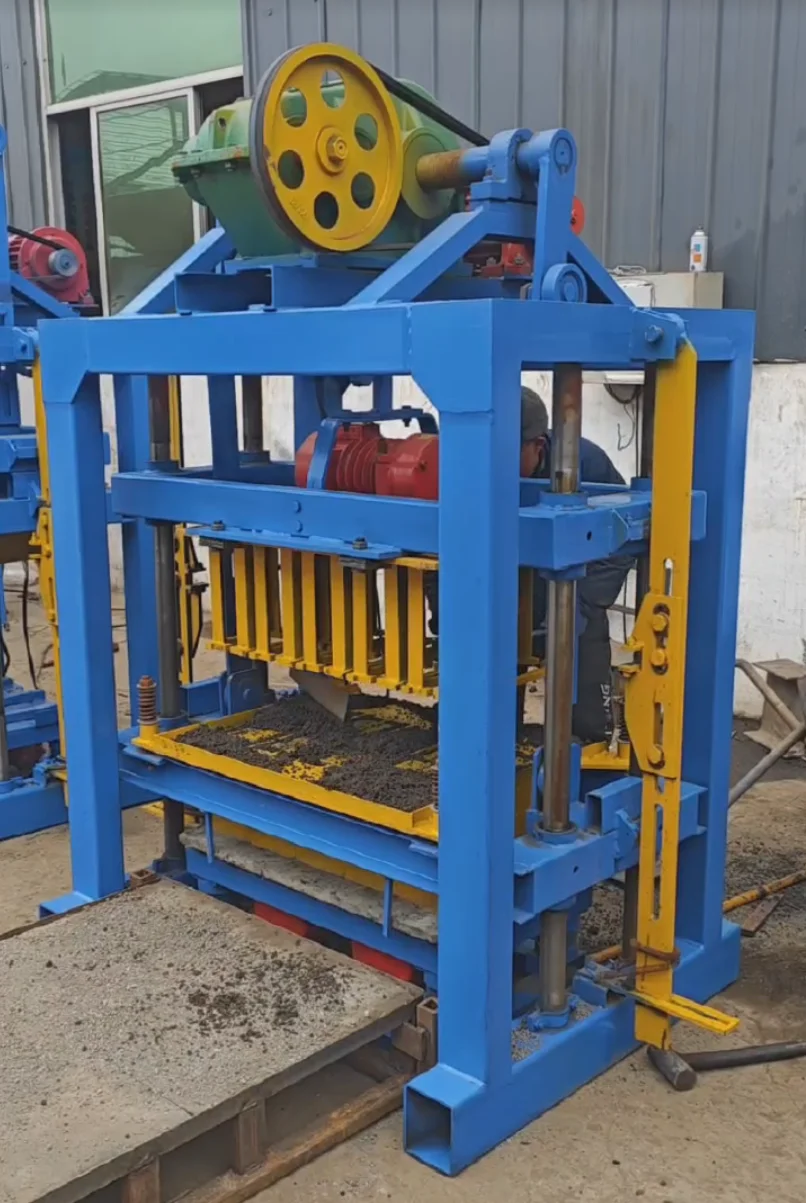
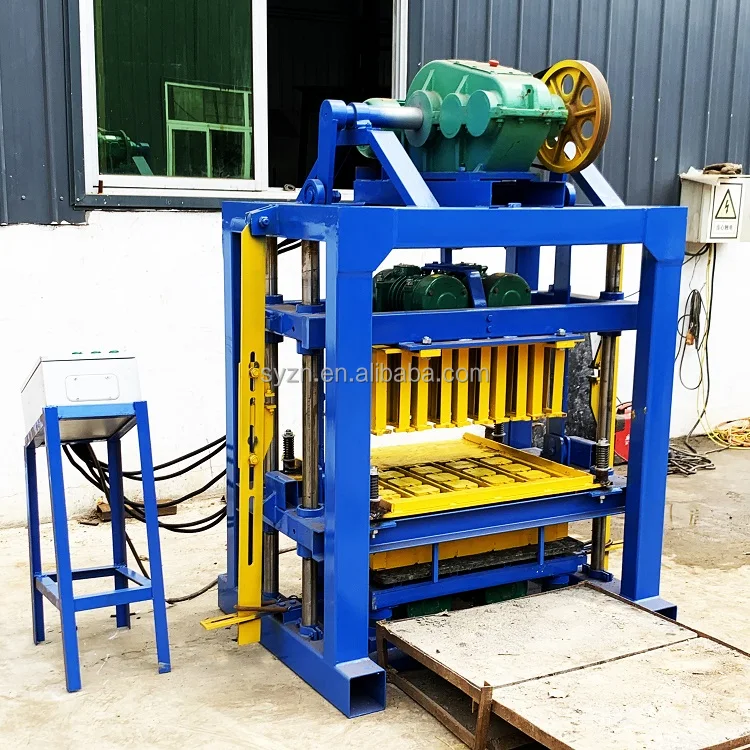
Description
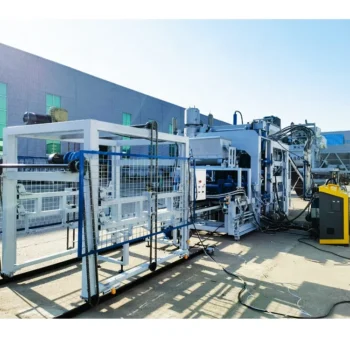
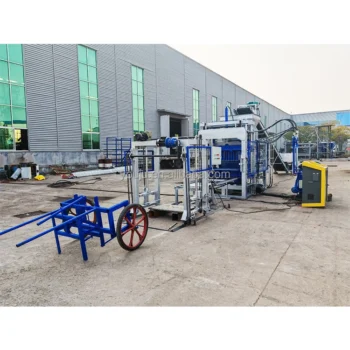
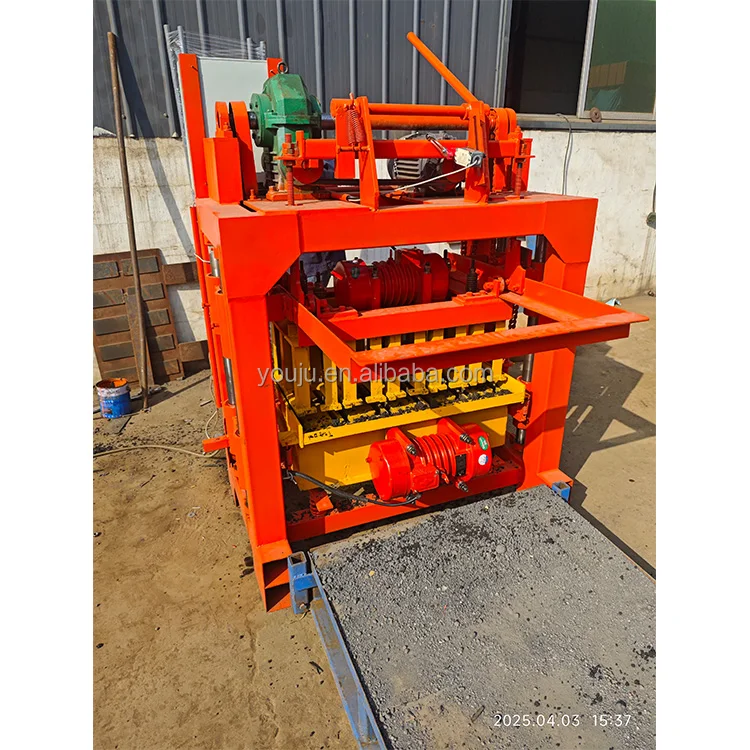
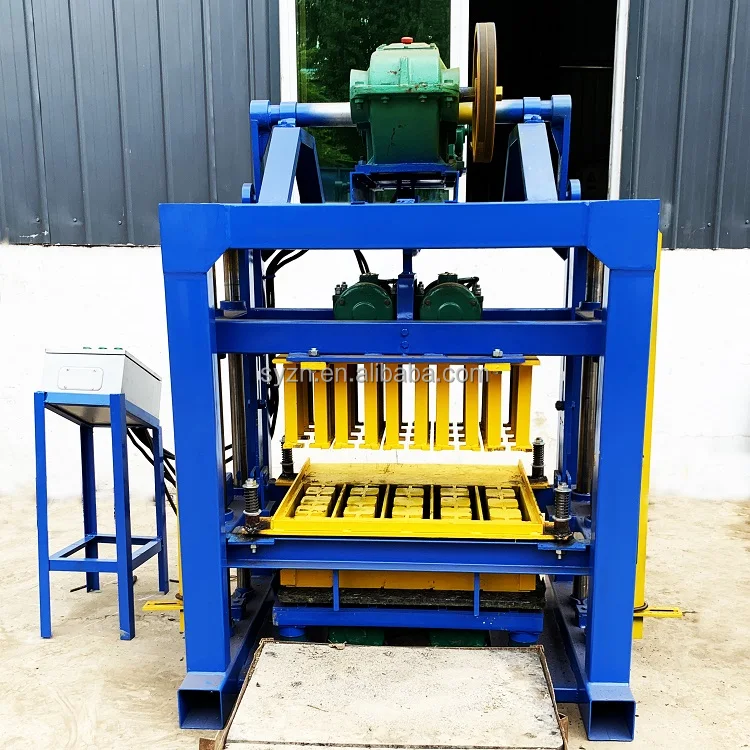
Configuration Match — The QTJ4-40 semi-automatic block making machine is sized against your target block format and local aggregate, not a generic catalogue output figure.
Technical Specifications
| Parameter | Value |
|---|---|
| Model | QTJ4-40 |
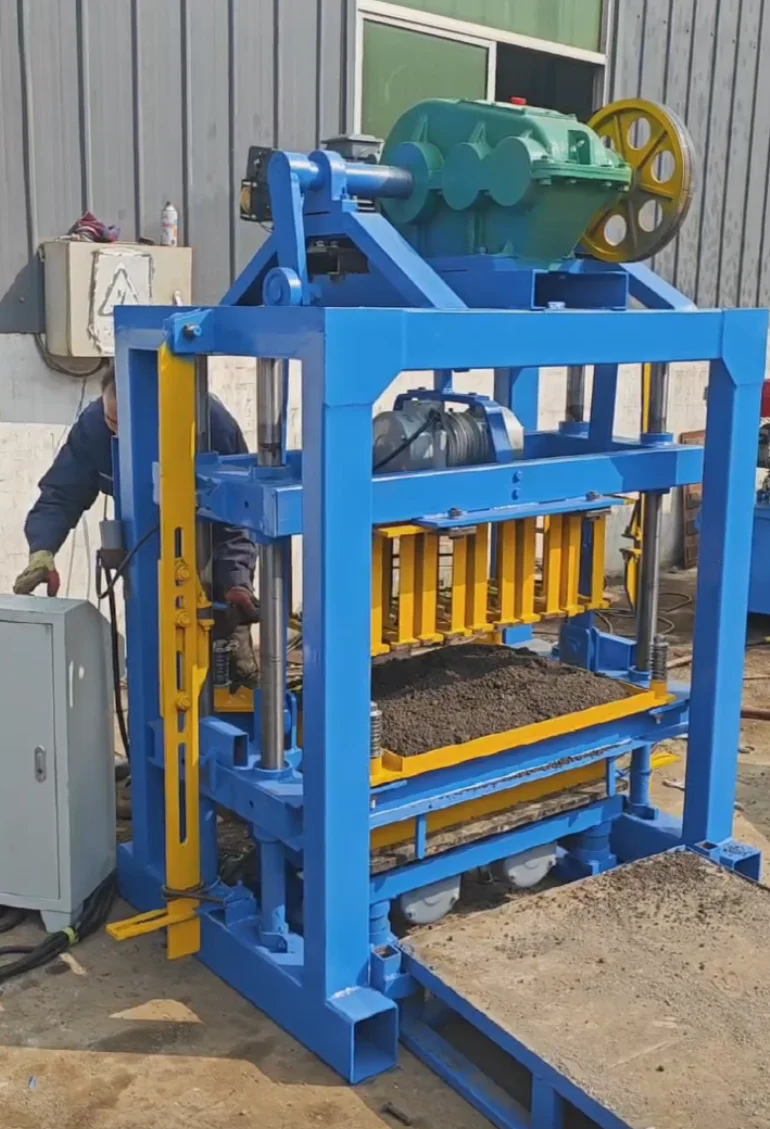
| Product Type | Semi-Automatic Concrete Block Making Machine |
| Overall Dimensions (L×W×H) | 1350×1460×1800 mm |
| Net Weight | 1.2 T |
| Rated Power | 10.4 kW |
| Voltage & Frequency | Configured to buyer’s local voltage, frequency, and phase (basis to be confirmed) |
| Control System | Semi-automatic, manual pallet handling |
| Vibration System | Bed mould vertical vibration + upper mould compression vibration |
| Cycle Time | 40 seconds |
| Pallet Size | 850×450×20 mm |
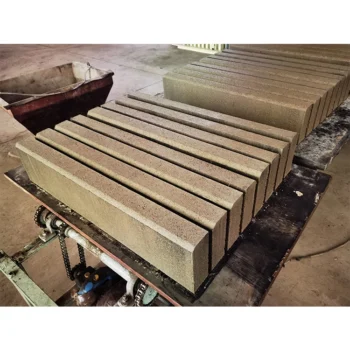
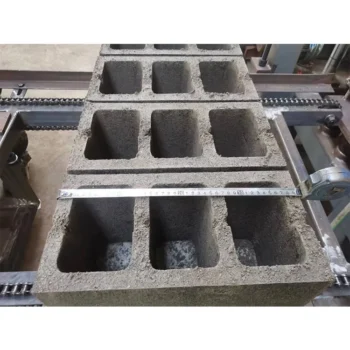
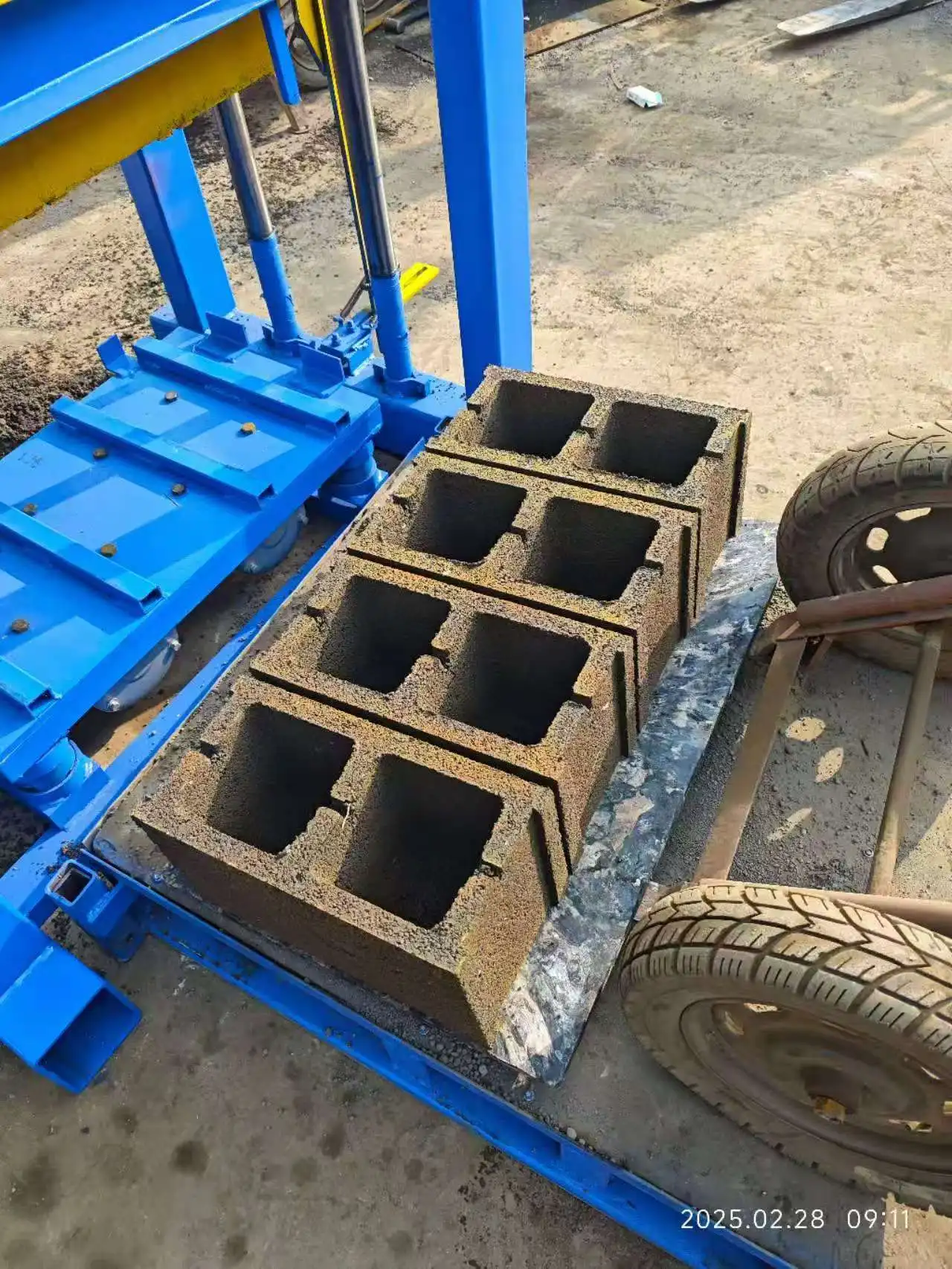
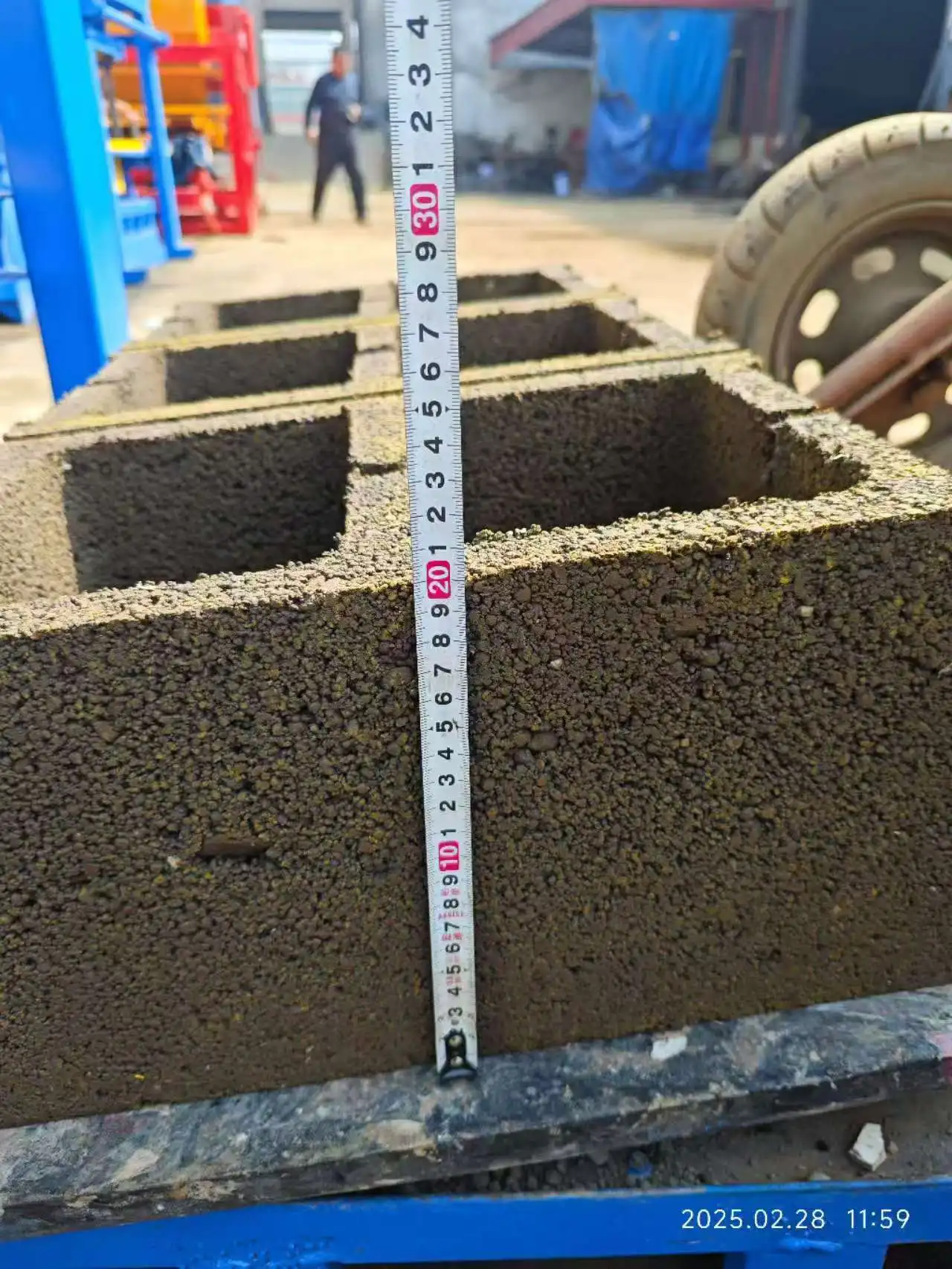
| Mould Formats Included | Hollow 400×200×200 mm (4 pcs/mould); Hollow 400×150×200 mm (5 pcs/mould); Solid 225×112.5×60 mm (9 pcs/mould) |
| Output Capacity (Hollow 400×200×200 mm) | 360 pcs/hour, 2800 pcs/day (theoretical, based on 40s cycle and 4 pcs/mould) |
| Output Capacity (Hollow 400×150×200 mm) | 450 pcs/hour, 3600 pcs/day (theoretical, based on 40s cycle and 5 pcs/mould) |
| Output Capacity (Solid 225×112.5×60 mm) | 800 pcs/hour, 6400 pcs/day (theoretical, based on 40s cycle and 9 pcs/mould) |
| Raw Material Compatibility | Concrete, sand, cement, fly ash, lime, gypsum |
| Assembly State | Host machine + block mould + pallets (mixer optional) |
Application Suitability
| Application | Material or Output |
|---|---|
| Small-scale hollow block production | Concrete and sand mix for 400×200×200 mm and 400×150×200 mm cavity formats |
| On-site solid brick runs for housing projects | Cement and fly ash blends pressed into 225×112.5×60 mm solids |
| First plant setup by entrepreneurs | Low-footprint semi-automatic line with optional mixer addition |
| Format expansion for existing producers | Dedicated small press adding paver or solid brick to an existing catalogue |
Why "3600 Blocks a Day" Might Not Match Your Site
Theoretical capacity is only honest when tied to the exact block format and mould count used in the calculation.
The QTJ4-40 block machine specifications list daily output numbers that look compelling on paper, but those figures assume a 40-second cycle, consistent material feed, and a specific mould configuration. I have seen buyers in regions with coarse volcanic aggregate discover that their actual cycle stretches well beyond the theoretical 40 seconds, pulling daily volume down to roughly half the brochure claim [NEED_CITE: aggregate gradation effects on vibration compaction cycle time]. Before the price conversation happens, the real question is whether your local sand and aggregate will compact within that window.
Matching Mould Count to the Block Your Market Buys
The QTJ4-40 ships with mould options covering three standard formats. Hollow 400×200×200 mm runs four pieces per cycle, while the smaller 400×150×200 mm format yields five per cycle, and solid 225×112.5×60 mm bricks produce nine per cycle. Knowing which of these your local construction code specifies determines whether the semi-automatic block making machine how to choose question resolves quickly or requires a custom mould drawing.
Vibration Force and Block Density Consistency
The dual-vibration setup on this press pairs bed mould vertical vibration with upper mould compression vibration. This two-direction compaction matters because hollow blocks with thin webs need consistent density across the entire cavity wall, not just at the base. When upper compression is absent, the top section of the block can remain under-compacted, leading to breakage during pallet transfer or curing [NEED_CITE: vibration compaction mechanics in hollow concrete block production].
Reading the Specs That Actually Matter On-Site
The 10.4 kW rated power is modest, which suits a small workshop without heavy electrical infrastructure, but it also means you need to confirm your site can deliver stable voltage at the required frequency before commissioning. The 850×450×20 mm pallet size is a fixed dimension that dictates your curing rack spacing and forklift tine width — if your existing racks were built for a different press, the mismatch will surface on day one. The 40-second cycle time governs throughput only when material is pre-mixed and pallets are fed without delay; manual pallet handling introduces variability that the theoretical output does not account for.
The Cost of Skipping the Voltage Confirmation
A machine configured for 380V/50Hz arriving at a site running 220V/60Hz will not simply underperform — the vibration motor will draw excessive current, overheat, and likely fail before the first production run completes [NEED_CITE: industrial motor failure from voltage and frequency mismatch]. This is not a warranty issue; it is a specification gap that could have been closed with a single confirmation email before production started. I have watched commissioning schedules slip by weeks because the PLC display language was never confirmed either, leaving the operator unable to read fault codes.
Why Buyers Source This Machine Through This Channel
Block machinery is the single focus here, so the QTJ4-40 is specified as a matched system — machine, mould, pallet, and handling — rather than assembled from disconnected suppliers. The configuration conversation starts with your actual mix design and local aggregate, not a default catalogue setting. Mould design extends to custom drawings when your market requires a format outside the three standard options. The semi-automatic base allows you to add a mixer later without replacing the press. Installation support includes operator training at your site so the 40-second cycle target is realistic from the first shift.
Documentation & Verification
- Capacity calculation sheet stating block format, mould count, and cycle time assumption behind each output figure
- Mould drawing and format list confirming dimensions and pieces per cycle included in your order
- Voltage, frequency, and control display language confirmation documented before production begins
- Factory test record run on material comparable to your local aggregate where sample is provided
- Pallet material and quantity specification matched to your curing area dimensions
Installation, Commissioning & Support
- Foundation pad leveled for 1350×1460 mm footprint with anchor bolt provisions
- Dedicated circuit sized for 10.4 kW rated power with voltage and frequency confirmed pre-shipment
- Host machine arrives assembled with mould and pallets; mixer added as optional separate unit
- First-run commissioning includes cycle time verification against your local material feed
- Operator training covers mould change procedure, vibration adjustment, and daily lubrication points
- Wear parts list provided with hydraulic seal and vibration motor brush replacement intervals
What We Need to Configure Your Line
To size the QTJ4-40 correctly, share the block format your market demands, including exact dimensions and required compressive strength. Confirm your local voltage, frequency, and phase, along with the preferred control display language. Let us know whether you already have a mixer on-site or need one included, and provide a sample or description of your primary aggregate so we can estimate a realistic cycle time.
Frequently Asked Questions
Q: How is output capacity calculated for each block format, and what cycle time is assumed?
A: Each output figure on this page is calculated from a 40-second cycle multiplied by the number of pieces per mould. Hollow 400×200×200 mm yields four pieces per cycle, giving a theoretical 360 pieces per hour. Actual daily volume depends on your material compaction behaviour and pallet handling speed.
Q: Which block formats are available, and can custom moulds be supplied?
A: The standard package covers hollow 400×200×200 mm, hollow 400×150×200 mm, and solid 225×112.5×60 mm. Custom mould drawings can be produced to your market dimensions, provided the pallet size of 850×450×20 mm is respected.
Q: How do I confirm voltage, frequency, and control language before shipment?
A: These are documented in the pre-production confirmation sheet. You specify your site voltage, frequency, phase, and preferred PLC display language, and these are locked before manufacturing begins to avoid commissioning delays.
Q: Can I use locally sourced wooden pallets instead of the standard ones?
A: The pallet size is fixed at 850×450×20 mm. Locally sourced timber pallets can work if they match this dimension and can withstand repeated vibration cycles without splitting. Thickness tolerance matters for consistent mould alignment.
Q: What does a mould change involve on this machine?
A: Mould change on the QTJ4-40 requires removing the retaining bolts, lifting the current mould, and seating the replacement. The exact time and tooling needed depend on the format. Confirm the procedure during operator training at commissioning.