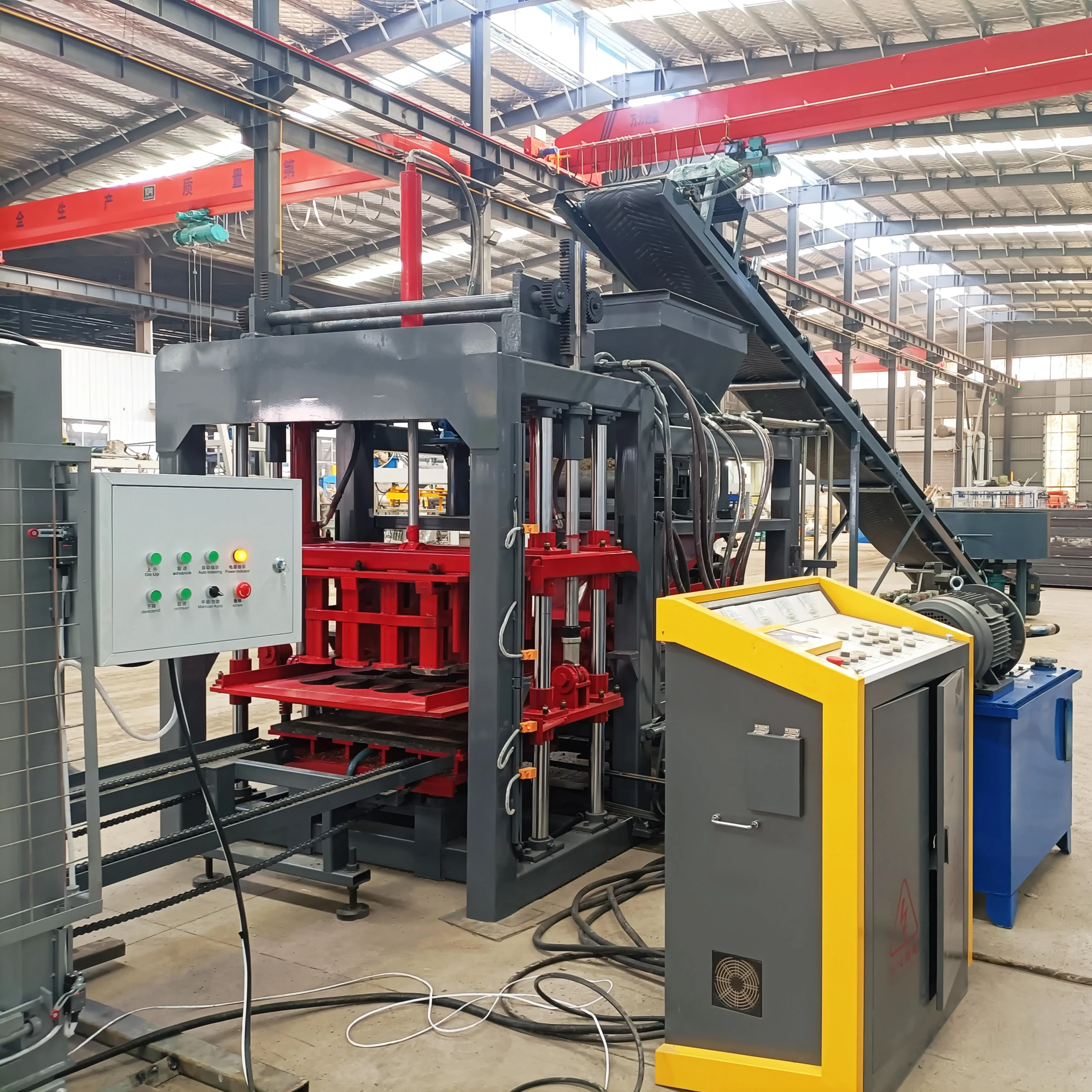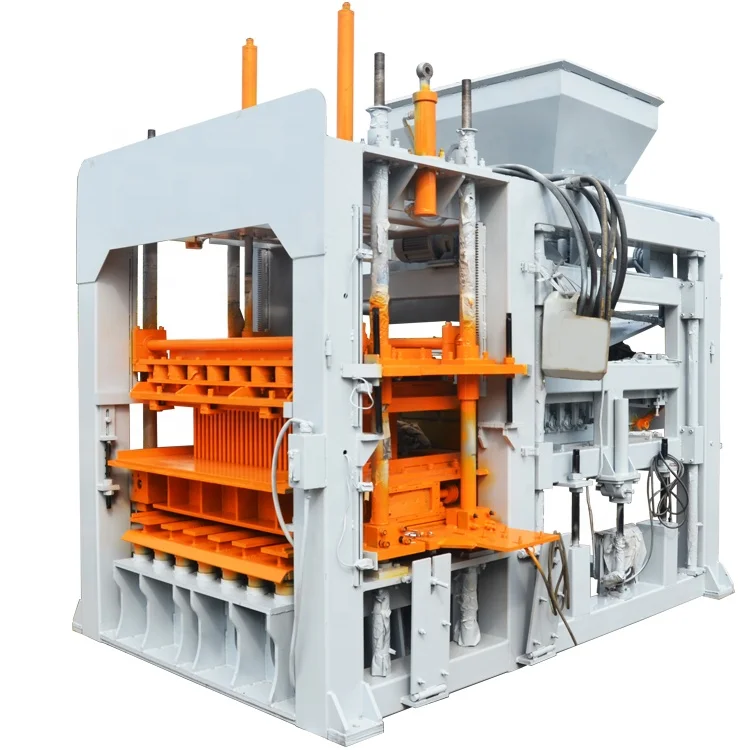
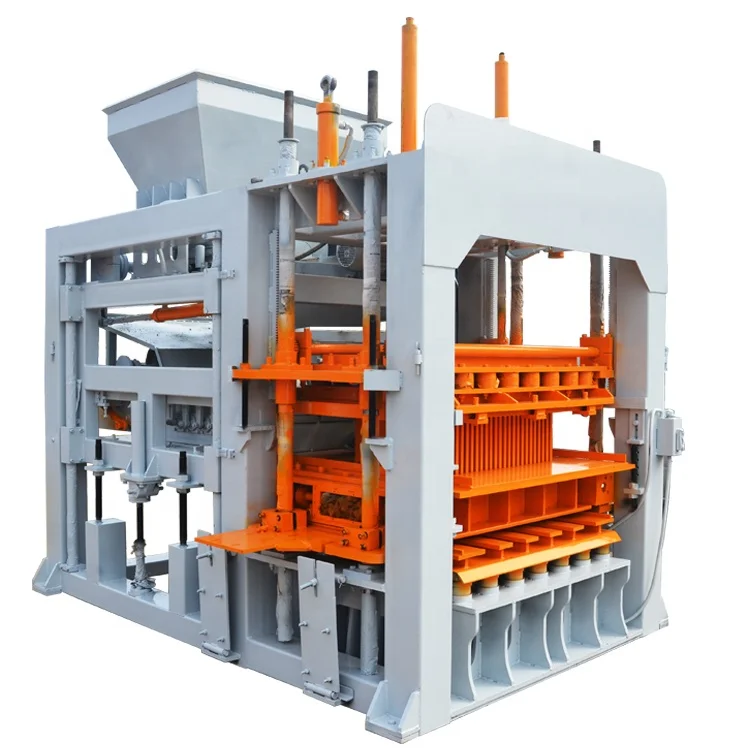
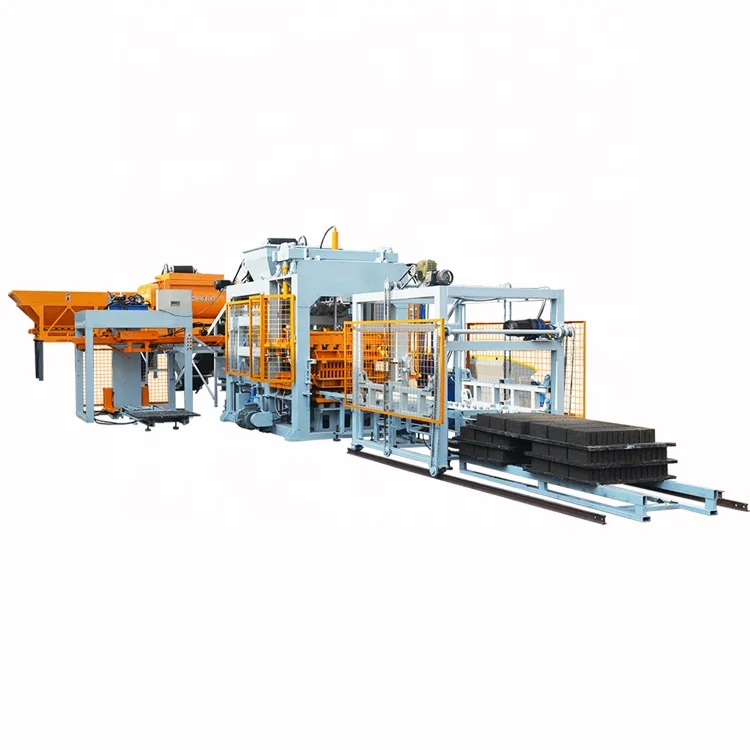
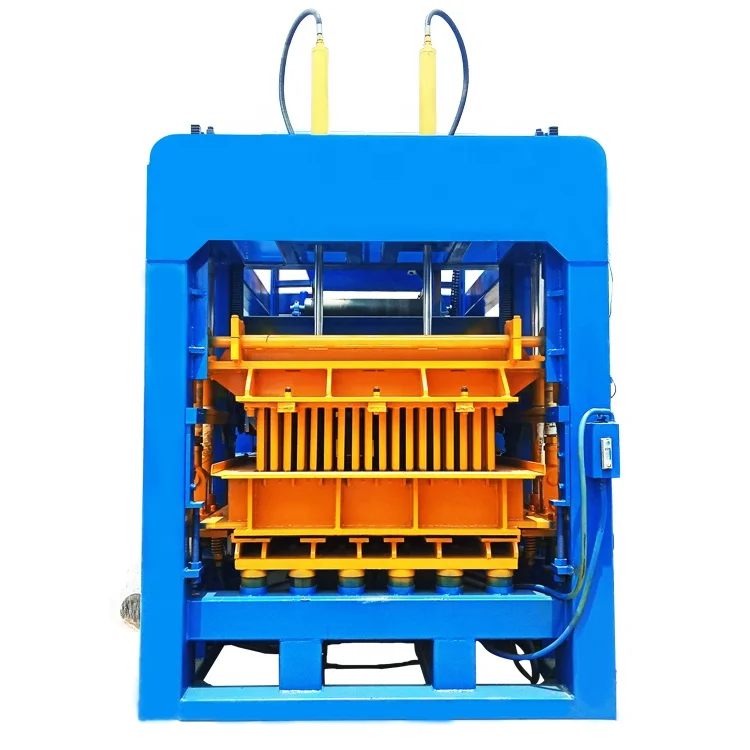
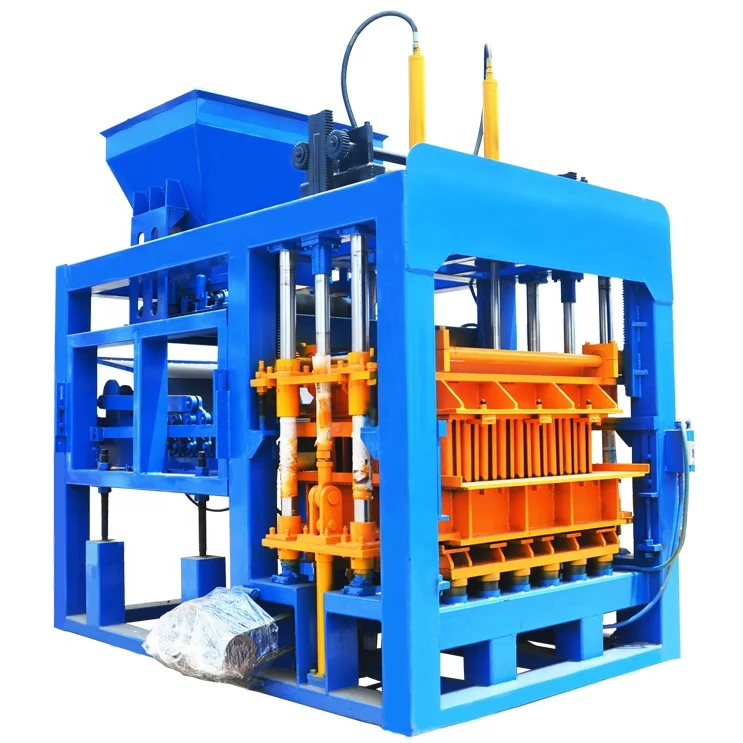
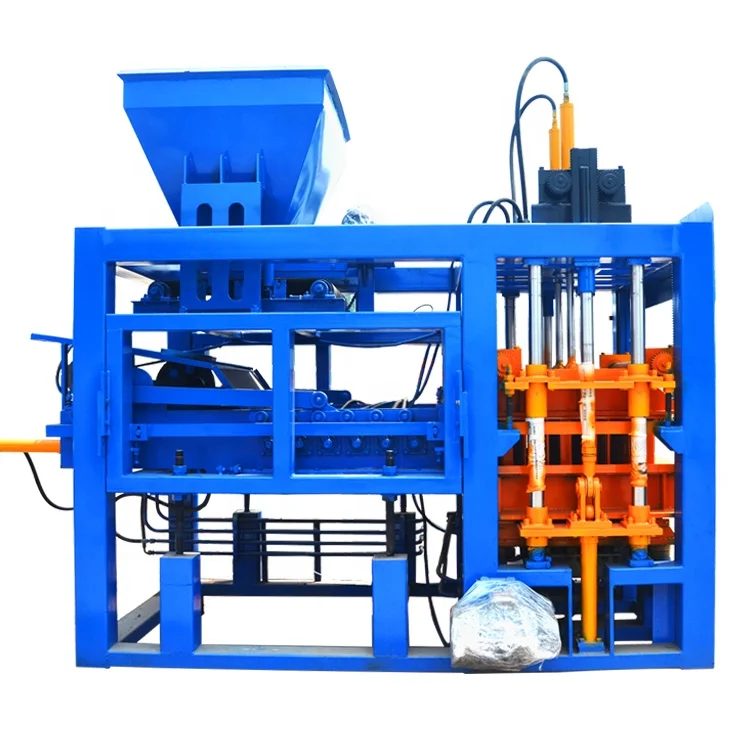
Description
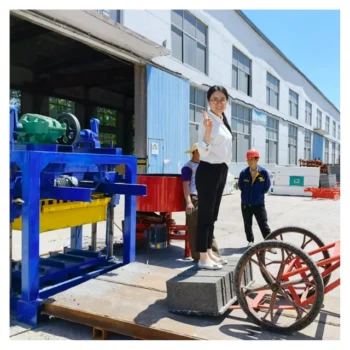
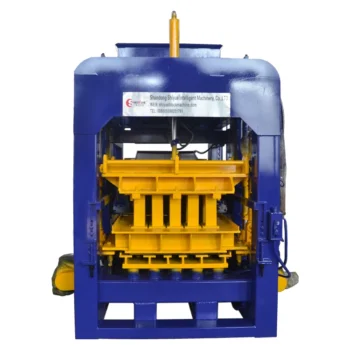
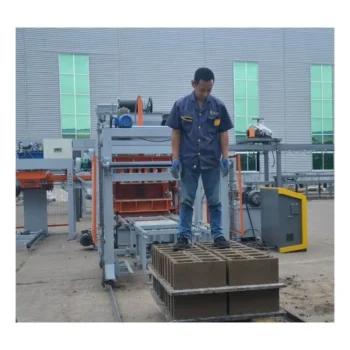
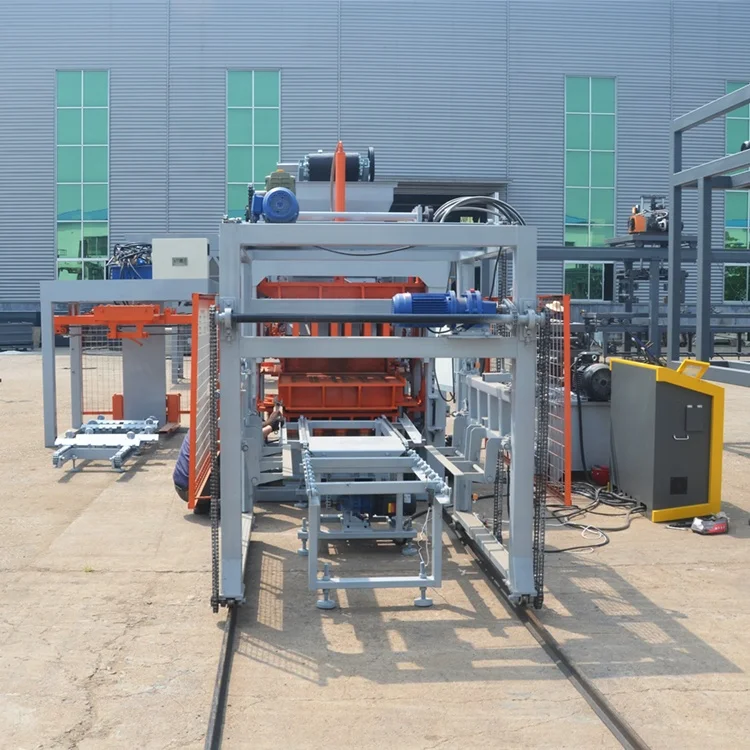
Matched Mould and Press Sizing — the QT8-15 block moulding machine is configured against your actual product format and local aggregate, not pulled from a catalogue default, so cycle time and block strength align with what your market demands.
Technical Specifications
| Parameter | Value |
|---|---|
| Model | QT8-15 |
| Product Type | Automatic Concrete Block Making Machine |
| Overall Dimensions (L×W×H) | 8300×1860×3000 mm |
| Total Mass | 8 T |
| Rated Pressure | 21 MPa |
| Vibration Force | 45 kN |
| Main Vibration Form | Platform Vibration |
| Vibration Frequency | 2800–4500 r/min |
| Pallet Size | 950×900 mm |
| Molding Cycle | 15–20 s (basis not stated in source — confirm block format / material / thickness) |
| Overall Power | 55.5 kW |
| Demolding Method | Hydraulic |
| Automation Level | Automatic |
| Factory Area Required | 300 m² |
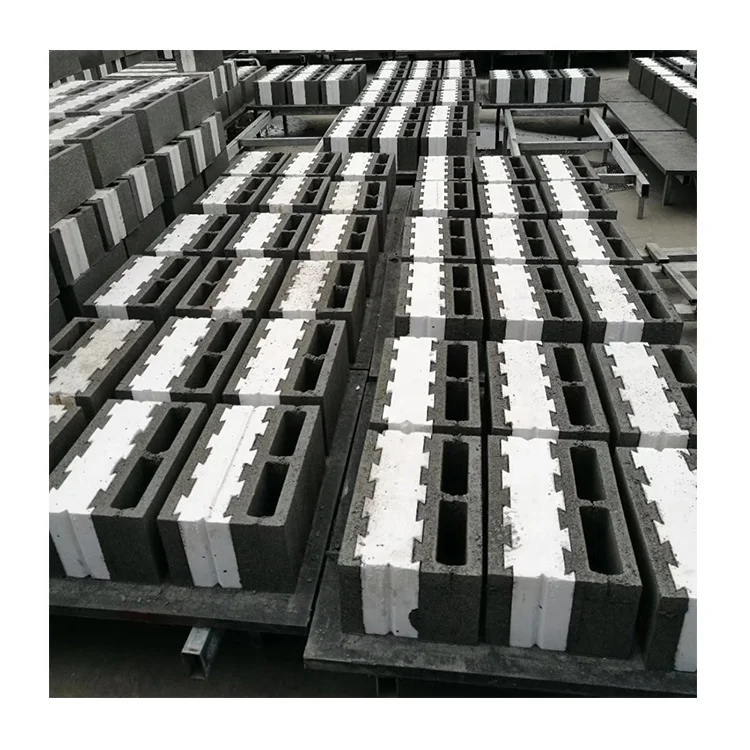
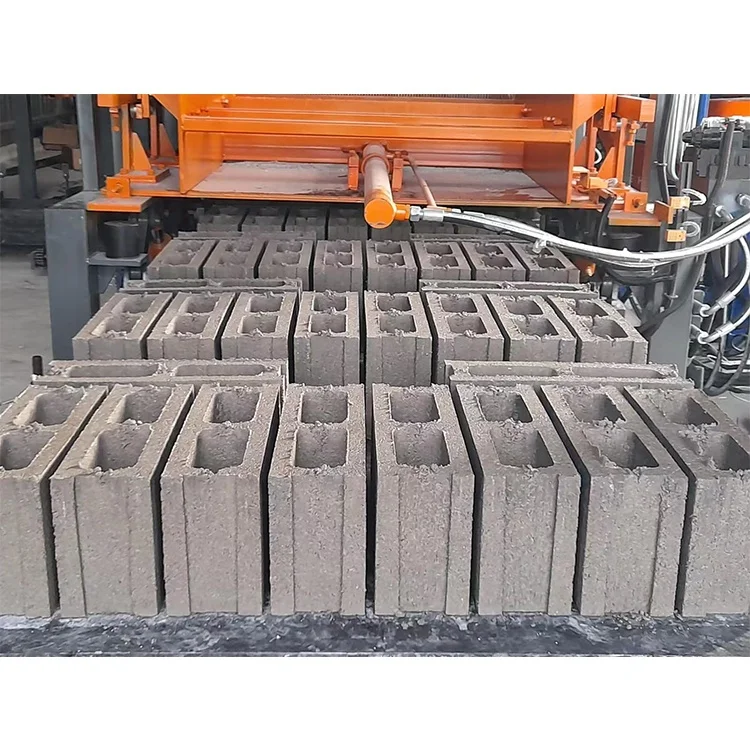
| Applied Products | Hollow blocks, solid blocks, pavers, interlocking blocks, curbstone, colored pavers |
| Raw Material Compatibility | Crushed stone, sand, cement, fly ash, gravel, slag |
| Voltage & Frequency | Configurable per site (confirm before order) |
| Control System | PLC (brand and language to be confirmed) |
| Warranty | 1 year (excluding spare parts) |
| Shipment Assembly | Shipped in 1×40HQ container (basic equipment) |
Application Suitability
| Application | Material or Output |
|---|---|
| Hollow block production | Crushed stone, sand, cement, fly ash blends |
| Solid block manufacturing | Dense aggregate mixes with cement and gravel |
| Paving block and colored paver runs | Fine aggregate, sand, cement with pigment additives |
| Interlocking brick production | Gravel, slag, sand and cement combinations |
| Curbstone and kerbstone forming | Coarse aggregate with high cement ratio |
| Project-site block production | Locally sourced aggregates including dust and slag |
Why QT8-15 Block Machine Specifications Must Be Read per Format
Capacity numbers mean nothing until they are tied to the exact block you sell.
Most quotations list a single cycle count per hour without naming the format behind that figure. A hollow block at 200 mm wall thickness and a thin paving brick do not share the same cycle, and they do not share the same compaction demand. I have stood on project sites in Latin America watching operators feed a press that was sold on a headline output, only to find the daily tally barely reached half the promised volume. The QT8-15 block machine specifications on this page carry a noted basis-to-be-confirmed tag on cycle time for that exact reason — we confirm per format before the order goes to production [NEED_CITE: block format impact on molding cycle in hydraulic press operations].
Format-Driven Cycle Time and What It Really Means
Every block format pulls the QT8-15 block machine specifications in a different direction. A standard hollow block demands sustained vibration to settle coarse aggregate into deep cavities, while a thin interlocking paver needs higher frequency over a shorter stroke. The platform vibration range of 2800–4500 r/min exists so that one press can cover both extremes, but only if the frequency is set correctly for the product in the mould. Without that format-by-format calibration, you are running a machine that technically works but produces inconsistent density across the pallet.
Matching the Pallet to Your Existing Curing Layout
The 950×900 mm pallet is the physical link between the press and your curing area. If your forklift was spec’d for 1000×800 mm pallets, or your curing racks were built around a different dimension, the mismatch shows up immediately on day one. Buyers often discover this incompatibility after the machine arrives, not during the quotation stage. We confirm pallet size against your existing infrastructure before the QT8-15 block moulding machine capacity by format is finalised, so the line flows from press to rack without manual re-handling [NEED_CITE: pallet size compatibility in block curing operations].
How Hydraulic Pressure and Vibration Force Define Block Strength
The 21 MPa rated pressure and 45 kN vibration force work together, not independently. Hydraulic pressure closes the mould and applies the static load, while vibration rearranges the aggregate particles into a dense packing before the cement matrix sets. If your local aggregate is coarse and angular — common with crushed river gravel in parts of Ecuador and Colombia — you need the full vibration frequency range to achieve uniform compaction. A fine sand-heavy mix, on the other hand, requires less vibration but benefits from higher hydraulic dwell time. The QT8-15 block machine specifications are only meaningful when paired with your actual mix design. Getting this wrong produces blocks that crumble at the edges or fail compression tests at the yard.
The Cost of Configuring by Catalogue Instead of by Format
When a machine ships with a default mould and a generic vibration profile, the first casualty is block consistency. Hollow blocks from the morning batch pass strength tests while afternoon runs from the same mix fall short, because the vibration frequency was never adjusted for the ambient temperature change in the aggregate. Mould changeovers then take most of a shift because the liner was never sized for the second format, and the promised flexibility of the press evaporates on the shop floor [NEED_CITE: mould changeover time impact on block plant flexibility].
Why Buyers Source the QT8-15 Through This Channel
Block machinery is the single focus here, which means the QT8-15 automatic block moulding machine arrives with mould, pallet and handling equipment specified as one matched system rather than assembled from unrelated suppliers. The configuration is set against your local aggregate and target block format, not a catalogue default. Moulds are available for every format your market sells, including custom designs built to your drawings. Automation level is selectable, allowing a semi-automatic start with a defined upgrade path. Installation, commissioning and operator training are part of the process, not an optional extra.
Documentation & Verification
- Line layout with capacity calculation stating the block format assumed for each output figure
- Mould drawing and format list confirming all products runnable on the 950×900 mm pallet
- Voltage, frequency and PLC display language confirmed in writing before production
- Factory test record with actual cycle times measured per mould format
- Hydraulic and electrical schematic matching the shipped configuration
- Packing photographs and customs documentation support
Installation, Commissioning & Support
- Foundation plan sized for the 8300×1860 mm footprint and 8 T operating mass
- Dedicated power circuit for the 55.5 kW total load at your confirmed voltage and frequency
- Press shipped dismantled in one 40HQ container with re-assembly supervised on site
- PLC display language and control parameters set during commissioning with operator walkthrough
- Mould change procedure demonstrated live using your production format sequence
- Wear parts and mould liner list supplied with recommended reorder intervals
What to Include in Your Enquiry
To size the QT8-15 to your actual production needs, we need your target block format and dimensions, the daily output you are planning, the aggregate materials available at your site, your local voltage and frequency, and the pallet size your curing area and forklift are built around. Share these details and the configuration proposal follows with format-specific cycle data.
Frequently Asked Questions
Q: What is the realistic daily output of the QT8-15 for each block format?
A: Daily output depends entirely on the format you run. A large hollow block at maximum wall thickness takes a longer cycle than a thin paving brick, so the same press produces different quantities per shift. We provide a capacity calculation document that states the output figure for each named format, not a single headline number.
Q: How do I match vibration force and hydraulic pressure to my local aggregate?
A: Coarse, angular aggregates need higher vibration frequency to achieve full compaction, while fine sand-dominant mixes respond better to extended hydraulic dwell. We review your specific material blend and adjust the QT8-15 block machine specifications accordingly before production begins, so block strength stays consistent across every run.
Q: What mould formats are available for the 950×900 mm pallet?
A: Standard moulds cover hollow blocks, solid blocks, pavers, interlocking bricks and curbstones, all sized to the 950×900 mm pallet. Custom moulds can also be built to your own drawings when your market demands a format outside the standard range.
Q: How long does a mould change take on the QT8-15?
A: Mould change time depends on whether the press was set up with quick-change hardware from the start. We specify the mould change system during configuration so that switching formats fits within your planned shift schedule, rather than consuming the better part of a production day.
Q: What pallet material is recommended and is it included in the quotation?
A: Pallet material should match your curing method — steam-cured environments demand different pallet stock than air-cured yards. The pallet specification is confirmed alongside the machine configuration so that material, thickness and quantity are clearly listed in the quotation, avoiding surprise costs after shipment.