

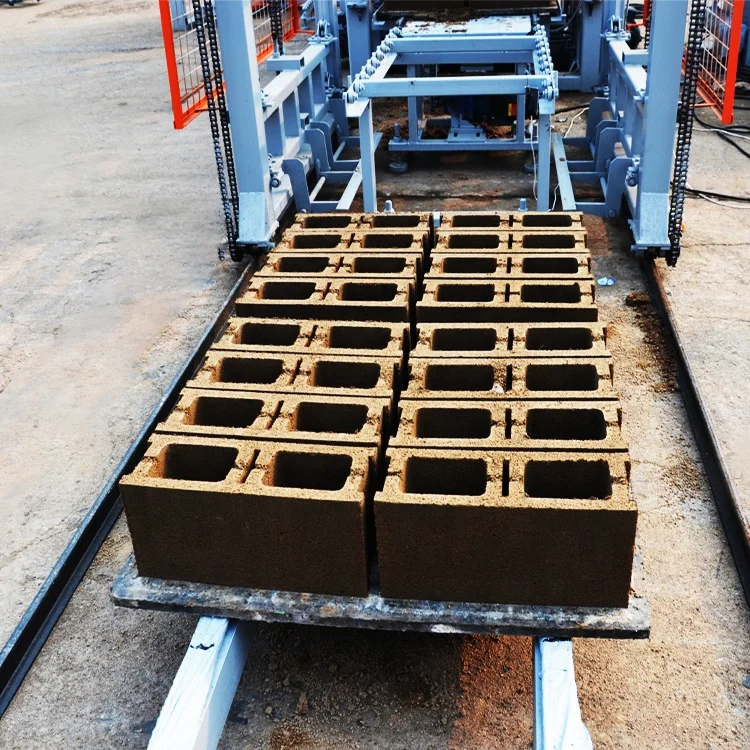
Description
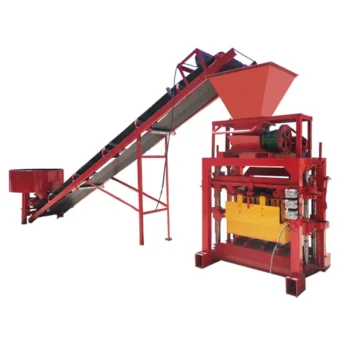
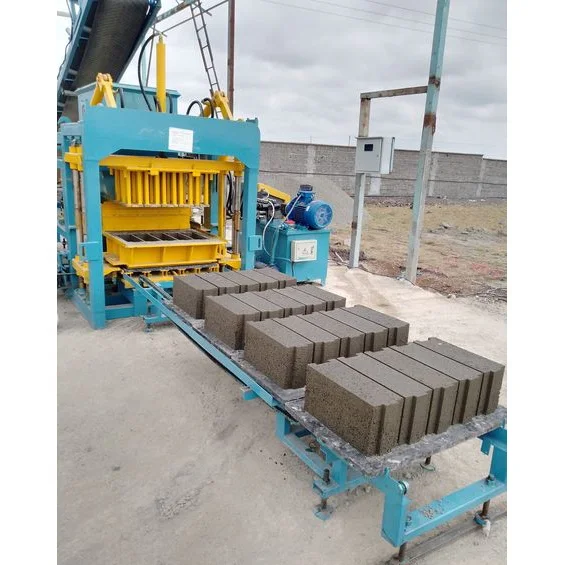
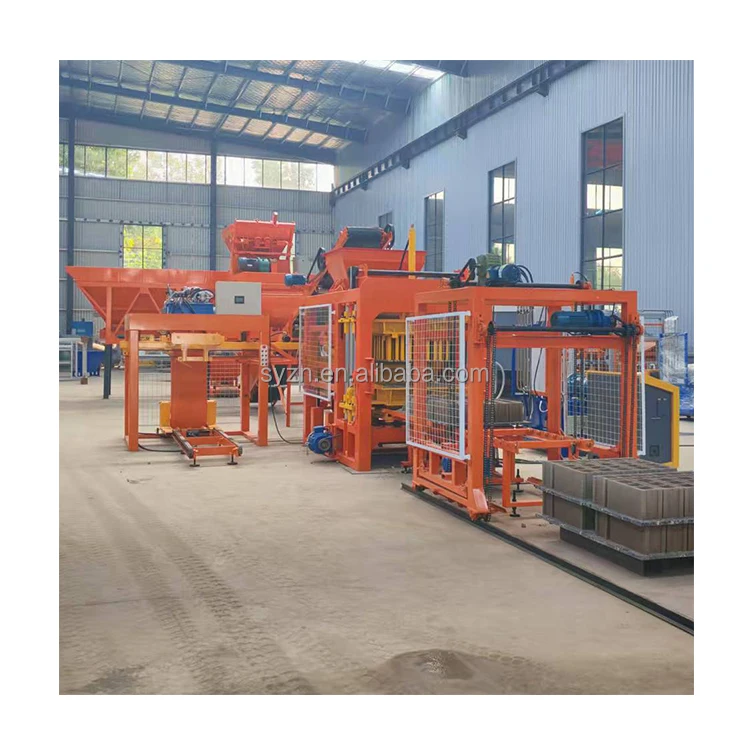
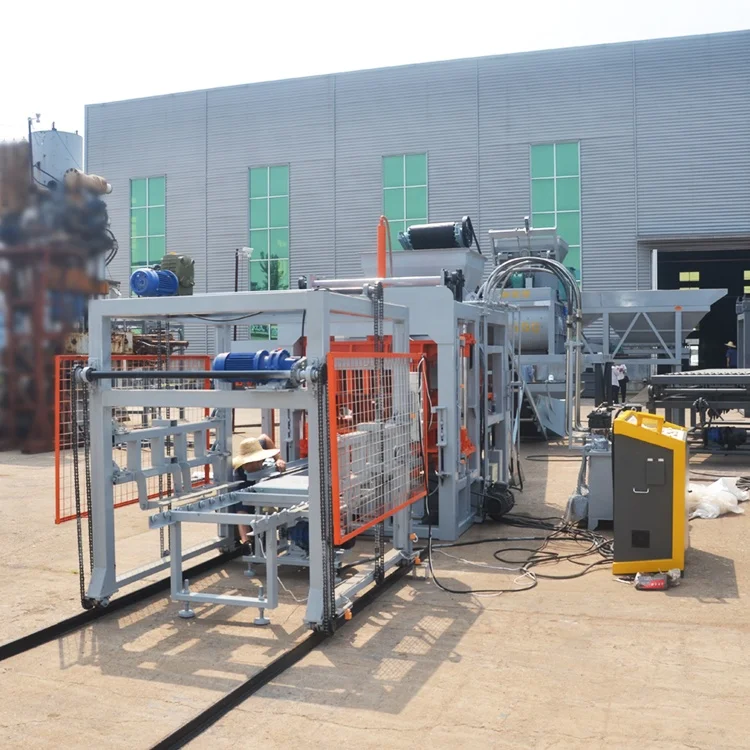
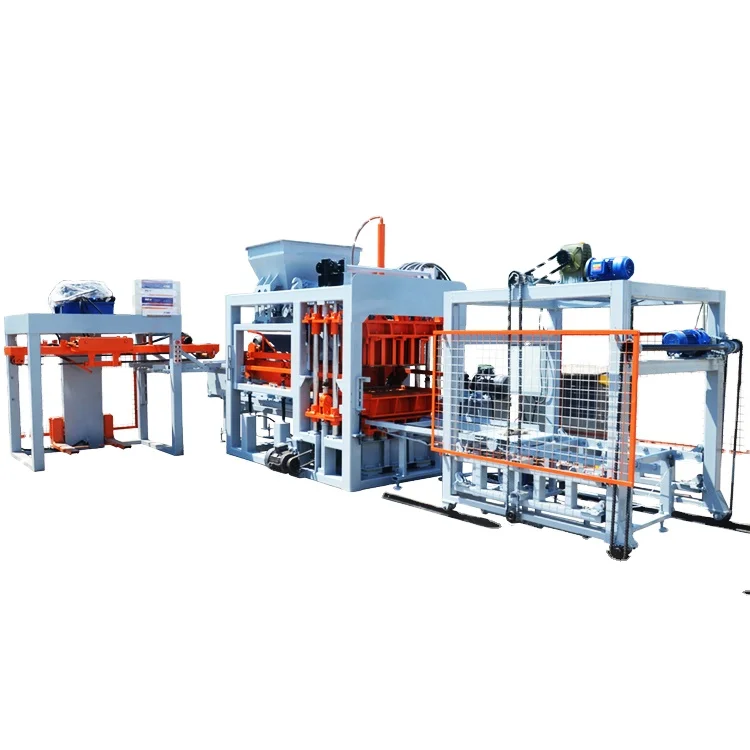
Matched System Design — the QT6-15 is specified as a complete press, mould, pallet and handling combination against your actual mix design, not sold as a standalone machine from a catalogue page.
Technical Specifications
| Parameter | Value |
|---|---|
| Model | QT6-15 |
| Product Type | Hydraulic Concrete Block Making Machine |
| Overall Dimensions (L×W×H) | 8200 × 1700 × 2950 mm |
| Total Mass | 7 T |
| Overall Power | 37 kW |
| Vibration Force | 45 kN |
| Vibration Frequency | 0–60 Hz (adjustable) |
| Vibration Form | Platform Vibration |
| Moulding Mode | Automatic loading, vibration moulding |
| Demolding Method | Hydraulic |
| Pallet Size | 880 × 850 mm |
| Molding Cycle | 15–20 s (basis not stated in source — confirm block format / material / thickness) |
| Control System | PLC with touch screen interface |
| Hydraulic System | Independent integrated hydraulic station |
| Compressive Strength of Blocks | >15 MPa |
| Factory Area Required | 1200 m² |
| Raw Material Adaptability | Waste ash, slag, various aggregates; reduced cement dosage capability |
| Output Capacity (Hollow Block 400×200×200mm) | 8640–11520 pcs / 8 hr (based on 6 pcs/mould, 15–20s cycle) |
| Output Capacity (Hollow Block 400×150×200mm) | 11520–15360 pcs / 8 hr (based on 8 pcs/mould, 15–20s cycle) |
| Output Capacity (Solid Brick 240×115×53mm) | 46080–61440 pcs / 8 hr (based on 32 pcs/mould, 15–20s cycle) |
| Output Capacity (Rectangular Paver 200×100×60mm) | 17280–23040 pcs / 8 hr (based on 21 pcs/mould, 20–25s cycle) |
| Output Capacity (Zigzag Paver 225×112.5×60mm) | 17280–23040 pcs / 8 hr (based on 15 pcs/mould, 20–25s cycle) |
| Warranty | 1 year (excluding spare parts) |
Application Suitability
| Application | Material or Output |
|---|---|
| Load-bearing hollow block production | Crushed stone, sand, cement blends targeting >15 MPa compressive strength |
| Non-bearing partition block production | Waste ash, slag and lightweight aggregates with reduced cement dosage |
| Solid brick manufacturing for masonry | Local river sand and fine aggregate on 32-cavity mould configuration |
| Rectangular paving block production | High-density aggregate mixes on 21-cavity paver mould |
| Interlocking (zigzag) paving for driveways | Pigmented face-mix concrete on 15-cavity interlocking mould |
Why the QT6-15 Block Machine Specifications Must Start With Your Block Format
A cycle time only means something when the block size, cavity count and material are named alongside it.
I have watched buyers sign off on a machine quoted at a single hourly figure, then discover on commissioning day that the number assumed a hollow block their market does not buy. When the actual format switches to a denser paver or a thinner solid brick, the cycle extends and daily output drops well below what was promised. The QT6-15 block machine specifications listed here carry a format tag on every capacity row so that mismatch is visible before the deposit is paid, not after the container arrives [NEED_CITE: common causes of block machine output shortfalls at commissioning].
Matching the Machine to the Formats Your Market Actually Buys
The QT6-15 covers hollow blocks in two wall-thickness variants, standard solid bricks, rectangular pavers and interlocking pavers — all on the same 880 × 850 mm pallet. Each format has its own cavity count and its own cycle range, so the output you plan your shifts around is the output you will see on the production floor. This format-level detail is the foundation of any honest QT6-15 block machine specifications discussion.
How Vibration and Hydraulic Pressure Interact Across Formats
Platform vibration at up to 45 kN and adjustable frequency between 0 and 60 Hz compacts the mix from below, while the independent hydraulic station drives demolding without the pressure spikes that crack green blocks. A hollow block tolerates a shorter, higher-frequency cycle because the voids reduce mass, whereas a 60 mm paver needs a longer dwell to reach full density [NEED_CITE: vibration consolidation principles in concrete block forming]. Adjusting both parameters to your aggregate grading is what holds compressive strength above 15 MPa.
Reading the Specs That Actually Move the Needle
Four parameters govern whether the QT6-15 fits your plant. The 37 kW total power draw dictates the transformer and feeder cable you must have on site before delivery. The 880 × 850 mm pallet size must match the spacing of your curing racks and the fork width of the forklift already in your yard — a mismatch here means building new racks or buying new handling gear. The PLC touch screen interface controls cycle logic and fault diagnosis, so confirming display language and voltage at order stage prevents a silent machine on first power-up. Finally, the 1200 m² factory area requirement includes raw material bays, press footprint, curing zone and finished-block staging; quoting only the press footprint understates the real space need.
The Hidden Cost of a Pallet Size Chosen in Isolation
When the pallet dimension is picked from a catalogue default instead of checked against the buyer’s curing area and forklift fleet, the result is pallets that cannot be stacked on existing racks or moved by existing trucks. Production then bottlenecks at the curing stage while the press sits idle — a problem that shows up as lost output, not as a machine fault, and one that is entirely avoidable with a five-minute conversation about yard layout [NEED_CITE: pallet handling mismatches in concrete block plants].
What Makes This Supply Route Different
Block machinery is our single focus, which means the QT6-15 press, its moulds, pallets and handling equipment are specified as one matched set rather than assembled from separate vendors. We configure the vibration force and cycle profile against your local aggregate report and target mix design, not a generic baseline. Mould design covers the formats your market actually sells, with custom drawings available for non-standard shapes. Automation level is selectable so you can start with semi-automatic pallet handling and add stacking later. Installation support includes on-site commissioning and operator training so the first production run meets spec.
Documentation & Verification
- Line layout showing capacity per block format, not a single blanket figure
- Mould drawing and format list confirming included sizes and custom-design slots
- Pallet specification sheet cross-referenced to your curing rack spacing
- Voltage, frequency and PLC language confirmation signed off before production
- Factory test record on your target block format before dispatch
Installation, Commissioning & Support
- 1200 m² factory footprint including curing and staging zones mapped before shipment
- 37 kW power feed with dedicated circuit and voltage confirmed at order stage
- Machine dismantled for container loading, reassembled and levelled on your foundation
- PLC touch screen parameters set to your mix and block format during first-week commissioning
- Operator training covers mould change, cycle adjustment and fault diagnosis screens
- Wear parts and mould replenishment list handed over with recommended reorder points
Before You Request a Quote
To size the QT6-15 correctly we need the block formats your market buys and the daily volume you plan for each, a sample or lab report of your local aggregate including grading and clay content, and your available yard area with curing rack dimensions. Share your local voltage and frequency plus preferred PLC display language so the electrical cabinet is built right the first time.
Frequently Asked Questions
Q: How is the QT6-15 capacity calculated per block format, and why do hollow blocks and pavers show different cycle times?
A: Every capacity row ties a mould cavity count to a cycle range. Hollow blocks cycle in 15–20 seconds because their voids reduce the mass that must be compacted, while 60 mm pavers need 20–25 seconds to reach full density at 45 kN vibration force. The figures assume the named block size and a standard mix.
Q: Which mould formats are included as standard, and what is the mould change procedure?
A: The specification covers hollow blocks in two sizes, solid bricks, rectangular and zigzag pavers. Moulds mount on a common bolster with locating pins and hydraulic clamps, so a trained operator completes a change within a single shift break. Custom moulds follow the same mounting interface.
Q: How should the QT6-15 be configured to match my local aggregate and reach above 15 MPa?
A: We review your aggregate grading and clay content, then set vibration frequency and hydraulic pressure accordingly. High-fines material typically needs longer dwell at lower frequency, while clean crushed stone responds to shorter, higher-frequency cycles. A trial run on your actual mix confirms strength before dispatch.
Q: Is the 880 × 850 mm pallet compatible with my existing curing racks and forklift?
A: That depends on your current rack slot width and fork tine spacing. Share your rack drawing or photos and forklift model; we confirm compatibility or adjust pallet dimensions within the press envelope before production starts, avoiding curing-area bottlenecks on arrival.
Q: What factory footprint does the QT6-15 require and how should the line be laid out?
A: The press, mixer, pallet feeder and curing rack handling together need roughly 1200 m². We provide a scaled line layout showing material flow from batching through stacking, with clearances for forklift circulation and maintenance access on all sides of the hydraulic station.