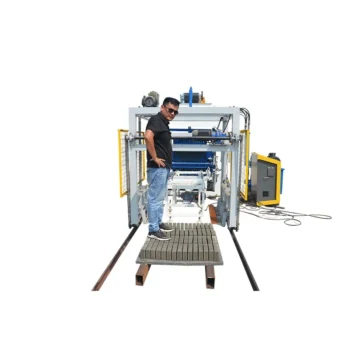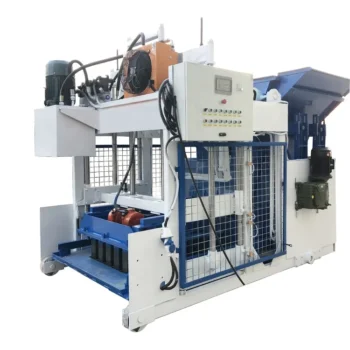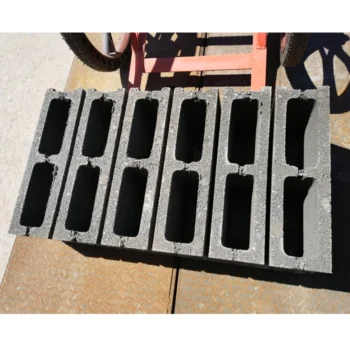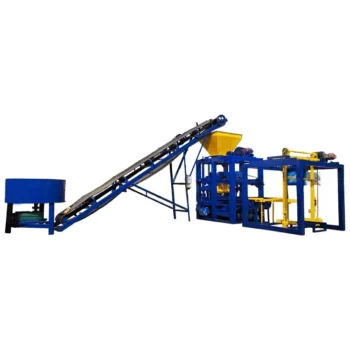
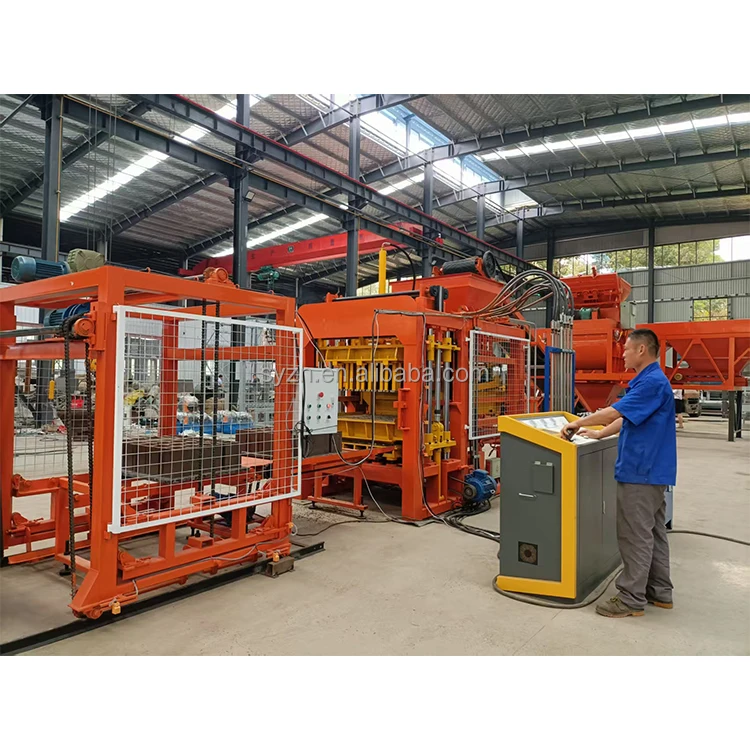
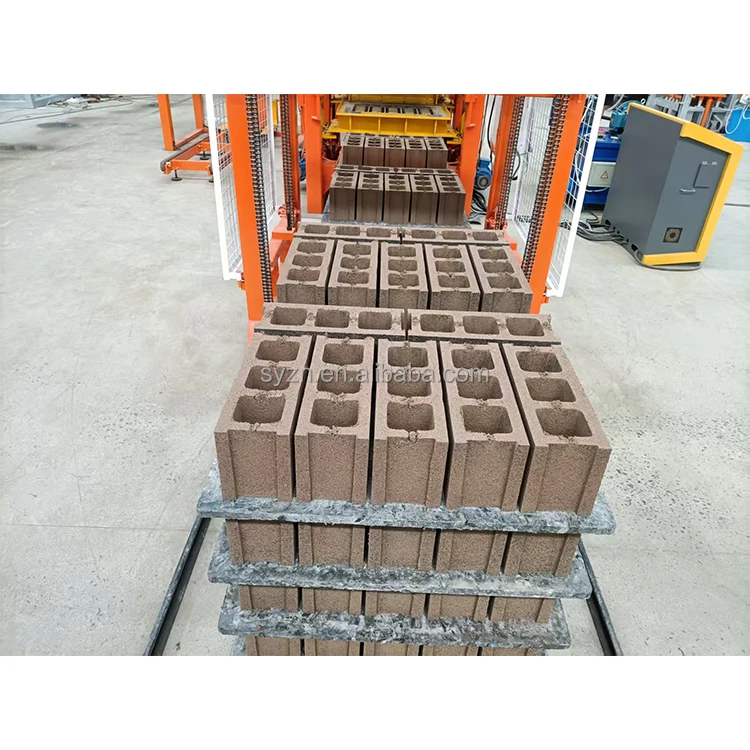

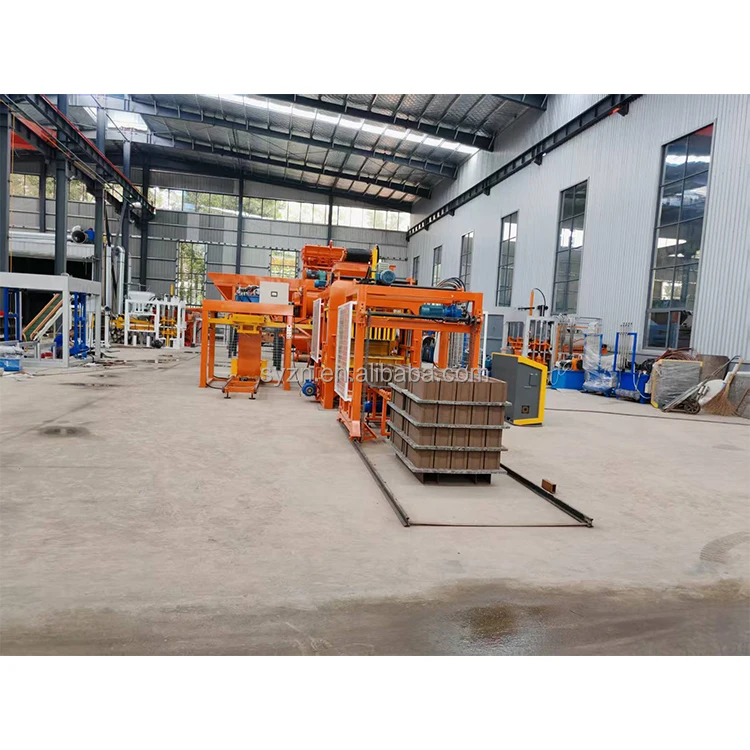

Description
Format-Specific Sizing — QT6-15 capacity is calculated per block format with cycle time and pallet dimensions stated, not quoted as a single daily output figure.
Technical Specifications
| Parameter | Value |
|---|---|
| Model | QT6-15 |
| Product Type | Automatic Concrete Block Making Machine |
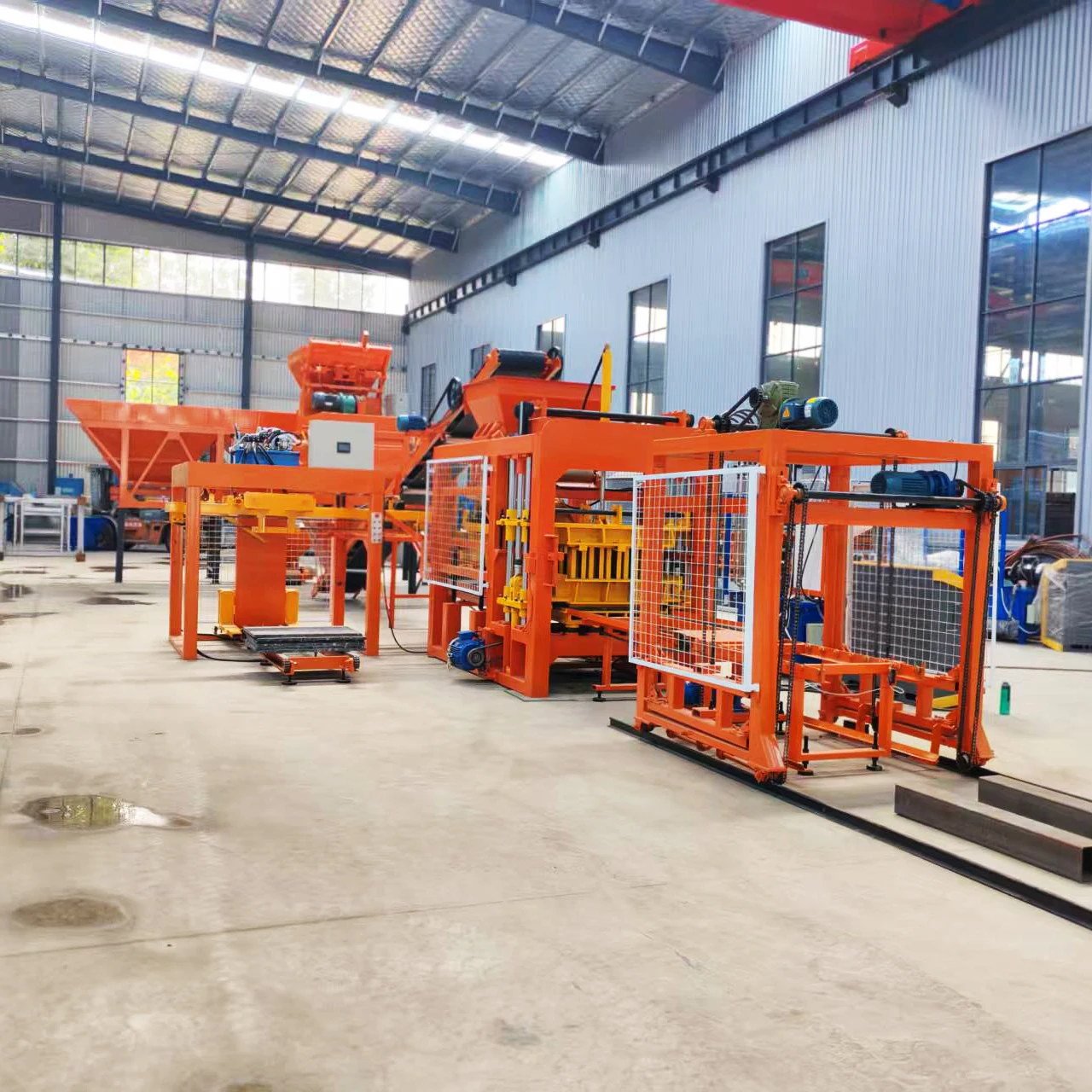
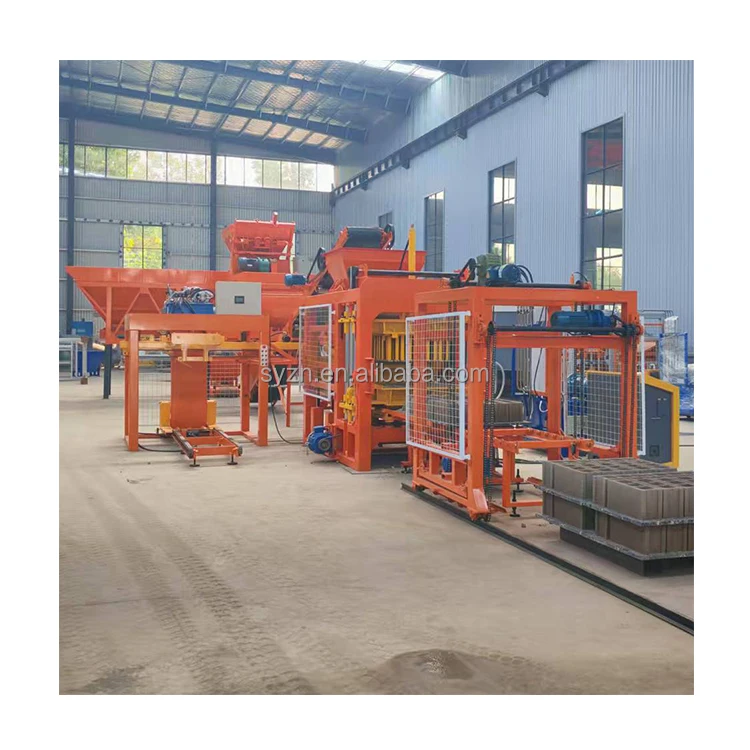
| Overall Dimensions | 8200 × 1700 × 2950 mm |
| Total Mass | 7 T |
| Overall Power | 37 kW |
| Vibration Form | Platform Vibration |
| Vibration Frequency | 0–60 Hz (adjustable) |
| Vibration Force | 45 kN |
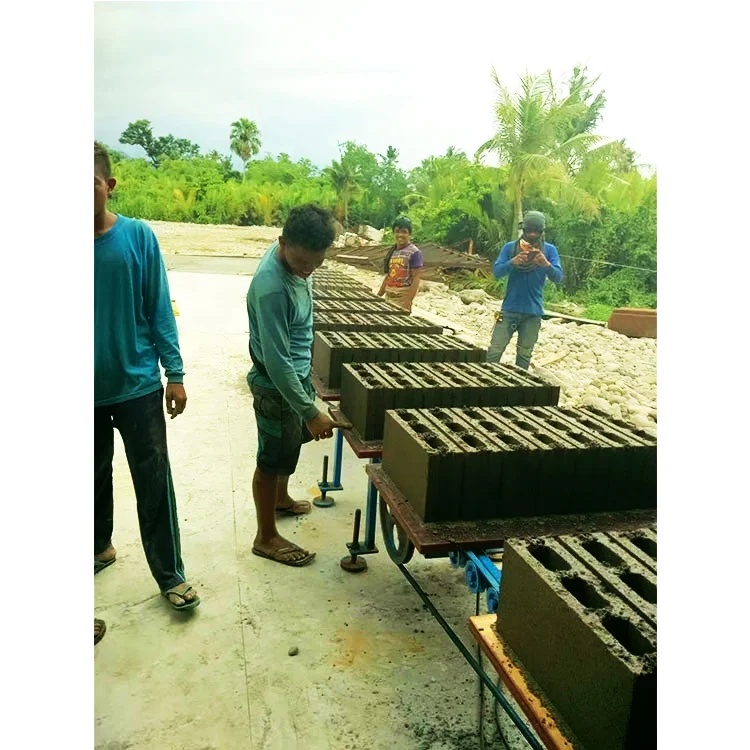
| Moulding Mode | Automatic loading, vibration moulding |
| Demolding Method | Hydraulic |
| Molding Cycle | 15–20 s (basis not stated in source — confirm block format and material) |
| Pallet Size | 880 × 850 mm |
| Factory Area Required | 1200 m² |
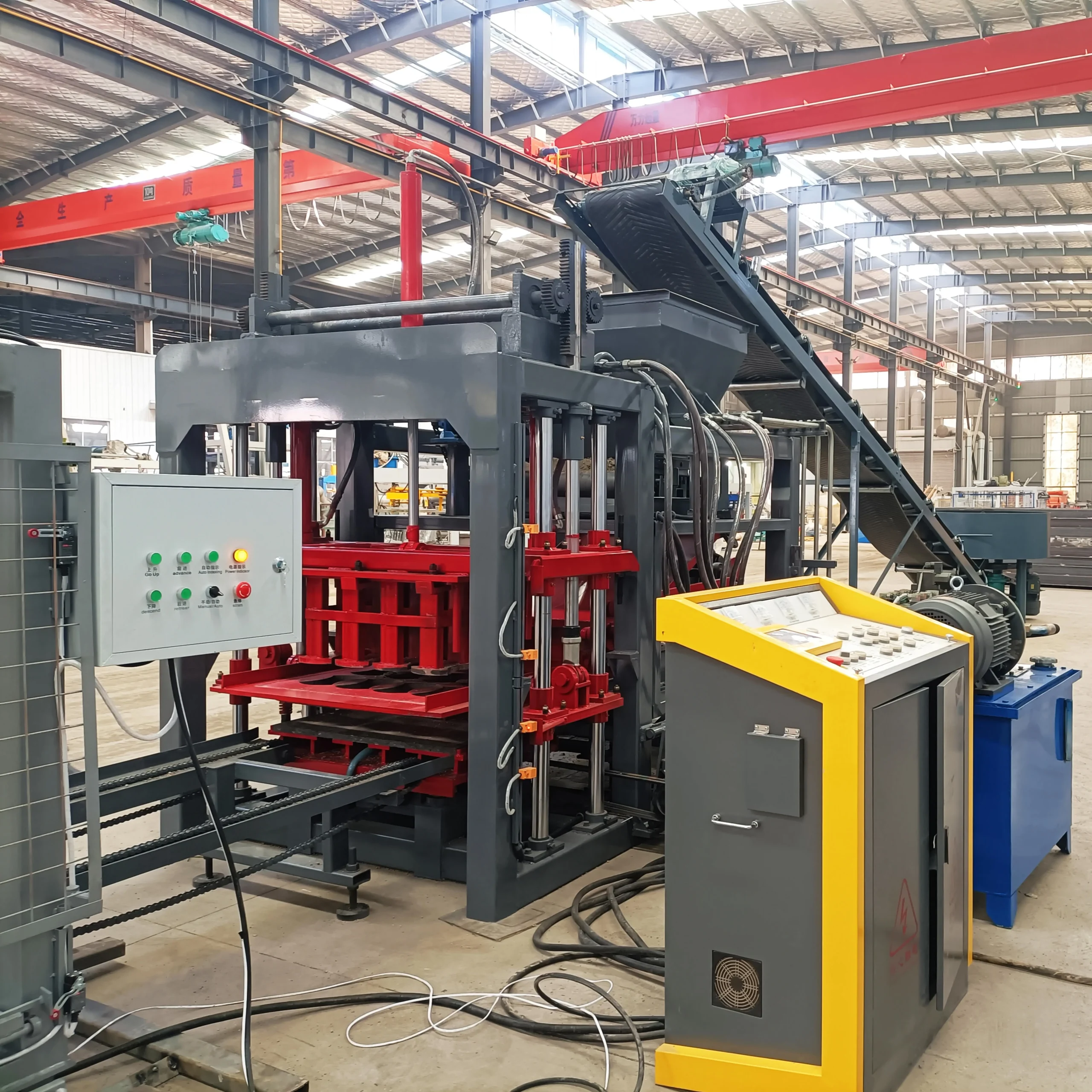
| Control System | PLC with touch screen interface, fault diagnosis |
| Output — Hollow Block 400×200×200 mm | 1080–1440 pcs/hour (6 pcs/mould, 15–20 s cycle) |
| Output — Hollow Block 400×150×200 mm | 1440–1920 pcs/hour (8 pcs/mould, 15–20 s cycle) |
| Output — Solid Brick 240×115×53 mm | 5760–7680 pcs/hour (32 pcs/mould, 15–20 s cycle) |
| Output — Rectangular Paver 200×100×60 mm | 2160–2880 pcs/hour (21 pcs/mould, 20–25 s cycle) |
| Output — Zigzag Paver 225×112.5×60 mm | 2160–2880 pcs/hour (15 pcs/mould, 20–25 s cycle) |
| Compressive Strength of Blocks | >15 MPa |
| Raw Material Adaptability | Waste ash, slag, cement-based mixes |
| Hydraulic Station | Independent integrated type, isolated from dust and vibration |
| Warranty | 1 year for whole machine (excluding spare parts) |
| Voltage & Frequency | Configurable — confirm before production |
| PLC Display Language | Configurable — confirm before production |
Application Suitability
| Application | Material or Output |
|---|---|
| Hollow block production for wall construction | Cement, crushed stone, sand, and fly ash mixes; 400×200×200 mm and 400×150×200 mm formats |
| Solid brick production for load-bearing and infill | Cement-based mixes with local aggregate; 240×115×53 mm standard format |
| Rectangular paving brick for roads and walkways | High-density cement and fine aggregate blends; 200×100×60 mm format |
| Interlocking zigzag paver for heavy-traffic areas | Cement, sand, and slag mixes requiring high compressive strength; 225×112.5×60 mm format |
| On-site block production for housing projects | Waste ash and slag blends adapted to local sourcing; format per project requirement |
What "15–20 Seconds per Cycle" Actually Means for Your Daily Output
Cycle time alone does not determine output — pallet return, material feed, and curing rack logistics set the real production ceiling.
A mould cycle of 15–20 seconds sounds fast on paper. But in a working plant, the QT6-15 automatic block machine press sits idle while pallets are manually collected, cured blocks are stripped, and fresh pallets are fed back. I have seen lines where the press was capable of far more than the surrounding logistics could sustain. Without matching pallet handling speed and curing area capacity to the press cycle, the real hourly count drops well below the theoretical maximum [NEED_CITE: block plant throughput bottleneck analysis]. Stating output per format with its cycle assumption lets you compare machines against the block you actually sell, not against a catalogue benchmark.
Matching the QT6-15 Automatic Block Machine to Your Target Block Format
The QT6-15 automatic block machine specifications show five distinct output tiers depending on which block format you run. A hollow block at 400×200×200 mm yields 6 pieces per mould, while a solid brick at 240×115×53 mm yields 32. Switching between these formats is not just a mould swap — the mix consistency, vibration duration, and hydraulic pressure all shift. Selecting the baseline format that represents the majority of your sales volume ensures the capacity calculation reflects your actual production mix rather than an optimistic edge case.
Pallet Size and Curing Area Compatibility
The 880 × 850 mm pallet is the interface between the press and everything downstream. If your curing racks were built for a different pallet dimension, every block coming off the line has to be restacked by hand before it enters the curing zone. Before confirming the QT6-15 order, measure your existing rack spacing and forklift tine width. A mismatch here adds labour that no amount of press automation can remove [NEED_CITE: pallet handling standards in concrete block production].
Vibration Force, Hydraulic Pressure, and Block Density
The platform vibration system operates at 0–60 Hz with 45 kN of force, and the hydraulic demolding station works independently from the main frame vibration. For a block to reach >15 MPa compressive strength, the vibration frequency must be matched to the particle size distribution of the local aggregate. Coarse crushed stone responds to a different frequency band than fine fly ash blends. The adjustable range on the QT6-15 gives room to tune, but the starting point must come from a mix design trial, not a factory default. The independent hydraulic station keeps pressure stable by isolating the valve block from dust ingress and press vibration, which matters for long-term seal life.
The Hidden Cost of Skipping Format-Level Capacity Planning
When a buyer selects a machine based on a single output number, the first sign of trouble is usually the pallet pile-up. The press is cycling, but blocks are stacking on the floor because the curing area cannot absorb the volume. Workers spend half the shift moving blocks instead of monitoring quality. Another common consequence is ordering moulds for formats the machine can technically run but that require a pallet change or a different feed configuration, turning a planned 30-minute mould swap into a multi-hour line stoppage [NEED_CITE: block machine format changeover downtime]. These are not equipment failures — they are specification gaps that surface only after installation.
Why Source This Machine Through a Format-Matched Approach
The QT6-15 is configured against the buyer’s actual mix design and local aggregate rather than a default catalogue setting, which means vibration frequency and hydraulic pressure arrive tuned for the material you can actually source. Mould design covers the formats your market sells, including custom drawings when standard options do not match local dimensions. Automation level is selectable — a plant can start with semi-automatic pallet handling and add automatic stacking later without replacing the press. Installation support includes operator training on the PLC touch screen and fault diagnosis system so the crew can respond to alarms without waiting for remote assistance. Capacity calculations are delivered per format, so the line layout shows which block type drives the output claim and which ancillary stations must match that pace.
Documentation & Verification
- Line layout with capacity calculation stating the block format and cycle time assumed for each output figure
- Mould drawing and format list confirming included and optional mould designs
- Pallet specification sheet matched to curing rack dimensions and forklift capacity
- Hydraulic and electrical schematic with voltage and frequency confirmed before production
- Factory test record run on the buyer’s target block format before dispatch
- Operation and maintenance manual with PLC display language confirmed
Installation, Commissioning & Support
- Foundation must support 7 T static mass plus dynamic vibration load across the 8200 × 1700 mm footprint
- Dedicated power circuit for 37 kW total draw with voltage and frequency confirmed before wiring
- Machine arrives in modular sections requiring on-site assembly and platform vibration alignment
- First-run commissioning includes PLC parameter tuning for local mix design and target block format
- Operator training covers touch screen navigation, fault diagnosis response, and safe logic interlock procedures
- Wear parts list and mould maintenance schedule provided at handover
Before You Request a Quote
To size the QT6-15 accurately, share your primary block format and the percentage split across formats you plan to produce. Include a sample or report of your local aggregate — particle size distribution and clay content directly affect vibration tuning. Confirm your site voltage, frequency, and preferred PLC display language so that electrical configuration is locked before production starts. If you already have curing racks and forklifts on site, send their dimensions so the pallet specification can be verified against your existing infrastructure.
Frequently Asked Questions
Q: How is the output capacity calculated per block format, and which format should I use as baseline?
A: Each output figure is derived from the number of cavities in the mould and the cycle time range for that format. The hollow block 400×200×200 mm figure uses 6 cavities at 15–20 seconds, for example. Choose as baseline the format that represents the largest share of your daily production, since that is the number your revenue depends on.
Q: What mould formats are available for the QT6-15, and how long does a mould change take?
A: Standard options include hollow blocks, solid bricks, rectangular pavers, and zigzag pavers. Custom moulds can be designed to buyer drawings. Mould change time depends on whether the format requires a pallet size adjustment or feed configuration change — confirm this during the line layout stage so it is planned, not discovered on the shop floor.
Q: How do I confirm the pallet size is compatible with my existing curing racks and forklift?
A: The standard pallet is 880 × 850 mm. Measure your curing rack shelf width and spacing, and your forklift tine spread. If there is a mismatch, the pallet specification can be adjusted before production. Confirming this avoids manual restacking between the press and the curing zone.
Q: What voltage, frequency, and PLC language options are available, and when must they be confirmed?
A: Voltage and frequency are configurable to match the buyer’s local grid, and the PLC display language is set before production. These must be confirmed during the quotation stage so the electrical panel and control software are built correctly — changes after assembly cause commissioning delays.
Q: How should the vibration force and hydraulic pressure be matched to my local aggregate and mix design?
A: The 0–60 Hz adjustable vibration and 45 kN force provide a tuning range, but the starting parameters must come from a trial with your actual aggregate and cement ratio. High-clay or high-moisture mixes respond differently than clean crushed stone blends. Share your material report during the inquiry so the factory test can validate block strength before shipment.