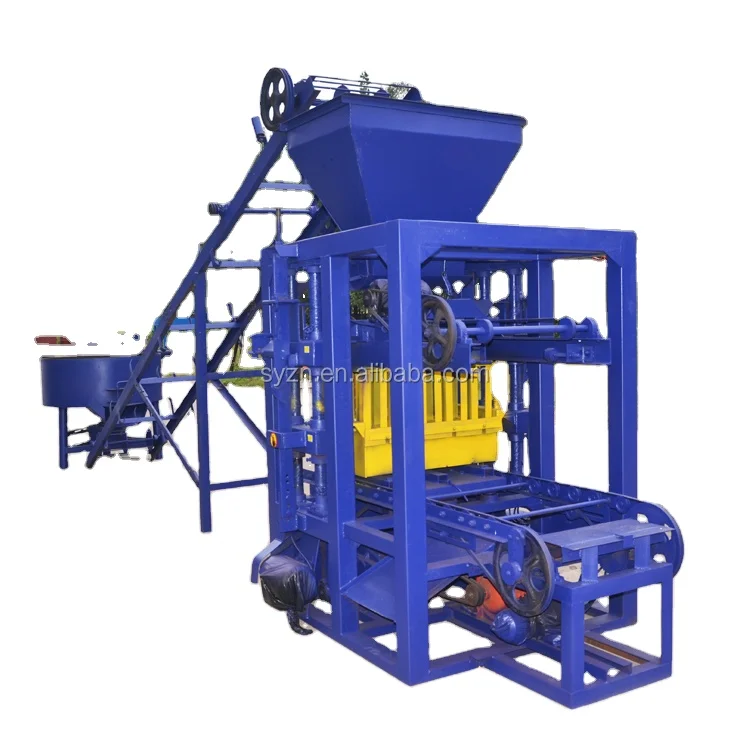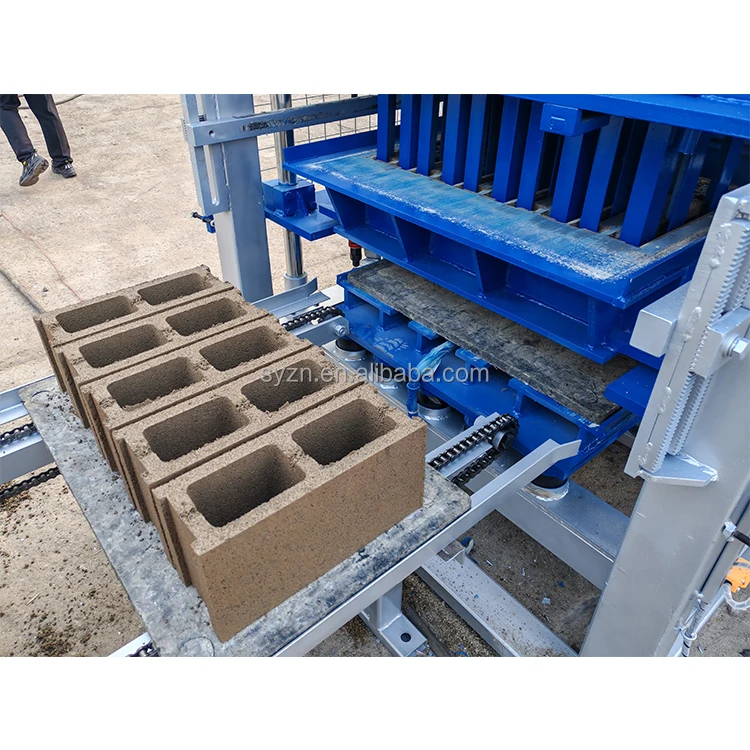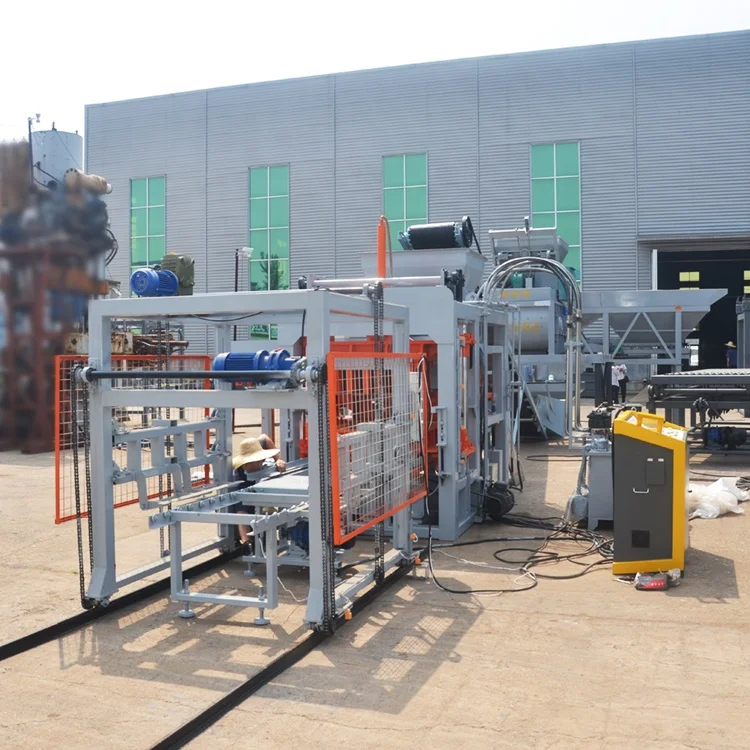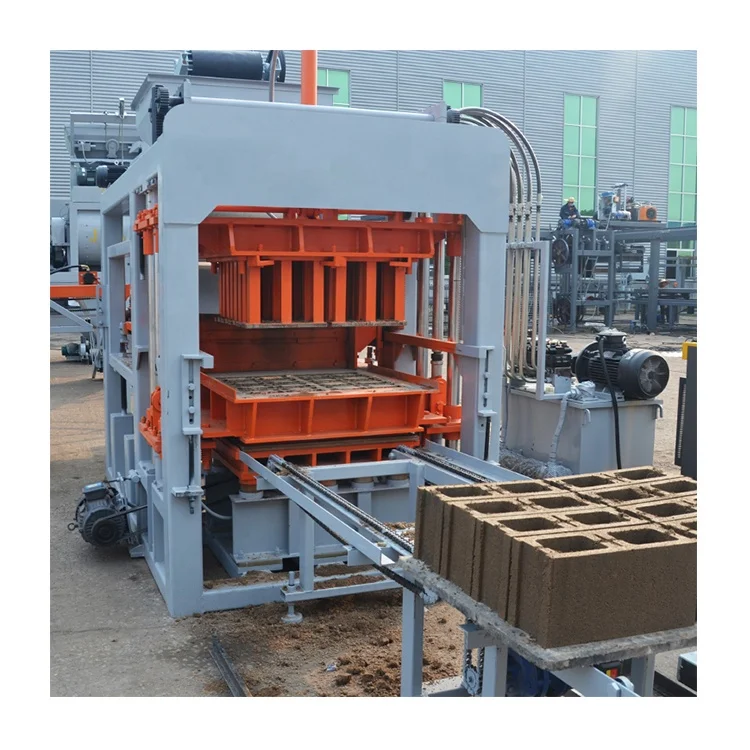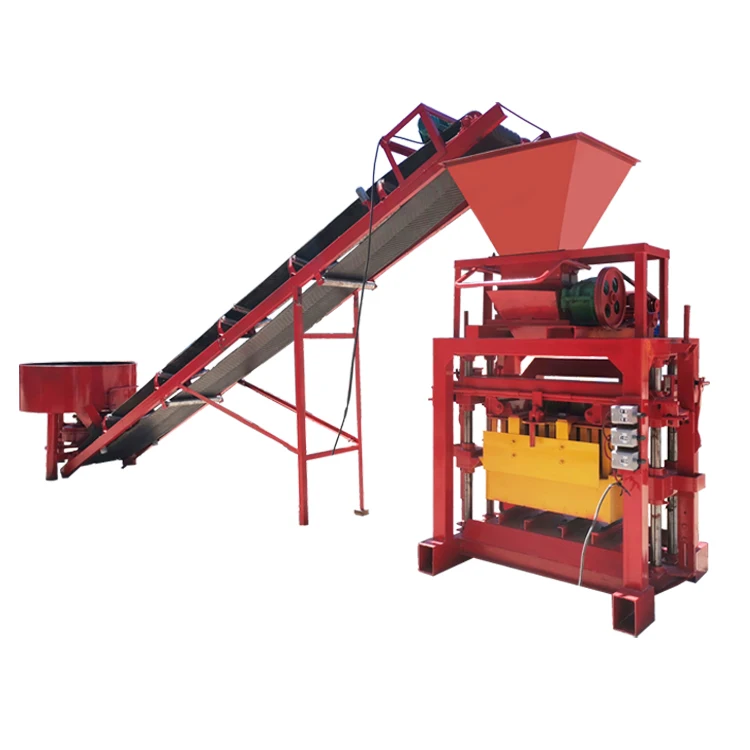
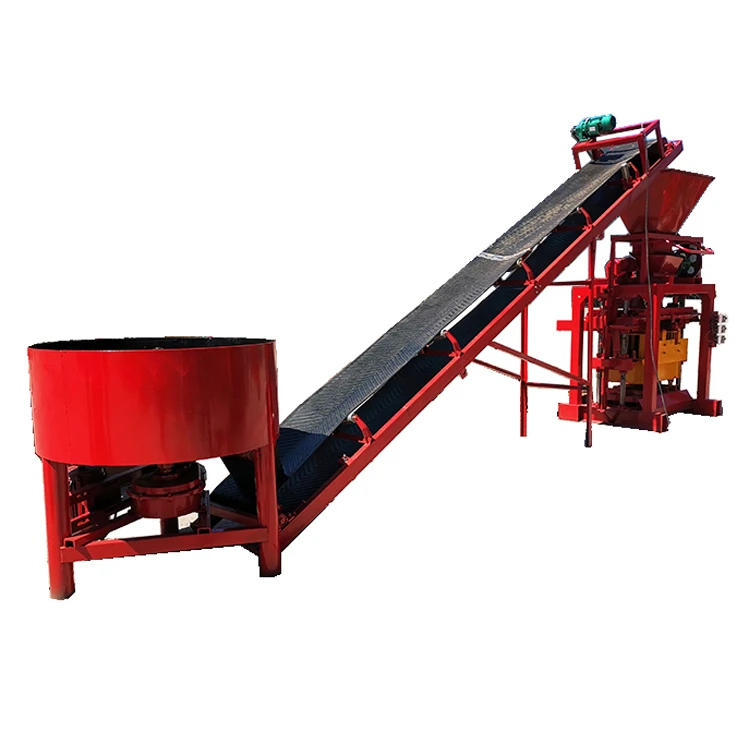

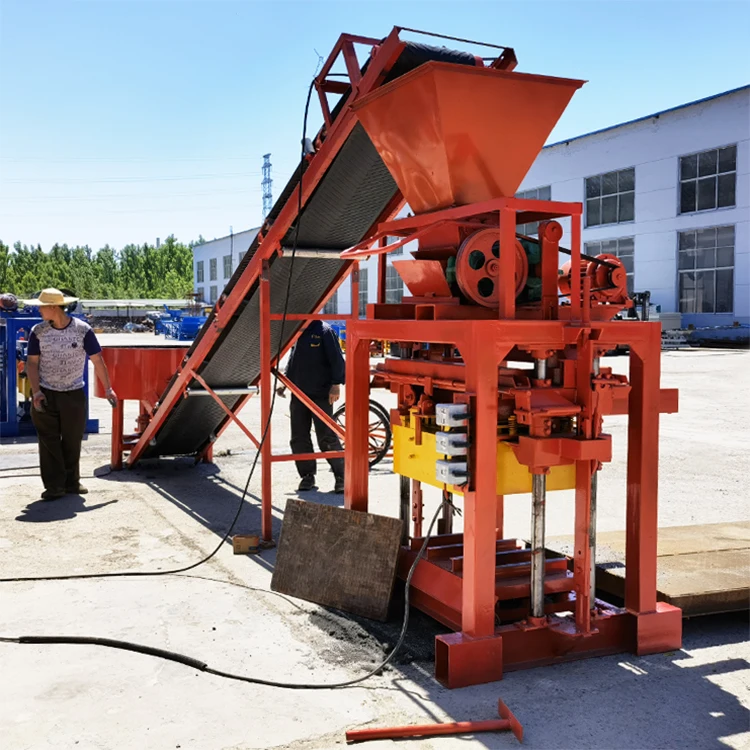


Description
Per-format capacity mapped to your actual mix — Every output figure we quote for the QTJ4-35 ties back to a specific block dimension, mould cavity count and cycle time, so what you see on day one of production is what the proposal promised.
Technical Specifications
| Parameter | Value |
|---|---|
| Model | QTJ4-35 |
| Product Type | Semi-Automatic Concrete Block Making Machine |
| Overall Dimensions (L×W×H) | 1350×1460×1800 mm |
| Molding Cycle | 35 s |
| Vibration Frequency | 2800 r/min |
| Exciting Force | 30 kN |
| Rated Power | 11.15 kW |
| Mixer Model | JQ350 |
| Pallet Size | 850×450×20 mm |
| Net Weight | 1500 kg |
| Applied Products | Concrete hollow blocks (8 inch, 6 inch), solid bricks |
| Raw Materials | Crushed stone, sand, cement, dust, fly ash |
| Output — 400×200×200 mm hollow block | 408 pcs/h, 3264 pcs/8hr (4 pcs/mould, 35s cycle) |
| Output — 400×150×200 mm hollow block | 510 pcs/h, 4080 pcs/8hr (5 pcs/mould, 35s cycle) |
| Output — 240×115×53 mm solid brick | 2100 pcs/h, 17000 pcs/8hr (18 pcs/mould, 35s cycle) |
| Frame Construction | Four-lead channel steel stand |
| Voltage & Frequency | Configurable to buyer’s local grid (basis to be confirmed) |
| Control System | Relay logic or PLC option (basis to be confirmed) |
| Mould Change System | Manual (change time to be confirmed) |
| Hydraulic Pressure | Vibration-based forming (hydraulic assist to be confirmed) |
Application Suitability
| Application | Material or Output |
|---|---|
| Small-scale hollow block plant | 8-inch and 6-inch concrete hollow blocks from crushed stone, sand and cement |
| On-site solid brick production for contractors | 240×115×53 mm solid bricks using locally sourced aggregate and fly ash |
| First-time block plant entrepreneurs | Standard hollow and solid formats with semi-automatic pallet handling |
| Secondary format line for existing producers | Dedicated runs of a single block size without reconfiguring the primary automatic plant |
Why "3264 Blocks per Day" Means Nothing Without the Format
The QTJ4-35 block machine specifications only hold meaning when you know which block you are making and what your local aggregate looks like. A headline capacity number without a format assumption is the single biggest source of disappointment at commissioning.
I once watched a Middle East contractor receive a semi-automatic block machine rated at a promising hourly output. The problem was that the quoted figure assumed clean, graded aggregate. His local sand ran high in clay content, which absorbed vibration energy and left the blocks friable. The first week on site was spent entirely re-tuning the mix and adjusting pressure, not producing saleable product. The machine was not at fault — the mismatch between quoted capacity and actual raw material was [NEED_CITE: aggregate moisture and clay content effects on vibration-compacted concrete].
Matching the Mould to Your Local Block Market
In many markets the 8-inch hollow block dominates wall construction, but a shift toward 6-inch blocks for partition walls changes the mould cavity count from four to five per cycle. That single change moves the QTJ4-35 semi-automatic block machine capacity from 3264 to 4080 pieces over an eight-hour shift, calculated at the same 35-second cycle. Before confirming an order, the right step is to identify which format your distributors and contractors actually buy in volume, then lock the mould drawing to that format rather than accepting a catalogue default.
Raw Material Flexibility Without Guesswork
The QTJ4-35 processes crushed stone, sand, cement, fly ash and stone dust, but the proportions matter far more than the ingredient list. A mix designed for river sand will behave differently under 2800 r/min vibration than one built around manufactured sand with sharper particle edges. We start every proposal by asking what aggregate is available within hauling distance of your site, then configure the vibration force and cycle time to suit that specific gradation. This approach replaces the trial-and-error period that otherwise consumes the first production week [NEED_CITE: vibration compaction behaviour across aggregate types].
Reading the Specification Sheet Like a Technical Buyer
The 30 kN exciting force and 2800 r/min vibration frequency work together to consolidate the concrete mix inside the mould cavity. Higher frequency with lower force suits fine sand mixes, while coarser crushed stone demands more force to shift particles into dense packing. The 35-second molding cycle is the baseline for standard hollow blocks; denser solid bricks may need a slightly longer dwell to reach full compaction. The 11.15 kW rated power covers both the vibration motor and the JQ350 mixer, meaning the entire forming station runs from a single supply point. Pallet size at 850×450×20 mm must align with your curing rack spacing and forklift tine width — an 850 mm pallet on a rack designed for 900 mm pallets creates a handling bottleneck that no amount of press speed can fix.
What Happens When Pallet Size and Curing Area Disagree
A buyer in West Africa once ordered a semi-automatic line without checking pallet dimensions against the curing racks already welded on site. The pallets were 50 mm narrower than the rack rails, so every loaded pallet had to be repositioned by hand before the forklift could stack it. The press kept its cycle time, but the manual repositioning added seconds per pallet, cutting effective daily output well below the quoted figure. That gap between press capacity and line throughput is invisible on a specification sheet [NEED_CITE: pallet handling impact on semi-automatic block line throughput].
Why Buyers Source the QTJ4-35 Through Shiyue
Block machinery is our single product focus, which means the press, mould, pallet and handling equipment are specified as one matched set rather than assembled from unrelated suppliers. We configure the machine against your actual mix design and local aggregate, not a catalogue default, so the vibration force and cycle time arrive pre-tuned for your material. Mould design covers the formats your market sells, including custom drawings if your region uses a non-standard brick dimension. The semi-automatic platform lets you start with manual pallet handling and add automatic stacking later when volume justifies the investment. Installation includes operator training at your site, and mould wear parts are listed with part numbers before the machine ships.
Documentation & Verification
- Line layout showing pallet flow from press through curing rack for the QTJ4-35 footprint
- Capacity calculation sheet stating block format, cavity count and cycle assumption for each output row
- Mould drawing and format list confirming the exact block dimensions included in the quotation
- Pallet specification matched to your curing rack spacing and forklift tine width
- Voltage and control language confirmation form signed before production begins
- Factory test record using your specified mix proportion before dispatch
Installation, Commissioning & Support
- Foundation pad leveled to the 1350×1460 mm machine footprint with anchor bolt provisions
- Dedicated circuit sized for the 11.15 kW rated load including mixer and vibration motor start-up surge
- Machine ships with vibration table and frame separated for container loading, reassembled on site
- First-day commissioning includes mix tuning to local aggregate and cycle time verification per block format
- Operator training covers mould change procedure, pallet loading sequence and daily vibration motor inspection
- Wear parts list with mould liner and vibration spring part numbers supplied at handover
- Maintenance schedule tied to vibration bearing and mixer blade replacement intervals
What to Prepare Before Requesting a Quotation
Share the block format your market buys most — dimension, wall thickness and whether hollow or solid — along with the daily volume you need to sustain. Confirm the aggregate available locally, including sand source and stone grading, so the vibration parameters can be matched before production. Finally, send your site voltage, frequency and preferred control language to avoid commissioning delays once the QTJ4-35 arrives.
Frequently Asked Questions
Q: How is the 408 pcs/h hollow block capacity calculated, and does it hold for other block sizes?
A: That figure assumes a 400×200×200 mm hollow block with four cavities per mould and a 35-second cycle. Switching to a 400×150×200 mm block raises cavity count to five, moving output to 510 pcs/h at the same cycle. Every capacity figure we quote states the format, cavity count and cycle behind it.
Q: What pallet size does the QTJ4-35 require, and can it work with my existing curing racks?
A: The standard pallet is 850×450×20 mm. Before confirming your order, measure your curing rack rail spacing and forklift tine width. If those dimensions differ, we adjust the pallet specification or recommend rack modifications so loaded pallets move straight from press to curing without manual repositioning.
Q: Which raw materials and aggregate gradings are compatible with this vibration force?
A: The 30 kN exciting force at 2800 r/min handles crushed stone, sand, cement, fly ash and stone dust. High-clay or high-moisture aggregates absorb vibration energy differently, so we ask for a sample of your local sand and stone before finalizing the cycle time and mix proportion recommendation.
Q: What voltage and control language will the machine ship with, and how is this confirmed?
A: Voltage, frequency and PLC display language are confirmed on a signed form before production starts. This step prevents the common situation where a machine arrives rated for 380V/50Hz but the site runs 440V/60Hz, delaying commissioning while a transformer or control board is sourced locally.