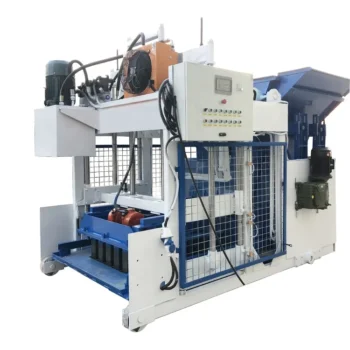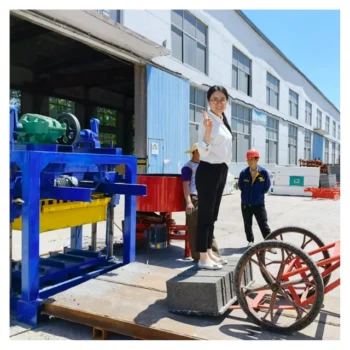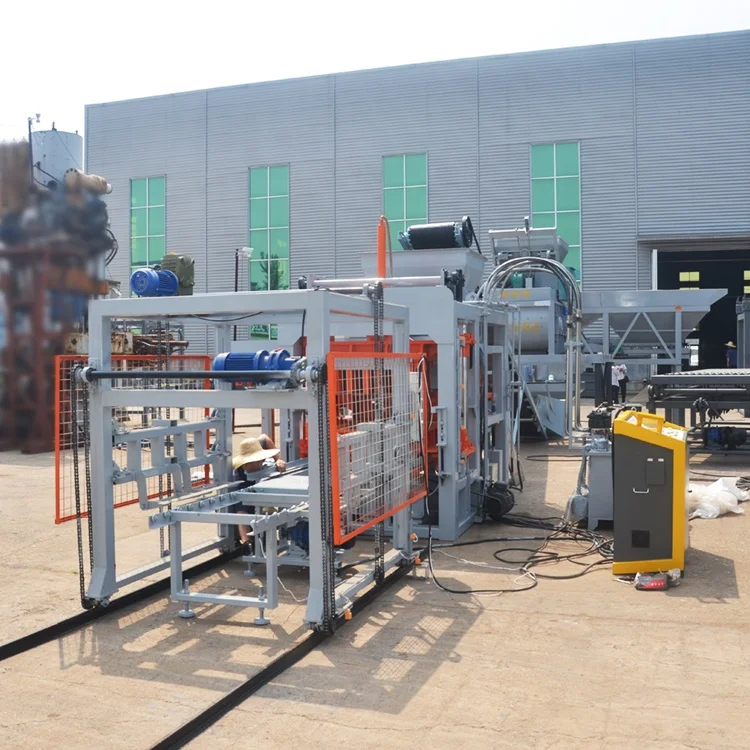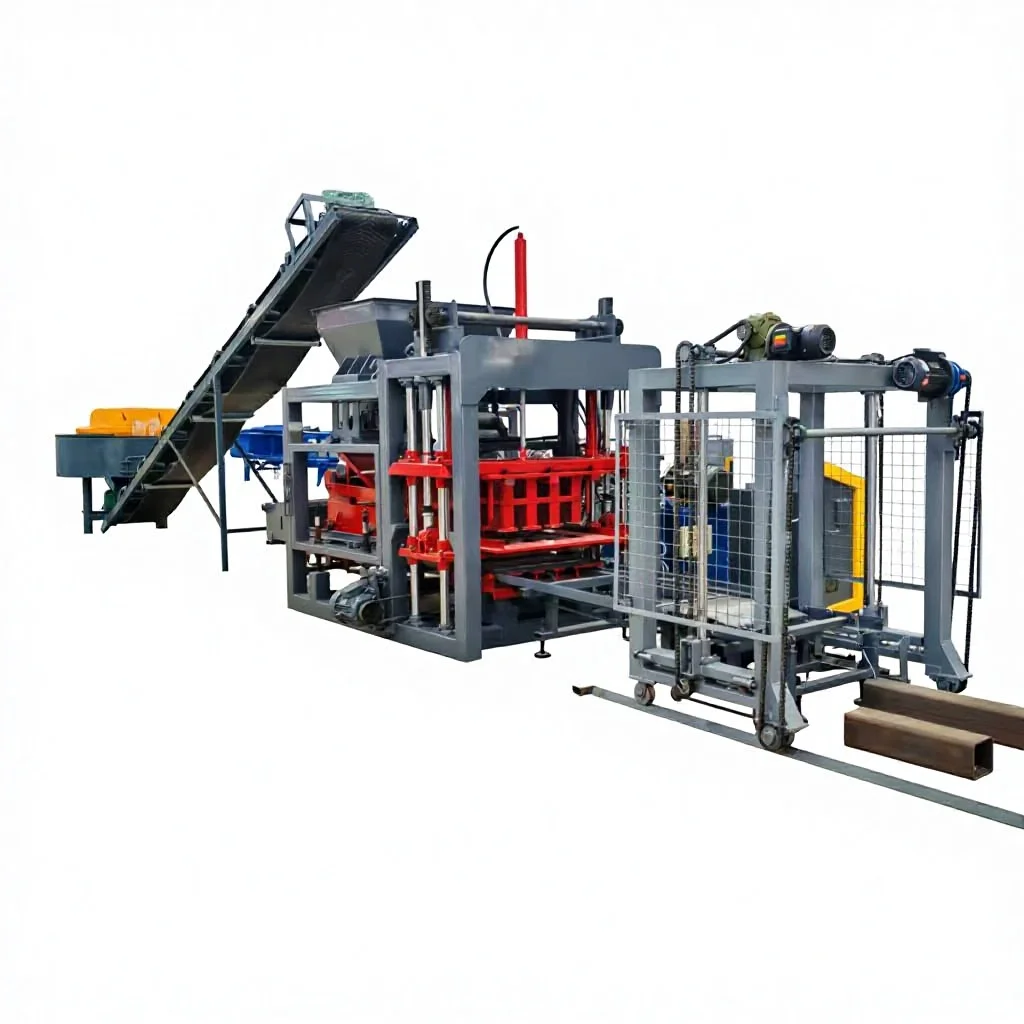


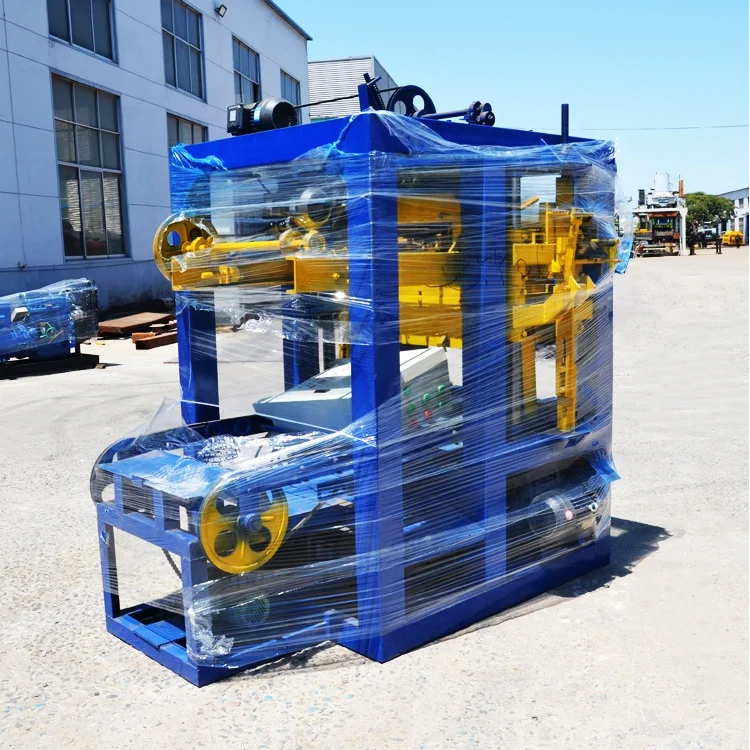
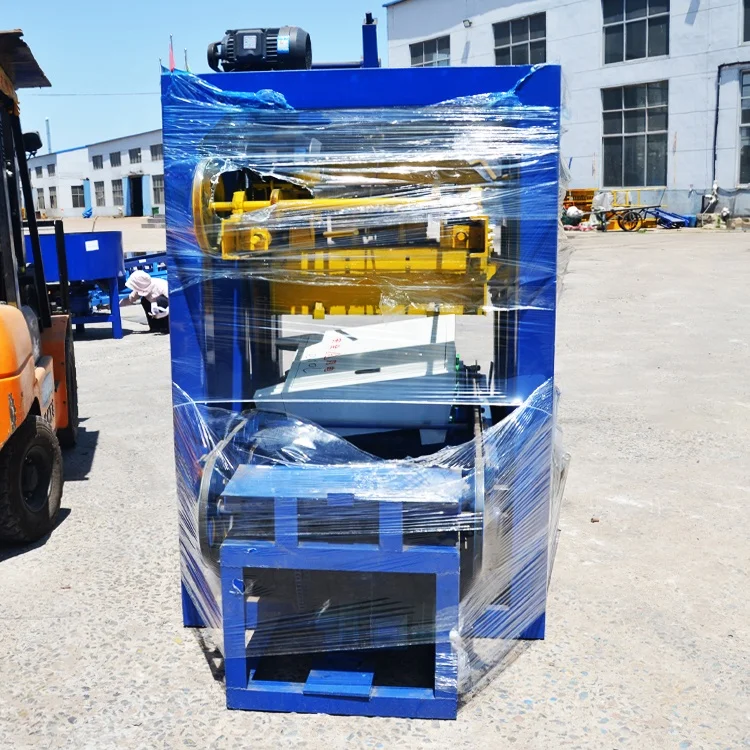
Description
Format-Matched Configuration — Every QTJ4-26 block machine we ship is set up against the buyer’s actual block dimensions, local aggregate, and daily output target rather than a generic catalog setting.
Technical Specifications
| Parameter | Value |
|---|---|
| Model | QTJ4-26 |
| Product Type | Concrete Block Making Machine |
| Overall Dimensions (L×W×H) | 2060×1730×2580 mm |
| Molding Cycle | 26 s |
| Vibration Frequency | 4200 r/min |
| Vibration Force (Exciting Power) | 35.5 kN |
| Rated Power | 14.25 kW |
| Mixer Model | JQ350 |
| Pallet Size | 850×450×20 mm |
| Net Weight | 1800 kg |
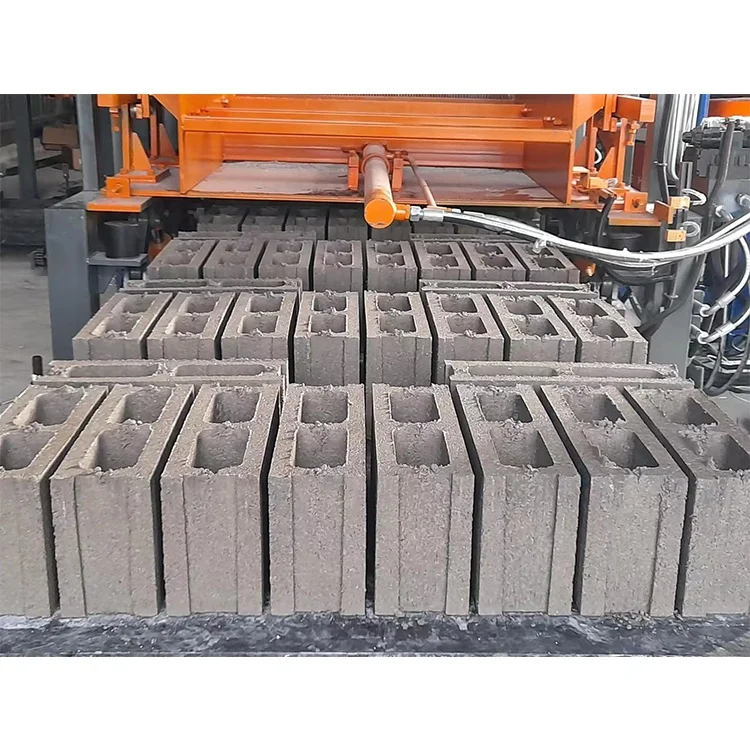
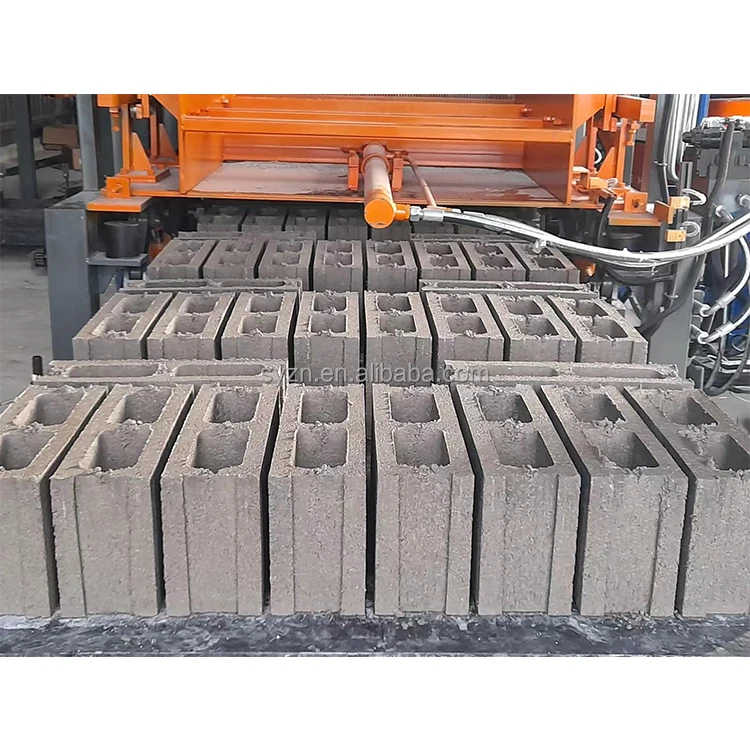
| Applied Products | Concrete blocks, hollow block (8 inch, 6 inch), solid brick |
| Raw Materials | Crushed stones, sand, cement, dust, fly ash |
| Output Capacity | 3800 pcs/8h (basis: 390×190×190 mm hollow block, 4 pcs/mould) |
| Output Capacity | 4800 pcs/8h (basis: 400×150×200 mm hollow block, 5 pcs/mould) |
| Output Capacity | 17000 pcs/8h (basis: 240×115×53 mm solid brick, 18 pcs/mould) |
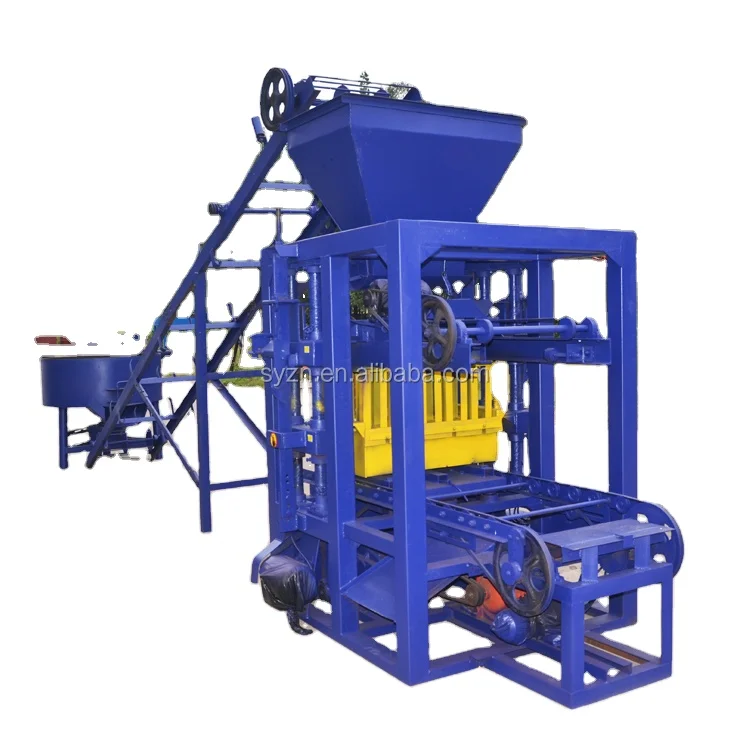
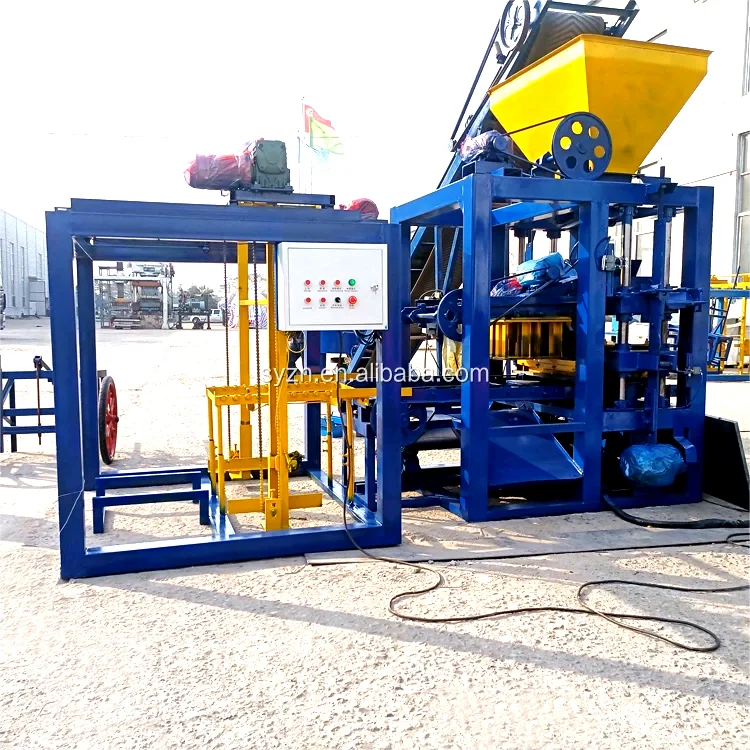
| Automation Level | Semi-automatic with four guide pillars and automatic mould movement |
| Color Options | Red, Yellow |
Application Suitability
| Application | Material or Output |
|---|---|
| 8-inch hollow block production | Crushed stone, sand, and cement mix for load-bearing walls |
| 6-inch hollow block production | Fly ash, sand, and cement blend for partition walls |
| Solid brick manufacturing | Crusher dust, sand, and cement for paving and boundary walls |
| On-site contractor production | Locally sourced aggregate with cement for project-specific block formats |
Why "Cycles Per Hour" Tells You Nothing About the QTJ4-26 Concrete Block Making Machine Specifications
A cycle time only becomes meaningful when you know which block format sits on the pallet.
I spent two weeks in a West African yard recalibrating a semi-automatic block press because the quoted output assumed standard river sand while the local supply was volcanic ash. The machine ran, but the blocks crumbled at the edges. Capacity figures that omit the block dimension, mould cavity count, and mix design leave buyers planning production schedules around numbers that never materialize on the curing rack. The QTJ4-26 concrete block making machine specifications must be read against the format your market actually buys, not a single headline throughput [NEED_CITE: common causes of block machine output shortfall].
Matching Mould Cavity Count to Market Demand
The QTJ4-26 concrete block making machine specifications list three distinct output tiers because the mould cavity count changes with each format. A 390×190×190 mm hollow block uses a four-cavity mould producing 3800 pieces per eight-hour shift, while switching to a 240×115×53 mm solid brick mould with eighteen cavities shifts that figure to 17000 pieces per shift. Buyers who need both formats must plan mould changeovers into their production calendar rather than assuming a single daily output applies across all products.
Pallet Size and the Curing Area Bottleneck
Every block exits the press on an 850×450×20 mm pallet, and that dimension dictates how many blocks your curing area can hold at once. If your existing racks were built for a different pallet footprint, the QTJ4-26 will force a curing layout redesign before the first production run. I have seen block plants receive a new press only to discover their forklift tines were spaced for a wider pallet, leaving the yard crew handling output by hand for the first week [NEED_CITE: pallet handling and curing area planning for block plants].
Vibration Force, Mix Design, and Block Density
The 35.5 kN vibration force at 4200 r/min acts directly under the mould table, compacting the mix upward while the upper mould presses down. This combination determines whether a hollow block reaches the compressive strength your local building code requires. A mix with fine volcanic ash needs different vibration duration and amplitude than one with coarse crushed granite, and the control system must allow the operator to adjust cycle parameters accordingly. Getting this wrong means blocks that pass visual inspection but fail the drop test at the construction site.
What Happens When Configuration Is Left to Default Settings
A block press configured for a standard sand-cement mix will produce inconsistent density when fed a local aggregate with different particle shape and moisture absorption. The vibration force may be too high for a lightweight fly ash blend, cracking the block faces, or too low for a coarse crusher dust mix, leaving voids that weaken the cured product. Mould changeover time compounds the problem if the buyer paid for format flexibility but the guide pillar alignment requires manual shimming with each swap, eating into the shift before production resumes [NEED_CITE: block machine commissioning and mix design alignment].
Why Buyers Specify This Machine Through Shiyue
Block machinery is our single product focus, which means the QTJ4-26 is quoted as a matched system of press, mould, pallet, and mixer rather than a standalone unit assembled from separate suppliers. We confirm your voltage, frequency, and PLC display language before production starts, preventing the commissioning delays that happen when a control panel arrives with labels in the wrong language. Mould drawings are reviewed against the exact block dimensions your distributors sell, and the JQ350 mixer is included so the feed rate matches the 26-second molding cycle without the press idling between batches.
Documentation & Verification
- Line layout showing QTJ4-26 footprint, pallet flow direction, and curing rack spacing
- Capacity calculation sheet stating output per block format with mould cavity count
- Mould drawing and format list matching your local block dimensions
- Pallet material specification aligned with your curing environment and forklift
- Voltage, frequency, and control language confirmation signed before production
- Factory test record with sample blocks from your confirmed mix design
Installation, Commissioning & Support
- Foundation pad leveled to within 5 mm across the 2060×1730 mm machine footprint
- Dedicated 14.25 kW circuit with voltage confirmed against local supply before energizing
- Guide pillar alignment checked and mould clamping verified on first production run
- Cycle parameter adjustment for your local aggregate, including vibration duration and press dwell
- Operator training on mould change procedure using the four-pillar guide system
- Wear parts list covering vibration motor bearings, mould liner plates, and pallet stop blocks
Before You Request a Quote
Send us the block dimensions your market sells, including wall thickness for hollow blocks and compressive strength targets for your local building code. Confirm your local voltage and frequency, the language your operators read, and whether your curing area is open yard or covered rack. If you are replacing an existing press, share the pallet size you already have in circulation so we can match or plan the transition.
Frequently Asked Questions
Q: How is the 3800 pcs/8h figure calculated, and what block format does it assume?
A: That figure assumes a 390×190×190 mm hollow block produced on a four-cavity mould, with a 26-second molding cycle running continuously across an eight-hour shift. Switching to a different block dimension or cavity count changes the output, so we provide a separate calculation for each format you plan to produce.
Q: What pallet size does the QTJ4-26 use, and how does it affect my curing layout?
A: The machine uses an 850×450×20 mm pallet. Your curing racks, forklift tines, and stacking area must accommodate this footprint. If your existing pallets differ, we discuss whether to adapt your handling equipment or plan a phased transition before the machine arrives.
Q: Can the mould be changed to produce different block formats, and what is the changeover time?
A: The four guide pillar structure allows mould swaps, but changeover time depends on operator familiarity and whether the new mould uses the same pallet area. We provide a mould change procedure during commissioning and can supply multiple moulds matched to your product range.
Q: What raw material mix design does the machine require for consistent block strength?
A: The 35.5 kN vibration force and 4200 r/min frequency compact a range of mixes from crusher dust to fly ash blends. We ask for a sample of your local aggregate before finalizing cycle parameters, so the machine arrives tuned to your material rather than a generic default setting.