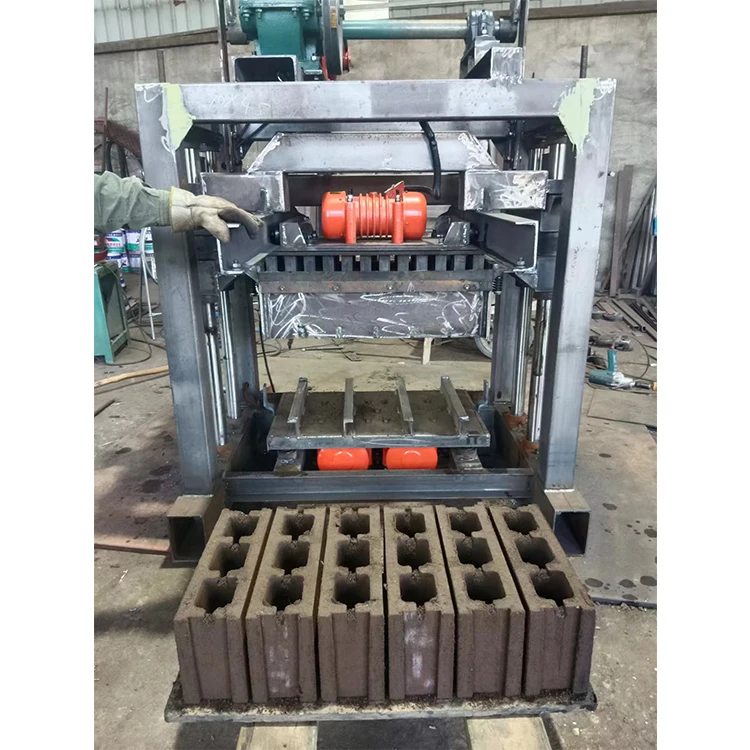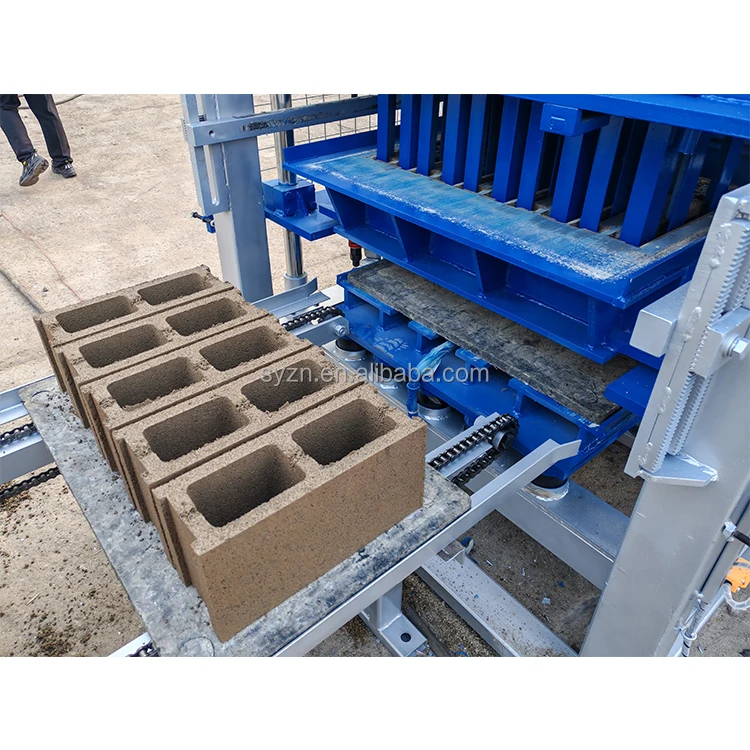
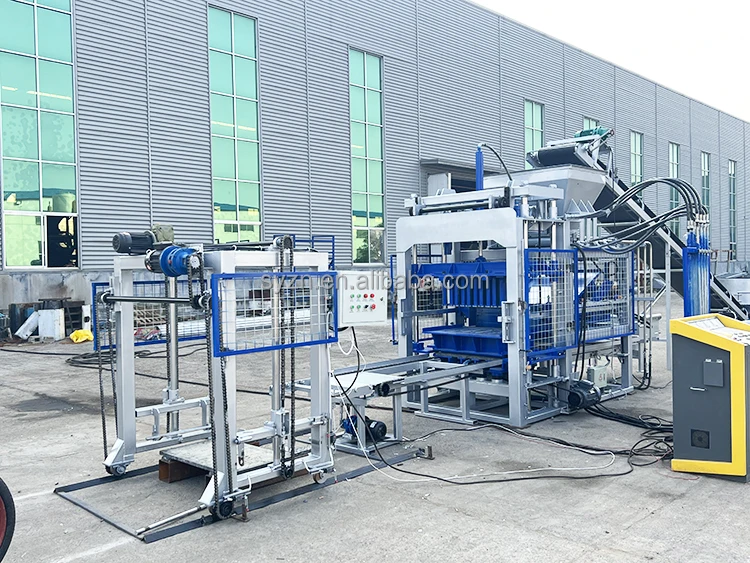
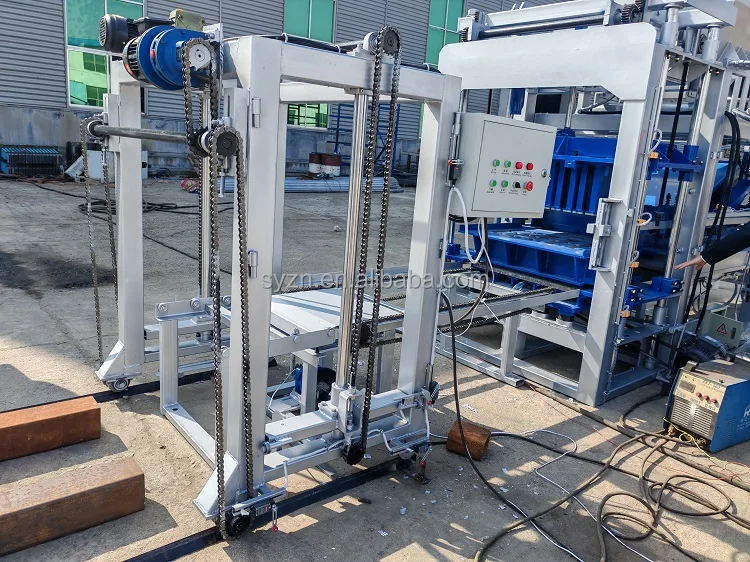
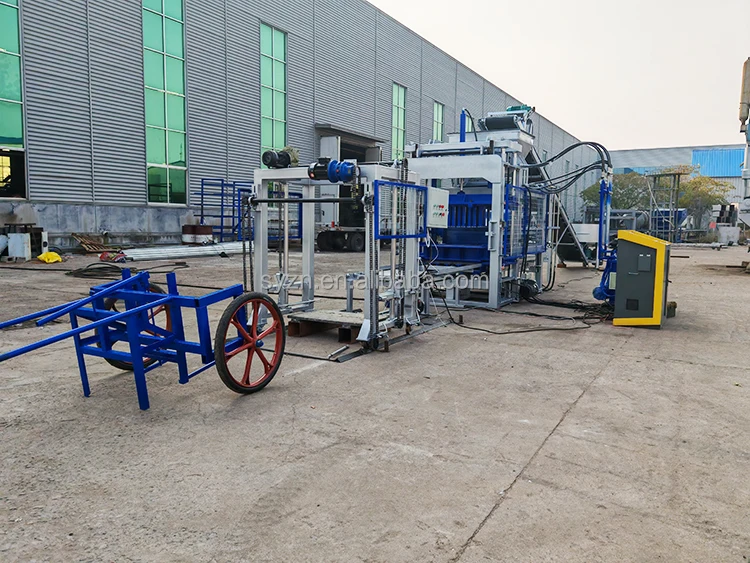
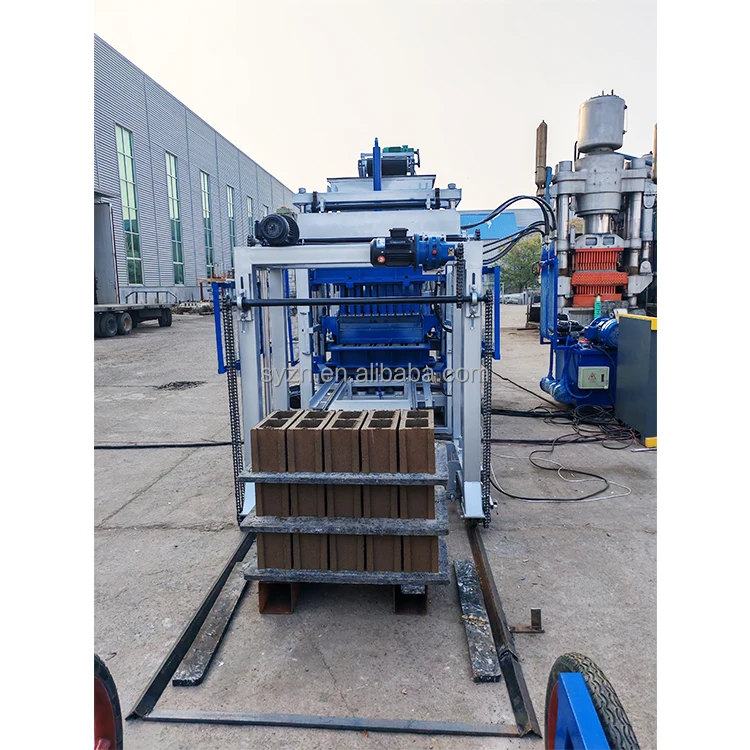

Description
Honest Capacity Sizing — every output figure for the QT4-15A is calculated against your specific block format, local aggregate gradation, and mix design rather than a generic catalogue claim.
Technical Specifications
| Parameter | Value |
|---|---|
| Model | QT4-15A |
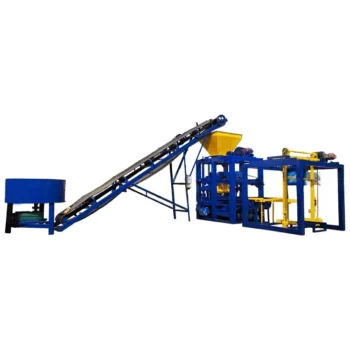
| Product Type | Fully Automatic Concrete Block Making Machine |
| Overall Dimensions (L×W×H) | 4100 × 1600 × 2600 mm |
| Rated Pressure | 16–21 MPa |
| Vibration Force | 55 kN |
| Vibration Form | Platform Vibration |
| Vibration Frequency | 4200 r/min |
| Pallet Size | 880 × 550 mm |
| Molding Cycle | 25–30 s (basis to be confirmed per block format and material) |
| Overall Power | 18.45 kW (source value to be verified against manufacturer catalog) |
| Demolding Method | Hydraulic |
| Total Mass | 4 T |
| Factory Area Required | 300 m² |
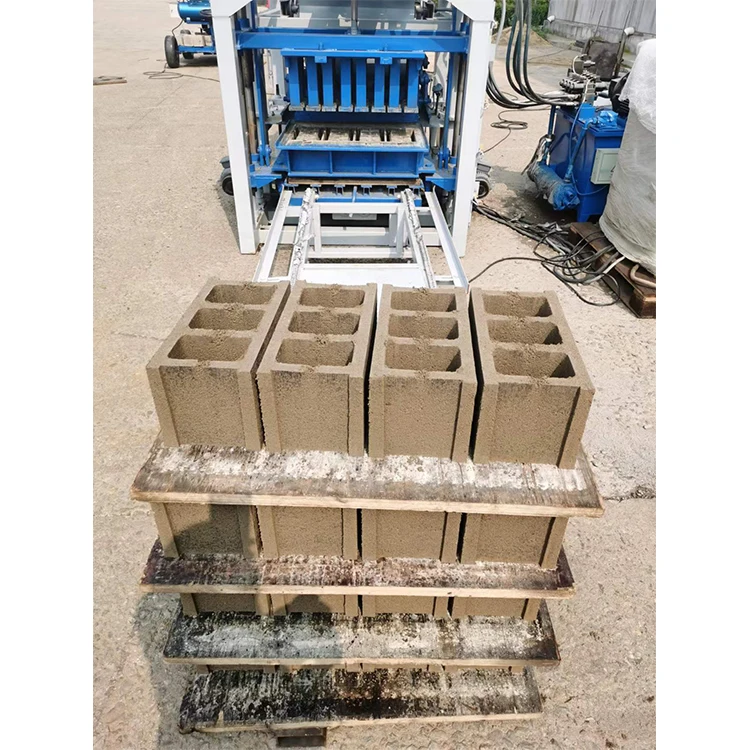
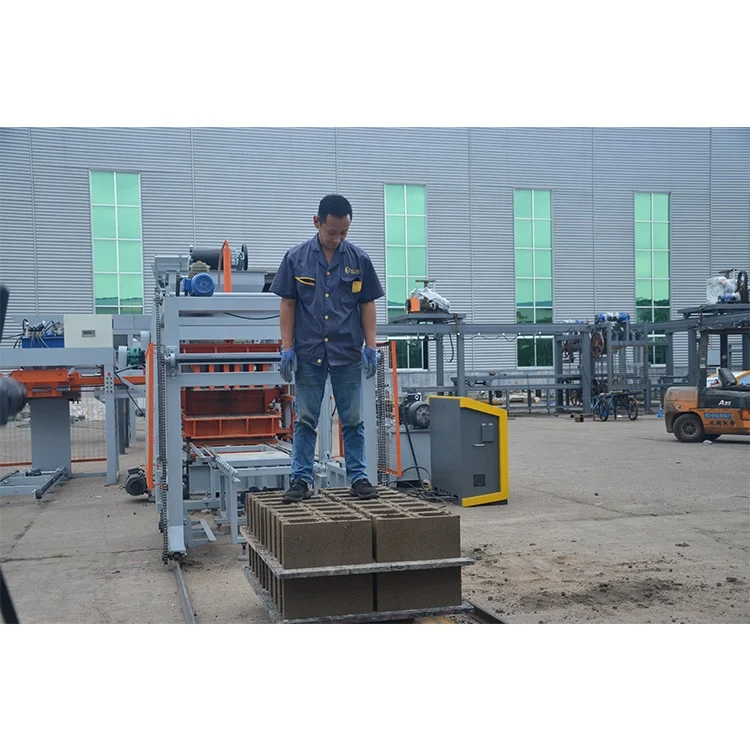
| Applied Products | Concrete hollow blocks, solid blocks, pavers, interlocking blocks, curbstone, colored pavers |
| Raw Materials | Crushed stone, sand, cement, dust, fly ash, gravel, slag |
| Control System | To be confirmed (PLC brand, language, automation level) |
| Voltage & Frequency | To be confirmed with buyer’s local grid |
| Automation Level | Fully automatic (stacking and pallet feeding scope to be confirmed) |
| Standards | CE (certificate availability to be verified for this model) |
Application Suitability
| Application | Material or Output |
|---|---|
| Hollow block production for building contractors | Crushed stone, sand, cement, fly ash blends |
| Solid block manufacturing for housing projects | Gravel, cement, and slag-based mixes |
| Interlocking paver production for road and landscape work | Fine aggregate with cement and colored pigments |
| Curbstone and kerbstone forming for municipal infrastructure | Coarse aggregate with high-cement-content mixes |
| Colored paver runs for architectural and commercial surfaces | Sand, cement, and oxide pigment combinations |
Why "25–30 Seconds per Cycle" Needs a Format Attached
A molding cycle means nothing until you know which block it produces.
When I first quoted a QT4-15A to a Middle East buyer, I used the sample-book daily output without asking what block format he actually ran. His local aggregate ran coarse, and the vibration cycle stretched well beyond the quoted range. Real output landed at roughly half of what the brochure suggested, and I spent the next two months answering his calls. That mistake reshaped how I approach every QT4-15A block machine specifications conversation now — the cycle time must always be tied to a named format, wall thickness, and target density.
A 400×200×200 mm hollow block and a 60 mm interlocking paver place very different demands on the hydraulic press and vibration table. If the raw material gradation shifts, the cycle extends. Honest capacity planning starts with your exact product drawing, not a generic figure. [NEED_CITE: concrete block molding cycle variables and format dependency]
Matching the Press to Your Block Format
The QT4-15A produces hollow blocks, solid blocks, pavers, and curbstones on a single platform, but each format changes what the press must do. A hollow block demands sustained vibration to settle the mix around the core pins, while a paver needs high static pressure for surface density. The 16–21 MPa rated pressure and 55 kN vibration force provide a working envelope, yet the real question is where your specific format sits inside that envelope. We configure the QT4-15A block machine specifications around your target product, not the other way around.
Mould Design Beyond the Catalogue Page
Buyers often discover that the block their market actually moves is not in the supplier’s standard mould list. The QT4-15A accepts custom moulds built to buyer-supplied drawings, so the format you produce matches the format your customers order. Mould changeover time is a practical concern too — a swap that eats most of a shift cancels the flexibility you paid for. We confirm changeover procedure and tool requirements before the machine ships. [NEED_CITE: block machine mould interchangeability standards]
Reading the Numbers That Actually Matter on Site
The 880 × 550 mm pallet size is the dimension your curing racks and forklift must accommodate; ordering pallets that do not match your existing handling equipment creates a bottleneck the press itself cannot fix. Platform vibration at 4200 r/min works with the hydraulic pressure to compact the mix, but the balance between vibration force and pressure changes with aggregate particle size — coarse gravel absorbs more energy than fine sand, altering both cycle length and block density. The 4 T total mass reflects the structural steel in the frame, which dampens resonance during high-frequency vibration and keeps dimensional tolerance consistent across long production runs. Overall power of 18.45 kW covers the hydraulic pump, vibration motor, and conveyor drives combined; your electrical panel must supply adequate amperage on a dedicated circuit.
The Hidden Cost of Skipping Configuration Details
Quoting a block machine on catalogue defaults creates problems that surface only after installation. A pallet size chosen without checking your curing rack spacing means pallets stack unevenly or require a new forklift. Voltage left unconfirmed delays commissioning for weeks while a step-down transformer is sourced locally. Mould formats that do not match your market leave the machine idle while replacement moulds are ordered and shipped. Each of these oversights costs more in lost production time than asking the right questions upfront. [NEED_CITE: industrial equipment commissioning delays due to specification gaps]
What You Get from a Single-Focus Block Machinery Supplier
Block machines are our only product line, so the QT4-15A press, moulds, pallets, and handling equipment are specified as one matched system rather than assembled from unrelated vendors. Every configuration is set against your actual mix design and local aggregate, not pulled from a generic chart. Moulds are designed for the formats your market sells, with custom drawings accepted when standard options fall short. Automation level is selectable — a buyer can start with semi-automatic pallet handling and add stacking automation later without replacing the press. Installation support includes operator training on the specific formats and mix your plant will run.
Documentation & Verification
- Line layout with capacity calculation stating the exact block format used for each output figure
- Mould drawing and format list confirming cycle time per product, not one blanket number
- Pallet specification sheet matched to your curing rack dimensions and forklift load rating
- Voltage, frequency, and PLC display language confirmed in writing before production begins
- Factory test record run on your raw material blend before the QT4-15A leaves the workshop
Installation, Commissioning & Support
- Foundation must support the 4 T static mass plus dynamic vibration loads across the 4100 × 1600 mm footprint
- Dedicated power circuit sized for the 18.45 kW total draw, voltage and frequency confirmed before wiring
- Machine arrives partially dismantled; reassembly covers frame bolting, hydraulic line connection, and vibration table alignment
- First-run commissioning includes pressure and vibration tuning to match your specific aggregate and block format
- Operator training covers mould changeover, PLC navigation in your chosen language, and daily maintenance checkpoints
- Wear parts list and hydraulic seal kit provided with recommended replacement intervals for continuous production
Before You Send an Inquiry
Tell us the exact block formats you plan to produce — dimensions, wall thickness, and target compressive strength. Share a sample or lab report of your local aggregate so we can match vibration and pressure settings to the material. Confirm your site voltage, frequency, and preferred control language so the QT4-15A arrives ready to wire in.
Frequently Asked Questions
Q: How is cycle time and daily output calculated for each block format I plan to produce?
A: We take your block drawing, target density, and local aggregate gradation, then run a test cycle on our workshop floor. The cycle time and daily output we quote always name the specific format, wall thickness, and material blend used — never a single generic number applied across all products.
Q: Which mould formats can the QT4-15A run, and can I supply my own drawings?
A: The machine handles hollow blocks, solid blocks, pavers, interlocking bricks, and curbstones. If your market needs a format outside the standard catalogue, send us your dimensional drawing and we engineer a mould to match, including core pin layout and surface texture.
Q: How do I match pallet size to my existing curing area and handling equipment?
A: The standard 880 × 550 mm pallet must fit your curing rack spacing and forklift tine width. We ask for your rack dimensions and forklift model before confirming pallet specs, so you avoid costly handling adjustments after the machine arrives.
Q: What raw material gradation does the machine expect, and what if my local aggregate differs?
A: The press and vibration table are tuned to a specific aggregate particle range. If your local crushed stone or sand runs coarser or finer, we adjust vibration frequency, pressure, and cycle time accordingly. Share a sieve analysis and we build the configuration around what you can actually source.
Q: Are voltage, frequency, and control language confirmed before shipment?
A: Yes. We collect your local grid specifications and preferred PLC display language during the quotation stage and confirm them in writing before production starts, so the electrical cabinet and control interface are correct when the machine reaches your site.