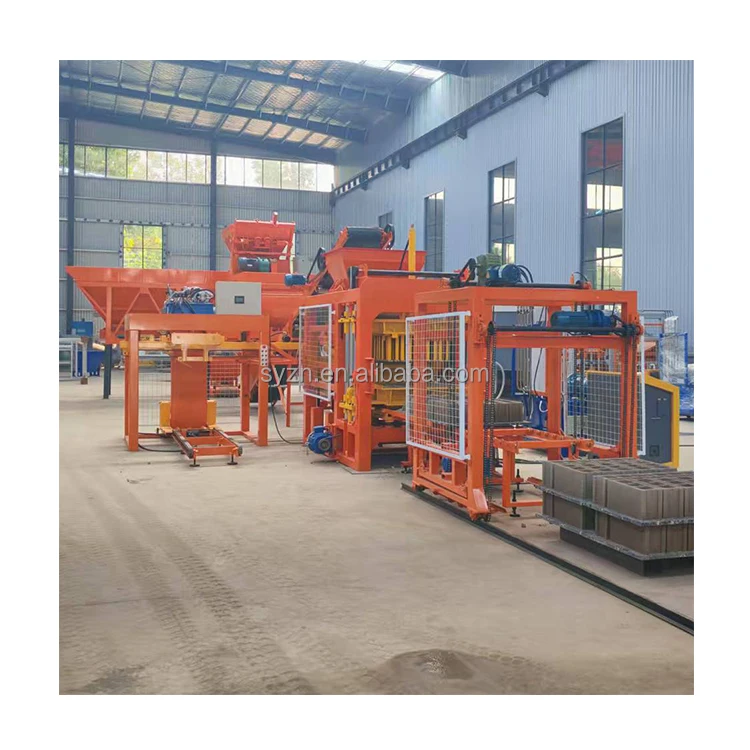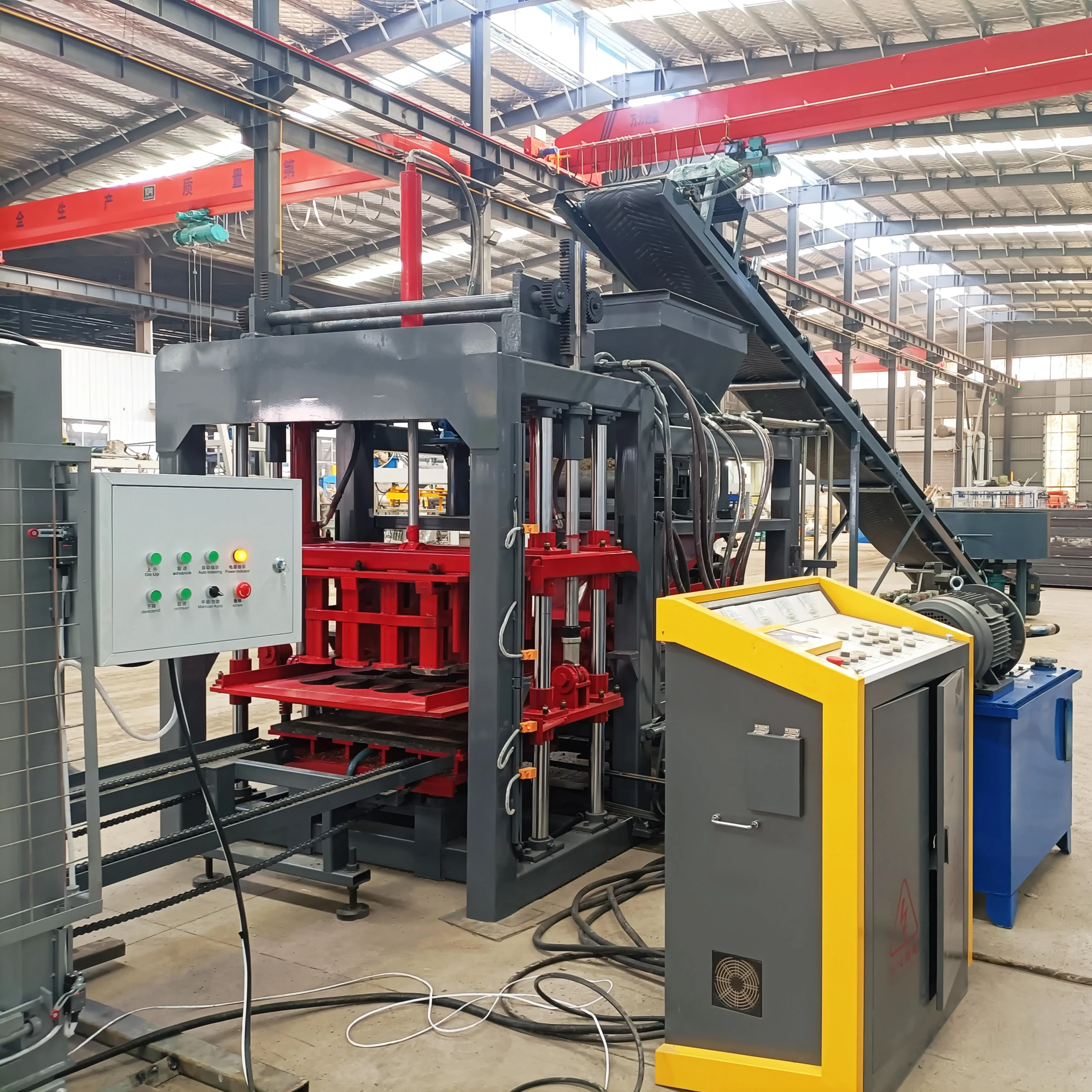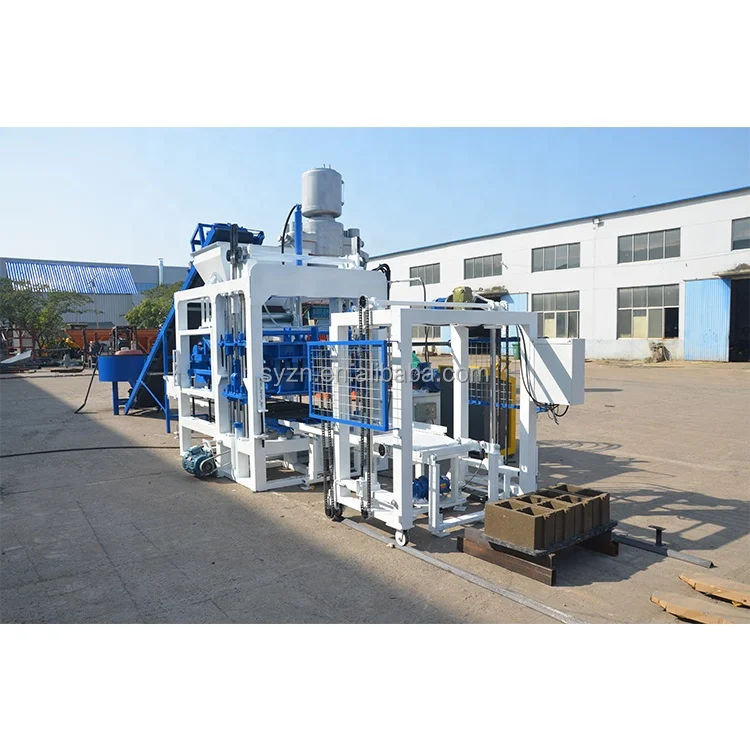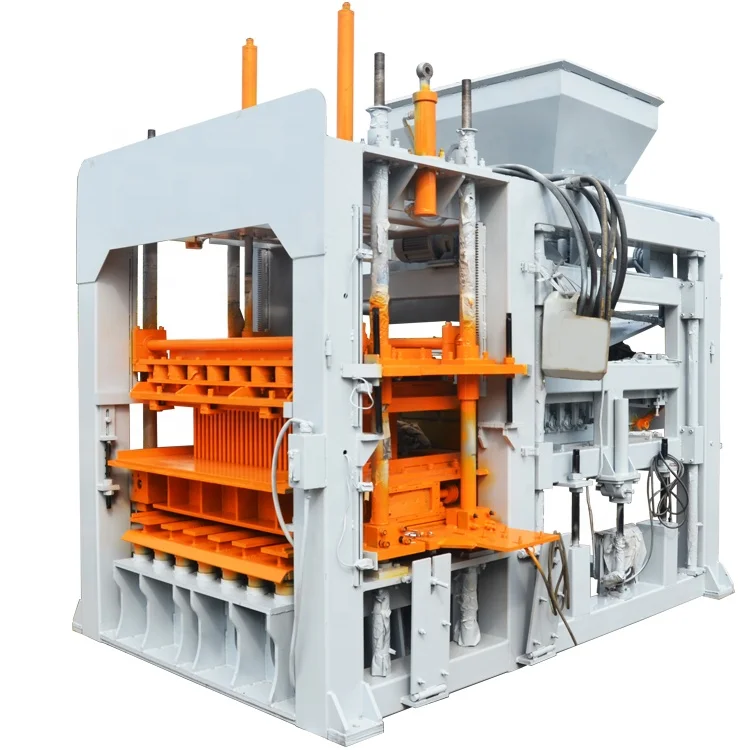
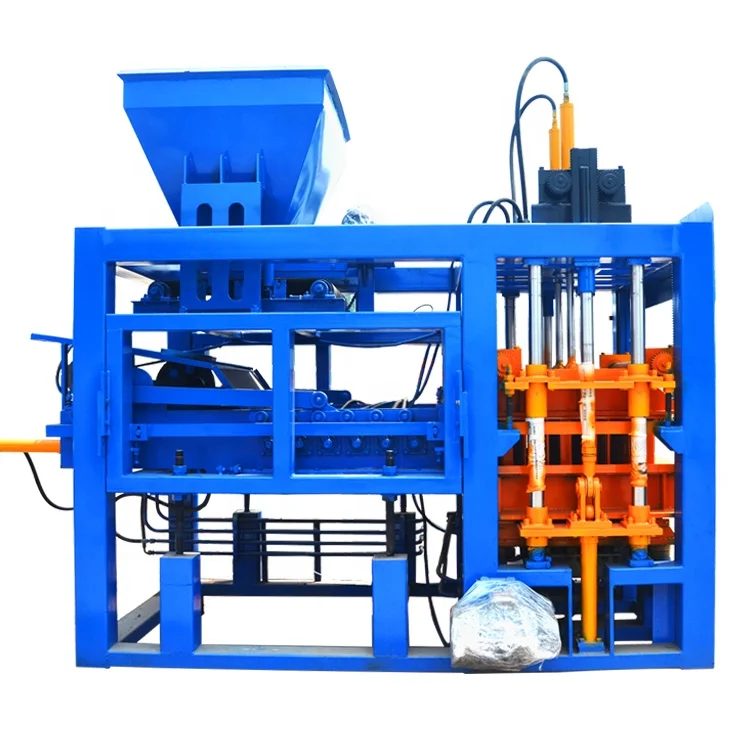
Description
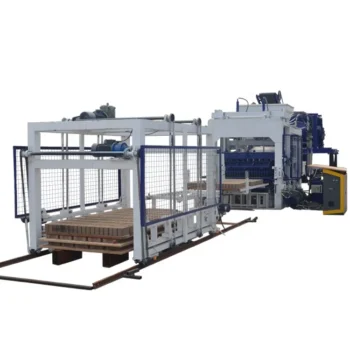
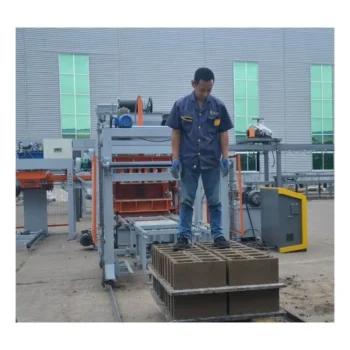
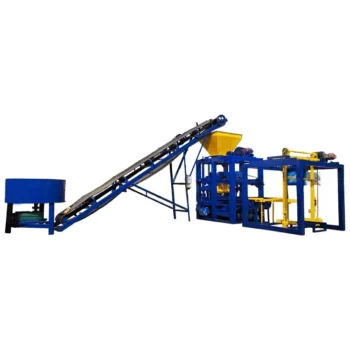
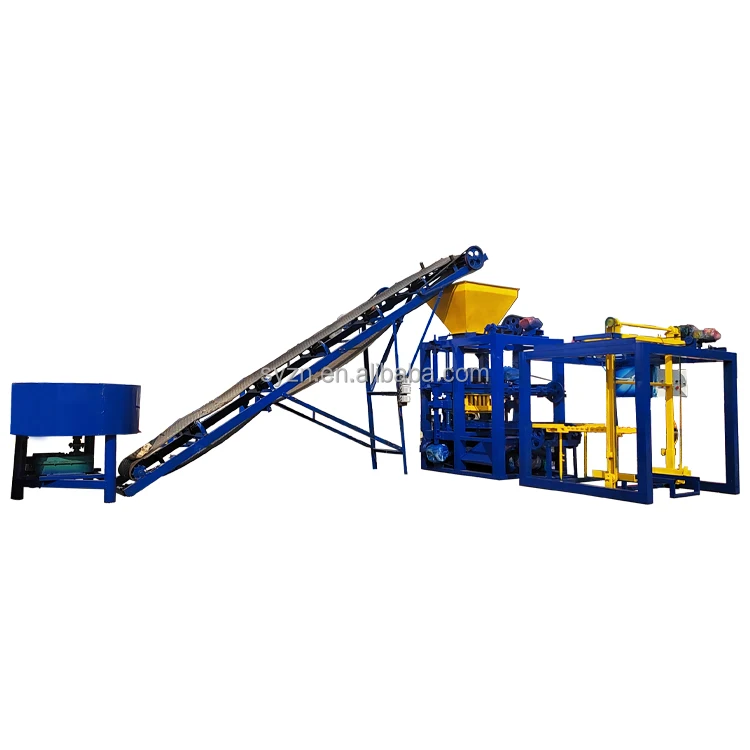
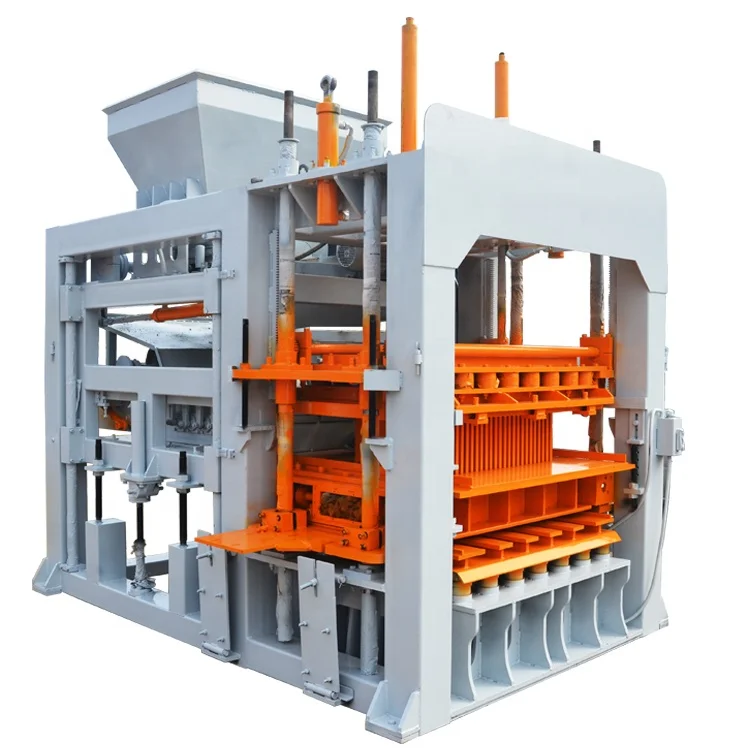
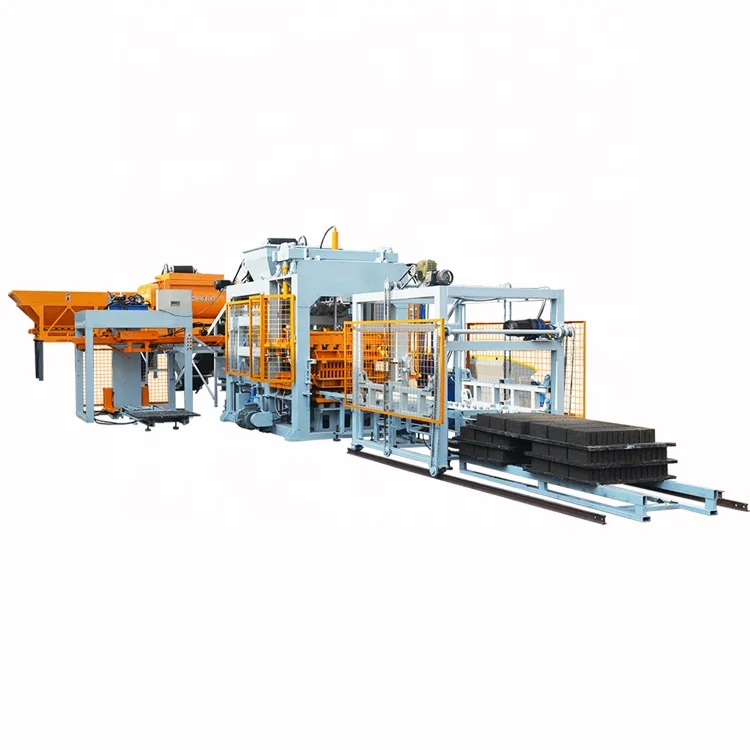
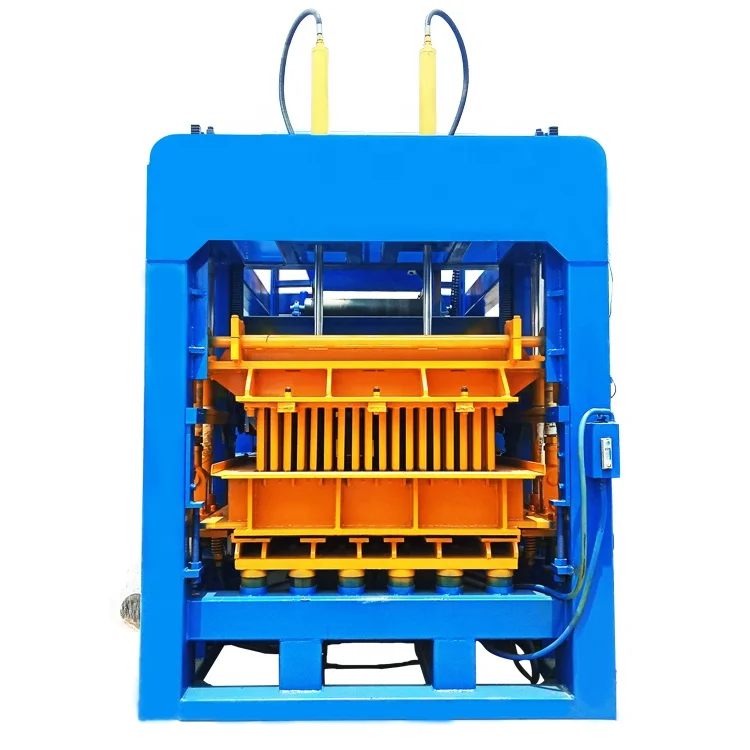
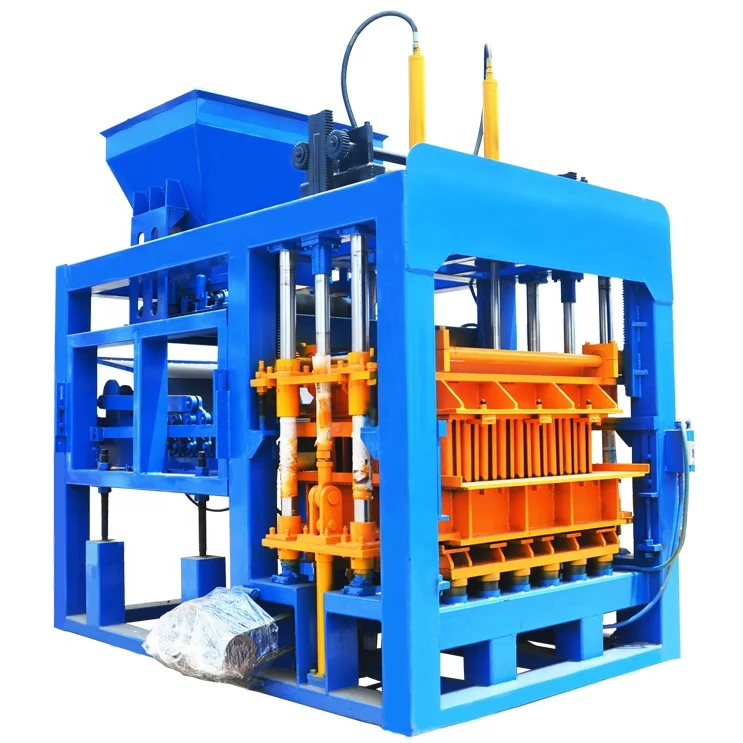
Matched System Design — The QT8-15 block machine, mould, pallet and handling equipment are specified as a single coordinated line rather than sourced from separate suppliers, so cycle times align across every station.
Technical Specifications
| Parameter | Value |
|---|---|
| Model | QT8-15 |
| Product Type | Automatic Concrete Block Making Machine |
| Overall Dimensions (L×W×H) | 8300 × 1860 × 3000 mm |
| Rated Pressure | 21 MPa |
| Main Vibration Form | Platform Vibration |
| Vibration Frequency | 2800–4500 r/min |
| Vibration Force | 45 kN |
| Pallet Size | 950 × 900 mm |
| Molding Cycle | 15–20 s |
| Overall Power | 55.5 kW |
| Total Mass | 8 T |
| Demolding Method | Hydraulic |
| Factory Area | 300 m² |
| Applied Products | Concrete blocks, hollow/solid blocks, pavers, interlocking blocks, curbstone, colored pavers |
| Raw Material | Crushed stone, sand, cement, dust, fly ash, gravel, slag |
| Automation Level | Automatic |
| Loading | 1 × 40HQ container (basic equipment) |
Application Suitability
| Application | Material or Output |
|---|---|
| Hollow block production for load-bearing walls | Crushed stone, cement, and fly ash blends |
| Solid block manufacturing for partition walls | Sand, gravel, and cement mixes |
| Interlocking paver production for driveways | Colored face-mix concrete on standard base |
| Kerbstone forming for road infrastructure | High-strength concrete with coarse aggregate |
| On-site block production for housing projects | Locally sourced gravel, sand, and cement |
Why "15-Second Cycle" Means Different Things for Different Blocks
Cycle time on the QT8-15 block machine specifications sheet only translates to real daily output when the block format, wall thickness, and local aggregate are taken into account.
I have watched buyers compare two quotations side by side, both claiming a 15–20 second molding cycle, and pick the cheaper one — only to discover that the quoted cycle assumed a thin paver while their actual product was a 200 mm hollow block requiring longer vibration and slower demolding. The QT8-15 automatic concrete block making machine capacity by format can differ substantially between a 400×200×200 mm hollow block and a 60 mm interlocking paver, so a single cycle-time number tells you very little about what you will actually produce at the end of a shift. [NEED_CITE: effect of block geometry on vibration dwell time]
How Block Format Reshapes the QT8-15 Block Machine Specifications
When you run 400×200×200 mm hollow blocks, the mold cavity fills a larger volume and the vibration must propagate through thicker walls before the concrete consolidates. Switch that same QT8-15 block machine to a 60 mm paving block and the fill volume drops, vibration settles the thinner layer faster, and the hydraulic head can descend sooner. Each format therefore sits at a different point within the 15–20 second cycle window, and the realistic daily output follows that difference, not the headline figure.
Pallet, Mould, and Curing Area Must Agree Before You Order
A 950 × 900 mm pallet carries the freshly pressed block from the QT8-15 to the curing rack. If your existing curing racks were built around a smaller pallet, or your forklift tines are too narrow for this dimension, the blocks have nowhere to go once they leave the press. We confirm pallet size against your curing layout before production starts, because the pallet is not a spare part you can swap later — it runs through every station in the line. [NEED_CITE: pallet size compatibility with curing rack standards]
Reading the Numbers That Actually Matter
The 21 MPa rated pressure and 45 kN vibration force work together: hydraulic pressure compacts the mix from above while platform vibration at 2800–4500 r/min shakes aggregate into the voids below. If your local aggregate is high in clay content, the mix resists compaction differently than clean washed sand, so the balance between pressure and vibration needs adjustment at commissioning. The 55.5 kW overall power covers the hydraulic pump, vibration motor, and conveyor drives running simultaneously — confirm that your site transformer can sustain this draw continuously, not just at startup. Demolding is hydraulic rather than mechanical, which keeps block edges intact across formats from thin pavers to tall hollow blocks.
What Happens When Vibration Force Ignores Your Aggregate
Buyers who select a press based solely on tonnage often find that blocks crack during demolding or fail compressive strength tests after curing. The root cause is usually a vibration frequency and force setting calibrated for a standard sand that the buyer cannot source locally. Once the QT8-15 arrives and runs with high-clay gravel or unwashed crusher dust, the vibration either over-compacts the fine particles or leaves voids in the core, and block strength becomes inconsistent from pallet to pallet. [NEED_CITE: aggregate gradation effect on concrete block compressive strength]
Why Buyers Choose This Configuration Path
The QT8-15 is configured against your actual mix design and target block format, not a catalogue default, so the vibration force and hydraulic pressure arrive pre-set for your material. Mould design covers the formats your market actually sells, including custom drawings when standard cavities do not match local dimensions. Automation level is selectable — you can begin with semi-automatic pallet handling and add automatic stacking later without replacing the press. Installation support includes operator training on your specific mix, and the wear parts list is prepared before shipment so the first replacement is already on your shelf. [NEED_CITE: importance of pre-shipment wear parts planning for block plants]
Documentation & Verification
- Line layout with capacity calculation stating which block format each output figure assumes
- Mould drawing and format list confirming every cavity dimension in the quoted set
- Pallet specification matched to your curing rack spacing and forklift capacity
- Voltage and frequency confirmation sheet signed off before production begins
- Factory test record run on your target block format before the machine is dismantled for shipment
- Operation and maintenance manual with PLC display language set to your preference
Installation, Commissioning & Support
- Foundation plan based on the QT8-15 overall dimensions of 8300 × 1860 mm and 8 T operating mass
- Dedicated power circuit sized for 55.5 kW continuous draw with correct voltage and frequency
- Machine dismantled for 40HQ loading and reassembled on-site with alignment checks at each station
- First production run supervised to tune vibration frequency between 2800 and 4500 r/min for your mix
- Operator training covering hydraulic demolding sequence and mould change procedure for your format set
- Wear parts and mould inventory list reviewed so replacements are available before the first change-out
What We Need From You Before Quoting
To size the QT8-15 correctly, share the exact block formats you intend to produce, including wall thickness and any face-mix requirements for pavers. Tell us what aggregate is available locally — particle size range, clay content, and whether it is washed or crusher-run — along with your target daily output per format. Confirm the voltage, frequency, and PLC display language at your site so the control panel is built to match.
Frequently Asked Questions
Q: What block format is the quoted capacity based on, and what is the realistic daily output for my specific block?
A: Every capacity figure we provide states the exact block format, wall thickness, and mix design assumed in the calculation. For your product, we run a cycle-time simulation using your local aggregate data and give you a per-format daily output sheet before you commit, so there is no gap between quoted and actual production.
Q: How long does a mould change take on the QT8-15, and does it require a full shift or minutes?
A: Mould change time depends on the format pair you are switching between and whether the new mould is already staged beside the press. With the hydraulic clamping system and pre-positioned mould, a trained operator can complete the swap within a single break period, keeping same-day multi-format production practical.
Q: Is the 950 × 900 mm pallet compatible with my existing curing racks and forklift?
A: We check your curing rack spacing and forklift tine width against the pallet dimension during the proposal stage. If your existing racks were built for a different size, we adjust the pallet specification or suggest rack modifications before the QT8-15 enters production, avoiding a mismatch when blocks start arriving at the curing area.
Q: Can the vibration force and hydraulic pressure be tuned to my local aggregate for consistent block strength?
A: Yes. The platform vibration frequency range of 2800–4500 r/min and the 21 MPa hydraulic pressure are adjusted during commissioning using your actual mix. We run test batches with your aggregate, measure block density and early strength, then lock in the settings so every pallet leaving the press meets the same target.