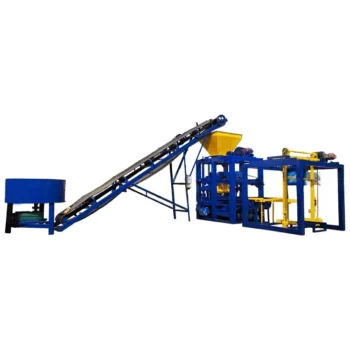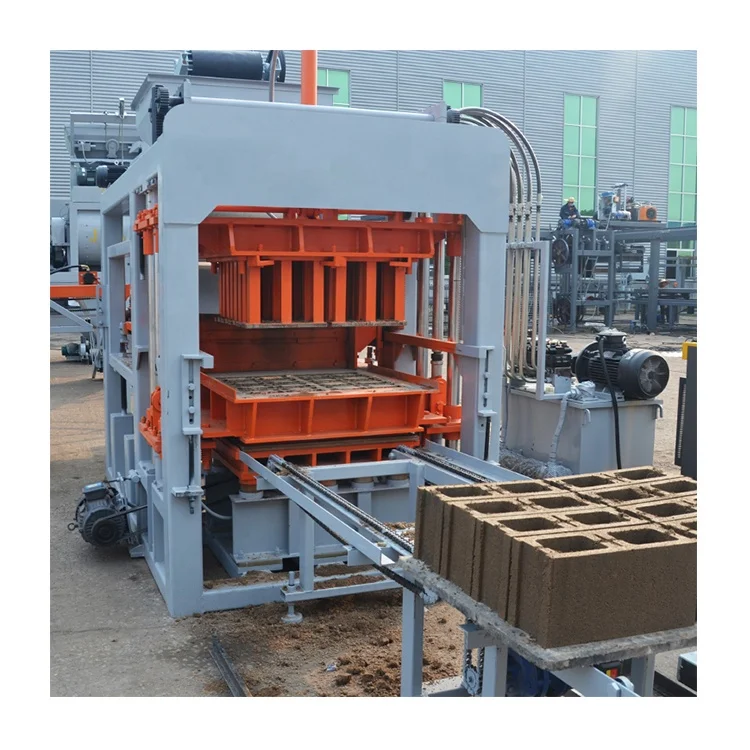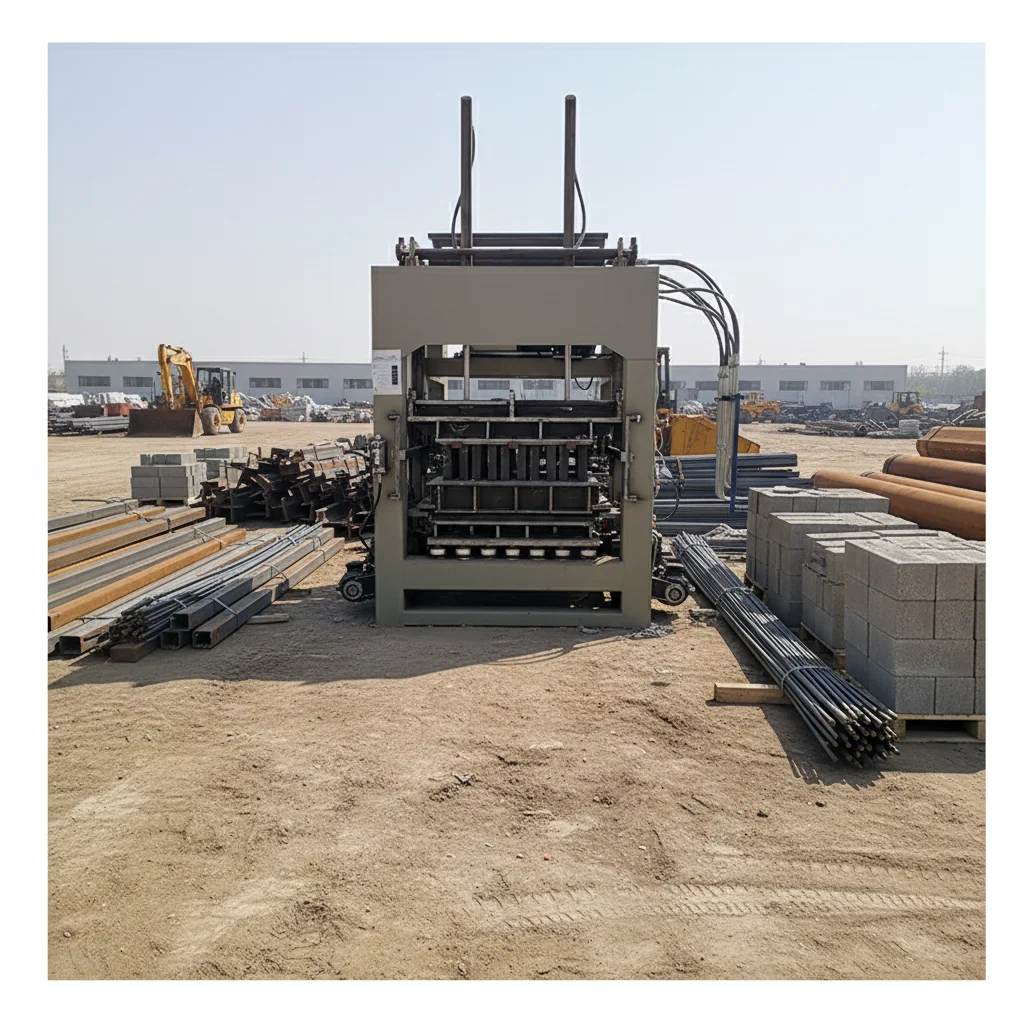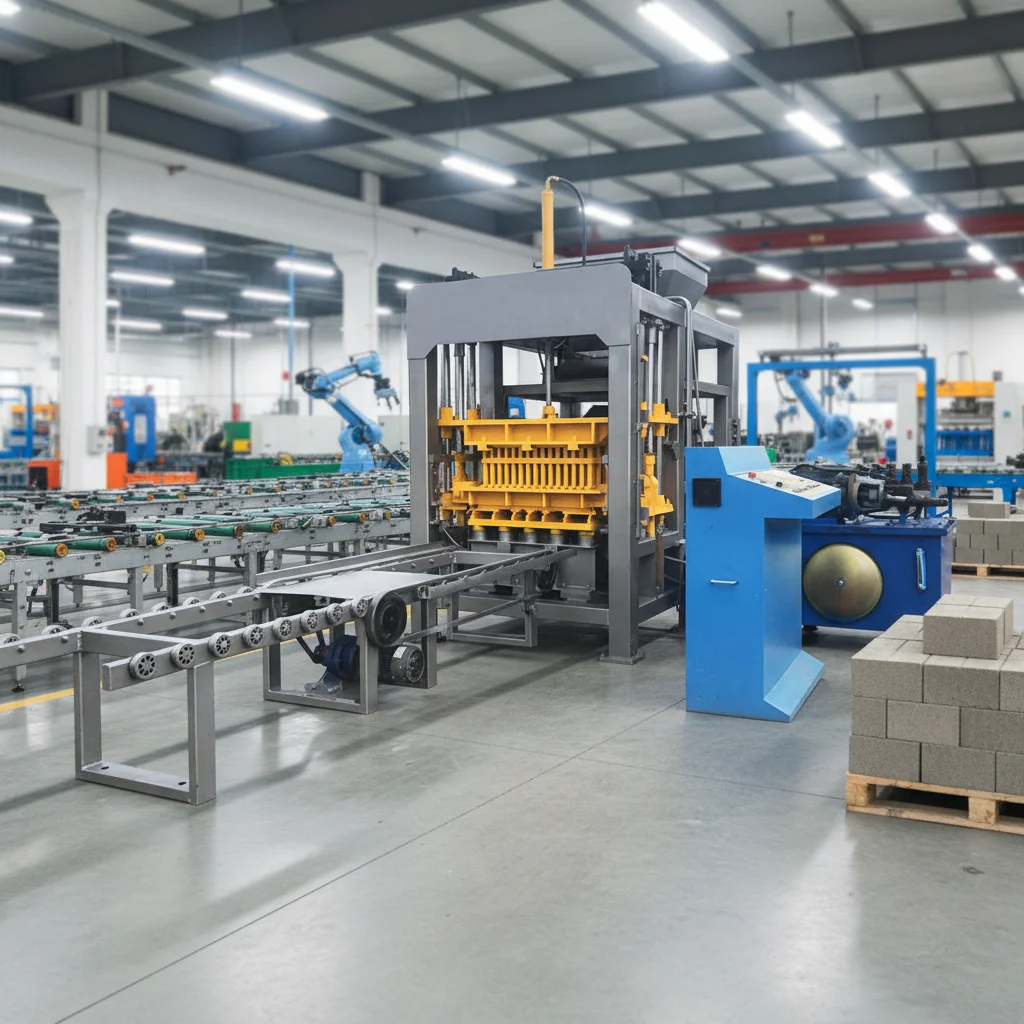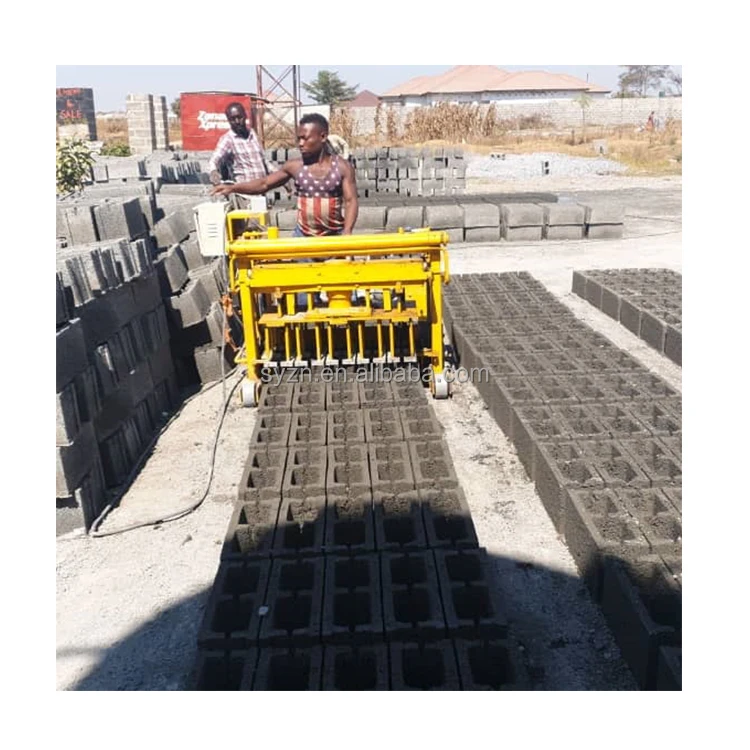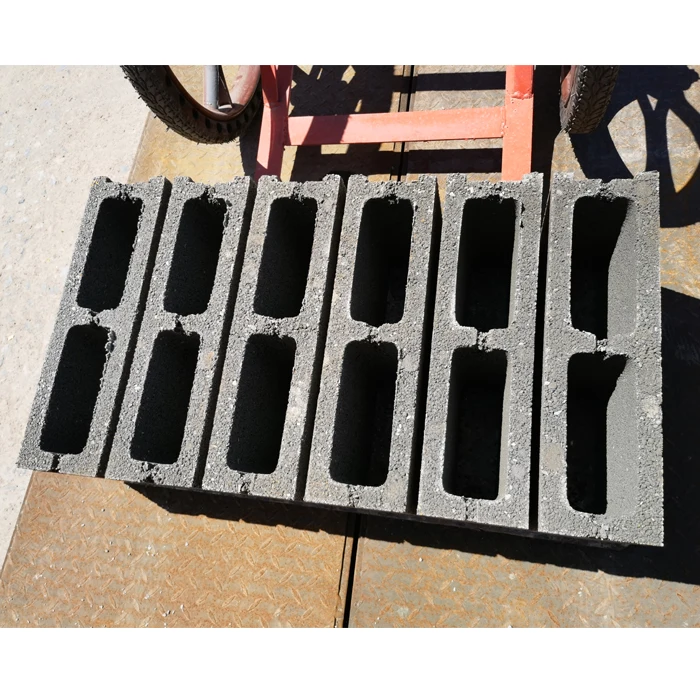

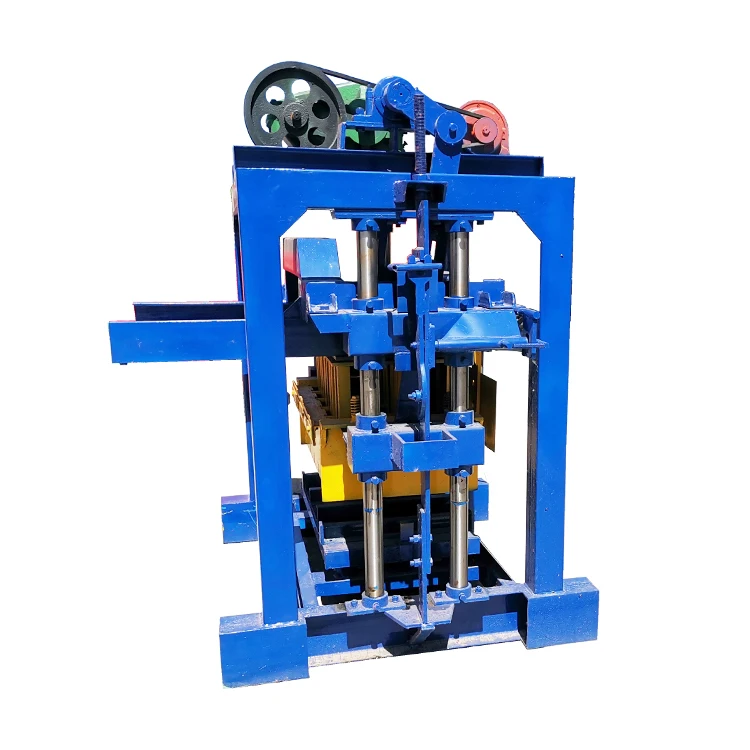


Description
Honest capacity by block format — every output figure for the QTJ4-40 is tied to the mould size and block type you actually sell, not a single headline number that collapses once your mix hits the hopper.
Technical Specifications
| Parameter | Value |
|---|---|
| Model | QTJ4-40 |
| Product Type | Semi-Automatic Concrete Block Making Machine |
| Machine Power | 10.4 kW |
| Molding Cycle | 40 s |
| Theoretical Productivity (400×200×200 mm hollow block, 4 pcs/mould) | 360 pcs/h, 2,800 pcs/8-h shift |
| Theoretical Productivity (400×150×200 mm block, 5 pcs/mould) | 450 pcs/h, 3,600 pcs/8-h shift |
| Theoretical Productivity (225×112.5×60 mm solid block, 9 pcs/mould) | 800 pcs/h, 6,400 pcs/8-h shift |
| General Capacity Statement | 2,000–2,500 pcs/8 h (basis not stated in source — confirm block format, material, thickness) |
| Vibration System | Bed mould vertical vibration + upper mould compression vibration |
| Mould Operation | Top die push-pull with automatic scraper |
| Pallet Size | 850 × 450 mm |
| Overall Size | 1,350 × 1,460 × 1,800 mm |
| Machine Weight | 1 T |
| Automation Level | Semi-automatic |
| Raw Materials | Concrete, sand, cement, fly ash, lime, gypsum, local aggregates |
| Voltage | According to local voltage (basis to be confirmed) |
Application Suitability
| Application | Material or Output |
|---|---|
| Hollow block production for residential and commercial walls | Crushed stone, sand, cement, fly ash blends |
| Solid masonry block for load-bearing and partition walls | River sand, quarry dust, cement with local aggregate |
| On-site block production for housing and infrastructure contractors | Locally sourced aggregate with portable cement supply |
| Small-to-medium block plants adding format variety | Interlocking, paving, and standard block formats on shared pallet stock |
Why "Pieces per Hour" Tells Only Half the Story for the QTJ4-40 Block Machine Specifications
The number on the brochure assumes a block size your market may not even buy.
Many quotations list a single cycle count and leave the block format out of the frame entirely. When the machine arrives and the buyer loads a 150 mm hollow block mould instead of the 200 mm solid block used in the factory test, the daily output drops noticeably and the payback calculation breaks. I have watched a QTJ4-40 block machine specifications sheet promise one figure while the buyer’s actual format delivered another, simply because the aggregate grading and mould cavity count were never reconciled before the deposit was paid [NEED_CITE: common causes of block machine output shortfall on arrival].
Matching the QTJ4-40 to the Format Your Market Actually Buys
A 40-second moulding cycle only translates into real output when the cavity count, block height, and mix design are settled first. The QTJ4-40 block machine specifications list three reference formats — hollow, standard, and solid — each with a different theoretical hourly rate, and that spread is exactly why a single headline capacity number misleads. Buyers who send a sample bag of local aggregate and a drawing of their best-selling block format receive a capacity calculation that holds up once the line is running.
Pallet Size, Curing Area, and the Handling Gap
The 850 × 450 mm pallet is a fixed dimension that must match the curing racks, forklift fork width, and stacking height already in place at the plant. When the pallet size is chosen without that check, blocks end up stacked by hand on the floor, curing times drift, and the semi-automatic advantage of the QTJ4-40 is lost to manual handling downstream [NEED_CITE: pallet and curing area mismatch in small block plants].
Vibration Force, Hydraulic Pressure, and Local Aggregate
The bed mould vertical vibration combined with upper mould compression vibration works well on standard sand-cement mixes, but volcanic scoria, laterite, or crusher dust demand a different force balance. On a commissioning trip to East Africa I saw bricks crumble at demoulding because the vibration amplitude had been tuned for river sand while the buyer ran crushed scoria. Adjusting the vibration table and confirming the hydraulic pressure against the actual mix density is a step that must happen before the machine leaves the factory, not after.
Spec-Reading Guide: What the Numbers Mean on the Shop Floor
The 10.4 kW total machine power must be read against the voltage and frequency at the installation site; a 50 Hz supply delivers a different vibration profile than a 60 Hz supply on the same motor, and that difference shows up directly in block density. The 1 T machine weight keeps the frame stable under vibration but still allows repositioning within a workshop when the layout changes. The 1,350 × 1,460 × 1,800 mm overall footprint means the press fits through a standard container door for shipment yet still needs clear headroom for the top die push-pull stroke and scraper travel. Mould change on the QTJ4-40 involves releasing the top die and sliding the cavity box out — a process that can consume a large part of a shift if the format change was not planned into the production schedule, which is why confirming mould change time at inquiry stage matters more than the headline flexibility claim.
What Happens When Configuration Is Skipped
A machine tuned for a standard sand mix produces brittle blocks when fed a high-fines laterite, and the buyer blames the press rather than the configuration sheet that was never completed. Voltage confirmed too late means the control panel arrives with the wrong contactor rating, delaying commissioning by weeks while replacements ship. A pallet size that does not fit the existing forklift forces the plant to buy new handling equipment that was never budgeted [NEED_CITE: commissioning delays caused by unconfirmed electrical specifications in block machinery exports].
Why Technical Buyers Source the QTJ4-40 Here
Block machinery is the single focus of the workshop, so the press, mould, pallet, and handling equipment are specified as one matched system rather than assembled from separate vendors. Each configuration is set against the buyer’s actual mix design and target block format, not pulled from a catalogue default. Mould design and supply cover the formats the local market sells, including custom drawings for interlocking or kerb profiles beyond the standard range. Automation level is selectable, letting a buyer start semi-automatic and add pallet feeding or stacking later. Installation support includes on-site commissioning and operator training, with mould and wear parts documentation provided so the first replacement order is straightforward.
Documentation & Verification
- Factory test record run on your specified block format before dispatch
- Mould drawing and format list confirming cavity count and block dimensions
- Line layout with capacity calculation stating the assumed block format
- Voltage, frequency, and control language confirmation sheet signed before production
- Hydraulic and electrical schematic matching the as-built configuration
Installation, Commissioning & Support
- Foundation pad sized to the 1,350 × 1,460 mm footprint with anchor bolt template
- Dedicated circuit rated for 10.4 kW at the confirmed local voltage and frequency
- Top die push-pull and scraper stroke verified during on-site commissioning
- Vibration amplitude adjusted to buyer’s local aggregate sample during first production run
- Operator training covering 40-second cycle operation and mould change procedure
- Wear parts and mould list supplied for first reorder planning
Before You Request a Quotation
Send the exact block format drawing or a photo of the block your market sells most, along with a sample of the local aggregate you intend to use. Confirm the site voltage, frequency, and the control panel display language your operators need. Let us know the pallet size your existing curing racks and forklift accept so the 850 × 450 mm pallet can be verified or adjusted before the QTJ4-40 enters production.
Frequently Asked Questions
Q: How is the QTJ4-40 daily capacity calculated for each block format?
A: Each output figure is tied to a specific mould cavity count and block dimension — 360 pcs/h for 400×200×200 mm hollow, 450 pcs/h for 400×150×200 mm, and 800 pcs/h for 225×112.5×60 mm solid — all based on a 40-second cycle. A general 2,000–2,500 pcs/8 h figure is also listed but requires format confirmation.
Q: Can the mould be changed to a block format not shown in the specifications?
A: Custom mould design is available to buyer drawings, covering interlocking, paving, and kerb profiles beyond the standard hollow and solid range. Mould change time depends on the format and should be confirmed at inquiry so production scheduling reflects the actual changeover duration.
Q: How should the 850 × 450 mm pallet be matched to my existing curing setup?
A: Pallet length and width must fit the curing rack slots and the forklift fork width already on site. Buyers should send rack and forklift dimensions at inquiry stage so the pallet specification is verified before the QTJ4-40 ships, avoiding manual restacking after arrival.
Q: What voltage and control language options are available for my market?
A: Voltage is configured to local supply, but the exact value and frequency must be confirmed before production. PLC display language is also set during the build, so buyers should state the required language alongside the electrical specification to avoid commissioning delays.
Q: How does local aggregate affect block strength on the QTJ4-40?
A: The dual vibration system — bed mould vertical plus upper mould compression — must be balanced against the density and grading of the buyer’s aggregate. A sample bag sent before configuration allows vibration force and hydraulic pressure to be tuned so block strength meets the local standard.