

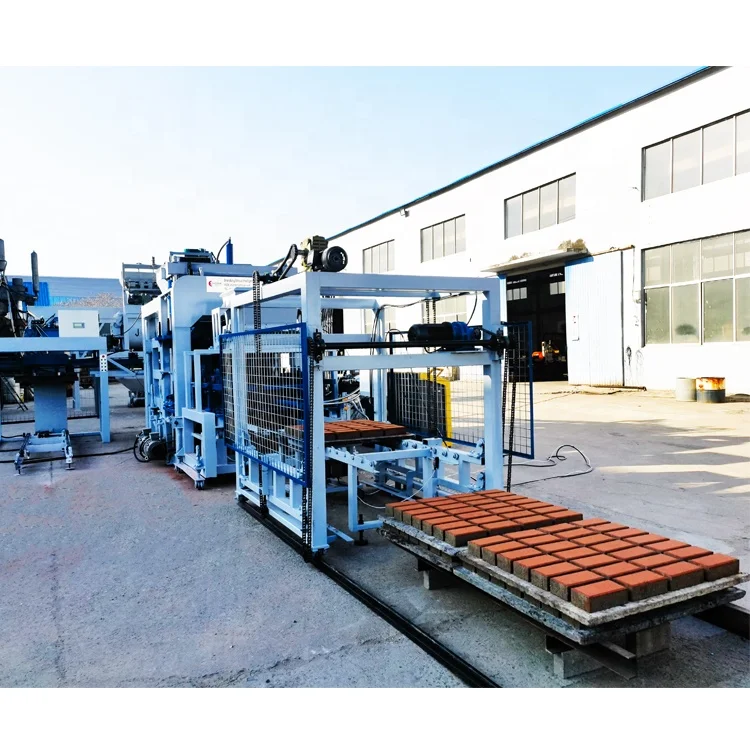
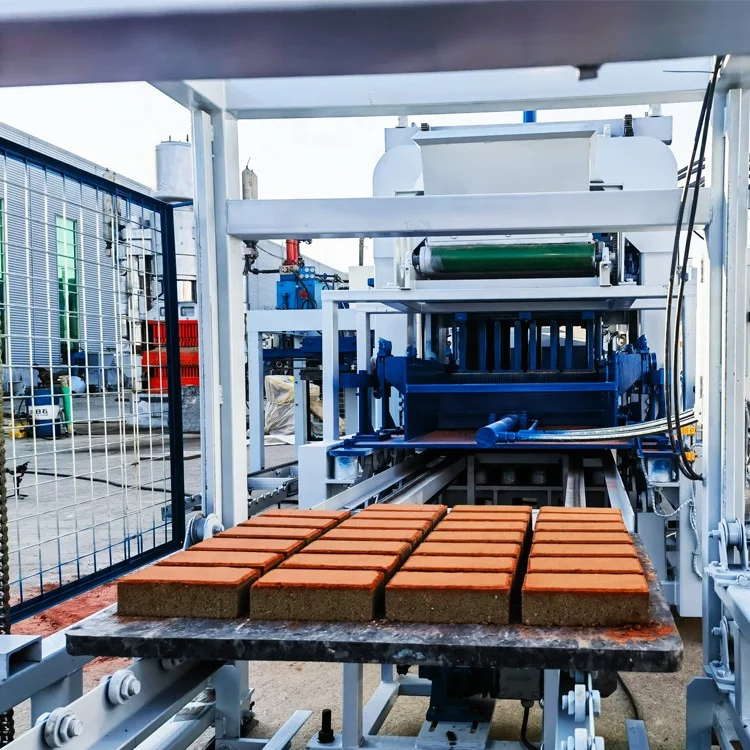
Description
Format-Matched Sizing — every capacity figure for the QT6-15 is calculated against your actual block format, pallet size, and local aggregate before the quotation is issued.
Technical Specifications
| Parameter | Value |
|---|---|
| Model | QT6-15 |
| Product Type | Automatic Hydraulic Concrete Block Making Machine |
| Mould Capacity | 6 pcs/mould (basis for hollow block — confirm format for other shapes) |
| Molding Cycle | 15–20 s (basis not stated in source — depends on block format and mix) |
| Vibration Force | 55 kN |
| Hydraulic Station | Included |
| Rated Power | 37.2 kW |
| Mixer Model | JS750 |
| Pallet Size | 1020 × 900 mm |
| Overall Dimensions | 8300 × 1860 × 3000 mm |
| Total Weight | 8 T |
| Control System | PLC control system |
| Voltage & Frequency | Configurable to buyer’s site (basis to be confirmed before production) |
| PLC Display Language | Selectable at order (basis to be confirmed) |
| Automation Level | Automatic with hydraulic station and PLC |
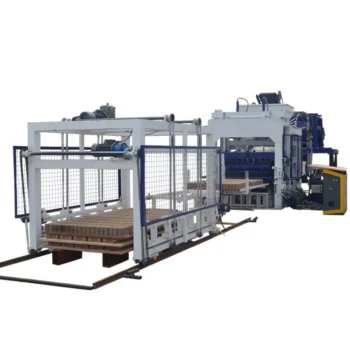
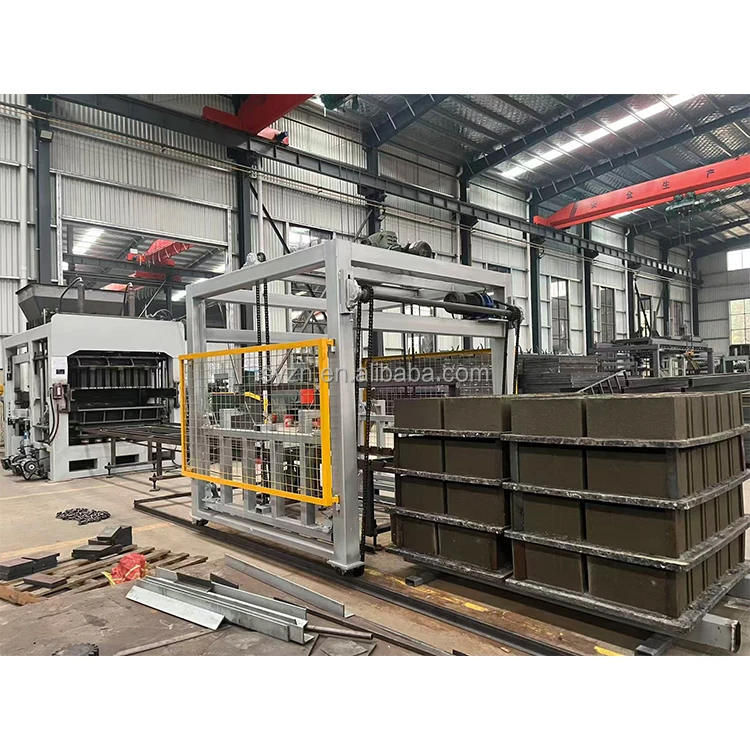
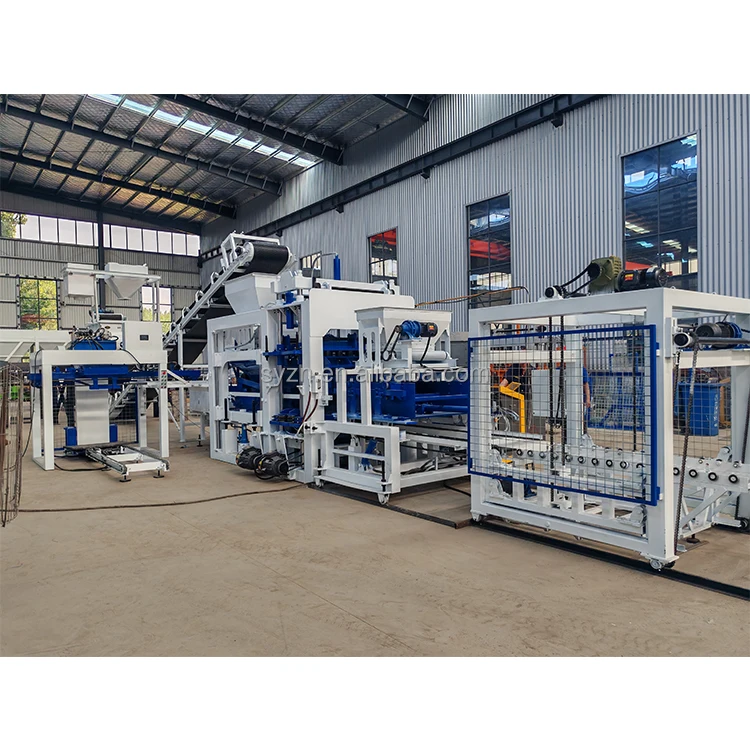
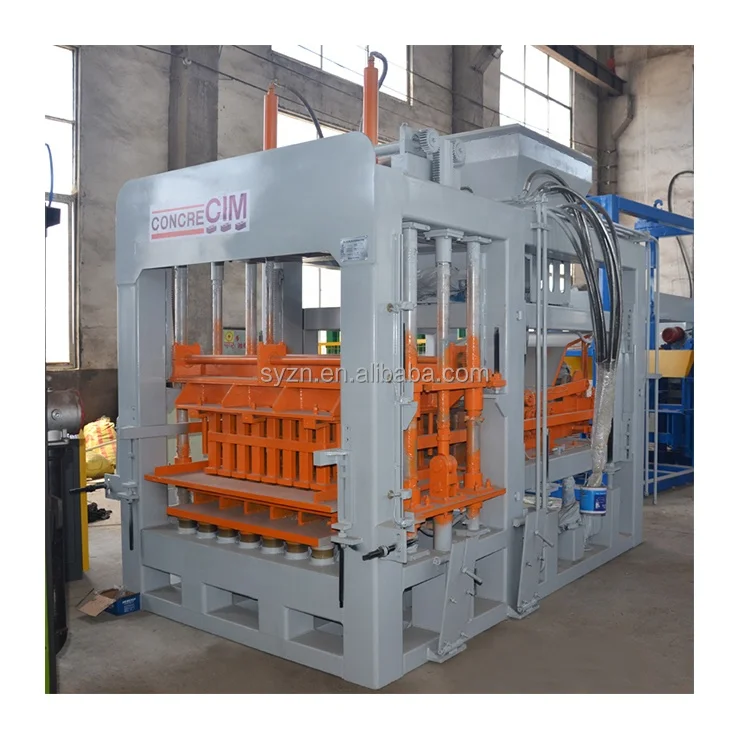
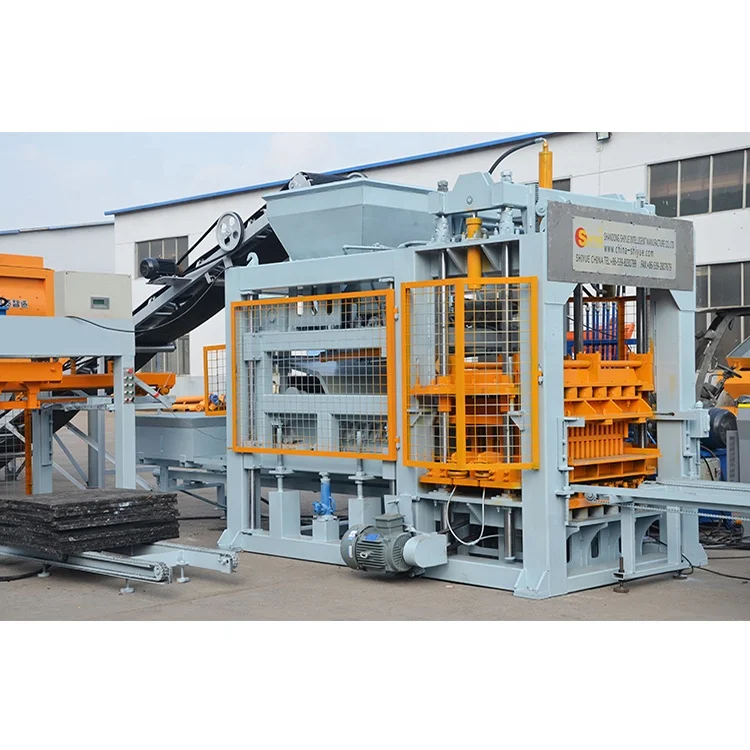
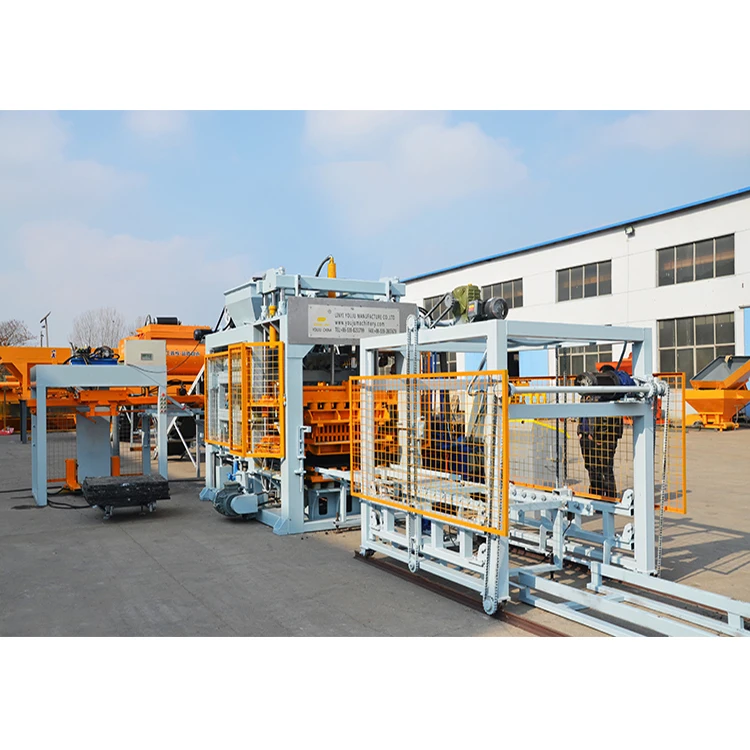
| Line Components | Block making machine, hydraulic station, PLC control unit, mould, material feeder, pallet feeder, block conveyor, block sweeper, spare parts and tools |
| Standards | CE declaration where applicable |
Application Suitability
| Application | Material or Output |
|---|---|
| Hollow block production for load-bearing and partition walls | Crushed stone, sand, cement, fly ash |
| Solid dense block for foundations and structural work | Coarse aggregate with cement binder |
| Paving block for walkways, yards, and light-duty roadways | Fine aggregate with cement and optional pigment |
| Curbstone and kerb production | High-strength mix with crushed stone and cement |
| Interlocking brick for retaining walls and landscaping | Graded sand-cement blend |
What "Six Blocks per Mould" Actually Means for Daily Output
Real daily tonnage depends on which block you are running, not just the mould count.
When buyers see "QT6-15" they often assume the "6" means six standard hollow blocks every cycle, and then multiply that by cycles per hour to get daily output. I have seen this calculation go wrong more times than I can count. A 400 × 200 × 200 mm hollow block at 6 pcs/mould is a very different daily number from a 200 × 100 × 60 mm paver that fills the same pallet with 18 or 20 pieces per cycle [NEED_CITE: block format and pallet coverage calculation methods]. The QT6-15 block making machine specifications only become meaningful once the format is locked in. That is why the first question I ask is always which block your market actually buys — not which block looks good in a brochure.
Pallet Size, Curing Area, and Forklift Matching
The QT6-15 runs on 1020 × 900 mm pallets, which is a deliberate mid-range size. That dimension determines how many blocks sit on each board, how the pallets stack in the curing racks, and whether your existing forklift can handle a loaded rack without modification. If your curing yard was set up for 850 × 680 mm pallets from an older line, every pallet on the QT6-15 will need new racking. We flag this during the layout stage so there are no surprises when the container arrives in Linyi port and your yard crew is suddenly dealing with boards that do not fit the shelves.
Mould Format Flexibility and Changeover Reality
How Cycle Time Shifts Across Block Formats
A 15–20 second cycle is the press window itself — the time the mould is closed, vibration and hydraulic pressure are applied, and the block is stripped onto the pallet. That number does not include pallet indexing, material feeding, or the conveyor taking the loaded pallet away. On a QT6-15 block making machine, the full index-to-index time will be longer, and it shifts depending on whether you are running a lightweight hollow block that strips easily or a dense paver that needs longer vibration dwell [NEED_CITE: cycle time components in hydraulic block presses]. When I size a line, I always calculate output using the full index cycle, not just the press stroke, so the daily figure you plan around is the one you will actually see on the shop floor.
Vibration Force, Hydraulic Pressure, and Your Local Aggregate
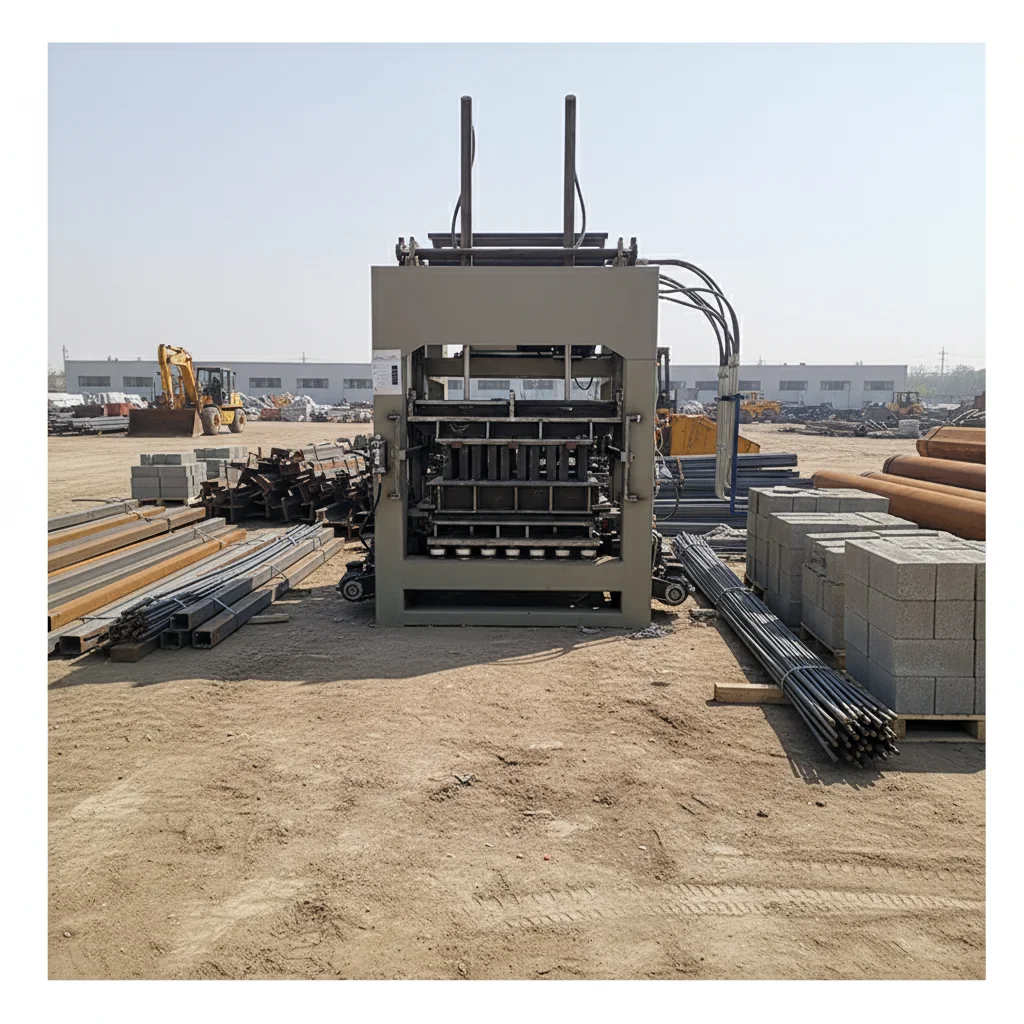
The QT6-15 delivers 55 kN of vibration force paired with a hydraulic station that controls press head pressure. These two numbers work together: vibration liquefies the mix so it flows into the mould cavity, and hydraulic pressure compacts it to target density. If your local sand has a high clay or silt content — which I encounter regularly with projects in West Africa and Southeast Asia — the mix absorbs vibration differently, and the default pressure setting will produce blocks that crumble at the corners. Before we ship, I ask for a sample of your aggregate and a description of your cement source so we can adjust the vibration amplitude and press pressure to match [NEED_CITE: aggregate grading and block compressive strength correlation]. This is not optional fine-tuning; it is the difference between blocks that pass a drop test and blocks that break before they leave the curing rack.
Reading the Spec Sheet Beyond the Headline Numbers
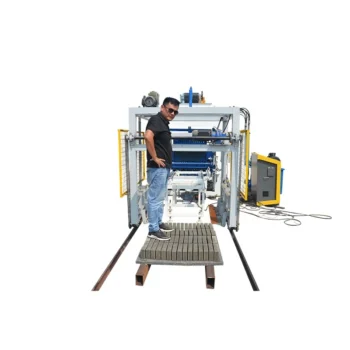
The 37.2 kW rated power covers the main motor, hydraulic pump, and feeder drive running together. The JS750 mixer paired with this line handles the volume the QT6-15 can consume at continuous cycle pace; undersizing the mixer forces the press to wait for the next batch, and oversizing wastes energy and floor space. The 8 T total weight tells you about foundation requirements — a concrete pad with adequate bearing capacity is needed before the machine is bolted down. Overall dimensions of 8300 × 1860 × 3000 mm define the press footprint, but the full line with material feeder, pallet feeder, block conveyor, and sweeper extends considerably further, so the plant layout drawing you receive will show a larger envelope than the press alone.
The Hidden Cost of Skipping Voltage and Language Confirmation
Buyers who rush past the voltage and PLC display language questions during ordering often face a multi-week delay at commissioning. If your site runs 415 V / 50 Hz but the motor was wound for 380 V / 60 Hz, the hydraulic pump will run hot within the first shift and the PLC may fault on under-voltage [NEED_CITE: voltage and frequency standards by export market]. A PLC screen displaying in a language your operator cannot read means every alarm becomes a phone call to technical support instead of a five-second fix. We confirm these details in writing before production starts because changing a motor winding or reprogramming a PLC after the machine is crated adds lead time that no one planned for.
Why Source This Machine Here
Block machinery is our single focus, which means the QT6-15 press, its moulds, pallets, and handling equipment are specified as one matched system rather than assembled from separate suppliers. Configuration is set against your actual mix design and target block format — not pulled from a catalogue default. Mould design covers the formats your market sells, and custom mould drawings to your dimensions are available before the machine is built. Automation level is selectable, so you can start with manual pallet handling and add automatic stacking later. Installation support includes operator training on your specific block type, and wear part and mould supply is maintained for the life of the machine.
Documentation & Verification
- Line layout and capacity calculation stating the block format assumed for each output figure
- Mould drawing and format list confirming every block type the QT6-15 will produce
- Pallet specification matched to your curing area dimensions and forklift capacity
- Voltage, frequency, and PLC display language confirmation sheet before production begins
- Factory test record on your target block format before dispatch
- Hydraulic and electrical schematic for on-site maintenance reference
Installation, Commissioning & Support
- Concrete foundation pad sized to the QT6-15 footprint of 8300 × 1860 × 3000 mm and 8 T weight
- Dedicated power circuit matching confirmed voltage and frequency for the 37.2 kW rated load
- Machine shipped dismantled for container loading, reassembled and levelled on site
- First-run commissioning with vibration and hydraulic pressure adjusted to your mix design
- Operator training covering PLC interface, mould change procedure, and daily maintenance
- Wear parts and mould replenishment list with part numbers for reorder
Before You Request a Quote
To size the QT6-15 accurately, send your target block format with dimensions, your daily output requirement stated per format, and a description of your local aggregate including sand source and cement type. Include your site voltage, frequency, and preferred PLC display language. If you already have curing racks or a forklift, share the pallet dimensions they handle so the 1020 × 900 mm pallet can be confirmed or adjusted before the quotation is finalised.
Frequently Asked Questions
Q: What is the realistic daily output of the QT6-15 for each block format?
A: Daily output depends on the block dimensions, mould cavity count, and full index cycle time — not just the press stroke. We provide a capacity calculation sheet that states output per format, so a 400 × 200 × 200 mm hollow block and a 200 × 100 × 60 mm paver will each show a different daily figure based on the same machine.
Q: How long does a mould change take, and what tools are required?
A: Mould change time varies with the format and the clamping arrangement on the QT6-15. We supply the required bolts, locating pins, and a changeover procedure sheet. Standard block formats can typically be swapped within a planned maintenance window, while complex interlocking moulds may require additional alignment steps.
Q: What pallet size and material does the QT6-15 use, and how does it affect curing logistics?
A: The QT6-15 uses 1020 × 900 mm pallets. Pallet material — bamboo, steel, or PVC — is chosen based on your curing method and block weight. We confirm that the pallet dimension fits your existing curing racks and forklift capacity before finalising the order to avoid yard modifications on arrival.
Q: How is the machine configured to match my local aggregate and mix design?
A: We ask for a description of your sand, crushed stone, and cement source before production. Vibration amplitude and hydraulic pressure on the QT6-15 are then adjusted to suit that mix. If your sand has high silt or clay content, the settings differ from those used with clean river sand to maintain block density and edge strength.
Q: What documentation is provided with the QT6-15 before shipment?
A: You receive a line layout with per-format capacity calculations, mould drawings, pallet specification, hydraulic and electrical schematics, voltage and language confirmation, a factory test record on your block format, and an operation manual. CE declaration is supplied where applicable to the destination market.