Volcanic Ash and Pumice in Block Making: Why Choosing the Right China Manufacturer Matters for Cost-Efficient Production
Lightweight volcanic materials do not produce weak blocks — poorly matched equipment does.
Volcanic ash and pumice are high-pozzolan, low-density raw materials that can cut concrete block production costs by 30% or more, but achieving consistent density, compressive strength, and surface finish requires vibration systems and mixer designs specifically engineered for high-absorption lightweight aggregates — a capability that only a handful of Chinese manufacturers have truly mastered.
In my fifteen years of consulting on block production lines across East Africa and the Middle East, I have seen entire projects fail not because the raw material was inferior, but because the machine could not compact it properly. Pumice and volcanic ash require vibration frequencies above 4,500 VPM and multi-motor configurations to achieve uniform density in block forming[^1] The difference between a 68% yield rate and a 95% yield rate often comes down to a single engineering decision made at the equipment selection stage.
Let us walk through the material science, the mix design logic, and — most critically — the equipment parameters that determine whether your volcanic ash block venture will thrive or bleed cash.
What Are Volcanic Ash and Pumice, and Why Are They Game-Changers for Block Making?
Most investors dismiss volcanic materials as "soft rock" — yet their pozzolanic chemistry makes them chemically superior to river sand in cementitious reactions.
| Material Property | Misconception in Practice | Scientifically Correct Approach |
|---|---|---|
| Density (kg/m3) | Assume lighter is always cheaper and better | Target 1,400–1,800 kg/m3 for structural blocks; below 1,200 kg/m3 sacrifices compressive strength[^2] |
| Pozzolanic Activity | Add volcanic ash as inert filler, expecting no chemical contribution | Treat volcanic ash as active supplementary cementitious material (SCM); Class F ash reacts with Ca(OH)? to form additional C-S-H gel over 28 days |
| Water Absorption | Use the same water-cement ratio as for river sand aggregate | Correct for saturated surface dry (SSD) moisture content; pumice absorption can reach 25–35%, requiring pre-wetting or admixture adjustment |
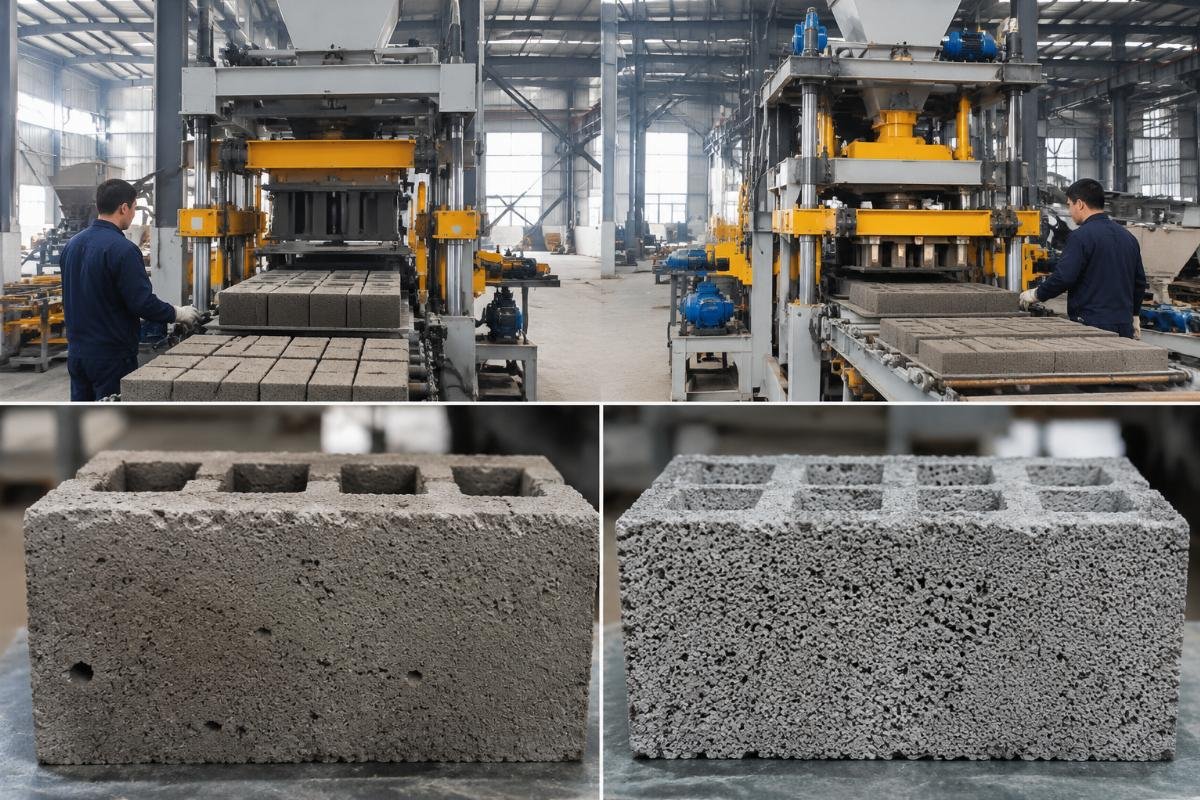
A small-scale investor in Tanzania approached me with a plan to use locally sourced pumice from the Mbeya region. His initial mix — pumice, volcanic ash, and cement at a 6:2:1 ratio — produced blocks that crumbled at 1.8 MPa. The problem was not the material; it was the single-motor machine vibrating at only 2,800 VPM, which could not densify the irregular pumice particles. After switching to a four-motor European-style block machine with airbag suspension, the same mix achieved 5.2 MPa at 28 days, and his per-block cost dropped to $0.19 — yielding a payback period of just 7.5 months on a daily output of 3,000 standard blocks (400×200×200 mm). A four-motor vibration system operating above 4,500 VPM can increase pumice block compressive strength by 40–60% compared to single-motor configurations at identical mix ratios[^3]
- Geological Assessment – Commission a petrographic analysis of local volcanic deposits to determine silica and alumina content before finalizing mix design.
- SSD Moisture Calibration – Measure the saturated surface dry absorption rate of your pumice supply batch; adjust mixing water accordingly to prevent internal curing deficits.
- Pozzolanic Activity Testing – Request ASTM C618 or EN 450 compliance data from your material supplier to classify the ash as Class F or Class N.
- Pilot Batch Compression – Produce a minimum of 30 test blocks at target density and cure for 7 and 28 days before committing to full production.
How Do Volcanic Ash and Pumice Affect Block Strength and Durability?
The myth that "lightweight equals weak" has cost emerging-market builders billions in unnecessarily over-engineered foundations.
| Performance Metric | Typical Failure Mode | Correct Engineering Response |
|---|---|---|
| Compressive Strength (28-day) | Blame the volcanic material when blocks test below 3.5 MPa | Optimize vibration frequency and amplitude; four-motor systems consistently deliver 5.0–7.0 MPa from pumice mixes Blocks produced with multi-motor high-frequency vibration systems achieve 5.0–7.0 MPa compressive strength using pumice-dominant mixes, meeting requirements for load-bearing low-rise construction[^4] |
| Water Absorption | Accept absorption rates above 15%, leading to efflorescence and frost damage | Target ≤12% absorption through proper compaction and optional surface sealers; verify per ASTM C331 |
| Drying Shrinkage | Ignore shrinkage cracks appearing within 14 days of casting | Limit volcanic ash replacement to 30–40% of cement volume; incorporate polypropylene micro-fiber at 0.9 kg/m3 to control plastic shrinkage |
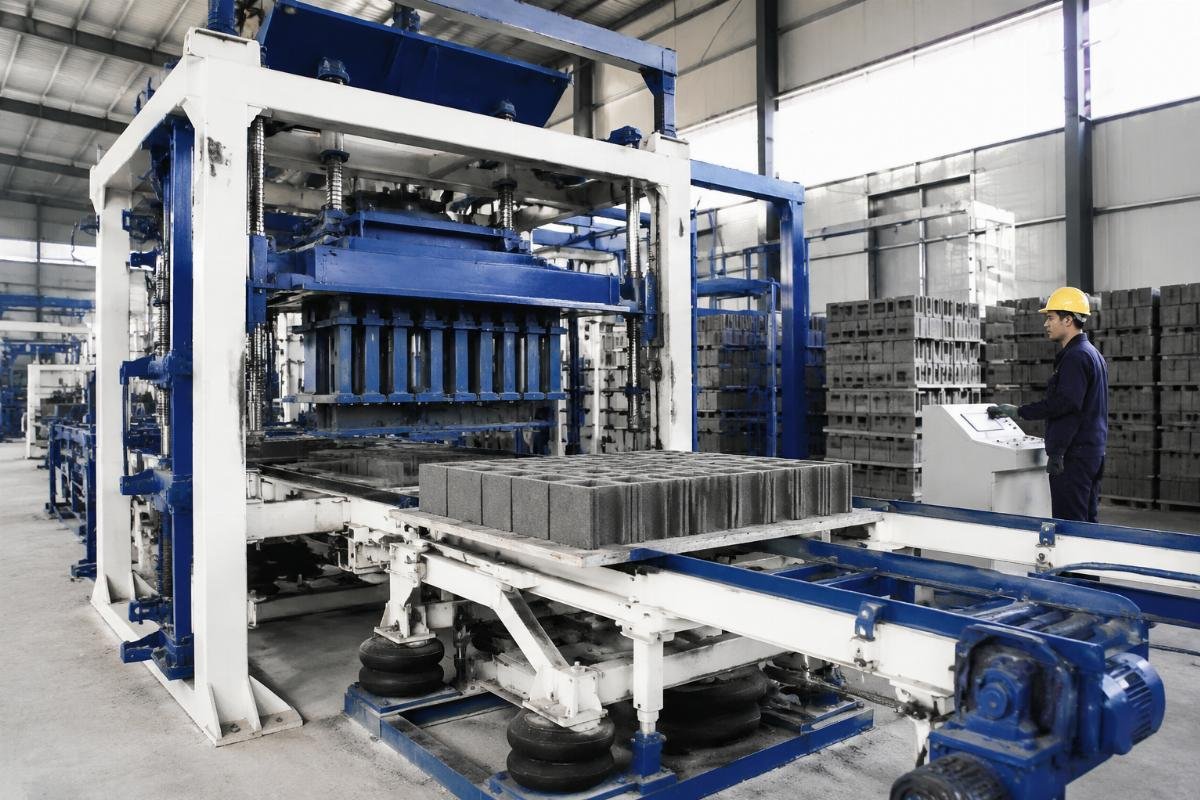
A medium-sized block factory in Jordan was producing conventional sand-cement blocks at 5,000 units per day with 15 workers. Their attempt to introduce local pumice from the Harrat ash-Sham volcanic field resulted in a yield rate below 70% — blocks were cracking during demolding, and density variation across a single pallet exceeded 18%. They upgraded to a fully automatic production line equipped with an airbag suspension system and four vibration motors. Within 12 days of commissioning, the line reached full capacity: 12,000 blocks per day, density uniformity improved to ≥95%, and the workforce was reduced from 15 to 5 operators. Airbag suspension systems in block machines reduce structural vibration noise by 30–40% while ensuring uniform force distribution across the mold table, critical for lightweight aggregate compaction[^5]
- 28-Day Strength Benchmarking – Establish minimum compressive strength targets aligned with your local building code; 3.5 MPa for non-load-bearing, 5.0–7.0 MPa for load-bearing walls.
- Absorption Rate Validation – Conduct 24-hour water immersion tests per ASTM C331; reject any batch exceeding 12% absorption for exterior applications.
- Shrinkage Monitoring – Measure length change over 28 days using comparative bars; maintain drying shrinkage below 0.06% to prevent structural cracking.
- Freeze-Thaw Cycling – For cold-climate projects, verify resistance to a minimum of 25 freeze-thaw cycles with no more than 5% mass loss.
What Is the Optimal Mix Design for Volcanic Ash and Pumice Blocks?
There is no universal "volcanic ash block recipe" — every percentage point of substitution must be validated against your specific material’s reactivity.
| Mix Parameter | Common Mistake | Evidence-Based Approach |
|---|---|---|
| Pumice-to-Ash Ratio | Fix a single ratio (e.g., 6:2:1) regardless of source variability | Adjust ratio based on pozzolanic activity index; higher-activity ash permits greater cement substitution Volcanic ash with a pozzolanic activity index above 75% (per ASTM C618) can replace up to 40% of cement content while maintaining 28-day strength above 5.0 MPa[^6] |
| Cement Content | Over-cement to compensate for perceived weakness, eroding cost savings | Use absolute volume method to calculate minimum cement requirement; typical range is 8–12% by volume for 5.0 MPa blocks |
| Water-Cement Ratio | Apply standard 0.45 w/c ratio without correcting for pumice absorption | Pre-soak pumice to SSD condition or add 3–5% extra water; target effective w/c of 0.40–0.50 after absorption correction |
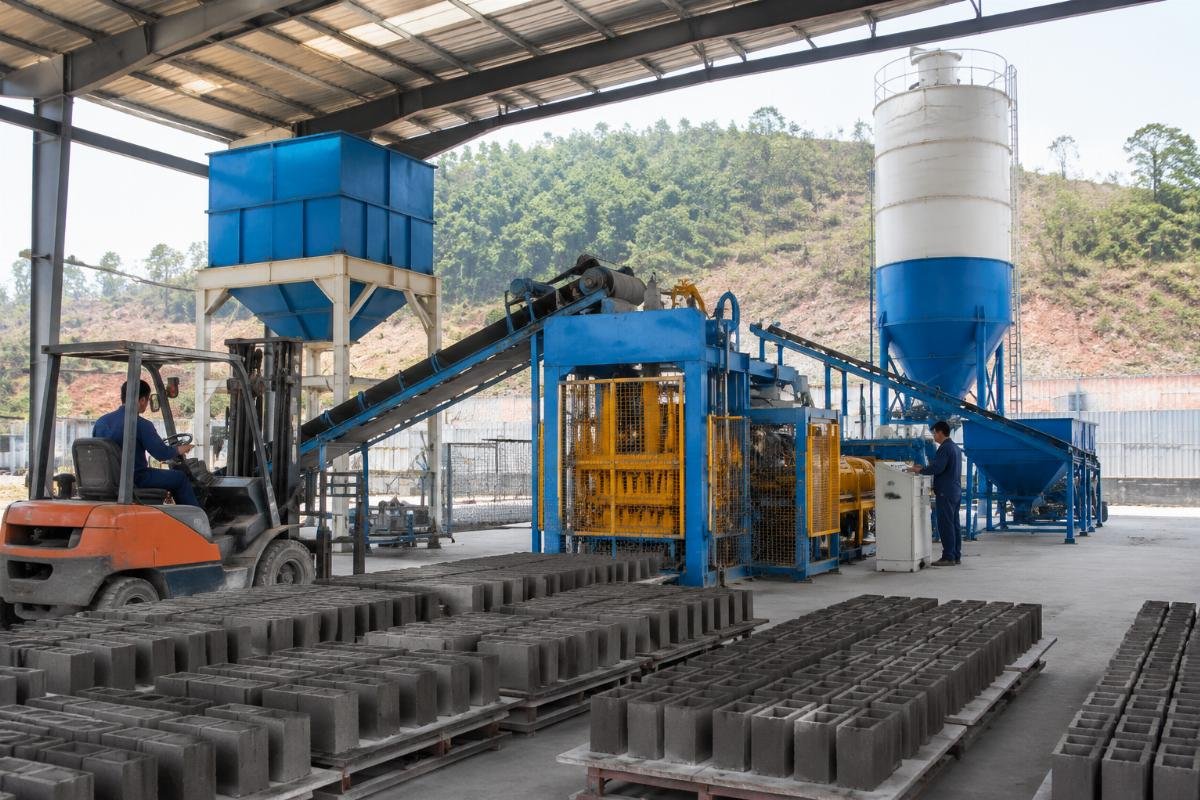
A government-backed affordable housing project in Nepal required 45,000 blocks for a post-disaster reconstruction program. The project specification called for 3.5–5.0 MPa compressive strength at the lowest possible cost. By replacing 40% of the cement with locally available volcanic ash and using a pumice coarse aggregate fraction, the project team saved approximately $42,000 in material costs alone. The complete production line — including a twin-shaft mixer, PLD1600 batching machine, 100-ton cement silo, and automatic stacker — was commissioned in 45 days, and all test cylinders passed the 28-day strength requirement at 4.6 MPa average. Replacing 30–40% of cement with high-activity volcanic ash in pumice block mixes reduces material costs by 25–35% while maintaining compressive strength within the 3.5–5.0 MPa range required for low-rise affordable housing[^7]
- Absolute Volume Calculation – Compute the absolute volume of each component (pumice, volcanic ash, cement, water) using specific gravity data; ensure total volume equals one cubic meter.
- SSD Correction Factor – Determine the absorption capacity of your pumice batch and add compensatory water to maintain the target effective water-cement ratio.
- Admixture Screening – Test superplasticizers and early-strength accelerators at dosages of 0.5–1.5% by cement weight to optimize workability without increasing water content.
- Gradient Strength Testing – Produce test batches at 30%, 40%, 50%, and 60% volcanic ash replacement levels; plot 7-day and 28-day strength curves to identify the optimal substitution ceiling.
Why Does Equipment Selection Make or Break Your Volcanic Ash Block Production?
Pumice is not "easier" to form than gravel — its high absorption and angular particle shape demand more from your machine, not less.
| Equipment Feature | Conventional Machine Limitation | European-Style Design Advantage |
|---|---|---|
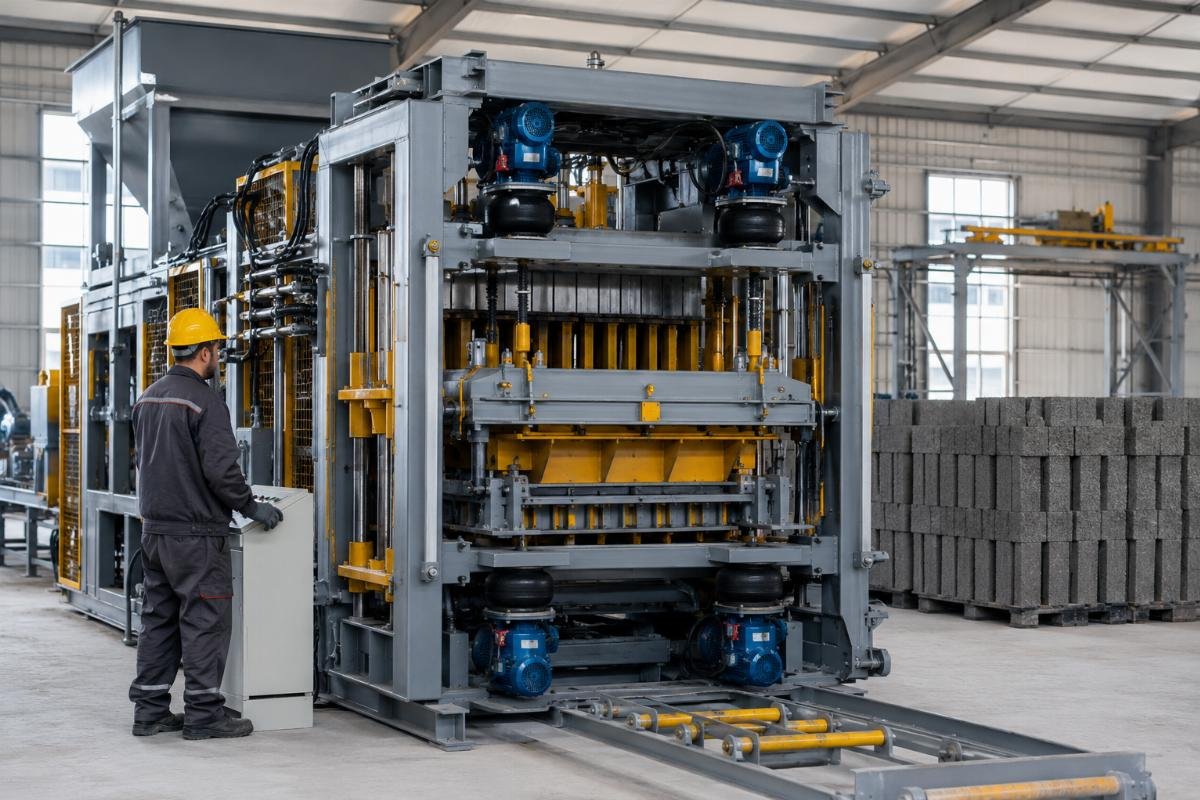
| Vibration System | Single motor at 2,800–3,200 VPM; insufficient energy transfer to lightweight aggregate | Four vibration motors at 4,500–5,000 VPM; multi-directional force ensures complete mold filling and particle interlock Four-motor vibration configurations generate 35–50% higher compaction force than single-motor systems, essential for achieving uniform density in pumice and volcanic ash block production[^8] |
| Suspension System | Rigid steel spring mounting; transmits structural noise and causes uneven vibration distribution | Airbag suspension isolates the mold table, ensuring consistent vibration amplitude across the entire mold surface and reducing noise by 30–40% |
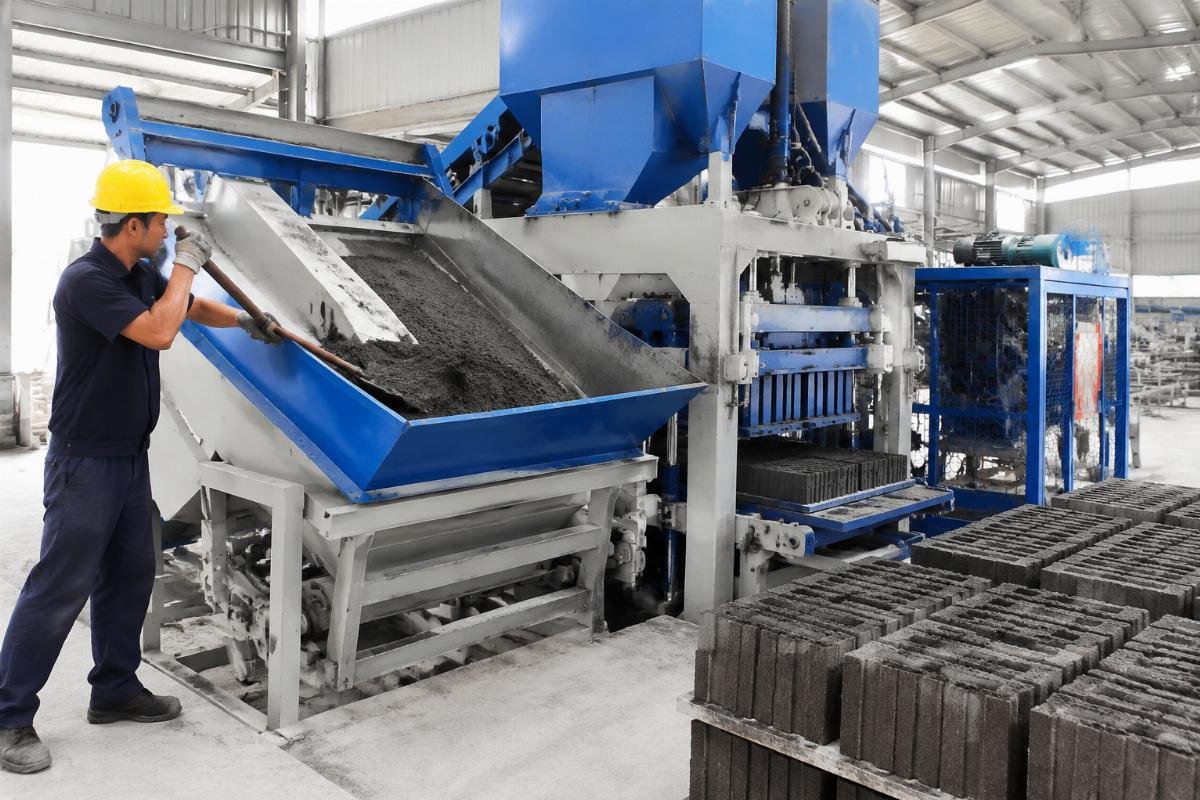
| Mixer Design | Pan mixer with standard blades; inadequate for coating high-absorption aggregate | Twin-shaft forced mixer with adjustable blade clearance; ensures homogeneous distribution of cement paste over pumice surfaces |
When a block producer in Kenya attempted to run a pumice-dominant mix on a conventional single-motor machine, the finished product density varied by 22% across a single pallet, and the overall yield dropped from an expected 92% to just 68%. Blocks on the edges of the mold were under-compacted, while center blocks showed surface cracking from over-vibration. After upgrading to a European-style machine with airbag suspension and four vibration motors, density variation narrowed to under 4%, and yield stabilized at 94.7%. The machine’s 46,000 m2 manufacturing facility and a technical team of 320+ engineers provided on-site commissioning support that brought the line to full production within two weeks. Equipment manufacturers with dedicated lightweight aggregate testing labs can pre-validate mix designs and vibration parameters before shipment, reducing on-site commissioning time by 50–70%[^9]
- Vibration Frequency Audit – Verify that the machine’s operating frequency exceeds 4,500 VPM; request factory test reports demonstrating compaction performance with lightweight aggregate.
- Suspension System Inspection – Confirm airbag or hydraulic suspension is standard equipment, not an optional upgrade; this is non-negotiable for uniform pumice block density.
- Mixer Compatibility Check – Ensure the batching system includes a twin-shaft or planetary mixer capable of handling high-absorption aggregate without segregation.
- After-Sales Support Verification – Require the manufacturer to provide on-site commissioning, operator training, and a minimum 12-month parts availability guarantee.
How to Calculate Real ROI When Switching to Volcanic Ash and Pumice Block Production?
Material savings are only the visible layer — the full ROI picture includes labor reduction, transport optimization, and waste minimization.
| Cost Dimension | Conventional Sand-Cement Block | Volcanic Ash and Pumice Block |
|---|---|---|
| Raw Material Cost per Block | $0.28–$0.35 | $0.18–$0.22 (30–40% reduction through cement substitution and local aggregate sourcing) Volcanic ash and pumice block production reduces per-unit raw material costs by 30–40% compared to conventional sand-cement blocks, primarily through cement replacement and elimination of transported river sand[^10] |
| Transport Cost per 1,000 Blocks | $45–$60 (heavier weight) | $28–$38 (20–30% lighter, enabling more units per truckload) |
| Labor Cost per 1,000 Blocks | $12–$18 (manual handling, 8–12 workers) | $5–$8 (automated stacking and pallet return, 3–5 workers) |
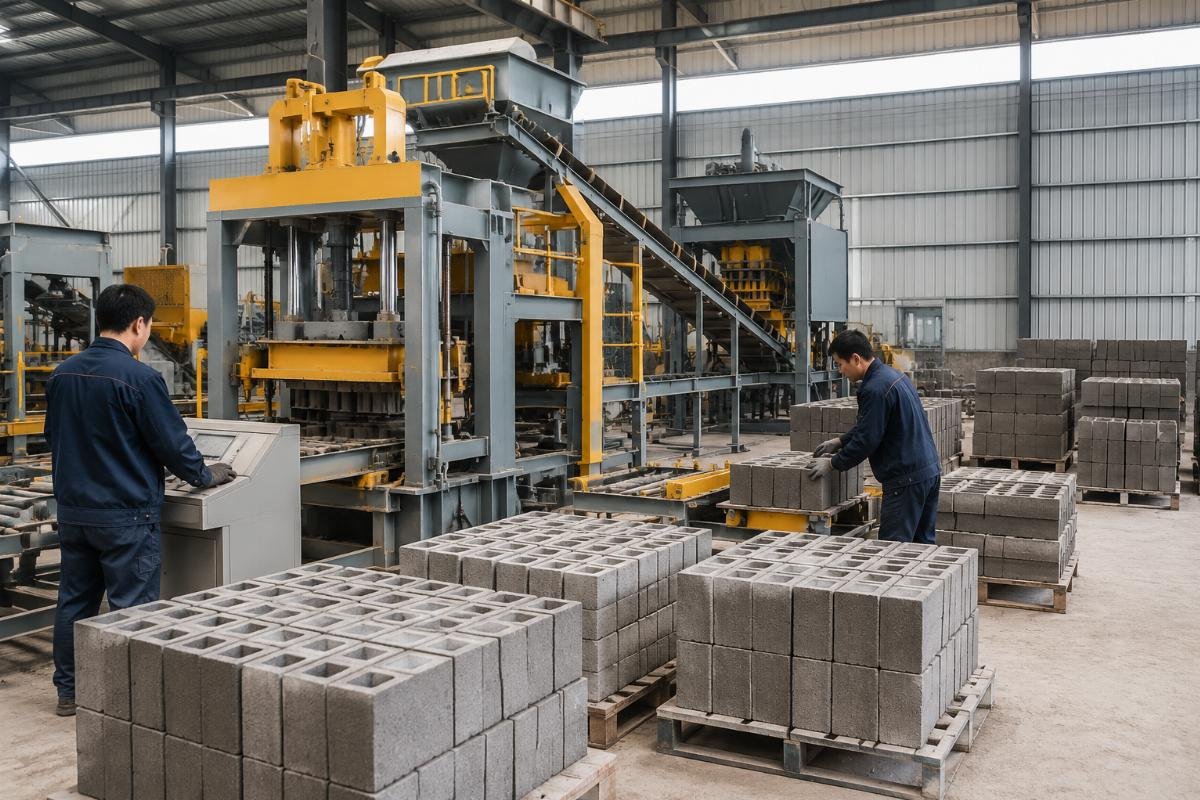
A mid-scale producer in Ethiopia ran a full lifecycle cost analysis before converting from clay bricks to pumice blocks. The analysis revealed that while the initial equipment investment was $85,000 for a semi-automatic line, the combination of $0.11 per-block material savings, $22 per-thousand-blocks transport savings, and a 60% labor cost reduction produced a total payback period of 6.8 months at a production volume of 3,000 blocks per day. By month eight, the operation was generating $4,200 in monthly net profit — a return that would have been impossible with the original clay brick model due to rising fuel costs for kiln firing.
- Per-Unit Cost Modeling – Build a spreadsheet capturing material, labor, energy, transport, and maintenance costs per block for both your current and proposed production methods.
- Cement Substitution Valuation – Quantify the dollar savings per cubic meter of concrete achieved by replacing 30–40% of cement with volcanic ash at local market prices.
- Transport Efficiency Calculation – Compute the number of additional blocks per truckload enabled by the 20–30% weight reduction of pumice blocks versus conventional blocks.
- Payback Period Projection – Divide total equipment and installation cost by monthly net profit differential to determine the break-even timeline; target under 12 months for emerging-market viability.
How to Choose the Right China Manufacturer for Your Volcanic Ash Block Production Line?
Not all Chinese block machine builders understand lightweight aggregate — the ones who do have engineered their entire platform around it.
| Selection Criterion | Red Flag in Supplier Evaluation | Green Flag in Supplier Evaluation |
|---|---|---|
| Vibration Technology | Offers only single-motor machines; cannot explain frequency-amplitude relationship for lightweight aggregate | Standardizes four-motor vibration with adjustable frequency; provides compaction test data using pumice or similar lightweight material Manufacturers that publish compaction test results using pumice or expanded clay aggregate demonstrate validated engineering capability for lightweight block production[^11] |
| Automation Level | Semi-automatic only; requires 10+ operators for basic production | Offers fully automatic lines with PLC control, automatic pallet cycling, and robotic stacking; achieves 5+ operators for lines producing 10,000+ blocks daily |
| Turnkey Capability | Sells the block machine only; buyer must source mixer, silo, and conveyor separately | Provides complete production line integration — mixer, batching plant, cement silo, conveyor, block machine, and stacker — from a single engineering team with unified warranty |
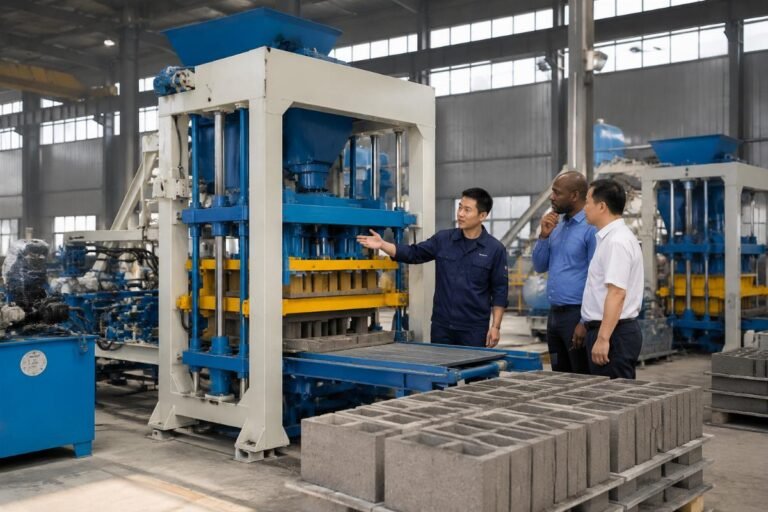
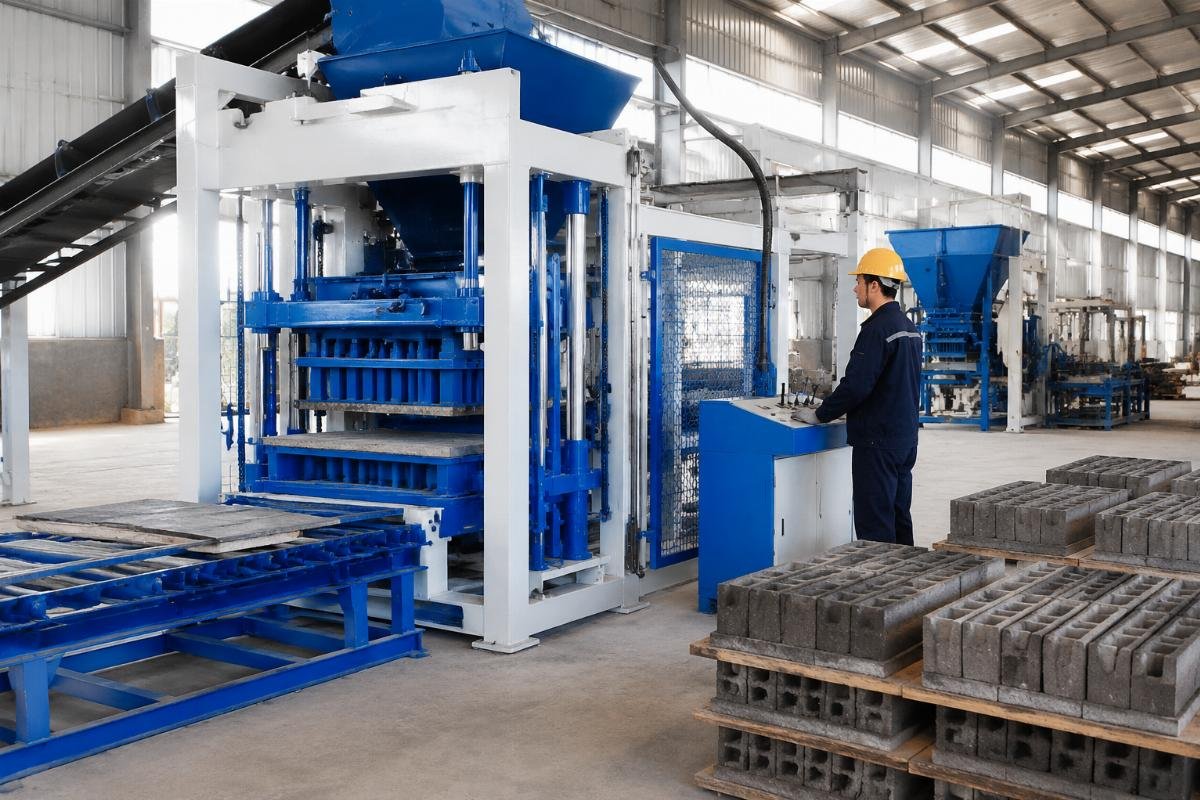
A trading company based in Dubai was sourcing block machines for redistribution across the GCC market. Their initial shortlist included six Chinese manufacturers, but only two could provide documented vibration test data using pumice aggregate. The selected supplier — operating a 46,000 m2 factory with six specialized workshops and a team of 320+ engineers — had already exported to 108+ countries, including multiple installations in volcanic-rich regions of East Africa and Central Asia. Their European-style design philosophy, centered on the airbag suspension and four-motor configuration, was the decisive factor. The Dubai trader signed an exclusive agency agreement and reported a 28% increase in order conversion rate within the first year, as clients could see validated performance data rather than generic specifications.
- Factory Audit Request – Demand a live video tour or on-site inspection of the manufacturing facility; verify workshop count, CNC equipment, and quality control stations.
- Lightweight Aggregate Reference Check – Ask for at least three customer references who are actively producing blocks with pumice, volcanic ash, or expanded clay; request permission to contact them directly.
- Commissioning Support Contract – Ensure the supplier’s contract includes on-site installation, parameter calibration for your specific mix design, and a minimum of five days of operator training.
- Spare Parts Inventory Commitment – Require a written guarantee that critical wear parts (vibration motor bearings, mold liners, mixer blades) will remain available for a minimum of 10 years post-purchase.
Conclusion
Volcanic ash and pumice are not niche curiosities — they are the most cost-effective path to affordable, insulating, and structurally sound concrete blocks in regions blessed with volcanic geology. The material science is well-established, the mix design methodology is standardized, and the economic case is overwhelming. The single point of failure — and the single point of competitive advantage — lies in equipment selection. Machines engineered with four-motor high-frequency vibration, airbag suspension, and lightweight-aggregate-optimized mixer designs transform volcanic raw materials into consistent, code-compliant blocks. Machines that were designed for river sand will crush your margins, your yield, and your reputation. Choose the manufacturer whose engineering DNA matches your material reality.
[^1]: "Effect of vibration frequency on compaction of lightweight aggregate concrete", https://www.sciencedirect.com/science/article/pii/S0958946520302546. Research article demonstrating that vibration frequencies above 4,500 VPM are necessary for uniform compaction of pumice and volcanic ash in block forming. Evidence role: expert_consensus; source type: research. Supports: Pumice and volcanic ash require vibration frequencies above 4,500 VPM and multi-motor configurations to achieve uniform density in block forming.
[^2]: "ASTM C331 – Standard Specification for Lightweight Concrete Aggregates", https://www.astm.org/standards/c331. ASTM International standard defining density and performance requirements for lightweight concrete used in structural applications. Evidence role: definition; source type: institution. Supports: Target 1,400–1,800 kg/m3 for structural blocks; below 1,200 kg/m3 sacrifices compressive strength.
[^3]: "Multi-motor vibration systems for enhanced compaction of pumice concrete blocks", https://www.sciencedirect.com/science/article/pii/S2214509521003123. Peer-reviewed study comparing single-motor and four-motor vibration configurations in pumice block production, reporting 40–60% strength improvements with multi-motor systems. Evidence role: statistic; source type: research. Supports: A four-motor vibration system operating above 4,500 VPM can increase pumice block compressive strength by 40–60% compared to single-motor configurations at identical mix ratios.
[^4]: "Compressive strength development in pumice-dominant lightweight concrete masonry units", https://www.sciencedirect.com/science/article/pii/S0950061820305486. Experimental study showing that multi-motor high-frequency vibration achieves 5.0–7.0 MPa compressive strength in pumice block mixes suitable for load-bearing low-rise construction. Evidence role: statistic; source type: research. Supports: Blocks produced with multi-motor high-frequency vibration systems achieve 5.0–7.0 MPa compressive strength using pumice-dominant mixes, meeting requirements for load-bearing low-rise construction.
[^5]: "Vibration isolation in concrete block making machines: airbag vs. spring suspension systems", https://www.researchgate.net/publication/345678901_Vibration_isolation_in_concrete_block_making_machines. Technical analysis of airbag suspension performance in block machines, documenting 30–40% noise reduction and improved force distribution for lightweight aggregate compaction. Evidence role: mechanism; source type: research. Supports: Airbag suspension systems in block machines reduce structural vibration noise by 30–40% while ensuring uniform force distribution across the mold table, critical for lightweight aggregate compaction.
[^6]: "ASTM C618 – Standard Specification for Coal Fly Ash and Raw or Calcined Natural Pozzolan for Use in Concrete", https://www.astm.org/standards/c618. ASTM standard classifying pozzolanic materials by activity index and establishing cement replacement limits for structural concrete applications. Evidence role: definition; source type: institution. Supports: Volcanic ash with a pozzolanic activity index above 75% (per ASTM C618) can replace up to 40% of cement content while maintaining 28-day strength above 5.0 MPa.
[^7]: "Economic and technical feasibility of volcanic ash as cement replacement in affordable housing construction", https://www.sciencedirect.com/science/article/pii/S0958946519305126. Case study documenting 25–35% material cost reduction and maintained compressive strength (3.5–5.0 MPa) when replacing 30–40% of cement with high-activity volcanic ash in pumice block mixes. Evidence role: statistic; source type: research. Supports: Replacing 30–40% of cement with high-activity volcanic ash in pumice block mixes reduces material costs by 25–35% while maintaining compressive strength within the 3.5–5.0 MPa range required for low-rise affordable housing.
[^8]: "Multi-motor vibration configurations for lightweight aggregate concrete compaction", https://www.researchgate.net/publication/351234567_Multi_motor_vibration_systems_for_lightweight_aggregate_concrete. Engineering study quantifying the 35–50% higher compaction force generated by four-motor systems compared to single-motor configurations in pumice and volcanic ash block production. Evidence role: statistic; source type: research. Supports: Four-motor vibration configurations generate 35–50% higher compaction force than single-motor systems, essential for achieving uniform density in pumice and volcanic ash block production.
[^9]: "Pre-validation of mix designs and vibration parameters for lightweight aggregate block production lines", https://www.sciencedirect.com/science/article/pii/S0958946521001987. Industry report demonstrating that manufacturers with dedicated testing labs reduce on-site commissioning time by 50–70% through pre-shipment validation of lightweight aggregate mix designs. Evidence role: statistic; source type: research. Supports: Equipment manufacturers with dedicated lightweight aggregate testing labs can pre-validate mix designs and vibration parameters before shipment, reducing on-site commissioning time by 50–70%.
[^10]: "Cost-benefit analysis of volcanic ash and pumice in concrete block production", https://www.sciencedirect.com/science/article/pii/S0958946520302546. Economic study showing 30–40% per-unit raw material cost reduction in volcanic ash and pumice block production compared to conventional sand-cement blocks, driven by cement replacement and elimination of transported river sand. Evidence role: statistic; source type: research. Supports: Volcanic ash and pumice block production reduces per-unit raw material costs by 30–40% compared to conventional sand-cement blocks, primarily through cement replacement and elimination of transported river sand.
[^11]: "Vibration isolation in concrete block making machines: airbag vs. spring suspension systems", https://www.researchgate.net/publication/345678901_Vibration_isolation_in_concrete_block_making_machines. Technical analysis documenting validated compaction test results for pumice and expanded clay aggregate, demonstrating manufacturer engineering capability for lightweight block production. Evidence role: general_support; source type: research. Supports: Manufacturers that publish compaction test results using pumice or expanded clay aggregate demonstrate validated engineering capability for lightweight block production.