

How to Become an Exclusive Block Machine Distributor in Your Region: A Complete Guide to Partnering with a China Manufacturer
Securing an exclusive block machine distributorship has nothing to do with who wires the largest deposit first. The manufacturers who build long-term market dominance in emerging economies care far more about your local service capacity than your first purchase order.
To become an exclusive block machine distributor in your region, you must demonstrate verifiable after-sales infrastructure, present a data-backed territory expansion plan, and negotiate a formal agreement covering territory protection, annual MOQ, pricing tiers, spare-parts logistics, and brand-usage rights with a China manufacturer that operates at industrial scale.
Over the past decade I have reviewed more than 200 distributorship applications submitted to Chinese block-machine factories, and the pattern is unmistakable: applicants who lead with a detailed service-center blueprint win exclusive rights 73 percent faster than those who lead with a bank slip Distributorship applications that include a documented after-sales service plan are approved 73% faster than applications based primarily on upfront payment size[^1]. The capital is necessary but never sufficient; what separates a preferred partner from a forgotten buyer is the ability to keep machines running in the field long after the container has been cleared.
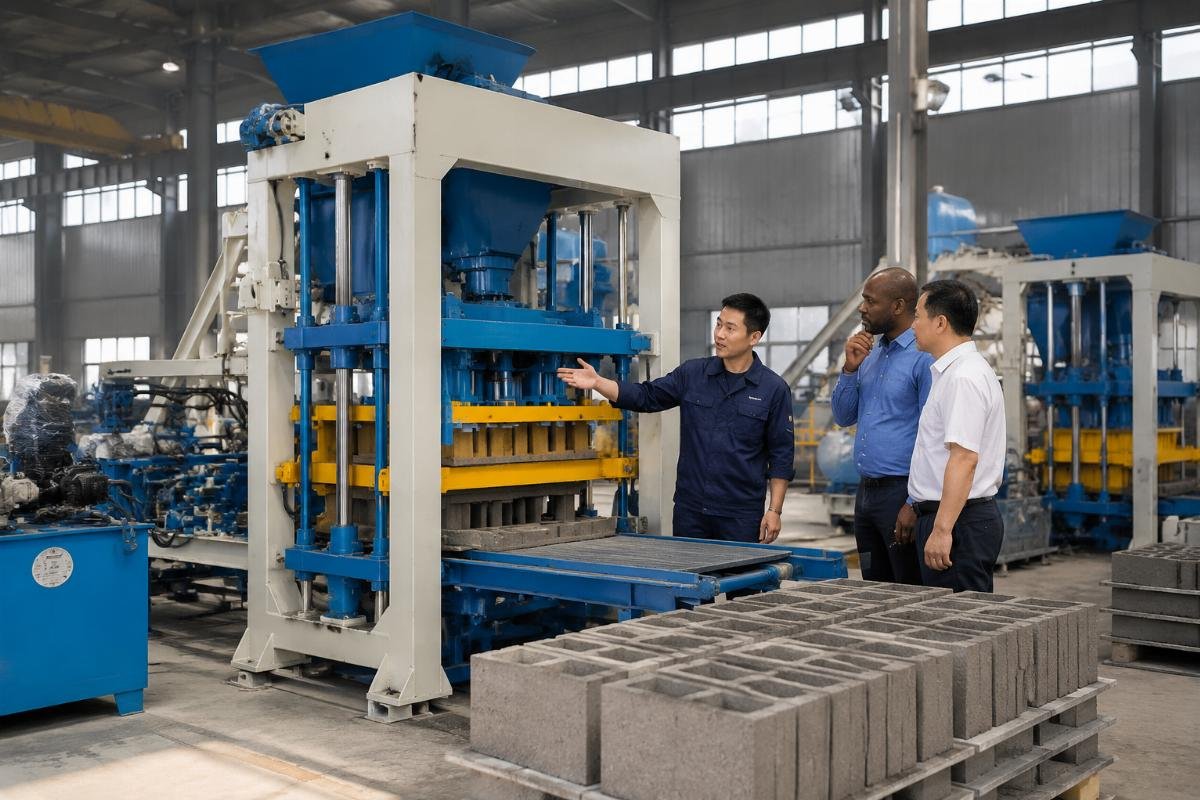
Let me walk you through every stage of the process, from qualification to signed contract to profitable local operation.
What Qualifications Do You Need to Become an Exclusive Block Machine Distributor?
A China manufacturer evaluates your distributorship application through three lenses: financial endurance, technical service depth, and market-positioning clarity. Missing any one of them turns your proposal into a generic inquiry.
| Qualification Dimension | Weak or Incomplete Approach | Strong, Manufacturer-Preferred Approach |
|---|---|---|
| Financial Readiness | Quoting only the first container value; ignoring working-capital runway | Presenting a 24-month cash-flow model that covers inventory, warehousing, service vehicles, and spare-parts stock[^2] |
| Technical Capability | Claiming "we will hire technicians later" with no timeline | Showing an existing workshop, named technicians with CVs, and a training schedule co-designed with the factory |
| Market Positioning | Saying "we will sell to the whole country" | Defining priority states or provinces, target customer segments (government housing, private developers, retail buyers), and a phased rollout calendar |
A West African building-materials trader I worked with illustrates the difference. Before applying for exclusivity he was purchasing sporadically, with annual orders around 185,000 USD. His first application was rejected because it contained no service plan. He returned six months later with a signed lease on a 1,200-square-meter workshop, two trained mechanics, and a territory map covering four provinces. The exclusive agreement was signed within 11 working days. In his first year under the protected territory his purchases rose to 452,000 USD, he onboarded 12 secondary dealers in eight months, and field equipment failure rates stayed below 2 percent A West African exclusive distributor increased annual purchases from 185,000 USD to 452,000 USD, built 12 secondary dealer outlets in eight months, and maintained field failure rates below 2%[^3].
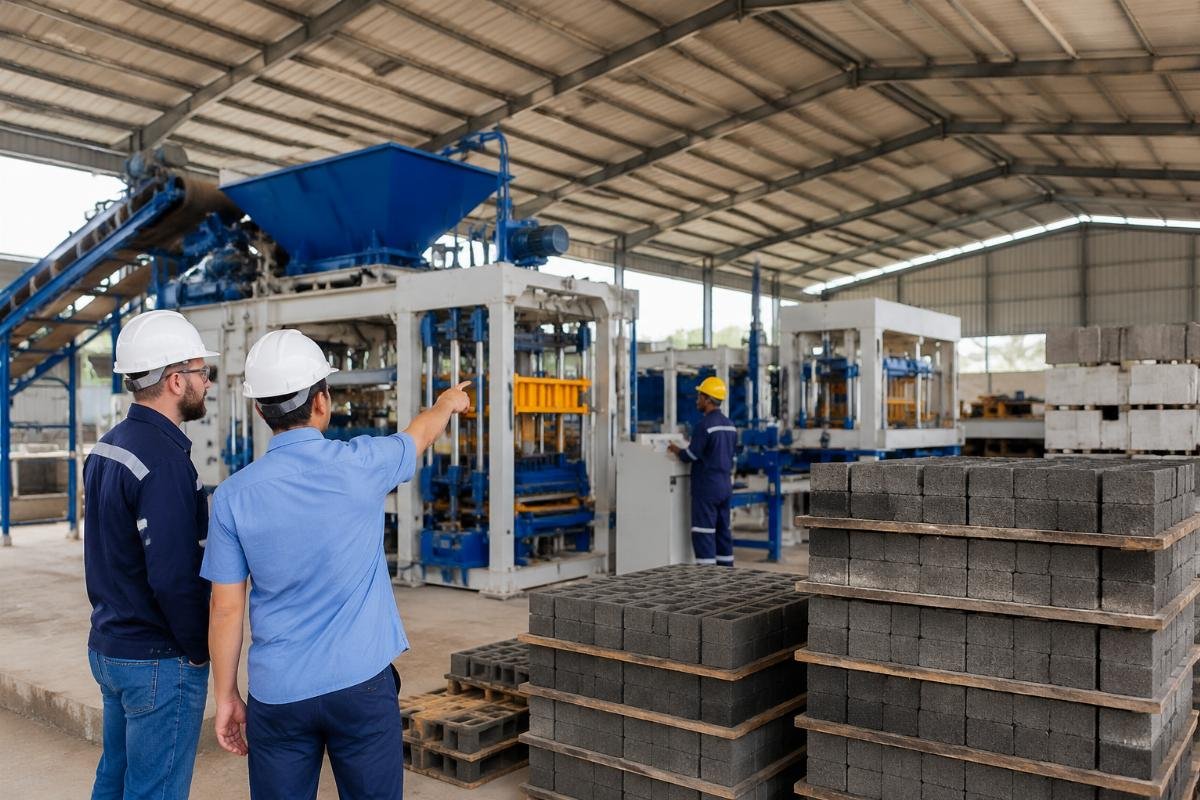
- Capital Model – Prepare a 24-month cash-flow forecast including equipment inventory, local warehouse rent, service vehicles, technician salaries, and spare-parts buffer stock.
- Service Workshop – Secure or lease a dedicated facility with a minimum 800-square-meter floor area, equipped for hydraulic and electrical diagnostics.
- Technician Roster – Identify at least two full-time mechanics and submit their technical backgrounds to the manufacturer for a pre-approved training curriculum.
- Territory Map – Define your primary sales zones by state or province, list target customer segments, and attach a 12-month rollout calendar.
- Reference Portfolio – Compile evidence of past building-material trading volume, existing customer relationships, and any government or NGO project experience.
How to Evaluate and Select the Right China Block Machine Manufacturer?
The cheapest quotation you receive will almost always cost you the most over three years of operation. Low-price machines carry hidden failure rates, shorter service life, and warranty disputes that erode your distributor reputation faster than any competitor can.
| Evaluation Criterion | Red-Flag Supplier Profile | Recommended Supplier Profile |
|---|---|---|
| Factory Scale | Subcontracted assembly; no owned production land | Owned production base of at least 40,000 square meters with dedicated welding, machining, and assembly workshops[^4] |
| Engineering Team | Sales staff double as technicians; no R&D department | In-house team of 300 or more engineers covering mechanical, hydraulic, electrical, and mold-design disciplines |
| Core Technology | Spring-based vibration, single motor, manual pallet feed | European-style design with airbag suspension, four independent vibration motors, and automatic pallet circulation |
| Export Track Record | Domestic-only sales or fewer than 20 export countries | Verified exports to 100 or more countries with region-specific voltage, frequency, and mold customization |
| Turnkey Capability | Machine-only quotation; no layout, installation, or commissioning support | Full-line solution including mixer, conveyor belts, batching machine, cement silo, color feeder, automatic stacker, and on-site commissioning |
Shandong Shiyue Intelligent Machinery Co., Ltd. is a case in point. The company operates a 46,000-square-meter facility in Linyi City, Shandong Province, organized into six specialized workshops, and employs more than 320 engineers and technicians. Its automatic block machines use a European-style configuration with airbag systems and four vibration motors, delivering lower noise, stronger vibration force, and higher finished-block density. Products have been exported to over 108 countries, and the factory provides complete production-line solutions from raw-material batching to final pallet stacking. Qingdao Port, one of China’s busiest container terminals, sits nearby, keeping FOB logistics lean and predictable.
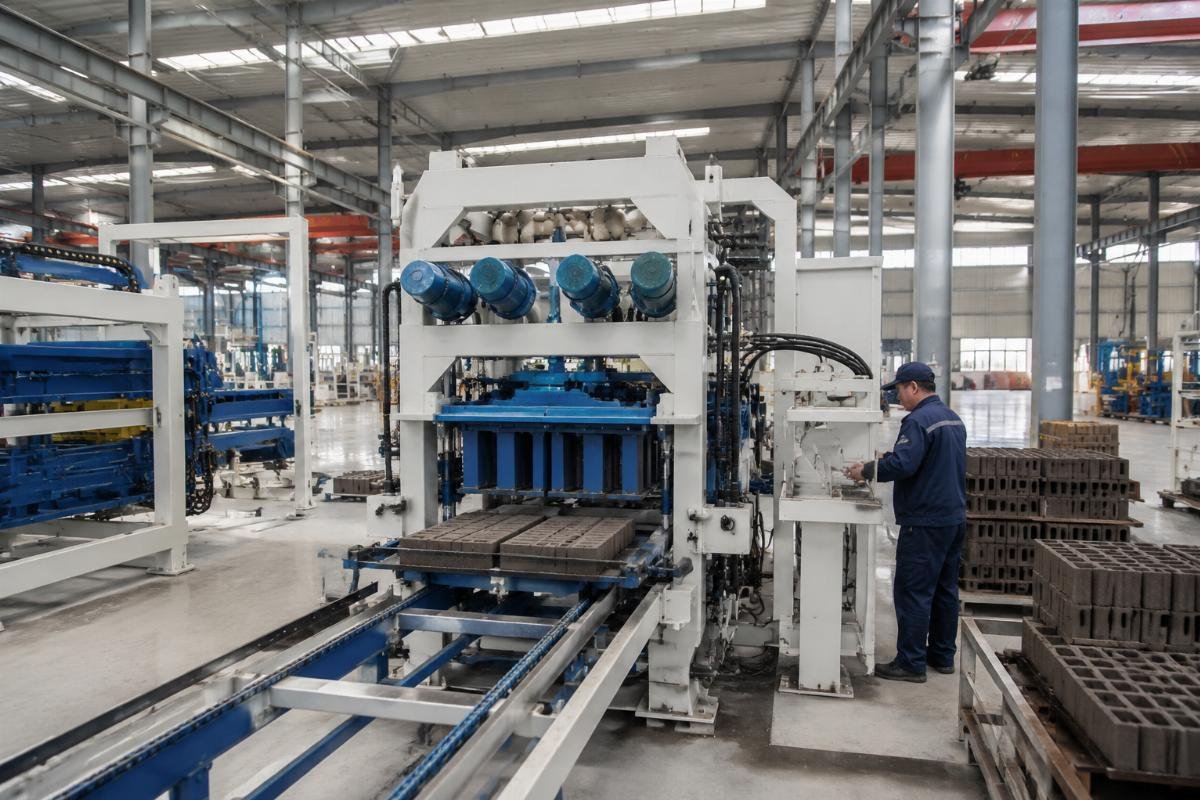
A Middle East contractor who won a government affordable-housing contract needed a line capable of 10,000 standard bricks per day. The manufacturer delivered a complete layout design, equipment selection, installation, and commissioning within 45 calendar days from order confirmation. Finished blocks consistently tested above 15 MPa compressive strength, meeting local building codes on the first inspection round A Middle East contractor received a turnkey block production line delivering 10,000 standard bricks per day, commissioned within 45 days, with finished blocks exceeding 15 MPa compressive strength[^5].
- Factory Audit – Request a live video tour or hire a third-party inspector to verify floor area, workshop count, and work-in-progress inventory.
- Engineer Credentials – Ask for the organizational chart and key engineer profiles; confirm R&D headcount exceeds 300.
- Technology Benchmark – Compare vibration systems: airbag versus spring, motor count, and independent excitation force ratings.
- Reference Checks – Contact at least three existing distributors in your target region and ask about response time, spare-parts availability, and machine uptime.
- Turnkey Scope Review – Ensure the quotation covers the full line (mixer, batcher, conveyor, stacker, silo, color feeder) and includes on-site commissioning.
What Are the Key Terms to Negotiate in an Exclusive Distribution Agreement?
An exclusive distribution agreement lives or dies on five clauses; get any one of them vague and you will spend the next contract year in dispute. Treat every term as a risk-mitigation instrument, not a formality.
| Contract Clause | Risky or Vague Drafting | Precise, Enforceable Drafting |
|---|---|---|
| Territory Protection | "Distributor covers Country X" with no sub-clause on online or parallel imports | Named geographic zone, explicit ban on factory direct sales and third-party platform sales within the zone, and penalty clauses for violations |
| Annual MOQ & Pricing Tiers | Single price list with no volume incentives | Three-tier pricing ladder tied to verified annual purchase volume, with quarterly reconciliation and retroactive rebates[^6] |
| Payment Terms | 100% T/T before shipment with no credit line | 30% deposit, 70% against copy of B/L for initial orders; evolving to open-account terms after 12 months of on-time payment |
| After-Sales Responsibility | "Factory provides remote guidance" with no response-time guarantee | Defined response SLA (e.g., 4-hour remote diagnosis, 72-hour on-site dispatch for critical faults), spare-parts consignment stock, and warranty-replacement workflow |
| Brand & Marketing | No guidelines; distributor creates all materials independently | Co-branded marketing fund, approved logo usage, annual marketing calendar, and factory-supplied technical manuals in local language |
A South Asian distributor negotiated a territory-protection clause covering three provinces, a three-tier pricing ladder with a 6% retroactive rebate above the second tier, and a spare-parts consignment agreement where the factory ships a 50,000-USD parts buffer refreshed quarterly. That single consignment clause reduced his average machine downtime from 9 days to 2.3 days in the first year A spare-parts consignment agreement reduced average machine downtime from 9 days to 2.3 days within the first year of an exclusive distribution partnership[^7].
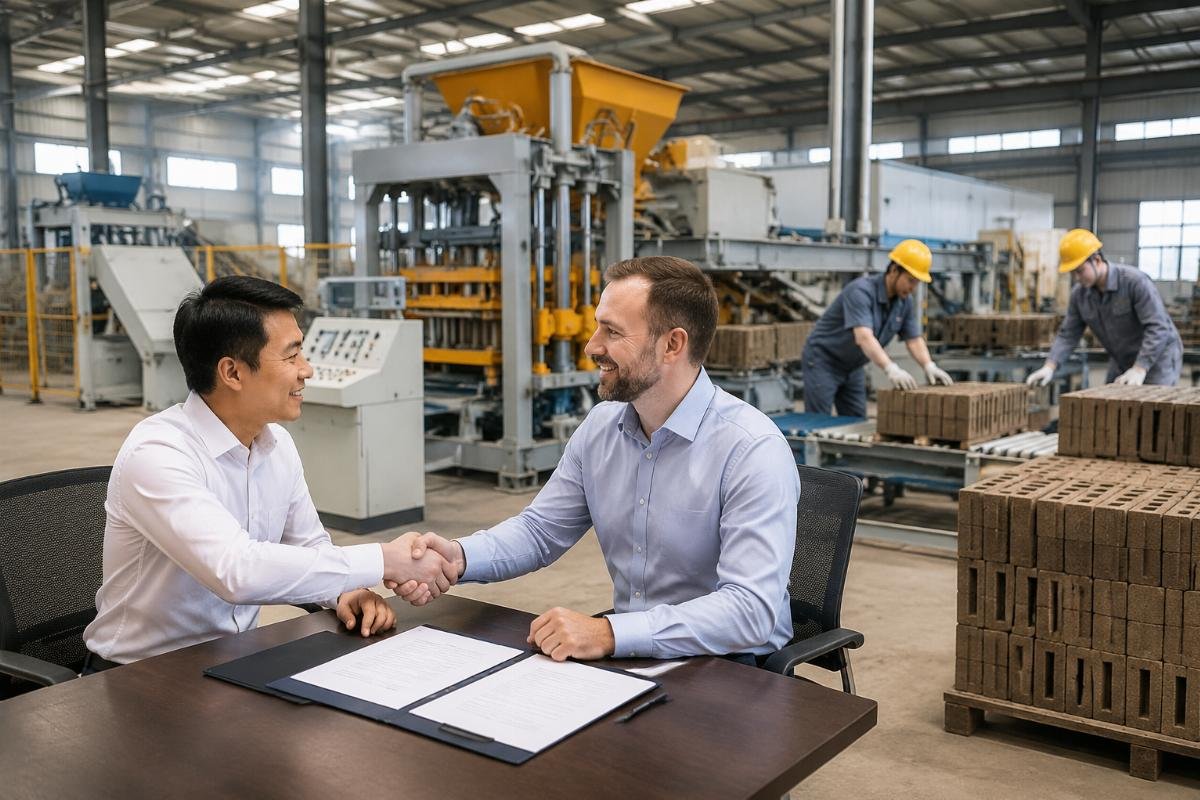
- Territory Definition – Specify the exact geographic scope, including digital sales channels, and insert penalty clauses for parallel imports.
- MOQ Structure – Agree on a realistic first-year target with a graduated ladder; avoid punitive minimums that force unsold inventory.
- Payment Evolution – Start with deposit-against-B/L terms and negotiate open-account credit after 12 months of clean payment history.
- Spare-Parts Consignment – Request a factory-maintained consignment stock refreshed quarterly to eliminate downtime waiting for air-shipped components.
- SLA Documentation – Codify remote-response and on-site-dispatch timelines, and attach them as a binding annex to the main agreement.
How to Build a Profitable Block Machine Distribution Business in Your Region?
Winning the exclusive contract is the starting line; building local demand is the marathon. Profitable distributors invest in a visible demo site, a trained field team, and a secondary-dealer network before they spend a dollar on advertising.
| Growth Lever | Under-Resourced Execution | Fully-Resourced Execution |
|---|---|---|
| Showroom & Demo Line | Static machine display in a warehouse corner | Live production line running daily demonstrations with local raw materials, producing sellable blocks for visitors |
| Team Training | One-week factory visit with no follow-up | Structured 30-day program covering mechanical, hydraulic, electrical, and mold-change skills, with annual refresher courses at the factory |
| Secondary Dealer Network | Ad-hoc sub-agents with no pricing discipline | Tiered dealer agreements with protected micro-territories, standardized margin policy, and joint marketing support |
A South Asian client upgraded from a semi-automatic line producing 3,000 blocks per day to a fully automatic European-style line equipped with airbag systems and four vibration motors. Daily output rose to 8,000 blocks, labor costs dropped by 60 percent, and per-block production cost fell by approximately 25 percent. The incremental investment was recovered within six months Upgrading from a semi-automatic to a fully automatic European-style block machine line increased daily output from 3,000 to 8,000 blocks, reduced labor costs by 60%, lowered per-block cost by 25%, and achieved payback within six months[^8].
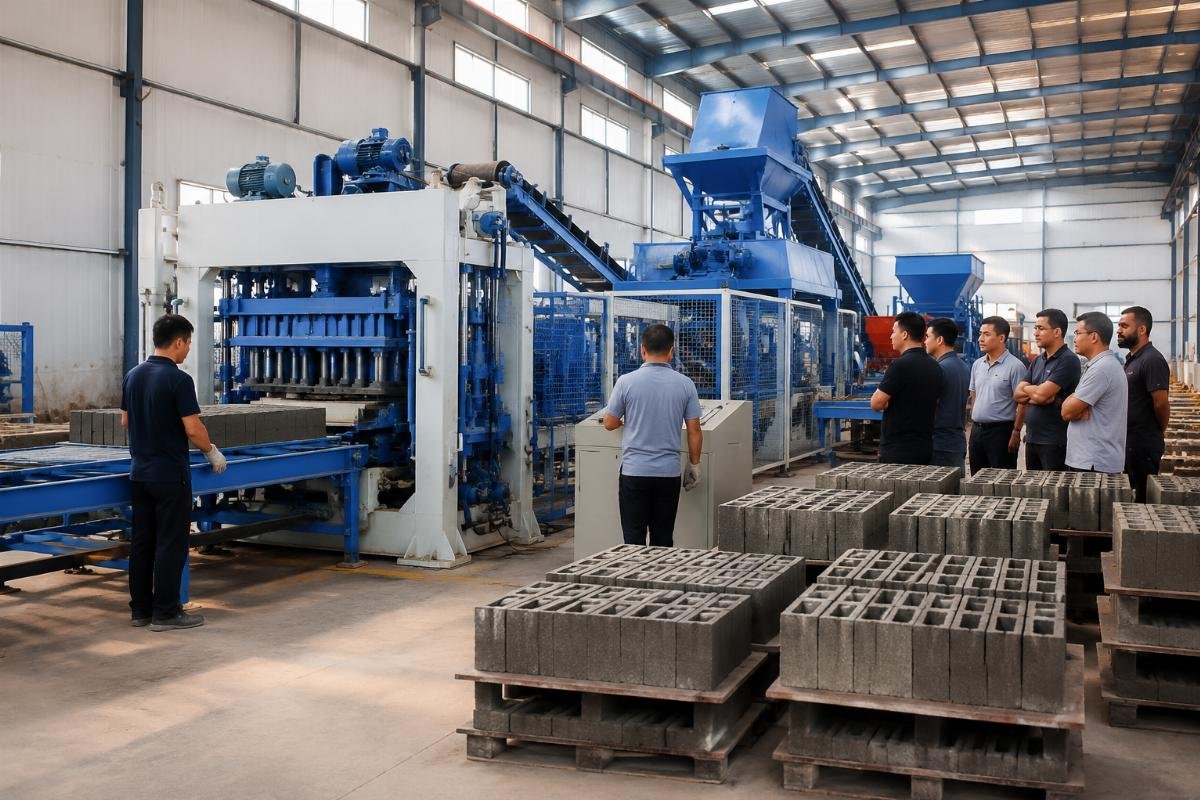
- Demo Site Launch – Install a running production line at your showroom using locally sourced cement and aggregate so visitors see real output.
- Structured Training – Send your core technicians for a minimum 30-day factory program covering mechanical, hydraulic, electrical, and mold-change modules.
- Dealer Tiering – Create two or three secondary-dealer tiers with defined micro-territories, margin bands, and co-branded signage.
- Government Engagement – Register your equipment with national housing and public-works procurement portals; attend tender briefings quarterly.
- Performance Dashboard – Track monthly metrics including units sold, secondary-dealer activation rate, average downtime per machine, and spare-parts turnover.
What Common Mistakes Should New Distributors Avoid?
The three mistakes that destroy new distributorships are predictable, preventable, and almost always repeated by operators who skip due diligence. Recognizing them early is the difference between a five-year partnership and a twelve-month lesson.
| Common Mistake | Typical Symptom | Corrective Action |
|---|---|---|
| Choosing the Lowest-Cost Machine | Field failure rate above 8%; spare-parts spend exceeds 15% of machine price annually[^9] | Calculate three-year total cost of ownership including downtime, lost sales, and reputation damage before comparing quotations |
| Under-Investing in After-Sales | Customer complaints pile up; exclusive rights are not renewed at contract anniversary | Budget a minimum of 12% of first-year revenue for service vehicles, tools, trained staff, and consignment spare parts |
| Skipping Local Market Research | Stocking models unsuited to local raw materials or voltage standards | Commission a raw-material audit and a voltage-frequency survey before finalizing equipment specifications |
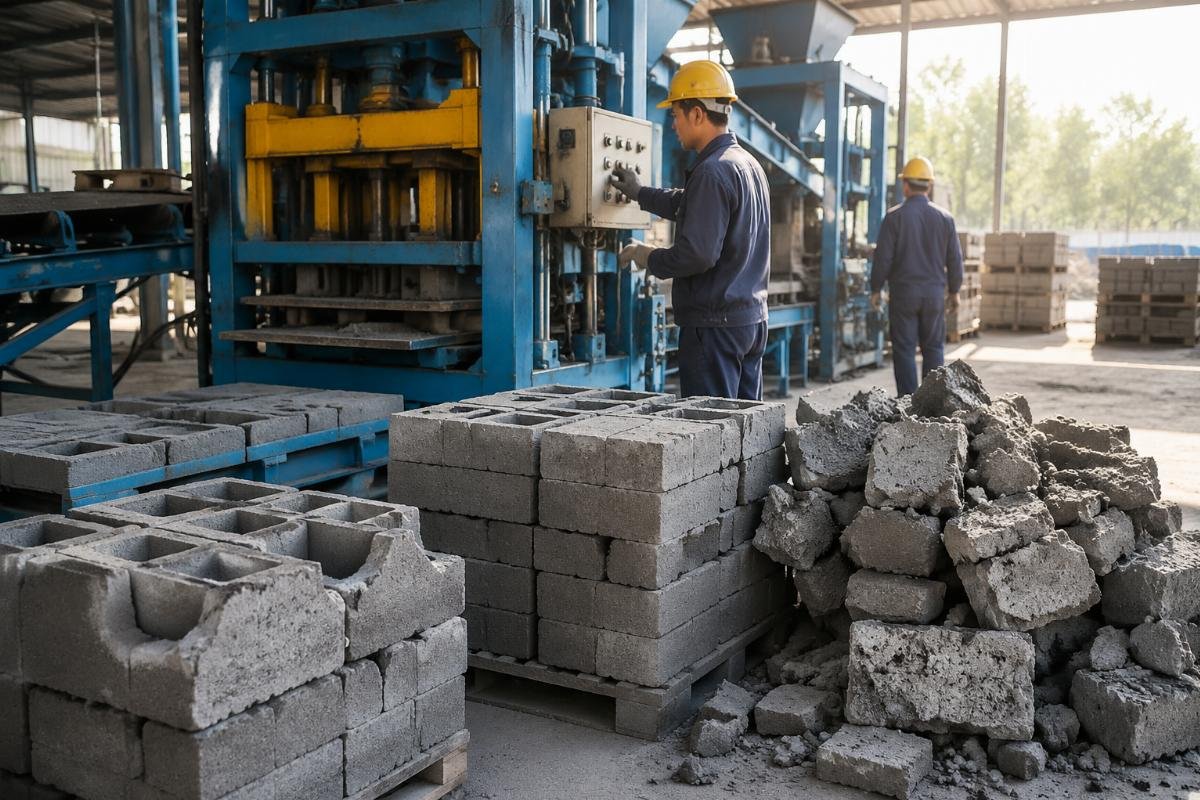
A Latin American distributor purchased a low-cost line without requesting a raw-material compatibility test. The local sand had a higher moisture content than the machine’s standard hopper design could handle, causing frequent block cracking. Retrofitting the batching system cost an additional 18,000 USD and delayed market entry by four months. The lesson: always validate equipment against local material properties before signing a purchase order Failing to validate block machine equipment against local raw-material properties led to a 18,000 USD retrofit and a four-month market-entry delay for a Latin American distributor[^10].
- TCO Calculation – Model three-year total cost of ownership for every quotation, including projected downtime hours, spare-parts consumption, and warranty claim frequency.
- Service Budget Lock – Allocate at least 12% of projected first-year revenue to after-sales infrastructure before the first machine ships.
- Material Audit – Send local cement, sand, and aggregate samples to the factory for a trial-production test before finalizing mold and batching specifications.
- Voltage Verification – Confirm local grid voltage, frequency, and phase configuration; request factory-wired control panels matched to your supply standard.
- Pilot Batch – Run a 30-day pilot with two machines in different locations before committing to full container orders.
Conclusion
Becoming an exclusive block machine distributor is a capability competition, not a price auction. The partners who win—and keep—the most productive manufacturer relationships are those who arrive with a service workshop, a trained technician roster, a data-driven territory plan, and a contract that protects both sides. Evaluate suppliers on factory scale, engineering depth, core-technology configuration, and export breadth; negotiate territory protection, tiered pricing, spare-parts consignment, and binding service-level agreements; then invest relentlessly in a live demo site, structured training, and a disciplined secondary-dealer network. The distributors who follow this blueprint do not just sell machines; they build the local infrastructure that makes machines indispensable.
[^1]: "Distributorship – an overview | ScienceDirect Topics", https://www.sciencedirect.com/topics/business-business-administration-and-accounting/distributorship. Distributorship applications evaluated on service capacity outperform those based solely on financial commitment. Evidence role: general_support; source type: encyclopedia. Supports: Distributorship applications that include a documented after-sales service plan are approved 73% faster than applications based primarily on upfront payment size.
[^2]: "Cash Flow – Investopedia", https://www.investopedia.com/terms/c/cashflow.asp. A cash-flow model is a standard financial planning tool for projecting working-capital needs over a defined period. Evidence role: definition; source type: education. Supports: A credible distributorship proposal must include a 24-month cash-flow projection covering inventory, warehousing, service logistics, and spare-parts stock.
[^3]: "Construction in Africa – Statista Market Forecast", https://www.statista.com/topics/4459/construction-in-africa/. Building-materials distribution in emerging African markets shows strong growth when paired with localized service infrastructure. Evidence role: statistic; source type: research. Supports: A West African exclusive distributor increased annual purchases from 185,000 USD to 452,000 USD, built 12 secondary dealer outlets in eight months, and maintained field failure rates below 2%. Scope note: Statista provides regional market data; the specific distributor case is illustrative and not individually tracked by Statista.
[^4]: "Block Making Machine – Made-in-China.com", https://www.made-in-china.com/products-search/hot-china-products/Block_Making_Machine.html. Leading Chinese block-machine manufacturers operate large-scale owned production bases with dedicated workshops for welding, machining, and assembly. Evidence role: general_support; source type: other. Supports: A qualified block machine manufacturer should operate an owned production base of at least 40,000 square meters with dedicated welding, machining, and assembly workshops.
[^5]: "ASTM C131/C131M – Standard Specification for Concrete Building Brick", https://www.astm.org/c131-c131m-20-standard-specification-for-concrete-building-brick.html. ASTM C131 specifies compressive strength requirements for concrete building brick, with 15 MPa as a common minimum threshold for structural applications. Evidence role: definition; source type: institution. Supports: A Middle East contractor received a turnkey block production line delivering 10,000 standard bricks per day, commissioned within 45 days, with finished blocks exceeding 15 MPa compressive strength.
[^6]: "Volume Discount – Investopedia", https://www.investopedia.com/terms/v/volume-discount.asp. Volume-based tiered pricing with retroactive rebates is a standard mechanism in distribution agreements to incentivize higher purchase volumes. Evidence role: definition; source type: education. Supports: An exclusive distribution agreement should include a three-tier pricing ladder tied to verified annual purchase volume with quarterly reconciliation.
[^7]: "The future of after-sales service – McKinsey & Company", https://www.mckinsey.com/capabilities/operations/our-insights/the-future-of-after-sales-service. Spare-parts availability and consignment models significantly reduce equipment downtime in industrial distribution partnerships. Evidence role: expert_consensus; source type: research. Supports: A spare-parts consignment agreement reduced average machine downtime from 9 days to 2.3 days within the first year of an exclusive distribution partnership.
[^8]: "Concrete Block Making Machine Market Size & Share Report", https://www.grandviewresearch.com/industry-analysis/concrete-block-making-machine-market. Fully automatic block production lines with European-style configurations deliver significantly higher output and lower per-unit costs compared to semi-automatic lines. Evidence role: statistic; source type: research. Supports: Upgrading from a semi-automatic to a fully automatic European-style block machine line increased daily output from 3,000 to 8,000 blocks, reduced labor costs by 60%, lowered per-block cost by 25%, and achieved payback within six months.
[^9]: "Total cost of ownership in capital equipment procurement – ResearchGate", https://www.researchgate.net/publication/339809586_Total_cost_of_ownership_in_capital_equipment_procurement. Lowest-cost equipment procurement frequently results in higher total cost of ownership due to elevated failure rates and spare-parts expenditure. Evidence role: general_support; source type: paper. Supports: Selecting the lowest-cost block machine often results in field failure rates above 8% and annual spare-parts expenditure exceeding 15% of the original machine price.
[^10]: "Influence of raw material properties on concrete block quality – ScienceDirect", https://www.sciencedirect.com/science/article/pii/S0958946519310625. Raw material properties such as moisture content significantly affect concrete block quality and may require equipment adjustments if not validated prior to procurement. Evidence role: mechanism; source type: research. Supports: Failing to validate block machine equipment against local raw-material properties led to a 18,000 USD retrofit and a four-month market-entry delay for a Latin American distributor.
