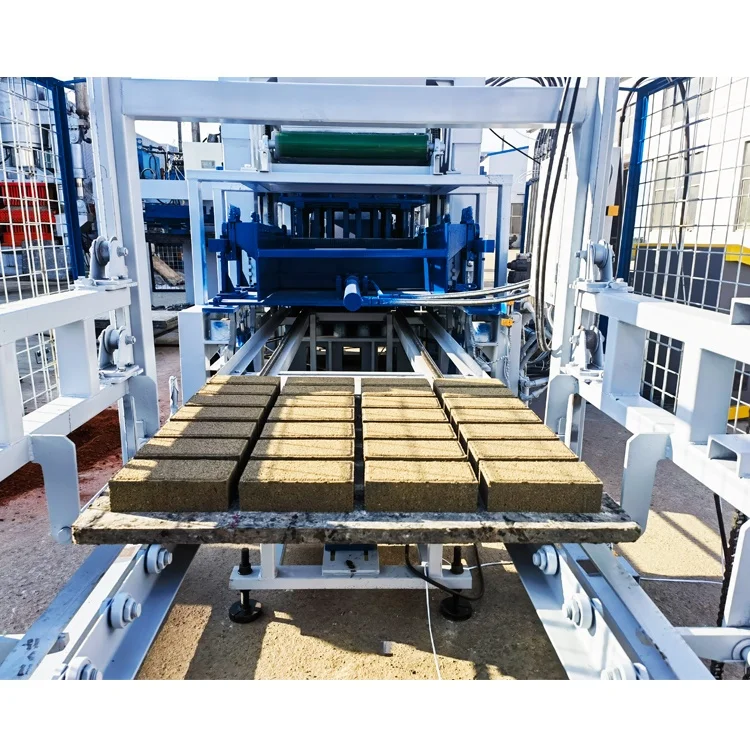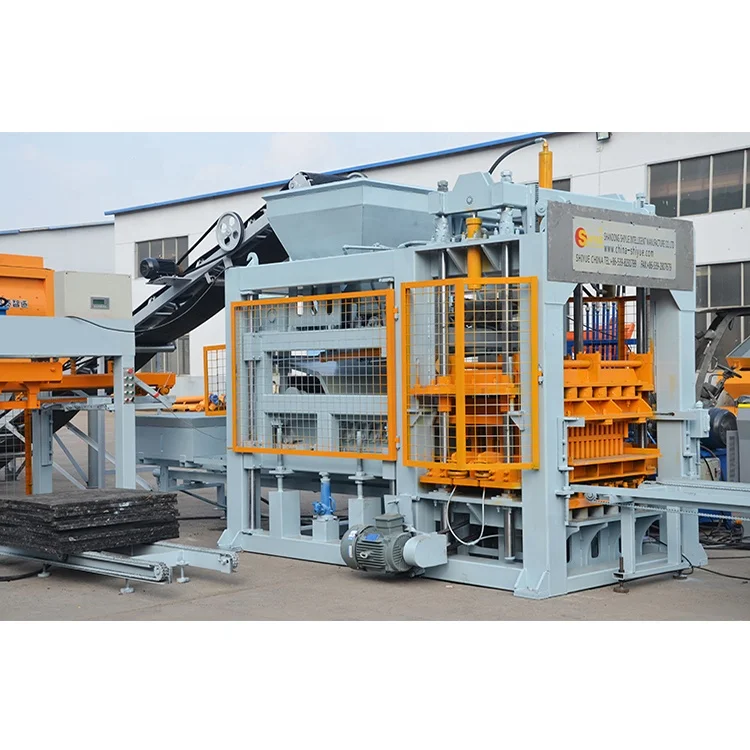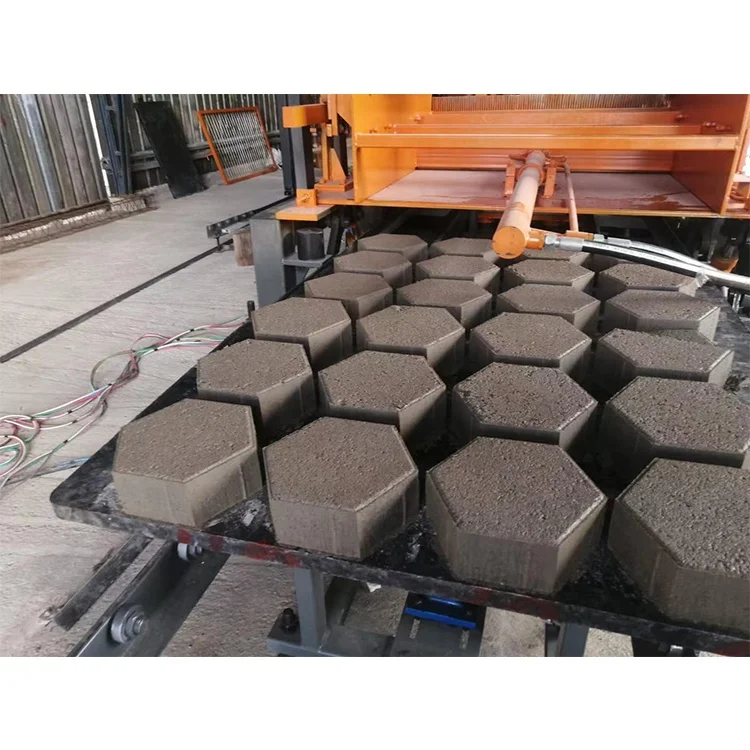
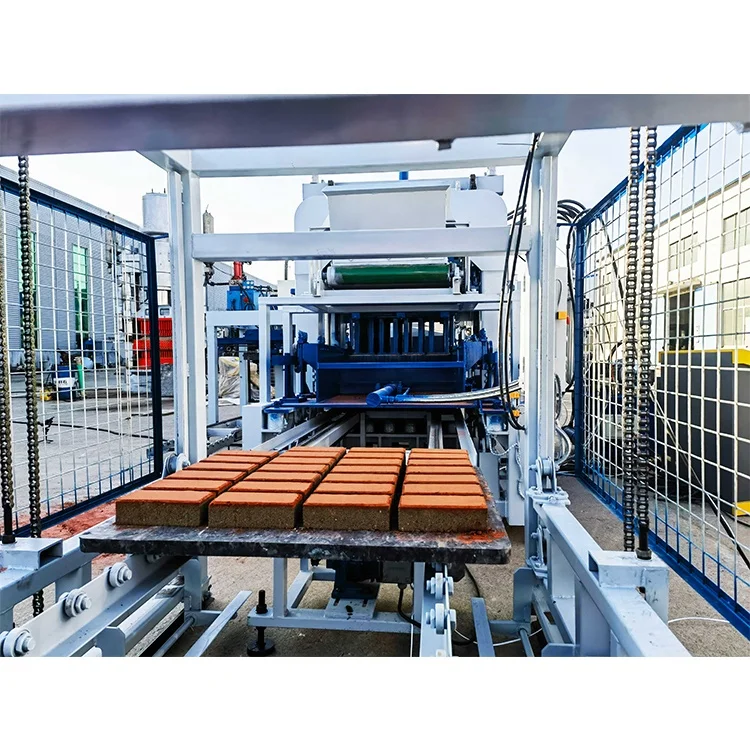


Description
Matched System Sizing — the QT8-15 is configured against your actual block format, local aggregate, and target daily output rather than shipped as a catalogue default.
Technical Specifications
| Parameter | Value |
|---|---|
| Model | QT8-15 |
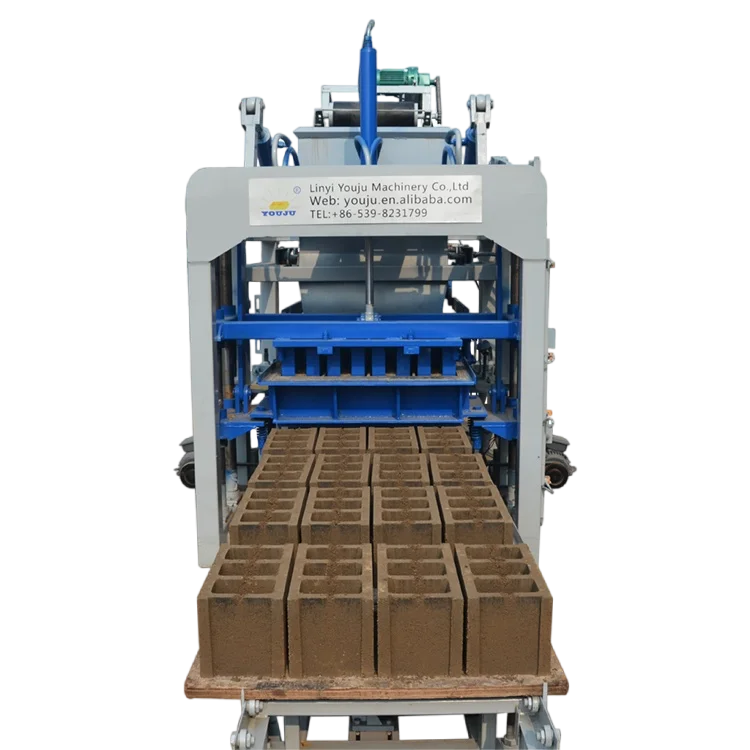
| Product Type | Hydraulic Paver Block Making Machine |
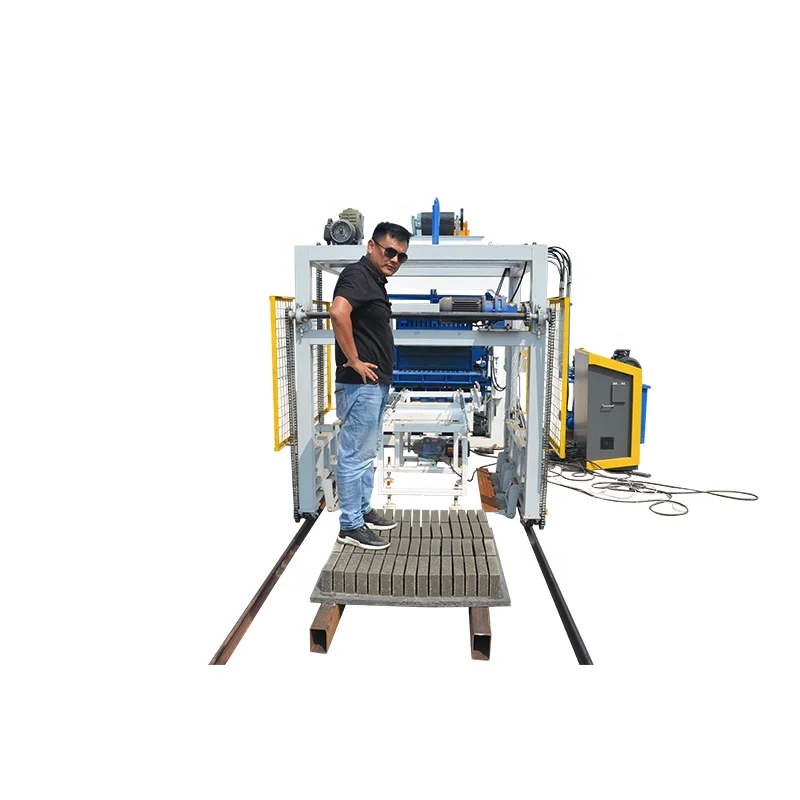
| Overall Dimensions (L×W×H) | 8300 × 1860 × 3000 mm |
| Rated Hydraulic Pressure | 21 MPa |
| Main Vibration Form | Platform Vibration |
| Vibration Frequency | 2800–4500 r/min |
| Vibration Force | 45 kN |
| Pallet Size | 950 × 900 mm |
| Molding Cycle | 15–20 s (basis not stated in source — confirm block format, material, and thickness) |
| Overall Power | 55.5 kW |
| Total Mass | 8 T |
| Demolding Method | Hydraulic |
| Minimum Factory Area | 300 m² |
| Raw Materials | Crushed stone, sand, cement, dust, fly ash, gravel, slag |
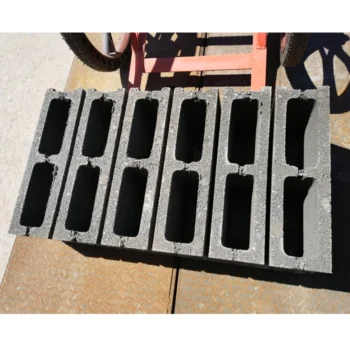
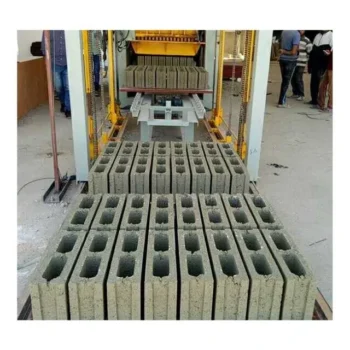
| Applied Products | Concrete hollow blocks, solid blocks, pavers, interlocking blocks, curbstone, colored pavers |
| Voltage & Frequency | Configurable — confirm with manufacturer before production |
| Control System | Confirm PLC brand and display language |
| Automation Level | Configurable from semi-automatic to fully automatic stacking |
| Stacking Method | Confirm manual or automatic |
| Mould Change Time | Confirm with manufacturer |
Application Suitability
| Application | Material or Output |
|---|---|
| Hollow block production for wall construction | Crushed stone, sand, cement, fly ash blends |
| Solid block manufacturing for load-bearing walls | Gravel, sand, cement mixes |
| Paving block and colored paver production | Fine aggregates with cement and pigment |
| Interlocking brick forming for landscape and retaining walls | Sand, crusher dust, cement |
| Curbstone production for road and kerb projects | Coarse aggregate, sand, cement |
| On-site block production for housing developments | Locally sourced aggregate and cement |
What "15–20 Seconds per Cycle" Actually Means for Your Output
Cycle time only matters when tied to a specific block format, mix design, and pallet configuration.
Many quotations list a single molding cycle without stating which block size or material it assumes. A 15-second cycle on a small solid paver does not translate to the same cycle on a 200 mm hollow block with a stiff, low-slump mix. When the QT8-15 paver block machine specifications are reviewed without that context, buyers regularly find their real daily output falling well short of the number they planned around. I have seen sites where the local river sand carried too much clay, forcing the vibration frequency and hydraulic pressure to be retuned on arrival, and the effective cycle stretched beyond the quoted range. [NEED_CITE: effect of aggregate grading and clay content on block compaction cycle time]
Matching Vibration and Pressure to Your Mix
The 21 MPa rated hydraulic pressure and 45 kN platform vibration on the QT8-15 must work together to compact the specific aggregate and cement ratio available at your site. Dense gravel blends need higher pressure to close voids, while crusher dust and fly ash mixes respond more to vibration frequency. Specifying the QT8-15 paver block machine specifications against your actual material — not a generic lab mix — is what keeps block strength consistent from the first pallet to the last.
Pallet Size and the Curing Area You Already Have
The 950 × 900 mm pallet is a mid-range size that suits many standard curing rack layouts, but it must align with the forklift tine spacing and rack dimensions already in your yard. Ordering a machine without checking this means pallets either do not fit the racks or require a different forklift. [NEED_CITE: pallet dimension compatibility with standard curing rack and forklift specifications in block production] Confirm pallet material — bamboo, PVC, or steel — against the curing environment and the weight your handling equipment can manage.
Reading the Core Numbers on the Spec Sheet
The 55.5 kW total power draw tells you the electrical supply must handle sustained load across the hydraulic pump, vibration motors, and conveyor drives simultaneously; a supply that dips under combined start-up current will trip breakers mid-cycle. The 2800–4500 r/min vibration frequency range gives the operator room to tune compaction for different formats — lower for large hollow blocks where the mix must settle into deep cavities, higher for thin pavers where surface finish matters. Hydraulic demolding, rather than mechanical stripping, reduces edge damage on freshly pressed blocks, which matters most when producing interlocking pavers with tight dimensional tolerances. The 8 T machine mass provides a stable base that absorbs vibration recoil, keeping the press frame from walking on the foundation during high-frequency cycles.
The Cost of Skipping Format-Level Capacity Confirmation
When a buyer orders based on a single cycles-per-hour figure, the first sign of trouble is the curing yard filling slower than expected. Workers stand idle waiting for filled pallets, and the project schedule slips. If the pallet size was chosen without checking the existing rack layout, blocks end up stacked by hand on the floor, introducing breakage and slowing the entire line. These are not machine faults — they are specification gaps that surface only after installation. [NEED_CITE: common causes of output shortfall in concrete block production plants after commissioning]
Why Sourcing the QT8-15 Here Reduces Specification Risk
The QT8-15 is specified as a matched system: machine, mould, pallet, and handling equipment are selected together against your block format and local material, not sourced from separate suppliers and bolted together. Mould design covers the formats your market actually sells, with custom drawings available when standard options do not match. Configuration is set after reviewing your mix design and aggregate samples, so vibration force and hydraulic pressure arrive tuned rather than defaulted. Automation level is selectable, meaning you can start with semi-automatic pallet handling and add stacking later without replacing the press. Installation includes on-site commissioning and operator training, so the crew knows how to adjust cycle parameters when the material source changes.
Documentation & Verification
- Line layout drawing showing QT8-15 footprint within your 300 m² minimum factory area
- Capacity calculation stating the exact block format and mix assumed for each cycle time
- Mould drawing and format list confirming every block type your market requires
- Pallet specification sheet matching the 950 × 900 mm size to your curing rack system
- Hydraulic and electrical schematic with confirmed voltage, frequency, and PLC language
- Factory test record run on your specified block format before dispatch
Installation, Commissioning & Support
- Foundation plan sized for the 8300 × 1860 mm footprint and 8 T operating mass
- Dedicated electrical circuit rated for 55.5 kW continuous draw at confirmed voltage and frequency
- Machine arrives dismantled for container loading; reassembly and alignment on your prepared base
- First-run commissioning with vibration frequency and hydraulic pressure tuned to your aggregate
- Operator training covering mould change procedure, cycle parameter adjustment, and daily maintenance
- Wear parts list with hydraulic seals and vibration motor bearings identified for local stocking
Before You Request a Quote
Send the exact block formats you plan to produce — dimensions, wall thickness, and face finish — along with your target daily output per format. Include a sample or description of the local aggregate and sand, plus the voltage and frequency at your site. If you already have curing racks and forklifts, share their dimensions so the 950 × 900 mm pallet configuration can be verified against your existing handling setup.
Frequently Asked Questions
Q: How is daily output calculated for each block format on the QT8-15?
A: Output is calculated by dividing available production hours by the confirmed molding cycle for each specific block format, then multiplying by the number of blocks per pallet. The cycle time varies with block thickness, mix stiffness, and target density, so a single blanket figure is not reliable. Request a format-by-format breakdown before ordering.
Q: What pallet material works with the 950 × 900 mm specification?
A: Bamboo, PVC, and steel pallets are all compatible with this size. The choice depends on your curing environment, block weight, and how your forklift and racks are set up. Bamboo suits lighter blocks and humid curing, while steel handles heavier pavers and longer service intervals.
Q: How long does a mould change take, and what tools are required?
A: Mould change time depends on the change system fitted — manual bolt-on moulds take longer than quick-clamp setups. Confirm the exact method and required tools during the specification stage so your crew can plan format changeovers without losing a full shift. [NEED_CITE: mould change systems and their impact on format flexibility in block production]
Q: What voltage and PLC language options are available for the QT8-15?
A: Voltage and frequency are configured to match your site supply before production begins. PLC display language is confirmed in writing so operators can read parameters and fault codes in a language they work with. Always verify these details before the machine enters manufacturing.
Q: How are vibration force and hydraulic pressure matched to local aggregate?
A: The 45 kN vibration force and 21 MPa hydraulic pressure are adjusted based on your specific aggregate type, grading, and cement ratio. Dense gravel needs more pressure; fine crusher dust responds better to higher vibration frequency. Providing a material sample or lab test result allows the settings to be configured before the machine ships.