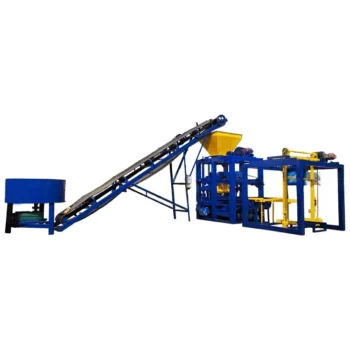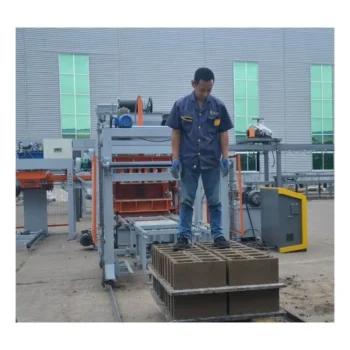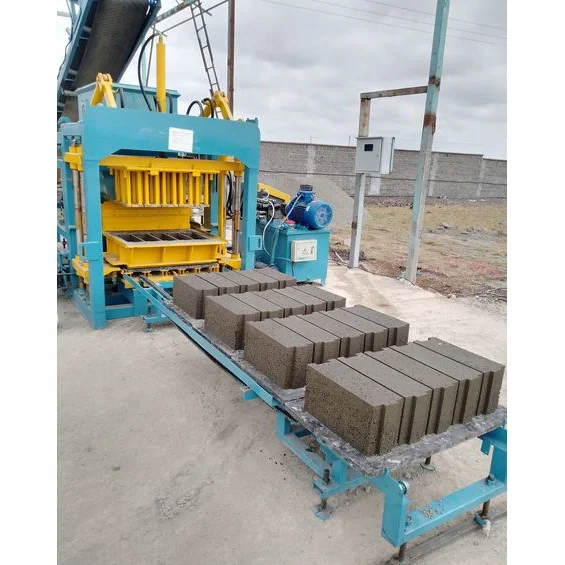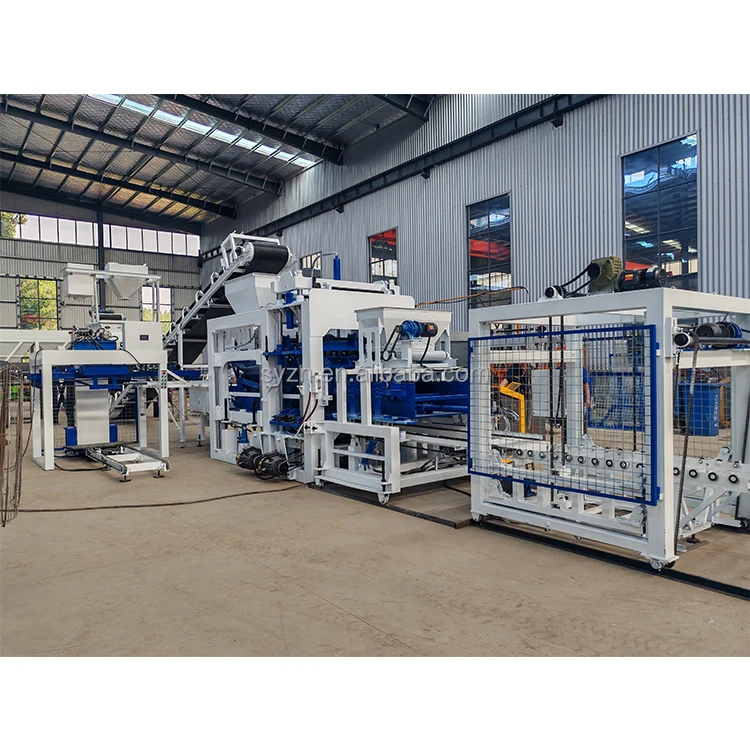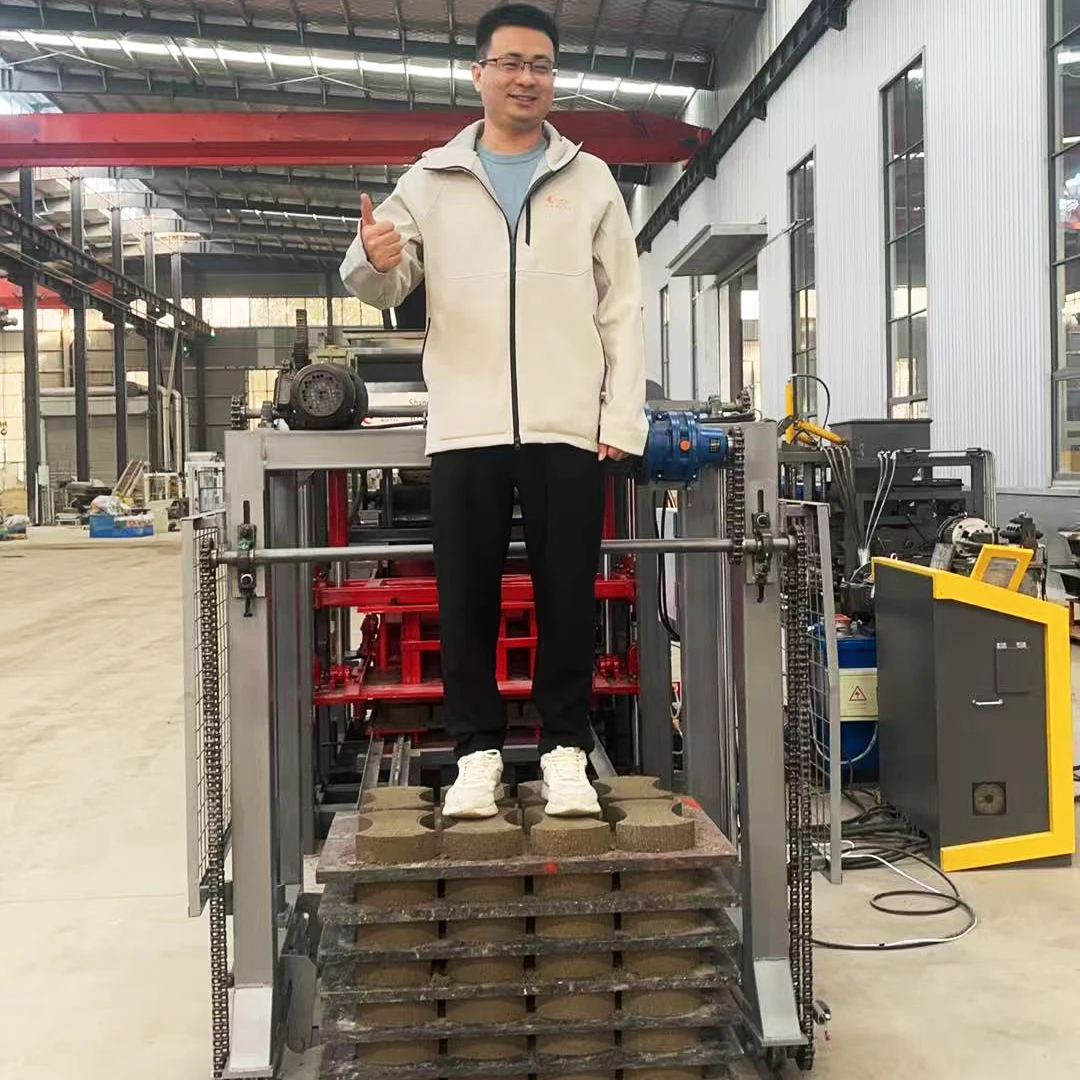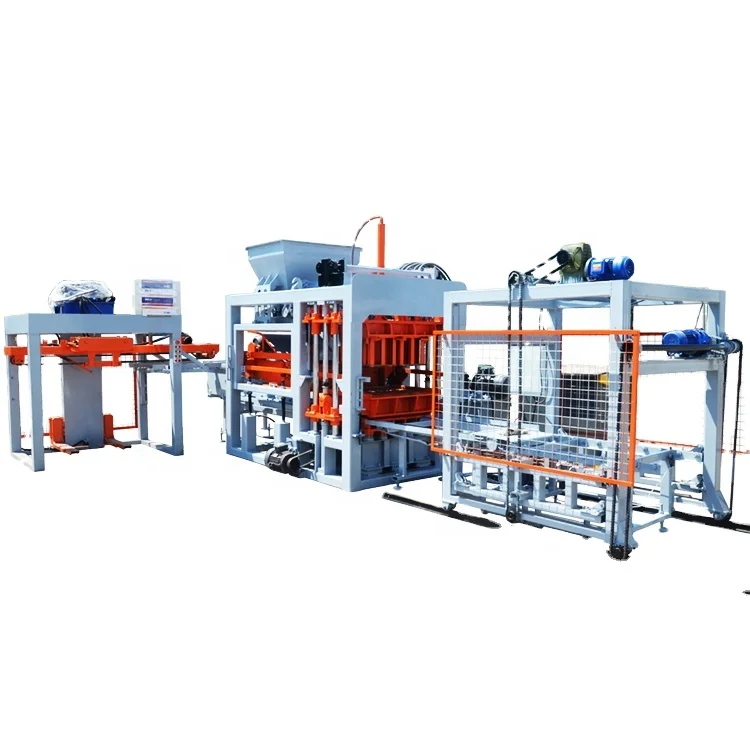

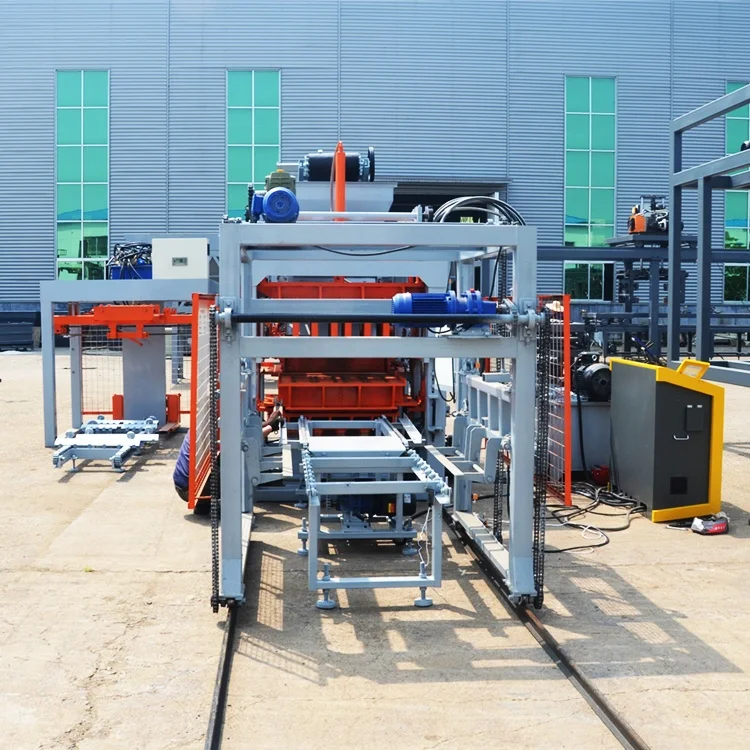
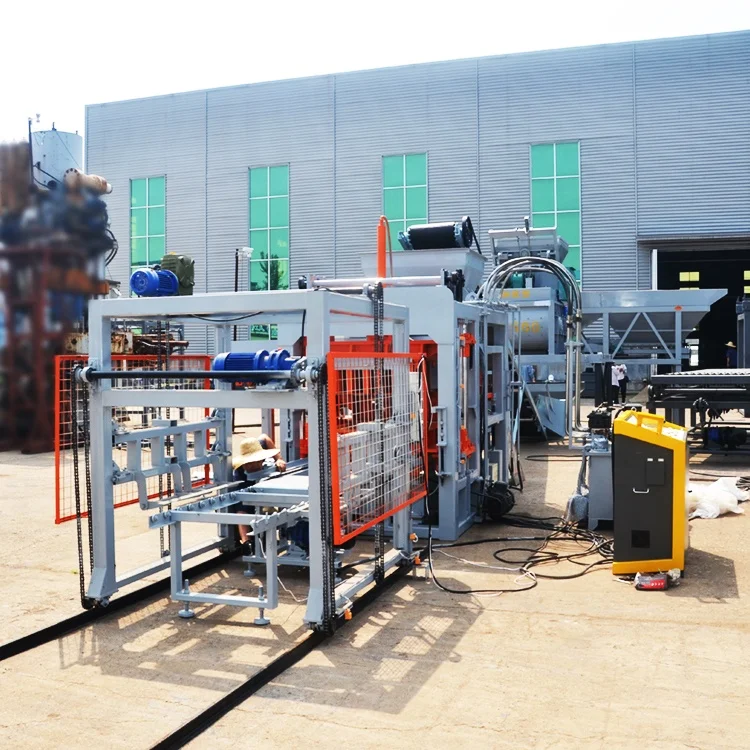
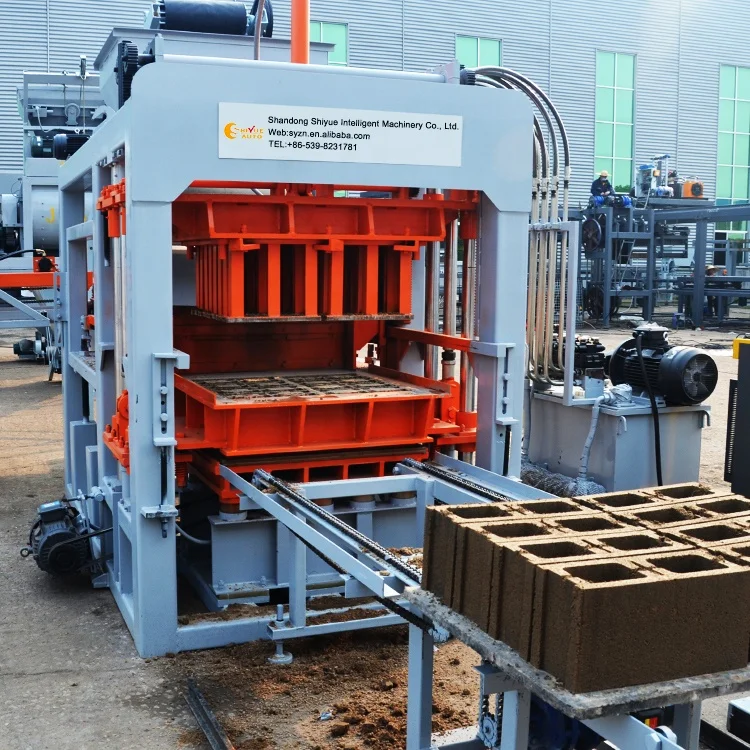
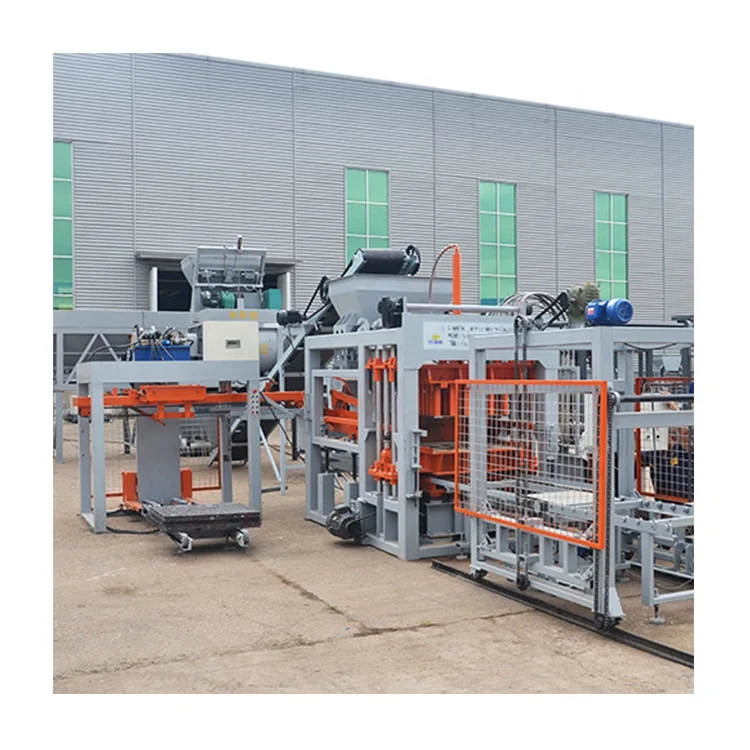
Description
Per-Format Output Transparency — every QT6-15 capacity figure on this page is tied to a specific block dimension and cycle time, so buyers match the machine to the format their market actually buys.
Technical Specifications
| Parameter | Value |
|---|---|
| Model | QT6-15 |
| Product Type | Hollow Block And Solid Block Making Machine |
| Overall Dimensions (L×W×H) | 8200×1700×2950 mm |
| Vibration Frequency | 0-60 Hz (adjustable) |
| Vibration Form | Platform Vibration |
| Vibration Force | 45 kN |
| Moulding Mode | Load automatically, vibration moulding |
| Pallet Size | 880×850 mm |
| Molding Cycle | 15-20 s (basis not stated in source — confirm block format / material / thickness) |
| Overall Power | 37 kW |
| Total Mass | 7 T |
| Demolding Method | Hydraulic |
| Recommended Factory Area | 1200 m² |
| Control System | PLC (Programmable Controller) with touch screen |
| Hydraulic System | Independent integrated hydraulic station |
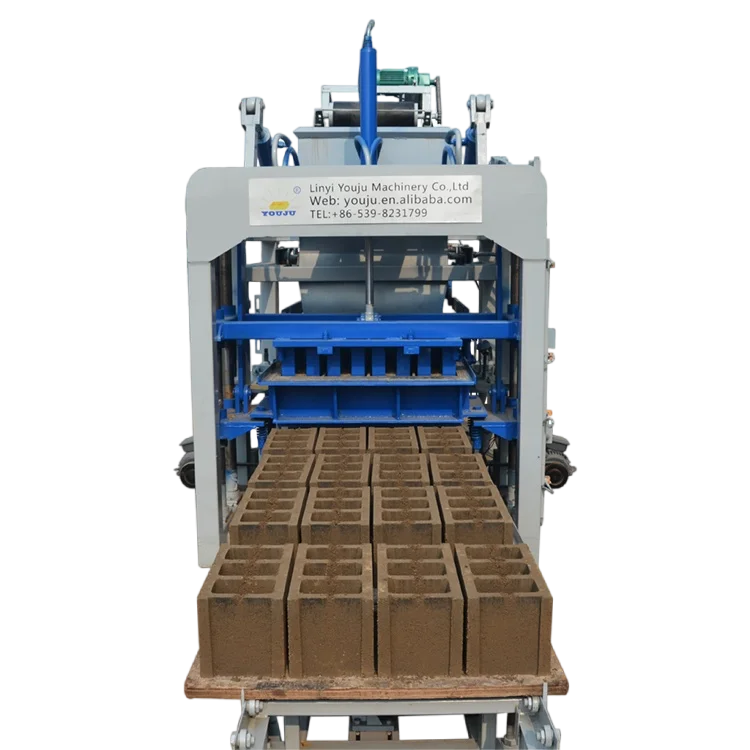
| Output — Hollow Block 400×200×200 mm | 6 pcs/mould, 1080-1440 pcs/h, 8640-11520 pcs/8hr |
| Output — Hollow Block 400×150×200 mm | 8 pcs/mould, 1440-1920 pcs/h, 11520-15360 pcs/8hr |
| Output — Solid Brick 240×115×53 mm | 32 pcs/mould, 5760-7680 pcs/h, 46080-61440 pcs/8hr |
| Output — Rectangular Paver 200×100×60 mm | 21 pcs/mould, 2160-2880 pcs/h (cycle 20-25 s), 17280-23040 pcs/8hr |
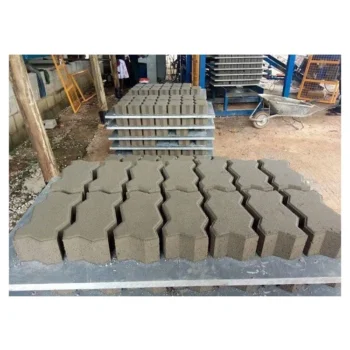
| Output — Zigzag Paver 225×112.5×60 mm | 15 pcs/mould, 2160-2880 pcs/h (cycle 20-25 s), 17280-23040 pcs/8hr |
| Block Compressive Strength | More than 15 MPa (source value — verify against manufacturer catalog) |
| Voltage & Frequency | Configurable per site (basis to be confirmed before order) |
| Automation Level | Automatic with PLC control |
| Warranty | 1 year for whole machine (excluding spare parts) |
Application Suitability
| Application | Material or Output |
|---|---|
| Hollow block production for load-bearing and partition walls | Crushed stone, sand, cement, fly ash, and lightweight aggregates |
| Solid brick manufacturing for masonry | Standard sand-cement mixes and waste ash blends |
| Rectangular paving brick production for walkways and yards | High-density aggregate-cement mixes at extended cycle times |
| Interlocking zigzag paver manufacturing | Colored face-mix and base-mix concrete layers |
| On-site block production for housing developments | Locally sourced aggregates matched to available cement grades |
What "1080 Pieces per Hour" Leaves Out About QT6-15 Block Machine Specifications
The cycle time on the QT6-15 hollow block making machine capacity by format changes with every block dimension, and quoting a single number hides that reality.
I have seen buyers sign contracts based on a headline cycles-per-hour figure, only to discover that number assumed a small solid brick format while their market demands 400×200×200 mm hollow blocks. The QT6-15 block machine specifications on this page list each format separately with its own mould cavity count and cycle window. When a supplier quotes one capacity number without naming the block format behind it, the daily output on your production floor will fall far short of what you planned for [NEED_CITE: honest block machine capacity quoting practices in the concrete products industry]. The gap is not a machine defect — it is a quotation gap, and it only surfaces after the equipment is installed and running your actual product mix.
Matching Vibration Force to Your Block Format
The QT6-15 block machine specifications list 45 kN of vibration force delivered through platform vibration at an adjustable 0-60 Hz frequency. That range exists because different block formats demand different compaction profiles. A dense 400×200×200 mm hollow block with thin webs needs high-frequency vibration to consolidate the mix around the core pins without segregating the aggregate, while a solid brick at 240×115×53 mm responds better to lower frequency and longer dwell to avoid surface cracking.
Hydraulic Pressure and Mix Design Alignment
The independent integrated hydraulic station powers both the mould loading and demolding sequence on this QT6-15 hollow block making machine capacity by format configuration. The hydraulic system sits apart from the main frame vibration zone, which keeps pressure consistent across cycles. When your local aggregate differs from the standard sand assumed in catalogue testing — lighter volcanic pumice, recycled crushed concrete, or high-clay river sand — the hydraulic pressure and vibration timing must be re-matched to that specific mix, or block strength drops below the 15 MPa threshold and rejection rates climb [NEED_CITE: effect of local aggregate variation on concrete block compressive strength].
Pallet Size and Curing Area Compatibility
The 880×850 mm pallet on the QT6-15 is a fixed dimension that determines how your curing yard and forklift fleet must be arranged. Every pallet carries one mould cycle of output, so pallet count per shift directly sets your curing rack capacity. If your existing racks were built for 900×700 mm pallets from a previous machine, the QT6-15 pallets will not slot in, and you will be building new curing infrastructure before the first production run starts.
The Mould Change and Format Flexibility Question
The QT6-15 block machine specifications show five standard formats across hollow blocks, solid bricks, and pavers. Switching between them requires a mould change on the platform, and the time that takes determines whether your format flexibility is real or theoretical. A mould change that consumes most of a shift cancels out the reason you bought multiple moulds in the first place. Buyers should confirm the changeover procedure and tooling requirements before the machine ships [NEED_CITE: mould changeover procedures on automatic block making machines].
Choosing the Wrong Configuration Silently
When the vibration frequency is set for a dense aggregate but the buyer sources lightweight pumice locally, the blocks emerge under-compacted and fail compression testing. When the voltage and frequency are not confirmed before production, the PLC and hydraulic pump motor arrive incompatible with the site supply, and commissioning stalls until a transformer is sourced. When the pallet material is specified without considering the curing environment, wooden pallets warp in high humidity and steel pallets corrode, both causing uneven block surfaces within weeks [NEED_CITE: pallet material selection for concrete block curing environments].
Why Source This QT6-15 Configuration Here
Block machinery is the single production focus, which means the QT6-15 press, moulds, pallets, and handling equipment are specified as one matched system rather than assembled from separate suppliers. Machine configuration is set against your actual mix design, local aggregate, and target block format instead of defaulting to a catalogue setting. Mould design covers the formats your market sells, with custom drawings accepted when standard options do not match. Automation level is selectable so a buyer can start semi-automatic and add stacking later. Installation includes on-site commissioning and operator training tied to your specific product range.
Documentation & Verification
- Line layout and capacity calculation stating the block format assumed for each QT6-15 output figure
- Mould drawing and format list confirming which block dimensions are included in the quotation
- Pallet specification sheet matching size and material to your curing area and handling equipment
- Voltage, frequency, and PLC display language confirmation document before production begins
- Factory test record on your target block format before dispatch
- Hydraulic and electrical schematic for on-site maintenance reference
Installation, Commissioning & Support
- Foundation must accommodate 8200×1700 mm footprint with clearance for 880×850 mm pallet circulation
- Dedicated 37 kW power circuit with confirmed voltage and frequency matching the PLC and hydraulic station
- Machine ships dismantled for container loading and is reassembled on the prepared 1200 m² factory floor
- Commissioning includes vibration frequency tuning to your local aggregate and target block strength
- Operator training covers PLC touch screen interface, fault diagnosis, and safe logic interlock procedures
- Wear parts list and mould maintenance schedule provided for first-year servicing
Before You Request a Quotation
Send your target block formats with exact dimensions, the daily output you need per format, and the aggregate type available at your site. Confirm your local voltage and frequency, the PLC display language your operators require, and the curing area layout so pallet compatibility can be checked before the QT6-15 configuration is finalized.
Frequently Asked Questions
Q: How is the QT6-15 output capacity calculated for each block format, and what cycle time is assumed?
A: Each output figure on this page is tied to a specific block dimension and its corresponding mould cavity count. Hollow blocks at 400×200×200 mm run on a 15-20 second cycle, while pavers at 200×100×60 mm use a 20-25 second cycle. The per-hour and per-shift figures reflect those cycle differences. Confirm your actual mix design, as aggregate type and moisture affect real cycle time.
Q: Which mould formats are included, and how long does a mould change take on this machine?
A: Standard formats cover two hollow block sizes, one solid brick, and two paver profiles. Mould changeover time depends on the specific change system fitted and operator familiarity. Request the changeover procedure document for the QT6-15 before ordering so you can plan shift scheduling around your actual format rotation needs.
Q: How do I confirm voltage, frequency, and PLC language match my site before shipment?
A: Voltage and frequency are configurable and must be confirmed in writing before production starts. The PLC touch screen display language is set at the factory. Provide your site electrical specification and preferred operator language during the quotation stage so the control system arrives ready for immediate commissioning.
Q: What pallet size does the QT6-15 use, and is it compatible with my existing curing racks and forklift?
A: The pallet size is 880×850 mm. Check this against your current curing rack spacing, forklift tine width, and stacking height before confirming the order. If your existing infrastructure was built for a different pallet dimension, new racks or handling adjustments will be needed to run the QT6-15 efficiently.
Q: Can the machine be configured for my local aggregate and mix design, or does it require specific raw materials?
A: The QT6-15 accepts various waste ash, slag, and natural aggregate blends. Vibration frequency and hydraulic pressure are adjusted to match your specific mix design and target block strength. Provide a sample or specification of your local aggregate during the inquiry stage so the machine arrives configured for your actual materials.