
Description
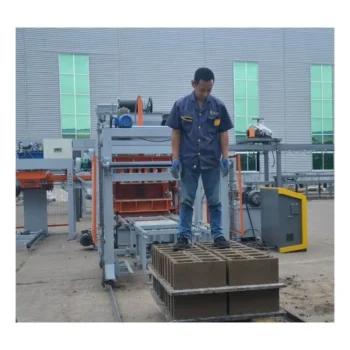
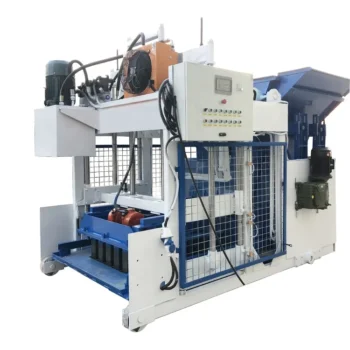
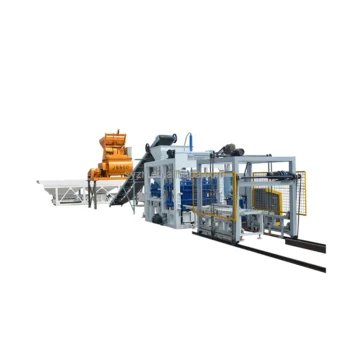
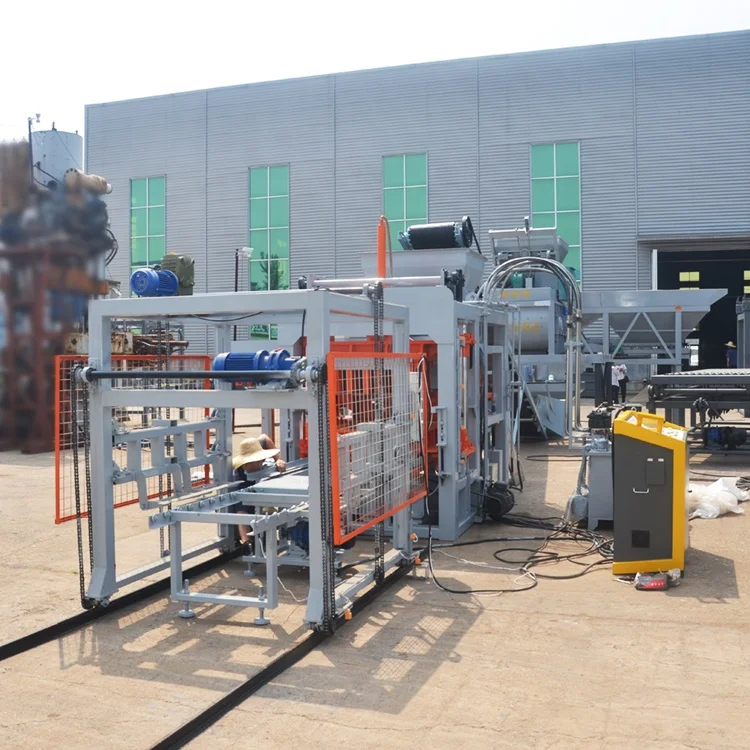
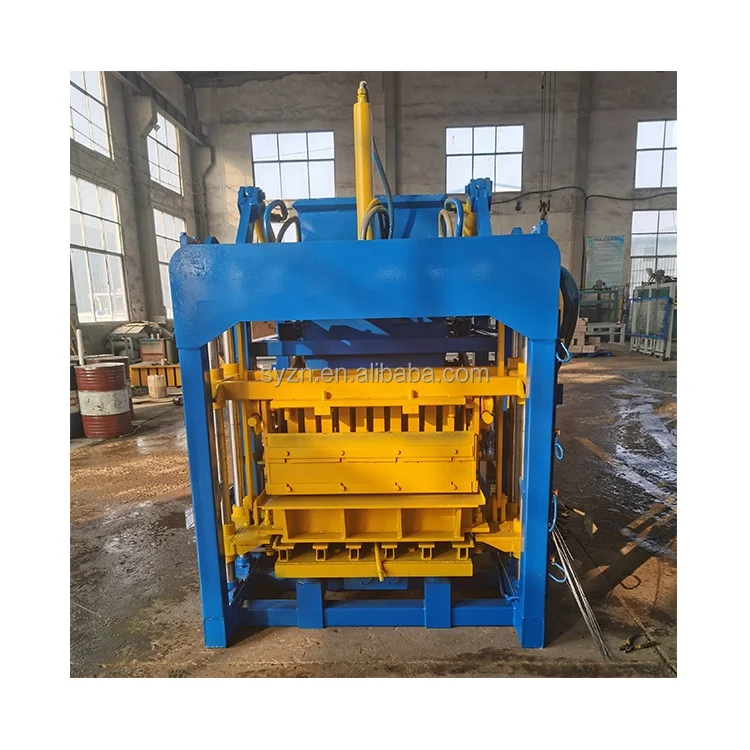
Matched System Sizing — every QT4-15A block machine specification sheet is built around the buyer’s actual block format, local aggregate, and curing layout rather than a generic catalog default.
Technical Specifications
| Parameter | Value |
|---|---|
| Model | QT4-15A |
| Product Type | Automatic Concrete Block Making Machine |
| Overall Dimensions (L×W×H) | 7100×1600×2610 mm |
| Molding Cycle | 15–25 s (basis not stated in source — confirm block format and material) |
| Vibration Frequency | 4600 r/min |
| Vibration Force | 40–50 kN |
| Total Power | 18.45 kW |
| Mixer Model | JQ350 |
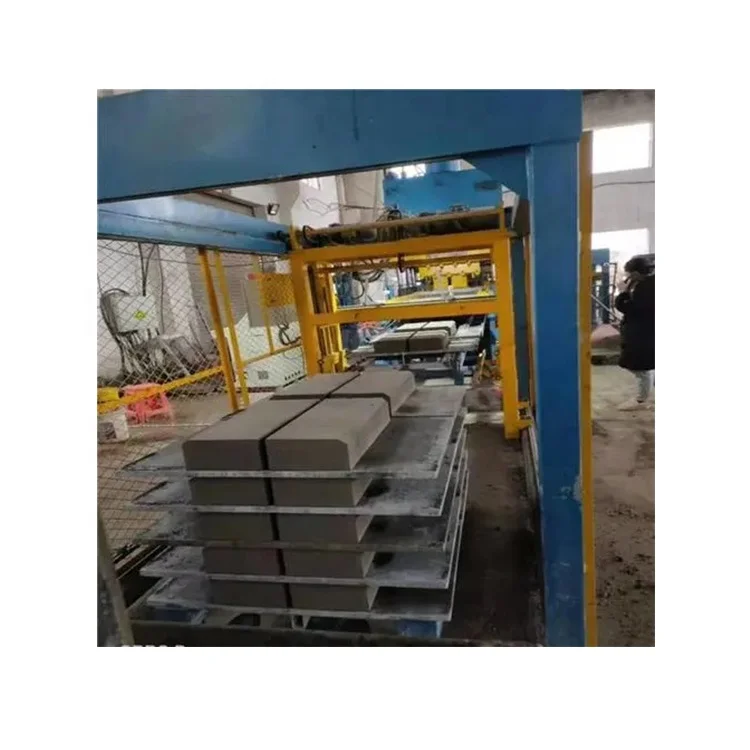
| Pallet Size | 850×550×25 mm |
| Total Weight | 3 T |
| Control System | PLC control system |
| Hydraulic Station | High-pressure hydraulic system, included |
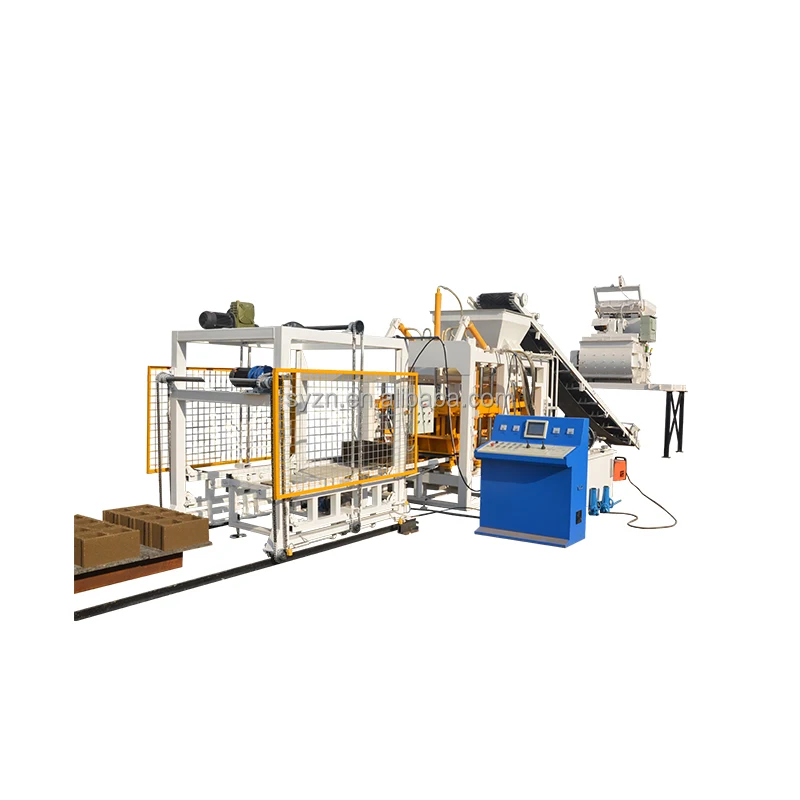
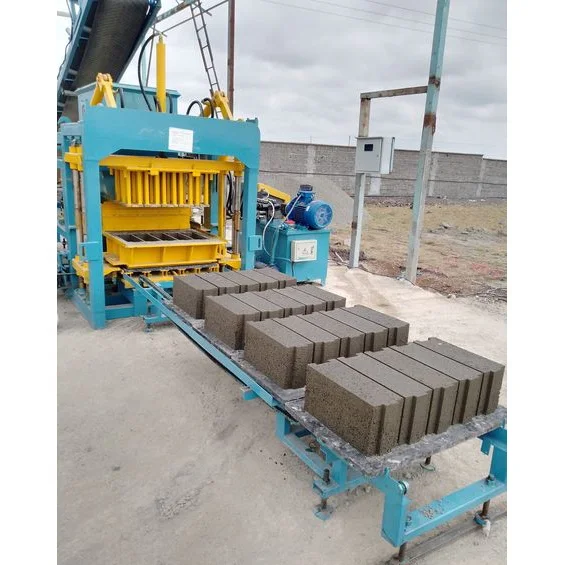
| Included Equipment | Block making machine, hydraulic station, PLC control system, pallet feeder, brick conveyor, block sweeper |
| Free Accessories | Manual hydraulic trolley, spare parts, tools |
| Voltage & Frequency | Configurable to buyer’s local grid (to be confirmed before production) |
| Automation Level | Automatic with PLC, pallet feeder, conveyor, and sweeper |
| Stacking Method | To be confirmed (manual or automatic) |
| Mould Change Time | To be confirmed per format |
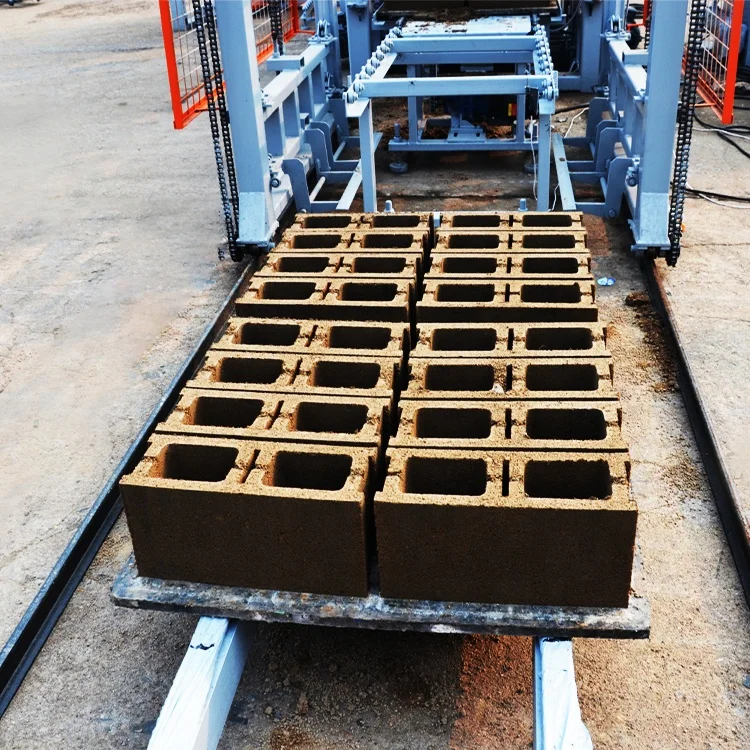
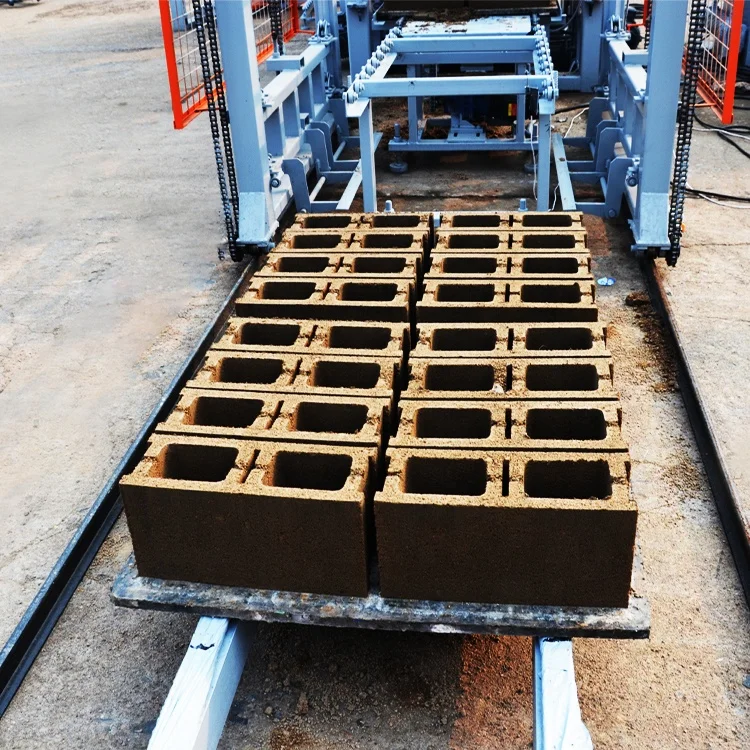
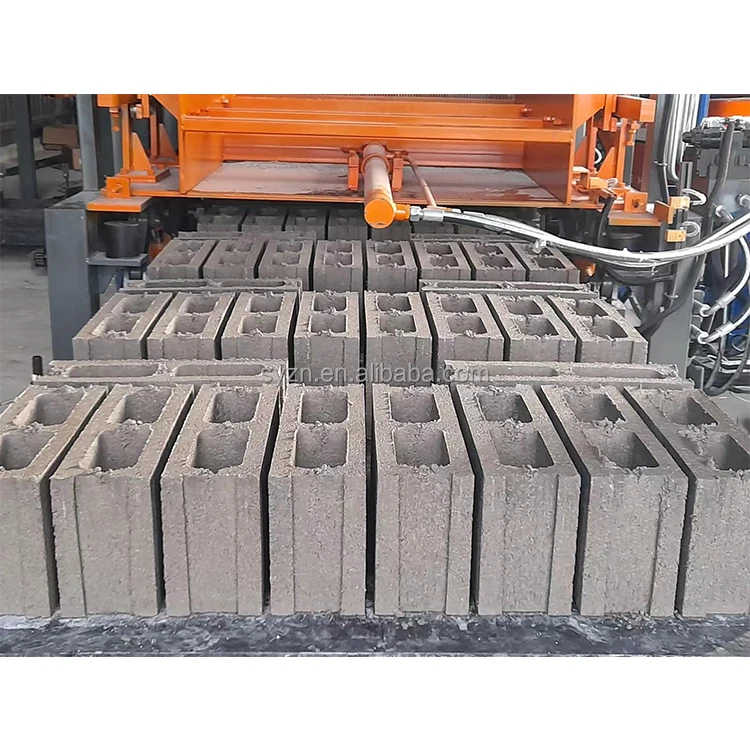
| Production Capacity (Hollow Block 400×200×200 mm) | 4 pcs/mould, 408 pcs/hr, 3264 pcs/8hr |
| Production Capacity (Hollow Block 400×150×200 mm) | 5 pcs/mould, 510 pcs/hr, 4080 pcs/8hr |
| Production Capacity (Solid Brick 240×115×53 mm) | 18 pcs/mould, 2100 pcs/hr, 17000 pcs/8hr |
| Raw Materials | Crushed stone, sand, cement, dust, fly ash |
| Applied Products | Paver, solid block, hollow block, curbstone (via mould change) |
Application Suitability
| Application | Material or Output |
|---|---|
| Hollow block production for wall construction | Crushed stone, sand, cement, fly ash in 400×200×200 mm and 400×150×200 mm formats |
| Solid brick manufacturing for load-bearing and partition walls | Cement, sand, and stone dust in 240×115×53 mm format |
| Paver and curbstone production for roads and landscaping | Crushed stone and cement mixes via dedicated mould change |
| On-site block production for housing and commercial projects | Locally sourced aggregate blended with cement and fly ash |
Why "Pieces per Hour" Means Nothing Without the Block Format
The QT4-15A block machine specifications only matter when tied to the exact block format you intend to sell.
I remember a buyer who received a quote stating a QT4-15A automatic brick machine capacity of over 400 pieces per hour. What the quote did not mention was that this figure assumed 400×150×200 mm hollow blocks at five pieces per mould. When the same machine ran 400×200×200 mm blocks — the format his market actually demanded — output dropped to 408 pieces per hour with only four pieces per mould. The buyer had planned his entire delivery schedule and labour roster around a number that did not apply to his product. This is the single most common disconnect I encounter when reviewing block machine quotations [NEED_CITE: common capacity misrepresentation in block machinery quotes].
Mould Selection Defines the Real Daily Output
The QT4-15A supports multiple block formats through mould changes: hollow blocks, solid bricks, pavers, and kerbstones. However, the machine only produces one format at a time, and the cycle varies depending on block height, mould cavity count, and material flow characteristics. Buyers who need to run two or three formats in a single shift must account for the time lost during each mould changeover — a detail often absent from initial quotations. Confirming the exact formats your market requires and the corresponding QT4-15A block machine specifications per format prevents costly surprises after installation.
Matching Vibration to Your Local Aggregate
The vibration system delivers 40–50 kN of exciting force at 4600 r/min. Whether that range produces blocks meeting your local strength standard depends entirely on your aggregate type, gradation, and cement content. Volcanic scoria, for example, absorbs vibration differently than river gravel or crushed basalt. A mix that works in a factory test with one aggregate may produce friable, under-strength blocks with another [NEED_CITE: aggregate influence on concrete block compressive strength]. The QT4-15A automatic brick machine capacity figures quoted in the specification table above assume a standard crushed-stone mix — if your locally available material differs, those numbers must be recalculated with your actual mix design in mind.
Reading the Numbers That Actually Matter
The 18.45 kW total power rating covers the main press motor, hydraulic pump, mixer drive, and conveyor. When sizing your electrical supply, add a margin for starting current and any auxiliary equipment not included in the base package, such as a curing rack system or batching plant. The 850×550×25 mm pallet size dictates your curing area layout: you need enough floor space or rack positions to hold a full shift’s output, and your forklift must accommodate that pallet dimension. The JQ350 mixer pairs with this machine’s throughput range, but if you plan to add a second press later, you may need to upgrade to a larger mixer to avoid the press waiting for material.
The Cost of Ignoring Configuration Details
When the PLC display language does not match the operator’s working language, commissioning stretches from days into weeks. When the voltage and frequency are not confirmed before production, the machine may arrive with a motor wound for a grid standard your site cannot supply, requiring a full rewinding or transformer installation. When pallet material is chosen without considering humidity and curing temperature, warping introduces dimensional inconsistency across an entire production run. Each of these issues is preventable, yet they appear regularly in post-delivery troubleshooting logs [NEED_CITE: common commissioning delays in exported concrete machinery].
What Differentiates This Supply Approach
The QT4-15A is specified as a matched system: the press, hydraulic station, PLC, pallet feeder, conveyor, and sweeper are selected to work together, not assembled from unrelated components. Capacity calculations are prepared per block format before the quotation is issued, so buyers see the numbers that apply to their product, not a single inflated headline figure. Mould design covers the formats the buyer’s market actually trades, and custom mould drawings are available when standard options do not match. Voltage, frequency, and control language are confirmed during the order stage, not discovered at unboxing. Installation support includes operator training so the team can run the machine independently from day one.
Documentation & Verification
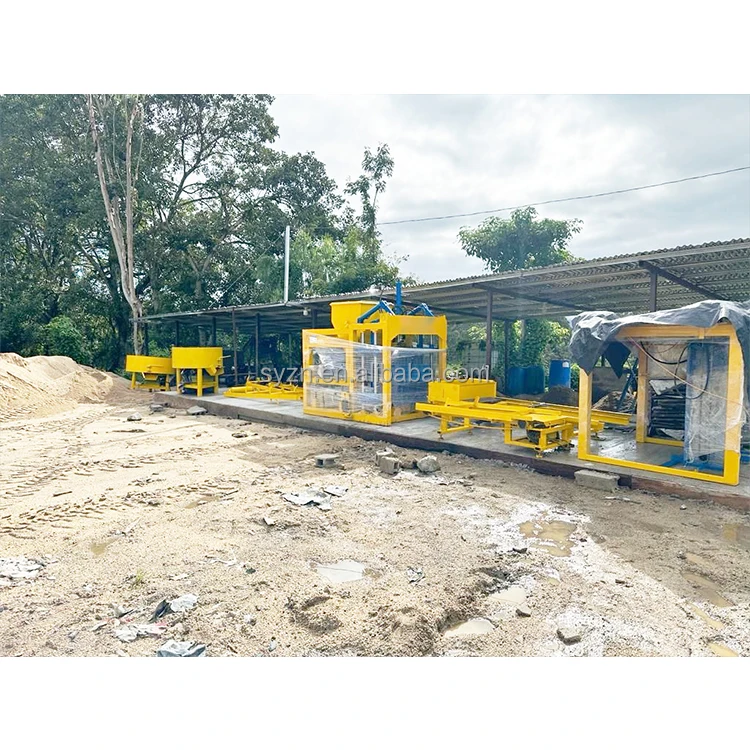
- Line layout drawing showing QT4-15A footprint with pallet flow and curing area allocation
- Capacity calculation sheet stating block format and cycle time for each output figure
- Mould drawing pack listing every confirmed format with cavity dimensions
- Pallet specification sheet covering material grade, thickness, and moisture resistance
- Voltage, frequency, and PLC language confirmation record signed before production
- Factory test report documenting a production run on the buyer’s specified block format
Installation, Commissioning & Support
- Foundation pad must support the QT4-15A’s 3 T operating weight plus dynamic vibration loads across the 7100 mm length
- Dedicated power circuit required for the 18.45 kW total load with voltage and frequency confirmed pre-shipment
- Machine ships with hydraulic station and pallet feeder separated for container loading, reassembled on site
- First-run commissioning includes cycle tuning to the buyer’s confirmed mix design and block format
- Operator training covers PLC navigation, mould change procedure, and daily maintenance checkpoints
- Wear parts list and hydraulic seal kit provided as free accessories alongside the manual hydraulic trolley
Before You Request a Quote
To give you a configuration that fits your actual production scenario, share the block formats your market requires, your target daily output per format, the type of aggregate available locally, and your site’s voltage and frequency standard. If you already have a curing area with defined dimensions or an existing forklift, include those details so the pallet specification and line layout can be matched accordingly.
Frequently Asked Questions
Q: How is the QT4-15A capacity calculated per block format, and what cycle time does each format assume?
A: The specification table lists output for three formats — hollow block at 400×200×200 mm, hollow block at 400×150×200 mm, and solid brick at 240×115×53 mm — each derived from a specific mould cavity count and cycle range of 15–25 seconds. Your actual cycle depends on your mix design and block height. A detailed capacity sheet per confirmed format is provided before order placement.
Q: What mould formats are available, and how long does a mould change take?
A: Standard moulds cover hollow blocks, solid bricks, pavers, and kerbstones. Custom formats are available to buyer drawings. Mould change time varies with format complexity and operator familiarity; it must be confirmed for your chosen mould set so you can plan shift scheduling realistically.
Q: How should vibration force and hydraulic pressure be matched to my local aggregate?
A: The QT4-15A delivers 40–50 kN at 4600 r/min. Whether this produces blocks meeting your strength standard depends on aggregate type, gradation, and cement ratio. Share a sample of your local aggregate and your target block strength so the vibration and pressure settings can be tuned before factory testing.
Q: What pallet size does the QT4-15A use, and how does it affect my curing layout?
A: The standard pallet measures 850×550×25 mm. Your curing area must hold a full shift’s worth of loaded pallets, and your forklift forks must accommodate that width. Pallet material — timber, bamboo, or composite — is selected based on your curing environment’s humidity and temperature conditions.
Q: What voltage, frequency, and PLC language options need to be confirmed before shipment?
A: The QT4-15A’s motors, hydraulic pump, and PLC are configured to your site’s exact voltage and frequency before production. PLC display language is set to your operators’ working language. All three parameters are documented in a signed confirmation record to avoid commissioning delays upon arrival.