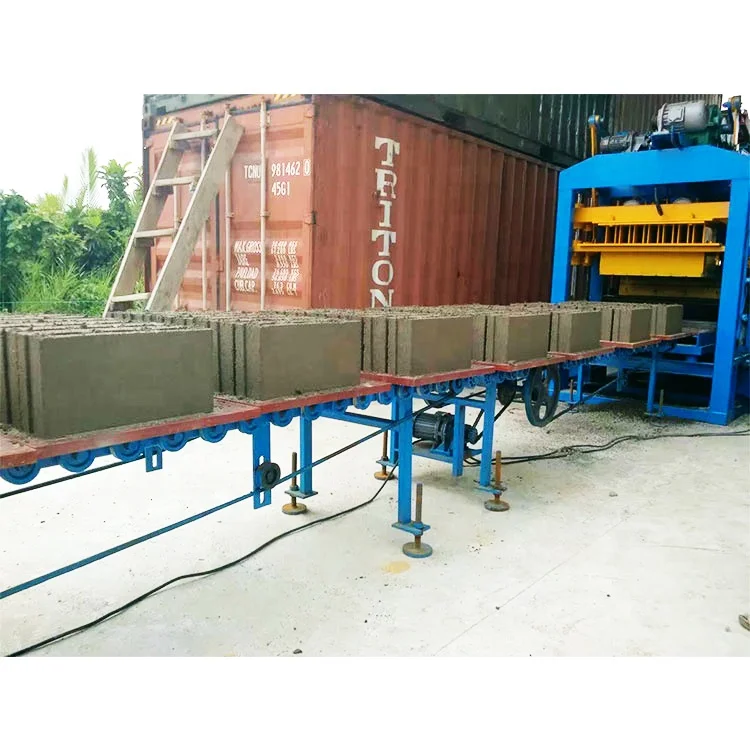
Description
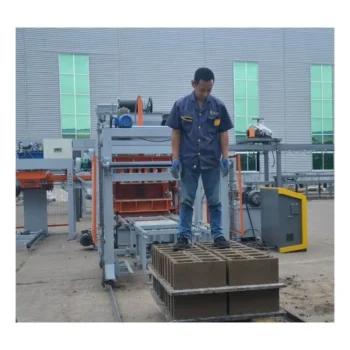
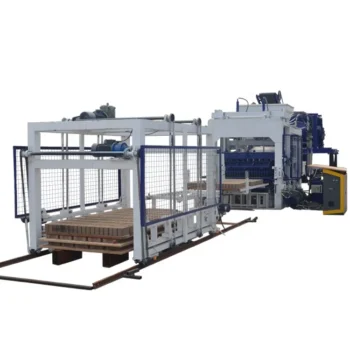
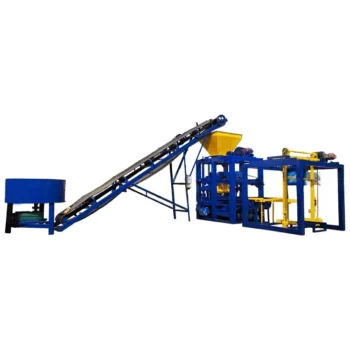
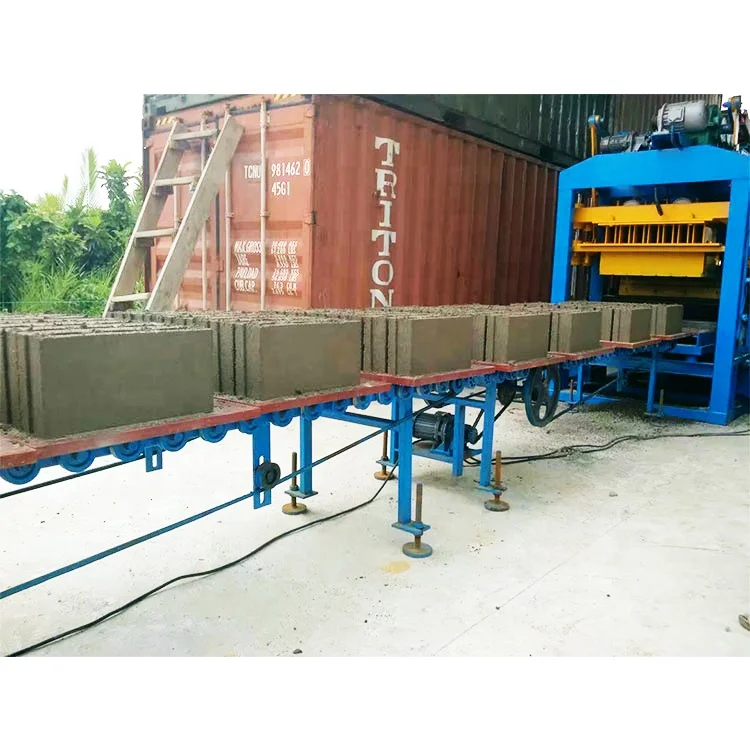
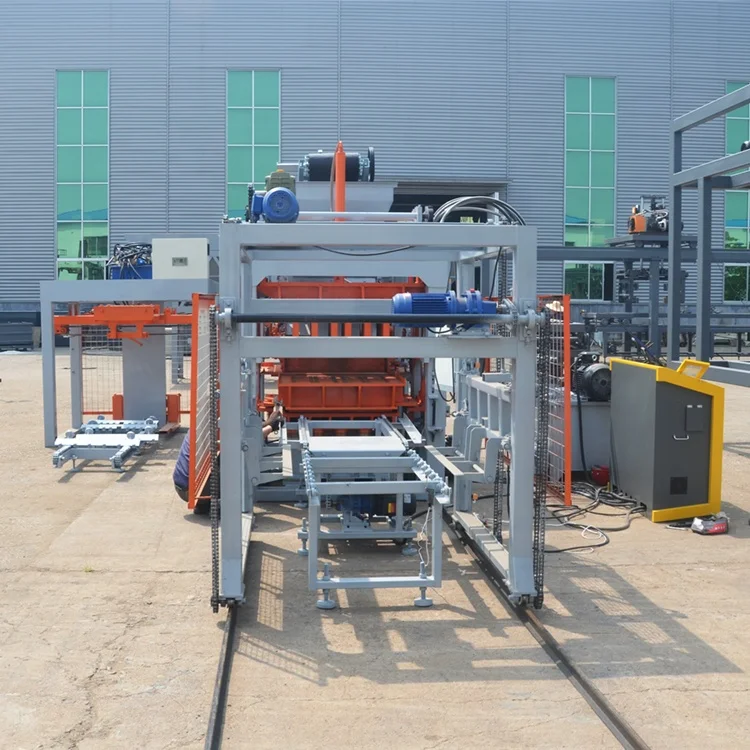
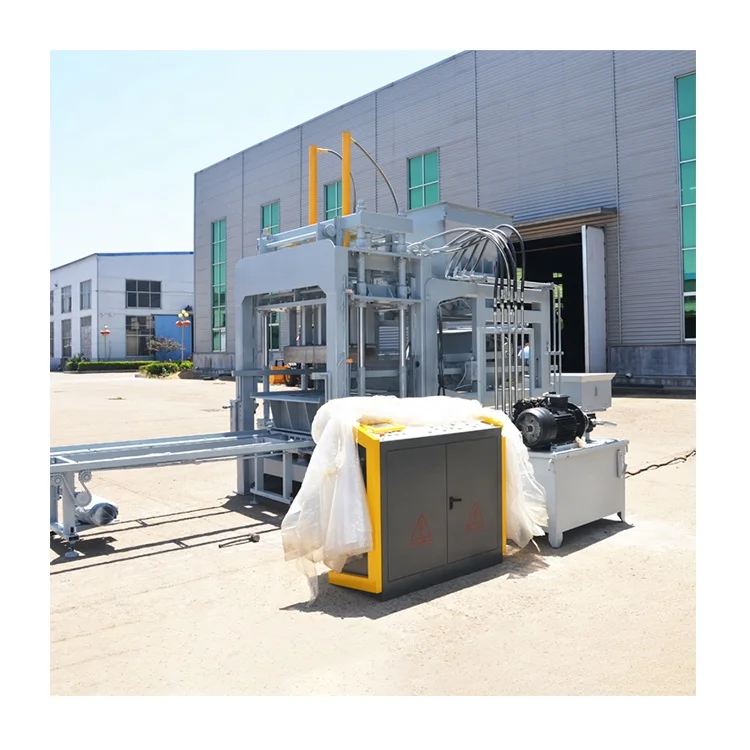
Block machinery as a single focus — every QTJ4-25 component from the host press to the 850×550mm pallet is specified together, so capacity calculations match the block format you actually sell.
Technical Specifications
| Parameter | Value |
|---|---|
| Model | QTJ4-25 |
| Product Type | Semi-Automatic Concrete Block Making Machine |
| Overall Dimensions | 6400 × 1500 × 2700 mm |
| Net Weight | 2500 kg |
| Molding Cycle | 25 s |
| Vibration Frequency | 2800–5100 r/min |
| Exciting Force | 60 kN |
| Vibration System | Bed mould vertical vibration + upper mould compression vibration |
| Hydraulic System | Hydraulic station included |
| Rated Power | 17.9 kW |
| Mixer Model | JQ350 |
| Pallet Size | 850 × 550 × 20 mm |
| Output Capacity (Hollow Block 390×190×190mm) | 480 pcs/hr, 3800 pcs/8hr |
| Output Capacity (Hollow Block 400×150×200mm) | 600 pcs/hr, 4800 pcs/8hr |
| Output Capacity (Solid Brick 240×115×53mm) | 2100 pcs/hr, 17000 pcs/8hr |
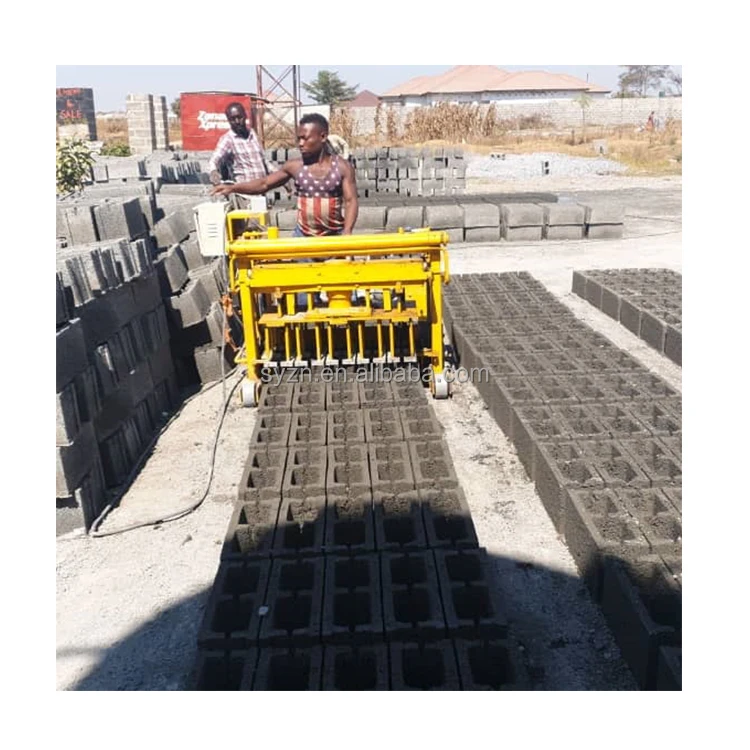
| Applied Products | Concrete blocks, hollow block (8 inch, 6 inch), solid brick |
| Raw Materials | Crushed stones, sand, cement, dust, fly ash |
| Automation Level | Semi-automatic |
| Standards | CE |
Application Suitability
| Application | Material or Output |
|---|---|
| Small to medium block plant | Hollow blocks (390×190×190mm, 400×150×200mm) from crushed stone, sand and cement |
| On-site construction production | Solid bricks (240×115×53mm) for housing and development projects |
| Format expansion for existing producers | 8-inch and 6-inch hollow blocks added to an established product range |
| Entrepreneur first block plant | Semi-automatic entry with a path toward higher automation later |
What "4800 Blocks per Day" Leaves Out About QTJ4-25 Block Machine Specifications
Every capacity figure on this page names the block format it assumes — no exceptions.
I once visited a plant in Guayaquil where the owner showed me a quotation promising over 5000 blocks daily. When I looked at the production log, actual output was barely half that. The supplier had quoted capacity based on a small solid brick, but the market wanted 8-inch hollow blocks. The QTJ4-25 block machine specifications only make sense when tied to a specific mould [NEED_CITE: capacity calculation methodology for concrete block machines]. This machine cycles every 25 seconds, but how many blocks that produces per hour depends entirely on how many cavities the chosen mould holds.
Mould Format and Realistic Daily Output
The QTJ4-25 produces 600 pieces per hour when pressing 400×150×200mm hollow blocks, which translates to 4800 pieces across an eight-hour shift. Switch the mould to a 390×190×190mm format and the cycle remains 25 seconds, but cavity count drops, bringing output to 480 pieces per hour or 3800 per shift. For solid brick at 240×115×53mm, the denser cavity layout pushes capacity to 2100 pieces per hour. These are not theoretical peaks — they are calculated from the 25-second cycle and the cavity count of each format. Buyers evaluating QTJ4-25 block machine specifications should request the capacity table matched to their target format before comparing quotations.
Matching Vibration Force to Your Mix Design
Consistent block density requires vibration force and hydraulic pressure to work together against the specific aggregate in your mix. The QTJ4-25 uses a dual vibration system: bed mould vertical vibration compacts material from below while upper mould compression vibration locks density from above. With 60 kN of exciting force operating across 2800–5100 r/min, the system can be tuned to different aggregate gradations — from fine sand-heavy mixes to those with coarser crushed stone [NEED_CITE: relationship between vibration frequency and aggregate gradation in block making]. When the frequency and pressure are matched correctly, blocks emerge with uniform weight and compressive strength across the pallet.
Reading the Specs That Matter for Production
Three numbers in the QTJ4-25 block machine specifications shape daily operations more than any others. The 850 × 550 × 20 mm pallet size determines whether finished blocks can move straight onto your existing curing racks and whether your current forklift can handle loaded pallets without modification. The 17.9 kW rated power tells your electrician what dedicated circuit and breaker rating the machine requires — undersizing the supply leads to voltage drops during vibration peaks, which produces weak blocks. The 25-second molding cycle sets the rhythm for the entire line: the JQ350 mixer must deliver a fresh batch within that window, and manual pallet handling must keep pace, or the press sits idle between cycles.
The Cost of Skipping Pallet and Voltage Confirmation
When a pallet size is chosen without checking the curing area, blocks end up stacked by hand on the floor because the pallets do not fit the racks — curing time extends, and output stalls. Similarly, when voltage, frequency, and PLC display language are not confirmed before the QTJ4-25 enters production, commissioning delays follow [NEED_CITE: electrical commissioning delays in exported machinery]. I have seen machines sit idle for weeks in South American ports because the control panel arrived in a language the operators could not read, or the motor was wound for a frequency the local grid does not supply. These are not machine defects — they are specification gaps that surface only after the container arrives.
Why Source the QTJ4-25 Through This Configuration Approach
Block machinery is the single product focus here, which means the QTJ4-25 press, its moulds, pallets, and the JQ350 mixer are specified as one matched system rather than assembled from unrelated suppliers. Each configuration is set against the buyer’s actual mix design and local aggregate, not pulled from a catalogue default. Mould design covers the hollow block and solid brick formats that sell in your market, with custom drawings available when standard formats do not match local demand. The semi-automatic level of the QTJ4-25 gives first-time plant owners a practical starting point, and the system allows upgrades in pallet handling and stacking as production volume grows. Factory testing runs the machine on your specified block format before dispatch, so the test record reflects real conditions rather than a generic benchmark.
Documentation & Verification
- Line layout showing capacity calculation for each block format included in your quotation
- Mould drawing and format list confirming every block size covered
- Pallet specification sheet with size, material, and load rating matched to your curing setup
- Voltage, frequency, and PLC display language confirmation signed off before production
- Factory test record run on your chosen block format before dispatch
- Operation and maintenance manual with wear parts list for the QTJ4-25
Installation, Commissioning & Support
- Foundation plan drawn to the QTJ4-25 footprint of 6400 × 1500 mm with anchor bolt positions
- Dedicated 17.9 kW circuit with correct breaker rating for vibration peak loads
- Machine shipped partially assembled with hydraulic station pre-mounted to reduce on-site work
- First-run parameter setting for vibration frequency and molding cycle on your local aggregate
- Operator training covering mould change procedure and daily vibration bed inspection
- Spare hydraulic seals and vibration springs included with initial shipment based on the wear parts list
Preparing Your QTJ4-25 Inquiry
To size the QTJ4-25 correctly for your operation, start by sharing the block formats your market demands and the daily volume each format requires. Provide your local aggregate type and cement source so the vibration and pressure settings can be matched to your mix. Confirm your site voltage, frequency, and the language your operators need on the control display — these details must be locked before the machine enters production. If you already have curing racks or a forklift on site, send the dimensions so the 850 × 550 mm pallet specification can be verified against your existing equipment.
Frequently Asked Questions
Q: How is daily output calculated and which block format does each figure assume?
A: Output is calculated from the 25-second molding cycle multiplied by the number of cavities in a specific mould. For the QTJ4-25, 400×150×200mm hollow blocks yield 600 pieces per hour, while 390×190×190mm hollow blocks produce 480 per hour. Solid bricks at 240×115×53mm reach 2100 per hour. Every capacity figure references the exact block format and cavity layout used in the calculation.
Q: Which mould formats are included and how long does a mould change take?
A: The standard quotation covers hollow blocks in 8-inch and 6-inch sizes plus solid bricks. Additional formats such as pavers can be added as separate mould orders. Mould change time depends on operator familiarity and whether quick-release fittings are specified — first-time changes take longer, but experienced crews complete the swap within a shift break once trained on the procedure.
Q: What pallet size is specified and how does it relate to my curing area?
A: The QTJ4-25 uses 850 × 550 × 20 mm pallets. Before confirming your order, you should measure your curing rack spacing and forklift tine width to ensure loaded pallets fit without modification. If your existing racks were built for a different pallet dimension, the specification can be reviewed to match your current setup or you can plan rack adjustments before the machine arrives.
Q: What voltage, frequency, and control language will the machine ship with?
A: These parameters must be confirmed in writing before production begins. The QTJ4-25 motor and hydraulic station are wound and configured to your site voltage and frequency. The control display language is set to match your operator team. Confirming these details upfront prevents commissioning delays that occur when machines arrive configured for a different electrical standard or language.
Q: Which raw materials and mix design is this machine configured for?
A: The QTJ4-25 is configured around your local aggregate — crushed stone, sand, cement, and optional additions like fly ash or stone dust. The vibration frequency range of 2800–5100 r/min and 60 kN exciting force are tuned during factory testing to match the gradation and moisture content of your specific mix, ensuring consistent block density and strength from the first production run.