
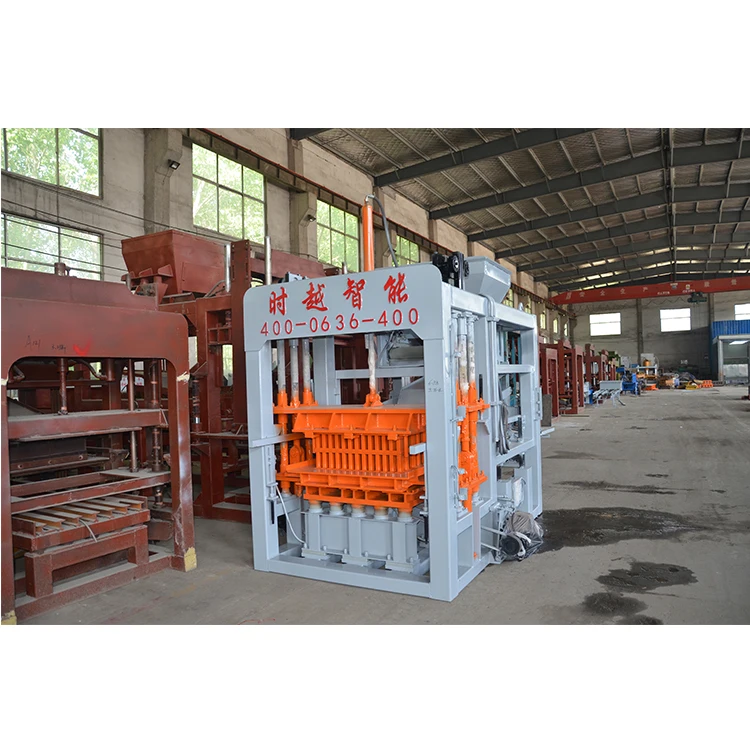


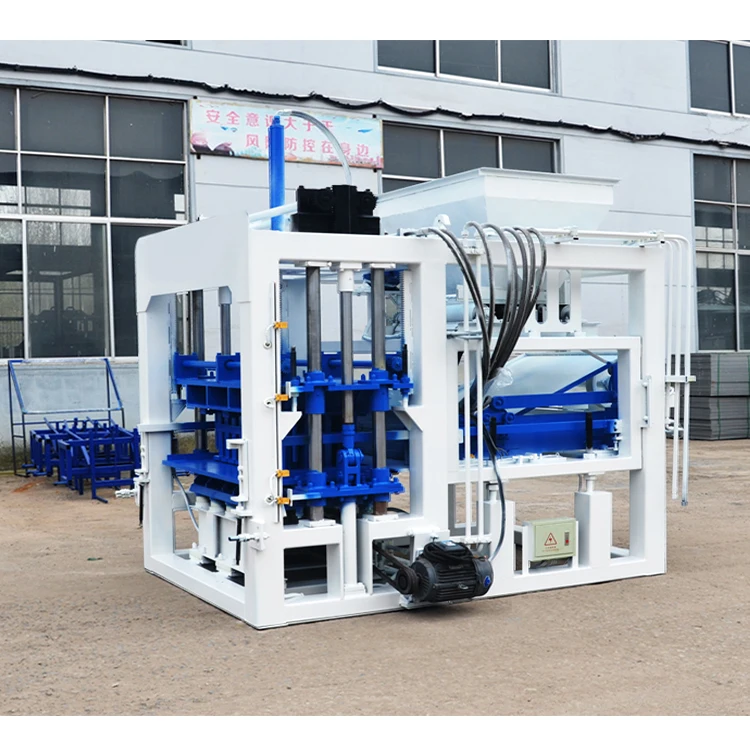
Description
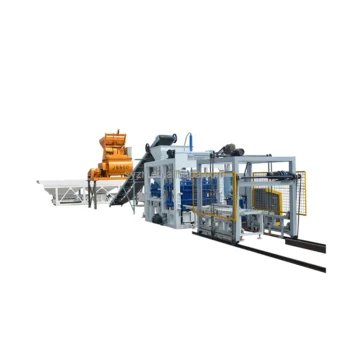
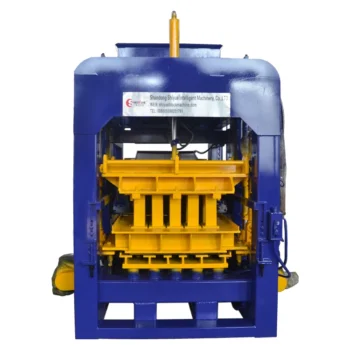
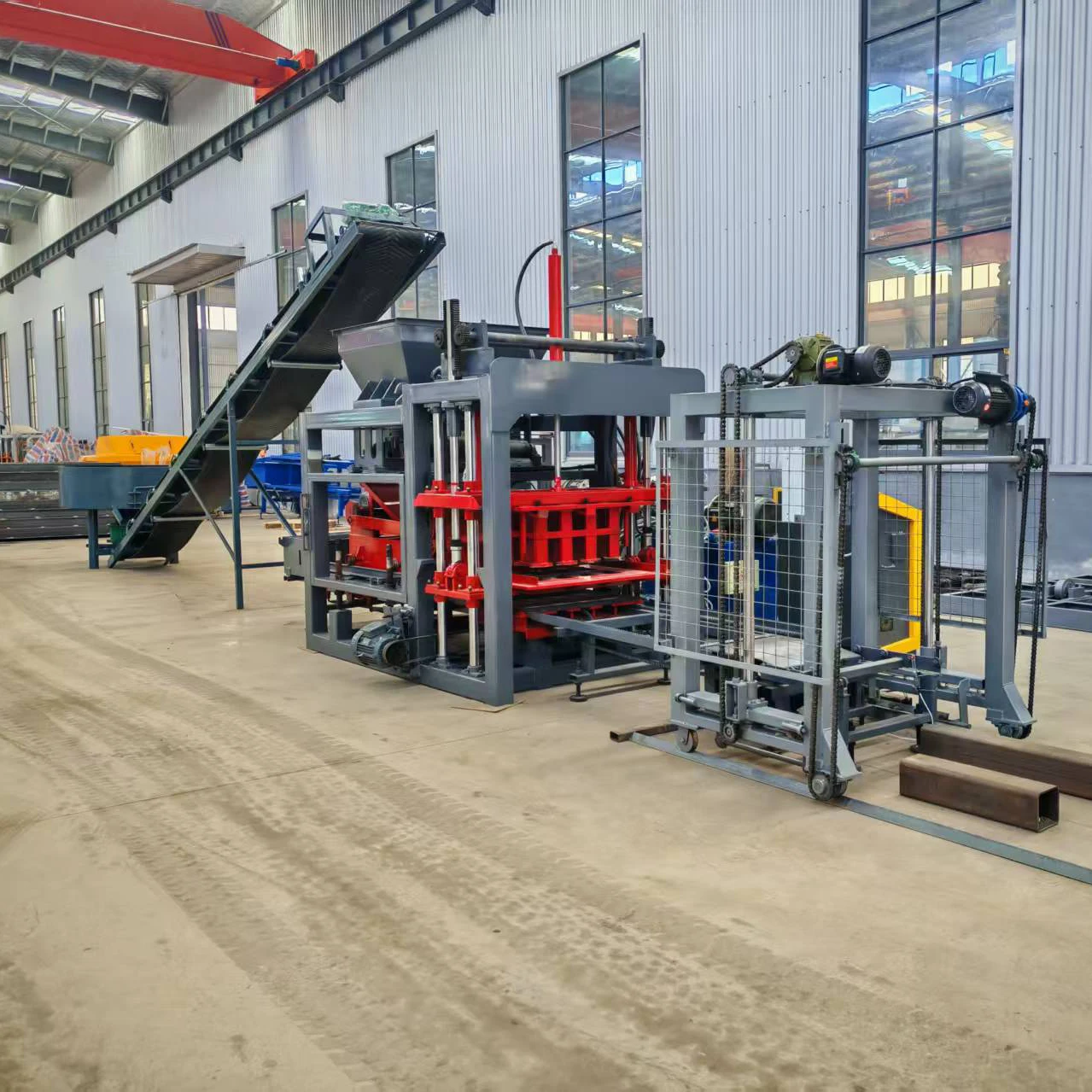
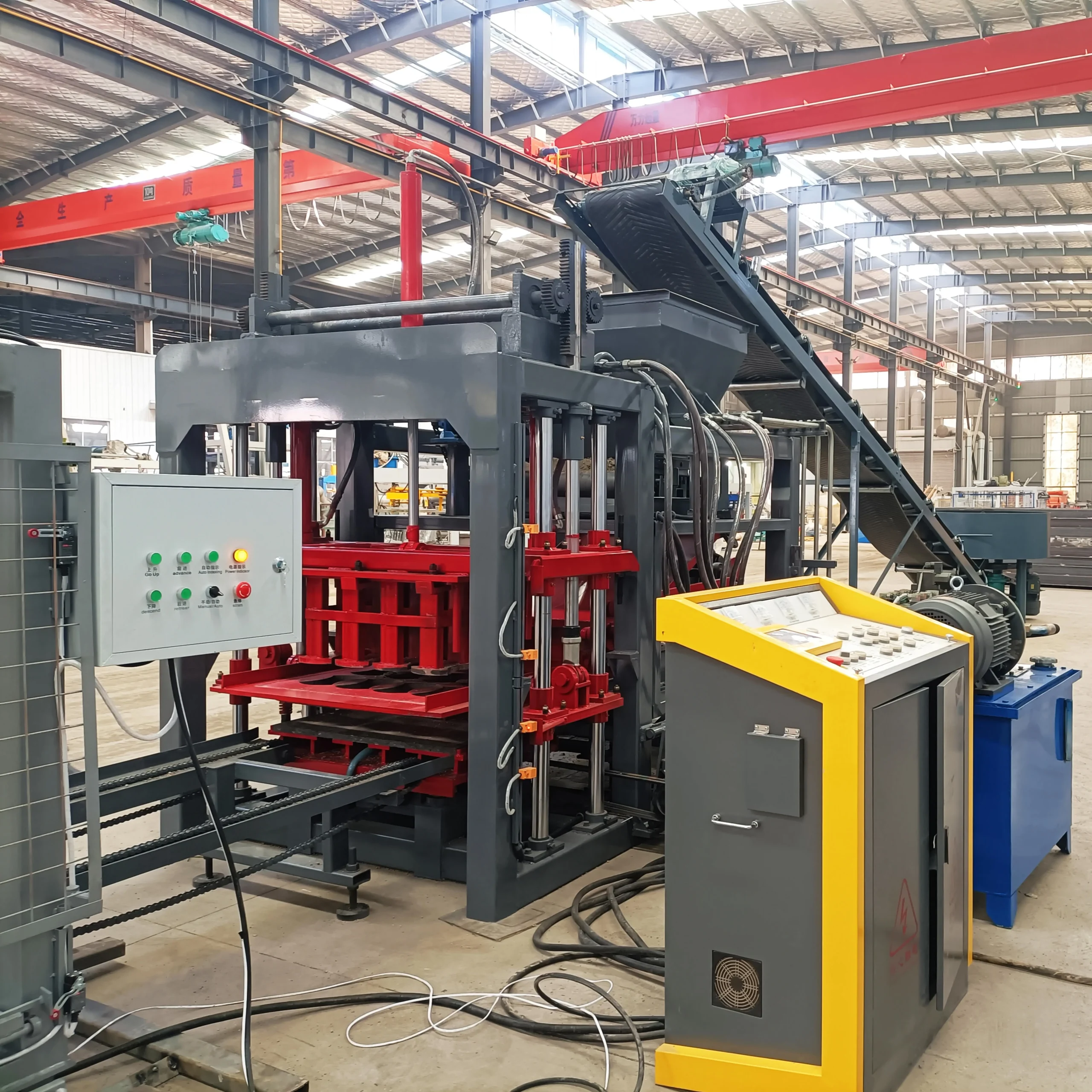
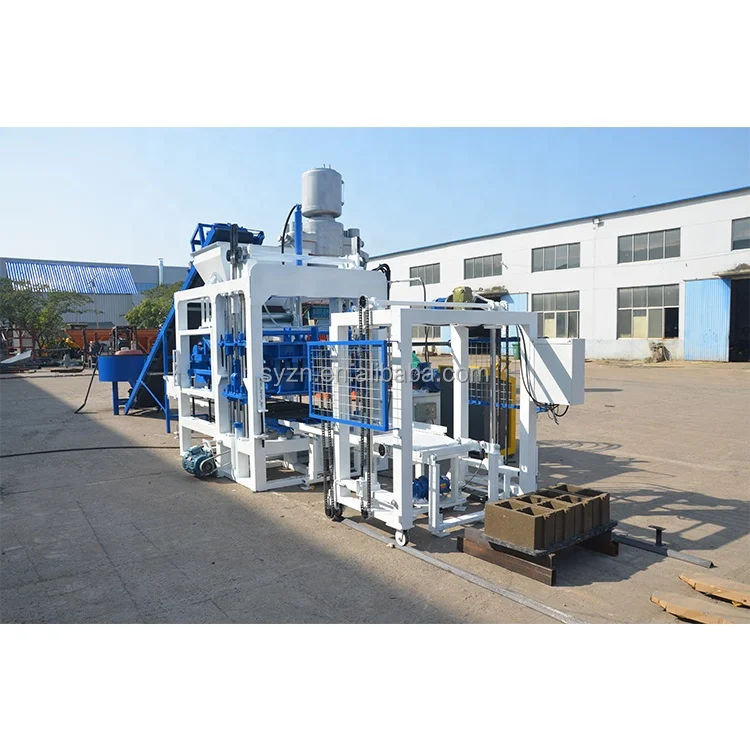
Single-Focus Block Machinery Configuration — Every QT5-15 component, from the 1100×550 mm pallet format to the 80 kN vibration force, is specified as a matched system rather than assembled from separate suppliers.
Technical Specifications
| Parameter | Value |
|---|---|
| Model | QT5-15 |
| Product Type | Fully Automatic Hydraulic Concrete Block Making Machine |
| Overall Dimensions (L×W×H) | 7400×1950×2800 mm |
| Vibration Form | Platform Vibration |
| Vibration Frequency | 0-60 Hz |
| Vibration Force | 80 kN |
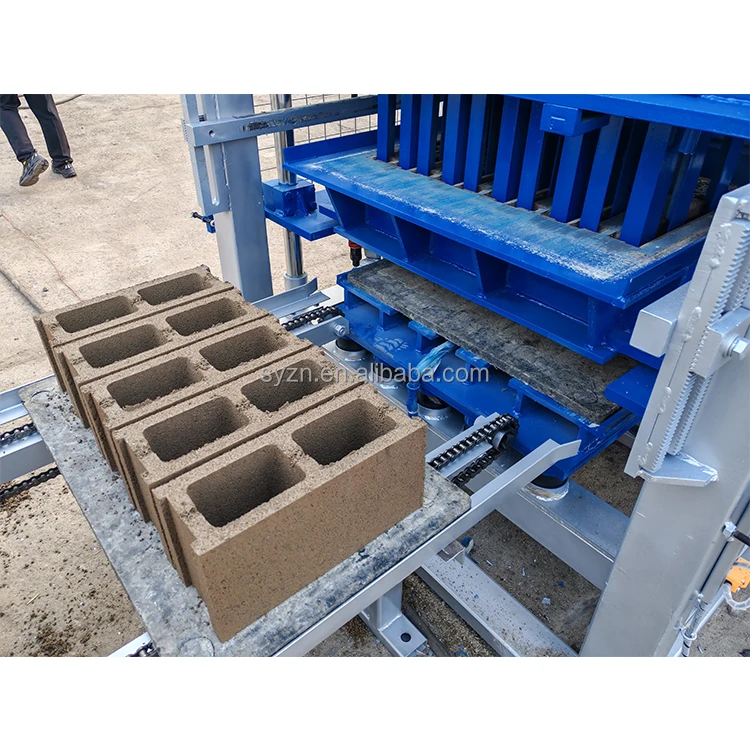
| Moulding Mode | Automatic load, vibration moulding |
| Pallet Size | 1100×550 mm |
| Molding Cycle | 15-20 s (basis not stated in source — confirm block format and material) |
| Overall Power | 32 kW |
| Total Mass | 5000 kg |
| Demolding Method | Hydraulic |
| Control System | PLC with touch screen interface |
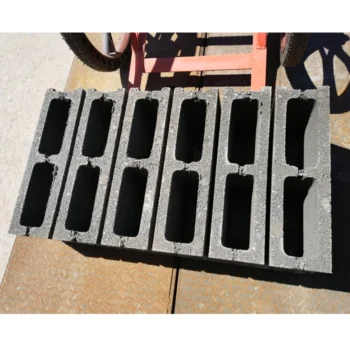
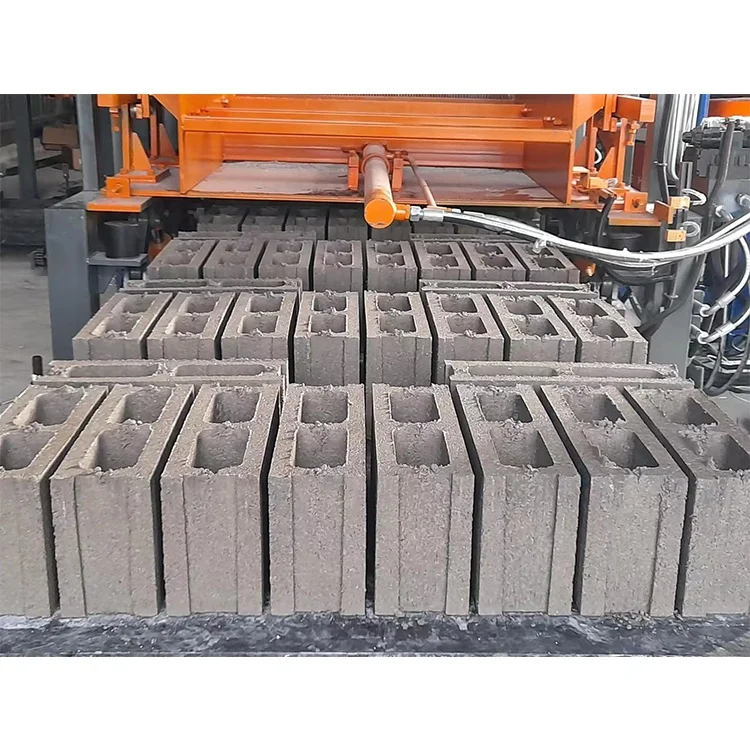
| Output (Hollow block 400×200×200 mm) | 900-1200 pcs/h; 7200-9600 pcs/8hr |
| Output (Hollow block 400×150×200 mm) | 1080-1440 pcs/h; 8640-11520 pcs/8hr |
| Output (Solid brick 240×115×53 mm) | 5760-7680 pcs/h; 46080-61440 pcs/8hr |
| Output (Rectangular paver 200×100×60 mm) | 3600-4500 pcs/h; 28800-36000 pcs/8hr (cycle 20-25 s) |
| Output (Zigzag paver 225×112.5×60 mm) | 2304-2880 pcs/h; 18432-23040 pcs/8hr (cycle 20-25 s) |
| Block Compressive Strength | >15 MPa |
| Hydraulic System | Independent integrated hydraulic station |
| Raw Material Compatibility | Fly ash (up to 70%), slag, gangue, sand, crushed stone, cement, water |
| Factory Area Required | 1000 m² |
| Warranty | 1 year (excluding spare parts) |
Application Suitability
| Application | Material or Output |
|---|---|
| Hollow block production for building construction | Fly ash, crushed stone, sand, cement blends |
| Solid brick manufacturing | Sand and cement or slag-based mix designs |
| Paving block and interlocking paver production | Coarse aggregate with cement for high-density surface layers |
| Fly ash and industrial residue utilization | Fly ash up to 70% combined with binding agents |
| Construction contractor on-site and off-site block plants | Regional aggregate and locally sourced cement |
What QT5-15 Block Machine Specifications Leave Out of the Headline Output Number
The cycle time only means something when the block format, mix design, and local aggregate are all named alongside it.
Capacity figures printed in brochures rarely state which block size they assume. I have watched a buyer commit to a machine based on a single output number, only to find that the cycle time doubled when they switched from a standard hollow block to the paver format their market actually demanded. The pallet sat idle while the operator adjusted material feed and vibration duration. [NEED_CITE: block format impact on cycle time in hydraulic block production]
When evaluating how to choose QT5-15, the honest approach is to ask for output per specific block format, with the exact cycle time and material assumption written next to it. Without that, the daily capacity calculation is a guess.
Mould-to-Market Fit Before Machine Selection
The QT5-15 supports interchangeable moulds for hollow block, solid brick, rectangular paver, and zigzag paver formats. The real question for a technical buyer is not whether the machine can run multiple formats, but whether the cycle time for your specific block dimension fits within your daily volume target. QT5-15 block machine specifications list a 15-20 second cycle for blocks and 20-25 seconds for pavers, but those ranges shift depending on mix density and mould complexity.
Pallet Size and Curing Yard Compatibility
The 1100×550 mm pallet is not a universal standard. If your existing curing racks, forklift forks, and drying yard lanes are dimensioned for a different pallet, every downstream handling step needs re-evaluation before the machine arrives. The pallet specification must be cross-checked against the curing infrastructure already on site, not after installation. [NEED_CITE: pallet handling and curing yard layout requirements for block plants]
Reading the Engineering Choices in the Spec Sheet
The 80 kN vibration force paired with platform vibration delivers energy through the pallet into the mix, and that force must be matched to the aggregate particle size in your region. Fine river sand absorbs vibration differently from crushed granite, and the hydraulic pressure during demolding must be set to release a block without cracking it at the density your strength target requires. The QT5-15 block machine specifications list >15 MPa compressive strength as the target, but achieving that number depends on whether the vibration frequency, hydraulic pressure, and mix water content are tuned together for your actual aggregate. The independent integrated hydraulic station sits apart from the main vibration source, which reduces long-term seal wear from constant oscillation. The 32 kW overall power draw reflects the combined demand of the hydraulic pump, vibration motor, and material feeder running simultaneously at peak cycle load.
The Cost of a Mould Change That Takes Half a Shift
A machine quoted as "multi-format" loses its value proposition if the physical mould swap requires tools, alignment jigs, and hydraulic disconnections that consume most of a production shift. When the format flexibility you paid for is cancelled out by the time it takes to exercise it, the line effectively runs single-format regardless of what the brochure claims. [NEED_CITE: mould changeover duration impact on daily production flexibility]
Why the Configuration Conversation Starts Before the Quotation
The QT5-15 is configured against the buyer’s actual mix design and target block format, not pulled from a catalogue default. Every quotation includes a capacity calculation that names the specific block format and cycle time assumption for each output tier. Mould drawings are provided in advance so the buyer can confirm the exact block dimensions match their market standard before production begins. Voltage, frequency, and PLC display language are confirmed before the machine enters the assembly stage. The independent hydraulic station and platform vibration system are set to match the buyer’s local aggregate sample, not a generic test material. Installation support covers on-site commissioning with operator training, so the first production run reflects the parameters established during factory testing.
Documentation & Verification
- Line layout drawing with capacity calculation stating the block format assumed for each output figure
- Mould drawing and format list confirming exact block dimensions per buyer market requirement
- Pallet specification at 1100×550 mm cross-referenced with buyer curing yard and forklift dimensions
- Voltage, frequency, and PLC display language confirmation document signed before production
- Factory test record on buyer-specified block format and material before dispatch
Installation, Commissioning & Support
- 7400×1950×2800 mm footprint requires level concrete foundation across the 1000 m² factory area
- 32 kW total power needs a dedicated three-phase circuit with voltage confirmed before shipment
- Machine dismantled for container loading and reassembled on site with alignment verification
- PLC touch screen parameters set to buyer’s confirmed block format and cycle time on first run
- Operator training covers mould changeover procedure and hydraulic station maintenance intervals
- Wear parts list and hydraulic seal kit provided for the first replacement cycle
Before You Send the Inquiry
We need to know the exact block format your market sells and the daily volume you plan to sustain across that format. Provide a sample description of your local aggregate and the cement source available to you. Confirm the three-phase voltage and frequency at your site, along with the language you need on the PLC interface. If you already have curing racks and forklifts on site, share their dimensions so the pallet specification aligns before the machine is built.
Frequently Asked Questions
Q: How is the QT5-15 output capacity calculated for each block format, and what cycle time applies?
A: Output is calculated per specific block format with a named cycle time. Hollow blocks at 400×200×200 mm run a 15-20 second cycle, while pavers at 200×100×60 mm run 20-25 seconds. The daily output assumes an eight-hour shift at that cycle. Your actual mix design and aggregate may shift the cycle within or slightly beyond those ranges.
Q: Which mould formats are available, and how long does a mould changeover take on site?
A: Standard interchangeable moulds cover hollow block, solid brick, rectangular paver, and zigzag paver. The QT5-15 uses a simple mould replacement system. Changeover duration depends on operator familiarity after training. Custom mould dimensions can be designed from buyer drawings for formats outside the standard range.
Q: How do I match the QT5-15 vibration force and hydraulic pressure to my local aggregate and mix design?
A: We request a description or sample of your local aggregate before setting parameters. Fine sand requires different vibration frequency and hydraulic demolding pressure than coarse crushed stone. The 80 kN platform vibration is adjusted in combination with hydraulic pressure to achieve the target block compressive strength for your specific material blend.
Q: What pallet size does the QT5-15 use, and how does it affect my curing yard layout?
A: The QT5-15 runs 1100×550 mm pallets. Your curing rack spacing, forklift fork width, and yard lane dimensions must accommodate this size. We confirm pallet compatibility with your existing infrastructure before the machine enters production so no handling bottleneck appears after installation.
Q: Can I start with one mould format now and add more later?
A: Yes. The QT5-15 accepts additional interchangeable moulds after initial installation. The machine frame, pallet system, and PLC programme remain the same. When you add a new format, the cycle time and output calculation are provided for that specific block so you can plan production scheduling around the new mould.