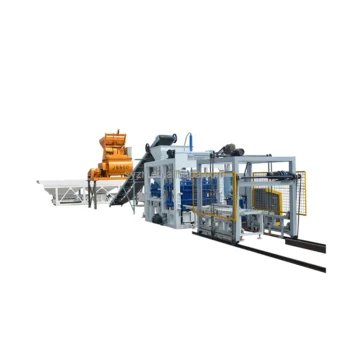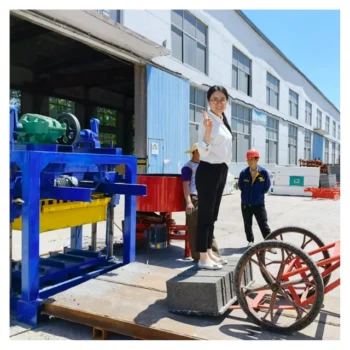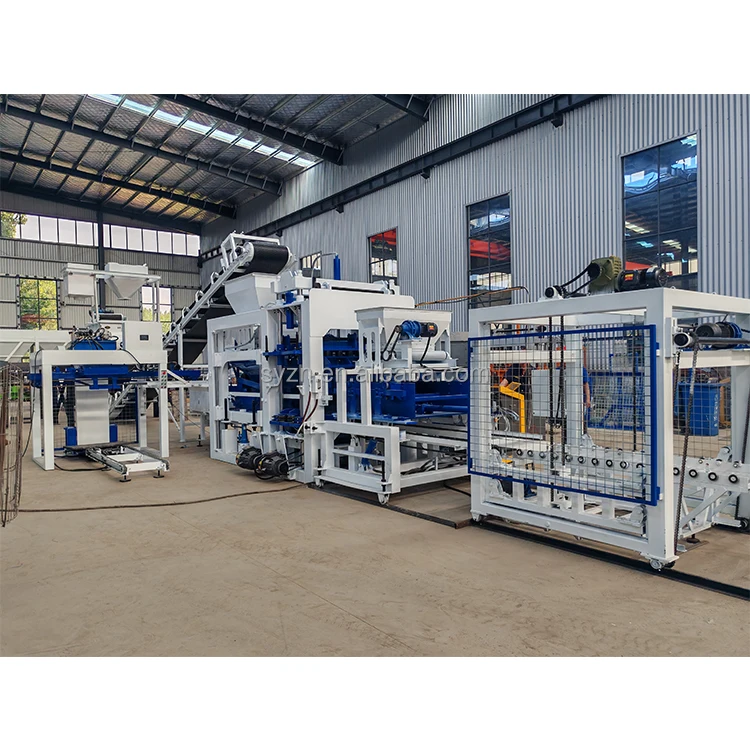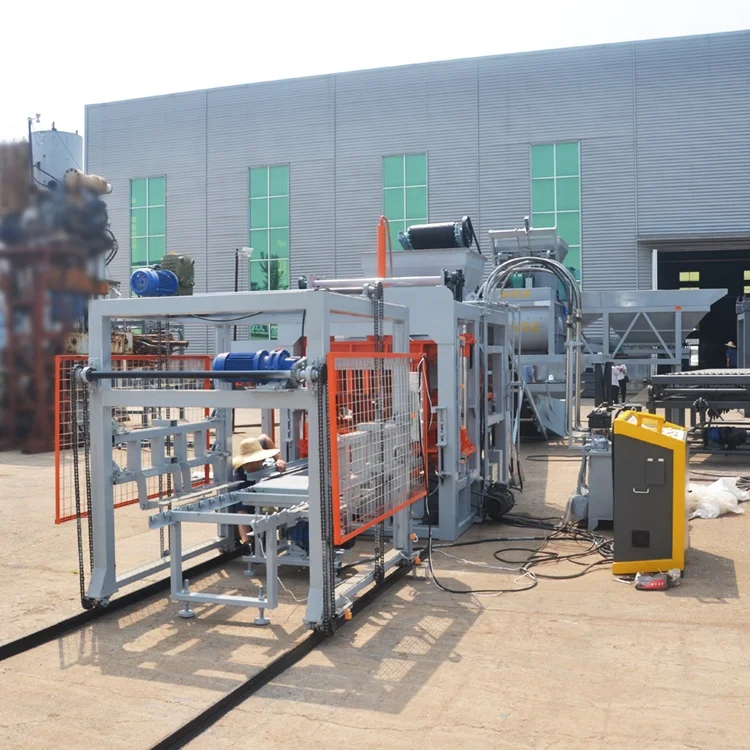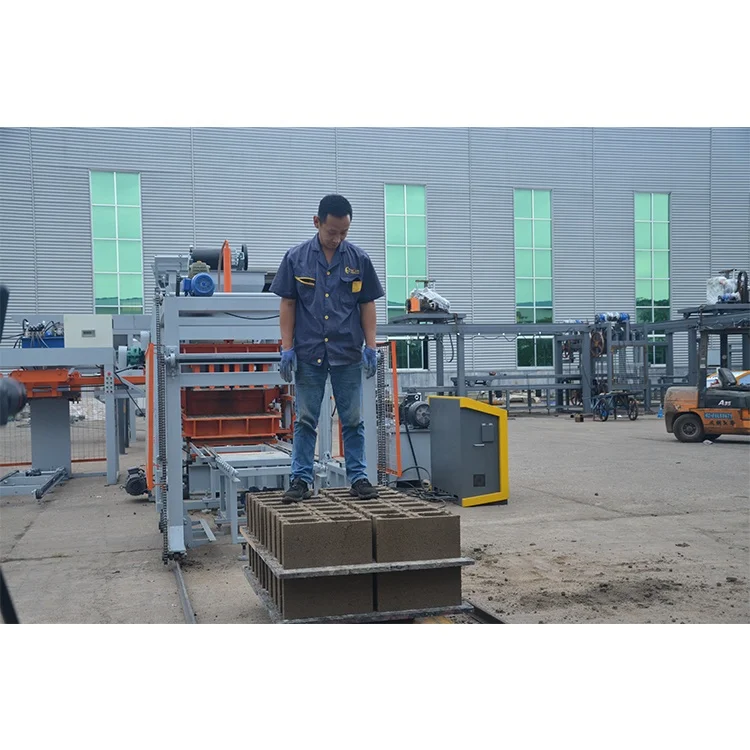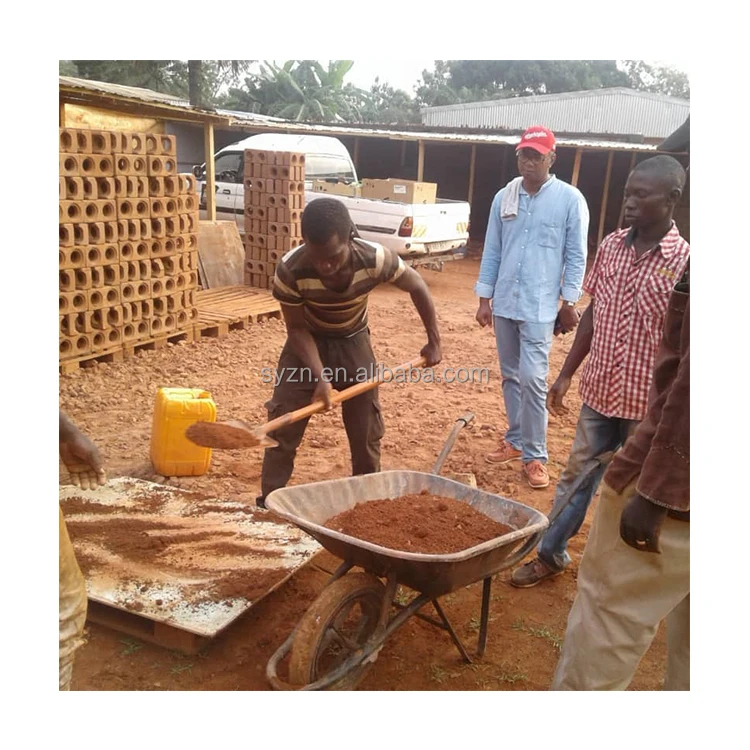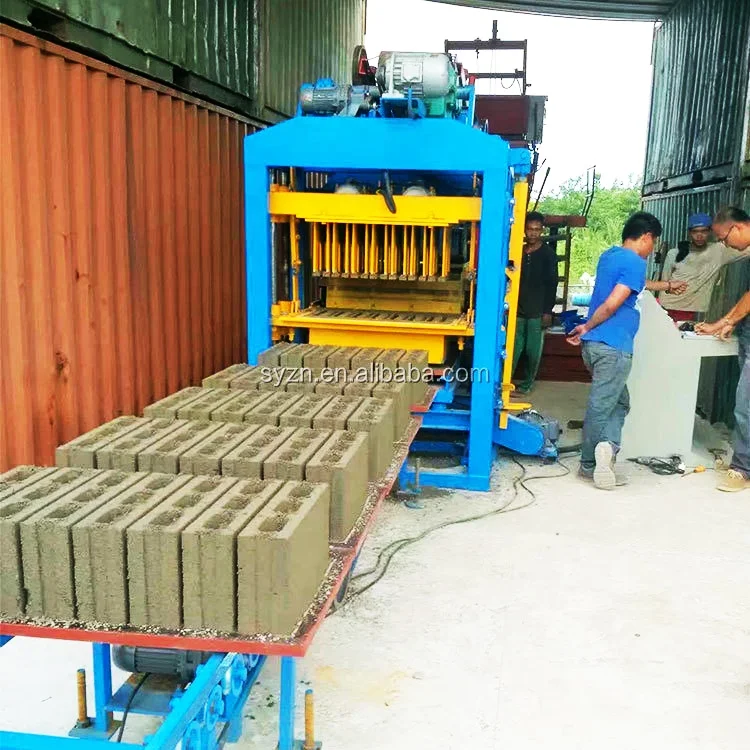

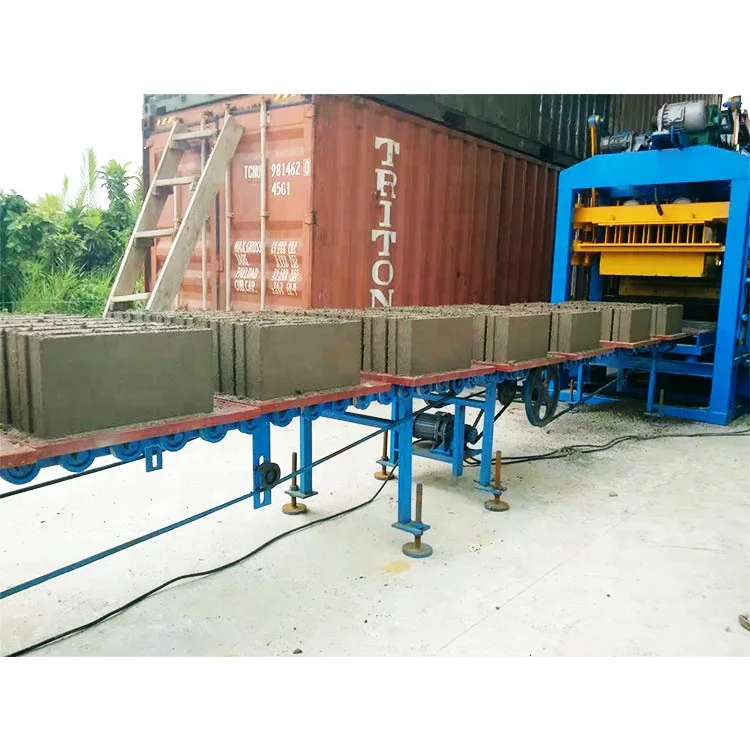

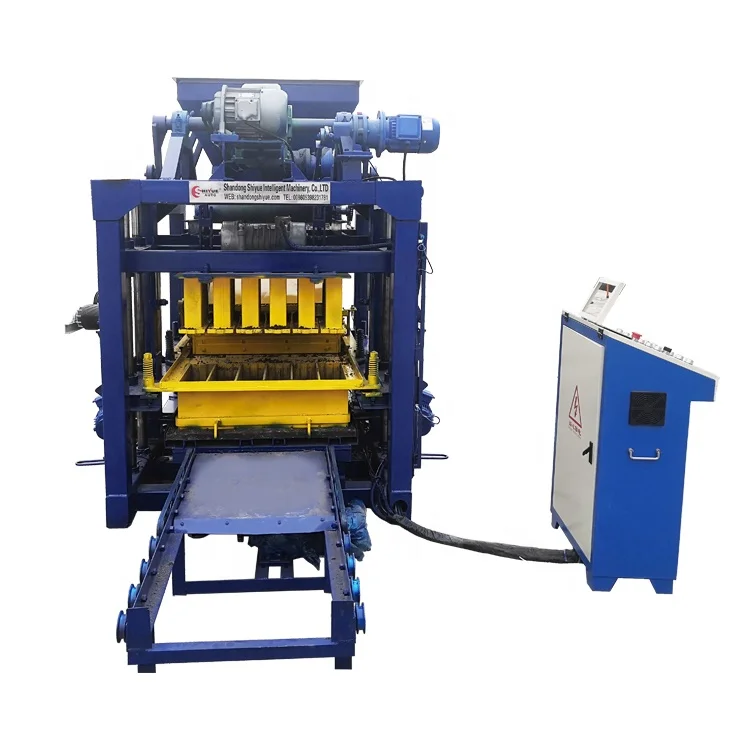

Description
Format-Specific Capacity Planning — the QTJ4-25 block machine specifications are presented here with per-format cycle data and matched pallet sizing so buyers can project actual daily output for the exact block type their market demands.
Technical Specifications
| Parameter | Value |
|---|---|
| Model | QTJ4-25 |
| Product Type | Semi-Automatic Concrete Block Making Machine |
| Overall Dimensions (L×W×H) | 3060×1730×2580 mm |
| Total Mass | 4 T |
| Rated Pressure | 16–21 MPa |
| Main Vibration Form | Platform Vibration |
| Vibration Frequency | 4200 r/min |
| Vibration Force | 45.5 kN |
| Pallet Size | 850×550 mm |
| Molding Cycle | 25–30 s (basis not stated in source — confirm block format / material / thickness) |
| Overall Power | 14.9 kW |
| Demolding Method | Vibration |
| Factory Area Required | 200 m² |
| Applied Products | Hollow blocks, solid blocks, pavers, interlocking blocks, curbstone, colored pavers |
| Raw Materials | Crushed stone, sand, cement, fly ash, gravel, slag, dust |
| Automation Level | Semi-automatic |
| Warranty | 1 year (whole machine, excluding spare parts) |
| Loading | 1×40HQ container (basic equipment) |
Application Suitability
| Application | Material or Output |
|---|---|
| Hollow block production for housing projects | Crushed stone, sand, cement mix |
| Solid block manufacturing for load-bearing walls | Gravel, cement, fly ash blends |
| Interlocking paver production for driveways and walkways | Fine aggregate, cement, pigment |
| Curbstone and kerb production for municipal works | Coarse aggregate, cement, slag |
| On-site block production for construction contractors | Locally sourced sand and stone dust |
Why "25–30 Seconds Cycle Time" Needs a Format Attached
A cycle time means nothing unless you know which block was being pressed when the stopwatch ran.
I watched a buyer in West Africa receive a QTJ4-25 and plan his entire shift schedule around a 25-second cycle, expecting a steady output of hollow blocks all day. The reality was that his 200 mm hollow blocks needed closer to 30 seconds per cycle because of the deeper draw and heavier fill, while his solid blocks ran faster. The daily tally fell short of what the single cycle figure had implied, and his crew ended up working overtime to meet delivery commitments [NEED_CITE: impact of block format variation on actual daily output in semi-automatic plants].
This is the gap that the QTJ4-25 block machine specifications sheet often leaves open. A single cycle number assumes a single block format, a single mix, and consistent material flow. When any of those variables shift, the cycle shifts with it. The honest approach is to ask for a capacity breakdown that lists cycle time and daily output for each format you intend to produce, not a blanket figure that covers only the easiest block in the mould catalogue.
Matching Vibration Force to Your Local Aggregate
The QTJ4-25 delivers 45.5 kN of vibration force through platform vibration at 4200 r/min, combined with 16–21 MPa rated hydraulic pressure. In block making, vibration and pressure work as a pair: vibration settles the mix into the mould cavity while pressure compacts it to target density. If your local aggregate is angular crushed stone, the mix needs enough vibration energy to flow into corners and achieve a uniform surface finish. If the aggregate is smoother river gravel, the same force may produce denser blocks with shorter cycle times.
The QTJ4-25 block machine specifications list both values, which lets a technical buyer cross-reference against their mix design before placing an order. Getting this wrong means blocks that crumble at the edges or fail compression tests after curing.
Pallet Size and What It Means for Your Curing Yard
The 850×550 mm pallet on this machine is not an arbitrary choice — it determines how many blocks sit on each board, how the boards stack in your curing racks, and whether your existing forklift can handle the loaded weight. A buyer who already has curing racks built for a different pallet dimension will find that the QTJ4-25 boards do not seat properly, leading to misaligned stacks and breakage during handling [NEED_CITE: pallet dimension compatibility with curing rack systems in block plants].
Before confirming the order, measure your curing area, check the fork spacing on your lift truck, and verify that the pallet material — typically bamboo or PVC for this class of machine — can withstand your local humidity and curing duration without warping.
Pressure, Vibration, and Block Density in Practice
The 16–21 MPa rated pressure range and 45.5 kN vibration force together define what the QTJ4-25 can achieve in terms of block density and surface finish. Higher pressure with adequate vibration produces blocks that meet structural load requirements for load-bearing walls. Lower pressure on the same mix may yield blocks suitable only for partition walls or non-structural applications. The platform vibration method means the entire mould table oscillates, which suits a wide range of formats from thin pavers to deeper hollow blocks.
The 14.9 kW overall power rating reflects the energy needed to drive both the vibration motor and the hydraulic system simultaneously. In regions where power supply fluctuates, this is a manageable load that can run on a dedicated circuit without requiring a high-capacity transformer. The 4 T total mass provides the machine weight needed to dampen vibration transfer to the factory floor, reducing the need for extensive foundation work beyond a level concrete pad.
When the Wrong Pallet Spec Disrupts the Entire Line
A mismatched pallet does not just slow down the press — it creates a bottleneck that ripples through stacking, curing, and dispatch. If the pallets are too heavy for your forklift, every loaded board requires two trips instead of one. If the pallet material warps in your climate, blocks cure unevenly and rejection rates climb at the quality check station. These are costs that never appear on the machine quotation but show up in your monthly operating statement [NEED_CITE: hidden operational costs from pallet specification mismatches in block production].
Why Source This Machine Through a Single-System Approach
Block machinery as a single focus means the QTJ4-25, its moulds, pallets, and any supporting handling equipment are specified as one matched set rather than assembled from separate vendors. Configuration is set against the buyer’s actual mix design and local aggregate, not pulled from a generic catalogue default. Mould design covers the formats the buyer’s market actually sells, with custom drawings available for non-standard sizes.
The automation level is selectable — a buyer can start with the semi-automatic QTJ4-25 and plan an upgrade path as volume grows. Installation and commissioning support includes operator training so the crew understands cycle adjustment and mould change procedures from the first production run.
Documentation & Verification
- Factory test record run on your specific block format and mix before dispatch
- Mould drawing and format list confirming all required block types
- Pallet specification sheet matched to your curing rack and forklift
- Voltage and control language confirmation signed off before production
- Operation and maintenance manual with wear parts and mould replacement list
Installation, Commissioning & Support
- Level concrete pad within the 200 m² factory area, no deep foundation required for the 4 T machine mass
- Dedicated electrical circuit rated for the 14.9 kW overall power draw at confirmed local voltage and frequency
- Machine arrives in 1×40HQ container, dismantled for shipment, reassembled on-site with technician guidance
- First-run commissioning includes parameter adjustment to your local aggregate and target block format
- Operator training covers mould change procedure, cycle time adjustment, and daily maintenance checkpoints
- Wear parts list provided with recommended replacement intervals for hydraulic seals and vibration components
Before You Request a Quote
To get a configuration that matches your production reality, share the block formats your market sells along with target daily output for each. Include your local raw material details — aggregate type, available sand gradation, and cement grade — so the mix can be tested against the vibration and pressure settings. Confirm your site voltage, frequency, and preferred control display language so commissioning is not delayed after arrival.
Frequently Asked Questions
Q: How does the 25–30 s cycle time vary between hollow blocks and solid pavers on the QTJ4-25?
A: Hollow blocks with deeper cavities require longer fill and compaction time, often pushing the cycle toward the upper end of the range. Solid pavers with shallower draws typically run closer to the lower end. The exact figure depends on your mix design and target block thickness, so request a per-format capacity sheet before finalizing your order.
Q: Which mould formats are available and can I order custom moulds to my own drawings?
A: Standard moulds cover hollow blocks, solid blocks, interlocking pavers, curbstone, and colored pavers. Custom mould design to buyer drawings is available for non-standard formats. Confirm all required formats before order so the mould list and format drawing are approved alongside the machine specification.
Q: How should I match the 850×550 mm pallet to my existing curing area and handling equipment?
A: Measure your curing rack spacing and forklift fork dimensions before confirming the pallet specification. The pallet material must also suit your local humidity and curing duration. Share these details during the inquiry stage so the pallet supplied with the QTJ4-25 integrates with your existing infrastructure.
Q: What raw material mixes has the QTJ4-25 been configured for in past installations?
A: The machine handles crushed stone, sand, cement, fly ash, gravel, slag, and dust in various proportions. Each installation is configured against the buyer’s local aggregate and mix design to ensure the vibration force and pressure settings produce consistent block strength. Sending a material sample for factory testing is recommended before production begins.
Q: What is the realistic daily output for the block format my market actually sells?
A: Realistic output depends on the specific block format, mix design, and shift length. Rather than quoting a single cycles-per-hour figure, request a capacity calculation that states daily output per format. This accounts for mould change time, material feeding intervals, and the actual cycle your chosen block requires on the QTJ4-25.