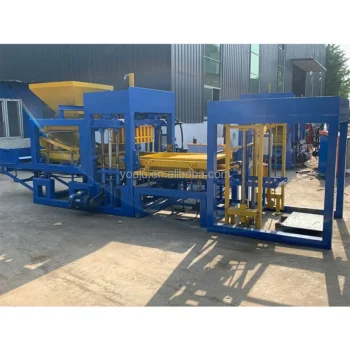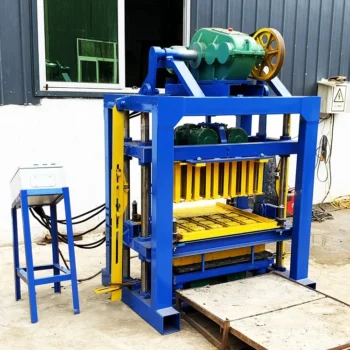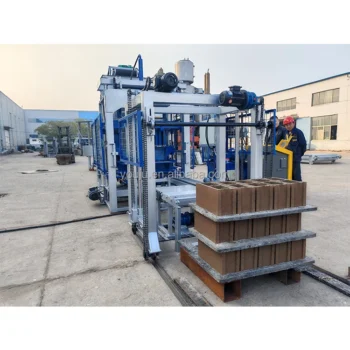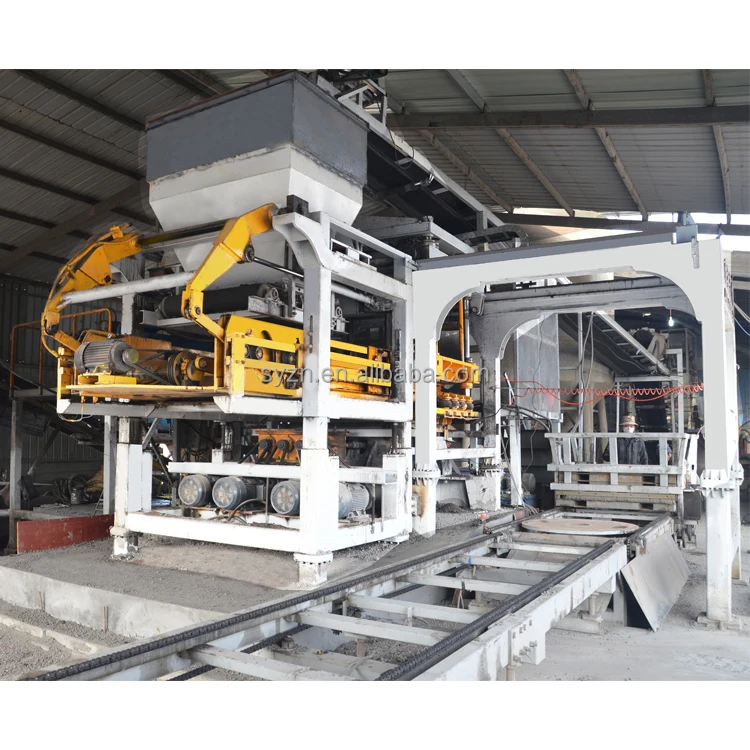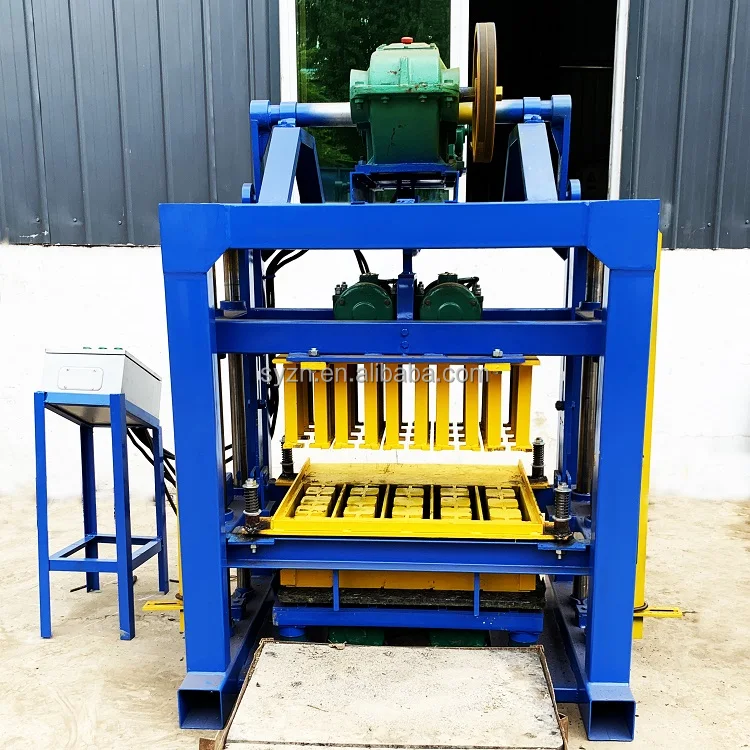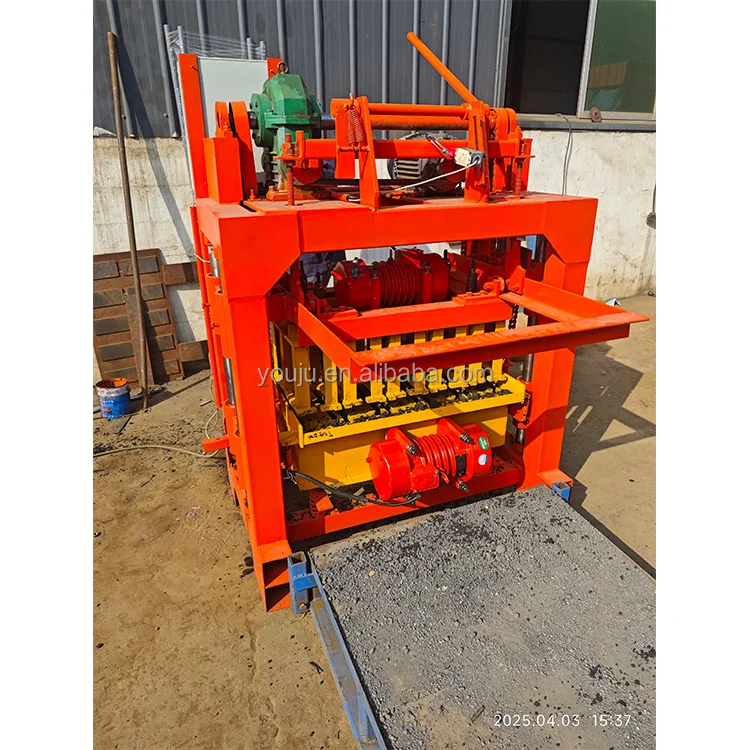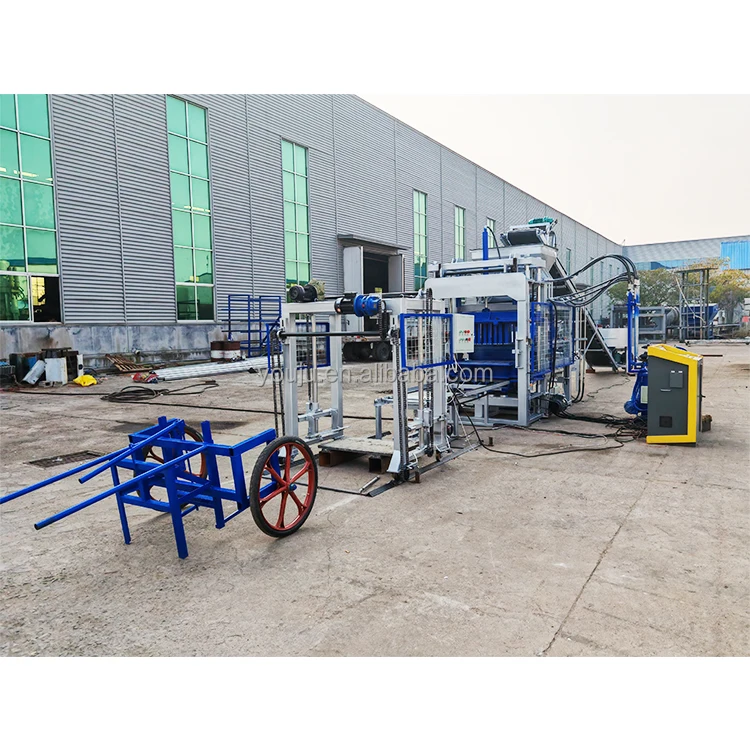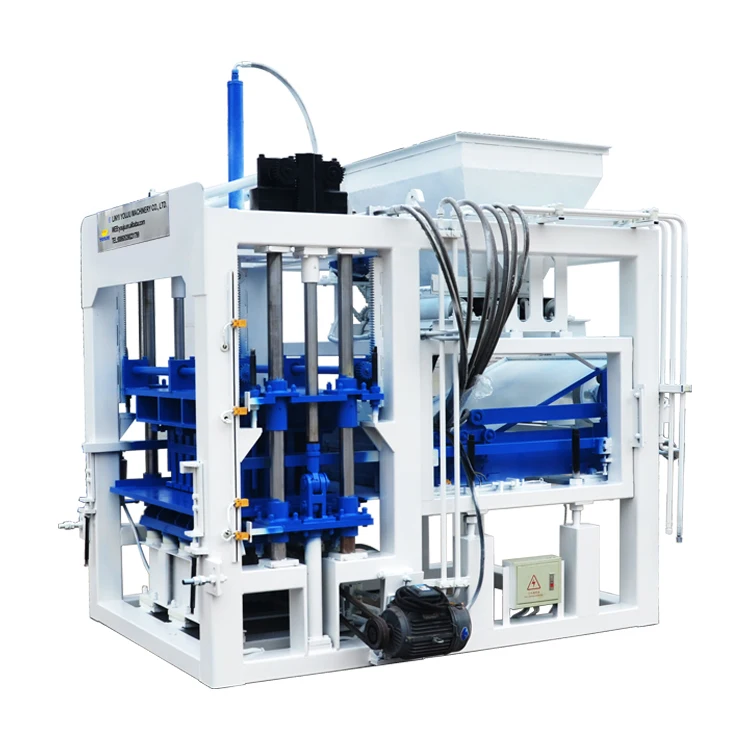
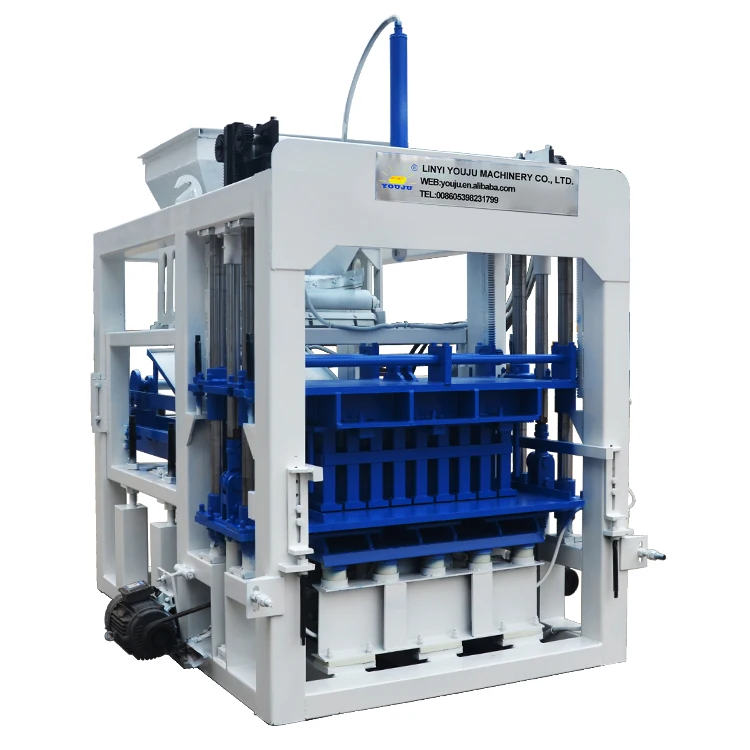
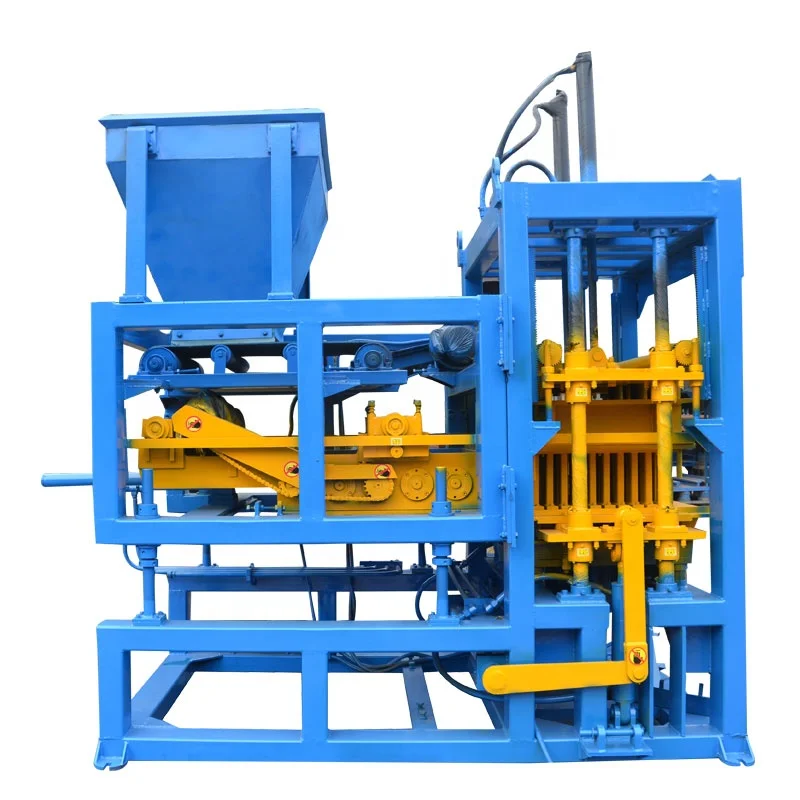
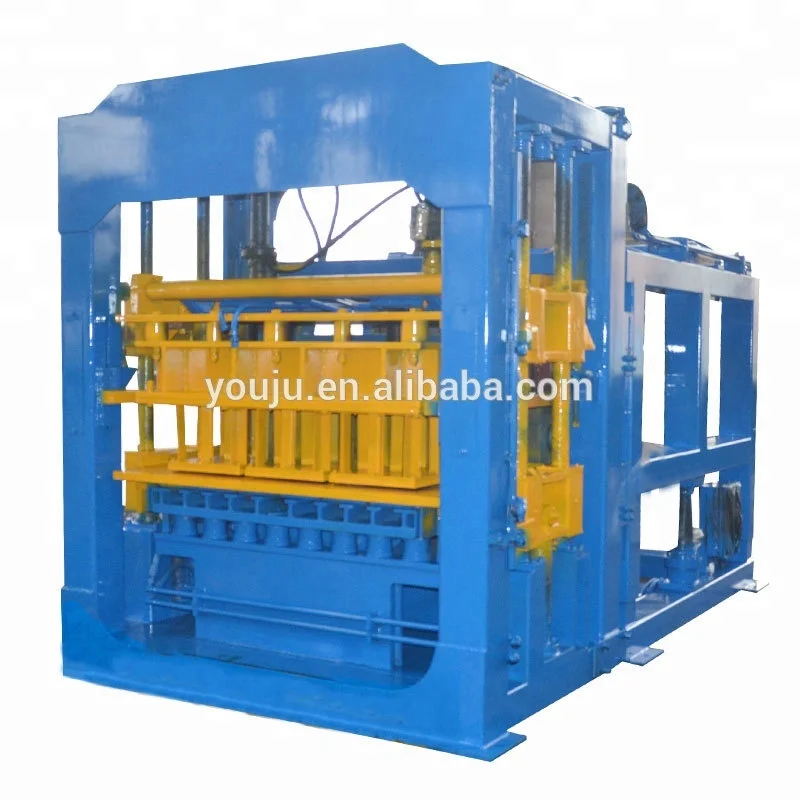
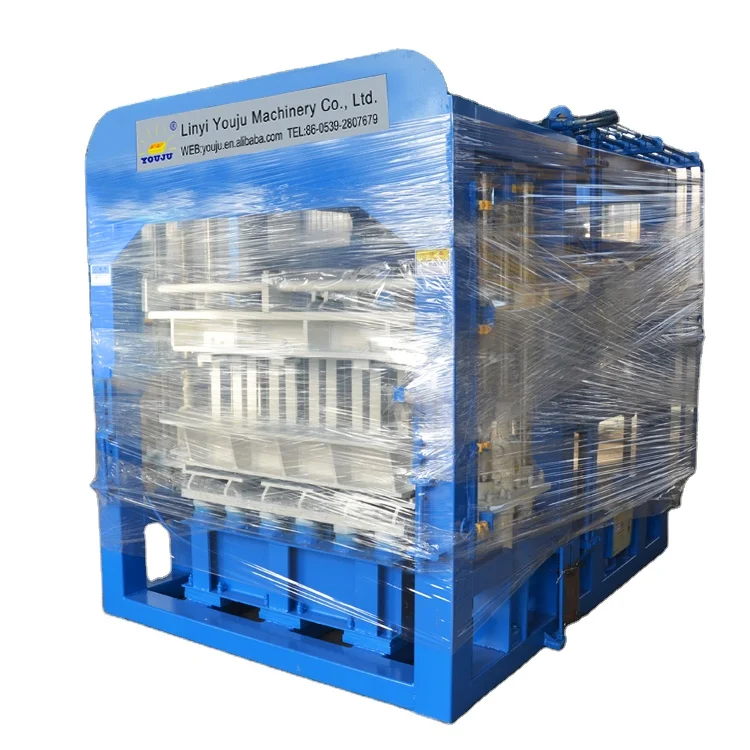
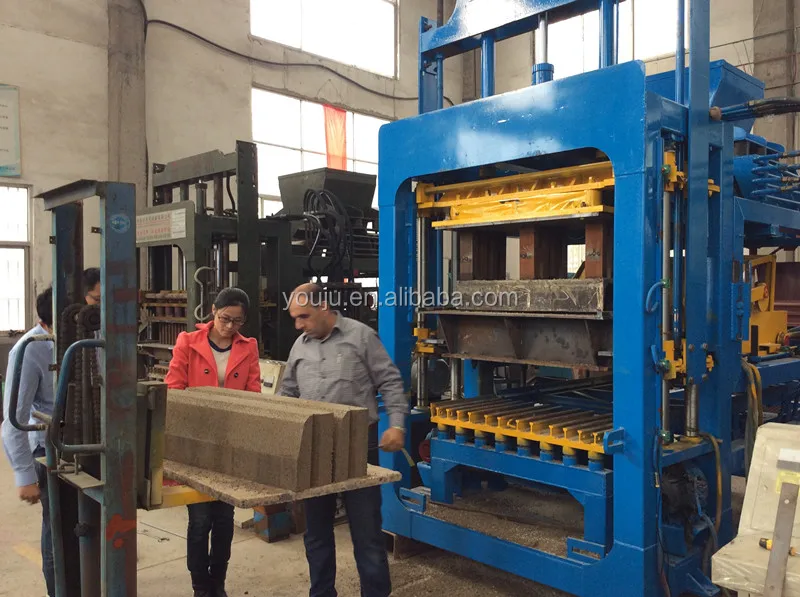
Description
Matched System Sizing — every QT5-15 configuration is set against your target block format, local aggregate and existing pallet handling, not pulled from a catalogue default.
Technical Specifications
| Parameter | Value |
|---|---|
| Product Type | Automatic Concrete Block Making Machine |
| Model | QT5-15 |
| Overall Dimensions (L×W×H) | 7400×1950×2800 mm |
| Rated Pressure | 21 MPa |
| Main Vibration Form | Hydraulic platform vibration |
| Vibrating Frequency | 2800–4500 rolls/minute |
| Cycle Time | 15–20 seconds (basis not stated in source — confirm block format / material / thickness) |
| Motors Power | 26.5 kW |
| Pallet Size | 1100×550 mm |
| Net Weight | 6 T |
| Voltage | According to buyer needs (confirm voltage and frequency before shipment) |
| Control System | PLC with fault diagnosis and remote monitoring capability |
| Output Capacity (240×115×90 mm standard brick) | 16 pcs/mould, 2880–3600 pcs/h, 23040–28800 pcs/8h |
| Output Capacity (400×115×53 mm) | 32 pcs/mould, 7680–8800 pcs/h, 61440–70400 pcs/8h |
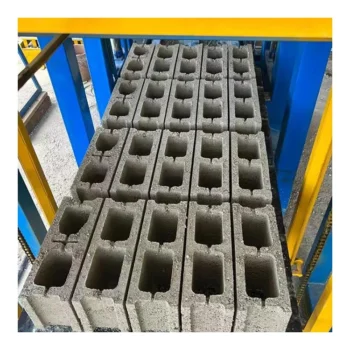
| Output Capacity (400×200×200 mm hollow block) | 5 pcs/mould, 900–1200 pcs/h, 7200–9600 pcs/8h |
| Mould Format Options | 240×115×90 / 400×115×53 / 400×200×200 mm (custom formats available) |
| Automation Level | Full automatic |
| Language Options | PLC display language to be confirmed with buyer |
| Warranty | One year for the whole machine |
| Standards | CE (certificate details confirmed per order) |
Application Suitability
| Application | Material or Output |
|---|---|
| Hollow block production for residential and commercial walls | Crushed stone, river sand and cement blended to local aggregate grading |
| Solid brick manufacturing for load-bearing masonry | Local quarry aggregate with cement binder, pressed at 21 MPa |
| Paving brick and interlocking brick for roads and walkways | Fine aggregate and cement mix, vibration frequency adjusted for surface finish |
| Kerbstone and porous brick for municipal infrastructure | Coarse aggregate with controlled water-cement ratio for permeability |
| Multicellular brick for lightweight partition walls | Lightweight aggregate or expanded clay blended with cement |
What "Pieces per Hour" Leaves Out About the QT5-15
Capacity means nothing until you name the block format it was measured on.
Most quotations state a single output figure that silently assumes the fastest or lightest format. A buyer in West Africa once signed for a machine based on a headline number, only to discover on commissioning that the real daily run on 400×200×200 mm hollow blocks was a fraction of what was promised. The cycle time on that QT5-15 automatic concrete block making machine specifications sheet changes dramatically between a 240×115×90 mm solid brick and a hollow block, because mould fill depth, vibration duration and demould travel all differ [NEED_CITE: how block geometry affects cycle time in hydraulic vibration presses]. Without per-format capacity, a buyer is comparing apples to a number that belongs to oranges.
Cycle Time Is Not a Single Number
Every format the QT5-15 presses requires its own cycle profile. A thin 400×115×53 mm paver fills the mould quickly and needs shorter vibration, while a 400×200×200 mm hollow block demands longer fill and higher vibration energy to compact the deeper cavity walls. The automatic concrete block making machine specifications QT5-15 lists a 15–20 second range, but which end of that range applies depends entirely on the format and the mix feeding behaviour. When we prepare a capacity calculation, every output figure is labelled with the exact block size it assumes, so a buyer can multiply by shift hours and get a realistic daily total.
Mould and Pallet Must Agree with Your Site
The 1100×550 mm pallet size was chosen to balance mould area against the curing racks and forklifts commonly found in mid-scale block plants. If a buyer’s existing curing racks are 1000 mm wide, every pallet needs re-racking or new racks must be built — a cost that never appears on the machine invoice. We confirm pallet dimensions against the buyer’s curing layout before the order enters production, because the pallet is the unit that travels through the entire line, not just the press [NEED_CITE: pallet size and curing rack compatibility in block plant design].
Reading the Specs That Actually Matter
Rated pressure at 21 MPa and a vibration frequency range of 2800–4500 rolls/minute together define the compaction energy delivered to the mix. Higher pressure with insufficient vibration leaves air voids in deep-cavity hollow blocks; high vibration with low pressure produces a weak green block that chips during pallet transfer. The QT5-15 allows the operator to adjust vibration frequency within that band through the PLC, matching it to the local aggregate’s particle shape and moisture. The 26.5 kW motor pack supplies enough headroom so that peak vibration draw does not trip the main breaker on a standard industrial feed, but the exact voltage and frequency must be locked in before the electrical panel is wired.
The Cost of Skipping Format-Level Detail
When a buyer accepts a single headline capacity, the first sign of trouble is missed delivery deadlines on the very first production contract. Workers stay late to hand-stack output that the machine cannot physically deliver on the contracted format. Mould changes that were never timed become an entire shift of downtime, and the second format the buyer paid for never gets run because the crew avoids the changeover [NEED_CITE: hidden downtime cost of unverified mould change procedures]. Pallets sized without checking the curing area force a forklift detour that adds labour the quotation never budgeted for.
Why Sizing Starts with Your Block, Not Our Catalogue
Every QT5-15 that leaves the workshop is configured against the buyer’s actual target format, not a default line in a brochure. The mould, pallet and press are treated as one matched system: mould design is confirmed to the block size the buyer’s market sells, pallet size is checked against existing racks and handling equipment, and the PLC display language is set to the operator team’s working language before the panel is closed. Block machinery is our single product focus, which means the press, the mould and the handling stations are specified together rather than assembled from separate suppliers after the fact. Mix design and local aggregate are reviewed before the vibration and pressure settings are finalised, so the machine arrives tuned to the material the buyer can actually source.
Documentation & Verification
- Line layout with capacity calculation stating the exact block format for each output figure
- Mould drawing and format list covering every block size the buyer’s market sells
- Voltage, frequency and PLC display language confirmation documented before production
- Hydraulic and electrical schematic supplied with the machine at delivery
- Factory test record run on the buyer’s confirmed block format before dispatch
- Wear parts and mould catalogue listing replacement intervals for hydraulic and vibration components
Installation, Commissioning & Support
- Foundation plan sized to the 7400×1950 mm footprint and 6 T operating weight of the QT5-15
- Dedicated electrical circuit confirmed for 26.5 kW total motor load at the buyer’s local voltage and frequency
- Machine arrives dismantled for container loading; on-site assembly scope documented before shipment
- PLC fault diagnosis and remote monitoring activated during commissioning with operator walkthrough
- Mould change procedure trained on-site so format changeover does not consume a full shift
- Wear parts list with hydraulic seals and vibration motor brushes identified for first reorder
Before You Request a Quote
Tell us the block formats your market actually sells — including dimensions and target daily output per format. Share the local aggregate type and any existing curing racks or forklifts so the 1100×550 mm pallet size can be verified against your site. Confirm your mains voltage, frequency and the language your operators need on the PLC display, and we will return a configuration proposal with capacity stated per format, not a single headline number.
Frequently Asked Questions
Q: How is capacity verified per block format and what mix design is assumed?
A: Each output figure on the QT5-15 is tied to a specific block size — for example 900–1200 pieces per hour on 400×200×200 mm hollow blocks. The calculation assumes a mix design matched to your local aggregate and cement source, which we review before the vibration and pressure settings are locked in.
Q: Which mould formats are available and how long does a mould change take?
A: Standard moulds cover 240×115×90 mm solid brick, 400×115×53 mm paver and 400×200×200 mm hollow block, with custom formats available to buyer drawings. Mould change time is confirmed during on-site training so your crew can plan format changeovers without losing a full shift.
Q: How is pallet size matched to existing curing racks and forklifts?
A: The QT5-15 uses a 1100×550 mm pallet. Before production we check this dimension against your curing rack width and forklift tine spacing, because a mismatch forces manual re-handling that no quotation line item covers.
Q: What voltage, frequency and PLC language options are confirmed before production?
A: Voltage and frequency are set to your site supply — for example 380 V / 50 Hz or 440 V / 60 Hz — and documented before the electrical panel is built. The PLC display language is configured to your operator team’s working language so fault diagnosis is readable on day one.