
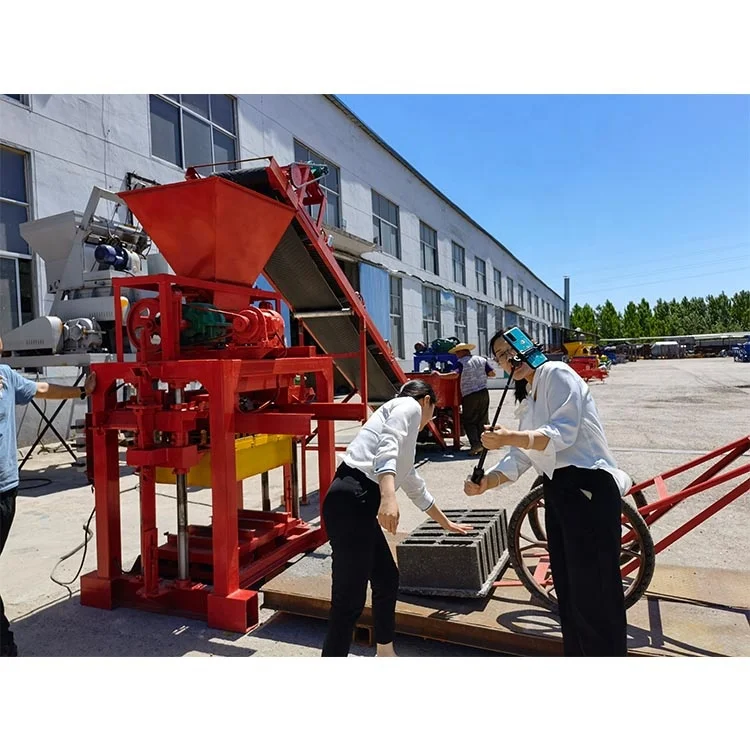
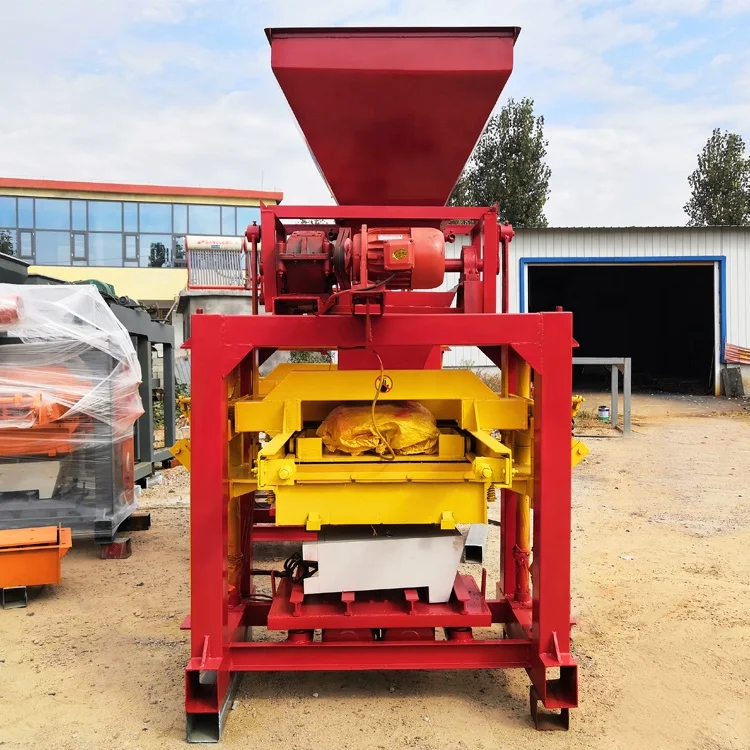
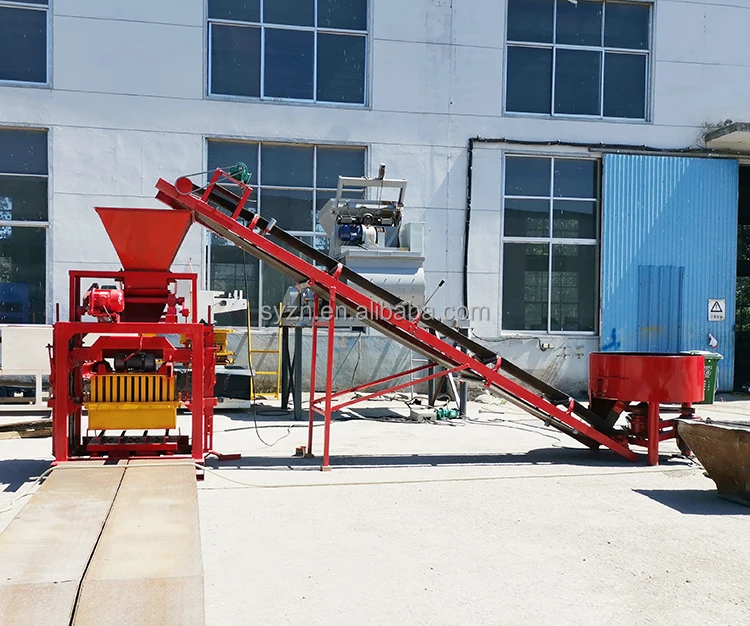

Description
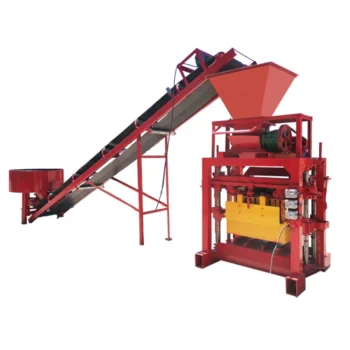
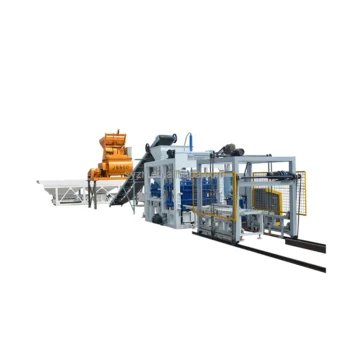
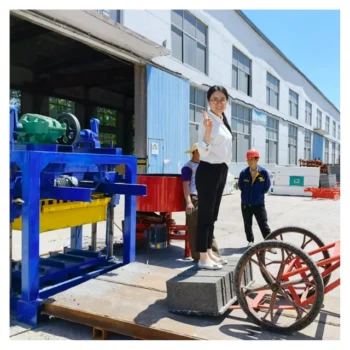
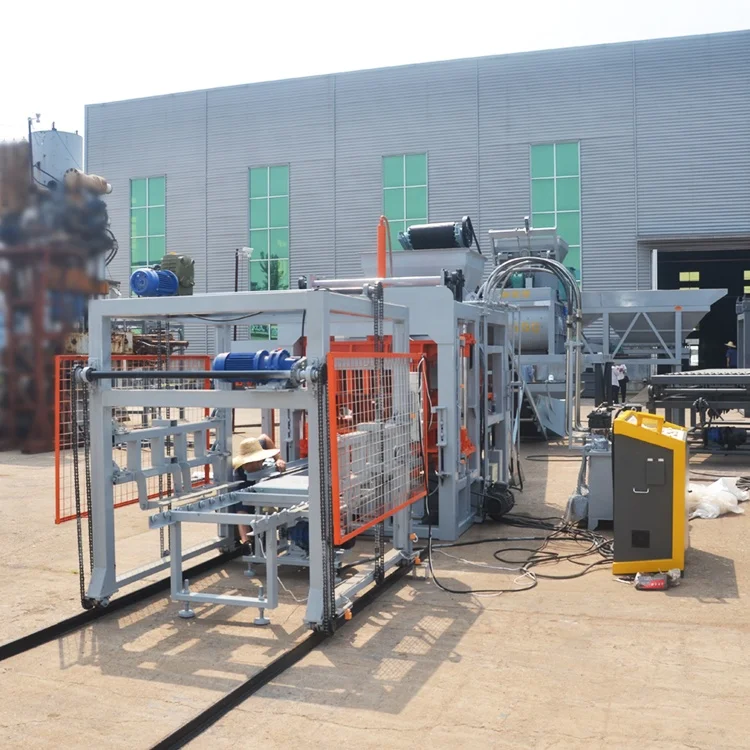
Configuration matched to your block format and aggregate — Output figures on the QTJ4-35 are calculated per specific hollow block or solid brick dimension, not quoted as a single unqualified number.
Technical Specifications
| Parameter | Value |
|---|---|
| Model | QTJ4-35 |
| Product Type | Concrete Block Making Machine |
| Overall Dimensions | 1350×1460×1800mm |
| Molding Cycle | 35s |
| Vibration Frequency | 2800 r/min |
| Vibration Force | 30KN |
| Total Power | 11.15KW |
| Mixer Model | JQ350 |
| Pallet Size | 850×450×20mm |
| Total Weight | 1500KG |
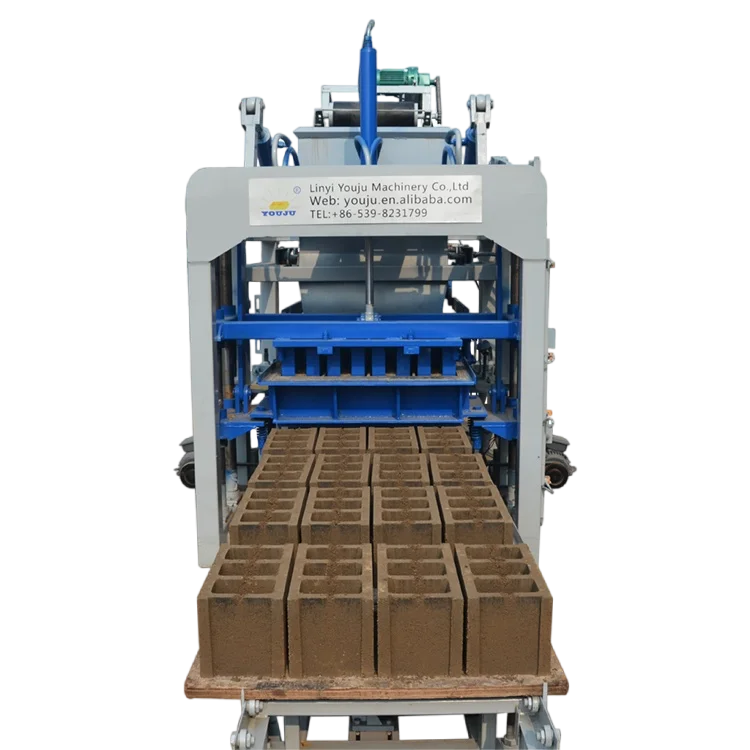
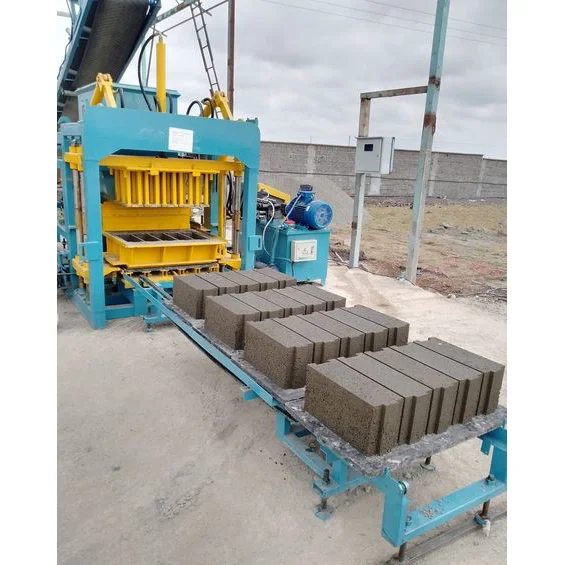
| Applied Products | Concrete blocks, hollow block (8 inch, 6 inch), solid brick |
| Raw Materials | Crushed stones, sand, cement, dust, fly ash |
| Output Capacity (400×200×200mm Hollow Block) | 408 pcs/hr, 3264 pcs/8hr |
| Output Capacity (400×150×200mm Hollow Block) | 510 pcs/hr, 4080 pcs/8hr |
| Output Capacity (240×115×53mm Solid Brick) | 2100 pcs/hr, 17000 pcs/8hr |
| Automation Level | Semi-automatic |
| Frame Construction | Four-lead channel steel stand |
Application Suitability
| Application | Material or Output |
|---|---|
| Small-scale hollow block production | 8-inch and 6-inch formats from crushed stone, sand, and cement |
| Standard solid brick manufacturing | 240×115×53mm clay-style format from fly ash, dust, and sand |
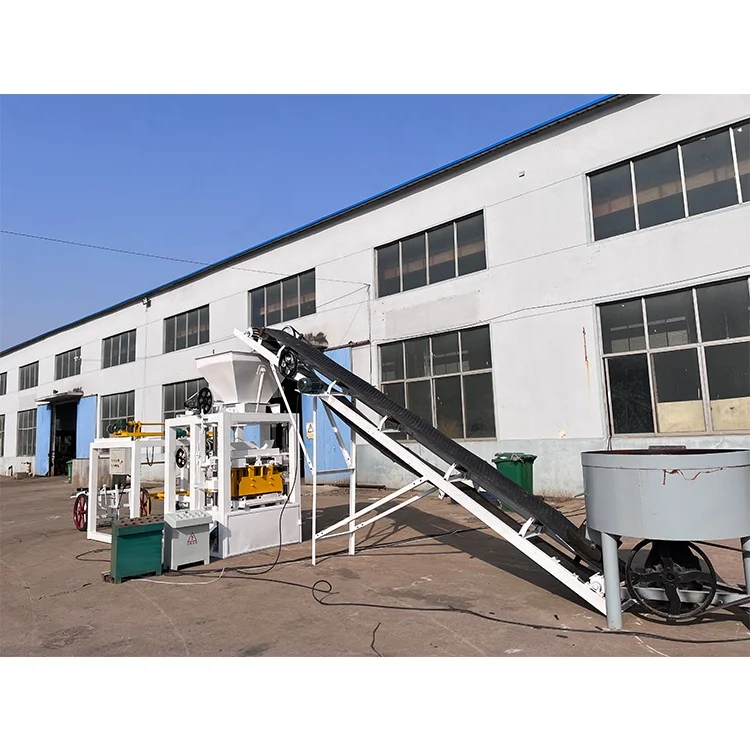
| On-site contractor block making | Locally available aggregates with JQ350 pan mixer integration |
What Concrete Block Making Machine Specifications Often Leave Out
A quoted cycle time means nothing until you know which block format it was measured on.
Many suppliers publish a single output number for a concrete block making machine without disclosing the mould it was tested with. A buyer expecting 400×200×200mm hollow block capacity receives a figure that was actually measured on a much smaller solid brick, and daily production falls far short of the business plan. I have seen this mismatch cause project delays on multiple sites across South Africa and Southeast Asia where contractors committed to delivery volumes before the machine arrived [NEED_CITE: common block machine misrepresentation claims in export markets].
Mould Format Determines Real Daily Output
The QTJ4-35 block machine capacity depends entirely on which mould is installed. At a 35-second molding cycle, this unit produces 408 pieces per hour on 400×200×200mm hollow blocks, stepping up to 510 pieces per hour on the narrower 400×150×200mm format, and reaching 2100 pieces per hour on standard 240×115×53mm solid bricks. Technical buyers sizing equipment to a specific product must anchor their calculations to the format their market actually purchases, not the highest number on the sheet.
Pallet Sizing and Curing Area Alignment
Pallet Dimensions, Vibration Force, and Mix Compatibility
The 850×450×20mm pallet on this concrete block making machine must align with the buyer’s existing curing racks and forklift tine spacing. When a pallet arrives that does not fit the curing area already built on site, blocks end up stacked by hand on the ground, defeating the semi-automatic feeding advantage. The 30KN vibration force at 2800 r/min was calibrated for standard crushed stone and sand mixes; when local aggregate runs coarse or the cement ratio shifts, the exciting power may need adjustment to maintain block density and compressive strength across every batch [NEED_CITE: relationship between vibration force and aggregate gradation in block making].
Reading the Key Specifications for Production Impact
The four-lead channel steel stand provides the rigidity needed to sustain 30KN vibration force over continuous shifts without frame fatigue or mould misalignment. Total power draw of 11.15KW includes the JQ350 pan mixer, which means the entire semi-automatic line runs on a single moderate electrical supply — a practical advantage for sites without high-capacity transformer infrastructure. The 35-second molding cycle assumes a consistent feed from the belt conveyor and an operator ready to handle pallets at the discharge end; any delay in pallet handling extends the actual cycle and reduces hourly throughput below the rated figure. Buyers should verify that their local voltage and frequency match the motor specifications before production begins, as rewinding a motor on site is both costly and time-consuming.
The Cost of Skipping Format Confirmation Before Order
When a buyer confirms an order without specifying which hollow block format the output figures are based on, the machine may arrive with a mould that does not match the regional standard. In several installations I have supported, the local market demanded 6-inch hollow blocks while the factory mould was cut for 8-inch, forcing an unplanned mould purchase and weeks of lost production while the replacement was shipped [NEED_CITE: block format standards varying by region in African and South Asian markets]. This mismatch also affects pallet utilisation, as a larger mould may not fill the pallet surface efficiently, wasting curing space.
Why Buyers Source This Machine Through Our Process
Our single focus on block machinery means the QTJ4-35 is quoted as a matched system — machine, mould, pallet, and belt conveyor — not assembled from separate suppliers who have not communicated. Configuration is set against the buyer’s actual mix design and local aggregate, not pulled from a catalogue default. Mould design covers the formats the buyer’s market sells, including custom drawings when regional standards differ from common sizes. Automation level is selectable, so a buyer can start with semi-automatic pallet handling and plan an upgrade path. Installation support includes operator training on the specific mould formats and cycle times relevant to the buyer’s production plan.
Documentation & Verification
- Line layout with capacity stated per block format, not a single aggregate figure
- Mould drawing and format list confirming included blocks and change procedure
- Pallet specification matched to buyer’s curing rack dimensions and forklift type
- Voltage and frequency confirmation document before production starts
- Factory test record on the buyer’s specified block format before dispatch
- Operation and maintenance manual with wear parts list
Installation, Commissioning & Support
- 1350×1460×1800mm footprint requires level concrete pad with anchor bolt provisions
- 11.15KW total load demands dedicated circuit breaker rated above motor starting current
- Belt conveyor and mixer shipped separately for container loading, assembled on site
- First-run commissioning covers mould change procedure and cycle time validation
- Operator training on JQ350 mixer loading sequence and semi-automatic pallet handling
- Wear parts list with hydraulic seal and vibration motor bearing replacement intervals
Before You Send an Inquiry
To size the QTJ4-35 correctly for your project, share the specific block format your market requires, including exact dimensions and target compressive strength. Confirm your local voltage, frequency, and the language you need on the control interface. Provide details on the aggregate available at your site — particle size distribution and moisture content — so the vibration force can be matched to your mix.
Frequently Asked Questions
Q: How is the capacity figure calculated and which block format does it assume?
A: Every output figure for the QTJ4-35 is stated per specific block format at the 35-second molding cycle. Hollow block 400×200×200mm yields 408 pieces per hour, while 240×115×53mm solid brick reaches 2100 pieces per hour. Always confirm which format your quotation references before comparing machines.
Q: What mould formats are available and how long does a mould change take?
A: Standard moulds cover 400×200×200mm and 400×150×200mm hollow blocks plus 240×115×53mm solid brick. Custom formats are available to buyer drawings. Mould change on the four-lead stand requires unbolting and realignment, typically completed within a shift by trained operators.
Q: Is the pallet size compatible with my existing curing area and handling equipment?
A: The 850×450×20mm pallet must be checked against your curing rack spacing and forklift tine width before order confirmation. Share your existing rack drawings so we can confirm compatibility or adjust pallet dimensions if the production volume allows.
Q: How do I confirm the machine is configured for my local aggregate and mix design?
A: Send a sample of your crushed stone, sand, or fly ash along with your typical cement ratio. The vibration force and frequency are evaluated against your material, and adjustments to exciting power or cycle time are documented before the factory test runs.
Q: What voltage, frequency, and control display options are available before shipment?
A: Voltage and frequency are confirmed during the quotation stage to match your site electrical supply. Control panel labelling and any display language are agreed in writing before production begins, preventing commissioning delays when the machine arrives on site.