


Description
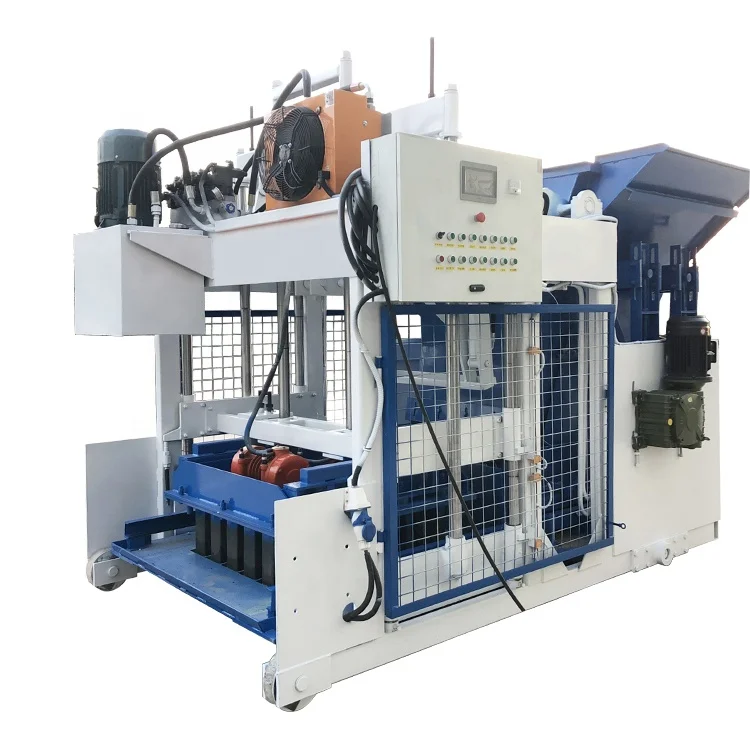
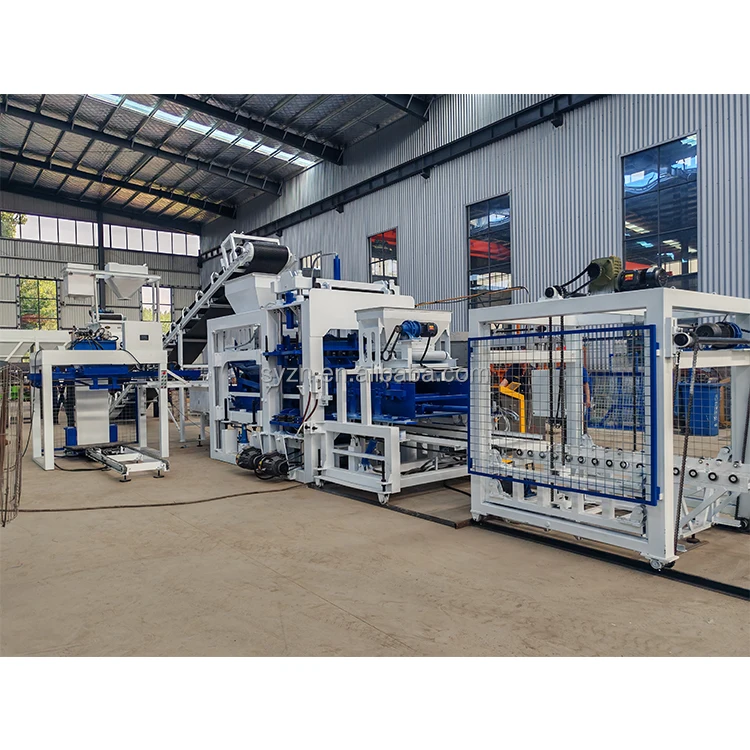
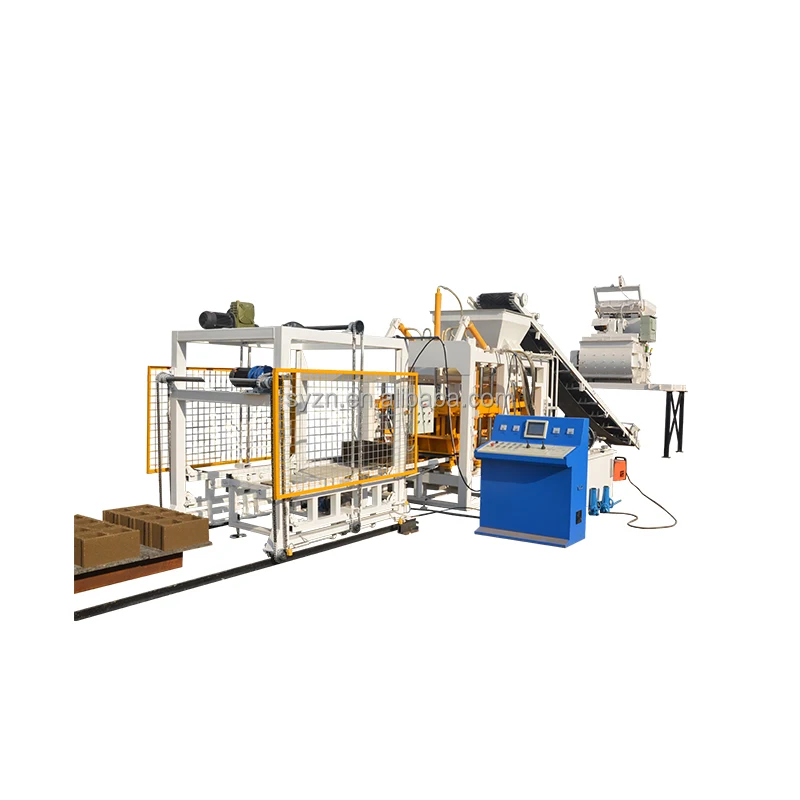
Format-Matched Output — QTJ4-25 capacity figures tied to specific block dimensions and mould cavity counts, not a single headline number.
Technical Specifications
| Parameter | Value |
|---|---|
| Model | QTJ4-25 |
| Product Type | Semi-Automatic Concrete Block Making Machine |
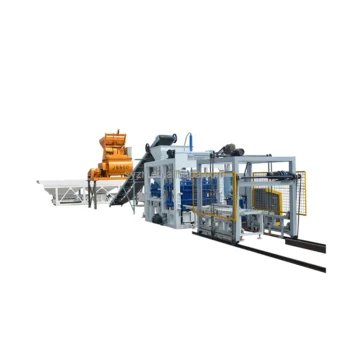
| Overall Dimensions (L×W×H) | 6400×1500×2700 mm |
| Molding Cycle | 25 s (basis not stated in source — confirm block format) |
| Vibration Frequency | 2800–5100 r/min |
| Exciting Force | 60 kN |
| Rated Power | 17.9 kW |
| Mixer Model | JQ350 |
| Pallet Size | 850×550×20 mm |
| Net Weight | 2500 kg |
| Automation Level | Semi-automatic |
| Hydraulic System | Equipped |
| Stacking Method | Manual with trolley |
| Voltage & Frequency | Configurable to site requirements (basis to be confirmed) |
| Control System | To be confirmed (PLC type and display language) |
Application Suitability
| Application | Material or Output |
|---|---|
| 8-inch hollow block production for wall construction | Crushed stone, sand, cement, fly ash — 480 pcs/h at 390×190×190 mm (4 pcs/mould) |
| 6-inch hollow block production for partition walls | Local aggregate and cement mix — 600 pcs/h at 400×150×200 mm (5 pcs/mould) |
| Solid brick production for load-bearing masonry | Sand, cement, dust, fly ash — 2100 pcs/h at 240×115×53 mm (18 pcs/mould) |
| Paving block production for walkways and yards | Crushed stone and cement blends with pigments |
Why "480 Pieces per Hour" Means Nothing Without the Block Format
Every QTJ4-25 block machine specifications figure must state which block size and mould cavity count produced it.
I have watched buyers receive a quotation that quotes a single hourly number, then discover on arrival that their actual 8-inch hollow block output sits well below that figure because the quoted capacity assumed a smaller format. The 25-second cycle on the QTJ4-25 is a fixed mechanical rhythm, but the pieces that drop onto the pallet each cycle range from four large hollow blocks to eighteen small solid bricks. QTJ4-25 semi-automatic concrete block making machine capacity only becomes meaningful when the block format, mould cavity count and local aggregate behaviour are all stated together [NEED_CITE: block format assumptions in capacity quotations].
Hollow Block, Solid Brick and Paver Output Tied to Mould Cavity Count
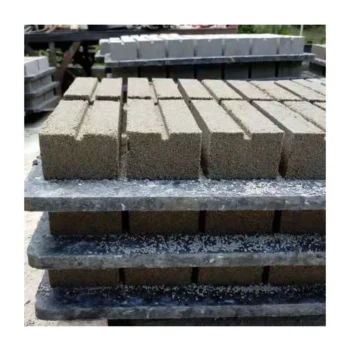
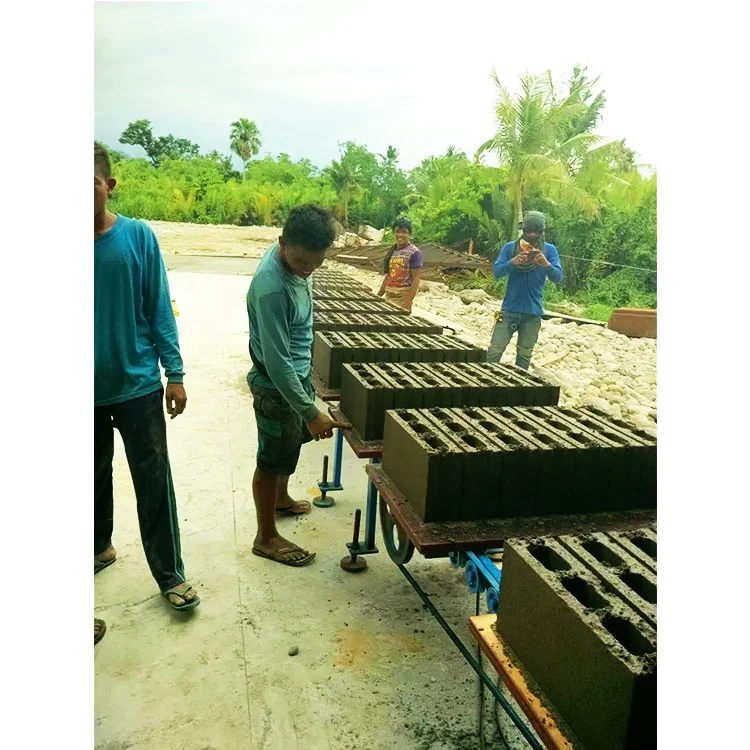
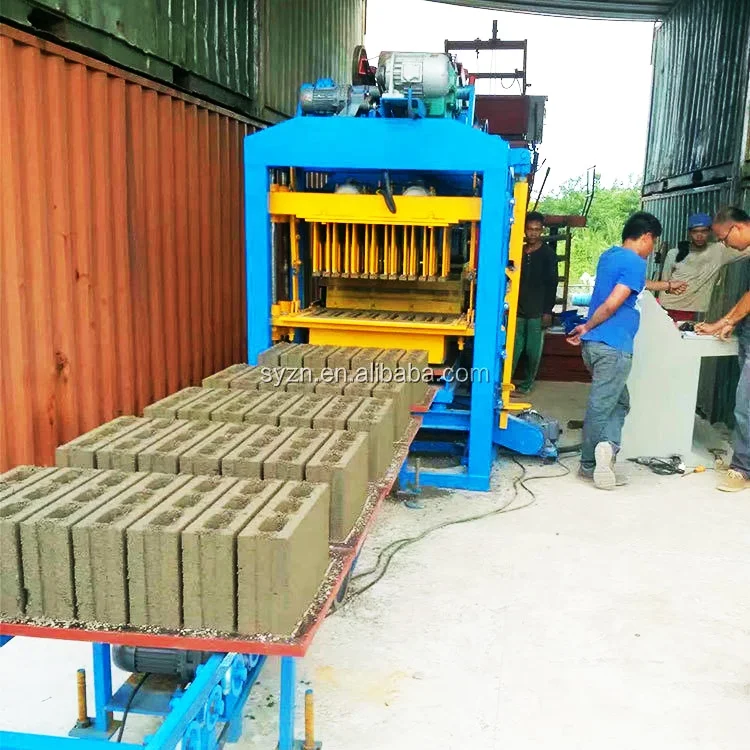
The QTJ4-25 semi-automatic concrete block making machine presses four 390×190×190 mm hollow blocks per mould, five 400×150×200 mm hollow blocks, or eighteen 240×115×53 mm solid bricks. Each press cycle runs at a 25-second rhythm, so hourly output is simply the cavity count multiplied by the cycles achieved within a continuous hour. Pavers and kerbstones use the same pallet area but occupy more depth per piece, which changes the effective cavity count and therefore the hourly count. Buyers comparing this machine to alternatives should normalise every quotation to the same block format before the numbers carry any weight.
Pallet Size Determines Curing Area Layout Before the Machine Arrives
The 850×550×20 mm pallet is the fixed footprint that every block leaves the press on. That dimension dictates the curing rack spacing, the forklift tine width, and the floor area needed for the curing yard. If a buyer’s existing curing racks were built for a different pallet standard, the mismatch surfaces only after the QTJ4-25 block machine specifications are locked and the first production run begins. Confirming pallet compatibility during the quotation stage avoids a curing area rebuild that delays commissioning [NEED_CITE: pallet standardisation in block plant layout].
Vibration Force and Frequency Range Set Block Density
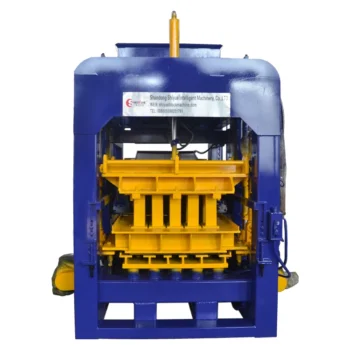
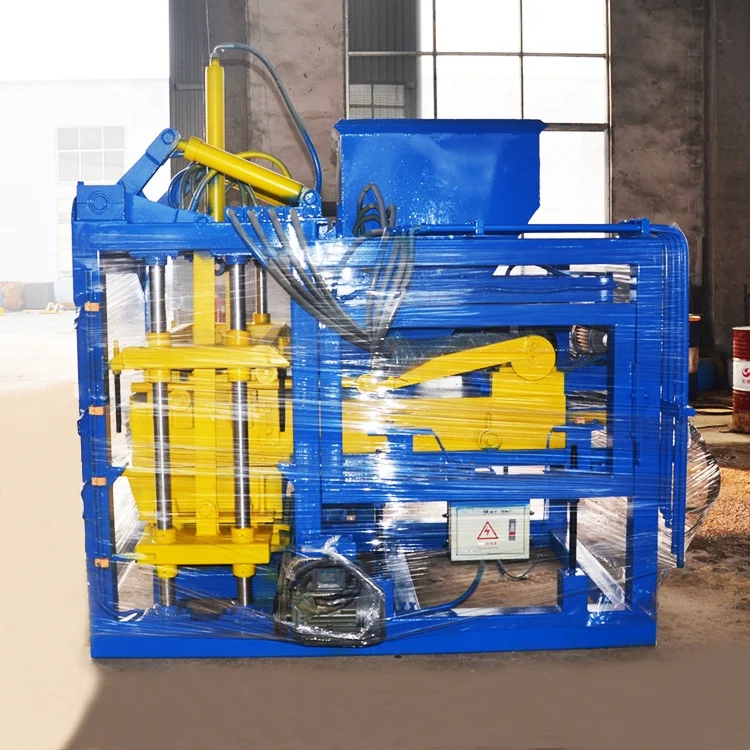
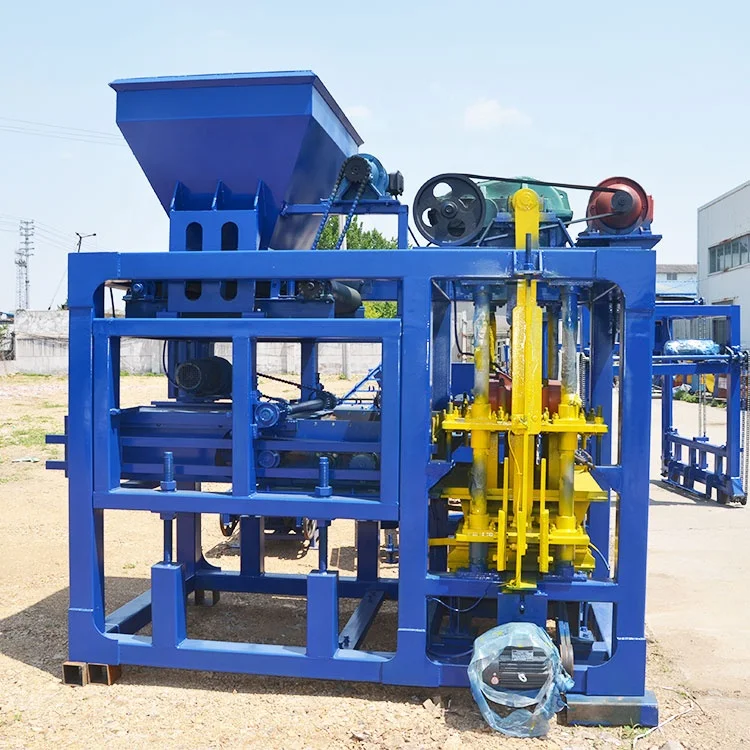
The vibration motor on the QTJ4-25 operates across 2800–5100 r/min and delivers 60 kN of exciting force. In practice, the correct frequency setting depends on the grain size and moisture content of the local aggregate. Coarse crushed stone with low fines needs a higher frequency to settle into the mould corners, while a sand-heavy mix with more natural moisture compacts adequately at a lower setting. Running the vibration at a default catalogue value without testing the buyer’s actual mix is a common reason blocks emerge with inconsistent compressive strength across a single batch.
What Happens When Mix Design and Vibration Are Never Matched
I have seen blocks crumble at the edges after demoulding because the vibration frequency was left at a factory default that suited a different sand gradation. The operator keeps increasing pressure to compensate, which accelerates wear on the hydraulic seals and shortens mould life without solving the strength problem. The QTJ4-25 gives the operator a frequency range to work with, but that range only delivers consistent block density when the starting mix proportions have been tested against the local aggregate first [NEED_CITE: aggregate gradation effect on vibration compaction].
Why Procurement Should Start With the Block, Not the Machine
A technical buyer evaluating the QTJ4-25 already knows which block formats sell in the local market and what daily volume the distribution network can absorb. Starting from those two facts, the correct mould cavity count, cycle time and pallet throughput fall into place. The machine then becomes a question of whether its 17.9 kW rated power matches the available site supply, whether its 2500 kg net weight fits the prepared foundation, and whether the semi-automatic stacking workflow fits the available labour. Reversing that sequence — choosing the machine first and searching for a block format that fits its output — leads to capacity figures that look strong on paper but never materialise on the curing yard.
Documentation and Verification
- Line layout drawing showing QTJ4-25 position, pallet flow path and curing rack spacing for your block format
- Mould drawing with cavity count and dimensional tolerances for each block size you intend to produce
- Capacity calculation sheet stating the exact block format, cycle time and pallet movement method assumed
- Factory test record run on aggregate samples matching your local material before dispatch
- Pallet specification confirming material grade, moisture resistance and compatibility with your forklift tines
- Voltage and control language confirmation document signed before production begins
Installation, Commissioning & Support
- Foundation pad sized to the 6400×1500 mm footprint with anchor bolt positions marked to QTJ4-25 drawing
- Dedicated electrical circuit rated for 17.9 kW plus mixer load, with voltage and frequency confirmed before wiring
- Machine shipped dismantled with hydraulic hoses and vibration motor separated for container loading
- On-site commissioning includes vibration frequency tuning against your actual aggregate sample
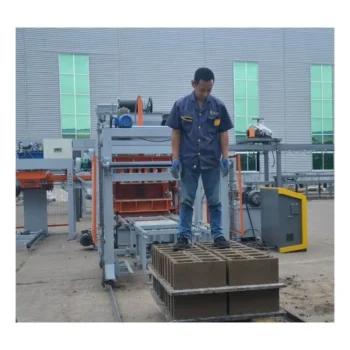
- Operator training covers mould change procedure, pallet feeding rhythm and manual stacking workflow
- Wear parts list supplied with recommended replacement intervals for mould liners and hydraulic seals
What to Include With Your Enquiry
Send the block formats your market currently buys, including exact dimensions and target daily volume per format. Provide a sample description of the sand, crushed stone or fly ash available locally, along with any existing curing rack dimensions and forklift specifications. State the site voltage and frequency so the control panel and motor wiring are configured before the QTJ4-25 leaves the factory.
Frequently Asked Questions
Q: How is QTJ4-25 capacity calculated per block format, and what does 480 pcs/h actually mean for my daily output?
A: The 480 pcs/h figure applies only to the 390×190×190 mm hollow block using the four-cavity mould at a 25-second cycle. Daily output depends on how many continuous hours your curing yard can absorb pallets and how often mould changes interrupt the run. Request a capacity sheet that states your exact block format before treating any hourly number as a planning figure.
Q: Which mould formats are available for QTJ4-25, and can I get a custom mould for my local block size?
A: Standard moulds cover 8-inch and 6-inch hollow blocks, solid bricks and common paver dimensions. Custom moulds can be manufactured to buyer-supplied drawings, provided the cavity layout fits within the 850×550 mm pallet area and the block depth suits the mould box travel. Send your drawing early so cycle time can be verified before the quotation.
Q: How long does a mould change take on QTJ4-25, and what tools are involved?
A: Mould change time depends on the bolt pattern and whether the operator has done the swap before. The process involves releasing the mould clamps, lifting the old mould out with the overhead hoist, lowering the new one in and re-tightening. Request the specific mould change procedure for your format pair so you can plan shift time around the swap.
Q: What pallet size does QTJ4-25 use, and how does it affect my curing area layout?
A: The machine uses 850×550×20 mm pallets. This dimension sets the curing rack shelf width, the spacing between rack rows for forklift access, and the total curing yard floor area needed for a full day’s production. If your existing racks or forklift were built around a different pallet standard, the mismatch must be resolved before commissioning begins.
Q: How is vibration force matched to local aggregate for consistent block strength?
A: The 60 kN exciting force operates across 2800–5100 r/min. The correct frequency setting depends on the grain size and moisture content of your sand and crushed stone. We run a mix trial using your aggregate sample before finalising the vibration parameter sheet, so the blocks that arrive at your curing yard on day one already meet the target compressive strength.