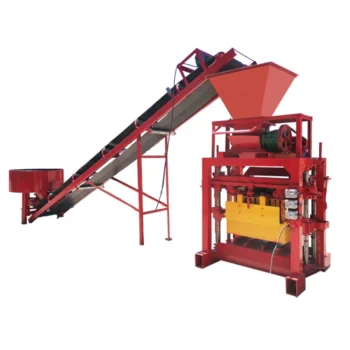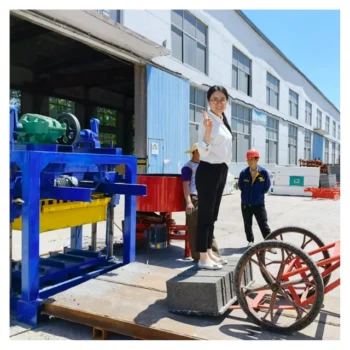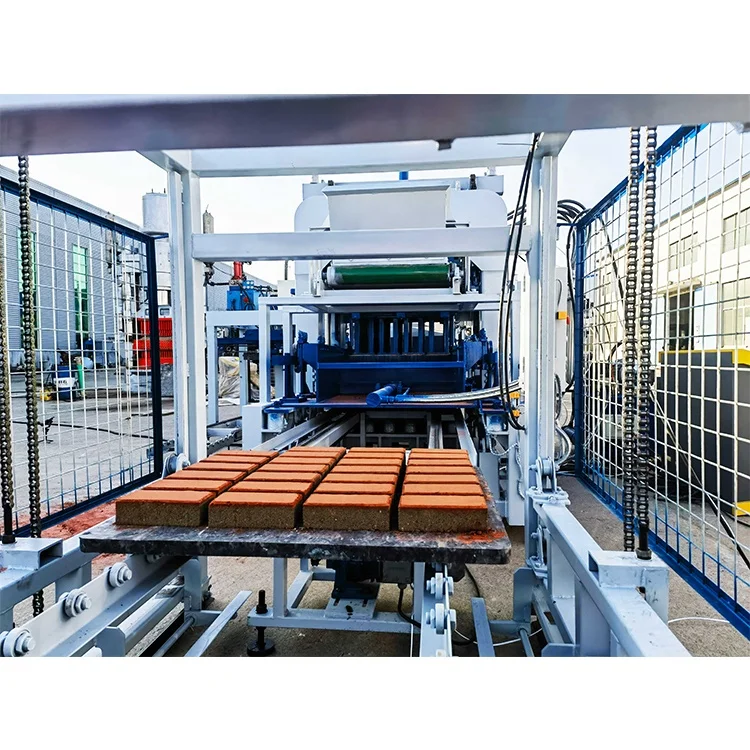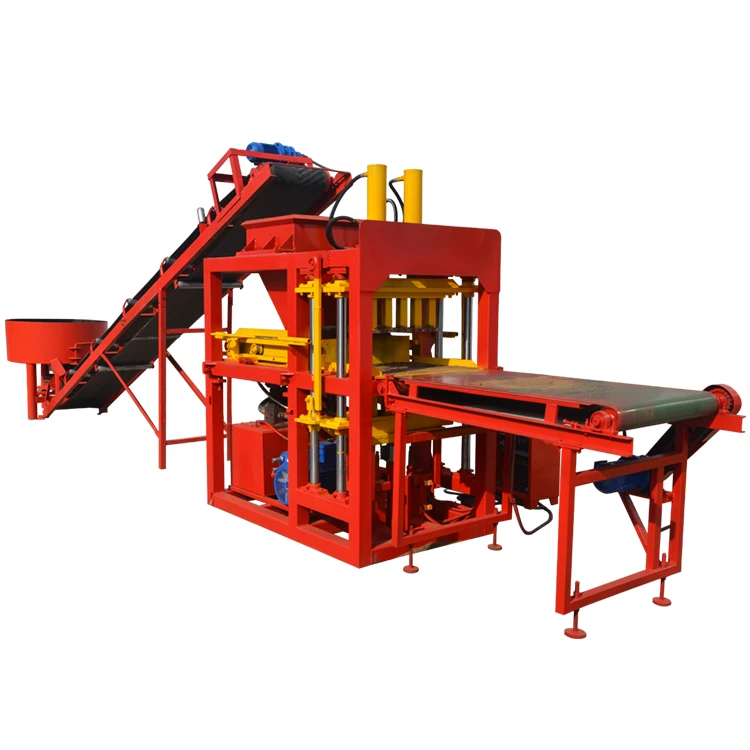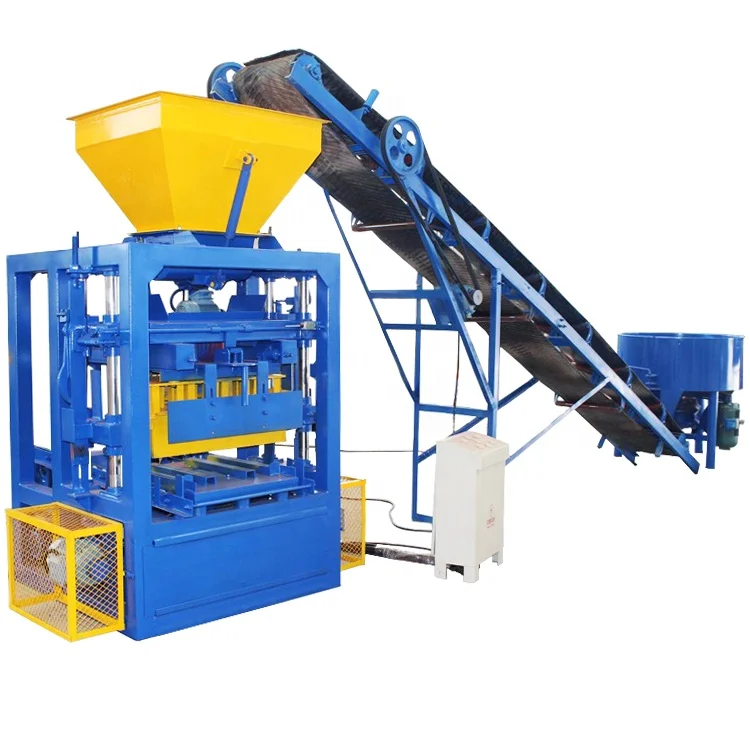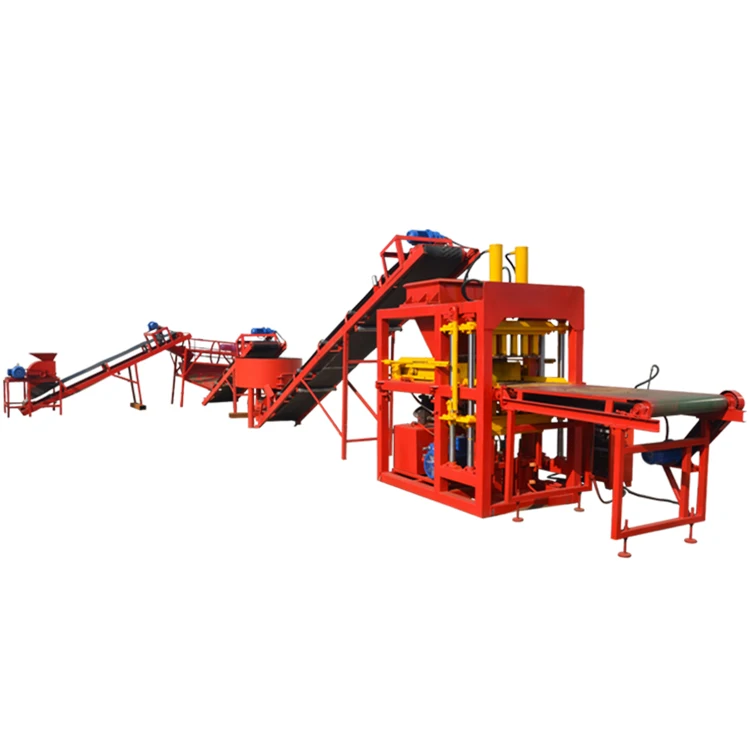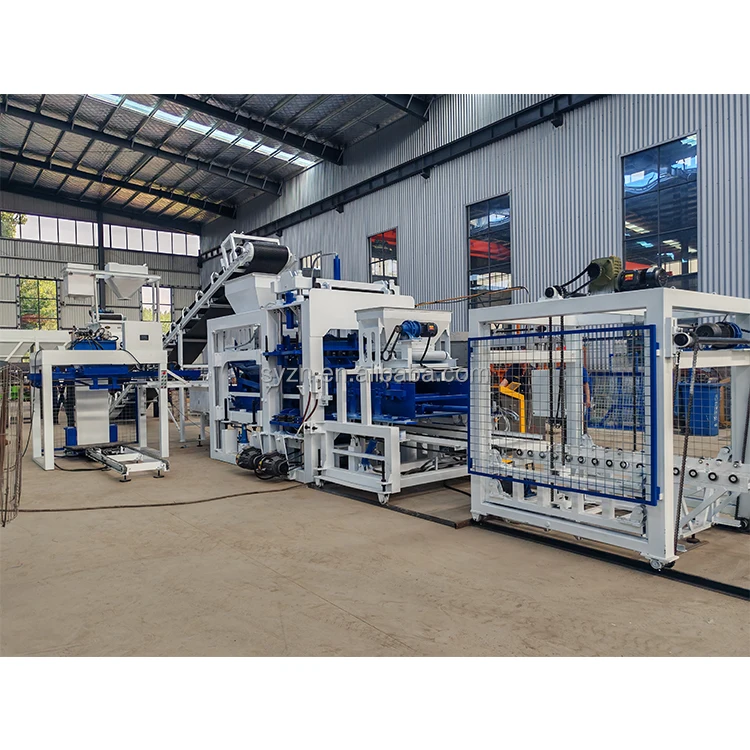
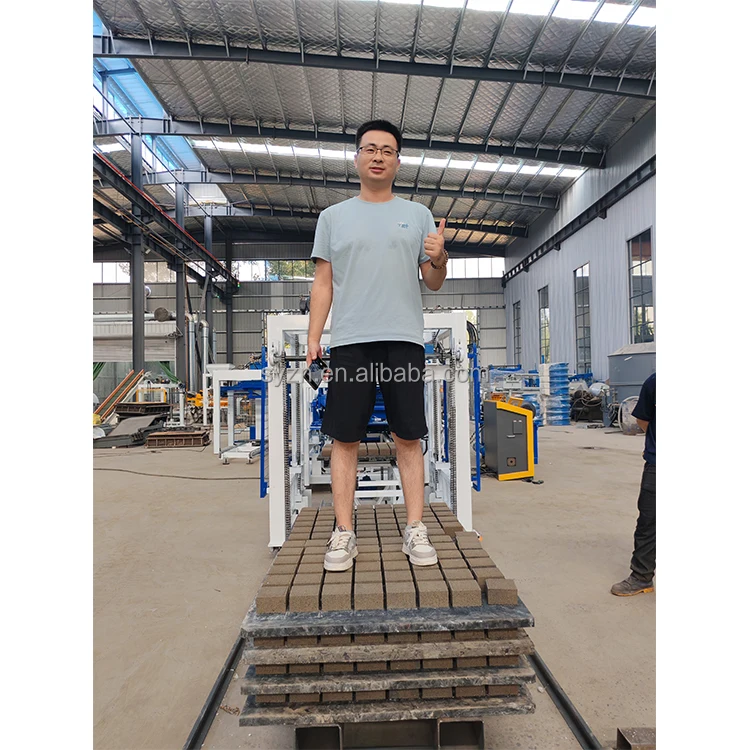

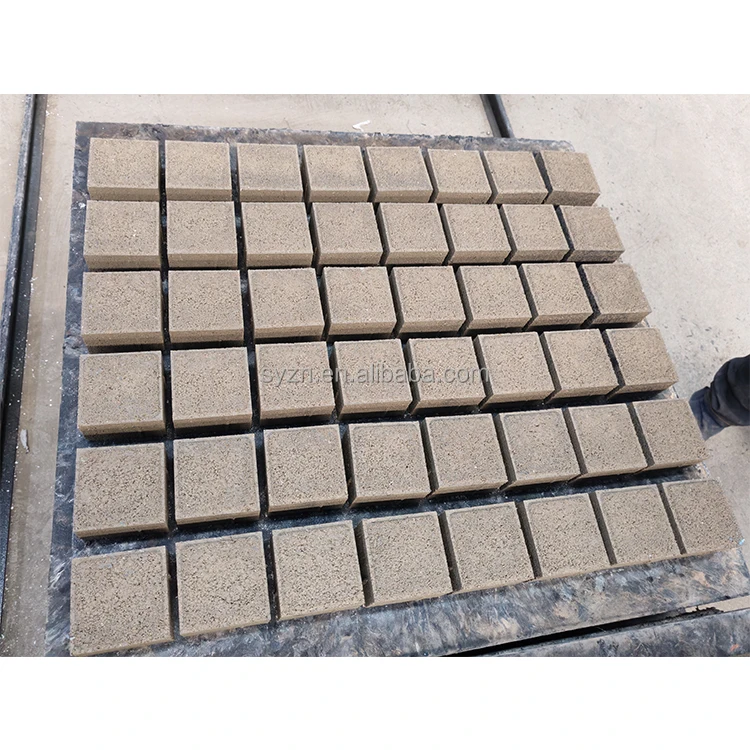
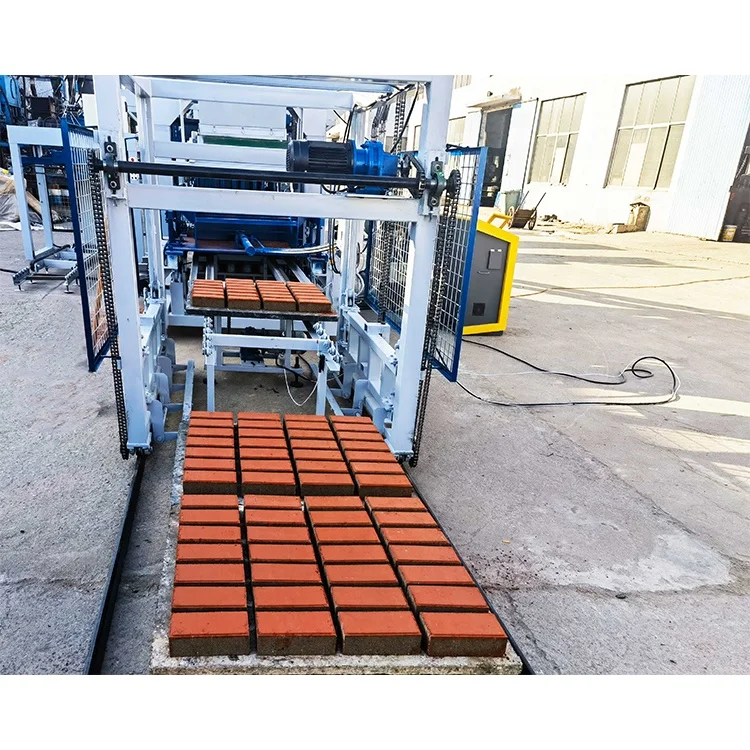

Description
Format-Specific Sizing — the QT8-15 block machine specifications are calculated against your target block format and local aggregate, not a catalogue default, so quoted cycle times hold up on your shop floor.
Technical Specifications
| Parameter | Value |
|---|---|
| Model | QT8-15 |
| Product Type | Hydraulic Concrete Block Making Machine |
| Overall Dimensions (L×W×H) | 8300×1860×3000 mm |
| Rated Pressure | 21 MPa |
| Main Vibration Form | Platform Vibration |
| Vibration Frequency | 2800–4500 r/min |
| Vibration Force | 45 kN |
| Pallet Size | 950×900 mm |
| Molding Cycle | 15–20 s (basis not stated in source — confirm block format, material and thickness) |
| Overall Power | 55.5 kW |
| Total Mass | 8 T |
| Demolding Method | Hydraulic |
| Factory Area | 300 m² |
| Raw Materials | Crushed stone, sand, cement, fly ash, gravel, slag |
| Applied Products | Hollow blocks, solid blocks, pavers, interlocking blocks, kerbstones, colored pavers |
| Warranty | 1 year (whole machine, excluding spare parts) |
| Container Loading | 1×40HQ (basic equipment) |
Application Suitability
| Application | Material or Output |
|---|---|
| Hollow block production for wall construction | Crushed stone, sand, cement with fly ash replacement |
| Solid block manufacturing for load-bearing structures | Gravel, sand, cement at higher pressure settings |
| Paving block and colored paver runs | Fine aggregate, cement, pigment with platform vibration |
| Interlocking brick for retaining walls and slopes | Crushed stone, sand, cement with specialized mould |
| Kerbstone and curb production for road projects | Coarse aggregate, sand, cement with extended cycle time |
What the QT8-15 Block Machine Specifications Actually Mean for Your Daily Output
Capacity numbers collapse the moment you switch from the reference block to the format your market actually buys.
I once worked with a West African buyer who received a quotation quoting a fixed hourly output. The figure assumed a standard 400×200×200 mm hollow block, but his market demanded 150 mm thick interlocking pavers. The cycle stretched well beyond the quoted range, and his daily production fell to roughly half of what the proforma invoice implied. The QT8-15 block machine specifications you see on this page carry a molding cycle of 15–20 seconds, and that range is only valid once we confirm your exact block format, mix design, and target strength. [NEED_CITE: cycle time variability across block formats in hydraulic vibration presses]
Mould Format Coverage and Cycle Time by Block Type
The platform vibration system running at 2800–4500 r/min works in tandem with 21 MPa hydraulic pressure to compact a wide range of concrete mixes. Each block format — hollow, solid, paver, interlocking, kerbstone — occupies a different position within that 15–20 second molding cycle window. A thin paver may complete at the lower end, while a tall hollow block demands the upper end or beyond. We map every mould you intend to run against the vibration frequency and pressure curve so you see the realistic cycle for each format before you commit.
Pallet Size, Curing Area, and Forklift Compatibility
The 950×900 mm pallet dimension is not arbitrary — it must match the curing racks you already have or plan to build, and the forklift tine spacing in your yard. A pallet too wide for your rack system means rebuilding the curing area; a pallet too small wastes press capacity per cycle. We confirm pallet material — treated timber, composite, or steel — against your climate and handling method so the QT8-15 block machine specifications align with the rest of your plant infrastructure. [NEED_CITE: pallet material selection and service life in tropical versus arid curing environments]
Reading the Vibration Force and Pressure Numbers Correctly
The 45 kN vibration force paired with 21 MPa rated pressure determines how densely the concrete is compacted inside the mould. Higher vibration frequency fluidizes the mix, while hydraulic pressure squeezes out voids. If your local aggregate is angular crushed stone, the vibration must be tuned differently than if you source rounded river gravel. The QT8-15 block machine specifications give you the adjustment range; matching that range to your mix design is the engineering work we do before the machine ships. Getting this wrong shows up as inconsistent block strength from one batch to the next, which your customers will notice before you do.
The Cost of Ignoring Format-Specific Capacity Planning
Buyers who skip the format-by-format capacity calculation often discover that their fastest-selling block is the slowest to produce. The press sits idle during extended cycles while downstream stacking and curing operations starve. Mould changes consume a large portion of a shift if the changeover system was never specified for frequent swaps. Worse, a machine configured for a mix you cannot source locally forces a costly material substitution or produces blocks that fail your regional strength standard. [NEED_CITE: mismatch between quoted and actual block output in emerging market plants]
Why Sizing Starts with Your Block, Not Our Catalogue
Every QT8-15 block machine we build is configured against the formats your market actually buys, not a generic output claim. Mould design covers your full product list, including custom drawings when your market demands a format outside the standard range. Pallet specification is locked to your existing curing racks and forklift fleet before production begins. Voltage, frequency, and PLC display language are confirmed in writing so commissioning proceeds without delay on arrival. The machine, moulds, pallets, and handling equipment are specified as one matched system rather than assembled from separate suppliers. Documentation — from mould drawings to factory test records — ships with the equipment so your maintenance team has every reference on day one.
Documentation & Verification
- Line layout and capacity calculation stating the block format assumed for each output figure
- Mould drawing and format list covering every block type in your quotation
- Pallet specification matched to your curing rack dimensions and forklift capacity
- Voltage, frequency, and PLC display language confirmed before production
- Factory test record run on your specified block format before dispatch
- Operation and maintenance manual with hydraulic and electrical schematics
Installation, Commissioning & Support
- 300 m² factory area confirmed against your site plan before shipment
- 55.5 kW total power requirement verified against your local transformer capacity
- Voltage and frequency locked to your grid standard prior to assembly
- 1×40HQ container loading planned with dismantling sequence for efficient on-site reassembly
- Operator training on mould change procedure and vibration frequency adjustment
- Wear parts and hydraulic seal list provided for first-year maintenance planning
What We Need to Quote You Accurately
Send us your target block formats with dimensions, your daily output goal per format, and a sample or analysis of the sand and aggregate you can source locally. Include your workshop dimensions, existing curing rack specifications, and the voltage and frequency at your site. If you already run forklifts, share the model and tine spacing so we match the pallet accordingly.
Frequently Asked Questions
Q: How is QT8-15 capacity calculated per block format, and what cycle time applies to my specific mould?
A: The 15–20 second molding cycle is a starting range. We calculate actual cycle time against your block dimensions, wall thickness, mix design, and target strength. Each format gets its own capacity line in the quotation so you see output per hour for the hollow block, paver, and kerbstone separately — not a single blended number.
Q: Which pallet size and material should I choose given my curing area and existing forklift?
A: The standard 950×900 mm pallet must fit your curing rack slots and forklift tine spacing. We confirm material — timber, composite, or steel — based on your humidity, curing duration, and handling intensity. If your existing racks need a different dimension, we adjust the mould and feed system accordingly before production starts.
Q: How long does a mould change take on the QT8-15, and do I need tools or a crane?
A: Mould change time depends on the mould weight and locking mechanism specified for your format range. We confirm the changeover procedure and required equipment — hand tools, overhead crane, or quick-lock system — during the configuration stage so it matches your shift schedule and available lifting capacity.
Q: Can the vibration force and hydraulic pressure be tuned to my local aggregate and mix design?
A: Yes. The 2800–4500 r/min vibration frequency and 21 MPa hydraulic pressure are adjustable ranges. We tune both against your aggregate grading, cement content, and target block strength during factory testing. The settings are documented in your operation manual so operators can reproduce them consistently.
Q: What documentation ships with the machine?
A: You receive the line layout with per-format capacity, mould drawings, pallet specification, hydraulic and electrical schematics, factory test record on your block format, CE declaration where applicable, and the operation manual — all in your confirmed language.