
Description
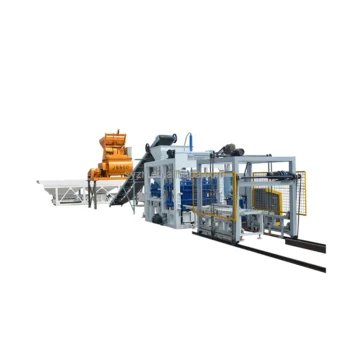
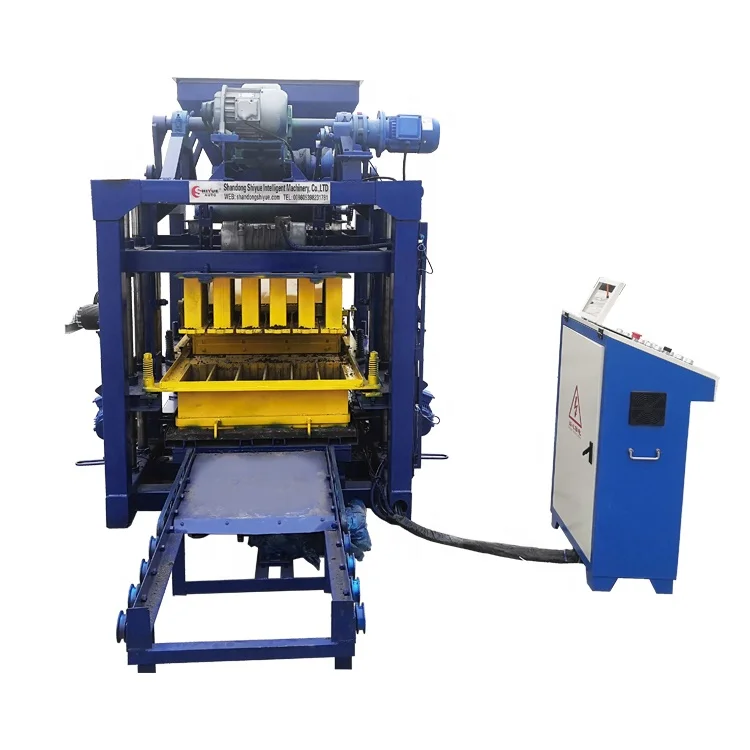
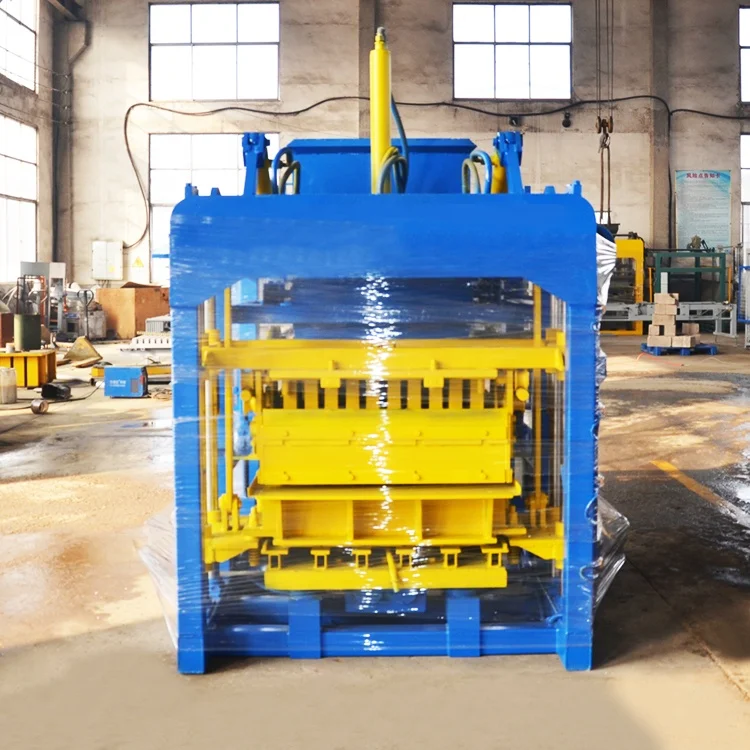
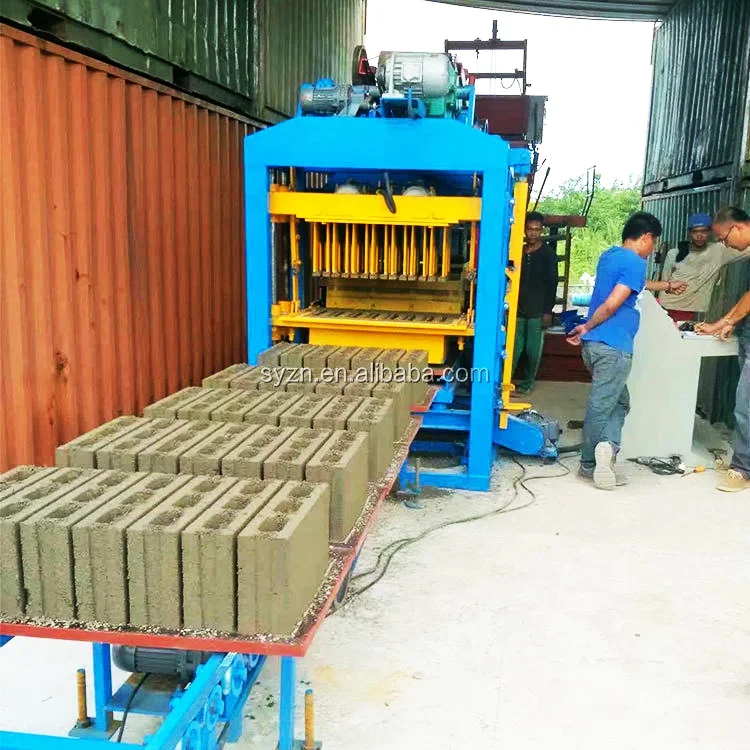
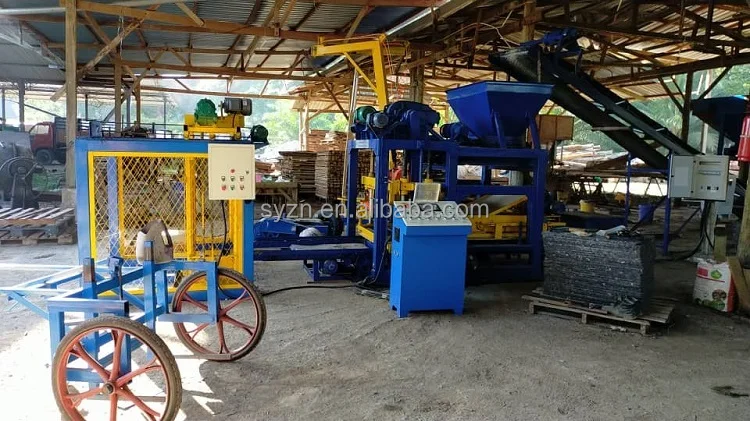
Matched Mould and Vibration Settings — the QTJ4-25 block machine specifications are configured against the buyer’s local aggregate and target format, so the 60 kN vibration force is tuned to the actual mix rather than a catalogue default.
Technical Specifications
| Parameter | Value |
|---|---|
| Model | QTJ4-25 |
| Product Type | Automatic Concrete Block Making Machine |
| Overall Dimensions (L×W×H) | 6400×1500×2700 mm |
| Molding Cycle | 25 s |
| Vibration Frequency | 2800-5100 r/min |
| Exciting Power (Vibration Force) | 60 kN |
| Total Power | 17.9 kW |
| Mixer Model | JQ350 |
| Pallet Size | 850×550×20 mm |
| Total Weight | 2500 kg |
| Control System | PLC |
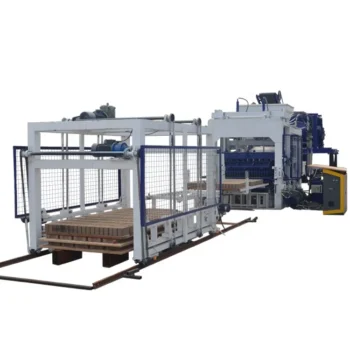
| Key Features | Automatic plate-supplying, material-disturbing, brick-discharging |
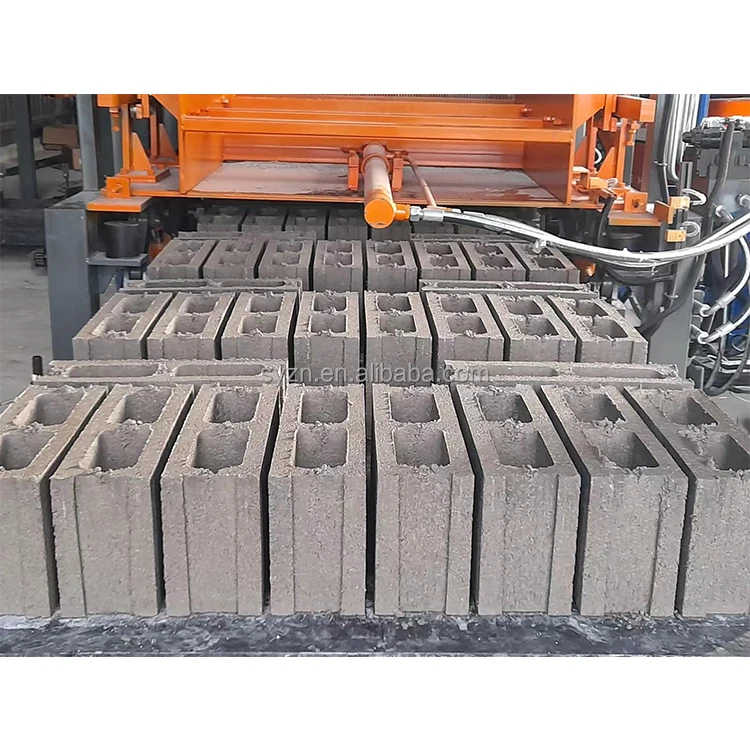
| Applied Products | Concrete hollow block (8 inch, 6 inch), solid brick |
| Raw Materials | Crushed stones, sand, cement, dust, fly ash |
| Output Capacity (390×190×190 mm hollow block) | 480 pcs/h, 3800 pcs/8hr (4 pcs/mould) |
| Output Capacity (400×150×200 mm hollow block) | 600 pcs/h, 4800 pcs/8hr (5 pcs/mould) |
| Output Capacity (240×115×53 mm solid brick) | 2100 pcs/h, 17000 pcs/8hr (18 pcs/mould) |
| Voltage & Frequency | Configurable to site supply (basis to be confirmed) |
| Standards | CE declaration where applicable |
Application Suitability
| Application | Material or Output |
|---|---|
| 8-inch hollow block for load-bearing walls | Crushed stone, sand, cement and fly ash blends |
| 6-inch hollow block for partition walls | Local aggregate with adjusted cement ratio |
| Standard solid brick for masonry | Fine sand and cement at higher vibration frequency |
| Small to medium block plant start-up | Semi-automatic operation with upgrade path to full automation |
| On-site production for housing projects | Portable pallet and curing setup using available yard space |
What "480 Pieces per Hour" Actually Means for QTJ4-25 Block Machine Specifications
Output numbers are meaningless without the block format they assume.
When a quotation states a capacity figure but omits which block size was used to calculate it, buyers discover on commissioning day that their real daily volume falls well short of the promised number. The QTJ4-25 block machine specifications list output tied to three specific formats: 390×190×190 mm hollow block at 4 pcs per mould, 400×150×200 mm at 5 pcs per mould, and 240×115×53 mm solid brick at 18 pcs per mould. I have seen plants in South Asia where the buyer ordered based on a headline capacity number, only to find the machine was timed for a format their market does not purchase. [NEED_CITE: block format demand variance by regional construction market] Every figure here carries its own mould count and cycle assumption, so the buyer can compare directly against local sales volume.
Mould Format Determines the Real Shift Output
The QTJ4-25 ships with mould options for the hollow block sizes and solid brick listed above, and the 25-second cycle applies across formats while the pieces-per-mould count changes the hourly total. A plant selling primarily 6-inch partition block will see a different shift volume than one running 8-inch load-bearing units, even though the machine and cycle time are identical. This is why the first question in any selection conversation must be which block format the buyer’s market actually purchases.
Vibration Tuning Against Local Aggregate
The 2800-5100 r/min frequency range and 60 kN exciting power are not fixed at a single setting. On sites in East Africa where volcanic scoria or lightweight local stone replaces standard crushed granite, the vibration frequency must shift to achieve proper compaction without segregating the mix. I once spent two days on a Kenyan site re-tuning parameters because the original setup assumed river sand that was simply not available in the region. The QTJ4-25 block machine specifications allow the frequency to be adjusted within its operating band, but the correct starting point comes from reviewing the buyer’s aggregate sieve analysis and trial mix before the machine leaves the factory. [NEED_CITE: aggregate variability impact on concrete block compaction requirements]
Reading the Parameter Sheet Beyond Headline Numbers
The 850×550×20 mm pallet size is a dimension that connects directly to the curing yard layout and the forklift the buyer already owns. If the curing racks were built for a different pallet footprint, the buyer faces either a rack rebuild or a daily handling bottleneck. The JQ350 mixer paired with this press is sized to keep material flowing at the 25-second cycle without starving the hopper, but its batch volume must also match the mix design moisture content and workability window. Total power at 17.9 kW means the buyer needs a dedicated circuit with adequate capacity; running the QTJ4-25 on a shared supply with other heavy equipment introduces voltage drops that shorten contactor and motor life. The PLC control system centralizes cycle timing and fault display, though the display language must be confirmed before production so the operator can read alarms on day one.
The Cost of Skipping the Format Conversation
When the machine arrives configured for a block format the local market does not buy, the buyer either runs at reduced output using an ill-fitting mould or waits weeks for a replacement to be manufactured and shipped. Pallet incompatibility surfaces later: the curing racks accept only one dimension, and the forklift tines are spaced for a different size, so every pallet must be repositioned by hand before stacking. Voltage mismatch is another silent delay — the machine sits under tarp for days while a transformer is sourced locally. I have watched plants lose their entire first week of production to these oversights, all of which could have been resolved with a checklist conversation before the order was placed. [NEED_CITE: common commissioning delays in block plant equipment installation]
Why Buyers Specify Through This Range
Block machinery as a single focus means the press, mould, pallet, and handling equipment are treated as one matched system rather than assembled from unrelated suppliers. The configuration is set against the buyer’s actual mix design and target block format, not pulled from a catalogue default. Mould design covers the formats the buyer’s market sells, with custom drawings accepted when standard options do not match local demand. The automation level is selectable, allowing a buyer to begin with the automatic plate-supplying and brick-discharging features on the QTJ4-25 and plan a future upgrade path. Installation support includes on-site commissioning and operator training so the crew understands mould change procedure and daily maintenance from the first shift.
Documentation & Verification
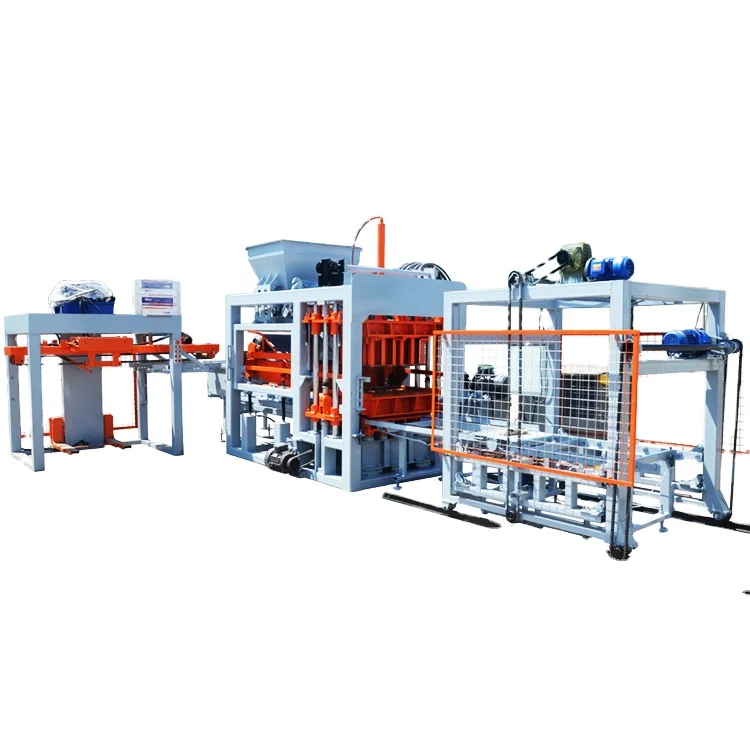
- Line layout showing pallet flow from feeding through curing rack for the QTJ4-25 footprint
- Capacity calculation sheet stating block format and mould count for each output figure
- Mould drawing with dimensional tolerances for the selected hollow block and solid brick formats
- Hydraulic and electrical schematic matching the confirmed voltage and frequency
- Factory test record with measured cycle times on the buyer’s specified block format
- Packing photographs and customs documentation prepared for the destination port
Installation, Commissioning & Support
- Foundation pad sized to the 6400×1500 mm footprint with anchor bolt template provided before arrival
- Dedicated 17.9 kW supply circuit with voltage and frequency confirmed prior to production start
- PLC display language set to operator preference and verified during factory test
- First-run mould alignment and vibration frequency tuning against the buyer’s trial mix on site
- Mould change procedure walkthrough covering format switch time and clamping sequence
- Wear parts list for vibration table springs and mould liners with reorder dimensions
Preparing Your Specification Inquiry
To move from general interest to a firm configuration, the most useful information a buyer can provide starts with the exact block format and dimensions their market requires, including any local standard or code the finished block must meet. A sample or sieve report of the available aggregate lets the vibration parameters be matched before production. Confirming the local voltage, frequency, and preferred PLC display language avoids the most common commissioning delays. If the buyer already has curing racks or forklifts on site, the pallet size can be cross-checked against that existing equipment.
Frequently Asked Questions
Q: How is the output capacity calculated and which block format does each figure assume?
A: Every output figure is tied to a specific block dimension and mould cavity count. For example, 3800 pieces per 8-hour shift assumes the 390×190×190 mm hollow block at 4 pieces per mould with a 25-second cycle. A different block size changes the pieces-per-mould number and therefore the shift total, even though cycle time remains the same.
Q: What mould formats are available and can custom moulds be designed to buyer drawings?
A: Standard moulds cover 8-inch and 6-inch hollow block plus 240×115×53 mm solid brick. When the buyer’s market requires a dimension outside these options, custom moulds can be produced from buyer-supplied drawings, with cycle time and pallet fit verified before the mould is shipped.
Q: How does the vibration force and frequency match the buyer’s local aggregate and mix design?
A: The QTJ4-25 offers a vibration frequency range of 2800-5100 r/min with 60 kN exciting power. The correct setting depends on the aggregate density, particle shape, and cement content of the buyer’s mix. A trial mix review and sieve analysis allow the starting parameters to be set before factory testing.
Q: Is the pallet size compatible with the buyer’s existing curing racks and forklift?
A: The standard pallet dimension is 850×550×20 mm. Before the order is confirmed, this size should be checked against the buyer’s curing rack spacing and forklift tine width to avoid a handling mismatch on arrival. Alternative pallet sizes may be available on request.
Q: What is the mould change procedure and how long does a format switch take on the QTJ4-25?
A: The mould is clamped to the vibration table and connected to the PLC cycle parameters. A format switch involves unclamping the current mould, lifting it out, positioning the replacement, and updating the cycle settings. With trained operators and the correct tools on hand, the changeover can be completed within a planned maintenance window rather than consuming an entire shift.