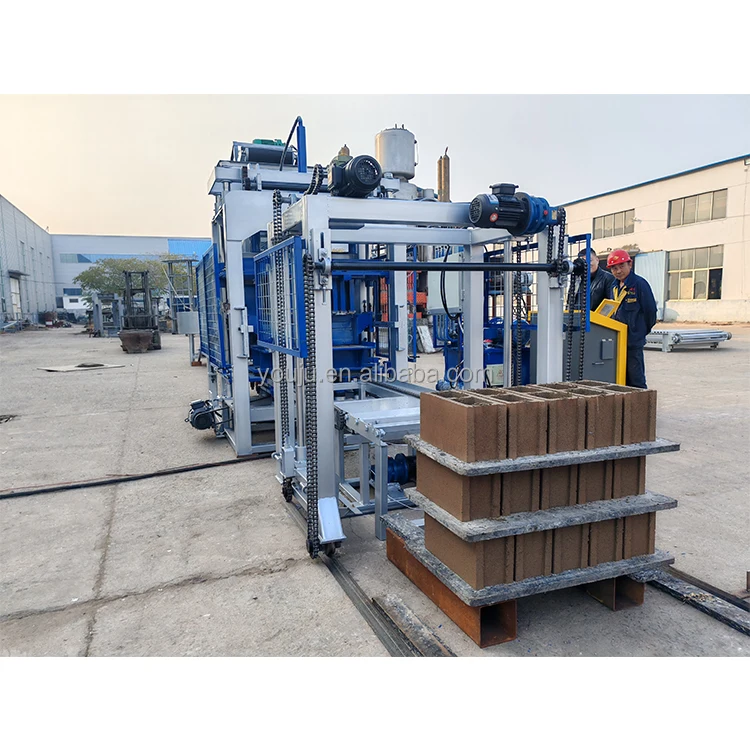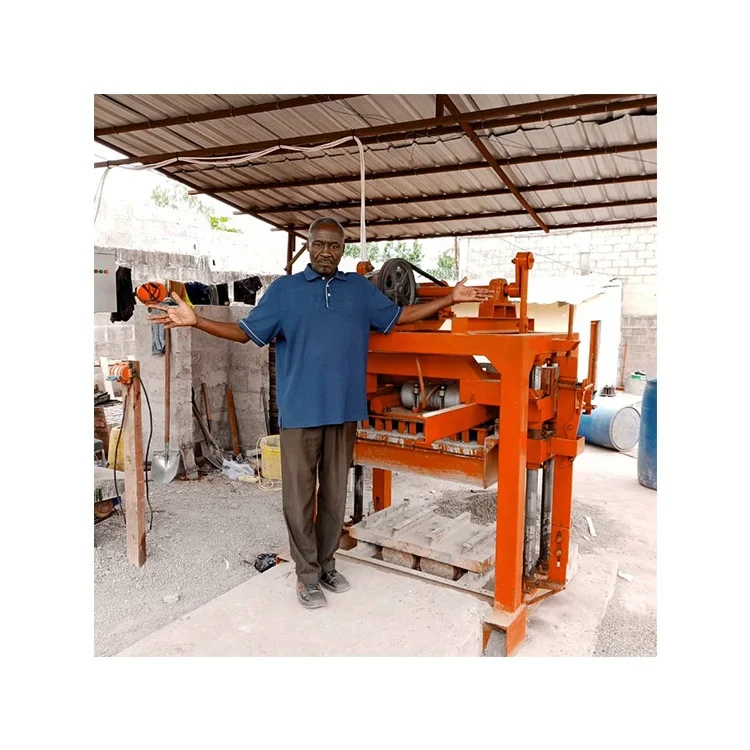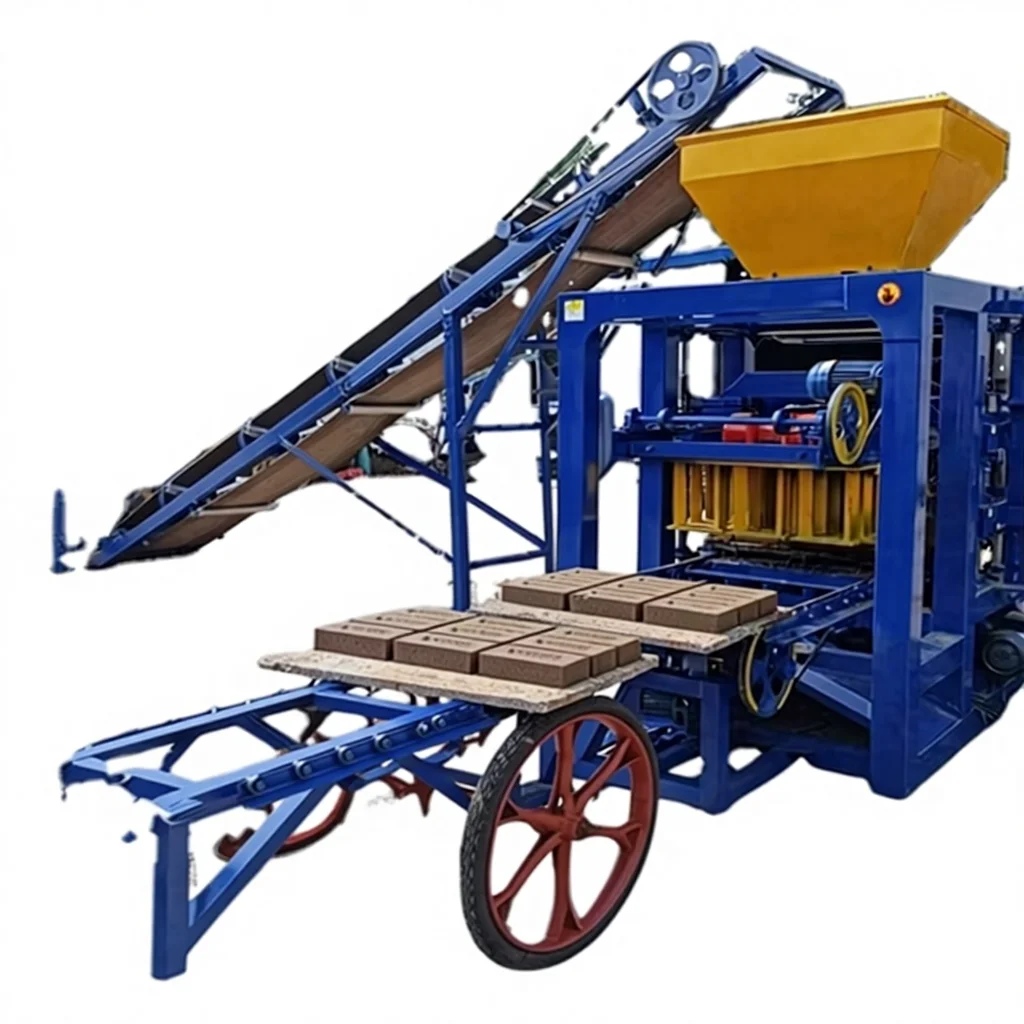

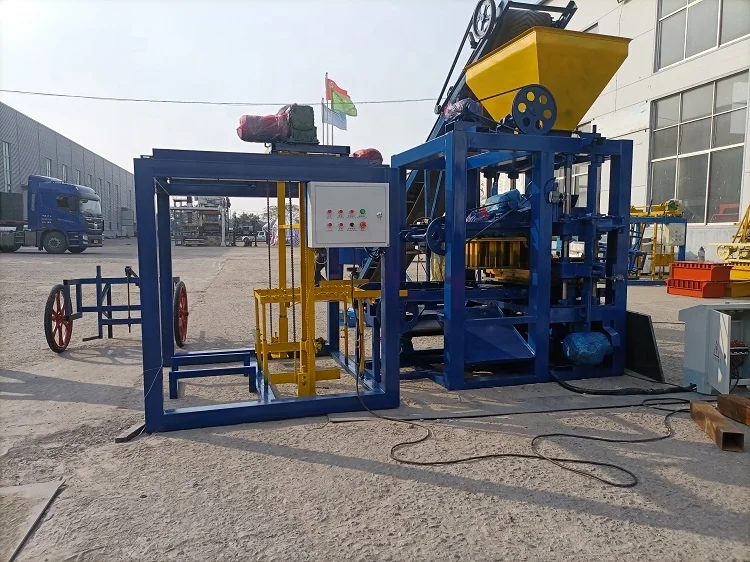


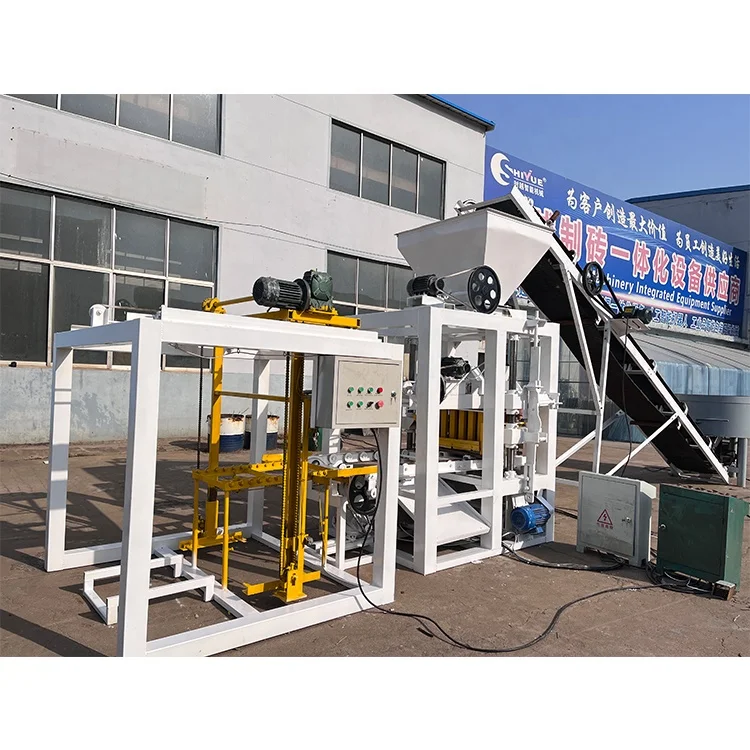
Description
Pallet Format Alignment — cycle time and daily output are calculated against the buyer’s selected mould and pallet size, not quoted as a single generic figure.
Technical Specifications
| Parameter | Value |
|---|---|
| Model | QTJ4-24 |
| Product Type | Semi-Automatic Concrete Block Making Machine |
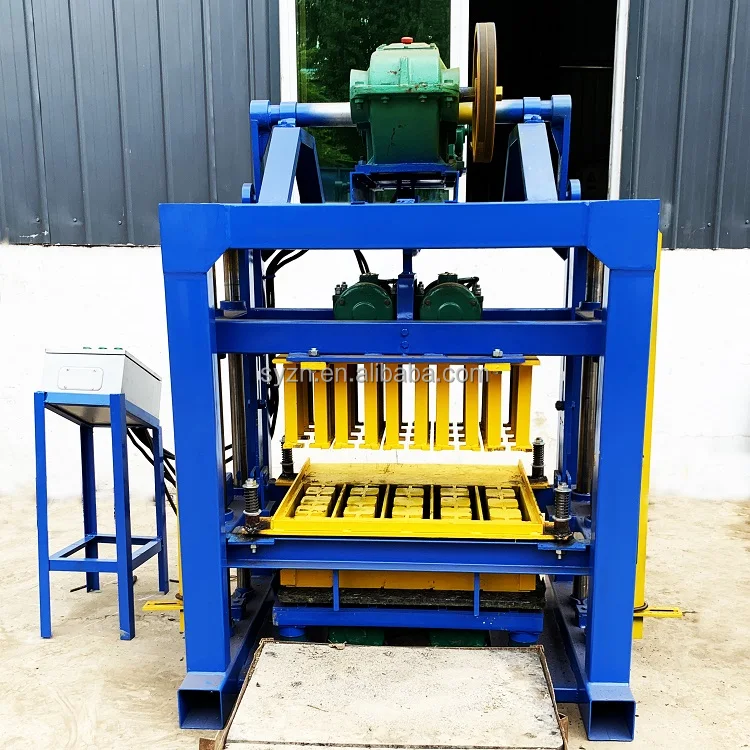
| Machine Type | Stationary, Platform Vibration |
| Overall Dimensions (Working State) | 3600mm × 1700mm × 2560mm |
| Total Mass | 1750kgs |
| Overall Power | 14.25KW |
| Vibration System | Lower platform vibration (2 × 3kW motors) + Upper vibration (1.5kW device) |
| Pallet Size | 850mm × 450mm |
| Elevating System | Cone-shape motor + JZQ250 speed reducer + V-belt drive |
| Delivery Device | Cycloidal pin wheel speed reducer + chains + V-belt + delivery wheel |
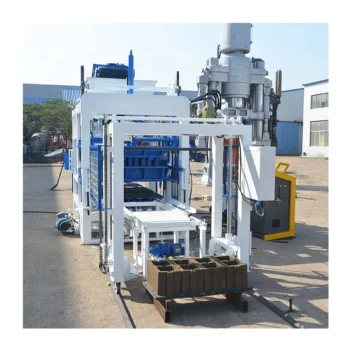
| Frame Construction | Dragon gate style, super steel, four wear-resisting vertical shafts |
| Mould Capacity (Basis) | 390×190×190mm (4 pcs/mould) or 240×115×53mm (21 pcs/mould) |
| Cycle Time | 24 seconds per cycle (basis: standard sand test, confirm with local aggregate) |
| Automation Level | Semi-automatic (mechanical and electronic combination) |
| Control System | Electronic controlling part (PLC or relay options) |
Application Suitability
| Application | Material or Output |
|---|---|
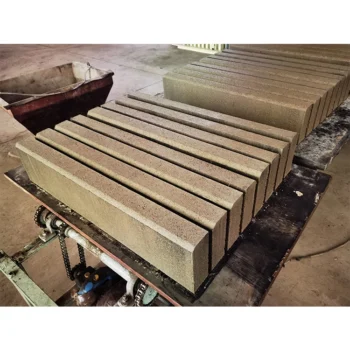
| Small-scale hollow block production | 390×190×190mm blocks using crushed stone, sand, and cement |
| Solid brick manufacturing | 240×115×53mm bricks from local aggregate and cement mix |
| On-site construction block making | Portable line setup for building contractors at project locations |
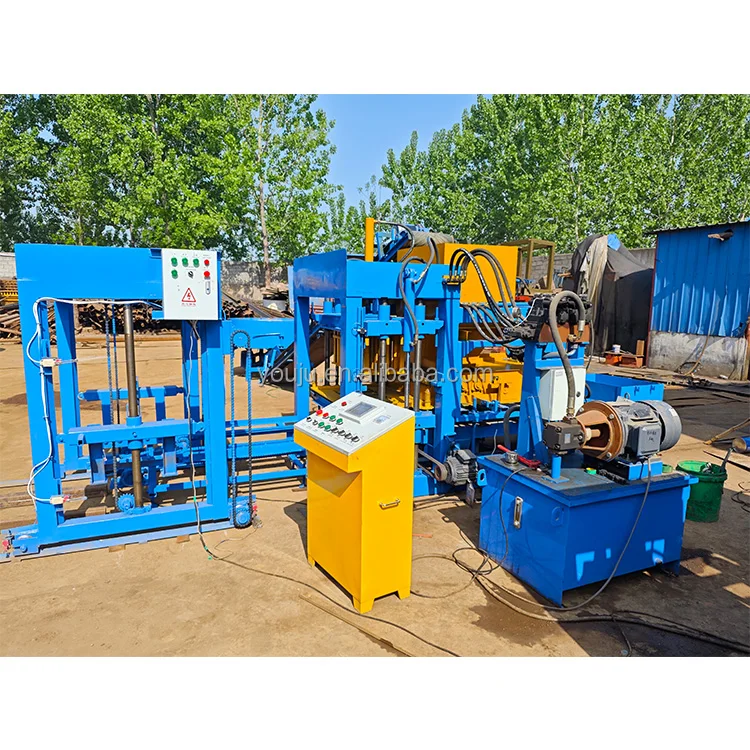
| First plant entrepreneur setup | Basic line (press + JQ350 pan mixer + 6m belt conveyor) configuration |
Why "Cycles Per Hour" Is Misleading Without Mould Context
The QTJ4-24 semi-automatic block machine specifications only mean something when tied to the exact block format you intend to produce.
A catalogue may state a fixed number of cycles, but that figure assumes a specific mould, block height, and material density. When a Latin American buyer switches from standard test sand to local volcanic aggregate, the vibration force and hydraulic pressure may no longer match the mix design. The result is blocks that lack compressive strength and a daily output that falls well below the quoted capacity [NEED_CITE: mix design and aggregate compatibility in block production]. Realistic capacity planning starts with a per-format breakdown, not a single headline number.
Matching Vibration Force to Your Local Aggregate
The QTJ4-24 uses dual 3kW lower vibration motors combined with a 1.5kW upper vibration device to compact concrete across the 850mm × 450mm pallet area. This dual-direction platform vibration is designed to densify the mix from both top and bottom simultaneously. However, the effectiveness of this system depends entirely on whether the excitation force matches the particle size and grading of the aggregate you actually source locally. Testing with your specific material before finalizing the order is the only way to confirm consistent compaction.
Pallet Size Determines Your Curing Yard Layout
The 850mm × 450mm pallet is not an arbitrary dimension — it dictates how your curing racks are spaced, which forklift tine width you need, and how many blocks fit per rack tier. If your existing curing infrastructure was built around a different pallet standard, you face a choice: adapt the yard to the machine, or request a pallet size that fits what you already have. This decision must be made before production begins, not after the QTJ4-24 semi-automatic block machine arrives at your site [NEED_CITE: pallet and curing rack compatibility standards].
Reading the Frame and Drive Specifications
The dragon gate frame with four wear-resisting vertical shafts keeps the mould aligned during repeated vibration cycles, preventing uneven block dimensions that worsen over time. The JZQ250 speed reducer paired with the cone-shape motor controls the elevating speed of the mould box, which directly affects how cleanly the block releases from the mould. A 14.25KW total power draw means the machine can run on a standard three-phase industrial supply, but the exact voltage and frequency must be confirmed in writing — a 50Hz motor running on 60Hz supply will overheat and fail prematurely. The cycloidal pin wheel delivery device moves pallets into position with chain and V-belt drive, a mechanical system that is straightforward to maintain with locally available spare parts.
The Cost of Skipping Material Testing Before Shipment
When the vibration system is tuned for standard sand but the buyer runs a completely different aggregate, blocks emerge under-compacted and fragile. The machine itself is functioning correctly, yet daily output drops because rejected blocks must be remixed and re-pressed. This is not a warranty issue — it is a specification mismatch that could have been caught with a pre-shipment test run using the buyer’s actual material sample. Buyers who skip this step often discover the problem only after the machine is installed and commissioned [NEED_CITE: pre-shipment factory testing protocols for block machinery].
Why Buyers Specify With Us
We treat the block machine, mould, pallet, and handling equipment as one matched system rather than quoting the press alone. Every capacity calculation we provide states the exact block format and mould assumed, so your daily planning is based on honest numbers. Mould design covers the formats your local market actually sells, including custom drawings when standard sizes do not match demand. The automation level is selectable — you can start with the basic QTJ4-24 line and add an auto stacker as production volume grows. Our factory test record documents actual cycle times per mould format, not a generic figure.
Documentation & Verification
- Line layout drawing showing QTJ4-24 footprint with mixer and conveyor placement
- Capacity calculation sheet stating output per specific block format and mould
- Mould drawing and format list for your selected block dimensions
- Factory test record with cycle time measured on your specified mould
- Voltage and control language confirmation document signed before production
Installation, Commissioning & Support
- Foundation must support 1750kgs machine weight plus dynamic vibration load on level concrete
- Dedicated three-phase circuit required matching confirmed voltage and frequency specification
- Machine ships as frame assembly with material storing and delivering devices pre-mounted
- First production run supervised to set vibration timing and elevating speed per your mix
- Mould change training using the pin-and-hanger system for upper mould separation
- Wear parts list provided covering vertical shafts, V-belts, and chain components
What We Need From You to Prepare a Configuration
Tell us which block formats sell in your market, your target daily output per format, and the type of aggregate you source locally. We also need your site voltage and frequency, the language your operators read, and whether your curing yard uses existing racks that dictate a specific pallet size. With this information, we prepare a line configuration that matches your actual conditions.
Frequently Asked Questions
Q: What is the realistic daily output for hollow blocks versus solid bricks on the QTJ4-24?
A: Output depends on the specific mould format. With the 390×190×190mm hollow block mould producing 4 pieces per cycle and the 240×115×53mm solid brick mould producing 21 pieces per cycle, daily totals vary significantly between formats. We provide a per-format capacity calculation based on a confirmed cycle time and your operating hours, rather than quoting a single generic number.
Q: How does the mould change system work on this machine?
A: The upper mould and beam are located by a hang pin and balance pin mechanism. The upper mould separates from the mould box using this pin system, which allows changeover without heavy lifting equipment. The exact changeover time depends on operator familiarity, and we provide training during commissioning so your team can perform mould changes independently.
Q: Is the 850mm × 450mm pallet compatible with my existing curing racks and forklift?
A: This must be verified before ordering. The pallet size determines rack spacing and forklift tine requirements. If your curing infrastructure was built to a different standard, we discuss whether to adapt your yard or adjust the pallet specification to match what you already have on site.
Q: Can I start with the basic line and add automation later?
A: Yes. The basic QTJ4-24 line includes the press, JQ350 pan mixer, and 6m belt conveyor with manual pallet handling using the included trolley. An auto stacker capable of 3 to 6 layers can be added later as your production volume increases and you want to reduce manual handling labor.
Q: What voltage and control language options are available?
A: Voltage and frequency are configured to match your site supply, and this is confirmed in writing before production begins. Control panel language is also specified at the order stage. We document both confirmations to prevent commissioning delays when the machine arrives at your facility.