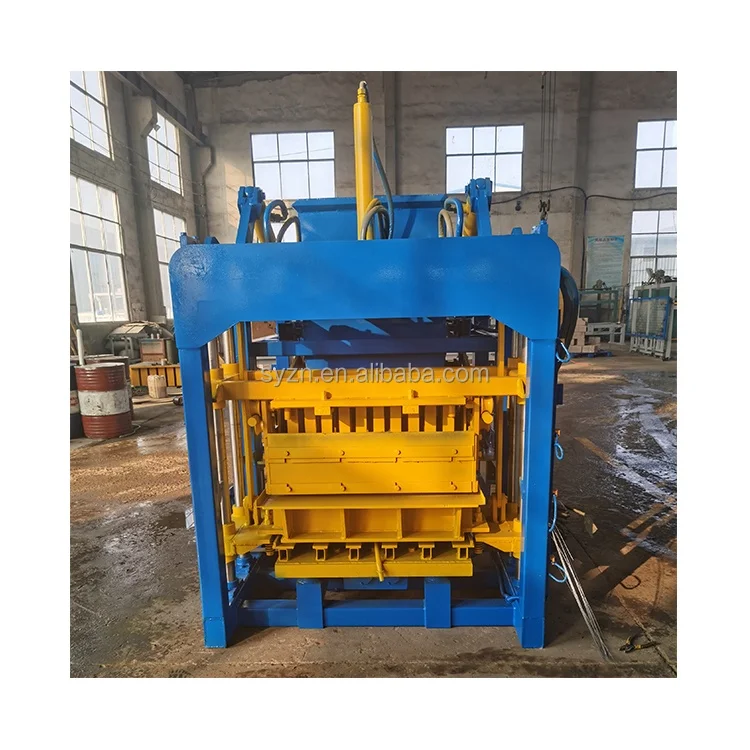
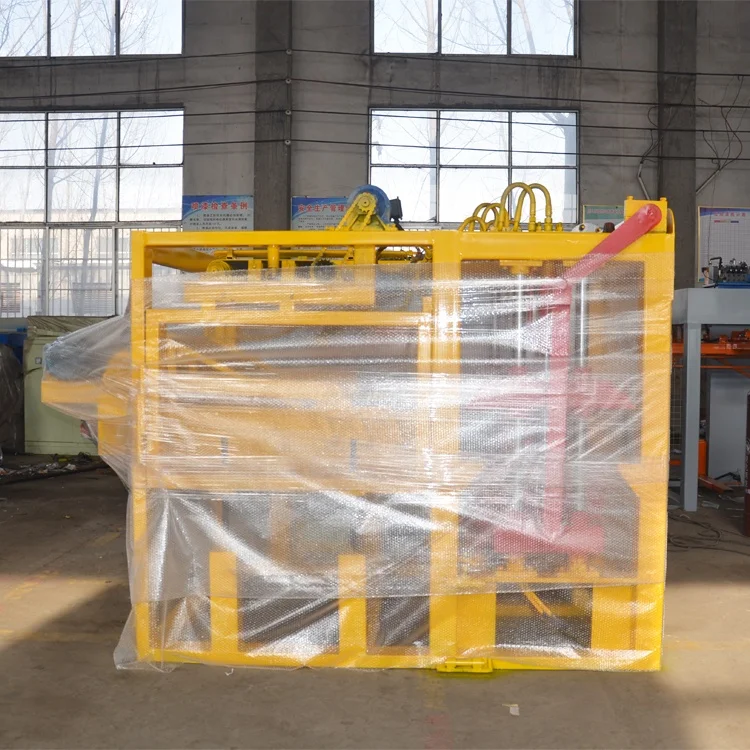

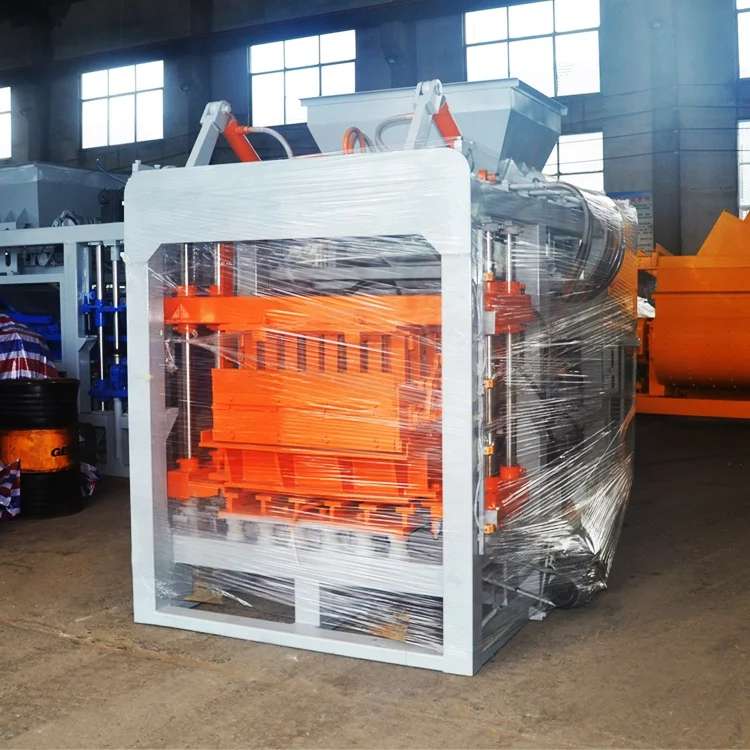

Description
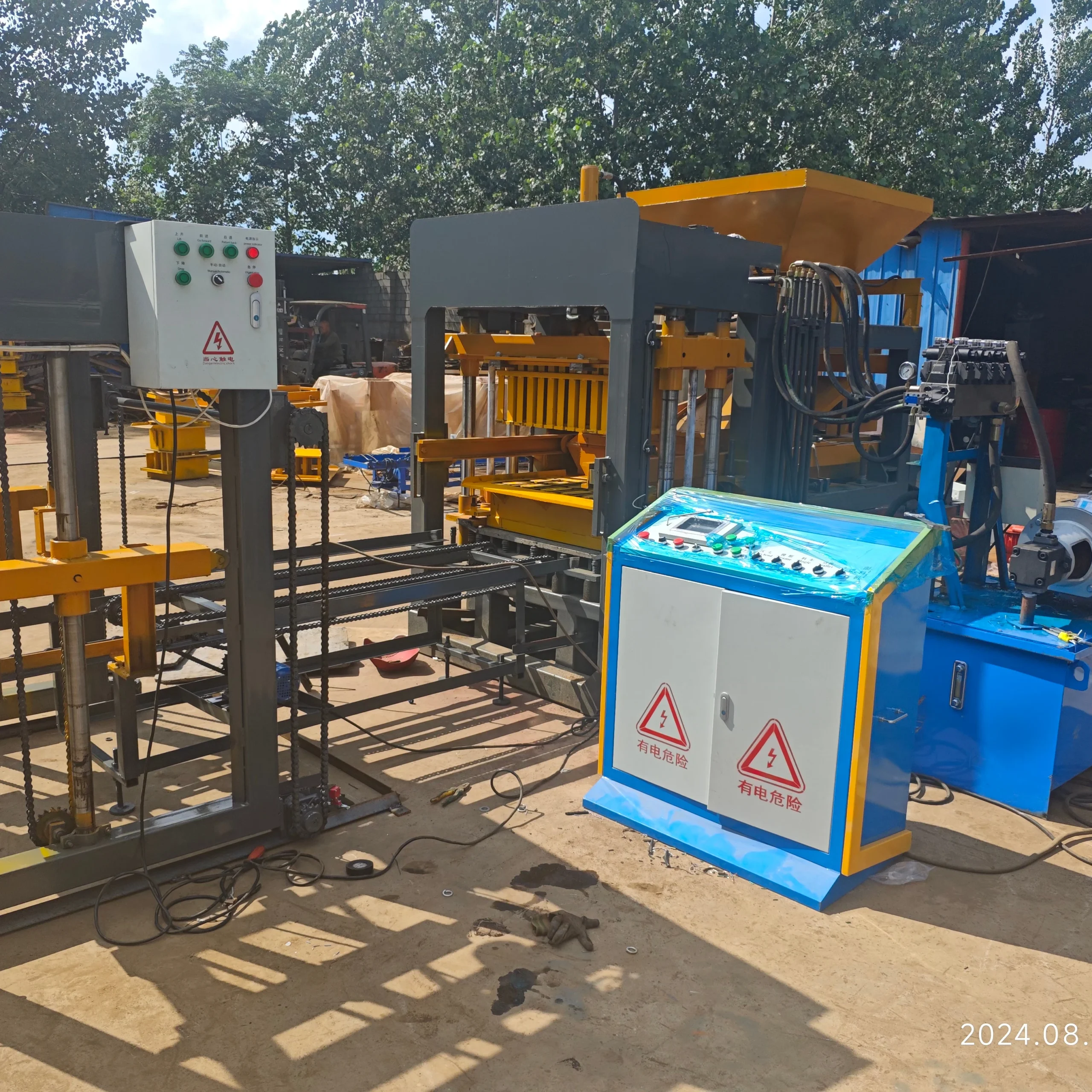
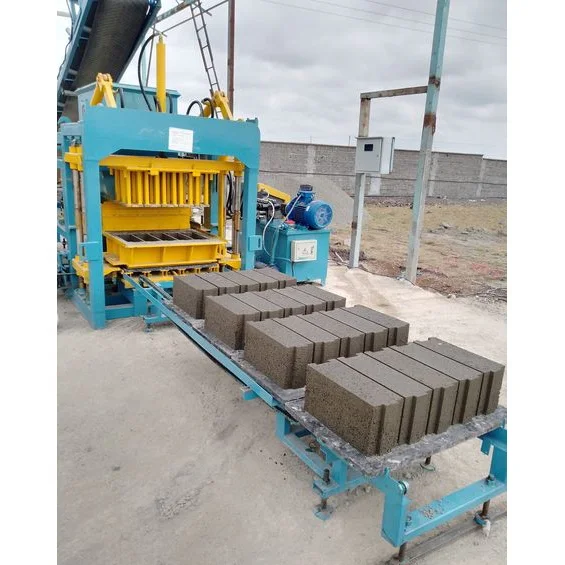
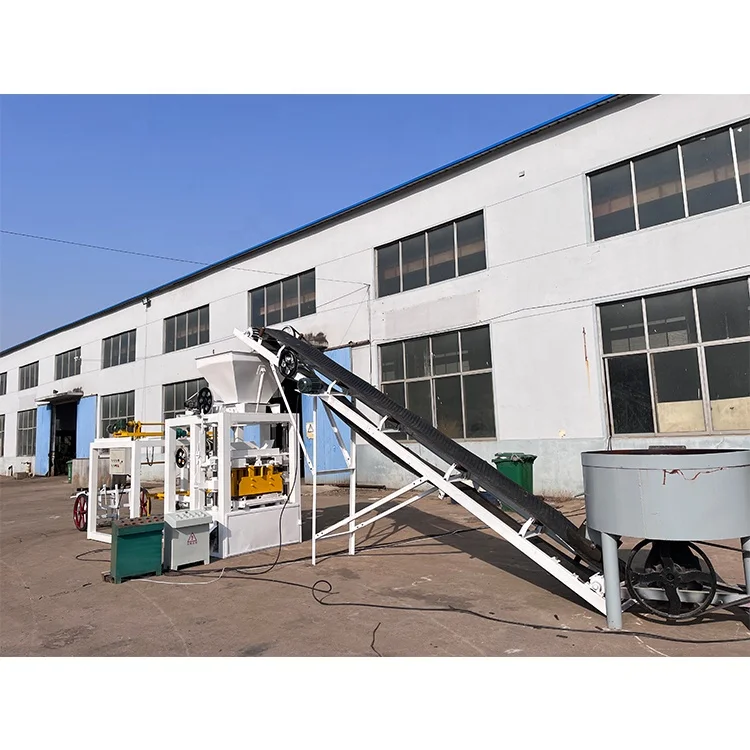
Honest capacity by format — every output figure for the QT4-15 is tied to a specific block size, mould cavity count, and cycle time, not a single inflated catalogue number.
Technical Specifications
| Parameter | Value |
|---|---|
| Model | QT4-15A |
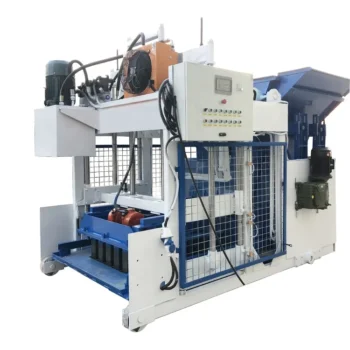
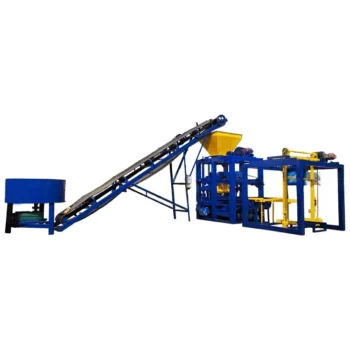
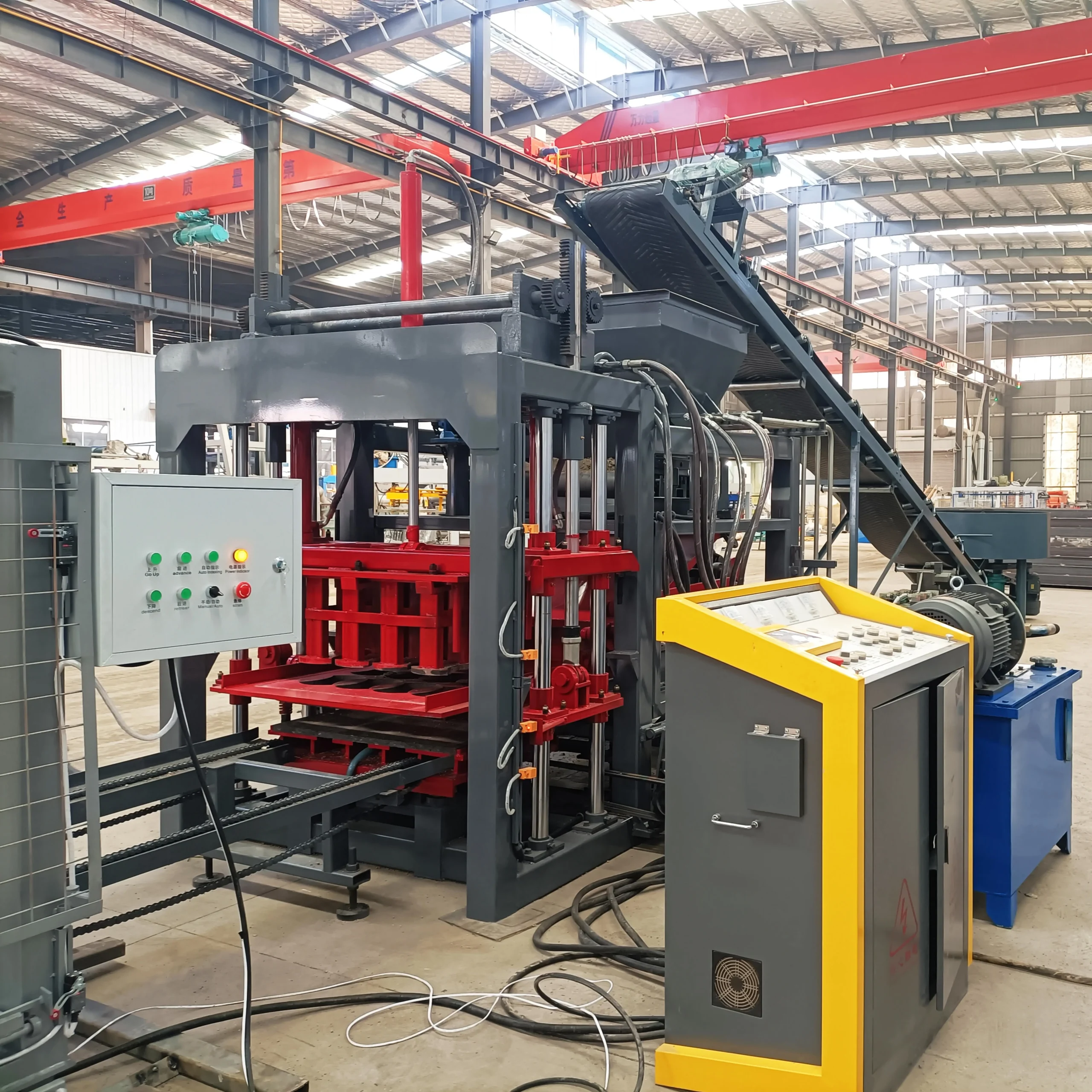
| Product Type | Automatic Concrete Block Making Machine |
| Overall Dimensions (L×W×H) | 7100 × 1600 × 2610 mm |
| Molding Cycle | 15–25 s (basis: standard sand-cement mix, format dependent) |
| Vibration Frequency | 4600 r/min |
| Exciting Power (Vibration Force) | 40–50 kN |
| Total Power | 18.45 kW |
| Mixer Model | JQ350 |
| Pallet Size | 850 × 550 × 25 mm |
| Net Weight | 3 T |
| Vibration System | Bed mould vertical vibration + upper mould compression vibration |
| Hydraulic Station | Equipped (high pressure, stable operation) |
| Automation Level | Semi-automatic |
| Stacking Method | Automatic stacker included in line |
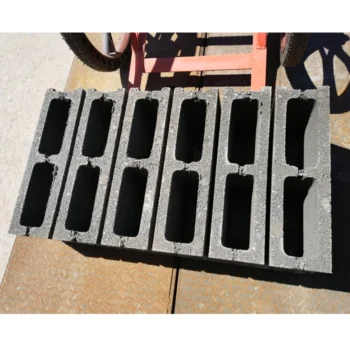
| Applied Products | Paver, solid block, hollow block, curbstone |
| Raw Materials | Crushed stone, sand, cement, dust, fly ash |
| Output Capacity (Hollow Block 400×200×200 mm) | 4 pcs/mould, 408 pcs/hr, 3264 pcs/8hr |
| Output Capacity (Hollow Block 400×150×200 mm) | 5 pcs/mould, 510 pcs/hr, 4080 pcs/8hr |
| Output Capacity (Solid Brick 240×115×53 mm) | 18 pcs/mould, 2100 pcs/hr, 17000 pcs/8hr |
| Voltage & Frequency | Basis not stated in source — confirm with buyer’s local grid |
| Control System / PLC Language | Basis not stated in source — confirm |
| Mould Change Time | Basis not stated in source — confirm |
| Certification | Basis not stated in source — confirm CE or other |
Application Suitability
| Application | Material or Output |
|---|---|
| Hollow block production for building walls | Crushed stone, sand, cement, fly ash; 400×200×200 mm or 400×150×200 mm formats |
| Solid brick manufacturing | Sand, cement, fly ash; 240×115×53 mm standard brick format |
| Paver and curbstone production | Crushed stone, sand, cement; format dependent on mould selection |
| Fly ash brick production | Industrial fly ash blended with cement and aggregate |
| Medium-scale fixed-plant block manufacturing | Daily output scaled to hollow block, solid brick, or paver format chosen |
What "408 Pieces per Hour" Actually Means for the QT4-15 Block Machine Specifications
The number only holds if your block format, mix design, and local aggregate match the test conditions behind it.
Capacity claims in this industry are almost always quoted as a single headline figure. A buyer sees "400+ blocks per hour" and plans a shift around it, only to discover on commissioning day that the number assumed a specific hollow block size and a standard sand-cement mix. When the local aggregate is volcanic ash, river gravel with high fines content, or a fly ash blend that behaves differently under vibration, the mould cycle stretches. I have seen daily output fall to half the quoted figure because the QT4-15 block machine specifications were never cross-checked against the buyer’s actual material [NEED_CITE: common causes of output shortfall in concrete block production].
Matching Mould Format to Market Demand
The QT4-15 supports hollow blocks, solid bricks, pavers, and curbstones on one host machine, but each format carries its own cycle time and cavity count. A buyer targeting 400×200×200 mm hollow blocks will see 4 pieces per mould at roughly 408 pieces per hour. Switch to 240×115×53 mm solid bricks and the same machine produces 18 pieces per mould at around 2100 pieces per hour. These are not interchangeable numbers — they are separate production scenarios that require separate planning.
Dual Vibration and Block Density Consistency
The bed mould vertical vibration combined with upper mould compression vibration is designed to compact the mix from two directions simultaneously. For fly ash blends, which tend to be lighter and less cohesive than pure sand-cement mixes, this dual action helps achieve consistent density across the block face and core. The 4600 r/min vibration frequency and 40–50 kN exciting power must be evaluated against your specific mix — a high-fly-ash ratio may need different pressure settings than a crushed-stone aggregate mix [NEED_CITE: vibration force requirements for fly ash versus sand-cement block mixes].
Reading the Specifications That Matter on Site
The 850×550×25 mm pallet size is fixed, which means your curing rack spacing and forklift fork width must accommodate it before the machine arrives. The 18.45 kW total power draw determines your transformer and dedicated circuit sizing — this is not a machine you plug into an existing workshop outlet. The JQ350 mixer is matched to the press cycle for standard mixes; if your aggregate requires longer mixing times or a different water-cement ratio, the mixer may become the bottleneck rather than the press itself. Semi-automatic operation means pallet feeding and product stacking still involve operator input at certain stages, so labour planning should reflect that reality.
The Cost of Skipping the Mix Design Conversation
When a machine is configured for a standard sand-cement mix but the buyer’s region only has access to high-fines river gravel or a particular fly ash grade, the vibration and pressure settings may not produce adequate compaction. Blocks come out with weak edges or inconsistent weight. The buyer then either changes their material source at considerable expense or accepts lower block strength that fails local building code inspections. This mismatch is rarely caught until the first production run [NEED_CITE: block strength failures linked to aggregate-press mismatch].
Why Sourcing the QT4-15 Here Reduces Format Risk
Block machinery is our single focus, so the QT4-15 is specified as a matched system — machine, mould, pallet, and handling equipment — rather than assembled from separate suppliers. We set the configuration against your actual mix design and local aggregate, not a catalogue default. Moulds are designed for the formats your market sells, including custom drawings when standard options do not cover your requirements. Capacity calculations are stated per block format with the assumed cycle time, so you can plan shifts honestly. Pallet specifications are confirmed against your existing curing area and forklift before the order is finalized.
Documentation & Verification
- Line layout and capacity calculation stating the block format assumed for each QT4-15 output figure
- Mould drawing and format list confirming which hollow, solid, and paver sizes are included
- Pallet specification sheet for cross-checking against curing rack dimensions and forklift capacity
- Factory test record showing actual cycle time per block format run during pre-dispatch testing
- Hydraulic and electrical schematic with voltage and control language confirmed to your site requirements
- Operation and maintenance manual covering mould change procedure and wear part replacement intervals
Installation, Commissioning & Support
- Foundation plan sized to the QT4-15’s 7100 × 1600 mm footprint and 3 T operating weight
- Dedicated circuit rated for 18.45 kW total power with voltage and frequency matched to your local grid
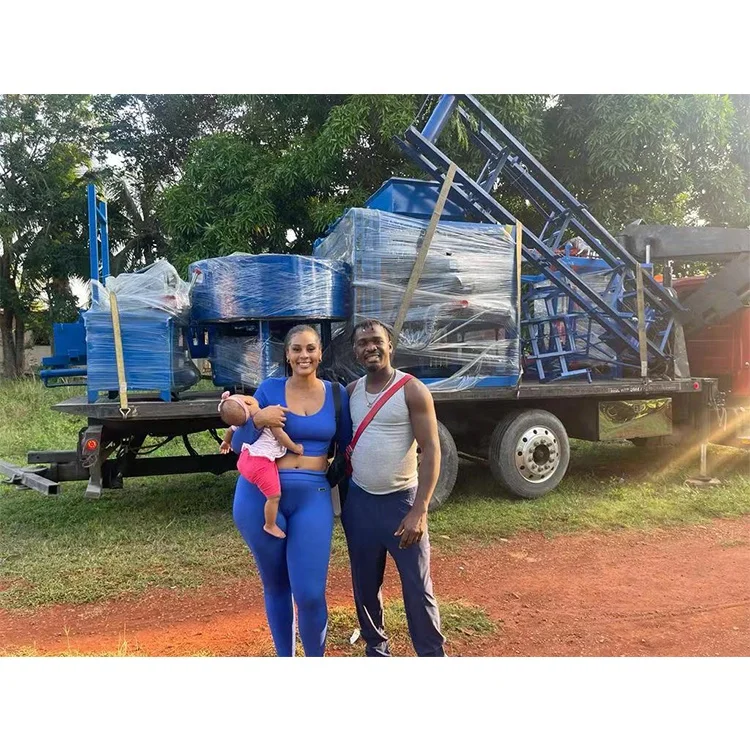
- Machine dismantled for container loading with reassembly guided on site during commissioning
- First production run supervised with cycle time verified against your specific block format and mix
- Operator training covering mould change, vibration adjustment, and daily maintenance checkpoints
- Wear parts and mould inventory list provided so replacements are available when first needed
Before You Request a Quote
To give you a meaningful configuration, we need your target block format and dimensions, the daily output you are planning for that specific format, and details about your local raw materials — particularly the aggregate type and any fly ash source you intend to use. Your site voltage, frequency, and preferred PLC display language should also be confirmed early to avoid commissioning delays.
Frequently Asked Questions
Q: How is output capacity calculated per block format, and what cycle time is assumed?
A: Each capacity figure is based on a specific mould cavity count and a molding cycle between 15 and 25 seconds. For example, the 408 pieces per hour rate assumes a 400×200×200 mm hollow block with 4 cavities per mould. Different formats and local aggregate characteristics will change both the cycle time and the realistic hourly output.
Q: Which mould formats are available for the QT4-15, and can custom moulds be designed?
A: Standard moulds cover hollow blocks, solid bricks, pavers, and curbstones in common sizes. Custom moulds can be designed to buyer drawings when the local market demands formats outside the standard range. Each mould is matched to the machine’s vibration and hydraulic parameters to ensure consistent compaction.
Q: How does the vibration force match my local aggregate for consistent block strength?
A: The 40–50 kN exciting power and 4600 r/min frequency must be evaluated against your specific mix design. Fly ash blends, crushed stone, and river gravel each respond differently to vibration. We confirm your aggregate type and adjust pressure and vibration settings before the factory test to ensure target block strength is met.
Q: What pallet size does the QT4-15 use, and how do I verify compatibility?
A: The machine uses 850 × 550 × 25 mm pallets. Before ordering, verify that your curing rack spacing, rack capacity, and forklift fork width all accommodate this dimension. A pallet specification sheet is provided so you can cross-check against your existing handling equipment.
Q: How long does a mould change take, and what is required?
A: Mould change time depends on the format transition and operator familiarity. The process involves releasing the mould clamps, lifting out the current mould, positioning the new one, and recalibrating vibration and compression settings. Training during commissioning covers the full procedure so your team can handle format changes independently.