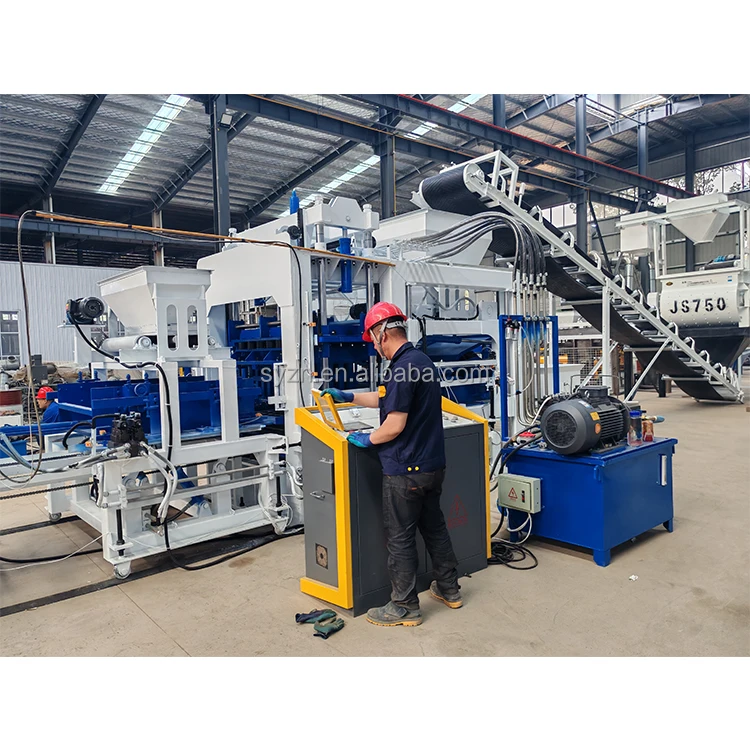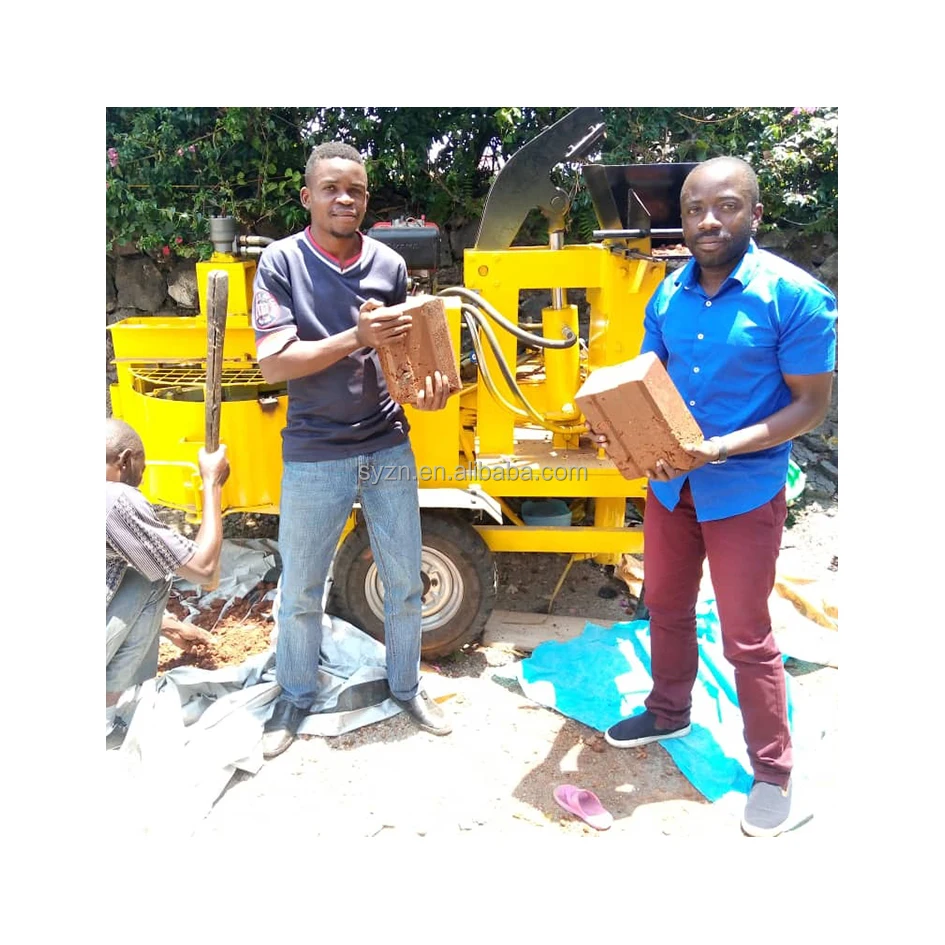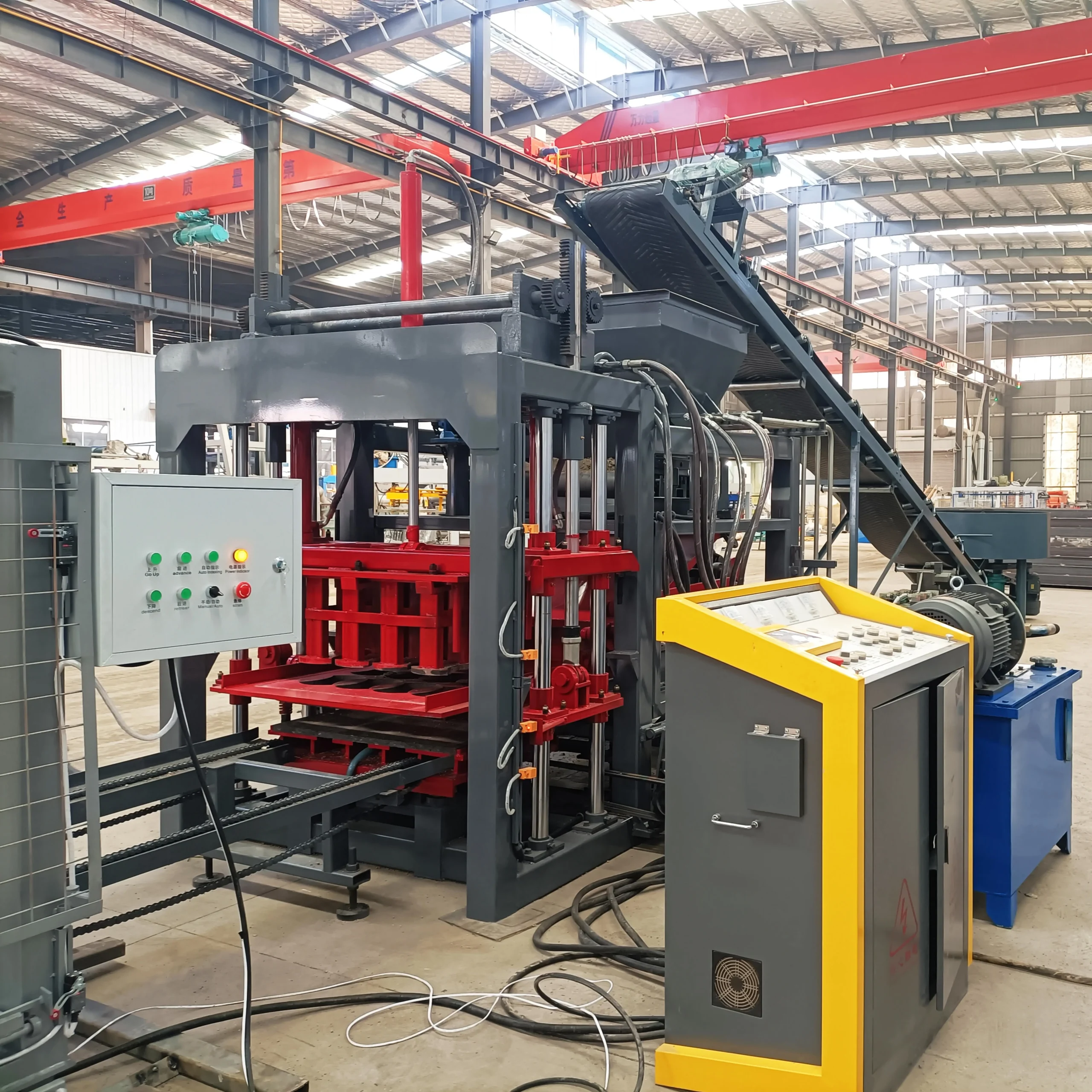
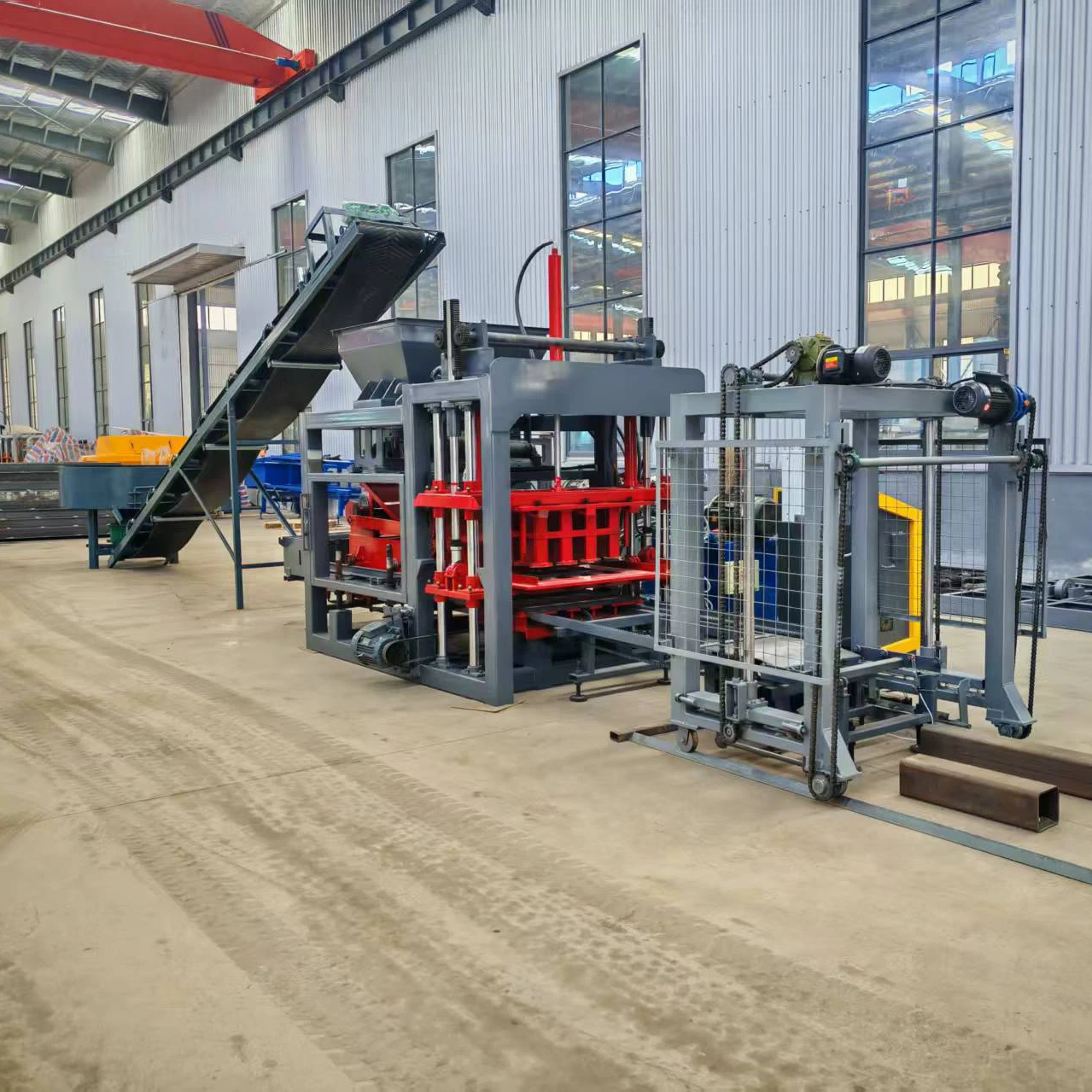
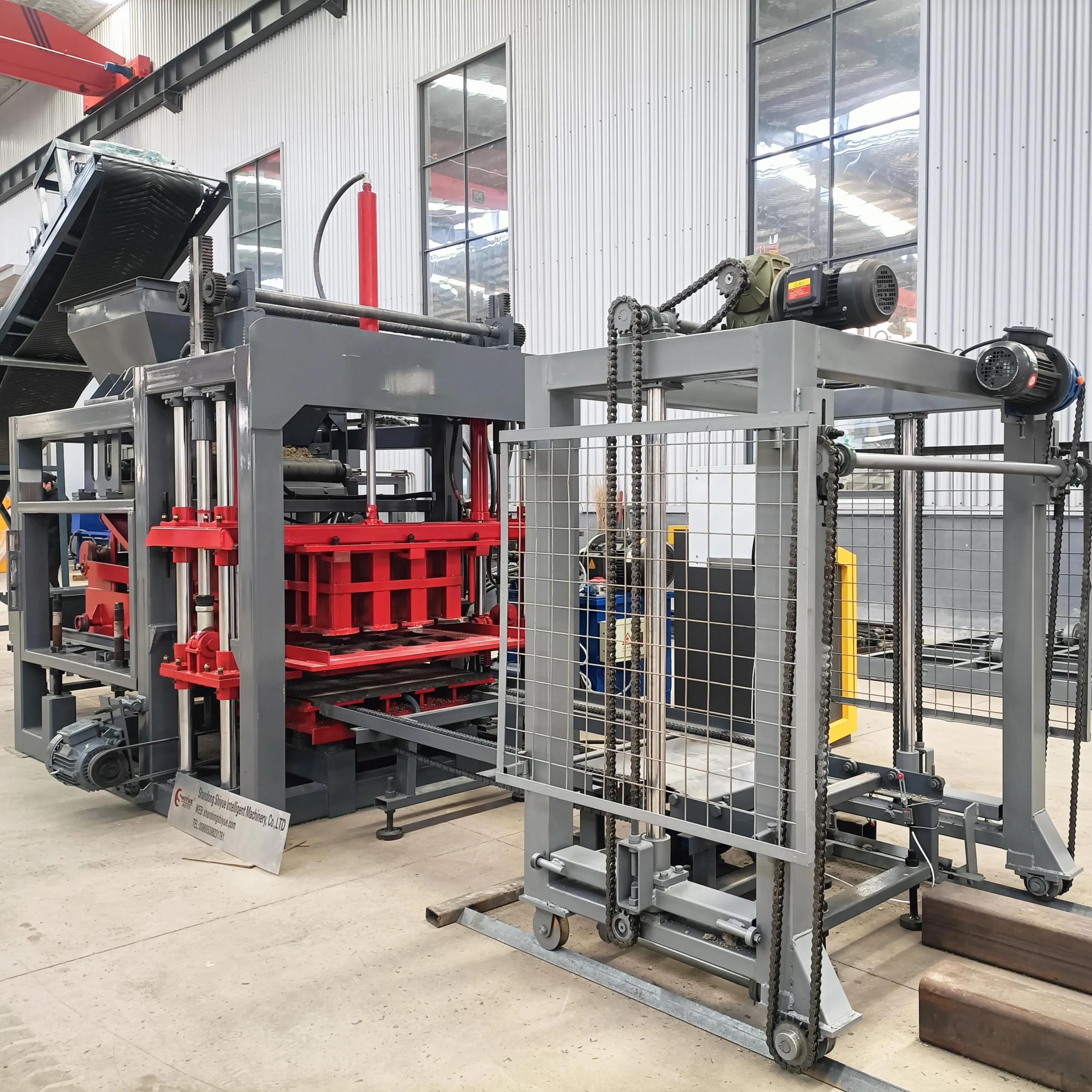

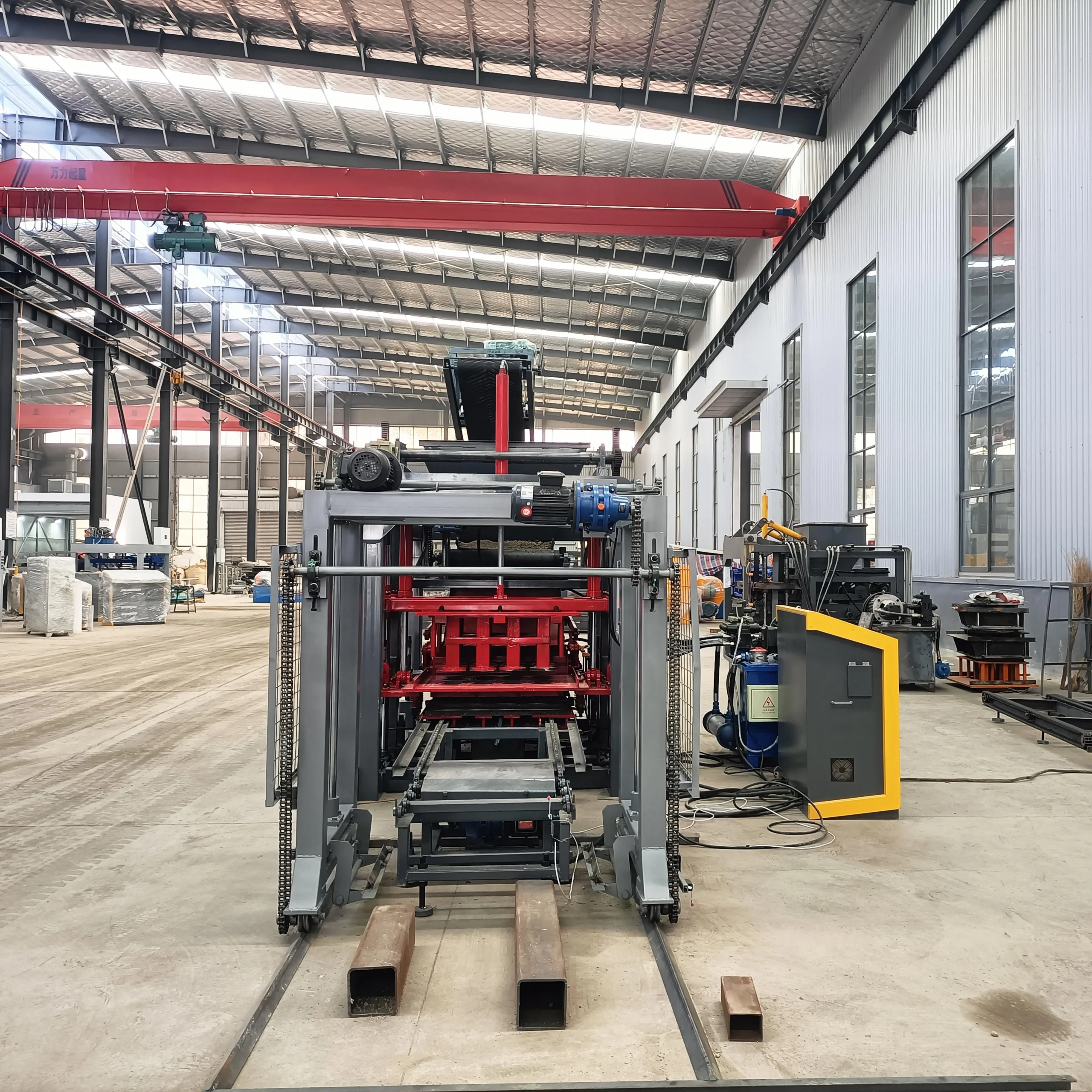
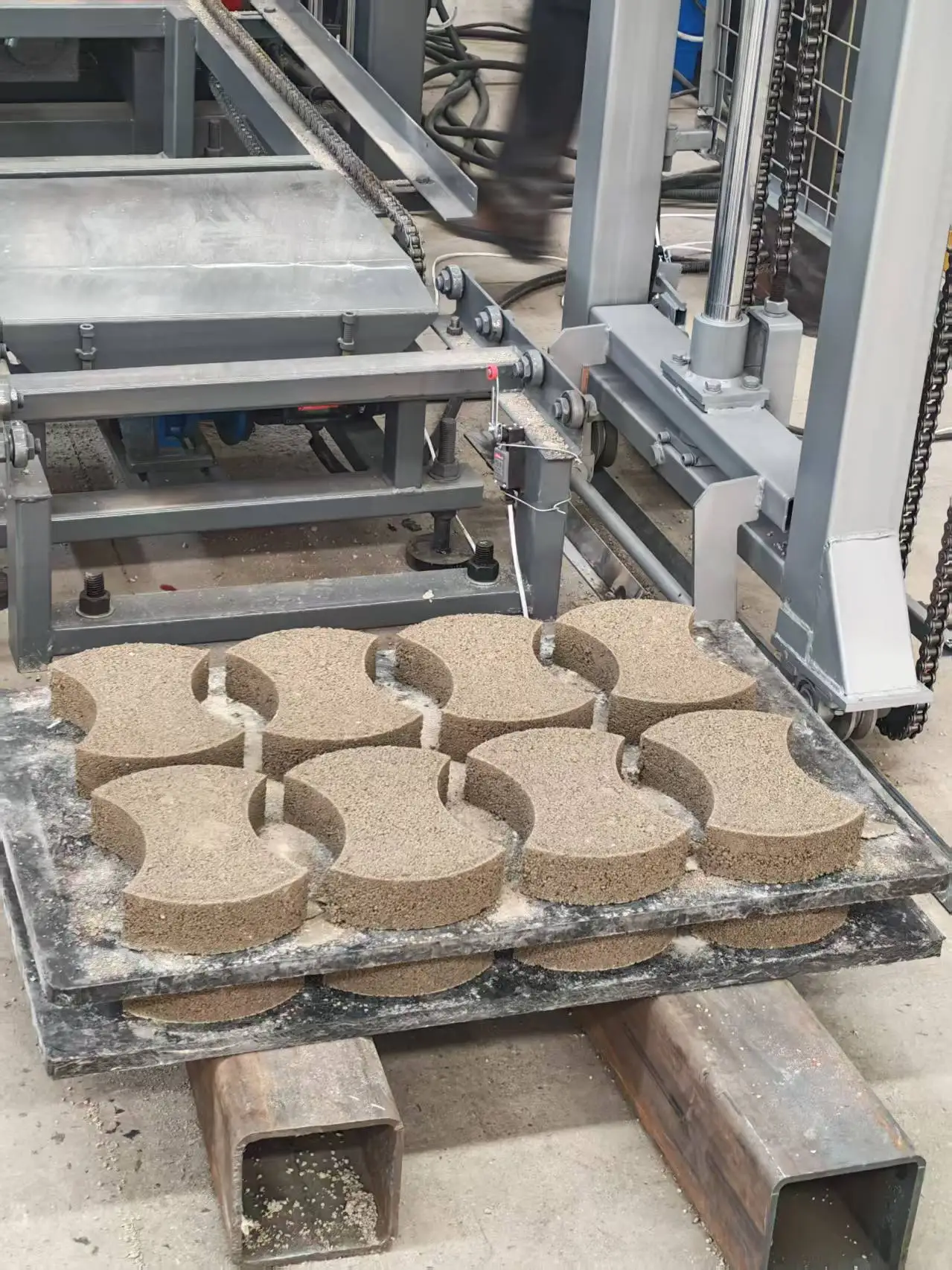
Description
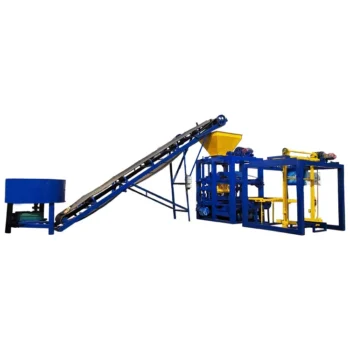
Configured for your mix — Every QT4-15A line we ship is matched to the buyer’s local aggregate and target block format, not assembled from catalogue defaults.
Technical Specifications
| Parameter | Value |
|---|---|
| Model | QT4-15A |
| Product Type | Fully Automatic Concrete Block Making Machine |
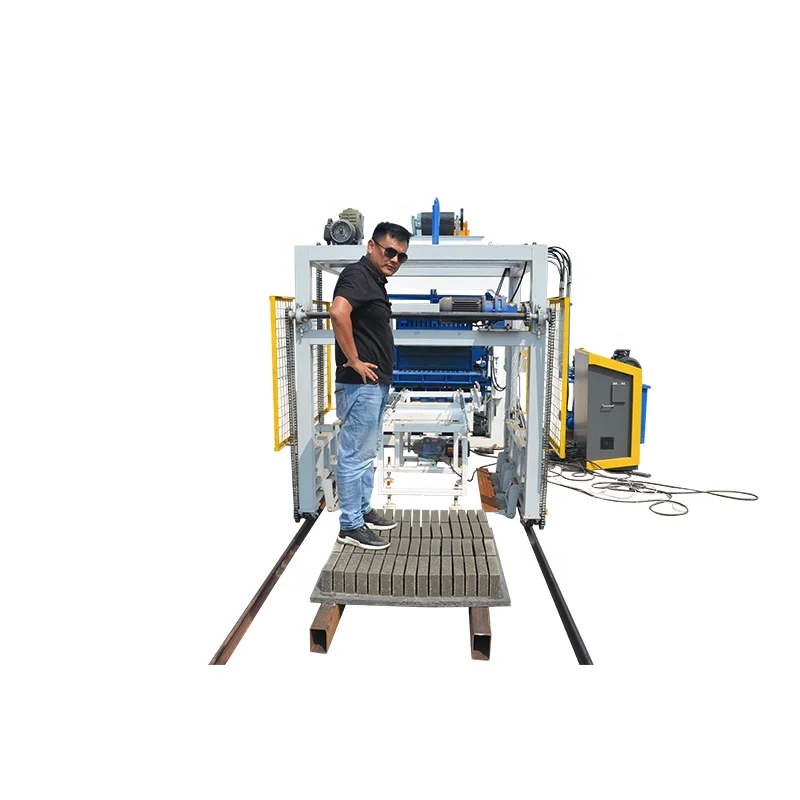
| Overall Dimensions (L×W×H) | 4100 × 1600 × 2600 mm |
| Rated Hydraulic Pressure | 16–21 MPa |
| Main Vibration Form | Platform Vibration |
| Vibration Frequency | 4200 r/min |
| Vibration Force | 55 kN |
| Pallet Size | 880 × 550 mm |
| Molding Cycle | 25–30 s (basis not stated in source — confirm block format / material / thickness) |
| Overall Power | 18.45 kW |
| Total Mass | 4 T |
| Demolding Method | Hydraulic |
| Recommended Factory Area | 300 m² |
| Automation Level | Fully Automatic |
| Raw Materials | Crushed stone, sand, cement, fly ash, gravel, slag, dust |
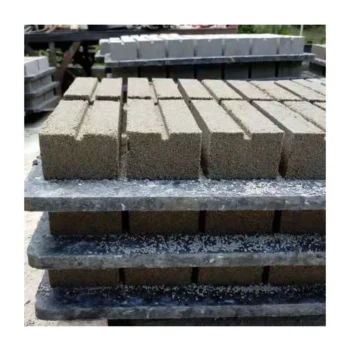
| Applied Products | Hollow block, solid block, paver, interlocking block, kerbstone, colored paver |
| Mould Format | Custom moulds available per customer drawings |
| Assembly State | Shipped in 1 × 40HQ container (basic equipment) |
| Warranty | 1 year (excluding spare parts) |
Application Suitability
| Application | Material or Output |
|---|---|
| Hollow block production for residential walling | Crushed stone, sand, cement, fly ash blends |
| Solid block manufacturing for load-bearing structures | Dense aggregate with cement binder |
| Interlocking paver production for driveways and walkways | Fine sand, pigment, cement mixes |
| Kerbstone forming for road and pathway edges | Coarse gravel, sand, cement |
| Colored paver runs for landscaping projects | Pigmented sand-cement formulations |
| On-site block production for housing developments | Locally sourced aggregate and cement |
What the QT4-15A Concrete Block Machine Specifications Leave Out About Capacity
The cycle time only becomes meaningful once you pin it to a specific block format, mix design, and local aggregate.
I have stood next to a block press that was rated at an impressive hourly output — until the buyer switched from standard hollow blocks to a heavier interlocking paver and the vibration cycle stretched well beyond the quoted baseline. The QT4-15A concrete block machine specifications how to choose conversation must start with the product you actually sell, not the fastest item in a test run. Buyers who lock in a number without asking which format it assumes end up reconfiguring shifts to meet delivery commitments [NEED_CITE: capacity calculation methods for concrete block production lines].
Matching Vibration Force to Your Aggregate Profile
The QT4-15A delivers 55 kN of vibration force at 4200 r/min through platform vibration, paired with 16–21 MPa hydraulic pressure. These two figures work together: vibration settles the mix into the mould cavity while hydraulic pressure compacts it to final density. If your local aggregate is angular crushed basalt rather than rounded river gravel, the mix resists compaction differently, and the QT4-15A concrete block machine specifications how to choose decision must account for that resistance. We ask for a material sample before finalizing the pressure and frequency settings so the block strength stays consistent across every pallet.
Pallet Size, Curing Area, and the Forklift You Already Own
The 880 × 550 mm pallet is the interface between the press and everything downstream. Before we confirm this size, we check your curing rack dimensions, the aisle width in your yard, and the fork length on your existing forklift. A pallet that does not match your handling equipment means extra labour moving wet blocks by hand or a forced investment in new racking. The pallet material — whether treated timber, bamboo composite, or steel — also affects how moisture escapes during curing and how many cycles the pallet survives before replacement [NEED_CITE: pallet material lifespan in concrete block curing].
Reading the Numbers That Actually Matter
The 4100 × 1600 × 2600 mm footprint tells you the press itself will fit in a modest bay, but the 300 m² recommended factory area accounts for raw material storage, pallet return, and a buffer of freshly pressed blocks waiting for the curing racks. The 18.45 kW overall power draw determines your transformer and dedicated circuit sizing; undersizing the supply causes voltage sag that shortens contactor life. The hydraulic demolding system lifts the mould box cleanly off the green block — if your target product includes a thin-walled hollow block, the demolding speed and mould tolerance become critical to preventing corner damage. Every one of these QT4-15A concrete block machine specifications how to choose factors connects to a real decision on your factory floor.
The Cost of Skipping the Format Conversation
When a buyer orders based on a generic output claim and later discovers the machine was tested on a block format they do not sell, the gap between expected and actual production becomes a daily problem. Shift plans slip, trucks leave half-loaded, and the buyer blames the press. We have also seen plants where the pallet size was chosen without checking the curing racks, forcing the owner to rebuild the entire rack system after the first shipment arrived [NEED_CITE: common commissioning delays in block plant installations]. These are not equipment failures — they are specification failures that happen before the machine is built.
Why Buyers Source This Press Through Shiyue
Block machinery is our single focus, so the QT4-15A press, mould, pallet, and handling equipment leave the factory as one matched system rather than components sourced from separate vendors. We configure the vibration and pressure settings against the buyer’s actual mix design and target block format, not a catalogue default. Custom moulds are designed and manufactured to the buyer’s drawings, covering every format the local market demands. Automation level is selectable, allowing a buyer to start with the QT4-15A fully automatic line and adjust handling and stacking automation as production volume grows. Installation support includes operator training so your team understands cycle adjustment and mould change procedures from day one.
Documentation & Verification
- Line layout showing capacity calculation per block format assumed
- Mould drawing and format list for every product in your range
- Pallet specification matched to your curing racks and forklift
- Hydraulic and electrical schematic for local maintenance teams
- Voltage, frequency, and PLC language confirmation before production
- Factory test record run on your target block format before dispatch
Installation, Commissioning & Support
- Foundation plan aligned with the 4100 × 1600 mm footprint and 4 T mass
- Dedicated circuit sized for the 18.45 kW total power draw
- Machine arrives dismantled in one 40HQ container for site reassembly
- First-run cycle tuning against your local aggregate and mix ratio
- Operator training on mould change and hydraulic demolding procedures
- Wear parts and mould replacement list provided at handover
What We Need to Build Your Configuration
Send us the block formats you sell today and the ones you plan to add within the next two years, along with your target daily output for each. Share a sample or analysis of your local aggregate and the cement type available in your region. Let us know your existing voltage and frequency, your curing yard dimensions, and the forklift capacity on site so we can lock in the pallet specification before production starts.
Frequently Asked Questions
Q: How is the QT4-15A capacity calculated per block format, and what does the 25–30 s cycle time assume?
A: The 25–30 s molding cycle is a baseline that must be confirmed against your specific block format, wall thickness, and aggregate type. We calculate daily output separately for each format you intend to produce, factoring in pallet return time, mould fill, and vibration duration. The capacity sheet you receive lists output per format, not a single aggregate number.
Q: Which block formats can the 880 × 550 mm pallet accommodate, and how is mould change measured?
A: The pallet supports hollow blocks, solid blocks, pavers, interlocking bricks, and kerbstones within its surface area. Each mould is designed to maximize cavity count on that pallet size. Mould change time depends on the clamping system selected; we measure and document it during the factory test so you know the exact downtime between format switches.
Q: How is vibration force and hydraulic pressure matched to my local aggregate?
A: We request a sample of your aggregate and run test pressings at different pressure and frequency combinations. Angular crushed stone typically needs higher vibration energy to settle than rounded gravel. The 55 kN vibration force and 16–21 MPa pressure range give us room to dial in the combination that produces consistent block strength with your material.
Q: What pallet material should I choose based on my curing setup?
A: Pallet material affects moisture release during curing and the number of press cycles before replacement. We review your curing method — open yard, covered rack, or steam chamber — and your forklift fork length before recommending timber, bamboo composite, or steel. The choice is documented in the pallet specification sheet before production begins.
Q: How do I confirm voltage, frequency, and control language before the machine ships?
A: We collect your site voltage, frequency, and preferred PLC display language during the configuration phase and print them on the electrical schematic. The control panel is wired and labelled accordingly before the factory test, so no rewiring or reprogramming is needed when the QT4-15A arrives at your plant.