
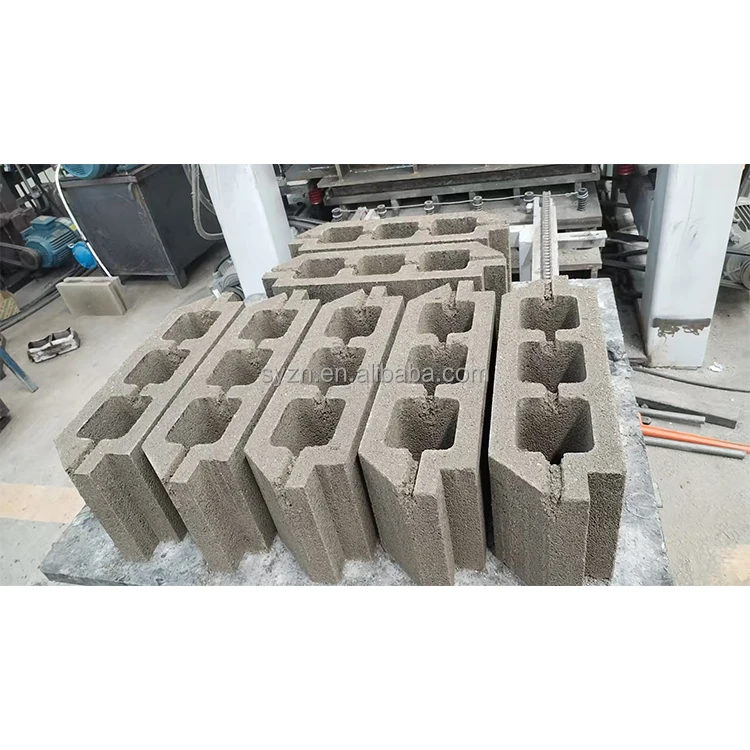

Description
Mould-to-Market Matching — capacity calculations on the QT8-15 are quoted per block format with the exact cycle time, so daily output projections survive contact with real production conditions.
Technical Specifications
| Parameter | Value |
|---|---|
| Model | QT8-15 |
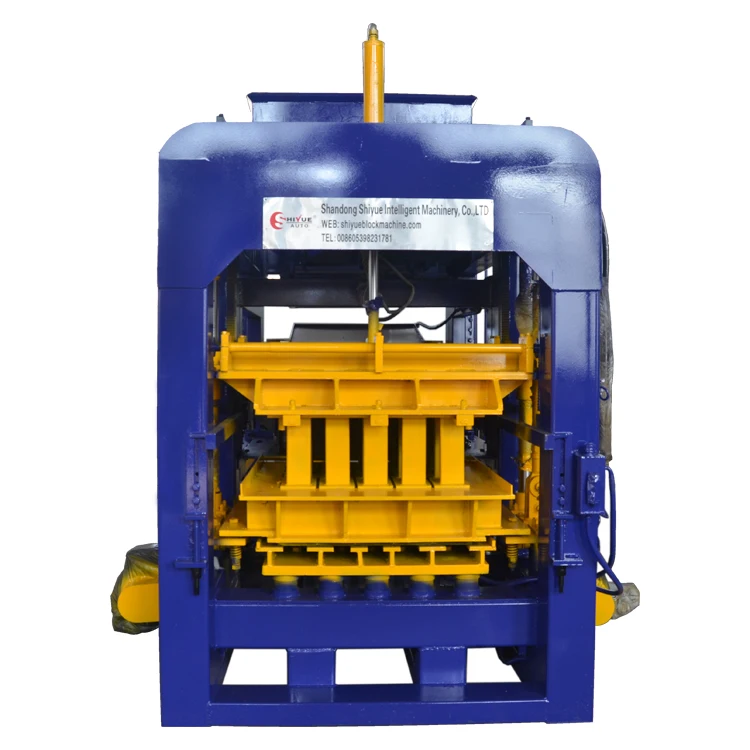
| Product Type | Hydraulic Concrete Block Making Machine |
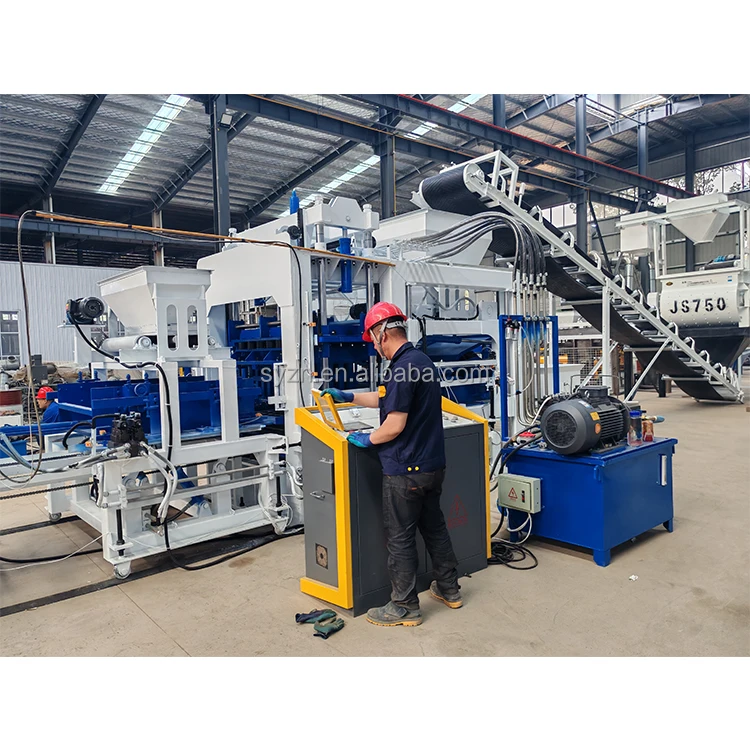
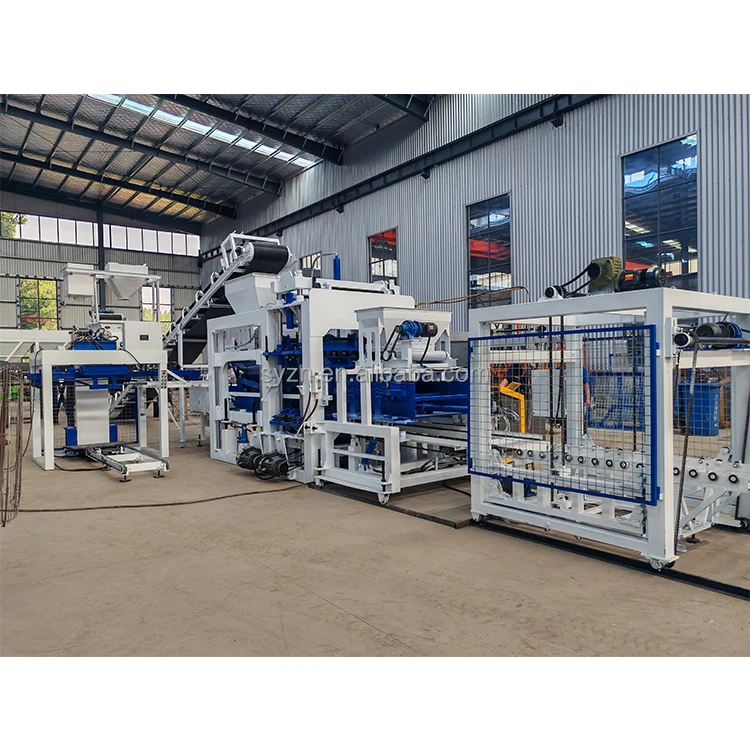
| Overall Dimensions (L×W×H) | 8300×1860×3000 mm |
| Rated Pressure | 21 MPa |
| Main Vibration Form | Platform Vibration |
| Vibration Frequency | 2800-4500 r/min |
| Vibration Force | 45 kN |
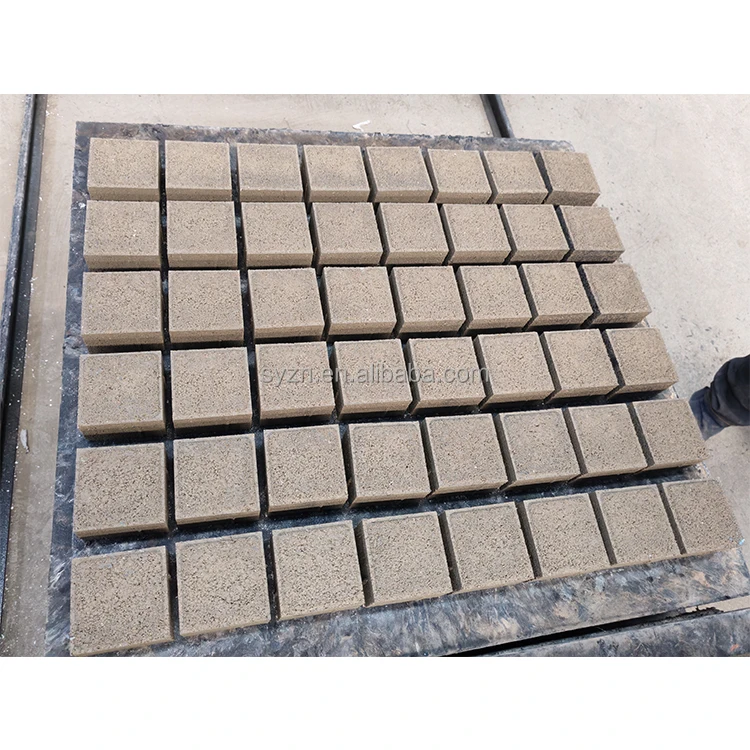
| Pallet Size | 950×900 mm |
| Molding Cycle | 15-20 s (basis: specific block format to be confirmed) |
| Overall Power | 55.5 kW |
| Total Mass | 8 T |
| Demolding Method | Hydraulic |
| Factory Area | 300 m² |
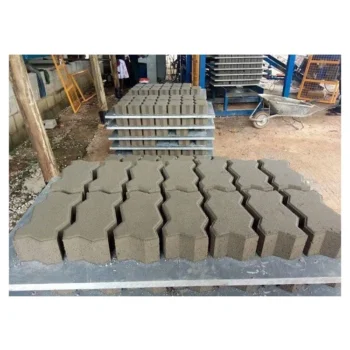
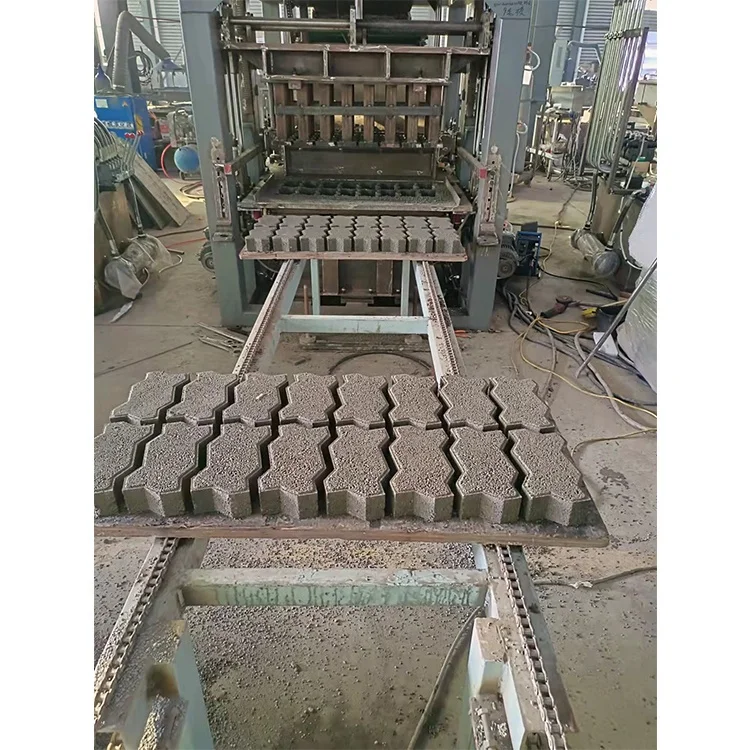
| Applied Products | Concrete blocks, hollow/solid blocks, pavers, interlocking blocks, curbstone, colored pavers |
| Raw Material | Crushed stone, sand, cement, dust, fly ash, gravel, slag |
| Voltage & Frequency | Configurable to buyer’s local supply (confirm before order) |
| Control System | PLC or relay (confirm before order) |
| Automation Level | Configurable (confirm before order) |
| Mould Change Time | Confirm before order |
| Stacking Method | Confirm before order |
| Warranty | 1 year (whole machine, excluding spare parts) |
Application Suitability
| Application | Material or Output |
|---|---|
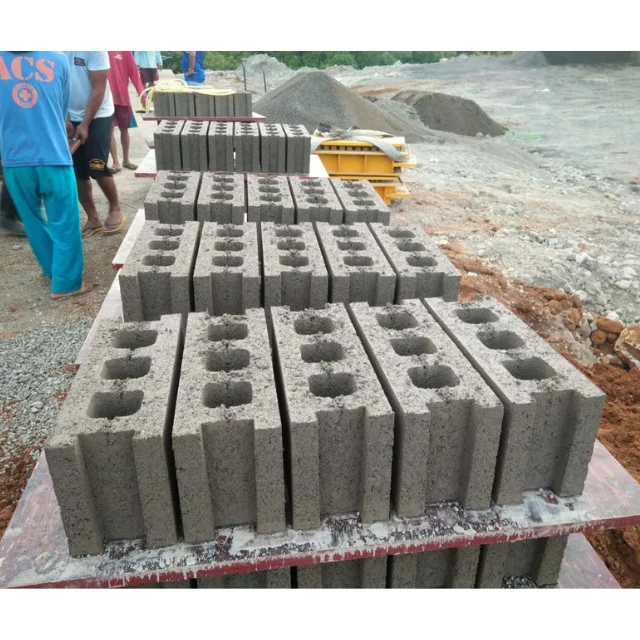
| Hollow block production plants | Crushed stone, sand, cement, fly ash blends for standard cavity formats |
| Solid block manufacturing | Dense aggregate mixes requiring full hydraulic compaction |
| Paving block and colored paver runs | Fine sand and cement with pigment dosing for surface finish |
| Interlocking brick production | Soil-cement or stone-dust blends for dry-stack formats |
| Kerbstone and curb units | Coarse gravel and cement mixes in heavier mould configurations |
What "15-20 Second Cycle" Leaves Out When Sizing a QT8-15 Block Machine
The cycle time only means something once you know which block format sits on the pallet.
I have watched buyers sign off on a QT8-15 block machine based on a single cycle-time figure, only to find that number assumed a small solid paver while their actual product was a large hollow block that needs longer vibration and a slower hydraulic descent. The daily output calculation collapses the moment production shifts to the format the market actually buys. Molding cycle on this machine ranges from 15 to 20 seconds, but where your product lands inside that window depends on block height, cavity count, and the density your local standard demands [NEED_CITE: block format cycle time variation in hydraulic presses]. Without a format-specific capacity sheet, you are quoting your customers on faith.
Mould Formats and the Real Output Question
The QT8-15 accepts moulds for hollow blocks, solid blocks, pavers, interlocking bricks, and curbstones, each with a different cavity count and fill depth. A mould producing four hollow blocks per cycle will deliver a different daily tally than one stamping twelve pavers in the same stroke. Before any order is finalized, the exact format list and per-format cycle time must be documented so the capacity calculation reflects what you will actually run.
Pallet Size as a System Constraint, Not a Catalogue Number
The 950×900 mm pallet on the QT8-15 determines how many blocks fit per stroke, but it also has to match your existing curing racks and forklift dimensions. I have seen plants receive machines only to discover their rack slots were built for a narrower pallet, forcing a full curing-area rebuild or a daily handling bottleneck. Pallet material — bamboo, PVC, or steel — also affects vibration transfer and block surface finish, so the choice should be made against your mix design and curing conditions, not the default option [NEED_CITE: pallet material impact on block surface quality].
Vibration Force and Hydraulic Pressure Working Together
The 45 kN vibration force and 21 MPa rated pressure on the QT8-15 are not independent numbers. Vibration settles the aggregate into the mould cavity while hydraulic pressure locks it into shape; if your local crushed stone carries a high clay content, the vibration frequency range of 2800 to 4500 r/min must be tuned so fines do not segregate to the block surface. Getting this wrong produces blocks that pass a visual check but fail compressive strength tests after curing. Every mix behaves differently, and the QT8-15 block machine specifications only become meaningful once your actual aggregate sample is in the test mould.
The Hidden Cost of Skipping Configuration Confirmation
When voltage, frequency, and PLC display language are left until the machine arrives on site, commissioning stalls. I have visited plants where the QT8-15 sat idle for weeks because the control panel spoke a language the operators could not read, or the motor winding did not match the local three-phase supply. Stack that on top of an unconfirmed mould change procedure and you lose entire shifts every time you swap formats. These are not installation problems; they are ordering-stage omissions that compound into real production losses [NEED_CITE: commissioning delays caused by unconfirmed electrical specifications].
Why Source the QT8-15 Through a Format-First Process
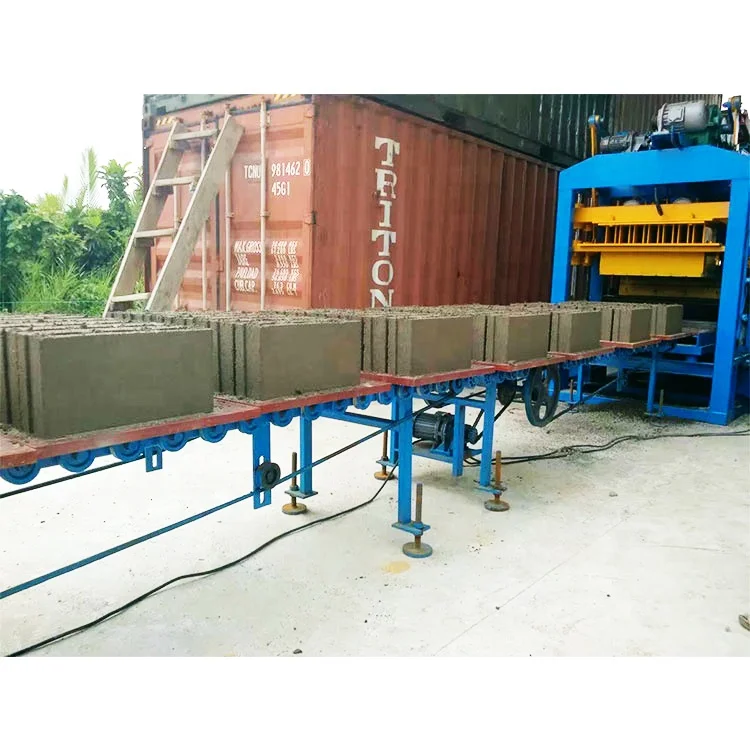
Block machinery is the single focus here, so the machine, mould, pallet, and handling equipment are specified as one matched system rather than assembled from separate suppliers. Every configuration is set against the buyer’s actual mix design and target block format, not a catalogue default. Mould design covers the formats your market sells, including custom drawings when a standard cavity layout does not fit. The automation level is selectable, meaning a plant can start with manual pallet handling and add stacking later. Installation support includes operator training on your specific format list and maintenance routines for the hydraulic and vibration systems.
Documentation & Verification
- Line layout and capacity calculation stating the exact block format assumed for each output figure
- Mould drawing and format list provided before production, including custom profiles to buyer drawings
- Voltage, frequency, and PLC display language confirmed in writing before shipment
- Pallet specification sheet covering size, material, and compatibility with existing curing racks
- Factory test record run on buyer’s confirmed block format before dispatch
- Wear parts and mould availability list covering first replacement cycle
Installation, Commissioning & Support
- Foundation plan sized for the 8300×1860 mm footprint and 8 T operating mass of the QT8-15
- Electrical supply matched to 55.5 kW total draw with dedicated breaker and confirmed voltage and frequency
- Hydraulic system filled and bled on site with pressure set to confirmed 21 MPa working point
- Vibration frequency tuned between 2800 and 4500 r/min against the buyer’s actual aggregate sample
- Mould change procedure demonstrated on site with tools matched to the confirmed mould clamping system
- Operator training covering daily greasing points, pallet inspection, and hydraulic hose condition checks
Before You Request a Quote
To size the QT8-15 to your actual production line, share the block formats you sell today along with target daily output per format. Include your local aggregate type and any available compressive strength requirements from your market standard. Confirm the voltage and frequency at your plant, the PLC display language your operators need, and the pallet dimensions your current curing area can accept.
Frequently Asked Questions
Q: How is QT8-15 capacity calculated per block format, and what is the realistic daily output for my specific hollow block or paver?
A: Capacity is calculated by taking the confirmed cycle time for your exact mould cavity layout, multiplying by the number of blocks per stroke, and then applying realistic operating hours minus mould change and maintenance windows. A capacity sheet listing output per format is provided before order so you can plan against actual market demand rather than a single aggregate number.
Q: Which mould formats are available for the QT8-15, and can custom moulds be designed to my market’s drawings?
A: Standard moulds cover hollow blocks, solid blocks, pavers, interlocking bricks, and curbstones in common cavity layouts. When your market requires a non-standard profile or dimension, custom moulds are built to your drawings with the cavity count and fill depth matched to the 950×900 mm pallet and 45 kN vibration force.
Q: How is vibration force and hydraulic pressure matched to my local aggregate and mix design to ensure block strength consistency?
A: Your aggregate sample and mix proportions are tested to determine where within the 2800 to 4500 r/min vibration range the material compacts evenly. Hydraulic pressure is then set so the 21 MPa rated capacity is applied at the correct point in the cycle, preventing surface segregation while achieving the density your standard requires.
Q: What pallet size does the QT8-15 use, and how is it verified against my existing curing area and forklift?
A: The QT8-15 runs on 950×900 mm pallets. Before production, your curing rack slot width and forklift tine spacing are confirmed so the pallet dimensions and material — bamboo, PVC, or steel — match your handling system without requiring site modifications after delivery.
Q: How long does a mould change take on the QT8-15, and what tools or procedures are required?
A: Mould change time depends on the clamping system confirmed at order stage. The procedure is documented in the operation manual with tool lists and step sequences for each format, so operators can plan changeovers between runs without losing an entire shift to alignment and calibration work.