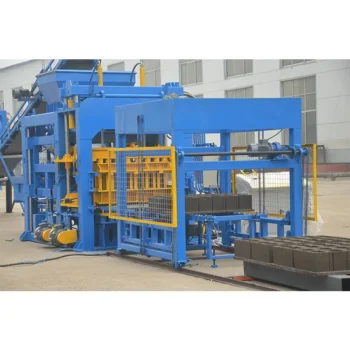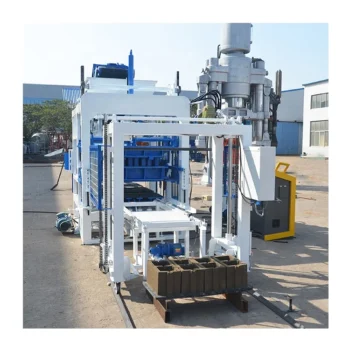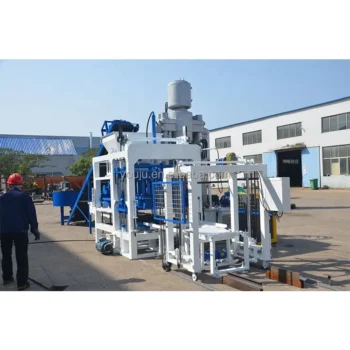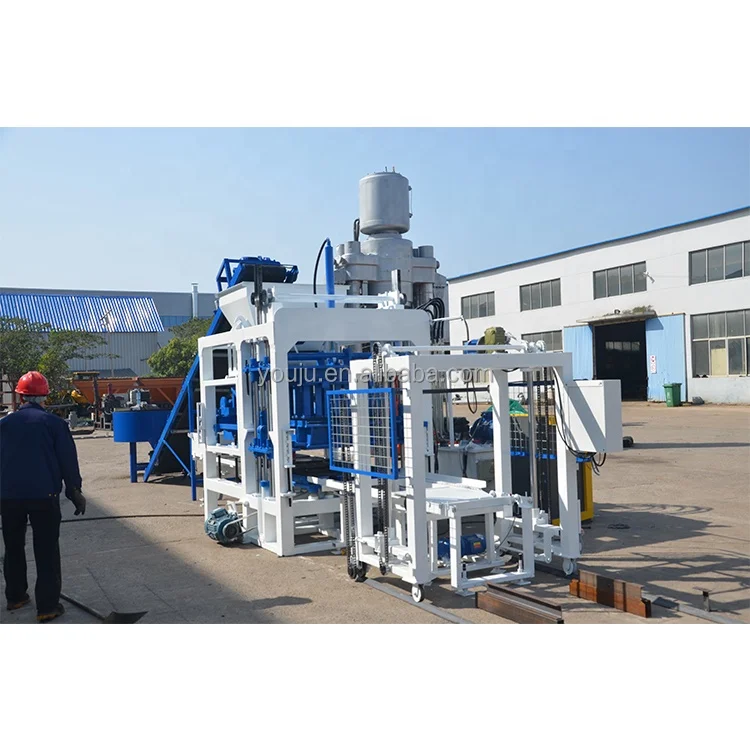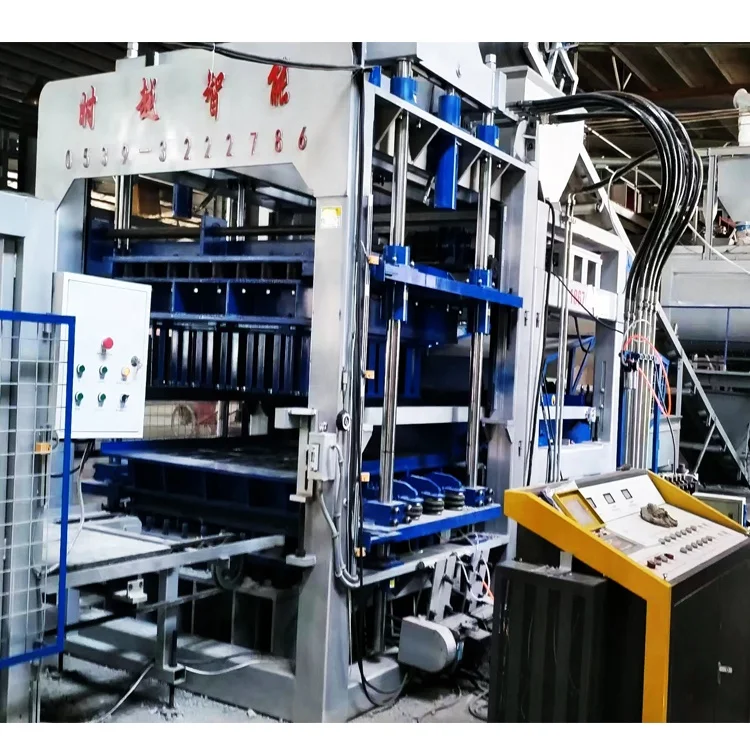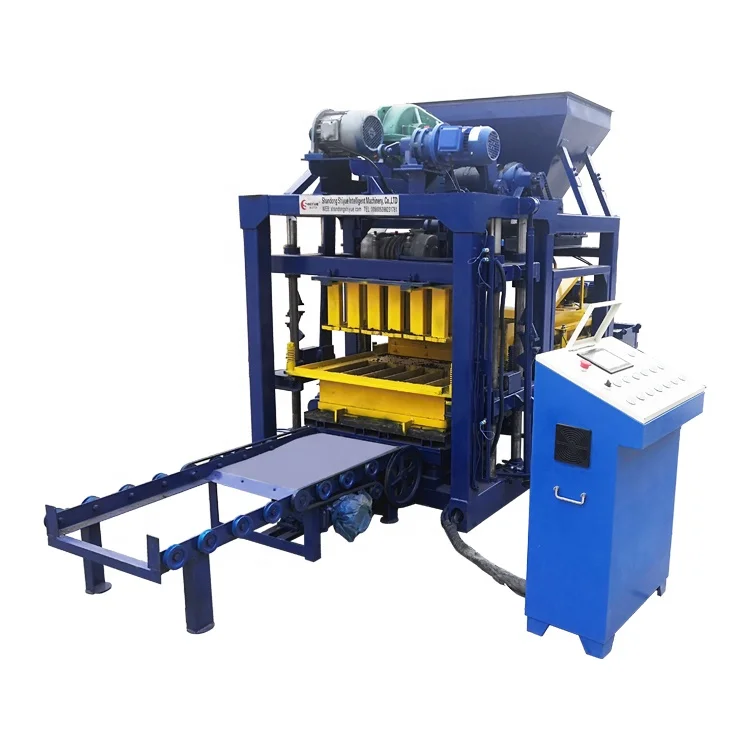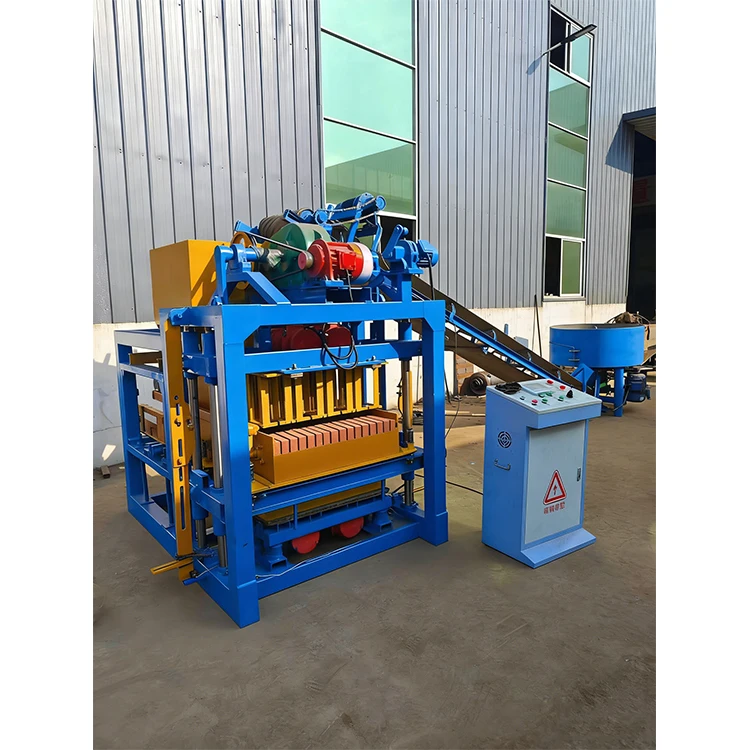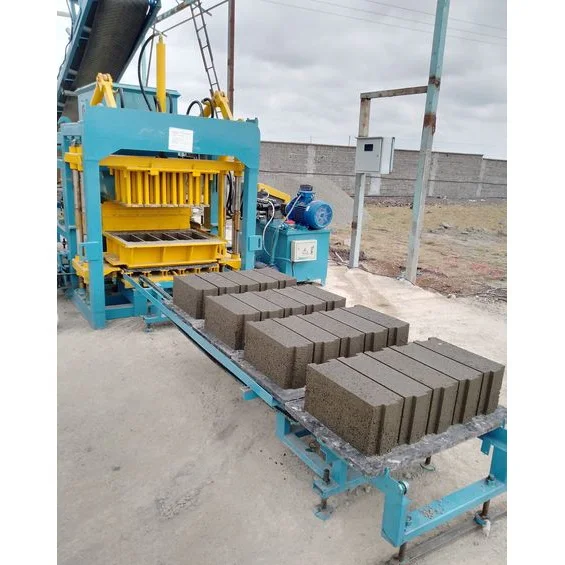
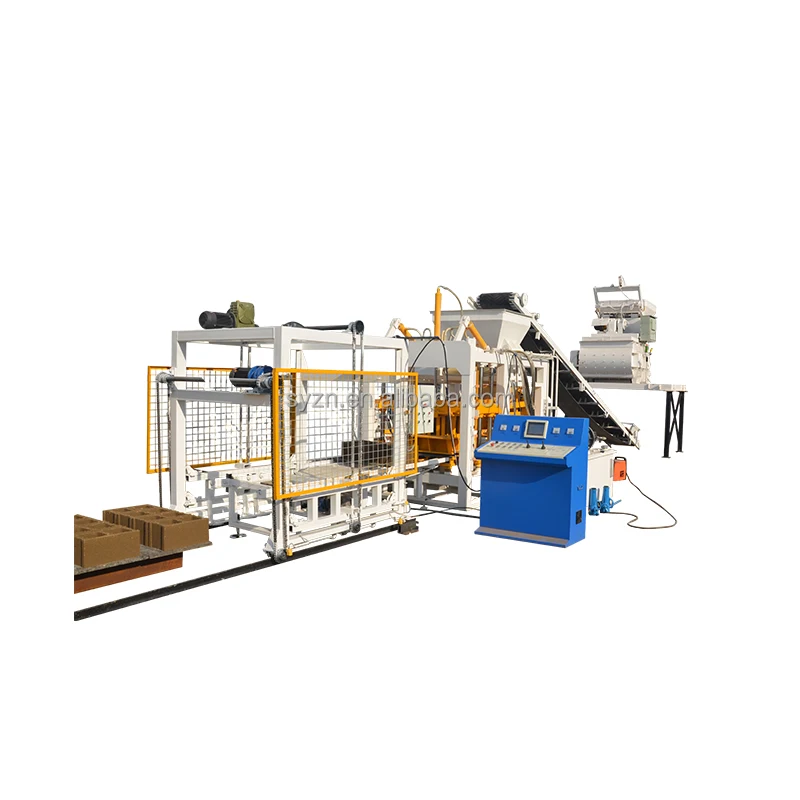
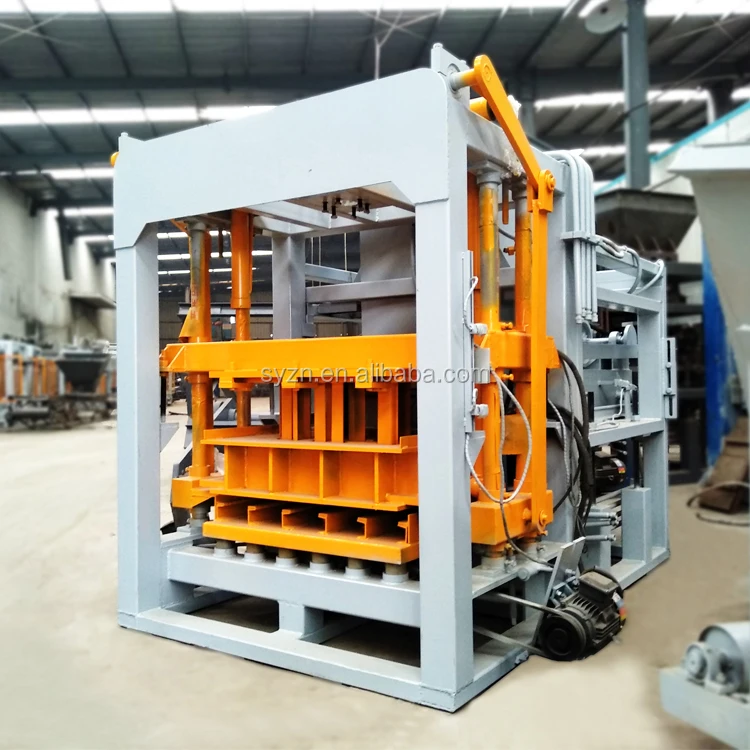
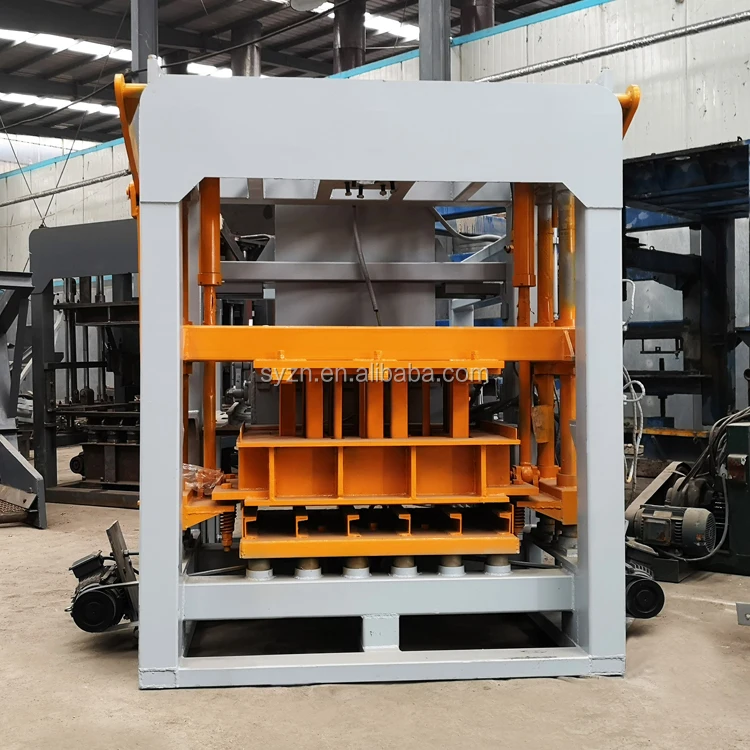
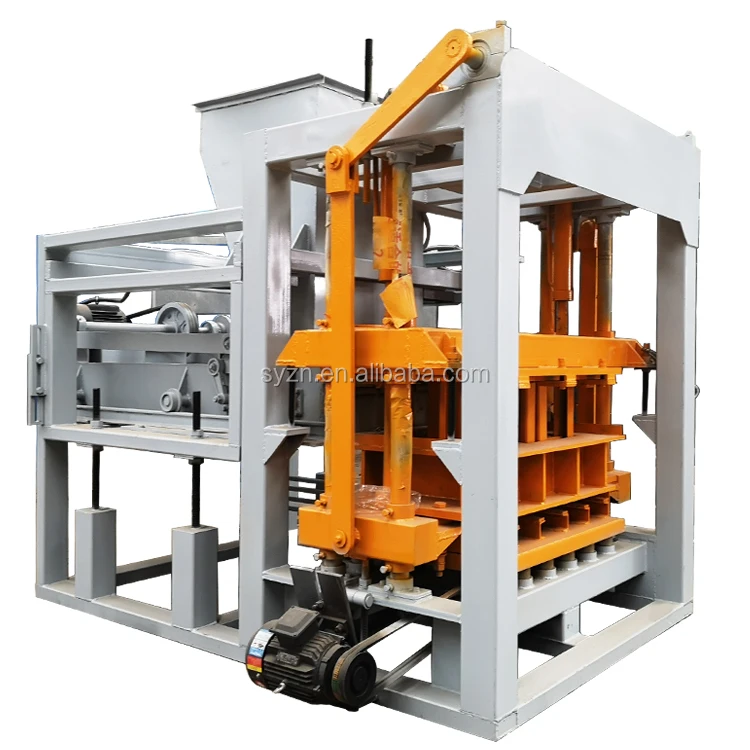
Description
Per-Format Capacity Data — every QT4-15 output figure ties to a named block size and mould cavity count, so daily planning reflects your actual product mix instead of a catalogue peak.
Technical Specifications
| Parameter | Value |
|---|---|
| Model | QT4-15 |
| Product Type | Automatic Hydraulic Block Making Machine |
| Control System | PLC (computer controlled, fully automatic) |
| Vibration Mode | Multiaxis synchronizer vibration (vertically downward) |
| Hydraulic System | High thermal efficiency, low heat productivity design |
| Mixer System | Multiaxis forced mixer (adaptable to varied raw materials) |
| Guide Bearing | Long-period over-length guide bearing for upper mould and mould box alignment |
| Rack Construction | High-strength steel with special welding technique (vibration shock resistant) |
| Automation Level | Fully automatic |
| Cycle Time (400×200×200 mm hollow block, 4 pcs/mould) | 15–20 s |
| Cycle Time (400×150×200 mm block, 5 pcs/mould) | 15–20 s |
| Cycle Time (400×100×200 mm block, 8 pcs/mould) | 15–20 s |
| Cycle Time (200×100×60 mm paver, 16 pcs/mould) | 15–20 s |
| Cycle Time (240×115×53 mm solid brick, 28 pcs/mould) | 15–20 s |
| Output (400×200×200 mm hollow block) | 900–1,200 pcs/h |
| Output (400×150×200 mm block) | 1,080–1,440 pcs/h |
| Output (400×100×200 mm block) | 1,440–1,920 pcs/h |
| Output (200×100×60 mm paver) | 2,880–3,840 pcs/h |
| Output (240×115×53 mm solid brick) | 5,930–6,720 pcs/h |
| 8-Hour Shift Output (400×200×200 mm hollow block) | 7,200–9,600 pcs |
| 8-Hour Shift Output (400×150×200 mm block) | 8,640–11,520 pcs |
| 8-Hour Shift Output (400×100×200 mm block) | 11,520–15,360 pcs |
| 8-Hour Shift Output (200×100×60 mm paver) | 23,040–30,720 pcs |
| 8-Hour Shift Output (240×115×53 mm solid brick) | 47,400–53,700 pcs |
| Mould Change Time | (basis not stated in source — confirm block format) |
| Pallet Size | (basis not stated in source — confirm pallet dimensions and material) |
| Voltage & Frequency | (basis not stated in source — verify against local supply) |
| PLC Display Language | (basis not stated in source — confirm language options) |
| Overall Dimensions (L×W×H) | (basis not stated in source — confirm) |
| Net Weight | (basis not stated in source — confirm) |
| Hydraulic Pressure | (basis not stated in source — confirm) |
| Vibration Force | (basis not stated in source — confirm) |
| Warranty | 1 year for whole machine (excluding spare parts) |
Application Suitability
| Application | Material or Output |
|---|---|
| Hollow block production | Crushed stone, cement, sand — 400×200×200 mm format at 7,200–9,600 pcs per 8-hour shift |
| Paving block production | Fine aggregate, cement, pigment — 200×100×60 mm format at 23,040–30,720 pcs per shift |
| Solid brick production | Clay-free mix, cement, quarry dust — 240×115×53 mm format at 47,400–53,700 pcs per shift |
| Multicellular brick production | Lightweight aggregate, cement — 400×150×200 mm or 400×100×200 mm formats |
| On-site contractor block production | Locally sourced aggregate and cement across multiple formats with mould changes |
What "900 Pieces per Hour" Actually Means on the QT4-15 Block Machine Specifications Sheet
Capacity only matters when you know which block it refers to.
A hollow block line running 400×200×200 mm blocks with four cavities per mould will never match the head count of a solid brick run pulling twenty-eight cavities in the same cycle. The QT4-15 block machine specifications list 900–1,200 pieces per hour for hollow blocks and 5,930–6,720 for solid bricks — two very different numbers driven by the same press at the same cycle time [NEED_CITE: block format influence on output calculation standards]. When a supplier quotes only the higher figure without naming the format, the buyer’s daily plan collapses before the first pallet is cured. I have watched contractors size their entire curing yard on a solid brick number, then switch to hollow blocks for a housing project and wonder why the yard is half-empty.
Matching the Press to Your Selling Format
The QT4-15 automatic hollow block making machine capacity by format is governed by mould cavity count and the 15–20 second cycle window shared across all formats. A buyer whose market moves mostly 400×200×200 mm hollow blocks should plan around 7,200–9,600 pieces per eight-hour shift, not the catalogue maximum. When that same buyer adds a paving block run for a municipal contract, the cycle stays in the same window but the cavity count jumps to sixteen, shifting shift output into the 23,040–30,720 range. This is why the format conversation has to happen before the machine conversation.
Why Local Aggregate Dictates the Vibration Setting
The multiaxis forced mixer paired with the QT4-15 handles a range of raw material natures, but the vibration force still needs to match the density your local aggregate can achieve. High-clay sand absorbs more water and dampens the vertically downward vibration, meaning a mix that compacts well in the factory test may under-perform on your site if the pressure and frequency are not re-tuned. Sending a bag of your actual aggregate to the manufacturer before final configuration avoids discovering the mismatch after the machine is bolted to the floor [NEED_CITE: aggregate variability impact on block compaction quality].
Reading the Numbers That Shape Daily Output
The over-length guide bearing keeps the upper mould and mould box aligned through thousands of cycles, which matters because even slight misalignment wears the mould edges and changes block dimensions over a long shift. The high-strength steel rack with vibration-resistant welding absorbs the repeated shock from the multiaxis synchronizer, preventing frame fatigue that would otherwise loosen hydraulic fittings. The hydraulic system’s low heat build-up design supports sustained operation across a full shift without the pressure dropping as the oil warms — a detail that shows up as consistent block density from the first pallet to the last. These three parameters together determine whether the cycle time stays inside that 15–20 second window or drifts upward as the shift goes on.
What Happens When the Pallet Spec Is an Afterthought
Choosing pallet size and material without checking your existing curing racks and forklift is one of the most common oversights in block plant procurement. If the pallets arriving with the machine do not fit your curing racks, you either replace the racks or stack blocks by hand on the floor — both options stall output and add labour the budget never accounted for. Pallet material also matters: timber pallets flex under vibration and shorten mould life, while steel or composite pallets hold flat but weigh more and demand a forklift rated for the load [NEED_CITE: pallet material effect on block surface finish and mould wear]. Getting this right before shipment is far cheaper than retrofitting after the first container arrives.
Why Sourcing the Machine and the Line Together Matters
The QT4-15 block machine specifications only describe the press; the raw material feeder, mixer, pallet feeder, and stacking system have to match its cycle speed or the press sits idle between strokes. Configuring the line as one matched system from a single supplier means the feeder delivers material in time for every 15–20 second cycle rather than on an average that leaves gaps. The mould design is tied to the formats your market actually sells, including custom drawings if you need a non-standard kerbstone or interlocking brick. Voltage, frequency, and PLC display language are confirmed before production so the electrician on your site is not decoding a Chinese-only screen on day one. The factory test runs your actual mix — or the closest available substitute — so vibration and pressure settings ship tuned rather than default. Wear parts and mould replacement lists arrive with the machine, not two months later when the first mould needs swapping.
Documentation & Verification
- Line layout stating the exact block format assumed for every capacity figure
- Mould drawing and format list showing which cavities the quoted output covers
- Hydraulic and electrical schematic matching the shipped configuration
- Factory test record run on your mix design or nearest equivalent aggregate
- Voltage, frequency, and PLC language confirmation sheet signed before production
- Wear parts and mould replacement list with part numbers and recommended stock levels
Installation, Commissioning & Support
- Foundation pad leveled to the machine’s footprint with anchor bolt layout provided before pour
- Dedicated circuit matching confirmed voltage and frequency with isolation switch within reach
- Machine arrives partially dismantled; reassembly sequence documented with torque values for rack bolts
- First-run parameter tuning against your local aggregate, adjusting vibration duration and hydraulic pressure
- Operator training covering PLC navigation, mould change procedure, and daily bearing lubrication points
- Spare hydraulic seals and guide bearing bushings shipped with the machine for the first replacement cycle
What to Have Ready Before You Request a Quote
To size the QT4-15 correctly for your plant, share the block formats your market currently sells, the daily volume you need for each format, and a sample of your local aggregate so the mixer and vibration settings can be matched before the machine enters production. Confirm your site voltage and frequency, the language you need on the PLC display, and whether your existing curing racks and forklift set constraints on pallet dimensions.
Frequently Asked Questions
Q: How is the per-format capacity calculated, and what block size does each figure assume?
A: Every output figure for the QT4-15 is tied to a specific block dimension and mould cavity count. For example, 900–1,200 pieces per hour assumes a 400×200×200 mm hollow block with four cavities per mould at a 15–20 second cycle. Solid brick figures assume twenty-eight cavities. No capacity number is quoted without its format attached.
Q: Which mould formats are available for the QT4-15, and how long does a mould change take?
A: Standard moulds cover hollow blocks in three sizes, pavers, and solid bricks as listed in the specification table. Custom moulds can be designed to buyer drawings for kerbstones or interlocking bricks. Mould change time depends on the format and whether the quick-change system is fitted; confirm with the supplier for your specific mould set.
Q: What pallet size does the QT4-15 require, and can it match my existing curing racks?
A: Pallet dimensions must be confirmed against your curing rack spacing and forklift capacity before the machine is built. Timber, steel, and composite pallet materials are available, each affecting block surface finish and mould wear differently. Share your rack drawings so the pallet spec is matched to your plant.
Q: How do I match vibration force and hydraulic pressure to my local aggregate?
A: Send a sample of your local aggregate — sand, crushed stone, or any alternative — so the manufacturer can run a test batch and adjust vibration duration and hydraulic pressure accordingly. High-clay or high-moisture materials typically need longer vibration and higher pressure to reach target block density.