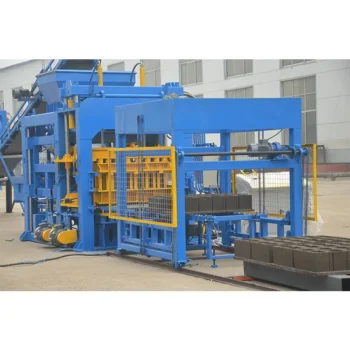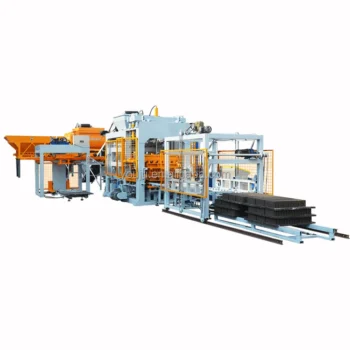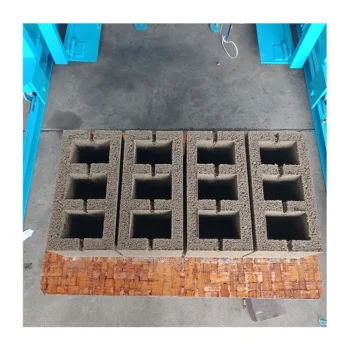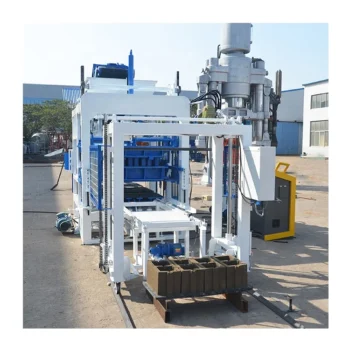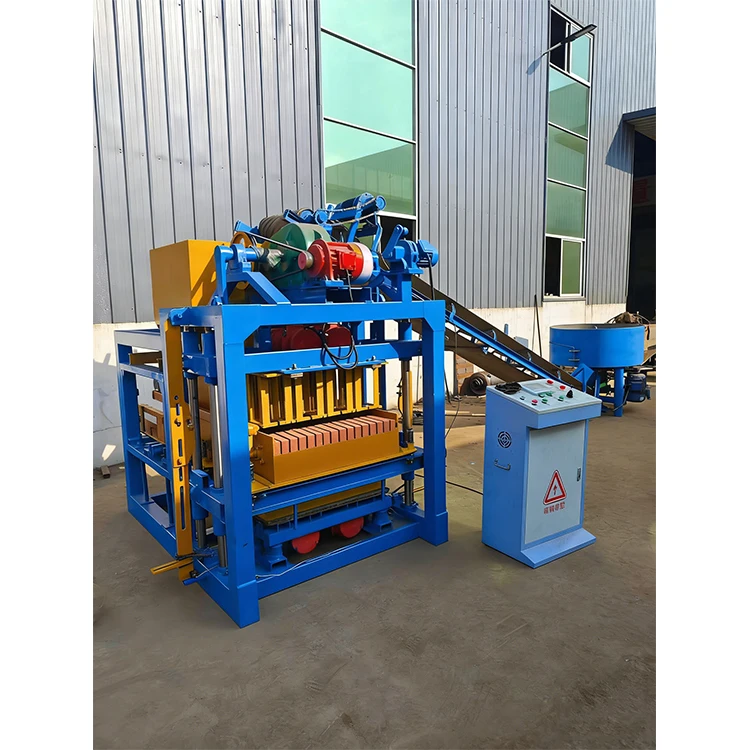
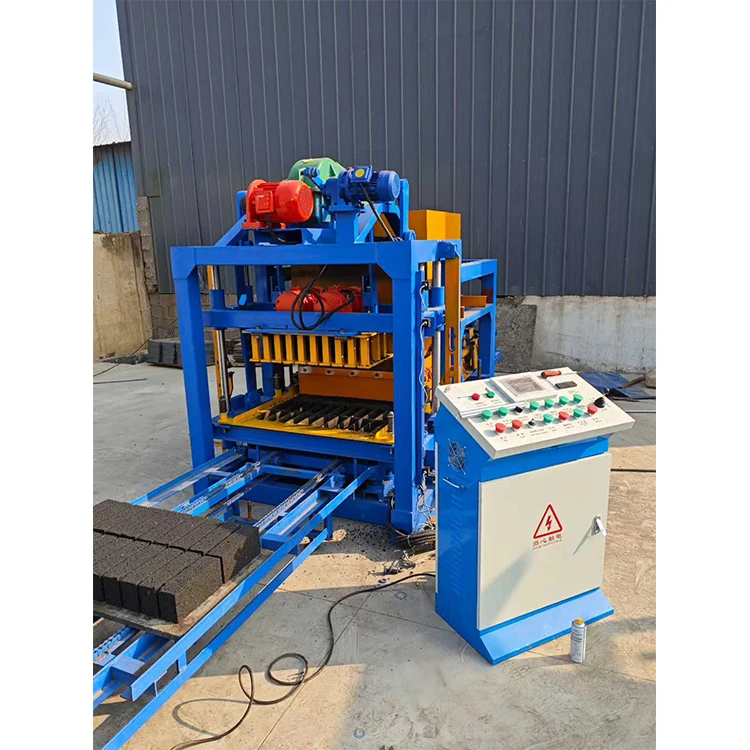
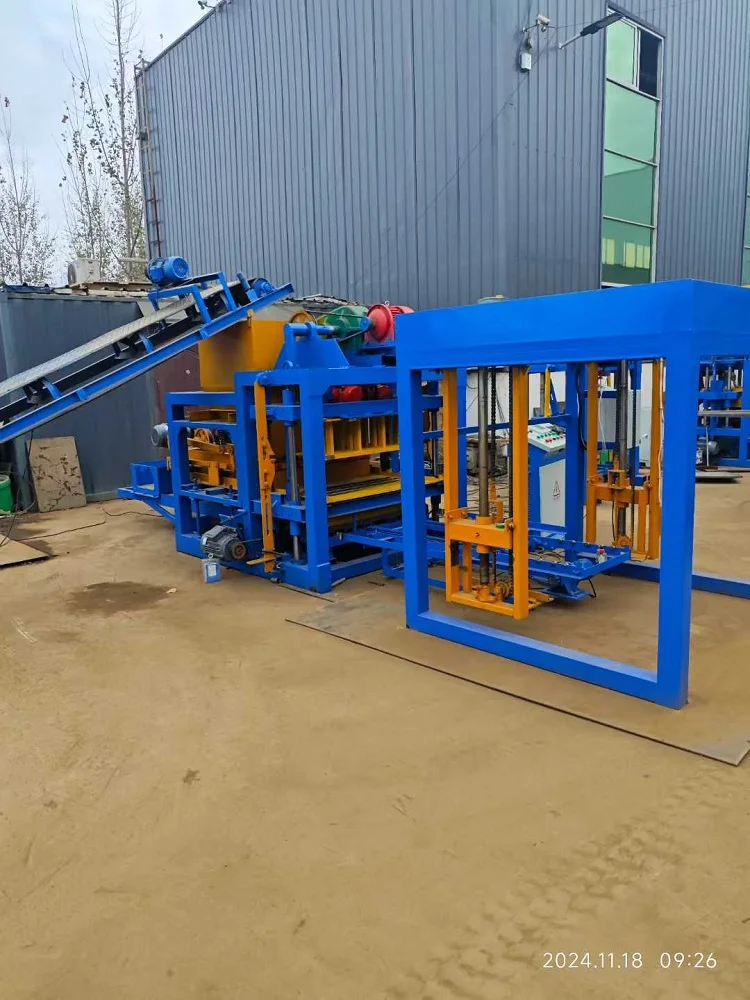
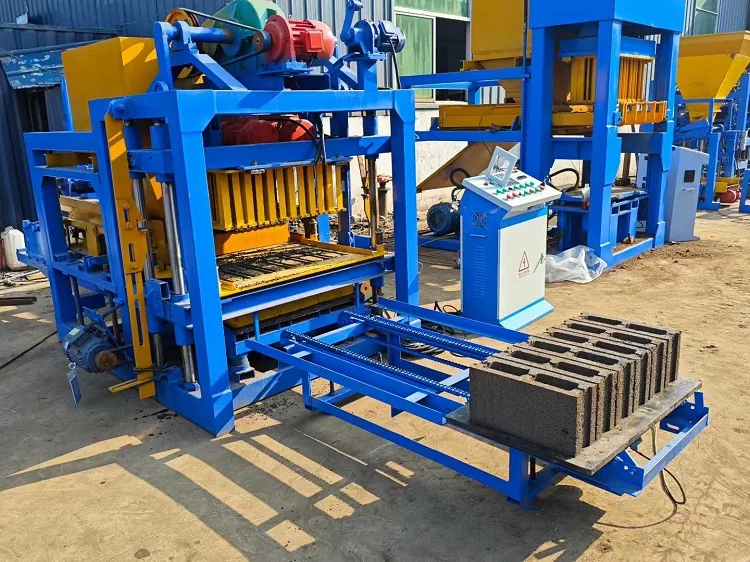
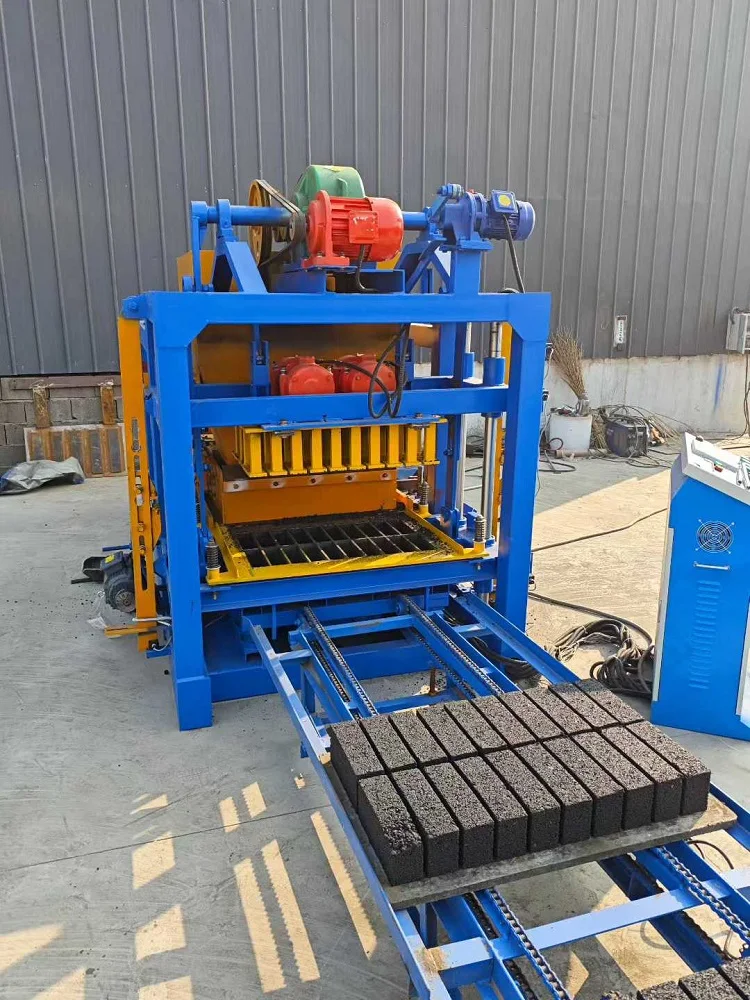
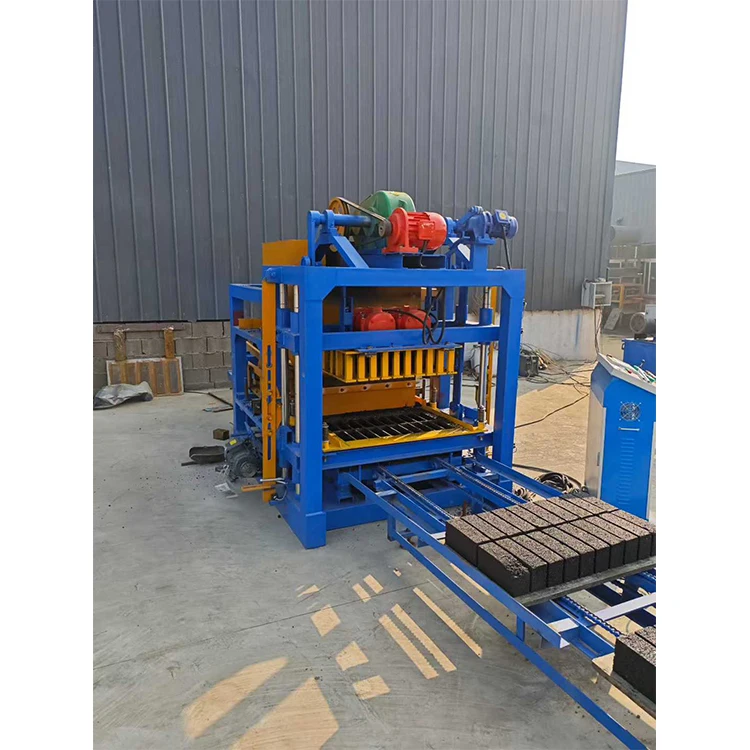
Description
Pallet-Format Matching — Every 850×480mm pallet layout we quote starts from the block dimensions your market actually buys, not a catalogue default that wastes curing space or limits your product range.
Technical Specifications
| Parameter | Value |
|---|---|
| Model | QT4-25 |
| Product Type | Automatic Hollow Block Making Machine |
| Molding Cycle | 25 seconds (basis to be confirmed per block format) |
| Output Capacity | 4600 pcs/8 hours (basis not stated in source — confirm block format, material, and thickness) |
| Pallet Size | 850×480mm |
| Vibration System | Vibration motor with single large vibration box |
| Control System | PLC controlled fully automatic |
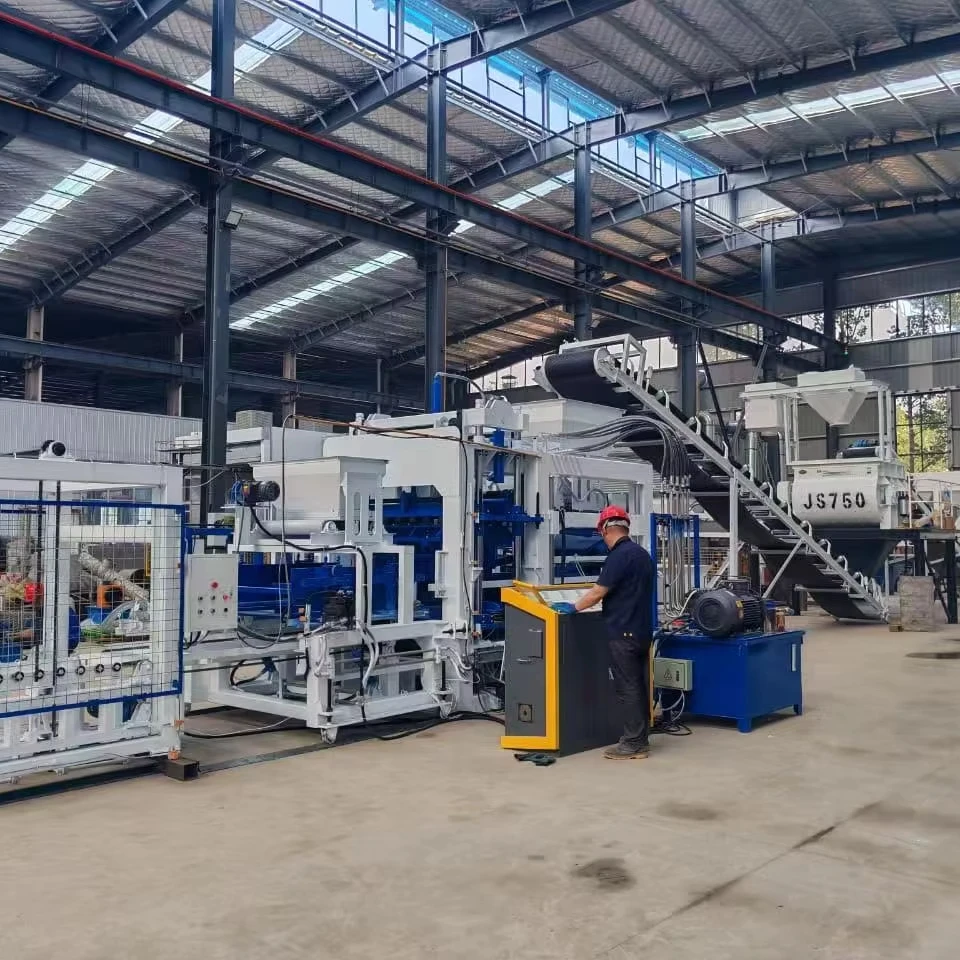
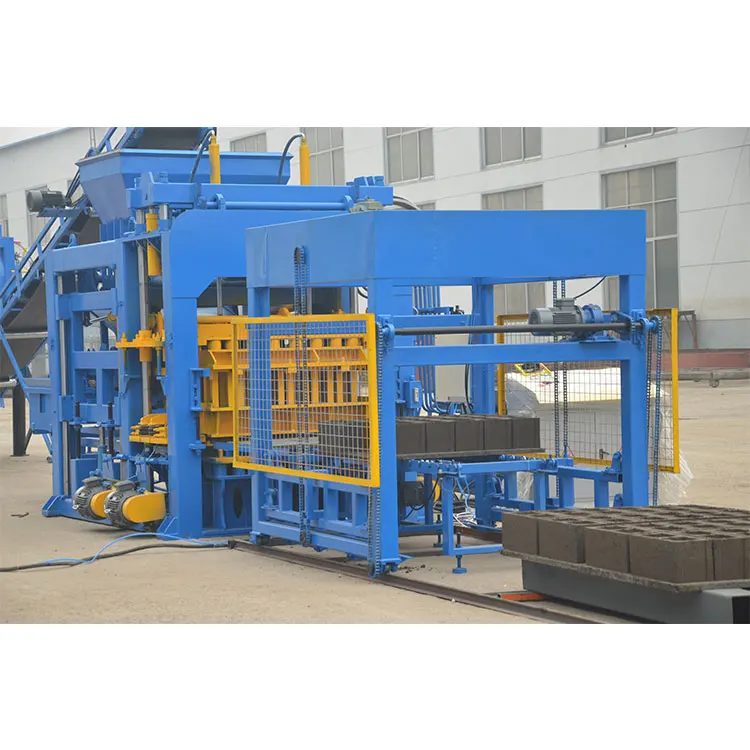
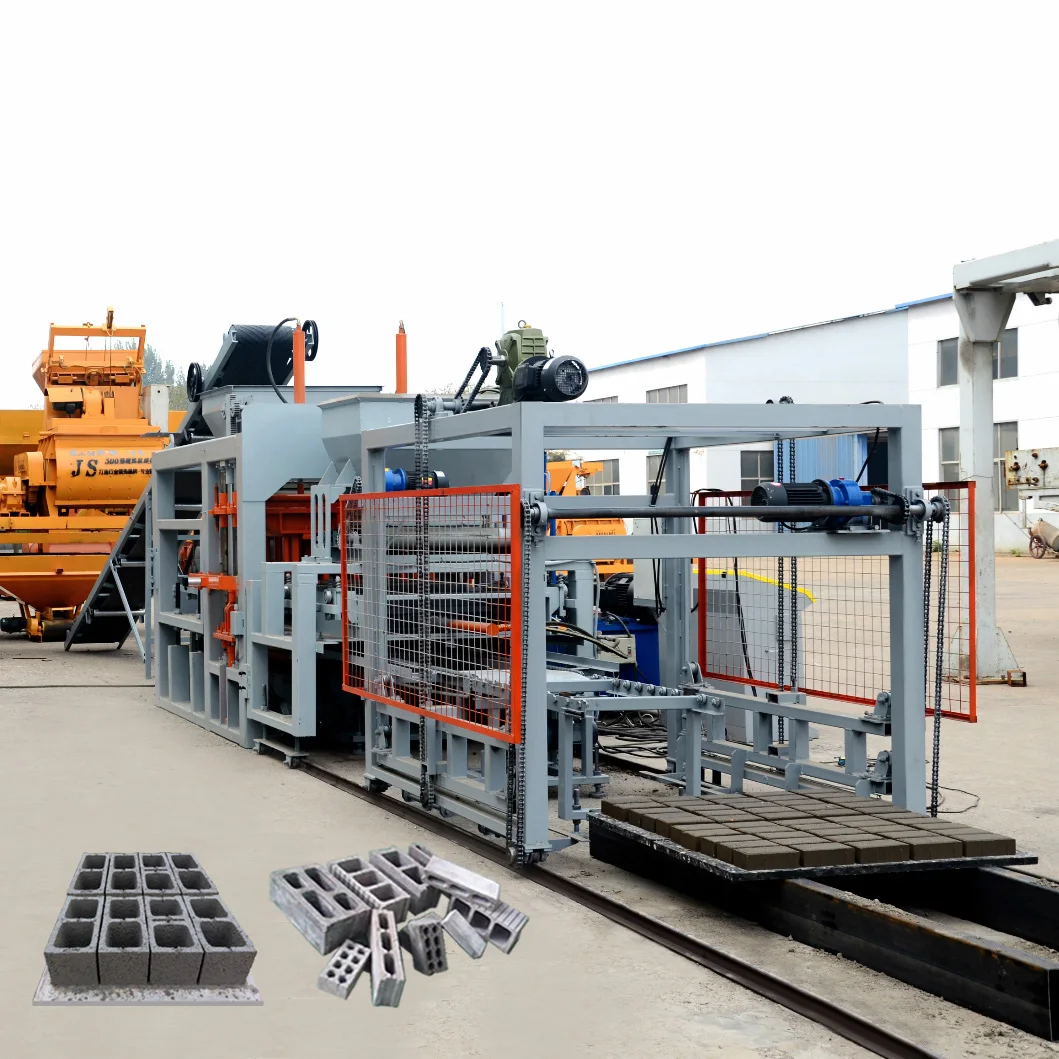
| Automation Features | Automatic pallet feeding, automatic material feeding and scraping, automatic block stacker |
| Rated Power | 16.58 kW |
| Motor | Siemens motor |
| Overall Dimensions | 6400×1500×2700mm |
| Net Weight | 5000 KGS |
| Frame Construction | Thick steel |
| Voltage & Frequency | Configurable to local supply (to be confirmed before production) |
| Raw Materials | Concrete, sand, cement, fly ash, crushed stone, lime, water |
| Warranty | One year with free parts supply |
Application Suitability
| Application | Material or Output |
|---|---|
| Hollow block production for residential and commercial walls | Crushed stone, cement, sand, fly ash blends |
| Solid brick manufacturing for load-bearing structures | Cement and fine aggregate mixes |
| Paver stone production for walkways and driveways | High-density concrete with colour oxide additives |
| Interlocking block runs for retaining walls | Coarse aggregate and cement at controlled moisture |
| Medium-volume block plant operations | Daily production across multiple format changes |
Why the QT4-25 Block Machine Specifications Matter More Than a Headline Capacity Figure
The cycle time you see on paper only holds true for one specific block format.
When a brochure quotes 4600 pieces per shift without naming the block, the pallet layout, or the mix moisture, that number becomes meaningless the moment your operator loads a different mould. Hollow blocks cure and release differently from solid bricks, and paver stones need a longer vibration phase to reach surface density. I have watched plants in Johor and Surabaya receive machines set up for one format and spend weeks re-tuning cycles before they could produce the block their customers actually order. The QT4-25 block machine specifications must be locked to your target product before the machine leaves the factory. [NEED_CITE: relationship between vibration duration and block compressive strength by format]
Mould and Pallet Alignment for the QT4-25
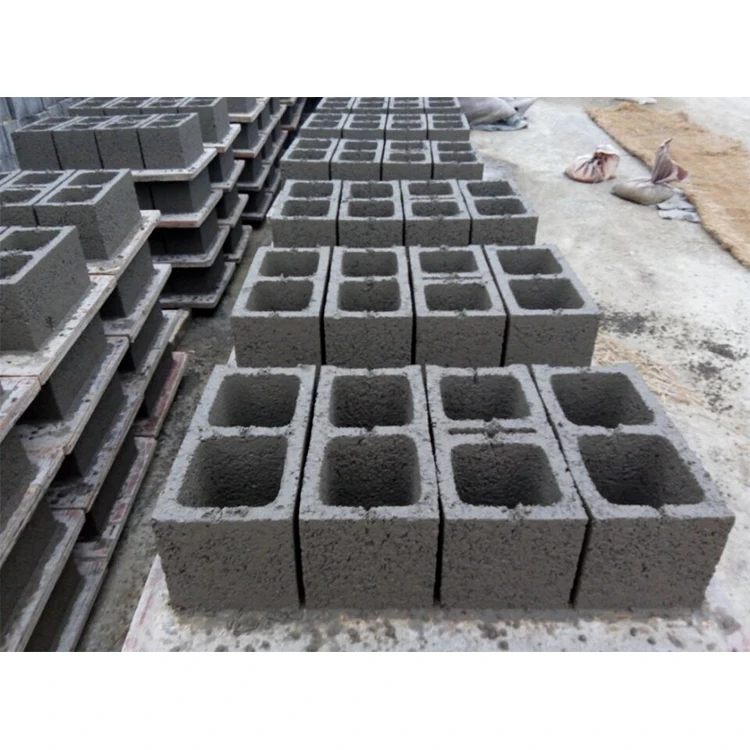
The 850×480mm pallet governs every block format the QT4-25 can produce. A 400×200×200mm hollow block fits four cavities across that pallet, but switching to a 230×115×75mm solid brick changes the cavity count entirely and therefore the per-cycle output. Selecting the mould set starts from your pallet, not from a generic mould catalogue, so that every cycle the QT4-25 completes actually fills the pallet with the block dimensions your distributors stock.
Vibration Tuning Without Hydraulic Pressure
The QT4-25 uses a vibration motor paired with a large vibration box rather than a hydraulic press system. This design suits mixes where the aggregate is angular and well-graded, letting vibration energy travel through the particle matrix to compact the block. If your local sand is fine and rounded, the vibration profile must be adjusted at commissioning or the block walls will crack during demoulding. We set the vibration amplitude and duration against your actual mix sample before final acceptance. [NEED_CITE: vibration compaction behaviour in fine versus coarse aggregate block mixes]
Reading the Specs That Affect Daily Output
The 25-second moulding cycle quoted for the QT4-25 is a starting point. Hollow blocks with two or three cores clear the mould faster because less material must be compacted, while solid bricks and dense paver stones need a longer vibration hold to reach target density. The 16.58 kW rated power covers the vibration motor, material feed drive, and pallet conveyor running simultaneously — undersizing the site transformer below this rating causes voltage sag that trips the PLC mid-cycle. The 6400×1500×2700mm footprint defines the curing conveyor length; if your existing building has a low ceiling, the automatic block stacker may need a shortened mast option. Thick steel frame construction keeps the vibration energy directed into the mould rather than dissipating through flex, which matters when the machine runs eight-hour shifts on abrasive aggregate. Siemens motors are specified because replacement parts are available through regional distributors across Southeast Asia, reducing the wait for a spare. The PLC control language must match your operator’s working language — we confirm this at order, not at commissioning, because re-flashing firmware on site delays production by days.
What Happens When Format and Cycle Time Are Never Matched
Plants that accept a single cycle time for every mould in the set end up with hollow blocks that are under-compacted on the face or paver stones that chip at the edges during stacking. Operators compensate by slowing the line manually, which erases the automation advantage the automatic pallet feeding and stacker were meant to deliver. In my time sourcing equipment for a block plant in Penang, I saw a rival supplier ship a machine with one fixed cycle — the buyer spent three months adjusting feed ratios by hand to keep the blocks from crumbling. [NEED_CITE: block face cracking caused by mismatched vibration time and mould cavity depth]
Why Buyers Choose This Supply Route for the QT4-25
Every configuration starts from the block format your market sells, so the mould drawing and pallet layout arrive together rather than as afterthoughts. Voltage, frequency, and PLC display language are confirmed in writing before steel is cut, eliminating the dead-on-arrival control boards I used to see when procurement skipped that step. The machine, mould, pallet, and handling stations are specified as one system, so the pallet conveyor height matches the curing racks you already own. Automation level is selectable — you can begin with the automatic block stacker and add a cubing module later without replacing the press. Mould design covers the formats you need, including custom drawings if your market runs a non-standard kerbstone or interlocking profile. Factory testing runs your actual mix sample through every cavity so the test record reflects your production reality, not a generic cement slurry.
Documentation & Verification
- Line layout drawing showing pallet flow and curing rack positions for the 850×480mm size
- Capacity calculation sheet stating the exact block format behind the shift output figure
- Mould drawing set with cavity count per format for your pallet dimensions
- Voltage, frequency, and PLC language confirmation record signed before production
- Factory test report run on your specified mix design and target block format
- Packing photographs with crate markings for customs and container loading
Installation, Commissioning & Support
- Foundation plan matching the 6400×1500×2700mm footprint and vibration load path
- Electrical single-line diagram sized for the 16.58 kW draw plus site transformer margin
- Vibration amplitude set against your local aggregate sample during commissioning
- PLC parameter tuning per block format with cycle times recorded in the operator manual
- Siemens motor spare part list cross-referenced to regional distributor stock codes
- Mould change procedure timed on site so format swaps fit within one shift
What We Need Before Quoting the QT4-25
Send the block format dimensions and wall thickness you produce most often, along with the daily output target for that specific format. Include your site voltage, frequency, and the language your operators read on a control screen. If you already run a curing area with fixed rack spacing, share those dimensions so the pallet conveyor and stacker are configured to fit.
Frequently Asked Questions
Q: How is the 4600 pcs/8 hrs capacity calculated, and which block format does it assume?
A: That figure is a source value that does not state the block format, mix design, or pallet cavity count behind it. Real output changes with every mould swap because a hollow block, a solid brick, and a paver stone each need different vibration durations and feed volumes. We calculate shift capacity per format once your target dimensions and mix are confirmed.
Q: What block formats fit the 850×480mm pallet on the QT4-25?
A: The pallet accepts hollow blocks, solid bricks, pavers, and interlocking profiles, but the cavity count per cycle depends on each block’s footprint. A 400×200mm hollow block fills the pallet with fewer cavities than a 230×115mm solid brick. We provide a mould format list showing exact cavity counts for every block you plan to produce.
Q: How does cycle time differ between hollow block, solid block, and paver formats?
A: Hollow blocks typically release faster because fewer material layers need full compaction. Solid bricks require a longer vibration hold to achieve uniform density through the full thickness. Paver stones need the longest cycle to reach surface finish quality. Each format’s cycle time is set and recorded during commissioning.
Q: Is the vibration system on the QT4-25 suited to my local aggregate?
A: The vibration motor and box system works well with angular, well-graded aggregates. Fine or rounded sand may require amplitude and duration adjustment to prevent face cracking. We run your actual mix sample during factory testing to confirm the vibration profile before shipment.
Q: Can the mould be changed within one shift?
A: Mould change time depends on the bolt pattern and alignment system fitted to your machine. We time the swap during on-site commissioning and record the procedure so your crew can repeat it without losing a full shift to format changeover.