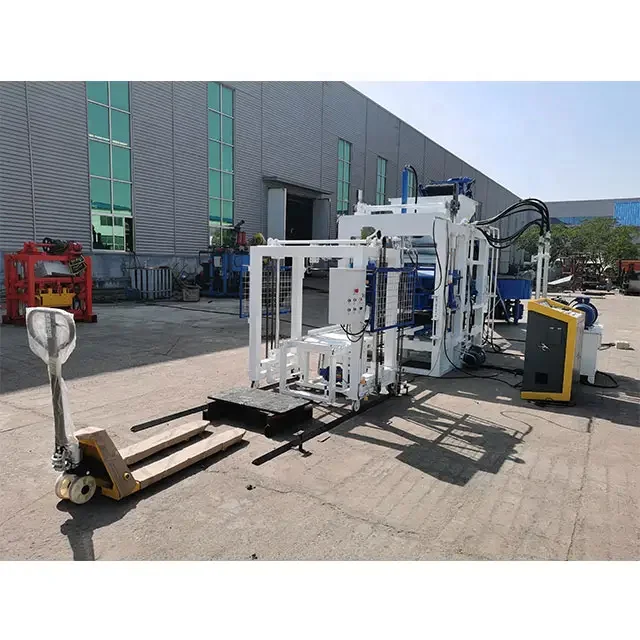
Description
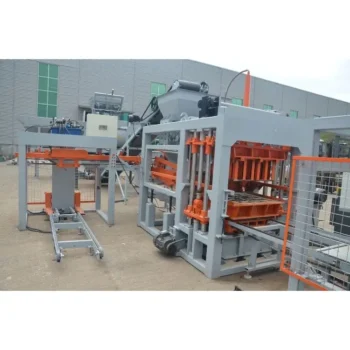
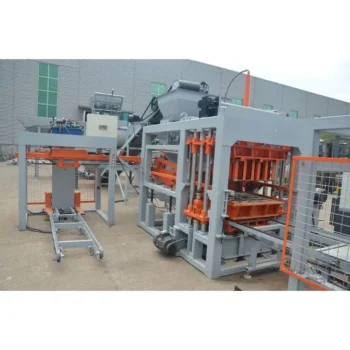
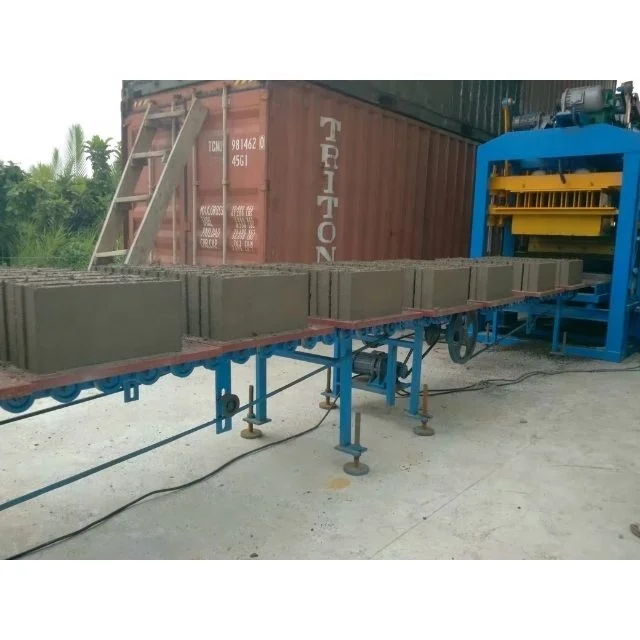
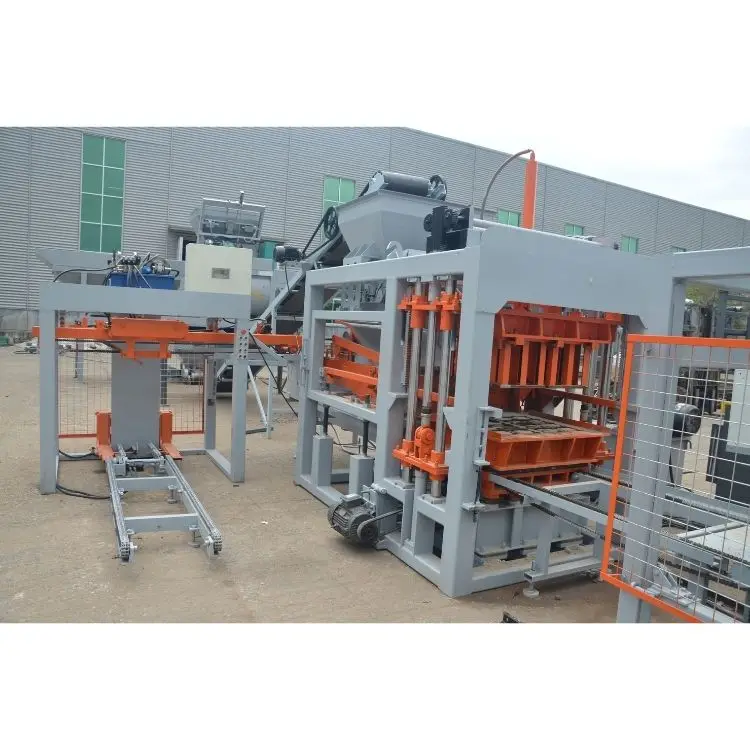
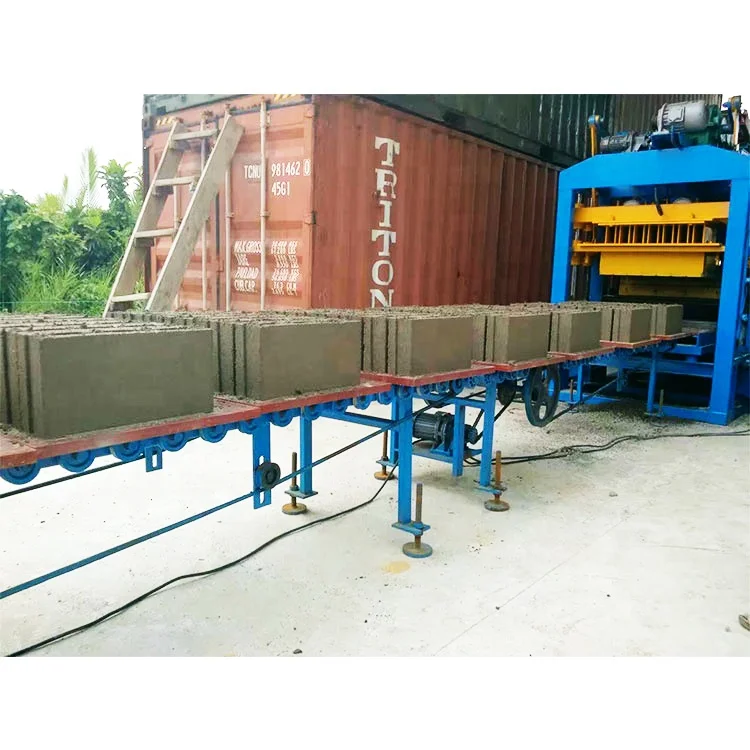
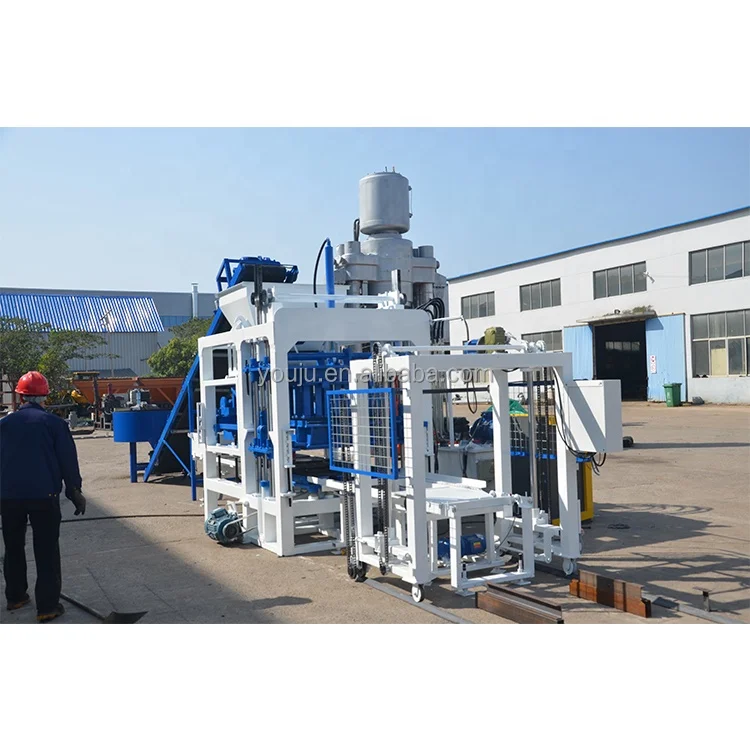
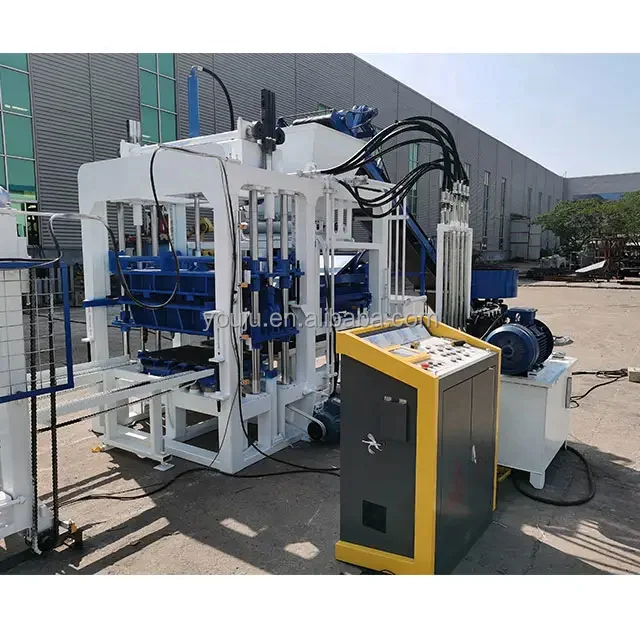
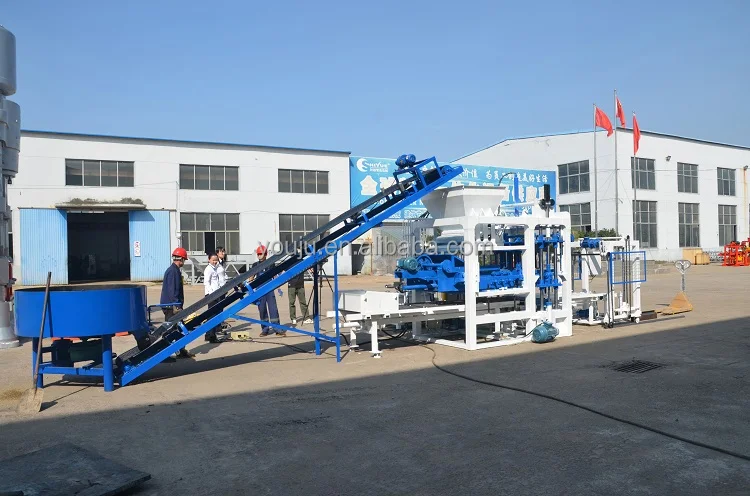
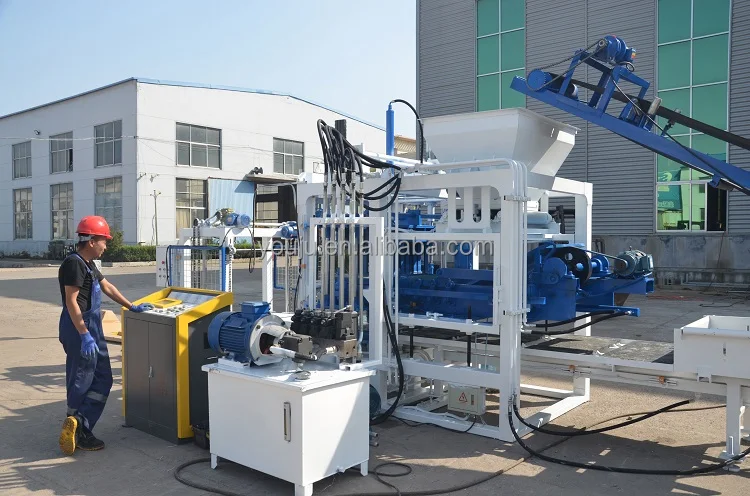
Matched System Specification — The QT4-18 automatic concrete block machine is configured as a complete matched system where vibration force, hydraulic pressure, pallet dimensions, and handling equipment are specified together against your target block format and local aggregate, not pulled from separate catalogue defaults.
Technical Specifications
| Parameter | Value |
|---|---|
| Model | QT4-18 |
| Product Type | Automatic Concrete Hollow Block Making Machine |
| Overall Dimensions | 2500×1750×2200mm |
| Rated Pressure | 16 MPa |
| Vibration Form | Platform Vibration |
| Pallet Size | 950×550mm |
| Molding Cycle | 18–25s (basis to be confirmed by block format and wall thickness) |
| Overall Power | 27.5 kW |
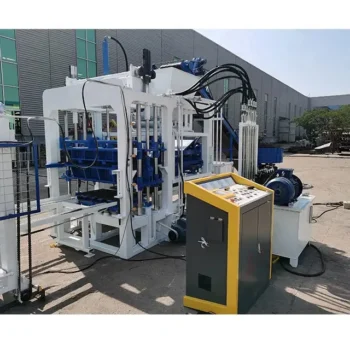
| Control System | PLC control with frequency converter |
| Electrical Components | Schneider brand |
| Lifting System | Double-sided sync gears |
| Feeding System | Distribution belt hopper |
| Material Feeding | Hopper, feeding box, feeding platform and conveyor system |
| Block Receiver | Chassis, transport system and idlers |
| Pallet Loader | Hydraulic cylinder driven |
| Automation Level | Automatic (one-person operation via PLC) |
| Output Capacity | (basis not stated in source — confirm block format, material, and thickness) |
| Supporting Equipment | JQ500 concrete mixer, 8m belt conveyor (6m optional), stacker, block gripper, trolley |
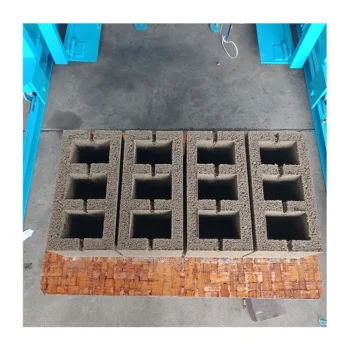
| Mould Format | Hollow mould included; additional moulds customizable |
| Mould Change | Manual bolt removal and replacement |
Application Suitability
| Application | Material or Output |
|---|---|
| Hollow block production | Crushed stone, sand, cement, and water mix for structural wall blocks |
| Solid block production | Dense aggregate mix for load-bearing and foundation blocks |
| Paving block production | Fine aggregate and pigment mix for interlocking or rectangular pavers (with appropriate mould) |
| On-site contractor production | Local aggregate and cement for project-specific block formats |
| Building material manufacturing | Multiple format runs using interchangeable moulds on a single press |
What "18–25 Seconds per Cycle" Actually Means for Your Daily Output
Cycle time is only meaningful when tied to the exact block format, wall thickness, and mix design you intend to run.
Many quotations list a single molding cycle without specifying which block format that number assumes. A QT4-18 Automatic Concrete Block Machine specifications sheet showing 18–25 seconds could mean 18 seconds for a thin paving block or 25 seconds for a 200mm-thick hollow block with high-density requirements. [NEED_CITE: relationship between block wall thickness and vibration duration in hydraulic press forming] If your local sand has high clay content, the material flows slower into the mould cavity, extending the cycle further and reducing realistic daily output well below what the brochure promises. I learned this the hard way when a Tunisian buyer’s line ran at nearly half the quoted speed until we adjusted vibration frequency and feeding parameters on-site to match his aggregate.
Matching Vibration Force to Your Block Format and Mix
The QT4-18 uses platform vibration paired with 16 MPa hydraulic pressure to compact concrete into the mould cavity. This combination determines the density and compressive strength of every block that leaves the press. When the vibration force is too low for a given mix, the material does not fully settle into the mould corners, producing blocks with weak edges and inconsistent dimensions. When the force is too high for a lightweight aggregate blend, the mix segregates and the finished block surface shows void patterns. The frequency converter in the PLC control allows operators to adjust vibration intensity across the 18–25 second cycle window, giving the machine flexibility across different automatic concrete block machine specifications requirements without hardware changes.
Pallet Size Determines Your Entire Curing Layout
The 950×550mm pallet is the physical interface between the press and your curing area. Every pallet loaded, pressed, and transported must fit your existing forklift tines, curing rack spacing, and stacking height limits. [NEED_CITE: standard pallet handling practices in concrete block curing yards] A pallet chosen without checking these downstream dimensions means buying new forklifts or rebuilding curing racks after the machine arrives. The hydraulic cylinder-driven pallet loader on this model feeds pallets at a rate matched to the press cycle, so the operator does not manually insert each board — but the pallet material itself must withstand repeated vibration and hydraulic compression without warping or delaminating over thousands of cycles.
Reading the Specification Sheet Beyond the Headline Numbers
Three parameters on this machine deserve close attention when evaluating automatic concrete block machine specifications for a real production line. The 27.5 kW overall power draw tells you the electrical supply must handle sustained motor load plus peak draw during simultaneous vibration and hydraulic press strokes. The double-sided sync gear lifting system ensures the mould box rises evenly on both sides, preventing uneven block ejection that causes corner damage on freshly pressed units. The distribution belt hopper feeding system controls how raw material enters the mould cavity — uneven feeding creates density variations across a single block, with one side testing stronger than the other. Schneider electrical components mean replacement contactors and relays are sourceable in most industrial markets without waiting for proprietary parts shipment.
The Cost of Skipping the Material Sample Step
When a block machine is configured against catalogue defaults instead of the buyer’s actual aggregate sample, the consequences appear within the first week of production. Blocks crack during curing because the vibration frequency was set for clean river sand while the local supply contains high fines content. Mould wear accelerates because abrasive aggregate particles were not accounted for in the liner material selection. [NEED_CITE: effect of aggregate clay content on concrete block compressive strength] The machine runs, but output quality forces the buyer into costly mix adjustments or material sourcing changes that could have been avoided with a simple sample test before the configuration was locked.
Why This Configuration Approach Works for Format-Specific Buyers
Every machine leaves the factory with the mould matched to the block format the buyer’s market actually sells, not a generic hollow block mould that produces dimensions nobody in the region orders. The capacity calculation document states the exact block format assumed, so there is no guessing whether the quoted output applies to 400×200×200mm hollow blocks or 200×100×60mm pavers. Voltage, frequency, and PLC display language are confirmed before production begins, eliminating the commissioning delay that happens when a control panel arrives in a language the operator cannot read. Mould drawings and format lists are provided upfront so the buyer knows exactly which blocks the machine can produce and how long a changeover takes. [NEED_CITE: importance of voltage and frequency confirmation in industrial machinery export] Supporting equipment — mixer, conveyor, stacker, and gripper — is specified as part of the line, not left as an afterthought the buyer must source separately.
Documentation & Verification
- Line layout with capacity calculation stating the exact block format assumed for output figures
- Machine specification sheet covering pallet size, hydraulic pressure, vibration force, and cycle time per format
- Mould drawing and format list showing producible block dimensions and changeover procedure
- Factory test record demonstrating cycle time with the buyer’s specified block format before dispatch
- Voltage, frequency, and PLC language confirmation sheet signed off prior to shipment
Installation, Commissioning & Support
- Foundation must support 2500×1750mm footprint with level tolerance for platform vibration alignment
- Dedicated 27.5 kW electrical circuit with voltage and frequency matching confirmed pre-shipment
- Machine arrives with bolt-on mould installed; additional moulds shipped in separate protective crating
- PLC frequency converter parameters set during commissioning to match buyer’s mix design and block format
- Operator training covers mould change procedure, pallet loading adjustment, and daily vibration system inspection
- Wear parts list provided with mould liner and hydraulic seal replacement intervals
What We Need to Configure Your Line Correctly
To size the QT4-18 to your production requirements, share the exact block formats your market demands including dimensions and wall thickness, your target daily output per format, and a sample or analysis of the aggregate and sand available locally. Specify your site voltage and frequency, the PLC display language your operators require, and the dimensions of your existing curing area and forklift capacity so the 950×550mm pallet specification can be validated against your downstream handling.
Frequently Asked Questions
Q: What is the realistic daily output for different block formats on the QT4-18?
A: Output depends entirely on the block format, wall thickness, and mix design you run. The 18–25 second molding cycle applies across a range, but a 400×200×200mm hollow block will sit at the longer end while a thinner paving block cycles faster. We provide a capacity calculation document that states the assumed format so you can plan production accurately rather than relying on a single unqualified number.
Q: How does the 950×550mm pallet size affect my curing area and forklift setup?
A: The pallet must fit your existing curing rack spacing, stacking height, and forklift tine width. If your current infrastructure was built around a different pallet dimension, you may need to adjust rack spacing or handling equipment before the machine arrives. We confirm pallet compatibility during the configuration stage to prevent costly post-delivery modifications.
Q: What mould formats come with the machine and how long does a changeover take?
A: A hollow block mould is included with the QT4-18, and additional moulds can be customized to your required block dimensions. The changeover involves manual bolt removal and replacement, which is documented in the operation manual. Knowing the changeover time helps you plan format rotation across your production schedule without unexpected downtime.
Q: How is vibration force matched to my local aggregate and block strength requirement?
A: The platform vibration system and 16 MPa hydraulic pressure work together to compact your specific mix into the mould. The PLC frequency converter allows vibration intensity adjustment during commissioning. We test the machine with your aggregate sample or mix data before shipment to ensure the finished block meets your target compressive strength.
Q: What voltage configurations and PLC language options are available?
A: Voltage and frequency are configured to match your site electrical supply, and the PLC display language is set to your operator’s requirement before the machine ships. Both are confirmed in writing during the order process so there are no commissioning delays caused by mismatched electrical standards or unreadable control interfaces.