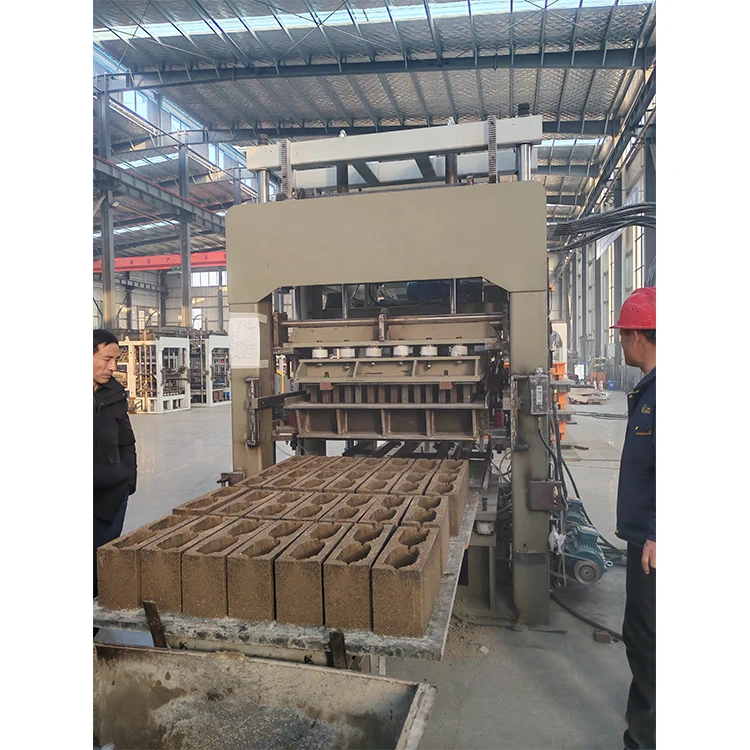
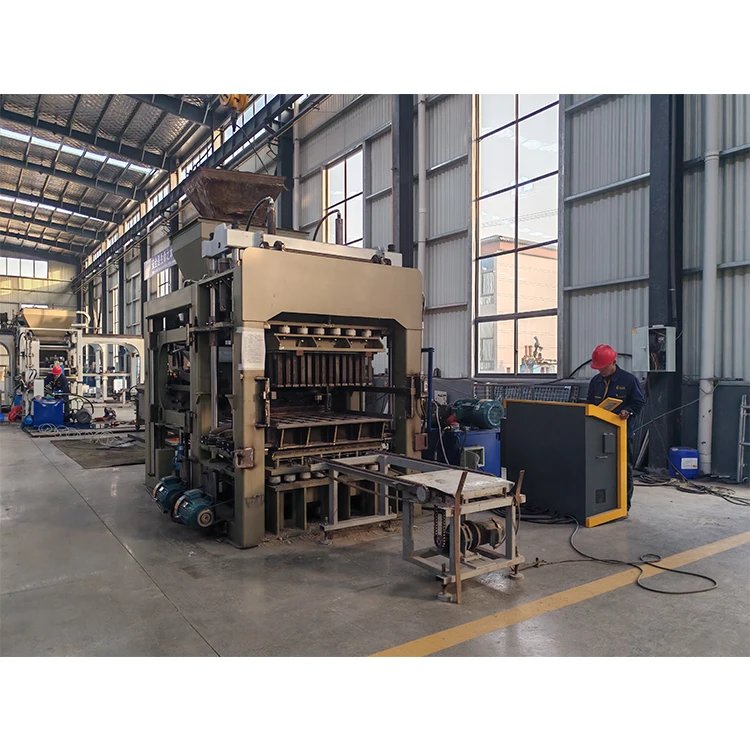
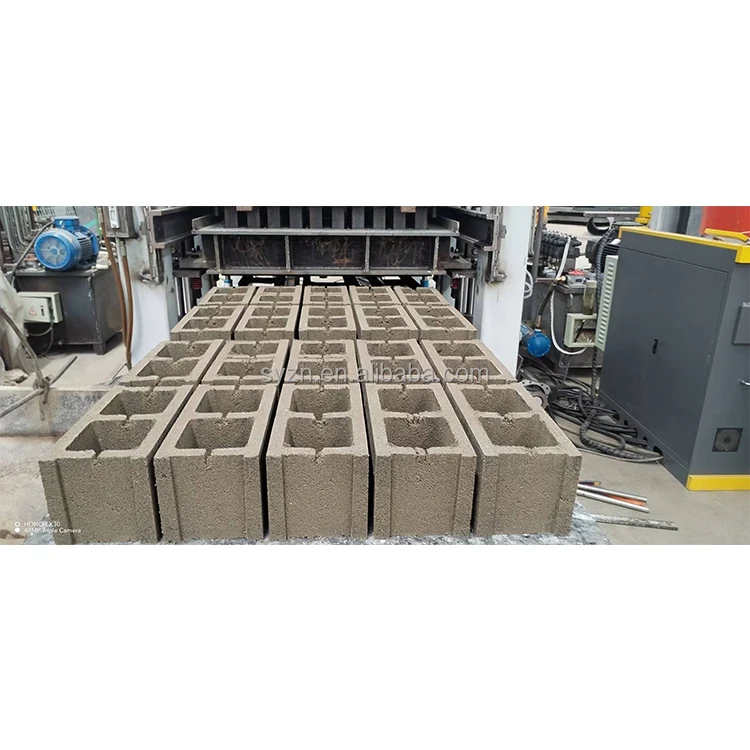
Description
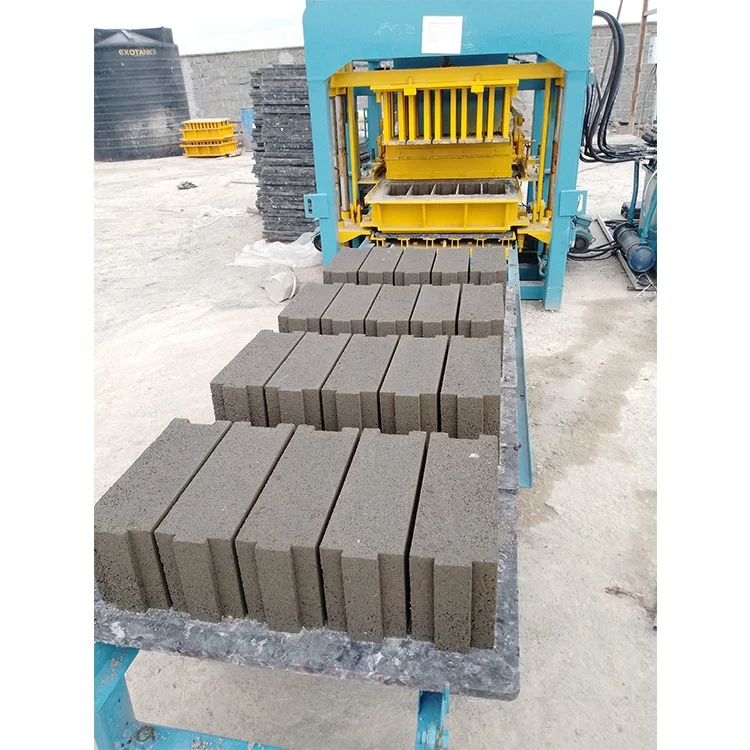
Mould-to-Block Traceability — Every QT10-15 quotation names the exact block format, cavity count, and cycle time assumed in the output calculation, not a generic cycles-per-hour headline figure.
Technical Specifications
| Parameter | Value |
|---|---|
| Model | QT10-15 |
| Product Type | Automatic Cement Block Making Machine |
| Control System | PLC control cabinet |
| Hydraulic System | Independent integrated hydraulic station |
| Vibration Mode | Vertical station mode resonance, automatic FM-AM |
| Mould Change | Simple replacement for multi-format production |
| Hollow Block 400×200×200mm Output | 1800–2400 pcs/hour (basis: 15–20s cycle, 10 pcs/mould) |
| Hollow Block 400×150×200mm Output | 2160–2880 pcs/hour (basis: 15–20s cycle, 12 pcs/mould) |
| Solid Brick 240×115×53mm Output | 8928–11160 pcs/hour (basis: 15–20s cycle, 62 pcs/mould) |
| Paving Block 200×100×60mm Output | 5184–6480 pcs/hour (basis: 20–25s cycle, 27 pcs/mould) |
| Paving Block 225×112.5×60mm Output | 4032–5040 pcs/hour (basis: 20–25s cycle, 24 pcs/mould) |
| Molding Cycle (Hollow Blocks) | 15–20s |
| Molding Cycle (Paving Blocks) | 20–25s |
| Automation Level | Automatic |
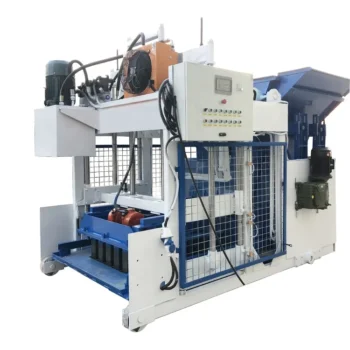
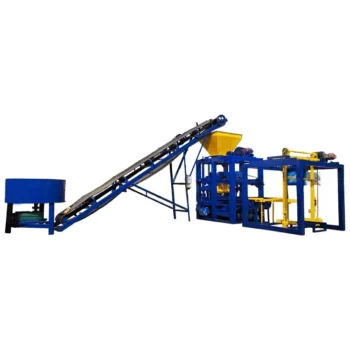
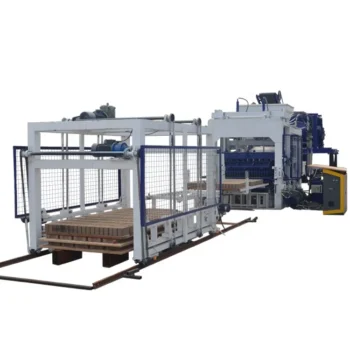
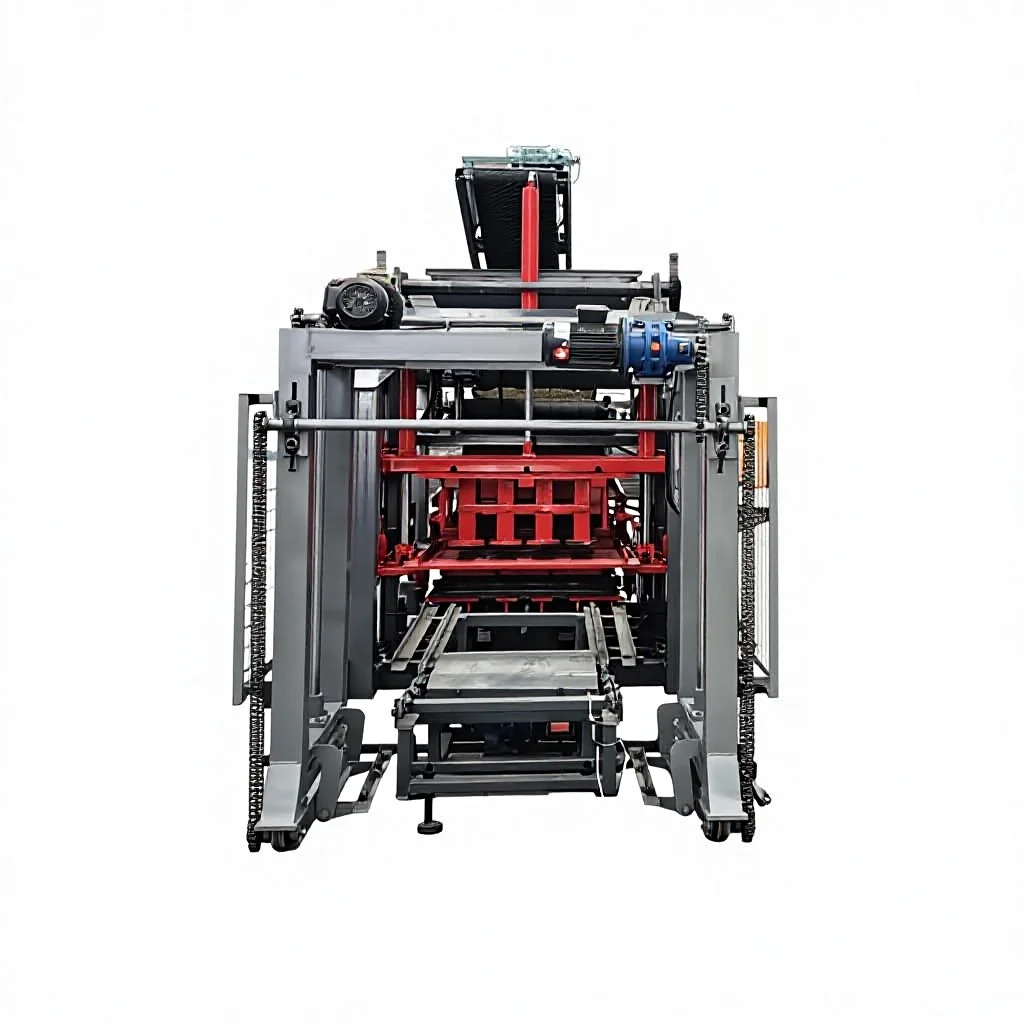
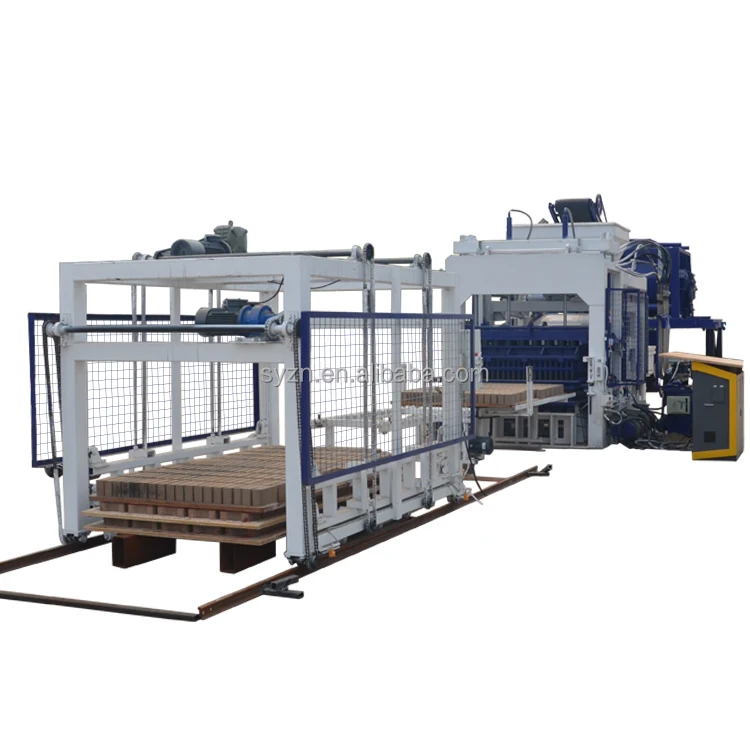
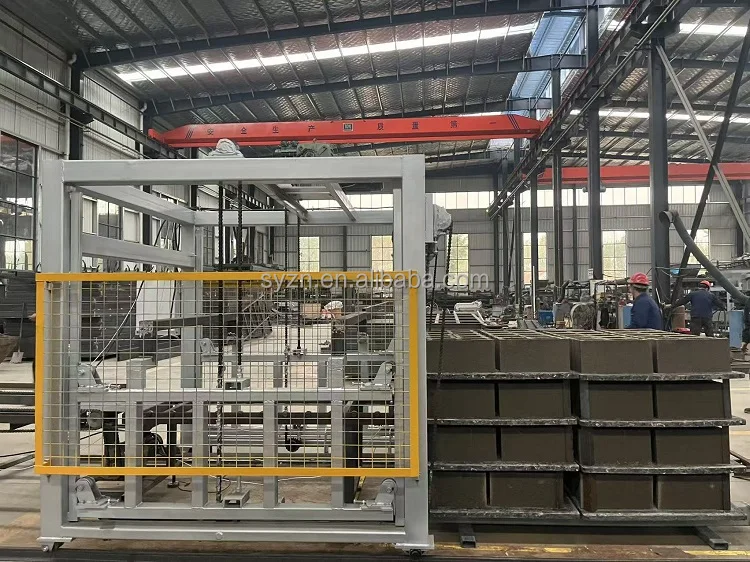
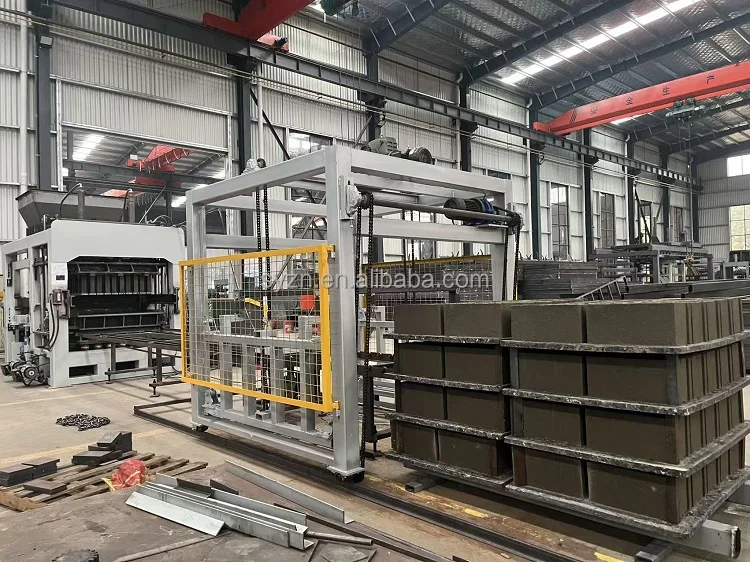
| Line Components | Pallet feed machine, block making machine, storage hopper, conveyor, hydraulic unit, PLC control cabinet |
| Warranty | 1 year for whole machine (excluding spare parts) |
| CE Conformity | Documentation available upon request |
| Rated Power (kW) | (source value — verify against manufacturer catalog) |
| Overall Dimensions (L×W×H) | (source value — verify against manufacturer catalog) |
| Net Weight | (source value — verify against manufacturer catalog) |
| Pallet Size | (source value — verify against manufacturer catalog) |
| Vibration Force (kN) | (source value — verify against manufacturer catalog) |
| Hydraulic Pressure (MPa) | (source value — verify against manufacturer catalog) |
| Voltage & Frequency | (source value — verify against manufacturer catalog) |
Application Suitability
| Application | Material or Output |
|---|---|
| Hollow block production | Crushed stone, cement, sand aggregate — 400×200×200mm and 400×150×200mm formats |
| Multi-cellular brick production | Lightweight aggregate or fly ash mix — smaller cavity formats |
| Paving brick production | Dense aggregate with pigment layers — 200×100×60mm and 225×112.5×60mm |
| Standard solid brick production | Cement-sand blend — 240×115×53mm high-cavity-count mould |
| On-site contractor production | Local aggregate sourced near project location |
| Format expansion for existing plants | Multiple block types on one press through mould replacement |
Why "Pieces per Hour" Without a Block Format Is Meaningless
Capacity only matters when tied to the exact mould, cycle time, and block dimensions your market actually buys.
Most automatic cement block making machine specifications quote a single throughput number that assumes an idealised block format — often the smallest, fastest-running product in the catalogue. When the buyer’s real production target is a 400×200×200mm hollow block, the actual daily volume can fall far short of the quoted headline figure. In one export case, a Middle East contractor received a block machine rated for a generic cycle count, only to discover his local high-clay aggregate required longer vibration exposure per cycle, dropping realistic output well below the brochure claim. The entire first batch was scrapped due to insufficient green strength [NEED_CITE: aggregate clay content effect on vibration cycle and block strength]. The QT10-15 is configured differently: every output figure above names the specific block size, pieces per mould, and molding cycle so you can calculate daily throughput against your actual product mix.
Matching Machine to Block Format
The QT10-15 operates across hollow blocks, solid bricks, and paving blocks through simple mould replacement. Each format carries its own verified molding cycle — hollow blocks run at 15–20 seconds while paving blocks require 20–25 seconds due to denser compaction. A technical buyer can use this automatic cement block making machine to plan a realistic shift output for the format that generates revenue, rather than sizing a plant around a theoretical peak number that only applies to the fastest-running product.
Mould Selection and Changeover
Mould availability determines how many formats you can sell from a single press. The QT10-15 supports simple mould replacement for multi-format production, meaning a plant can run hollow blocks during the morning shift and switch to paving blocks in the afternoon if the local market demands both. Mould drawings and format lists are confirmed before production, so there is no surprise when the machine arrives and the cavity count does not match the block dimensions your distributors expect [NEED_CITE: block mould cavity count and market format alignment].
Reading the Specs That Actually Matter
Vibration mode on the QT10-15 uses vertical station mode resonance with automatic FM-AM tuning, which adjusts frequency and amplitude to the density of the mix rather than running a fixed profile. This matters when your local aggregate varies in particle size and moisture content between deliveries. The independent integrated hydraulic station sits isolated from host vibration and dust, maintaining consistent pressure delivery across continuous shifts. Hydraulic pressure and vibration force must both be matched to the buyer’s mix design — high cement content requires different compaction energy than a fly-ash-heavy blend. The PLC control cabinet governs the entire cycle sequence, and the control language is confirmed before production so operators are not reading error messages in an unfamiliar script on day one.
What Happens When Configuration Is Skipped
A block machine configured for a mix the buyer cannot source locally forces a costly material substitution after installation. Pallet size chosen without regard to the curing area and forklift the buyer already has means the plant either cannot stack output or must buy new handling equipment. Voltage, frequency, and PLC display language left unconfirmed delay commissioning — transformers and control reprogramming add weeks before the press produces saleable blocks. Moulds and hydraulic wear parts that are unavailable when the first replacement is due can idle a plant for the duration of an international shipment [NEED_CITE: spare parts lead time impact on block plant uptime]. These are not theoretical risks; they repeat across projects where the quotation did not lock down configuration details before production started.
Why Buyers Specify the QT10-15 Here
Block machinery is the single focus of this operation, so the QT10-15 machine, mould, pallet, and handling equipment are specified as one matched system rather than assembled from separate suppliers. Configuration is set against the buyer’s actual mix design, local aggregate, and target block format instead of a catalogue default. Mould design covers the formats the buyer’s market sells, including custom drawings when standard cavity layouts do not match local block dimensions. The automation level is selectable — a buyer can start with semi-automatic pallet handling and plan a future upgrade path. Installation and commissioning support includes operator training on the specific mould set and PLC interface language confirmed in the purchase order [NEED_CITE: operator training impact on block plant first-week output].
Documentation & Verification
- Line layout and capacity calculation naming the exact QT10-15 mould and cycle time per format
- Mould drawing and format list confirming cavity dimensions match your target block
- Voltage, frequency, and PLC display language confirmation locked before production
- Factory test record run with your specified mould, not a generic test block
- Hydraulic and electrical schematic for the QT10-15 configuration as shipped
Installation, Commissioning & Support
- Foundation layout matched to QT10-15 overall dimensions and vibration isolation requirements
- Dedicated electrical circuit sized to the QT10-15 rated power and local voltage standard
- Machine dispatched in dismantled state with container loading plan for the QT10-15 line components
- First-run parameter setting on your mould and aggregate blend during on-site commissioning
- Operator training on the QT10-15 PLC control cabinet in the confirmed display language
- Wear parts and mould replacement list supplied with the QT10-15 shipment for first-cycle spares planning
What to Include in Your Inquiry
To size the QT10-15 correctly, specify the block formats your market buys, the daily volume you need per format, and the local aggregate type you can source. Confirm the voltage, frequency, and preferred PLC display language for your plant location. If you have an existing curing area, forklift, or upstream mixer, provide those details so the pallet and line components are matched to your site rather than quoted as a standalone press.
Frequently Asked Questions
Q: How is the QT10-15 output capacity verified for my specific block format?
A: Every capacity figure is calculated against the exact block dimensions, mould cavity count, and molding cycle for that format. For example, the 400×200×200mm hollow block output of 1800–2400 pcs/hour assumes a 15–20 second cycle with 10 pieces per mould. Your quotation includes a line layout document stating the format assumed so there is no gap between quoted and realistic daily throughput.
Q: What mould formats are available and how long does a mould change take on site?
A: The QT10-15 supports hollow blocks, solid bricks, and paving blocks through simple mould replacement. Available formats include 400×200×200mm, 400×150×200mm hollow blocks, 240×115×53mm solid bricks, and 200×100×60mm or 225×112.5×60mm paving blocks. Custom mould designs can be produced from buyer drawings when standard formats do not match local market requirements.
Q: How do I match vibration force and hydraulic pressure to my local aggregate?
A: Before configuration, you send a sample of your local aggregate and sand for mix testing. Vibration force and hydraulic pressure on the QT10-15 are then set against the density and particle characteristics of your actual material. This prevents the common problem where blocks arrive with insufficient green strength because the machine was configured for a different aggregate profile.
Q: What pallet size does the QT10-15 require, and will it fit my curing area?
A: Pallet size is confirmed during the quotation stage and selected to match both the mould footprint and the buyer’s existing curing rack dimensions and forklift capacity. Providing your curing area layout and handling equipment specifications before production ensures pallets are compatible with your site rather than requiring new infrastructure after arrival.
Q: What voltage, frequency, and PLC language options are confirmed before shipment?
A: The QT10-15 voltage, frequency, and PLC display language are locked in the purchase order and confirmed before production begins. This prevents commissioning delays caused by electrical mismatches or operators unable to read the control interface. The buyer specifies local power standards and preferred language, and the factory test record verifies the configuration before dispatch.