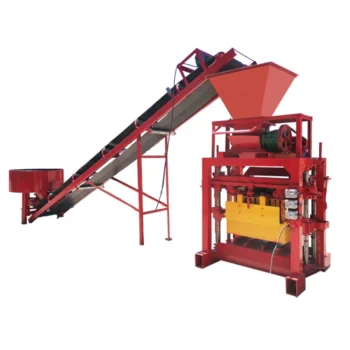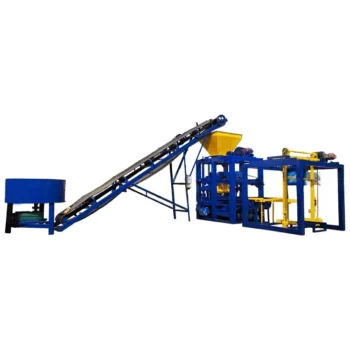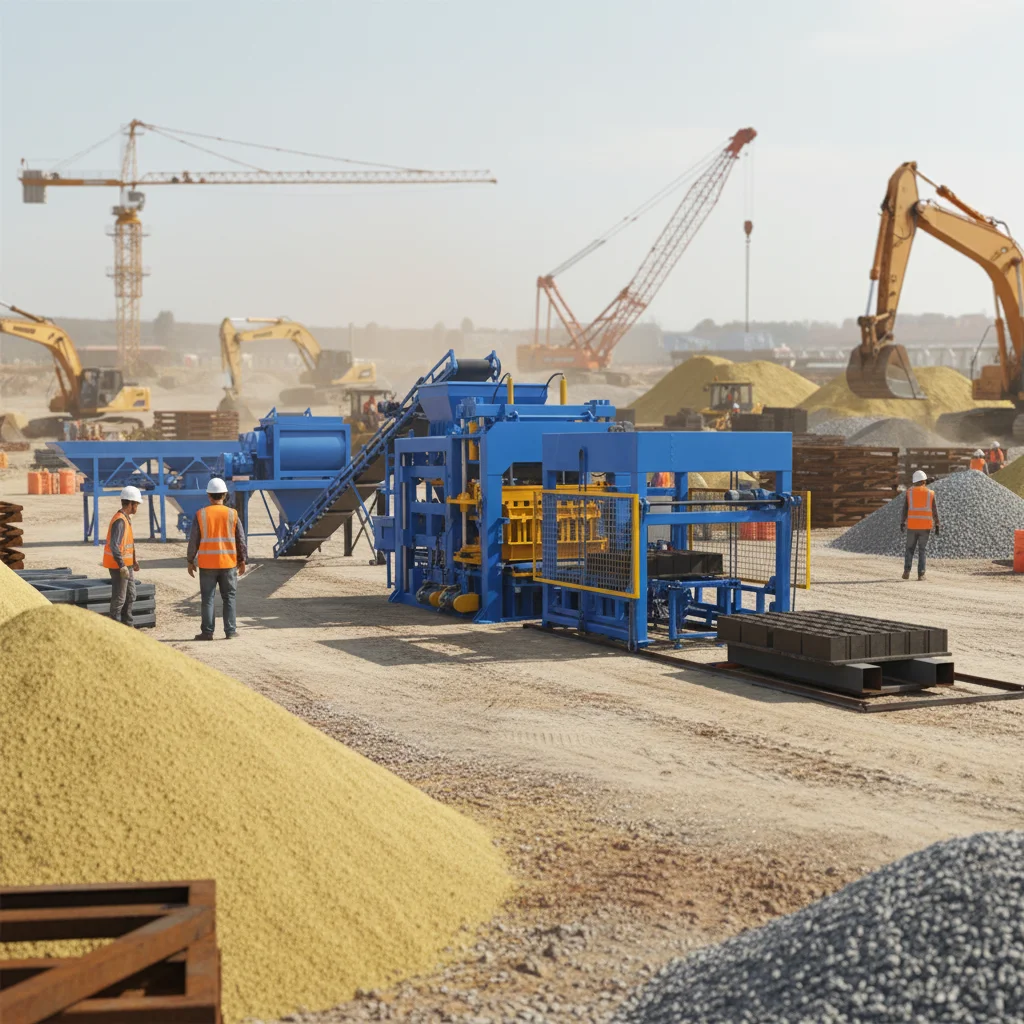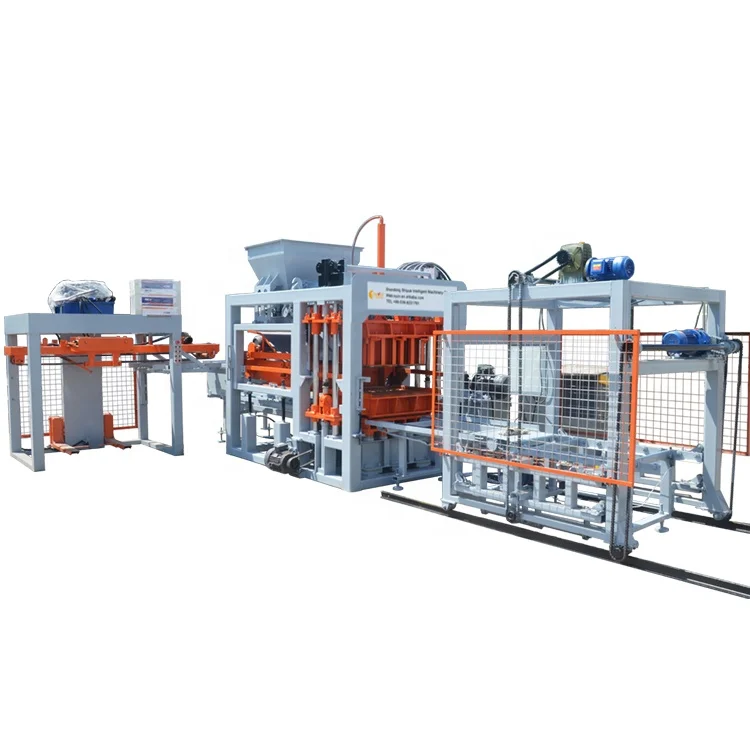



Description
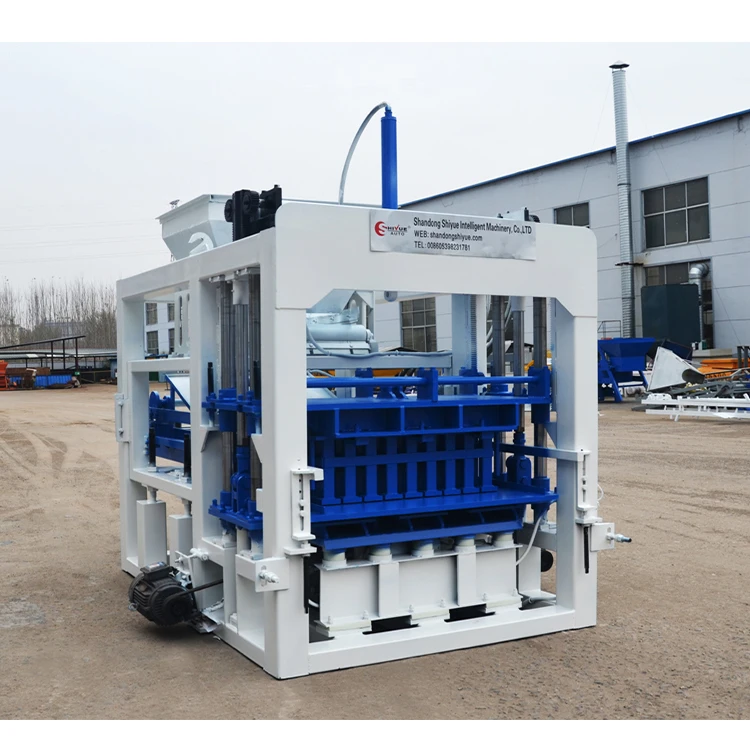
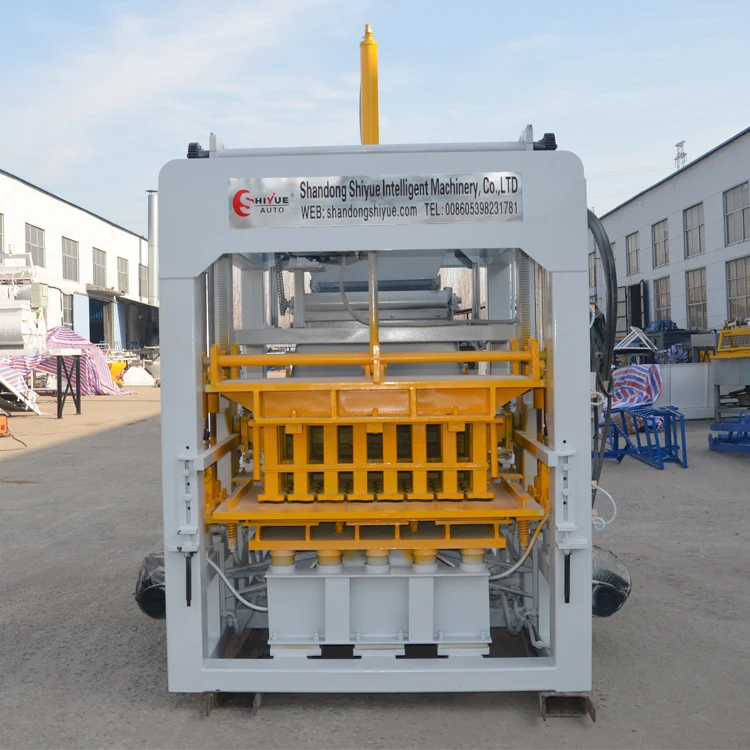
Matched Mould, Pallet and Press — every cavity count, pallet dimension and vibration setting on the QT5-15 is locked to your actual block format before the machine is built, not pulled from a catalogue default.
Technical Specifications
| Parameter | Value |
|---|---|
| Model | QT5-15 |
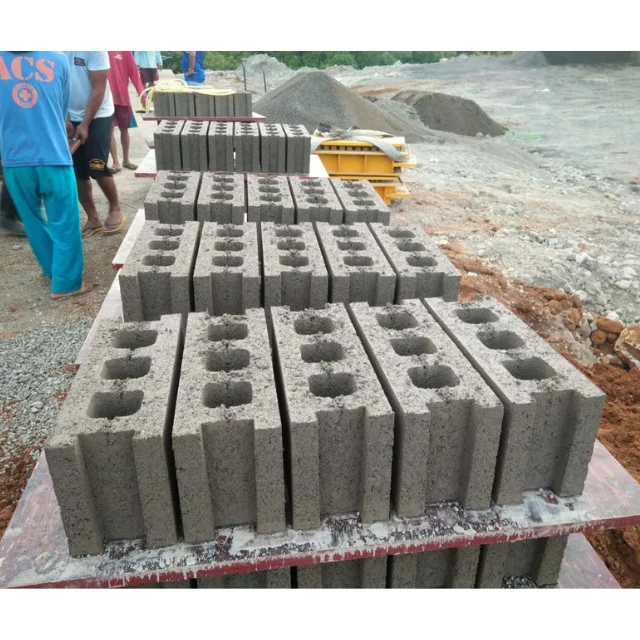
| Product Type | Hollow Block Making Machine |
| Overall Dimensions (L×W×H) | 7400 × 1950 × 2800 mm |
| Pallet Size | 1100 × 550 mm |
| Vibration Force | 80 kN |
| Vibration Frequency | 0–60 Hz |
| Vibration Form | Platform Vibration |
| Moulding Mode | Automatic loading, vibration moulding |
| Moulding Cycle | 15–20 s for hollow/solid blocks; 20–25 s for pavers (basis to be confirmed per mix and format) |
| Overall Power | 32 kW |
| Total Mass | 5000 kg |
| Demolding Method | Hydraulic |
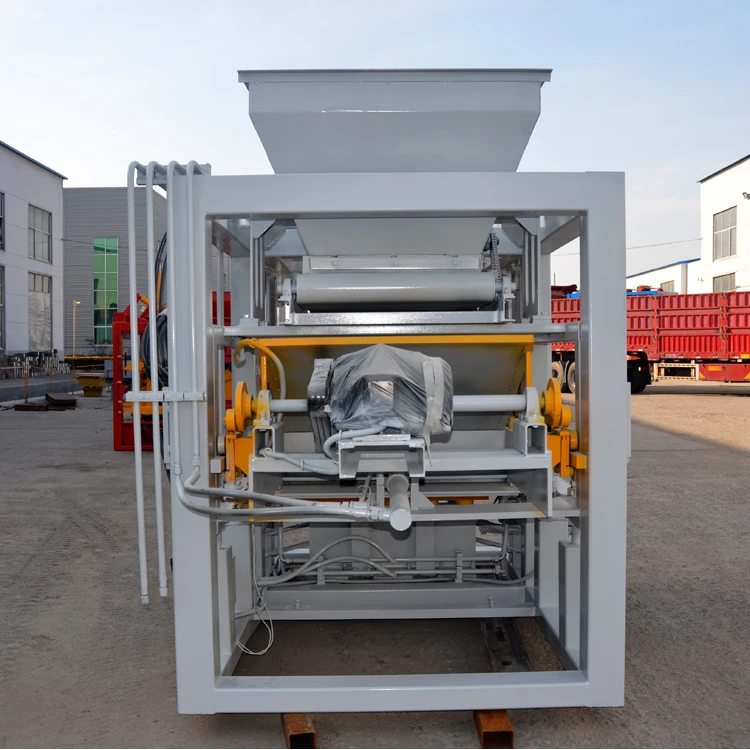
| Hydraulic System | Independent integrated hydraulic station |
| Control System | PLC with touch screen interface |
| Output — Hollow Block 400×200×200 mm | 900–1200 pcs/hour, 7200–9600 pcs/8 hr (basis: stated format) |
| Output — Hollow Block 400×150×200 mm | 1080–1440 pcs/hour, 8640–11520 pcs/8 hr (basis: stated format) |
| Output — Solid Brick 240×115×53 mm | 5760–7680 pcs/hour, 46080–61440 pcs/8 hr (basis: stated format) |
| Output — Rectangular Paver 200×100×60 mm | 3600–4500 pcs/hour, 28800–36000 pcs/8 hr (basis: stated format, cycle 20–25 s) |
| Output — Zigzag Paver 225×112.5×60 mm | 2304–2880 pcs/hour, 18432–23040 pcs/8 hr (basis: stated format, cycle 20–25 s) |
| Block Compressive Strength | >15 MPa (basis to be confirmed against mix design) |
| Raw Material Compatibility | Fly ash (up to 70%), slag, gangue, sand, crushed stone, cement, water |
| Recommended Factory Area | 1000 m² |
| Warranty | 1 year for whole machine (excluding spare parts) |
Application Suitability
| Application | Material or Output |
|---|---|
| Hollow block production for masonry walls | Crushed stone, sand and cement with fly ash or slag replacement up to 70% |
| Solid brick for standard building work | Sand-cement mix at higher cavity density per pallet |
| Rectangular and zigzag paving brick | Fine aggregate with cement, 20–25 s cycle per paver format |
| Industrial residue utilization | Fly ash, slag and gangue blended with cement and water |
| On-site block manufacturing | Fixed-plant setup with pallet feed, curing rack handling and cubing |
| Format expansion for distributors | Mould change between hollow, solid and paver on a single press |
What "1200 Pieces per Hour" Actually Means for the QT5-15
Capacity is only meaningful when tied to a named block format, cavity count and cycle time — everything else is marketing.
I once watched a buyer sign off on a hollow block machine quoted at a headline cycle rate, then discover on commissioning that the number assumed a lightweight 400×200×200 mm block in standard river sand. His local volcanic ash blend required longer vibration and different pressure, which stretched the cycle enough to cut daily throughput by a third. The QT5-15 hollow block machine specifications in this sheet separate each format because hollow blocks, solid bricks and pavers each carry their own cycle time and cavity count. [NEED_CITE: block cycle time variation by format and material density] Without that separation, a buyer has no way to match the press to the product the local market actually orders.
Pallet Size Decides the Curing Rack, Not Just the Press
The 1100 × 550 mm pallet on the QT5-15 hollow block machine specifications governs how many cavities fit per cycle and which curing rack layout works in the yard. If a buyer already operates forklifts sized for a different pallet dimension, adopting this machine means either re-racking the entire curing area or accepting manual pallet transfer between press and yard. Confirming pallet material — bamboo, PVC or steel — against local humidity and curing temperature avoids warping issues that show up weeks after installation.
Cycle Time Splits Between Block and Paver Formats
Hollow and solid blocks on this press cycle at 15–20 seconds, while rectangular and zigzag pavers need 20–25 seconds because the denser paver mix and thinner profile demand longer platform vibration to reach target compressive strength. Any quotation that offers a single cycle figure for all formats hides the real output gap a buyer will see when switching from hollow block runs to paver production mid-shift. [NEED_CITE: vibration duration requirements for paver versus hollow block density]
Vibration Force, Hydraulic Pressure and the 80 kN Rating
The 80 kN vibration force works through platform vibration, driving energy upward through the pallet into the mix. For hollow blocks with thin walls, that force must be balanced against hydraulic demolding pressure so the green block holds shape when the mould lifts. A mix heavy in fly ash absorbs vibration differently from a sharp sand-cement blend, which is why matching the QT5-15 hollow block machine specifications to the buyer’s actual aggregate sample is not optional — it determines whether the press produces consistent density or cracks half the output on day one.
Mould Change and Multi-Format Flexibility
The QT5-15 supports hollow block, solid brick, rectangular paver and zigzag paver moulds on one frame. Mould change involves unbolting the current die, lifting it clear with the plant crane, setting the replacement mould onto the locating pins and re-torquing — a process that takes a portion of a shift if the plant has no dedicated changeover tools or jigs. Buyers who plan to run two or three formats in a single week should confirm that the mould weight and bolt pattern suit their crew’s capability before ordering the full format set.
When the Wrong Configuration Costs More Than the Machine
A buyer who skips voltage confirmation before production discovers on arrival that the 32 kW motor and PLC cabinet do not match the local grid frequency, delaying commissioning until a transformer or replacement drive is sourced. Another common miss: specifying pallets in a material that swells under local monsoon humidity, which warps the pallet surface and causes uneven block height across the cycle. Both issues trace back to specifications left unconfirmed at the quotation stage. [NEED_CITE: electrical commissioning delays from unconfirmed voltage and frequency]
Why Buyers Specify the QT5-15 Through This Channel
Block machinery is the single focus here, so the QT5-15 press, mould, pallet and handling equipment are specified as one matched system rather than assembled from separate vendors. Configuration is set against the buyer’s actual mix design and local aggregate, not a catalogue default. Mould drawings and format lists are provided so cavity count and block dimensions can be verified against local standards before the mould enters production. Automation level is selectable — a plant can start with manual pallet handling and add automatic stacking later. Installation support includes operator training on the PLC touch screen and hydraulic station, and mould plus wear parts lists are delivered with the machine.
Documentation & Verification
- Line layout with capacity calculation stating the block format and cycle time assumed
- Machine specification sheet covering the 80 kN vibration force and 32 kW power rating
- Mould drawing and format list for each cavity count ordered
- Pallet specification confirming 1100 × 550 mm material and thickness
- Hydraulic and electrical schematic matching the shipped configuration
- Voltage, frequency and PLC display language confirmation sheet before production
Installation, Commissioning & Support
- 1000 m² factory area required for the full line including pallet feed and curing handling
- Dedicated power circuit for the 32 kW overall load with confirmed voltage and frequency
- Machine ships fully assembled; pallet feed, conveyor and hydraulic unit align on site
- PLC touch screen parameters set during commissioning against the buyer’s mix design
- Operator training covers mould change procedure and hydraulic station daily checks
- Wear parts and mould list supplied for first replacement planning
Before You Request a Quote
To size the QT5-15 accurately, provide the block format your market sells most, the target daily output for that specific format, and the raw materials you source locally — including aggregate type and any fly ash or slag percentage. Confirm your site voltage, frequency and the language needed on the PLC display. If you already have curing racks or forklifts, share the dimensions so the 1100 × 550 mm pallet spec can be checked against your existing equipment.
Frequently Asked Questions
Q: How is QT5-15 capacity calculated per block format, and what cycle time applies to my product?
A: Each output figure in the QT5-15 hollow block machine specifications is tied to a named format — for example, 900–1200 pieces per hour assumes a 400×200×200 mm hollow block. Paver formats carry a longer 20–25 second cycle. Your actual cycle time depends on mix design, aggregate density and target compressive strength, which we confirm against your material sample before finalizing the capacity sheet.
Q: Which mould formats are available, and can I order custom moulds to my local block dimensions?
A: Standard moulds cover hollow block, solid brick, rectangular paver and zigzag paver. Custom moulds can be designed to buyer drawings, with cavity count and block dimensions matched to local standards. We provide the mould drawing and format list for approval before production begins.
Q: How long does a mould change take on the QT5-15, and what is involved?
A: Mould change requires unbolting the current die, lifting it with a crane, placing the replacement on locating pins and re-torquing. The process occupies a portion of a shift without dedicated changeover jigs. Plants running multiple formats weekly should plan crew and tooling accordingly.
Q: What pallet size does the QT5-15 use, and how does it fit standard curing racks?
A: The press uses a 1100 × 550 mm pallet. Material options include bamboo, PVC and steel, selected for local humidity and curing temperature. Buyers should verify this dimension against existing curing racks and forklift fork spacing to avoid yard reconfiguration after delivery.
Q: How is block compressive strength maintained when switching between formats on the same machine?
A: The 80 kN platform vibration and hydraulic pressure are adjustable per mould. When switching from hollow block to paver, the PLC cycle parameters — vibration duration, frequency and pressure profile — are recalibrated to match the denser paver mix and thinner section, keeping compressive strength above the target for each format.