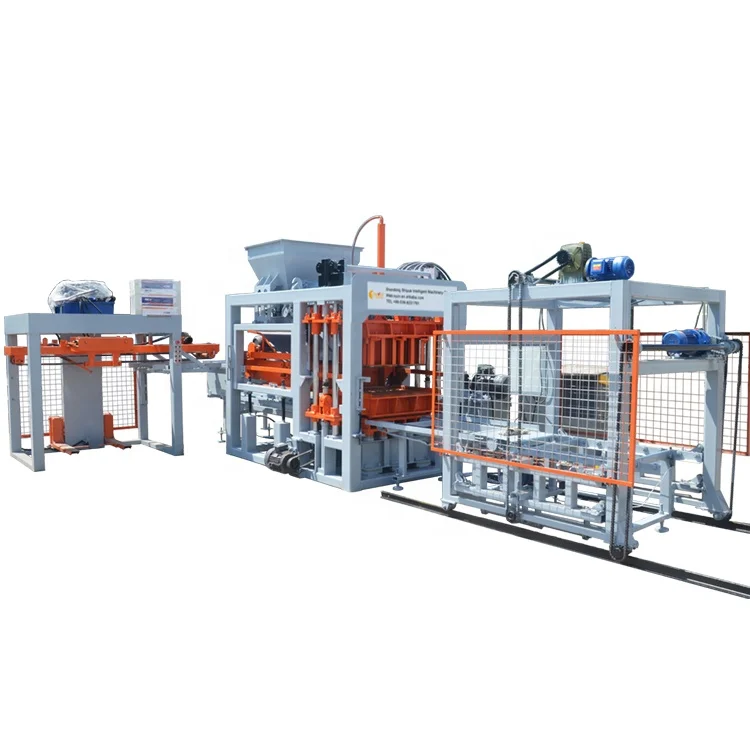
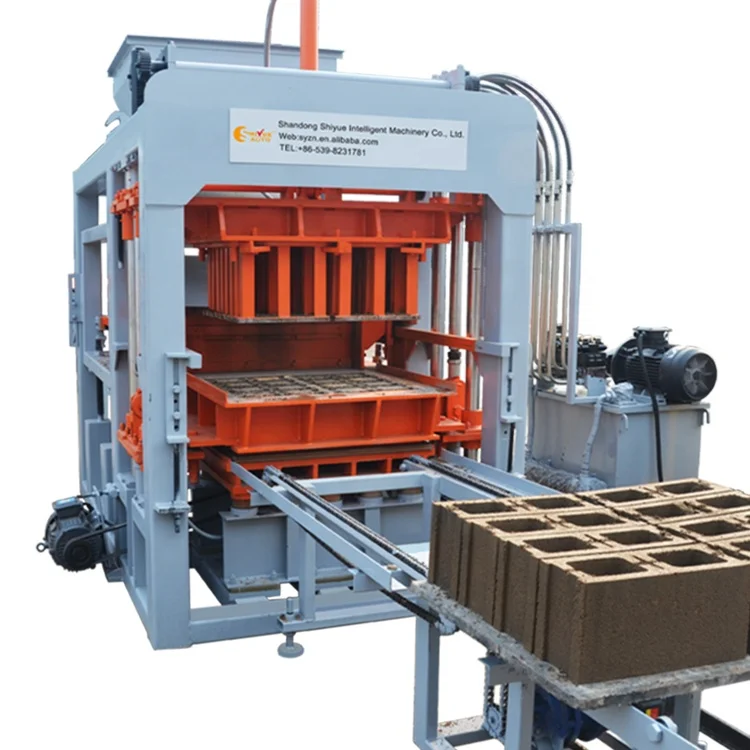
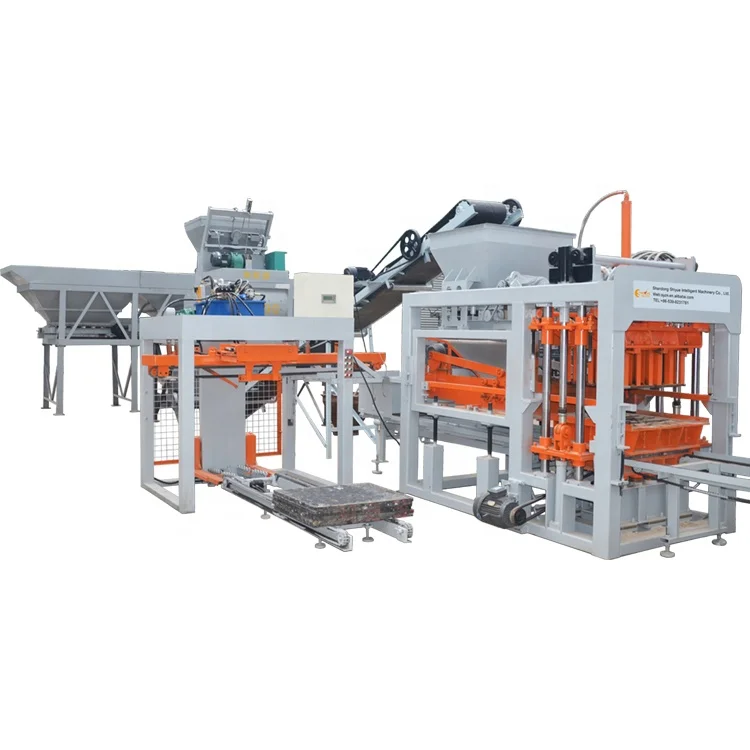
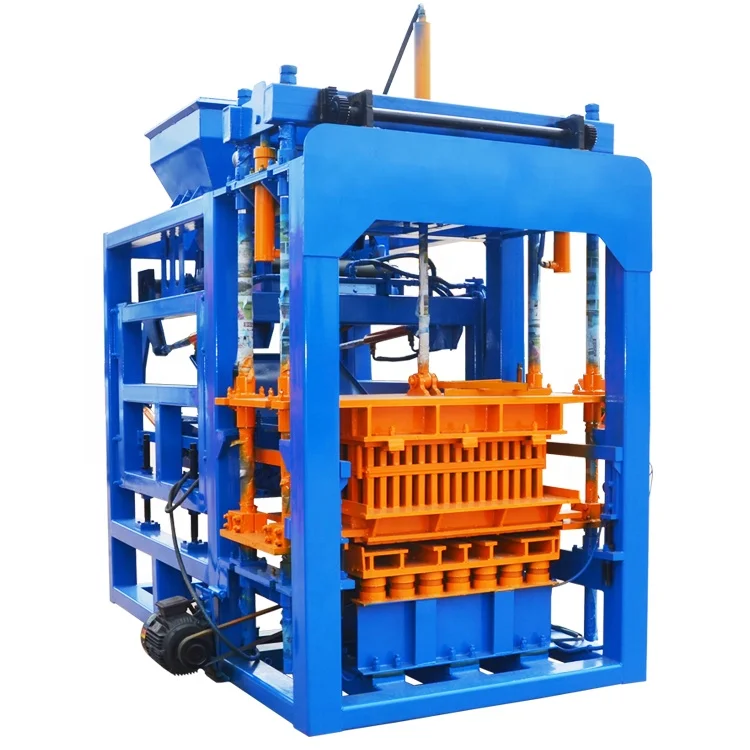
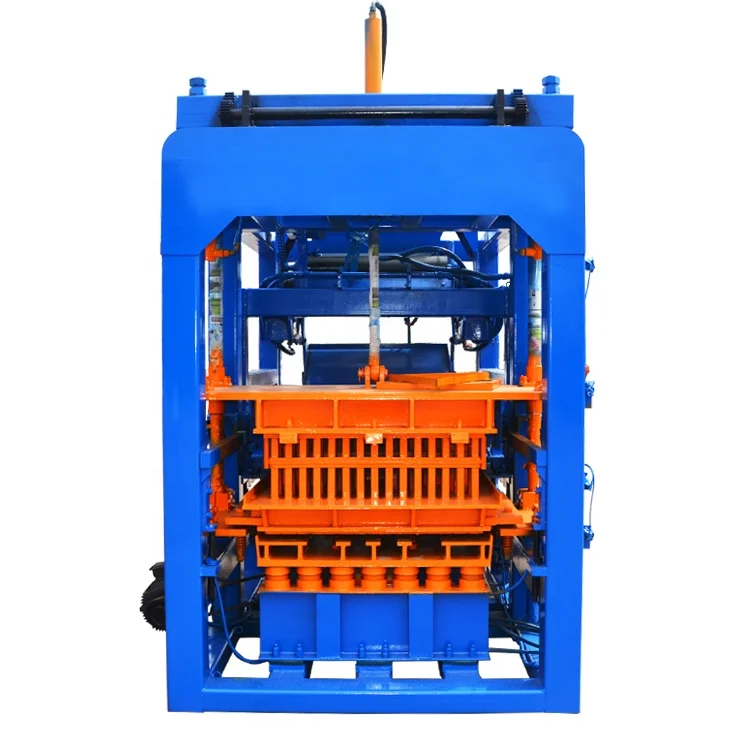

Description
Mould-matched capacity — every QT6-15 output figure states the block format, mould cavity count and cycle time behind it, so technical buyers size a machine to the product their market actually sells.
Technical Specifications
| Parameter | Value |
|---|---|
| Model | QT6-15 |
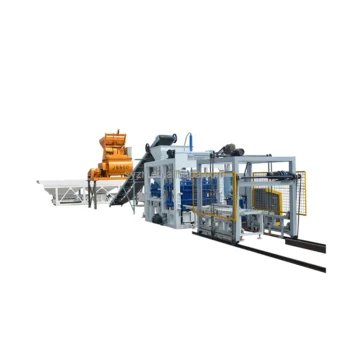
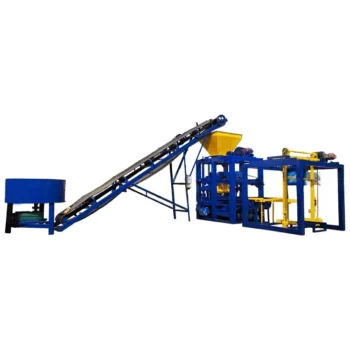
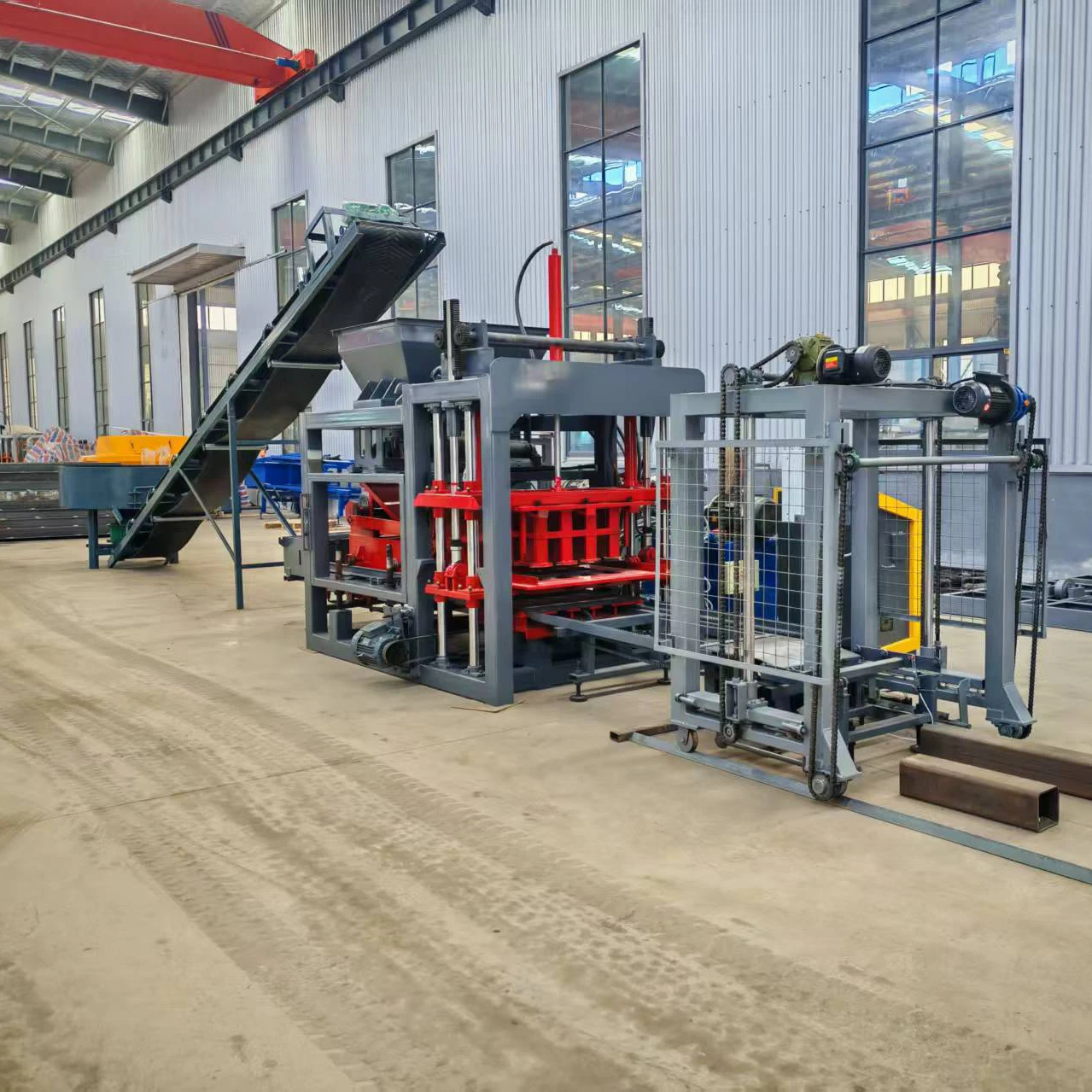
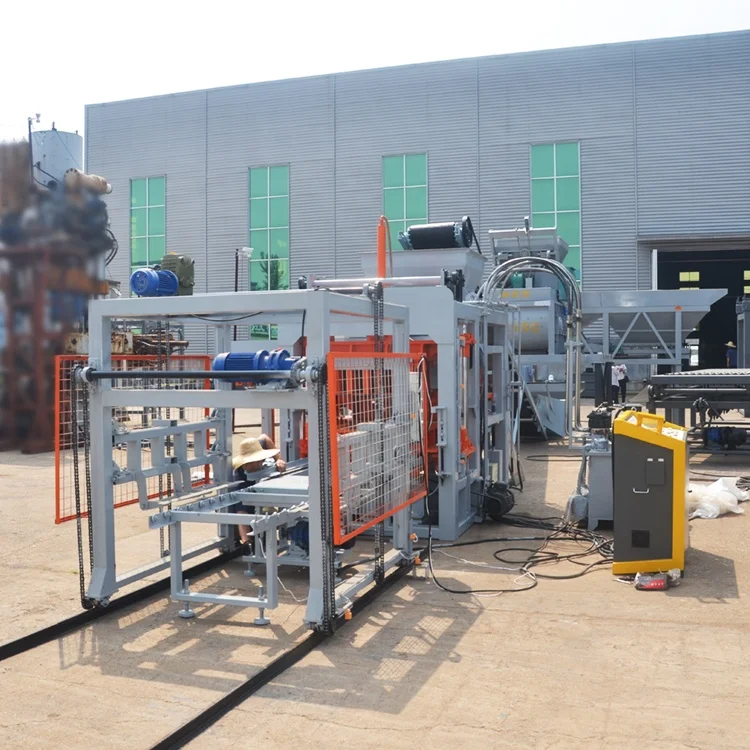
| Product Type | Hollow Block Making Machine |
| Overall Dimensions (L×W×H) | 8200×1700×2950 mm |
| Total Mass | 7 T |
| Vibration Form | Platform Vibration |
| Vibration Frequency | 0-60 Hz (adjustable) |
| Vibration Force | 45 kN |
| Moulding Mode | Load automatically, vibration moulding |
| Molding Cycle | 15-20 s (format dependent) |
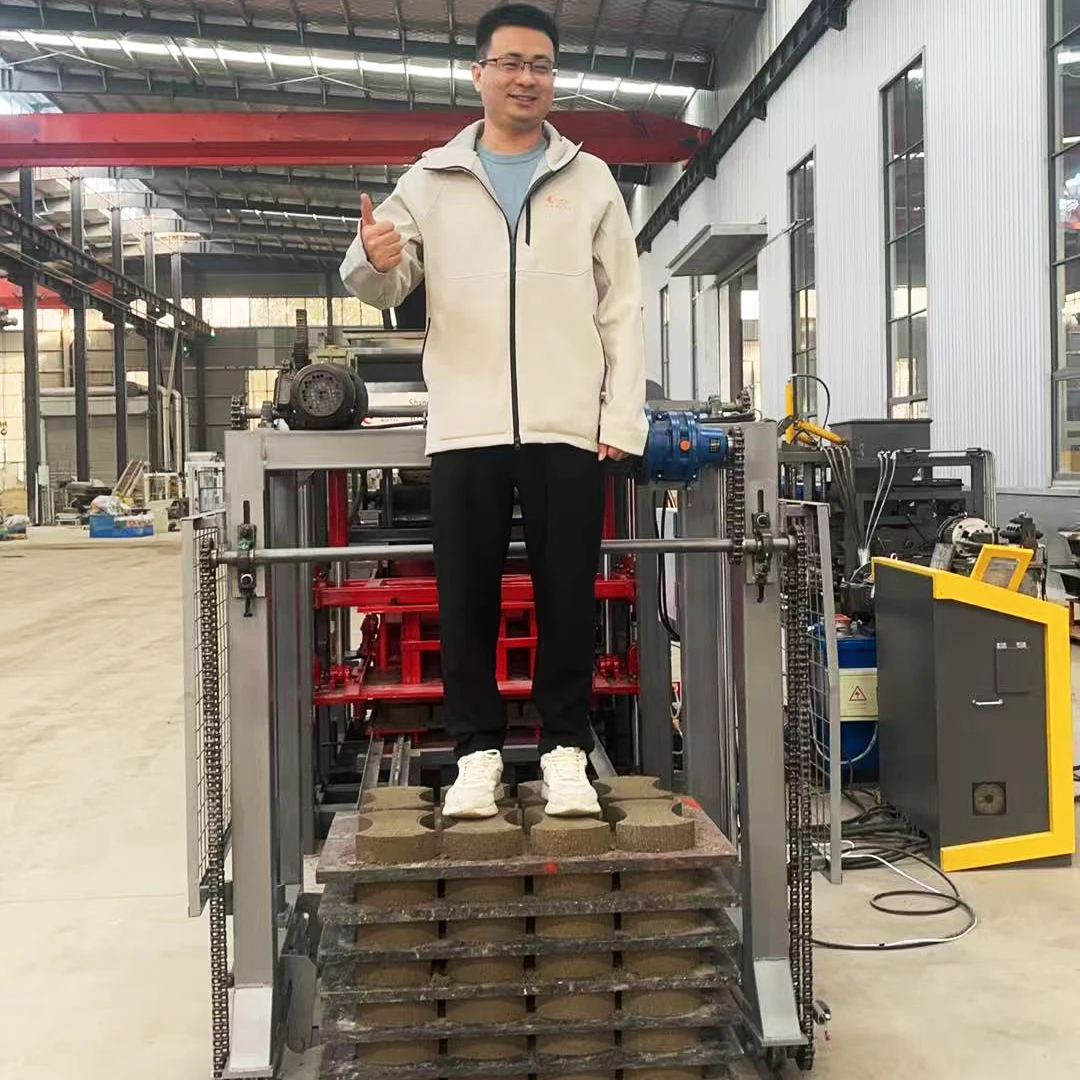
| Pallet Size | 880×850 mm |
| Demolding Method | Hydraulic |
| Hydraulic System | Independent integrated hydraulic station |
| Overall Power | 37 kW |
| Control System | PLC with touch screen interface |
| Factory Area | 1200 m² |
| Block Compressive Strength | More than 15 MPa |
| Raw Material Adaptability | Waste ash, slag, various aggregates; adjustable cement dosage |
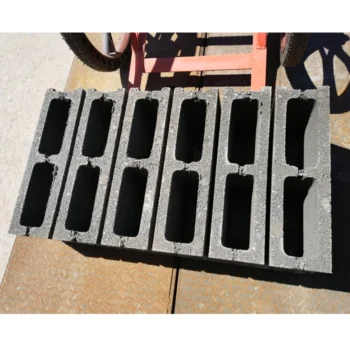
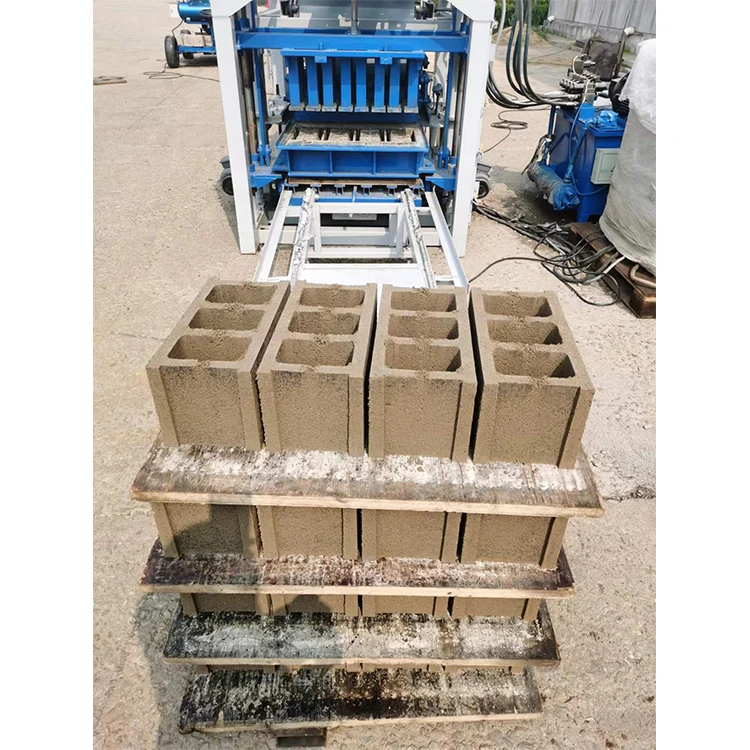
| Output (Hollow block 400×200×200 mm) | 1080-1440 pcs/hour, 8640-11520 pcs/8hr (basis: 6 pcs/mould, 15-20 s cycle) |
| Output (Hollow block 400×150×200 mm) | 1440-1920 pcs/hour, 11520-15360 pcs/8hr (basis: 8 pcs/mould, 15-20 s cycle) |
| Output (Solid brick 240×115×53 mm) | 5760-7680 pcs/hour, 46080-61440 pcs/8hr (basis: 32 pcs/mould, 15-20 s cycle) |
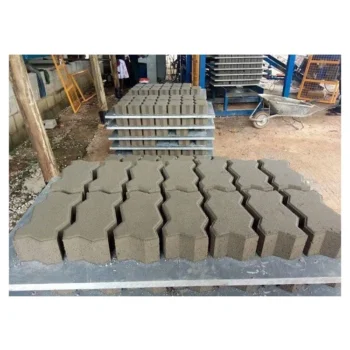
| Output (Rectangular paver 200×100×60 mm) | 2160-2880 pcs/hour, 17280-23040 pcs/8hr (basis: 21 pcs/mould, 20-25 s cycle) |
| Output (Zigzag paver 225×112.5×60 mm) | 2160-2880 pcs/hour, 17280-23040 pcs/8hr (basis: 15 pcs/mould, 20-25 s cycle) |
| Warranty | 1 year (excluding spare parts) |
Application Suitability
| Application | Material or Output |
|---|---|
| Standard hollow block production | 400×200×200 mm and 400×150×200 mm formats from crushed stone, sand and cement |
| Solid brick manufacturing | 240×115×53 mm bricks using fly ash, slag or natural sand mixes |
| Paving brick lines | Rectangular 200×100×60 mm and zigzag 225×112.5×60 mm pavers with high-density vibration |
| On-site block production for contractors | Hollow blocks for building projects, reducing transport cost and breakage |
| Format expansion for existing plants | Adding solid brick or paver formats alongside hollow block output |
What "Cycles per Hour" Hides About Your Real Output
The honest hollow block making machine specifications start with the block format you actually sell, not a single number printed on a brochure.
A buyer once selected a QT6-15 based on a general throughput claim, only to discover that their local river sand carried a high clay content that slowed compaction. The longer cycle time needed to achieve target strength cut daily output roughly in half against the brochure figure [NEED_CITE: effect of aggregate clay content on block compaction cycle time]. That gap between catalogue capacity and real output is why every number here names the format, mould cavity count and the cycle range it depends on. When the mix design, vibration frequency and hydraulic pressure are matched to the buyer’s local aggregate before the machine is built, the stated capacity becomes a realistic planning baseline rather than an optimistic ceiling.
How Format Determines the Real Cycle on the QT6-15
The QT6-15 hollow block making machine specifications separate output by format because each block geometry demands a different compaction profile. A 400×200×200 mm hollow block mould carries six cavities and completes a cycle in 15-20 seconds, while the rectangular paver mould with twenty-one cavities requires 20-25 seconds to reach full density. These hollow block making machine specifications let a technical buyer calculate daily shift output for the exact product the market orders, avoiding the surprise of a shorter effective run once paver production begins.
Why Vibration Force and Mix Design Must Be Decided Together
Platform vibration at 45 kN, adjustable from 0-60 Hz, only delivers its rated compaction when the mix design matches the amplitude range. High-silt sand absorbs vibration energy differently from clean crushed aggregate, so the same frequency setting that produces 15 MPa blocks with one aggregate may leave another mix under-compacted [NEED_CITE: vibration amplitude requirements for different concrete aggregate gradings]. Before the QT6-15 leaves the factory, the vibration frequency range and hydraulic pressure are set against the buyer’s confirmed mix recipe, so the machine arrives tuned rather than needing weeks of trial runs on site.
Pallet Size, Curing Space and the 880×850 mm Decision
The 880×850 mm pallet is not an arbitrary choice — it defines how many blocks sit on each board, how boards stack in the curing area and which forklift class is needed to move them. A buyer whose existing curing racks accept 900×700 mm pallets will face a choice between modifying rack spacing or ordering a non-standard pallet size before the machine ships. Confirming pallet dimensions against the curing area footprint and available handling equipment is a step that belongs in the hollow block making machine specifications review, not after the container is opened at the port.
Independent Hydraulic Station and Process Stability
The integrated hydraulic station sits separate from the main vibration frame, which keeps hydraulic seals and valve blocks away from continuous high-frequency shock and cement dust. This isolation reduces the frequency of seal replacements and keeps demolding pressure consistent across long shifts. On a block press running 15-20 second cycles, any drift in demolding speed cracks the green block edge, so hydraulic stability directly affects the percentage of saleable output leaving the line each hour.
The Cost of Skipping the Mould Change Conversation
A machine advertised for multi-format flexibility only delivers that flexibility if the mould change procedure fits within a practical window. When mould bolts, alignment pins and hydraulic clamps are not standardised across the format set, a single changeover can consume most of a shift [NEED_CITE: typical mould changeover duration on mid-tier block machines]. Buyers who plan to run hollow blocks in the morning and pavers after lunch need to see the changeover steps, required tools and estimated time for each format pair before the purchase order is signed, not after the first delivery deadline is missed.
Why the QT6-15 Is Specified as a Matched System
Block machinery is our single focus, so the press, moulds, pallets and handling equipment are specified as one system rather than assembled from unrelated sources. Each QT6-15 configuration is set against the buyer’s confirmed mix design and local aggregate, not a catalogue default. Mould design covers the formats the buyer’s market actually sells, with custom drawings available when standard formats do not match. The automation level is selectable — a buyer can start with semi-automatic pallet handling and add stacking later. Installation support includes operator training on the exact formats and mix the line will run.
Documentation & Verification
- Line layout with capacity calculation stating block format per output tier
- Mould drawing and format list confirming included cavities and changeover procedure
- Pallet specification sheet matched to buyer’s curing rack and forklift class
- Hydraulic and electrical schematic showing independent station arrangement
- Voltage, frequency and PLC display language confirmation before production
- Factory test record on the buyer’s target block format prior to dispatch
Installation, Commissioning & Support
- 1200 m² factory area required; level concrete floor with drainage for curing runoff
- 37 kW total power needs a dedicated circuit breaker sized for motor starting current
- Machine ships in sections; reassembly aligns vibration frame to hydraulic station
- PLC touch screen language and fault diagnosis codes confirmed during commissioning
- Operator training covers mould change steps for each included block format
- Wear parts list identifies hydraulic seals and vibration springs with reorder intervals
What to Include in Your First Enquiry
A useful first message names the block formats your market sells, the daily output target per format, the local aggregate source and any clay or silt content in the sand. Include your existing voltage and frequency, the PLC display language your operators need and the pallet dimensions your curing area already accepts. If you plan to run more than one format per shift, mention the changeover frequency so the mould clamping system can be matched to that schedule.
Frequently Asked Questions
Q: How is the QT6-15 capacity verified for my specific block format?
A: Every output figure in our hollow block making machine specifications names the block dimensions, mould cavity count and cycle time range it depends on. Before production, we run a factory test using your confirmed mix recipe and target format, then share the test record so you can plan daily output from verified data rather than a generic brochure number.
Q: Which mould formats are included and how long does a changeover take?
A: The standard format set covers 400×200×200 mm and 400×150×200 mm hollow blocks, 240×115×53 mm solid bricks, and rectangular and zigzag pavers. Mould change time depends on the clamping option selected; we provide a step-by-step procedure and estimated duration for each format pair so you can plan shift schedules before the machine arrives.
Q: How is the 880×850 mm pallet matched to my curing area?
A: We ask for your existing curing rack dimensions and forklift capacity during the specification stage. If the standard pallet size does not fit your racks, an alternative size can be confirmed before production so the pallet feeder, stacking height and curing layout all align with the equipment already on your site.
Q: Can the QT6-15 use my local aggregate with high clay content?
A: The vibration frequency range of 0-60 Hz and adjustable hydraulic pressure allow tuning for different aggregate profiles, but clay-rich sand slows compaction and may extend the cycle time. We request an aggregate sample or lab report during the enquiry so the hollow block making machine specifications can reflect realistic cycle times and strength results for your material.
Q: What voltage and PLC language will the machine be set to before shipment?
A: Voltage, frequency and PLC display language are confirmed in writing before production begins. The touch screen interface and fault diagnosis messages are loaded in the operator’s language, and the electrical schematic included in the documentation set matches the as-shipped configuration for local electricians.