
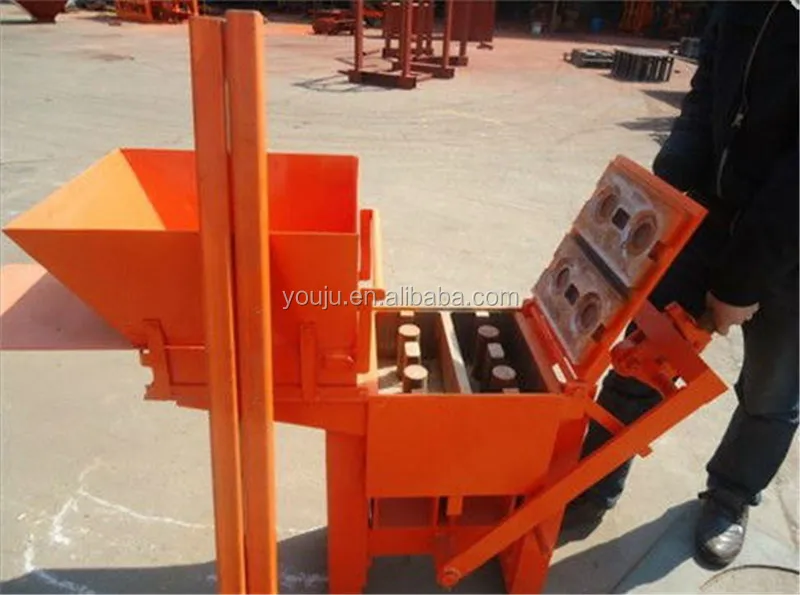
Description
Configured to Your Local Soil — Gear ratios and bearing clearances are calibrated against the clay-cement mix you send us, ensuring interlocking bricks hold their shape straight from the mould rather than cracking on the curing rack.
Technical Specifications
| Parameter | Value |
|---|---|
| Model | LY2-40 |
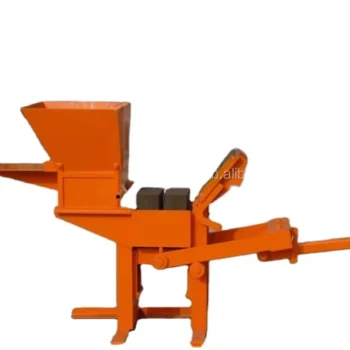
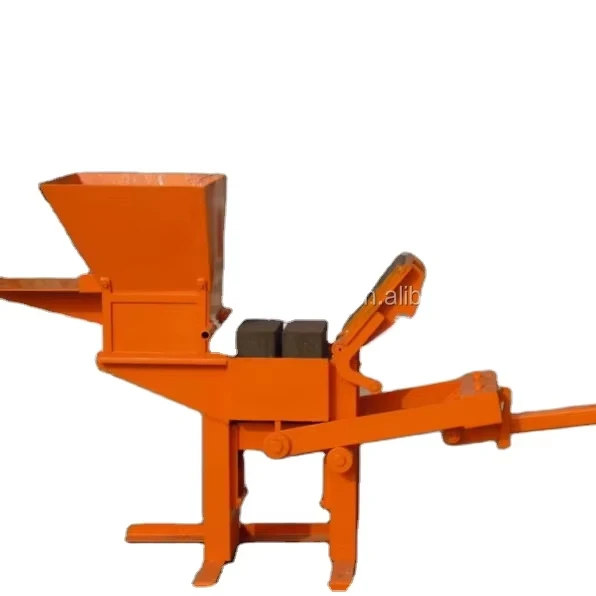
| Product Type | Manual Clay Interlocking Brick Making Machine |
| Overall Dimensions (L×W×H) | 1600 x 700 x 1200 mm |
| Net Weight | 200–240 kg |
| Rated Power | None — Completely Manual Operation |
| Molding Cycle | 30–40 seconds per stroke |
| Output Capacity | 400–1,000 pcs/day (basis not stated in source — confirm block format, material, and thickness) |
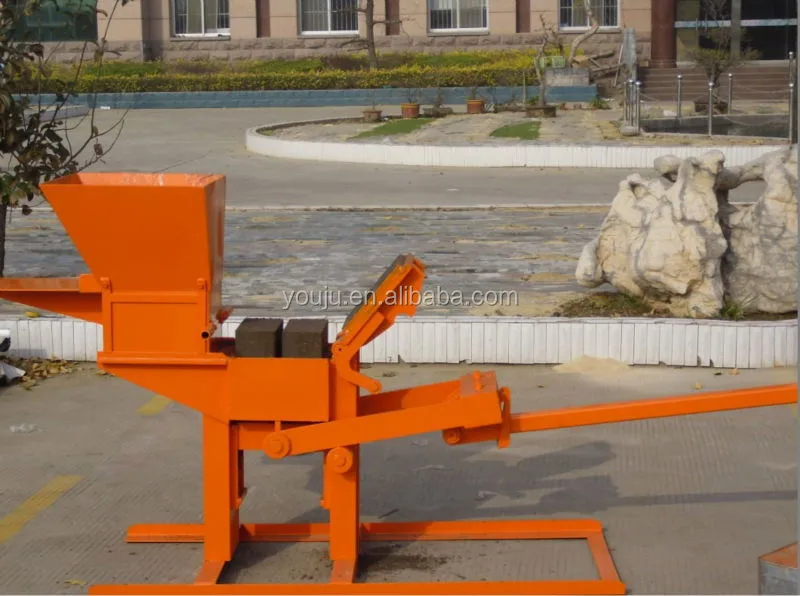
| Mobility | Steel-wheel mobile chassis |
| Mould System | Interchangeable moulds for various interlocking block profiles |
| Lifting System | Manual |
| Recommended Mixer | JFA-1 Mixer or JQ350 Mixer |
| Warranty | 1 Year |
Application Suitability
| Application | Material or Output |
|---|---|
| On-site interlocking brick production for housing projects | Local red clay or laterite mixed with Portland cement |
| Off-grid earth block manufacturing | Soil-cement blends without electrical power dependency |
| Small-scale commercial brick yards | Multiple interlocking profiles via mould changes |
| Rural construction and community development builds | Unstabilised or cement-stabilised earth blocks |
What "400 to 1,000 Pieces per Day" Actually Means for Your Interlocking Format
Daily output depends entirely on which interlocking profile you press and how your local soil-cement mix behaves under manual compression.
Catalogue sheets for Manual Clay Interlocking Brick Making Machine specifications often quote a single daily range without stating the block dimensions, wall thickness, or soil moisture content assumed. I have stood on project sites in West Africa where a contractor budgeted for 1,000 interlocking bricks per shift, only to discover the real figure for their thick-walled stabilised block was closer to half that. The 30–40 second molding cycle is a mechanical constant, but loading the hopper, positioning the mould, and extracting a green brick from a clay-heavy mix all add seconds that compound across a shift [NEED_CITE: manual brick production time-motion studies in tropical climates]. If the interlocking profile has deep tongues and grooves, demoulding takes longer and demands a carefully tuned moisture window.
Matching the Mould Profile to Your Market
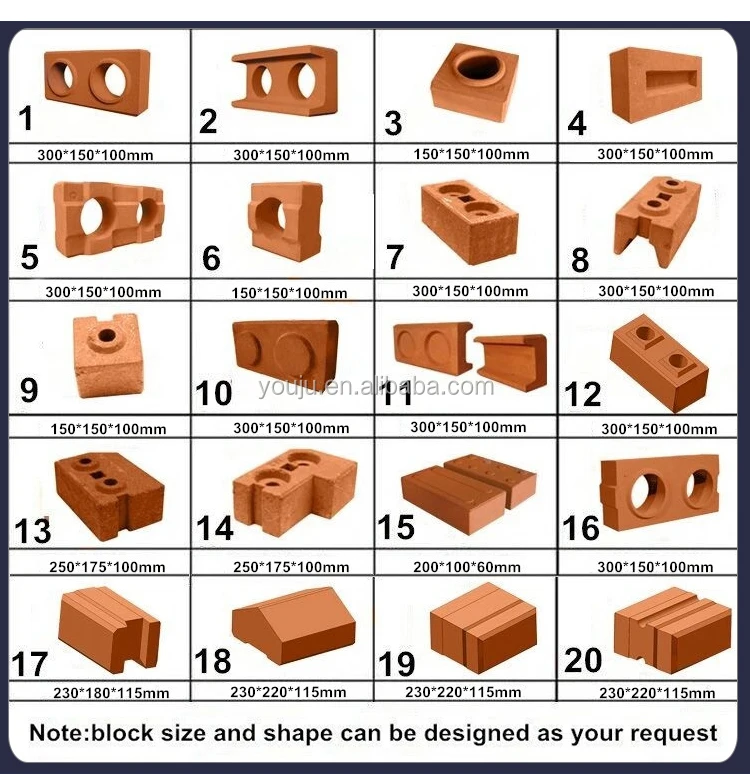
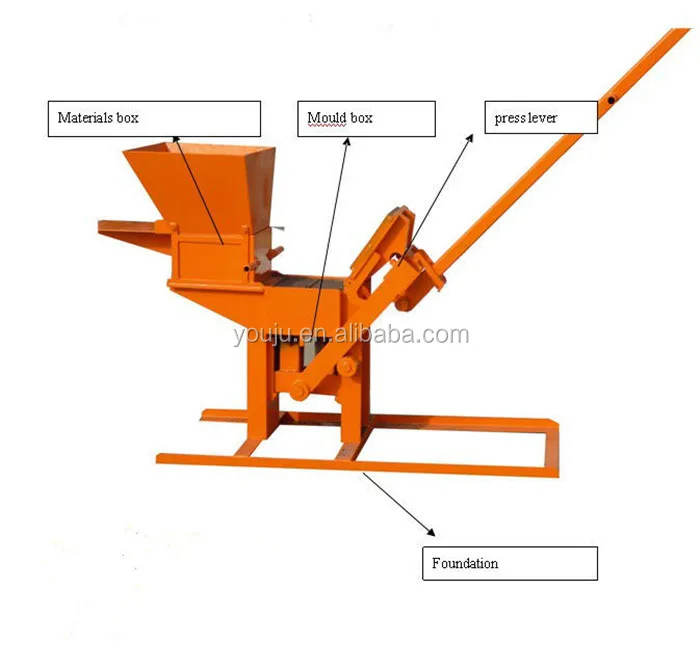
The interlocking brick format your local market accepts determines the mould you need, and not every profile compacts well under purely manual force. Shallow-key profiles typically release cleanly from a wider range of soil-cement ratios, while deep interlock geometries demand tighter moisture control and more consistent tamping. The LY2-40 accepts interchangeable moulds, so you can switch profiles as your product range grows, but each change requires verifying that the manual lifting mechanism clears the new mould depth without snagging. Choosing the right Manual Clay Interlocking Brick Making Machine specifications starts with sending us a drawing or sample of the brick your buyers actually purchase.
Soil-Cement Calibration Before Dispatch
Every region’s clay has a different plasticity index, and that directly affects whether a green interlocking brick survives demoulding. I have seen machines arrive on site with factory-default gear ratios that worked fine for the test soil but caused cracking when run on local laterite at higher moisture. Before we ship, we ask for a soil sample and your target cement percentage so we can adjust the gear engagement and bearing clearances accordingly [NEED_CITE: effect of soil plasticity index on manual block compaction]. This step is often skipped by suppliers who treat the press as a commodity item.
Reading the Cycle Time Against Your Shift Plan
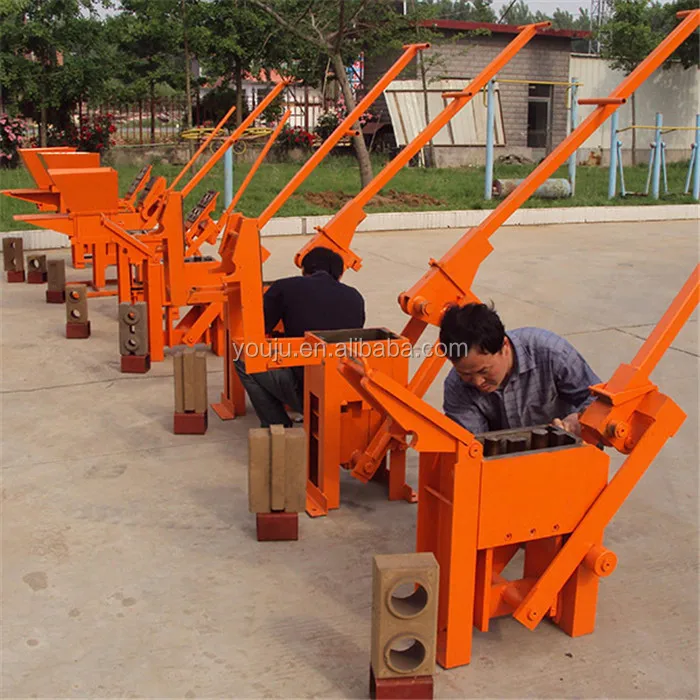
A 30–40 second stroke cycle sounds straightforward, but the true bottleneck on a manual interlocking brick line is the operator rhythm: filling the mould, levelling the mix, operating the manual lever, and carefully withdrawing the green block. In a well-organised two-person team—one feeding mix, one operating the press—sustained output tracks closer to the upper end of the quoted range. Add a third hand for curing-area transport, and the press stays loaded without idle gaps. The steel-wheel chassis lets you reposition the LY2-40 along the curing yard as the day progresses, cutting the carrying distance for freshly pressed bricks that are too fragile to stack immediately.
The Hidden Cost of Ignoring Mix-Machine Alignment
When the gear ratio and bearing clearances are set for a generic soil rather than your actual clay, the consequences show up within the first production day. Green bricks crack along the interlocking tongue during demoulding, forcing the operator to slow down and re-pack each cavity. Cement consumption rises because the crew compensates for weak compaction by adding more binder. Over a multi-week project, that unplanned cement overuse becomes a significant line-item overrun [NEED_CITE: cement cost overruns in manual earth block projects due to poor compaction]. The fix is not a bigger machine—it is a calibrated one.
Why Source This Press Through Our Configuration Process
Block machinery is our single focus, which means the LY2-40 is never shipped as a standalone catalogue item. We specify the press, the mould profile, and the recommended mixer as one matched set, so the JFA-1 or JQ350 you receive produces a mix consistency that the manual press can actually compact. Our mould design team works from your interlocking brick drawings, not a generic library, so the profile you receive matches the dimensions your local market demands. Automation level is selectable within our broader range, meaning you can start with this manual unit and move to a powered press later without replacing your entire mould inventory. We calibrate the machine against your soil sample before dispatch and provide operator training covering manual lifting technique, mould change procedure, and daily maintenance intervals.
Documentation & Verification
- Capacity calculation sheet stating the exact interlocking block format and soil-cement mix assumed
- Mould drawing confirming tongue-and-groove profile matches your market dimensions
- Factory test record on your submitted soil sample before dispatch
- Operation manual covering manual lever technique and mould swap procedure
- Wear parts list identifying replaceable bearings and mould liner components
Installation, Commissioning & Support
- No electrical supply required; the 200–240 kg unit operates entirely by manual force
- Steel-wheel chassis allows two workers to reposition the 1600 mm frame across unprepared ground
- Mould change requires basic hand tools; first swap supervised via remote video guidance
- Mixer pairing confirmed at order stage so JFA-1 or JQ350 output matches press feed rate
- Bearing and gear inspection schedule provided in the maintenance manual with interval guidance
Starting Your Configuration
To size this Manual Clay Interlocking Brick Making Machine to your project, we need the interlocking brick dimensions your market requires, your local soil type and available cement grade, and your target daily output based on the shift length you plan to run. Share any existing brick samples or drawings, and tell us whether your site has grid power for a mixer or needs a fully manual mixing setup as well.
Frequently Asked Questions
Q: How is daily output verified for my specific interlocking brick format and soil mix?
A: We run a test batch on your submitted soil sample using the exact mould profile you order. The resulting cycle time and demoulding success rate give us a realistic pieces-per-shift figure, which we document in the capacity calculation sheet before dispatch. This replaces generic catalogue claims with a number tied to your actual conditions.
Q: What interlocking profiles are available and how long does a mould change take?
A: Moulds are manufactured to your brick drawings, so any tongue-and-groove geometry your market demands can be produced. A mould swap on the LY2-40 involves removing the retaining pins and lifting the mould cassette out; an experienced operator completes the change in a few minutes using basic hand tools.
Q: How do we ensure block strength matches our local aggregate and cement ratio?
A: Block strength in manual presses depends on compaction consistency and mix moisture. We calibrate the gear ratio and bearing clearances against your soil sample so the manual stroke delivers repeatable pressure. Your cement percentage is then fine-tuned during the test batch to hit the strength target your local building code requires.
Q: What are the curing surface requirements for this mobile manual machine?
A: The LY2-40 presses bricks directly onto the ground or onto simple pallets, depending on your interlocking profile’s fragility. The steel-wheel chassis lets you move the press along the curing area so green bricks are placed close to their drying position, reducing handling damage during the first critical hours.