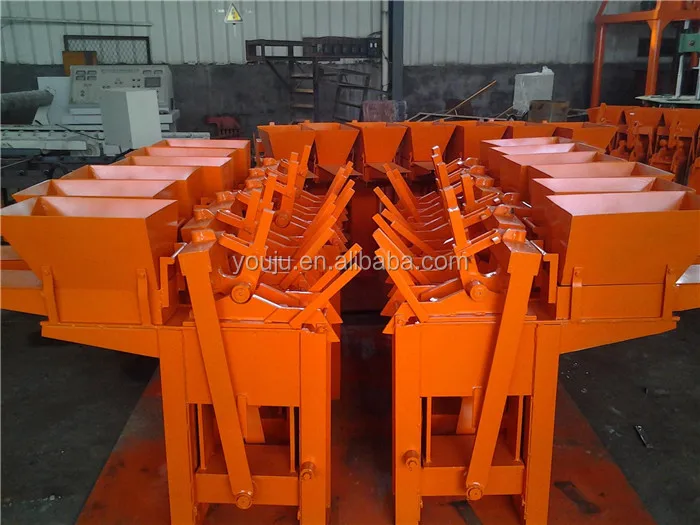
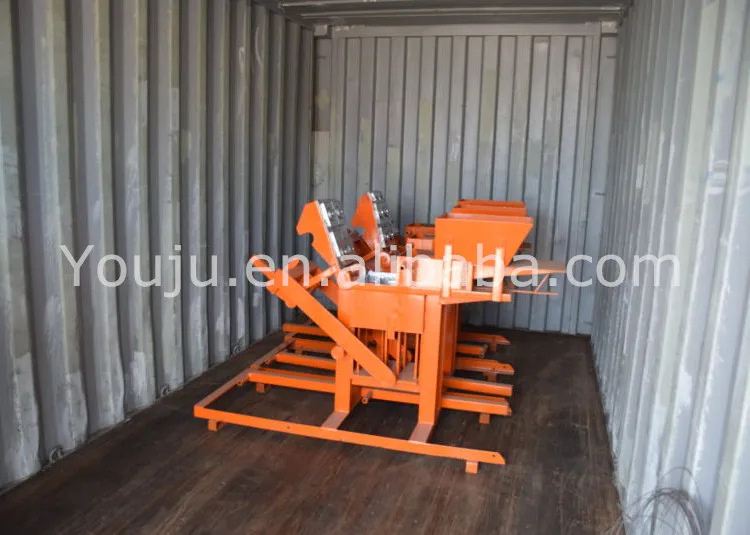
Description
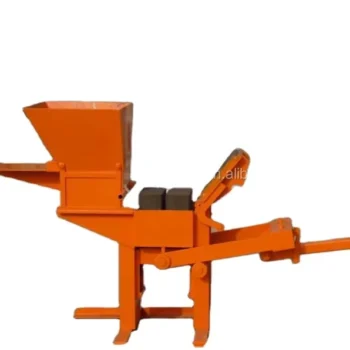
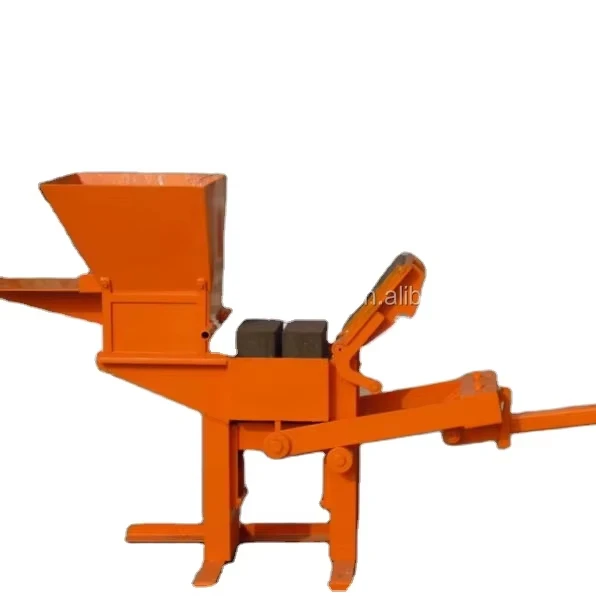
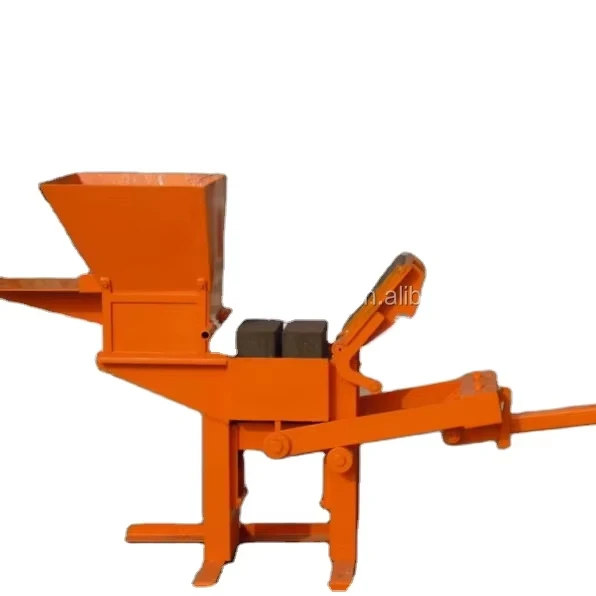
Format-Specific Capacity Mapping — the LY2-40 manual clay interlocking brick machine is configured around your actual block profile and local soil-cement mix, not a catalogue default that ignores what your market buys.
Technical Specifications
| Parameter | Value |
|---|---|
| Model | LY2-40 |
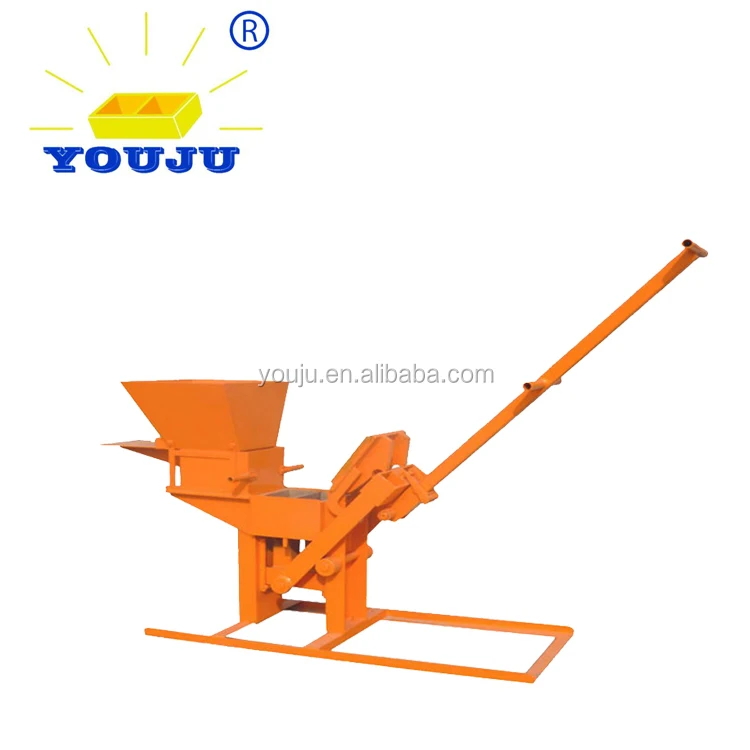
| Product Type | Manual Clay Interlocking Brick Making Machine |
| Overall Dimensions (L×W×H) | 1600 x 700 x 1200 mm |
| Net Weight | 200–240 kg |
| Total Power | None — completely manual operation |
| Molding Cycle | 30–40 s (basis to be confirmed depending on block format and operator pace) |
| Output Capacity | 400–1000 pcs/day (basis not stated in source — confirm block format, material and thickness) |
| Automation Level | Completely manual, no electrical power required |
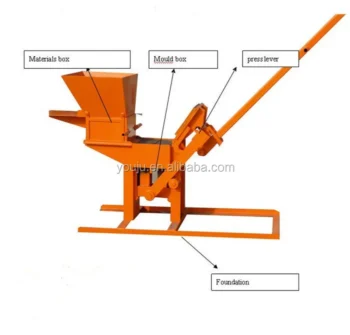
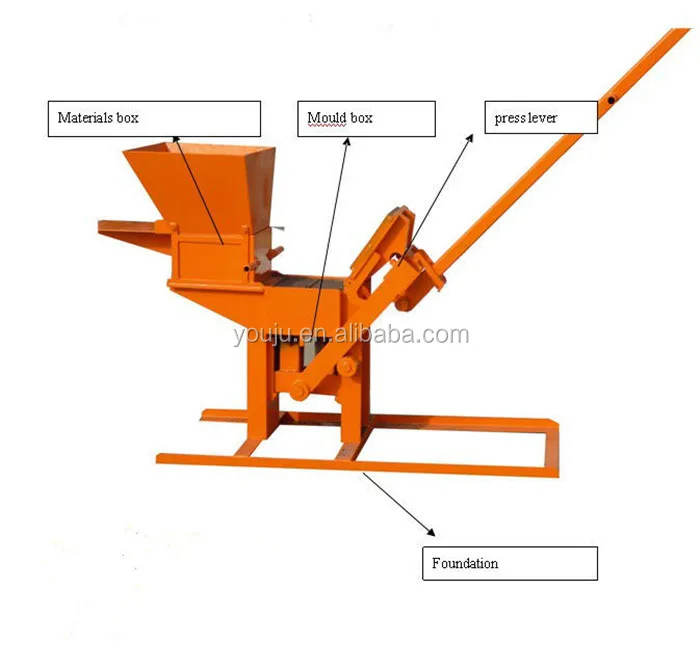
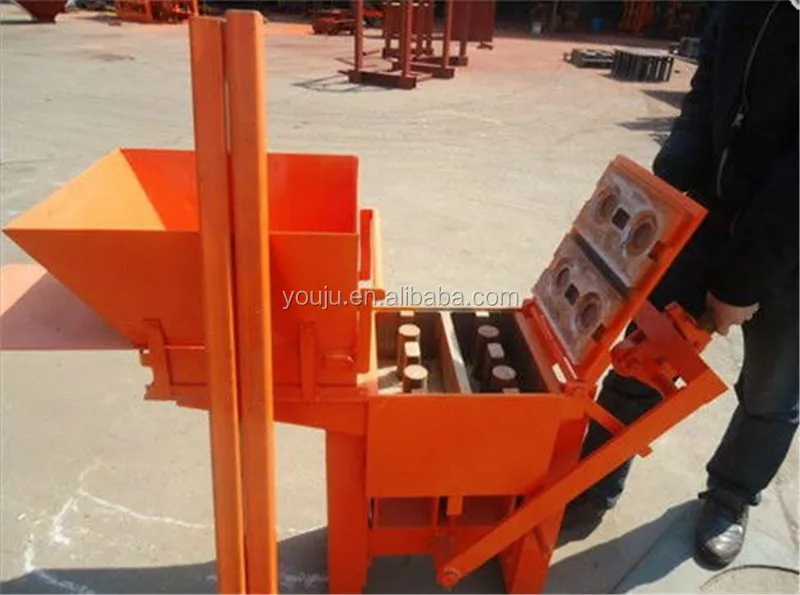
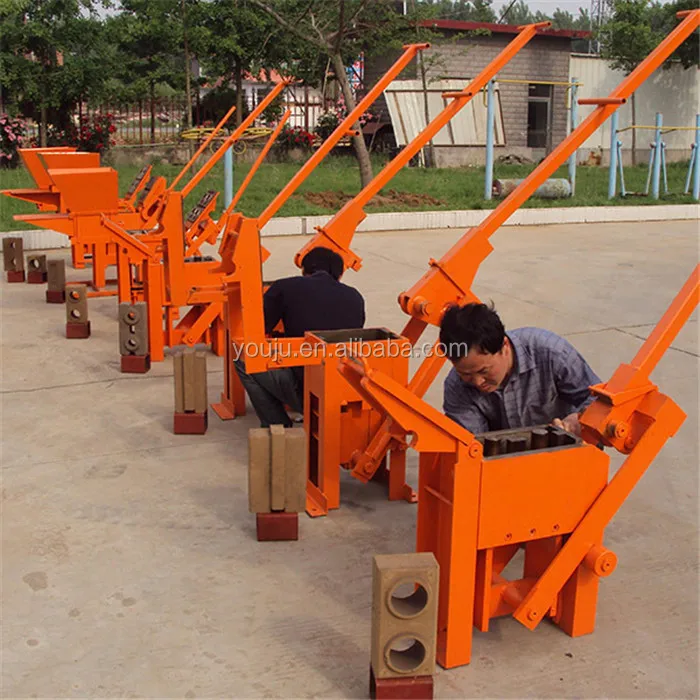
| Lifting System | Manual lever mechanism |
| Mobility | Steel wheels for on-site repositioning |
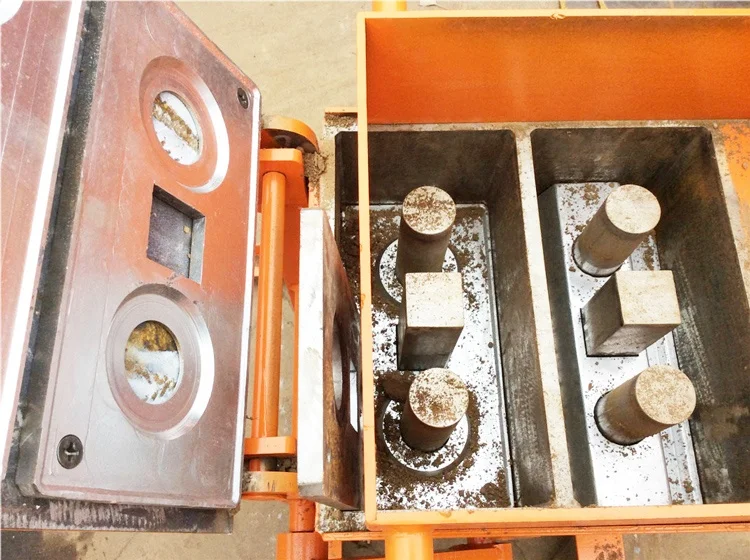
| Mould Format | Changeable for various interlocking brick profiles |
| Optional Mixer Pairing | JFA-1 or JQ350 mixer for soil-cement blending |
| Warranty | 1 Year |
Application Suitability
| Application | Material or Output |
|---|---|
| Rural housing and community building projects | Local soil blended with cement to form load-bearing interlocking bricks |
| On-site production for remote construction sites | Soil-cement interlocking bricks without grid electricity |
| First brick plant for small entrepreneurs | Interlocking brick formats sold in regional markets using locally sourced clay |
| Humanitarian and development housing programs | Stabilized earth bricks from site-excavated soil and Portland cement |
What "400 to 1000 Pieces Per Day" Really Means for Manual Clay Interlocking Brick Machine Specifications
Daily output depends entirely on which interlocking profile you press and how your soil-cement mix behaves under manual compaction.
I learned this the hard way on a Southeast Asian project where we tested a manual clay interlocking brick machine with standard loam in our yard and got clean, sharp edges. When the machine reached the customer’s site, the local red soil had a much higher clay fraction. The bricks cracked during curing and the interlocking lips fractured during handling. We spent the better part of two weeks adjusting cement ratios, moisture levels and compaction stroke before the output met their mason’s expectations [NEED_CITE: soil-cement stabilization standards for compressed earth blocks]. A capacity figure without a block format and a mix design attached to it is just a number — it does not tell you what will actually stack on your pallets at the end of a shift.
Mould Selection Drives Every Other Decision
The LY2-40 supports interchangeable moulds for different interlocking brick formats, and this is where the real buying decision lives. A wider wall block for load-bearing construction takes more raw material per cycle and demands a longer compaction stroke, which pushes the cycle time toward the upper end of the 30–40 second range. A thinner partition-style interlocking brick cycles faster but requires tighter dimensional control so the keys and slots engage properly during wall assembly. Before you compare manual clay interlocking brick machine specifications between suppliers, lock down the exact profile your builders expect — the mould determines your cycle time, your daily volume and your cement consumption per brick.
Matching the Soil-Cement Mix to Local Conditions
The optional JFA-1 or JQ350 mixer is not just a convenience item; it directly affects brick consistency. Hand-mixing soil and cement with shovels produces uneven cement distribution, and you end up with a batch where some bricks are well-stabilized and adjacent ones crumble [NEED_CITE: cement distribution uniformity in hand-mixed versus machine-mixed soil blocks]. A JQ350 pan mixer blends the soil and cement in a matter of minutes with consistent moisture distribution, which is what lets the LY2-40 lever produce uniform compaction density from the first brick of the morning to the last. The mixer you pair with this press is part of the system, not an accessory.
Reading the Parameter Table Without Getting Misled
Net weight between 200 and 240 kg tells you this is a machine two workers can reposition on its steel wheels, not one that requires a forklift every time the production area shifts. The absence of any electrical power requirement means the LY2-40 is viable on sites where generators are unreliable or grid connection does not exist yet — a common reality for rural housing and remote development projects. The 1600 x 700 x 1200 mm footprint is compact enough to operate under a temporary shelter, which matters when you are producing interlocking bricks on a building site that has no covered factory floor. Mould changeability across interlocking formats means a single LY2-40 can serve different wall types on the same project, provided the mould change procedure and tooling are included in the delivery scope.
The Cost of Skipping Mix Design Before Shipment
Shipping a manual clay interlocking brick machine without first testing the buyer’s actual soil sample leads to a predictable sequence: arrival, first production run, cracked bricks, finger-pointing, and a commissioning delay measured in weeks rather than hours. The clay fraction, the sand gradation and the organic content of local soil all change how the mix responds to manual compaction pressure [NEED_CITE: effect of clay mineralogy on soil-cement block strength]. A machine set up for one soil type will underperform on another until the cement ratio, water content and mixing duration are re-established for that specific material. The cost is not the machine — it is the idle crew and the delayed construction schedule while the mix is sorted out on site.
What We Bring to the Table on This Machine Type
Our focus on block machinery means the LY2-40, its moulds, the optional mixer and the pallets are specified as a matched set rather than sourced from separate vendors and hoped to work together. We configure the mould around the interlocking profile your market actually builds with, not a generic shape from a catalogue. Mix design confirmation against your local soil sample happens before production, so the machine arrives calibrated for your material. Documentation includes a capacity calculation that names the specific brick format and mix ratio behind the daily output figure. And when your first mould wears out, the replacement drawing is on file so you are not waiting for a new engineering cycle [NEED_CITE: mould wear and replacement lead time expectations for manual brick presses].
Documentation & Verification
- Line layout showing LY2-40 placement relative to mixing station and curing area
- Capacity calculation stating the exact interlocking brick format and mix assumed
- Mould drawing with interlocking profile dimensions and key-and-slot tolerances
- Factory test record using soil-cement mix parameters matching your sample
- Operation manual covering mould change procedure and compaction stroke technique
- Packing photographs of LY2-40 and moulds before container loading
Installation, Commissioning & Support
- Flat, compacted ground sufficient for LY2-40 steel wheels — no concrete foundation required
- No electrical supply needed; optional JQ350 mixer requires a dedicated single-phase circuit
- Machine ships assembled; lever and mould installed on site in under one hour
- First-day commissioning includes test pressing with your soil-cement mix ratio
- Operator training covers compaction stroke rhythm and mould release technique
- Wear parts list identifies lever pivot pins and mould liner as primary replacement items
Moving Forward With Your Inquiry
To configure the LY2-40 correctly for your project, send us the interlocking brick profile your builders use — a sample brick, a drawing, or a photograph with dimensions. We also need a soil sample from your site or at least a description of the local soil type so we can propose the right cement ratio and confirm which optional mixer suits your daily volume. Let us know your target daily output in finished bricks and we will return a capacity calculation tied to your specific format and mix.
Frequently Asked Questions
Q: What daily output can I expect for my specific interlocking brick format on the LY2-40?
A: Output depends on which mould profile you run and how quickly your team can feed, press and demould. A simple rectangular interlocking brick cycles faster than a complex multi-key profile. We provide a capacity calculation that names your exact format, the assumed cycle time and the resulting daily range — not a generic catalogue figure disconnected from the brick you actually sell.
Q: How do I match the soil-cement mix design to my local soil and target block strength?
A: Send us a representative soil sample before shipment. We test the clay fraction, sand gradation and organic content, then propose a cement ratio and mixing duration that produce the target compressive strength. This step prevents the all-too-common situation where a manual clay interlocking brick machine arrives on site and produces cracked bricks because the mix was never validated against the local material.
Q: What mould formats are available, and how long does a mould change take?
A: We supply moulds for the interlocking profiles your market demands, including custom profiles based on your drawings. A trained operator can swap moulds on the LY2-40 in a matter of minutes using basic hand tools — the lever mechanism and mould retention are designed for field-level maintenance without specialist equipment.
Q: How do I size the curing area and pallets to match the LY2-40’s daily output?
A: Your curing area must hold at least one full day’s production laid flat with air space between bricks. We calculate the pallet count and dimensions based on your chosen brick format and daily target, then confirm the layout fits within your available ground space before the machine ships.
Q: Which optional mixer should I pair with the LY2-40 for consistent soil-cement blending?
A: The JFA-1 suits very small daily volumes where batch size is limited. The JQ350 pan mixer handles larger batches and blends soil with cement more uniformly, which directly improves brick-to-brick consistency on the LY2-40. We recommend based on your daily output target and the homogeneity your block strength requirement demands.