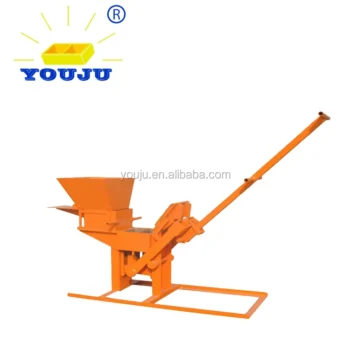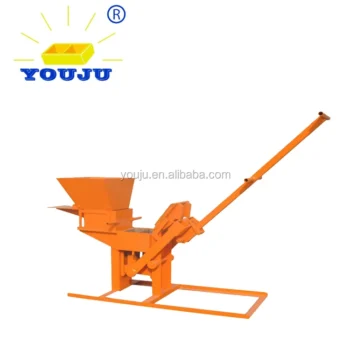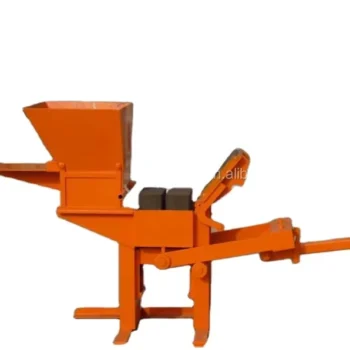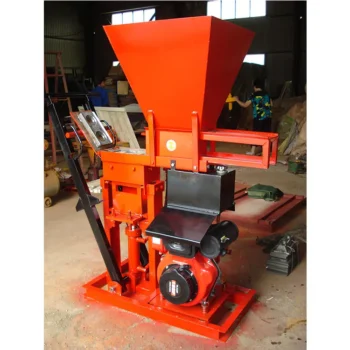
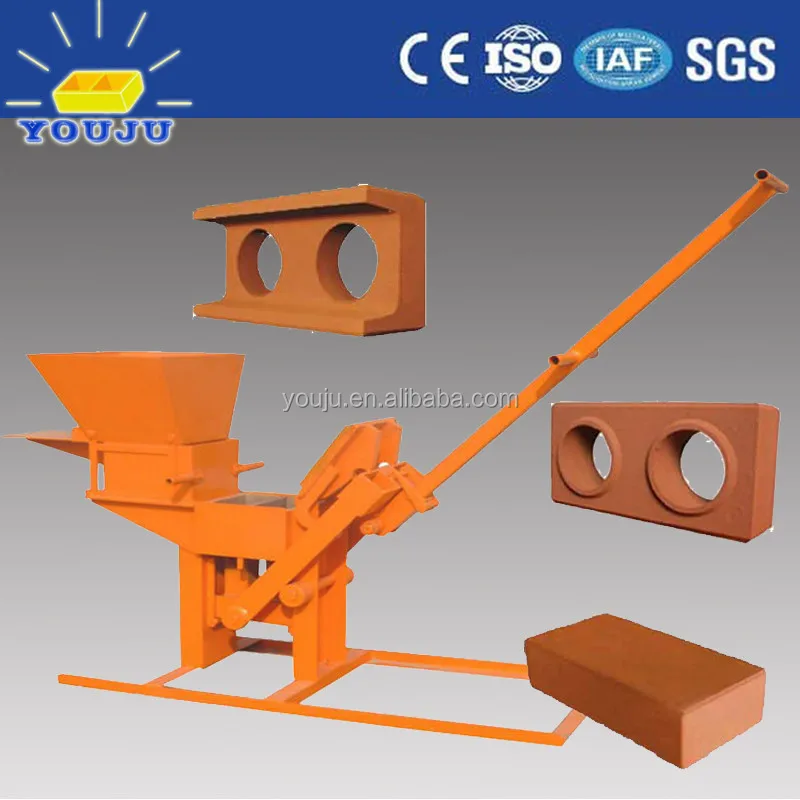
Description
Format-Matched Capacity — Every output figure for the LY2-40 is tied to a specific interlocking brick size and soil-cement mix, so the daily count you plan against is the daily count you actually produce on site.
Technical Specifications
| Parameter | Value |
|---|---|
| Model | LY2-40 |
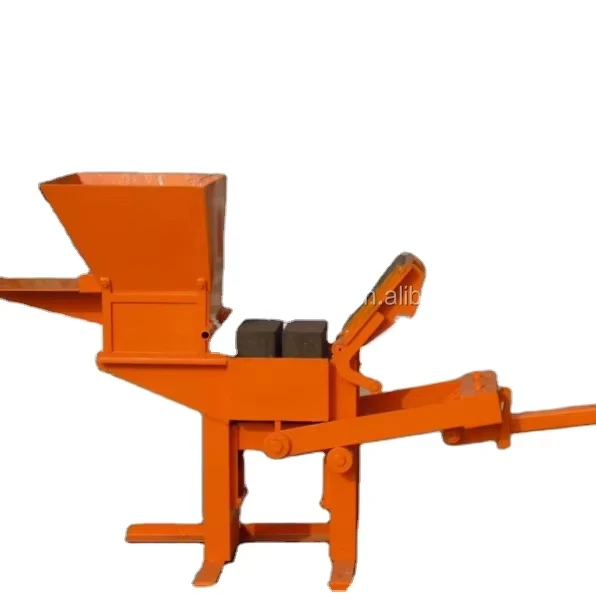
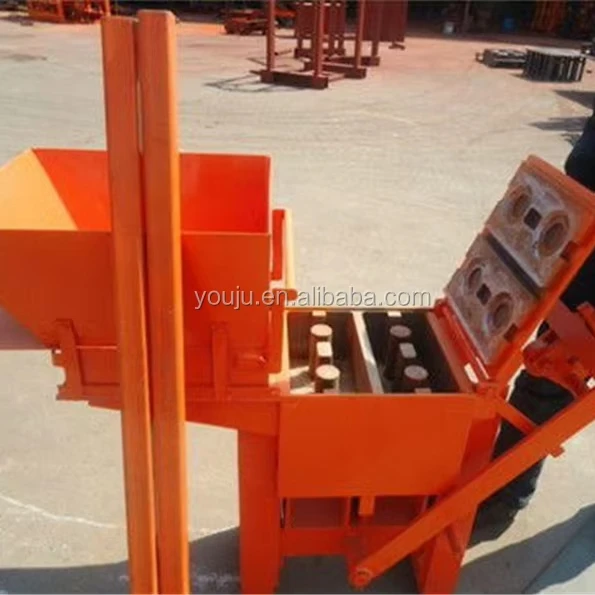
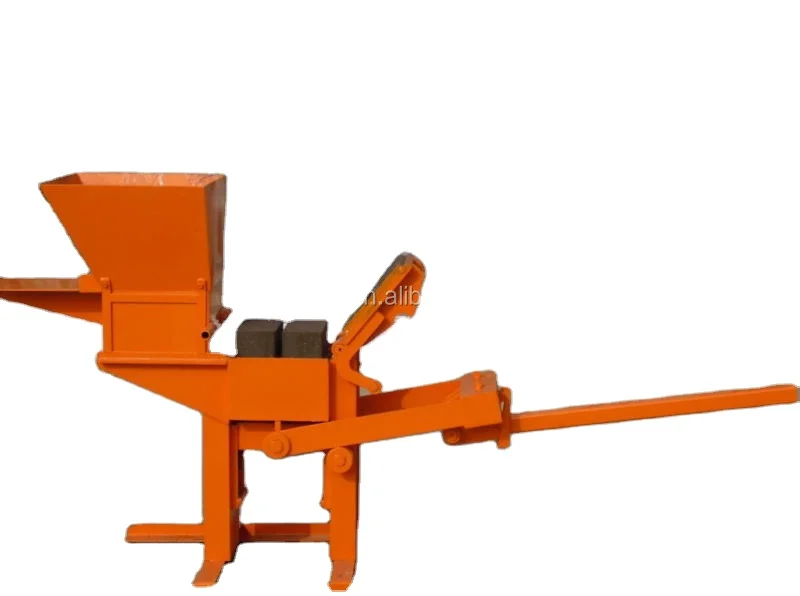
| Product Type | Manual Clay Interlocking Brick Making Machine |
| Operation Mode | Fully manual lever operation, no electrical or hydraulic system |
| Overall Dimensions (L×W×H) | 1600 × 700 × 1200 mm |
| Net Weight | 200–240 kg |
| Cycle Time | 30–40 seconds per pressing cycle |
| Output Capacity | 400–1000 pcs/day (basis not stated in source — confirm block format, material and wall thickness before quoting) |
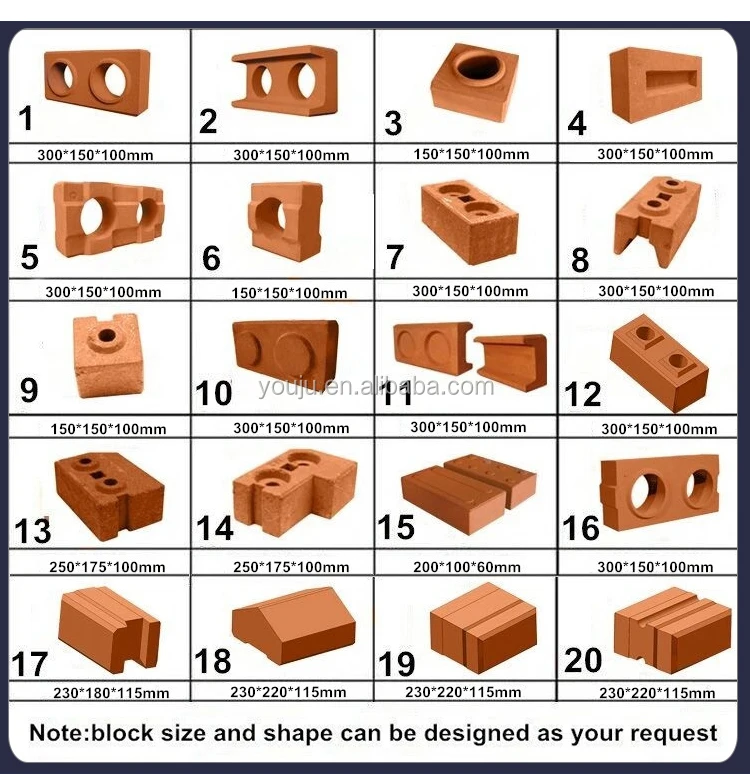
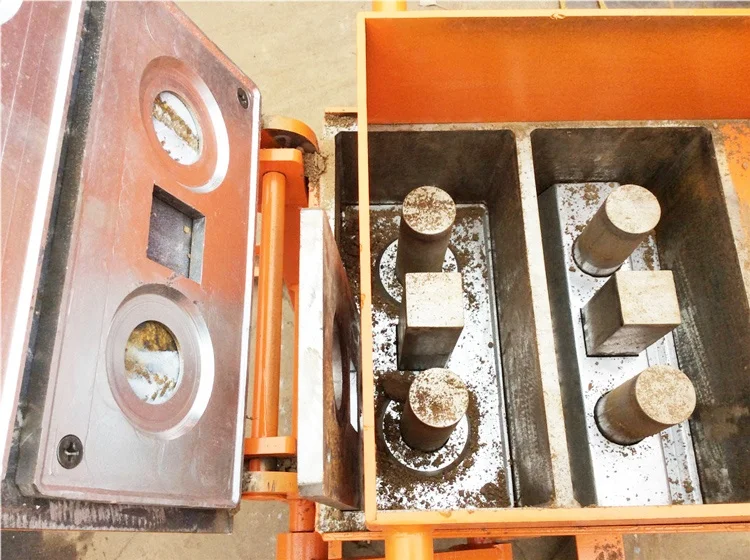
| Mould Format | Interlocking brick, moulds changeable for various block profiles |
| Mobility | Steel wheels for on-site repositioning |
| Recommended Mixer (optional) | JFA-1 or JQ350 |
| Warranty | 1 Year |
Application Suitability
| Application | Material or Output |
|---|---|
| On-site interlocking brick production without grid power | Local clay, laterite or sandy soil blended with cement at controlled moisture |
| Rural and small-scale housing projects | Soil-cement interlocking blocks laid without mortar joints |
| First brick plant setup by entrepreneurs | Low-capital entry validating block format before scaling |
| Infrastructure contractor producing blocks locally | Stabilised soil interlocking bricks for site-built walls and partitions |
Why "400 to 1000 Pieces per Day" Tells You Nothing Without the Format
The daily output of a manual clay interlocking brick machine only means something when the block format, mix design and pressing cycle are stated together.
I have watched a contractor in East Africa take delivery of a manual press and spend two weeks chasing a daily target that was never achievable with the interlocking profile his market actually bought. The capacity figure he was shown assumed a thin paver format, but he needed a tall hollow interlocking wall block that required more soil per cycle and longer compaction time. His real output settled at roughly half the quoted number, and the housing project fell behind before the first wall was laid [NEED_CITE: buyer output shortfall when block format is not declared in capacity quotation]. This is the gap we close before the machine ships.
Matching the Interlocking Profile to Your Regional Market
The manual clay interlocking brick machine specifications only matter if the mould produces the profile your builders actually use. The LY2-40 frame accepts changeable moulds, and the interlocking geometry — the tongue, groove and channel dimensions — must match the laying convention in your region. We confirm the exact block drawing with you before the mould is cut, so the first brick off the press fits the wall system your masons already know.
Cycle Time and the Realistic Press Count Per Shift
A 30–40 second cycle sounds straightforward, but the clock starts when the operator closes the mould and ends when the finished brick is lifted clear and set on a pallet. Loading the soil-cement mix, levelling, pressing and demoulding all sit inside that window. On a well-organised site with a dedicated mixer feeding the press, a crew can sustain a rhythm that yields a meaningful daily count. On a site where the same person mixes and presses, throughput drops noticeably [NEED_CITE: manual block press throughput versus crew configuration on African construction sites].
What the Steel Frame and Lever Mechanics Mean for Block Density
The LY2-40 relies on manual lever force transmitted through a mechanical linkage to compact the soil-cement mix inside the mould. Compaction density depends on the operator’s leverage effort, the mix moisture content and the gradation of the local soil. Finer clays require more careful moisture control to avoid sticking, while sandy soils compact more readily but need enough cement to hold the interlocking edges during handling. There is no hydraulic pressure to compensate for a poorly graded mix, so the soil sample you send us before order directly shapes the mould tolerance and the block strength you will achieve in the field.
The Hidden Cost of Skipping the Soil Sample Step
Shipping a manual press configured for a soil type the buyer cannot source locally forces a material substitution mid-project. The mould clearances set for one clay may produce bricks that crack or spall when a different laterite is used instead. I have seen entire curing yards full of bricks rejected because the moisture window was wrong for the available soil, and the contractor had no time left in the schedule to experiment [NEED_CITE: soil-cement brick failure due to untested local aggregate substitution]. Sending a sample before the order lets us confirm the mix against the mould and avoid that loss.
Why Buyers Source This Machine Through a Format-First Process
We treat the block format as the starting point, not an afterthought — the mould is specified against the interlocking profile your market sells before the machine frame is assigned. Configuration is set against your actual soil type and cement availability, not a catalogue default [NEED_CITE: block machine configuration matched to local aggregate and buyer mix design]. Mould design and supply cover the profiles in demand in your area, and custom drawings are accepted when standard options do not fit. The LY2-40 sits within a range that allows you to move to semi-automatic or automatic pressing later, so the first machine is a validated step rather than a dead end. Documentation arrives with the machine, not weeks after.
Documentation & Verification
- Capacity calculation stating the exact interlocking brick format and soil-cement mix assumed
- Mould drawing and profile list confirming available and custom interlocking geometries
- Factory test record on your soil sample before dispatch
- Operation and maintenance manual with wear parts list for replacement planning
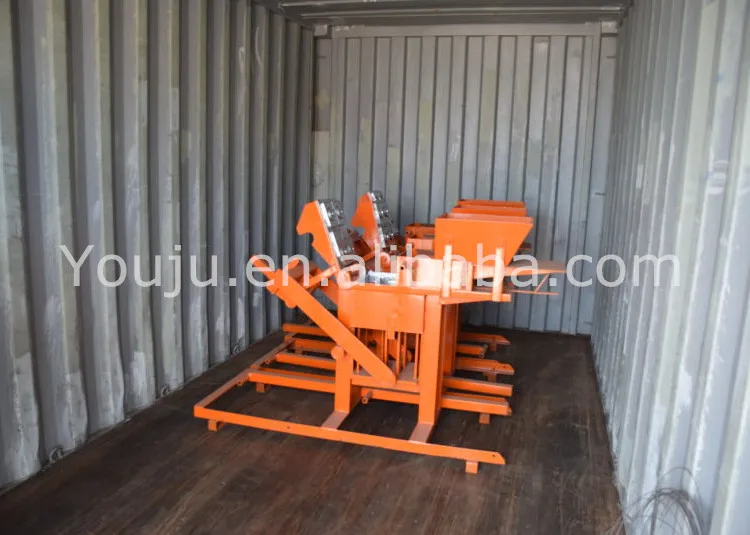
- Packing photographs and customs documentation support for smooth clearance
Installation, Commissioning & Support
- Levelled compacted ground required; no concrete foundation needed for the 200–240 kg frame
- No electrical supply or dedicated circuit required — fully manual lever operation
- Machine ships assembled on steel wheels; position by hand at the production area
- First-run pressing with your local soil-cement mix to confirm cycle rhythm and block density
- Operator training covers mix moisture window, mould release technique and daily lever linkage inspection
- Wear parts list identifies mould liner and pivot bushings for early reorder
What to Include in Your Inquiry
Send us the interlocking brick profile your builders use, including dimensions and a photograph of a laid wall if available. Provide a soil sample or a description of the local clay, laterite or sand you will blend with cement, and the cement type you can source. Tell us the daily output you need and the number of workers you plan to assign to the press.
Frequently Asked Questions
Q: How is daily output calculated for each interlocking brick format on the LY2-40?
A: Output is derived from the pressing cycle time of 30–40 seconds multiplied by the number of working hours, then reduced for mix loading, demoulding and pallet handling. The figure changes with block size because a larger interlocking profile takes more mix per cycle and may need longer compaction. We state the assumed format alongside every capacity number.
Q: Which soil types and cement ratios work with manual pressing on this machine?
A: Sandy loams and laterites generally compact well under manual lever force. Heavy clays need careful moisture control to prevent sticking in the mould. Cement ratio depends on the target block strength and the soil gradation. We confirm the workable range against your soil sample before the mould is finalised.
Q: What interlocking profiles are available, and can you design from my drawings?
A: Standard moulds cover common tongue-and-groove interlocking wall blocks and channel blocks. Custom profiles are produced from buyer-supplied drawings or from a sample brick sent to us. The mould is matched to the machine frame so changeover remains a manual operation with basic hand tools.
Q: How long does a mould change take on site?
A: A prepared operator with the correct spanners can swap a mould on the LY2-40 frame within a short break period. The fasteners are standard, and no specialised alignment jig is required. We include a step-by-step changeover procedure in the operation manual.
Q: What pallet size should I use with the LY2-40 for curing?
A: Pallet dimensions should match the interlocking brick footprint and the spacing your curing area allows. Timber or bamboo pallets are common for manual operations. We recommend a pallet specification that fits the forklift or handcart you already have on site, so wet bricks move without damage.