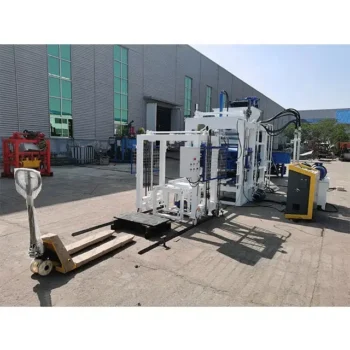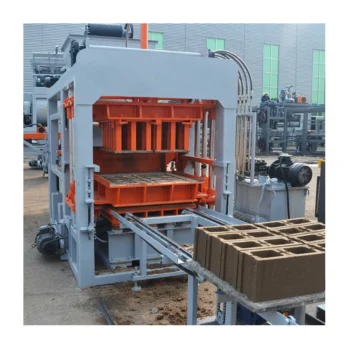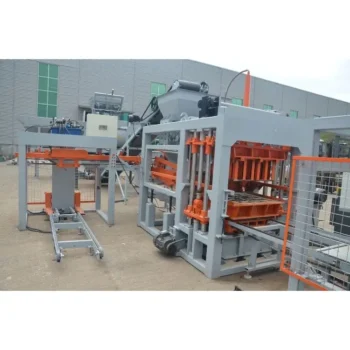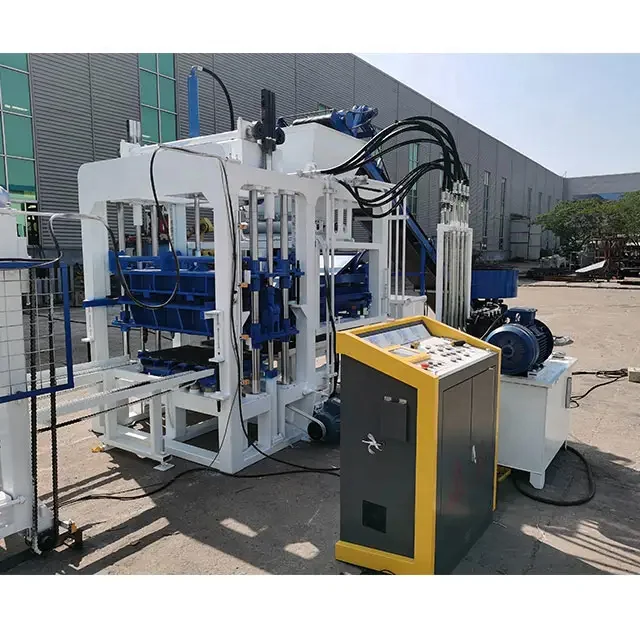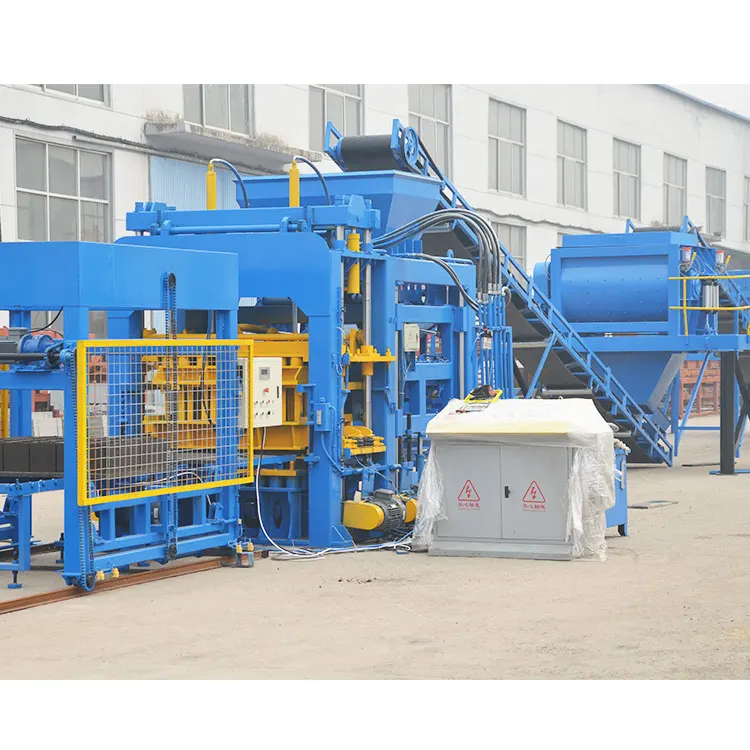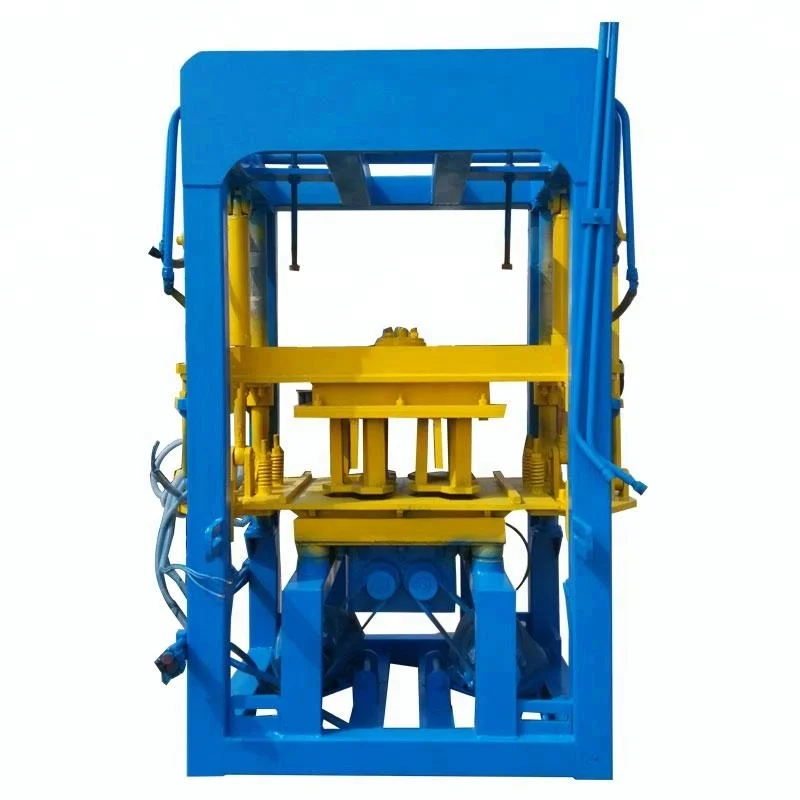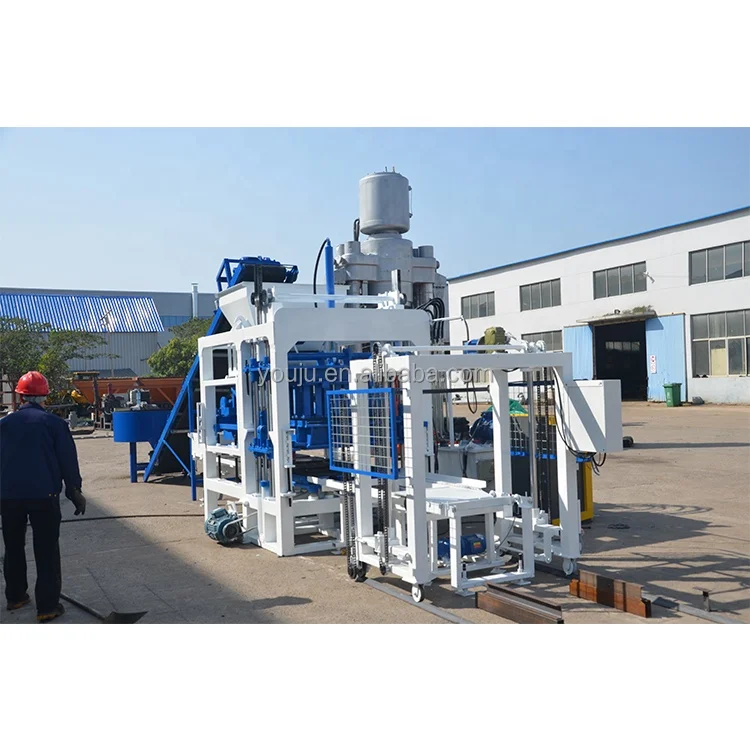

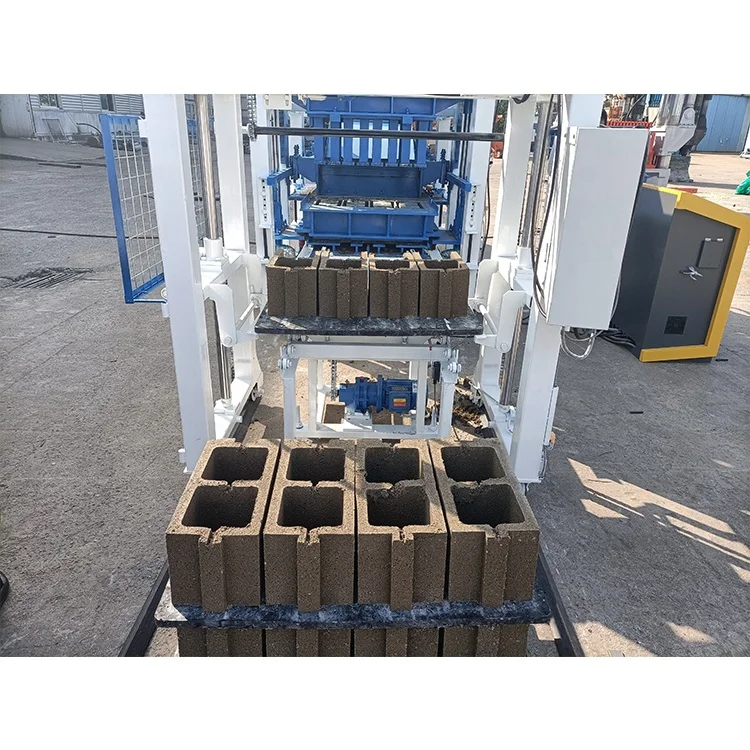
Description
Format-Matched Engineering — Every cycle time and output figure is calculated per block format, not quoted as a single number that ignores what you actually sell.
Technical Specifications
| Parameter | Value |
|---|---|
| Model | QT4-16 |
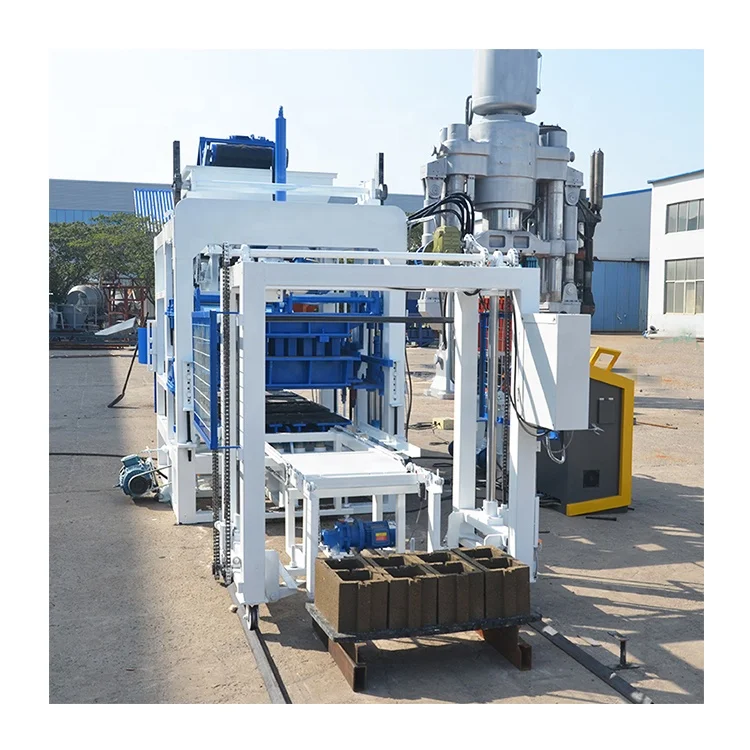
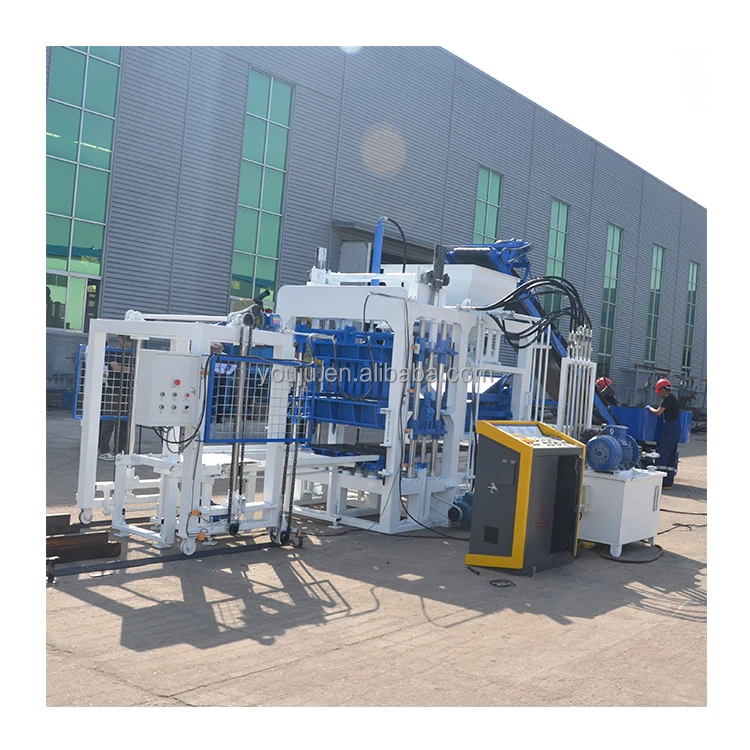
| Product Type | Hydraulic Concrete Block Making Machine |
| Overall Dimensions (L×W×H) | 7400×1950×2800 mm |
| Rated Hydraulic Pressure | 21 MPa |
| Main Vibration Form | Platform Vibration |
| Vibration Frequency Range | 2800–4500 r/min |
| Vibration Force | 40 kN |
| Pallet Size | 900×550 mm |
| Molding Cycle | 15–20 s (basis not stated in source — confirm block format, material and thickness) |
| Total Mass | 5 T |
| Demolding Method | Hydraulic |
| Factory Area | 600 m² |
| Control System | PLC with man-machine interface, logic control, production program, malfunction diagnosis and remote control function |
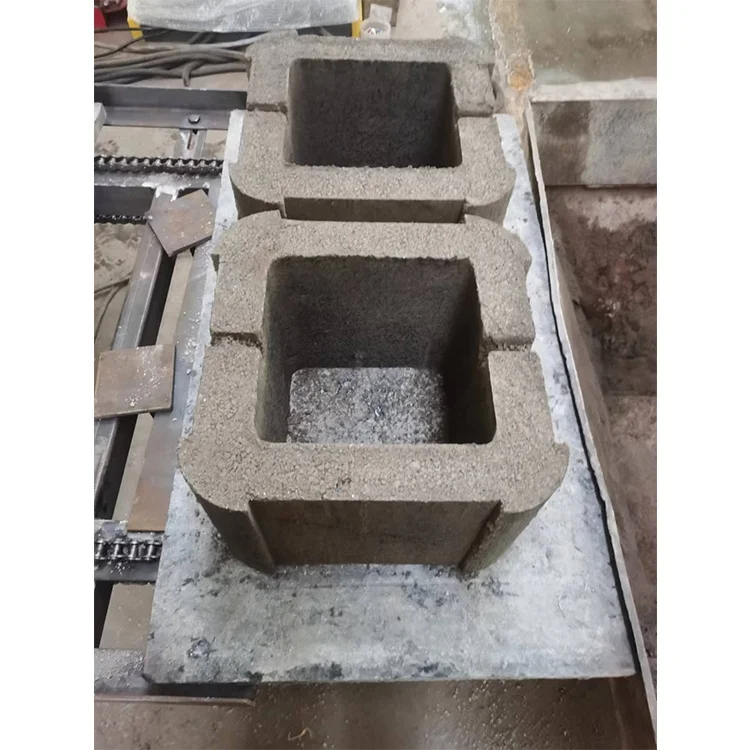
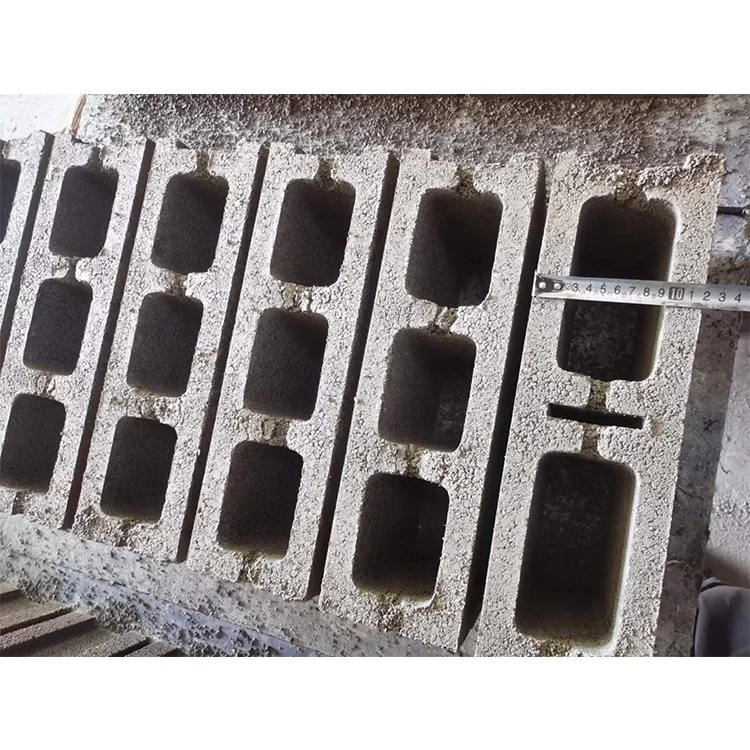
| Applied Products | Hollow blocks (8/6/5/4 inch), solid blocks, pavers, interlocking blocks, kerbstones, colored pavers |
| Raw Materials | Crushed stone, sand, cement, dust, fly ash, gravel, slag |
| Voltage & Frequency | Configurable per destination market — confirm before order |
| PLC Display Language | Configurable — confirm before production |
| Automation Level | Automatic |
Application Suitability
| Application | Material or Output |
|---|---|
| 8-inch hollow block production for load-bearing walls | Crushed stone, sand and cement mix on 900×550 mm pallets |
| 6-inch and 4-inch partition hollow blocks | Lighter aggregate blends with fly ash or dust substitution |
| Solid concrete block manufacturing | Dense aggregate and cement at higher hydraulic pressure settings |
| Interlocking paver and colored paver runs | Fine sand and pigment mix with shorter cycle and high-frequency vibration |
| Kerbstone production for road and infrastructure projects | Heavy-duty mix with extended vibration and pressure hold |
| On-site block production for construction contractors | Local aggregate sourced near project location, semi-continuous operation |
Why the Stated Cycle Time Rarely Matches Your Daily Count
A moulding cycle quoted without naming the block format is the single biggest gap between brochure numbers and actual output.
When a supplier lists 15–20 seconds as the moulding cycle for the QT4-16 block machine, that figure may reflect a thin 4-inch hollow block running on well-graded river sand. Switch to an 8-inch block with volcanic ash or quarry dust in the mix and the cycle extends — the vibration must work harder to consolidate the taller cavity, and the hydraulic pressure hold lengthens to prevent edge collapse on demolding. I have watched buyers arrive at their new plant expecting a certain daily count, only to discover the reality is noticeably lower once their actual block format and local material are on the pallet. The honest approach is to ask for a capacity sheet that states the cycle per format, with the assumed mix written beside it [NEED_CITE: block cycle time variance by format and aggregate type].
Matching Vibration to Your Local Aggregate
The QT4-16 block machine specifications include a platform vibration system adjustable from 2800 to 4500 r/min with 40 kN of vibration force. That range exists because different aggregates demand different energy inputs. River sand consolidates quickly at mid-range frequency, while angular crushed stone or lightweight volcanic ash needs higher amplitude and longer vibration to achieve the same density. If the frequency is set too low for the material, the block leaves the mould under-consolidated and breaks during handling. Set it too high and the fines migrate to the surface, leaving a weak core. Matching vibration to aggregate is the single step that determines whether the blocks you produce meet the compressive strength your local building code requires.
Pallet Size and Curing Layout Must Agree
The 900×550 mm pallet is the interface between the press and everything that happens afterwards. Before you confirm the order, measure the spacing of your existing curing racks and check the fork pocket width on the forklift that will move loaded pallets to the yard. A pallet that is even slightly wider than the rack rails forces a plant to rebuild curing infrastructure or handle pallets manually — a cost that never appears on the machine quotation [NEED_CITE: pallet handling compatibility in block plant layout]. Buyers who verify pallet dimensions against their curing area before production avoid a delay that otherwise surfaces only on commissioning week.
Pressure, Vibration and Mix Design as One System
The 21 MPa rated hydraulic pressure and the 40 kN vibration force do not operate independently. Pressure compacts the mix vertically while vibration liquefies it laterally; together they determine the green density of the block at the moment of demolding. A high-cement mix with fine sand needs less vibration and moderate pressure, whereas a lean mix with coarse gravel and fly ash demands the full vibration range and maximum pressure hold. The PLC on the QT4-16 allows the operator to store recipes for different formats, so that switching from 8-inch hollow blocks to solid pavers does not require the operator to relearn the machine from scratch. Understanding how these three variables interact is what separates a block plant that produces consistent strength from one that generates waste on every shift change.
What Happens When Configuration Is Skipped
When voltage and frequency are assumed rather than confirmed, the machine may arrive at a site where the supply is 220 V 60 Hz while the motor was wound for 380 V 50 Hz. The result is a press that will not start, a commissioning engineer standing idle, and weeks of delay while replacement motors are shipped. Similarly, when pallet material is chosen without considering the humidity and curing temperature at the buyer’s location, wooden pallets warp within the first production month and steel pallets corrode at the weld points. These are not machine defects — they are configuration oversights that turn a straightforward installation into a dispute [NEED_CITE: voltage mismatch consequences in exported industrial machinery]. The cost of a confirmation sheet before production is negligible compared to the cost of re-commissioning after arrival.
Why Buyers Return for a Second Line
Block machinery is our single focus, which means the press, mould, pallet and handling equipment are specified together rather than sourced separately and made to fit. We configure the QT4-16 against the buyer’s actual mix design and target block format, not a catalogue default, so the vibration and pressure settings match local aggregate from the first production run. Mould design covers the formats the buyer’s market actually sells, with custom drawings available when a non-standard kerbstone or interlocking profile is required. The automation level is selectable — a buyer can commission the line semi-automatic and add automatic stacking later without replacing the press. Every machine ships with installation support, operator training, and a wear parts list that ensures the first replacement is available when needed rather than weeks after the original fails.
Documentation & Verification
- Line layout stating cycle and output per block format, not a single blanket figure
- Mould drawing and format list confirming included and optional block sizes
- Pallet specification covering material, thickness and rack compatibility
- Voltage, frequency and PLC display language confirmation signed before production
- Factory test record on the buyer’s target block format before dispatch
- Operation and maintenance manual with wear parts and mould replacement schedule
Installation, Commissioning & Support
- 600 m² factory area assessment including curing yard and pallet return path
- Voltage and frequency verified against site supply before motor winding begins
- Machine dismantled into press frame, hydraulic station and control cabinet for container loading
- On-site PLC parameter tuning against local aggregate and chosen block format
- Operator training on recipe storage, mould change and fault diagnosis screens
- Wear parts and mould list provided at handover for first replacement planning
What We Need to Size the QT4-16 Correctly
To prepare a configuration that reflects your actual production rather than a catalogue estimate, share the block formats you sell most — including dimensions, wall thickness and target compressive strength. Tell us which raw materials are available locally and whether you plan to substitute fly ash or quarry dust for a portion of the cement. Confirm your site voltage and frequency, the language you need on the PLC display, and the curing rack and forklift specifications you already have on site.
Frequently Asked Questions
Q: How is the QT4-16 cycle time calculated for different block formats?
A: The 15–20 second range reflects variation across block sizes. An 8-inch hollow block requires longer vibration and pressure hold than a 4-inch partition block. We provide a capacity sheet stating the cycle per format with the assumed mix design, so you can calculate realistic daily output for the block your market actually buys rather than relying on a single catalogue figure.
Q: Will the 900×550 mm pallet fit my existing curing racks and forklift?
A: Pallet compatibility depends on your rack rail spacing and fork pocket width. Before we confirm the order, send us the dimensions of your curing racks and the forklift you will use. If adjustments are needed, we revise the pallet specification so that loaded pallets move from press to curing yard without manual intervention or rack modification.
Q: How do I match vibration and pressure to my local aggregate?
A: The adjustable vibration frequency and 21 MPa hydraulic pressure must be set according to your specific mix. Angular crushed stone, volcanic ash and river sand each demand different energy input. We configure the PLC recipes based on the aggregate samples and mix proportions you provide, then verify block strength during the factory test before the machine ships.
Q: What electrical and language details must I confirm before production?
A: Voltage, frequency and PLC display language are confirmed in writing before the machine enters production. This prevents a situation where the press arrives with a motor wound for the wrong supply or a control screen in a language your operators cannot read, both of which cause multi-week commissioning delays.
Q: Which moulds come with the QT4-16 and how long does a change take?
A: The standard package covers 8-inch, 6-inch, 5-inch and 4-inch hollow block moulds. Additional formats such as pavers and kerbstones are available as options. Mould change procedure and estimated time are documented in the format list so you can plan shift schedules around the formats you intend to run each week.