Description
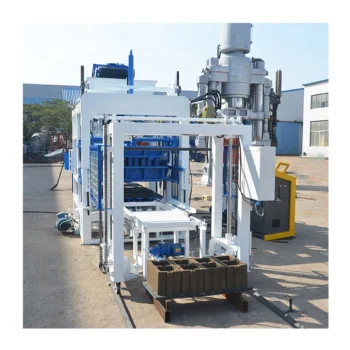
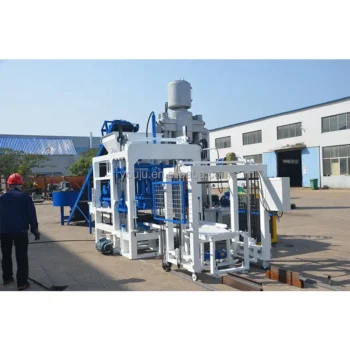
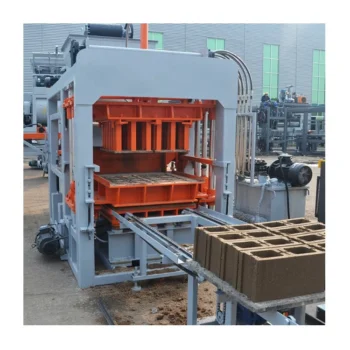
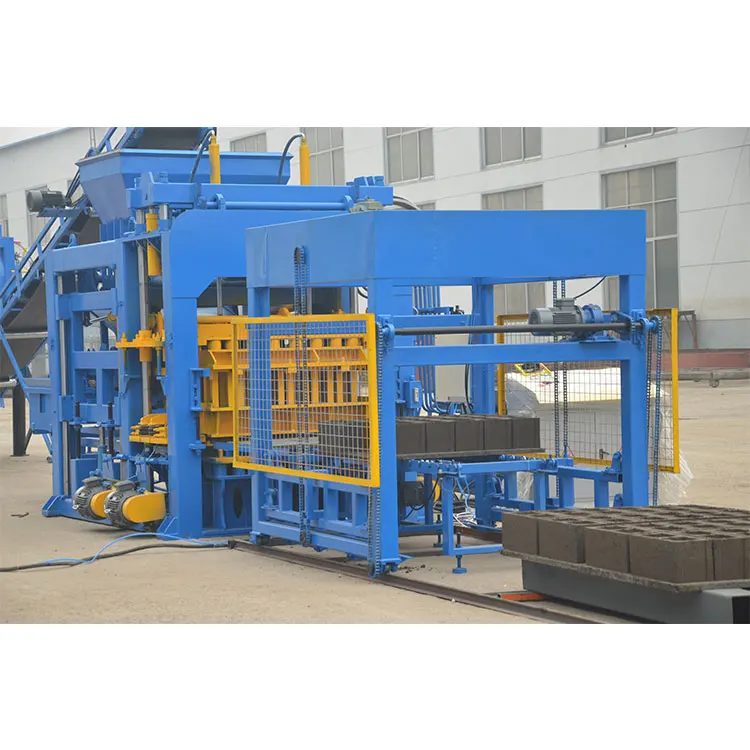
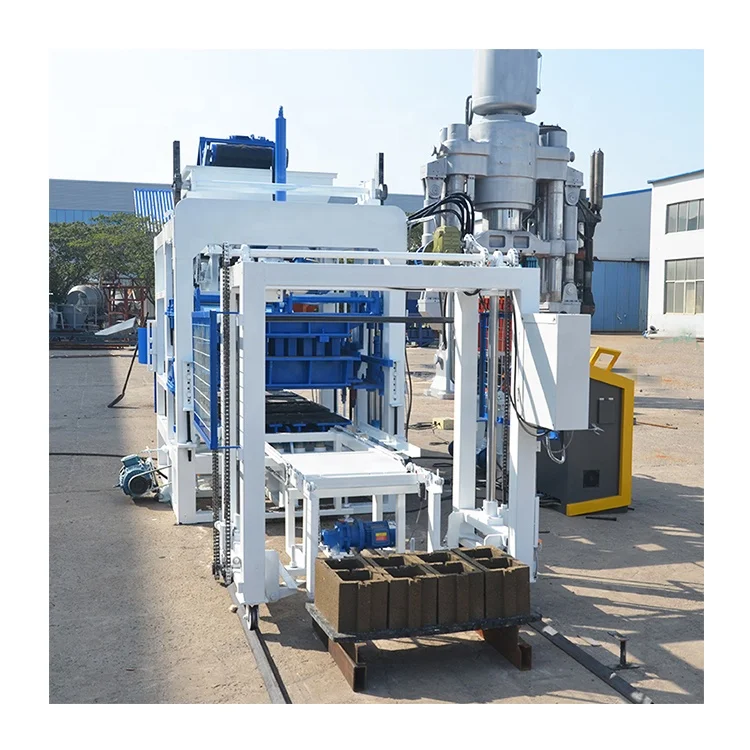
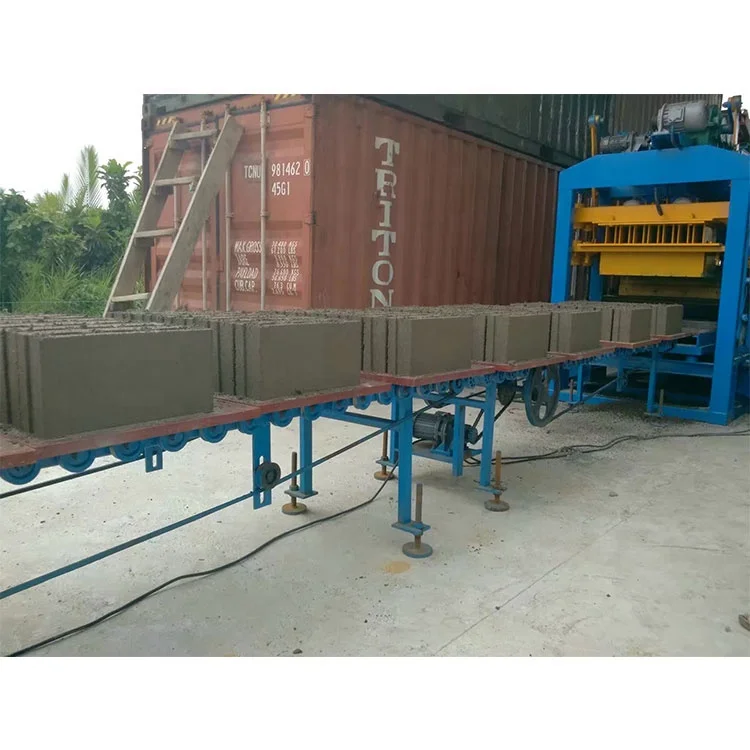
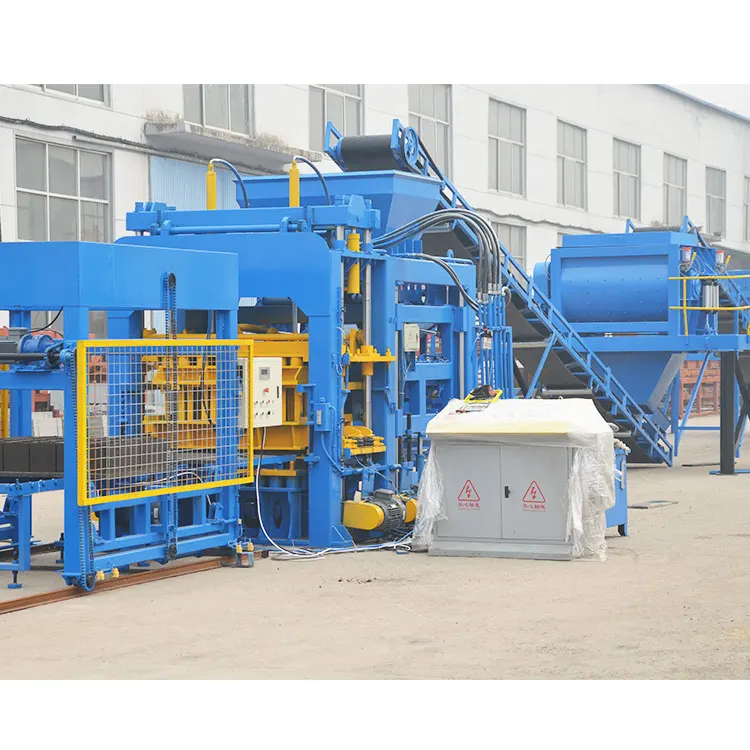
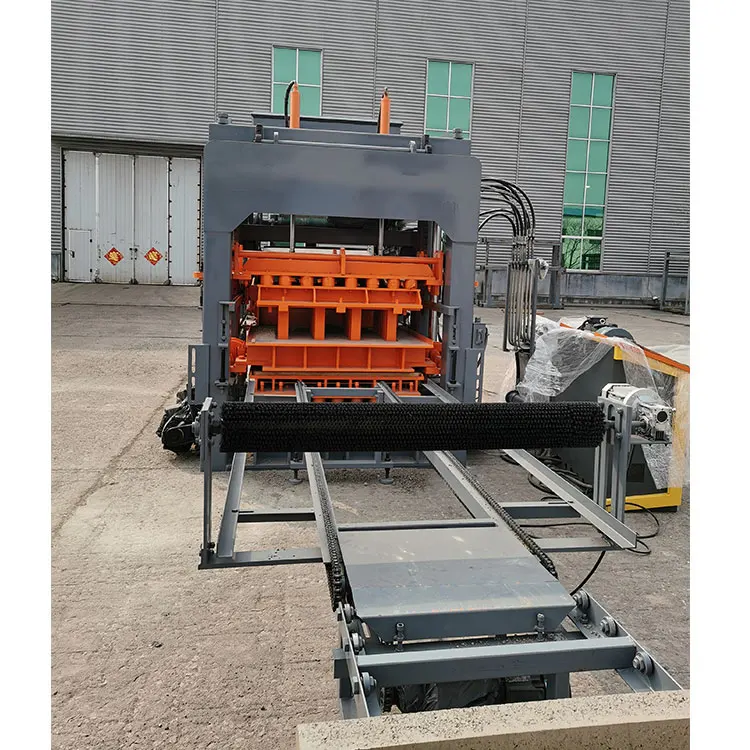
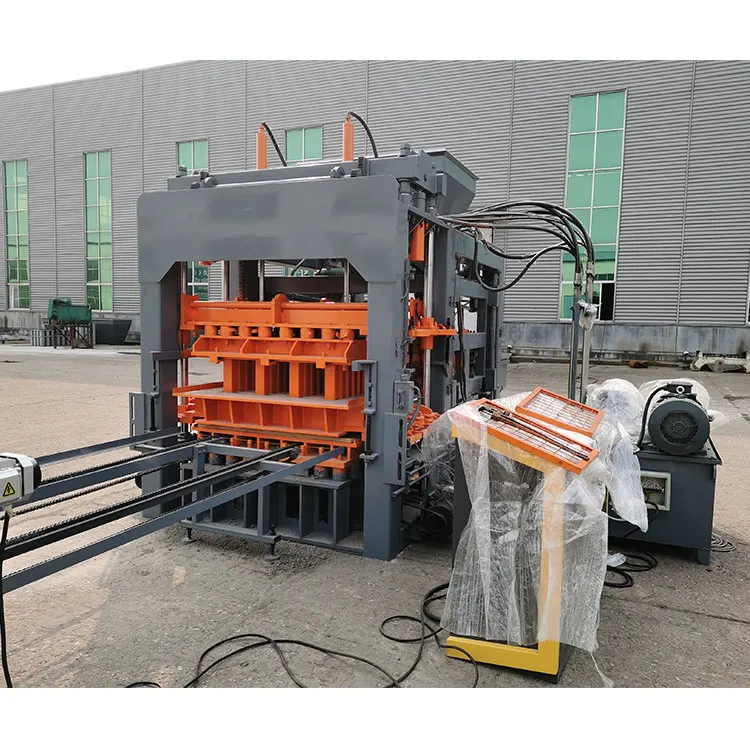
Matched System Engineering — the QT12-15 block making machine is configured around your actual block format, local aggregate and curing setup, not a catalogue default, so every capacity figure ties back to a specific product you sell.
Technical Specifications
| Parameter | Value |
|---|---|
| Model | QT12-15 |
| Product Type | Automatic Hydraulic Concrete Block Making Machine |
| Overall Dimensions (L×W×H) | 9350 × 2520 × 2950 mm |
| Total Weight | 12,000 kg |
| Rated Pressure | 21 MPa |
| Main Vibration Form | Platform Vibration |
| Vibration Frequency | 2,800–4,500 r/min |
| Vibration Acceleration | 15–20 g |
| Exciting Force | 120 kN |
| Fixed Brick Height | 50–200 mm |
| Pallet Size | 1,350 × 850 mm |
| Molding Cycle | 15–25 s |
| Storage Hopper Volume | 0.4 m³ |
| Feeding Device Volume | 0.31 m³ |
| Total Power | 50.7 kW |
| Control System | PLC controlled (mechanical-hydraulic synthesis) |
| Frame Structure | Gantry frame type, super steel, shock resistant |
| Mould Material | Manganese steel, carburizing and quenching treatment |
| Block Compressive Strength | ≥ 15 MPa |
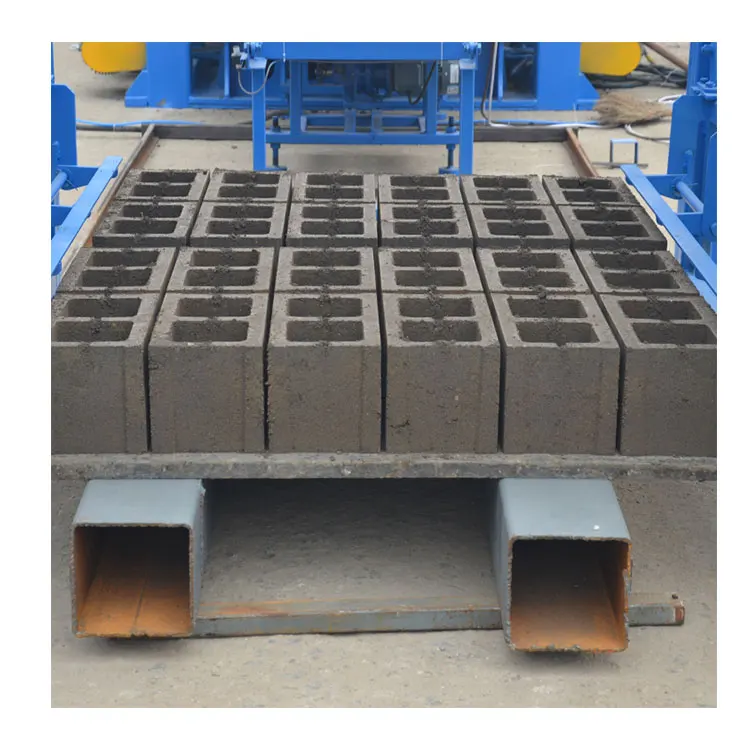
| Output — Hollow Block (390×190×190 mm) | 12 pcs/mould, 1,720–2,160 pcs/h based on 20–25 s cycle |
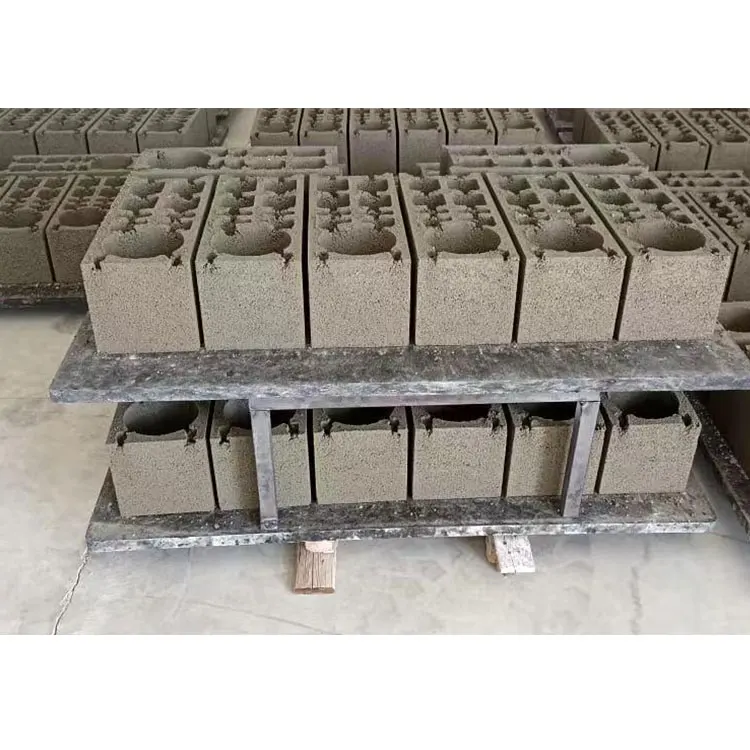
| Output — Porous Block (240×115×90 mm) | 35 pcs/mould, 5,040–6,300 pcs/h based on 20–25 s cycle |
| Output — Standard Block (240×115×53 mm) | 62 pcs/mould, 13,100–14,800 pcs/h based on 15–17 s cycle |
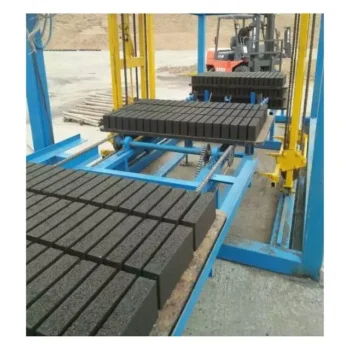
| Suggested Line Configuration | PL1200 batching machine, JS500 or JS750 mixer, 8 m conveyor belt, stacker |
Application Suitability
| Application | Material or Output |
|---|---|
| Hollow block production for building construction | Crushed stone, sand, cement mix forming 390×190×190 mm structural blocks |
| Porous and perforated block production | Lightweight aggregate and cement blends for 240×115×90 mm cavity bricks |
| Standard solid brick production | Dense aggregate mixes pressed into 240×115×53 mm facing and common bricks |
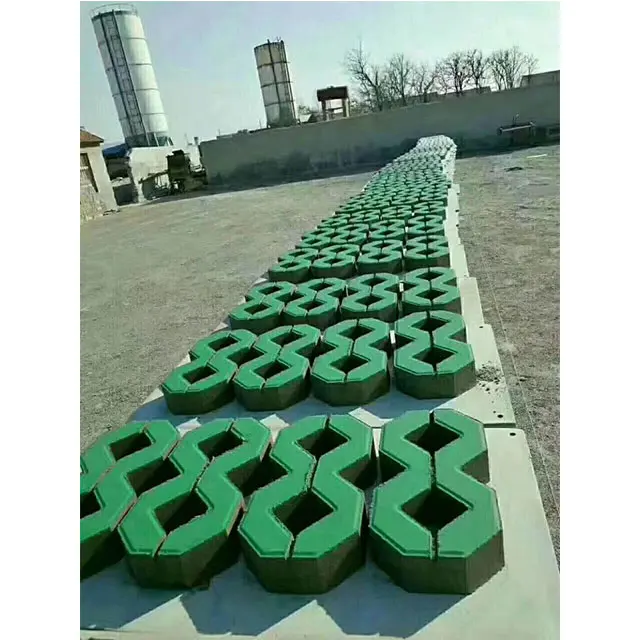
| Paving block and interlocking brick production | High-strength concrete mixes for driveways, walkways and road base |
| Fly ash block production | Fly ash, lime and gypsum blends for masonry units |
| Cement-based concrete product manufacturing | Kerbstones, channel blocks and custom formats via interchangeable moulds |
What "17,000 Blocks per Day" Actually Means for the QT12-15 Block Making Machine
Every capacity figure on this page names the block format and cycle time behind it — no single headline number hiding half the story.
Catalogue sheets often quote one output number and leave the buyer guessing which block it refers to. In practice, a 390×190×190 mm hollow block at a 20–25 second cycle produces a very different daily count than a 240×115×53 mm standard brick at 15–17 seconds. I have watched project planners order a press based on the larger figure and discover on commissioning day that the hollow block output is a fraction of what they budgeted. [NEED_CITE: common discrepancies between catalogue capacity and site output in block making]
Format-by-Format Output and What Controls It
The QT12-15 block making machine produces 12 hollow blocks per mould at a 20–25 second cycle, which translates to 13,700–17,200 pieces across an eight-hour shift. Switch to a porous block mould with 35 cavities and the same cycle window yields 40,300–50,400 pieces per shift. Each number assumes consistent raw material feed and no unplanned stops, so real site output depends on how well the upstream batching and downstream pallet handling keep pace.
Mould Change Flexibility on a Working Shift
Manganese steel moulds with carburizing and quenching treatment are rated for extended service life, but the value of multiple formats only matters if the changeover fits inside your shift plan. A bolt-on mould swap on the QT12-15 involves releasing the clamping bolts, lifting the old mould with the plant crane, lowering the new one and re-tensioning — a sequence that can consume a meaningful portion of a shift if the crew has not practised it. [NEED_CITE: typical mould change time and its impact on effective production hours] Buyers who plan two or three format changes per day need to factor that downtime into the capacity calculation rather than treating the press as if it runs one format continuously.
Reading the Pressure and Vibration Numbers Together
Rated pressure at 21 MPa and platform vibration at 120 kN exciting force work as a pair — the hydraulic pressure compacts the mix while the vibration rearranges aggregate particles into a denser matrix. When the two are matched to the buyer’s specific aggregate gradation and cement content, the resulting block reaches the stated ≥ 15 MPa compressive strength. If vibration frequency stays at 2,800 r/min on a stiff, low-slump mix, compaction may be incomplete; raising it toward 4,500 r/min helps finer particles settle. This is why we run trial blocks with the buyer’s actual material before locking in the PLC parameters.
The Pallet Size Question Most Buyers Skip
The 1,350 × 850 mm pallet governs how many blocks sit on each board and how those boards move through curing. If your existing curing racks were built for a smaller pallet, every board will need re-stacking by hand before it enters the rack — the exact bottleneck the buyer thought the automatic line would eliminate. Forklift tine spacing, rack bay width and curing chamber door clearance all have to accommodate 1,350 × 850 mm boards before the press is ordered, not after it arrives. [NEED_CITE: pallet and curing rack compatibility issues in concrete block plants]
When the Wrong Configuration Shows Up on Day One
Ordering a QT12-15 without confirming voltage, frequency and PLC display language seems minor until the electrician opens the control cabinet on arrival and finds a 380 V / 50 Hz panel in a 440 V / 60 Hz country. The press sits idle while transformers are sourced or the PLC is reprogrammed. Similarly, specifying a JS500 mixer for a high-output hollow block line may starve the 0.4 m³ storage hopper during continuous cycling, forcing the press into wait states that drag daily output well below the format-stated capacity. These are not machine defects; they are configuration gaps that surface only when the line is asked to run. [NEED_CITE: commissioning delays caused by unconfirmed electrical specifications]
Why This Is the Right Place to Source a QT12-15
Block machinery is the single focus here, which means the press, mould, pallet and handling equipment are specified as one matched system rather than assembled from separate purchase orders. The configuration is set against your actual mix design and local aggregate, not copied from a default catalogue sheet. Mould design covers the formats your market sells, and custom drawings are accepted when standard cavities do not match. The automation level is selectable — start semi-automatic and add a stacker later — so capital deployment tracks your sales volume. Installation support includes operator training so the crew can run the line from the first week.
Documentation & Verification
- Line layout with capacity calculation naming each block format and its cycle assumption
- Mould drawing pack listing every cavity format and custom design option
- Pallet specification sheet cross-referenced to your curing rack and forklift dimensions
- Hydraulic and electrical schematic confirming voltage, frequency and PLC language before production
- Factory test record showing block compressive strength on your mix design
- Packing photographs and customs documentation for smooth port clearance
Installation, Commissioning & Support
- Foundation plan scaled to 9,350 × 2,520 mm footprint and 12,000 kg static load
- Dedicated 50.7 kW power circuit with confirmed voltage and frequency before wiring
- Gantry frame assembled on-site with bolt torque verification against shock-resistant spec
- PLC parameters tuned to your aggregate and target block format during first run
- Operator training on mould change procedure and daily maintenance intervals
- Wear parts and mould reorder list with manganese steel specifications for local sourcing
Before You Send the Inquiry
To size the QT12-15 correctly, share the block formats your market currently sells along with target daily output per format. Confirm your local aggregate type — whether crushed granite, river sand, volcanic scoria or fly ash — so the vibration and pressure settings can be matched before the press is built. State your site voltage, frequency and preferred PLC display language to avoid any electrical mismatch at commissioning.
Frequently Asked Questions
Q: How is daily output verified for each block format on the QT12-15?
A: Each output figure is calculated from the mould cavity count and the molding cycle specific to that format. Hollow blocks at 12 cavities and a 20–25 second cycle yield one range; standard bricks at 62 cavities and a 15–17 second cycle yield another. We provide a written capacity table naming every format and cycle assumption so your project model uses realistic numbers.
Q: Which mould formats can the QT12-15 run and how long does a changeover take?
A: The press accepts moulds for hollow blocks, porous blocks, standard bricks, pavers and interlocking units. Moulds are manganese steel with carburizing treatment. Changeover time depends on crew practice and crane availability; we recommend a timed dry run during commissioning so your team knows the realistic window before planning a multi-format shift.
Q: How do I match pallet size to my existing curing area?
A: The standard pallet is 1,350 × 850 mm. Before ordering, measure your curing rack bay width, forklift tine spacing and chamber door clearance. If any dimension falls short, we can discuss alternative pallet sizes or rack modifications so the line runs continuously without manual re-stacking at the curing stage.
Q: Can the QT12-15 be configured for my local aggregate?
A: Yes. We request a sample of your aggregate and cement blend, then run trial blocks to set vibration frequency and hydraulic pressure. This ensures the ≥ 15 MPa compressive strength target is met with materials you can actually source, rather than forcing a costly material substitution after the machine arrives.