

Description
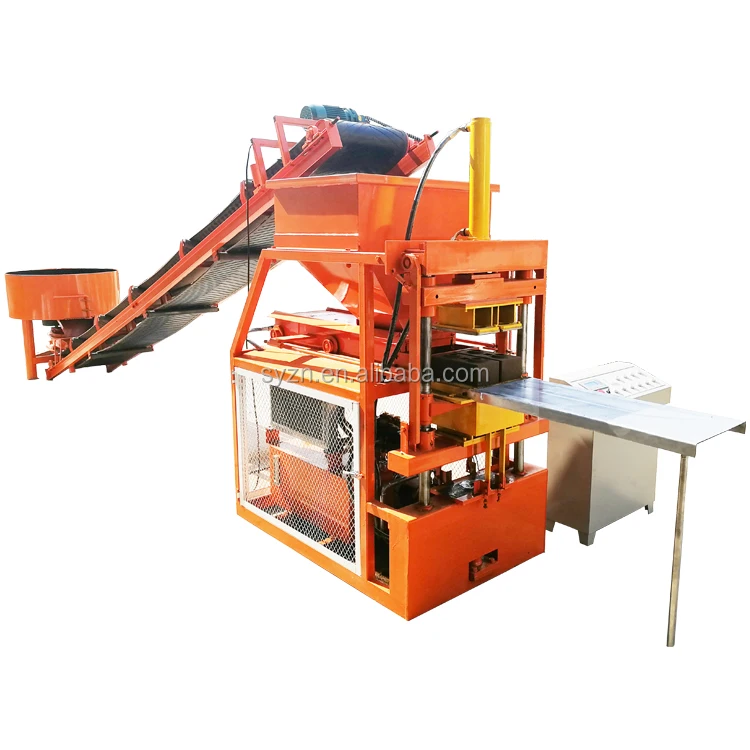
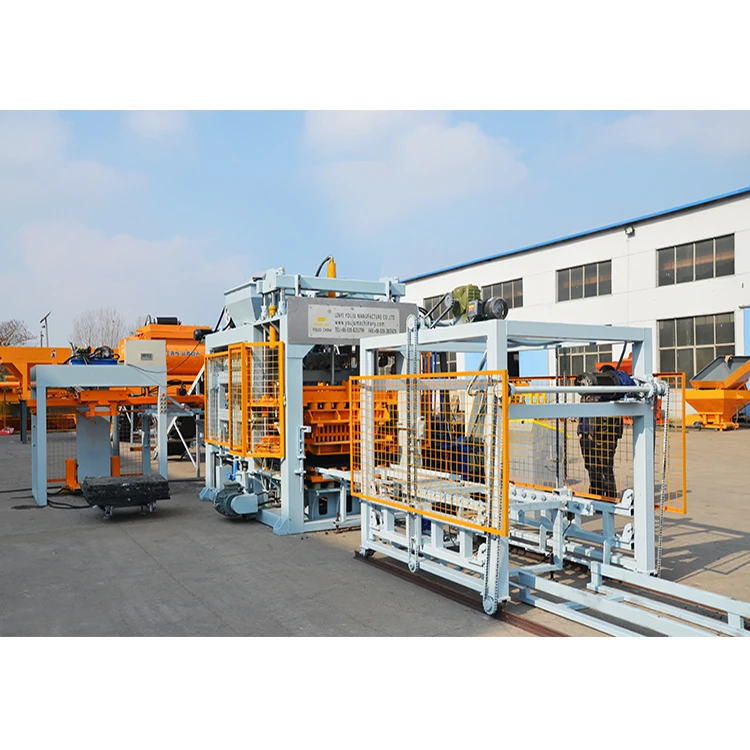
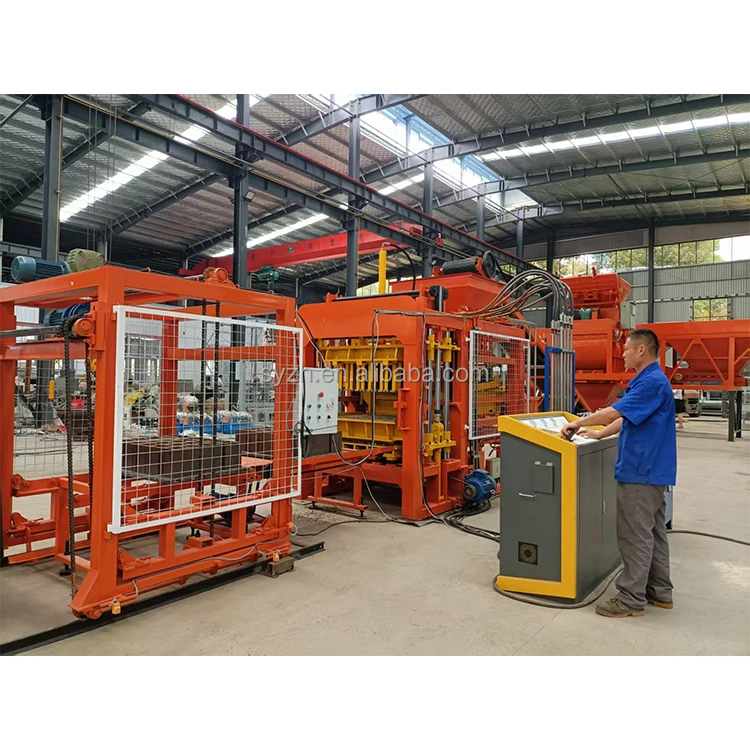
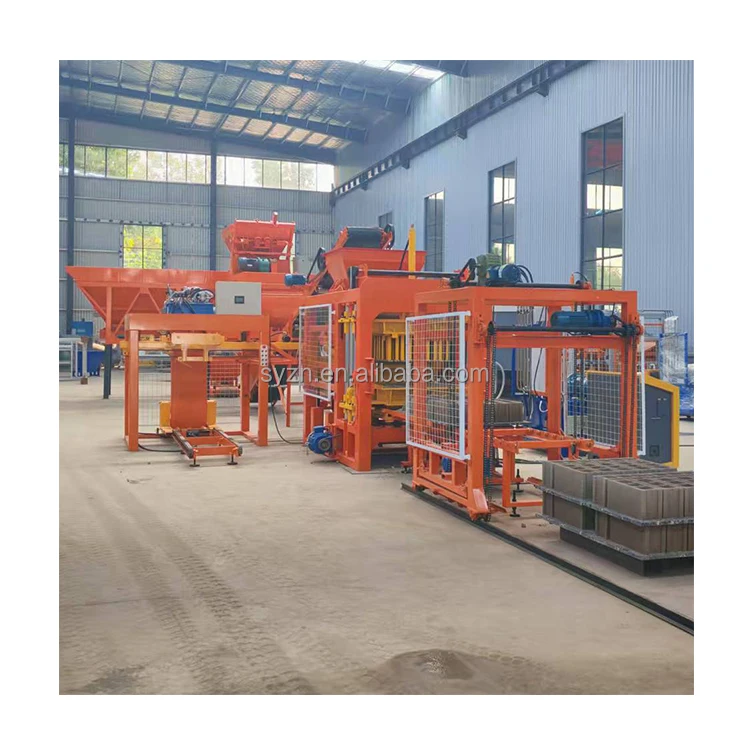
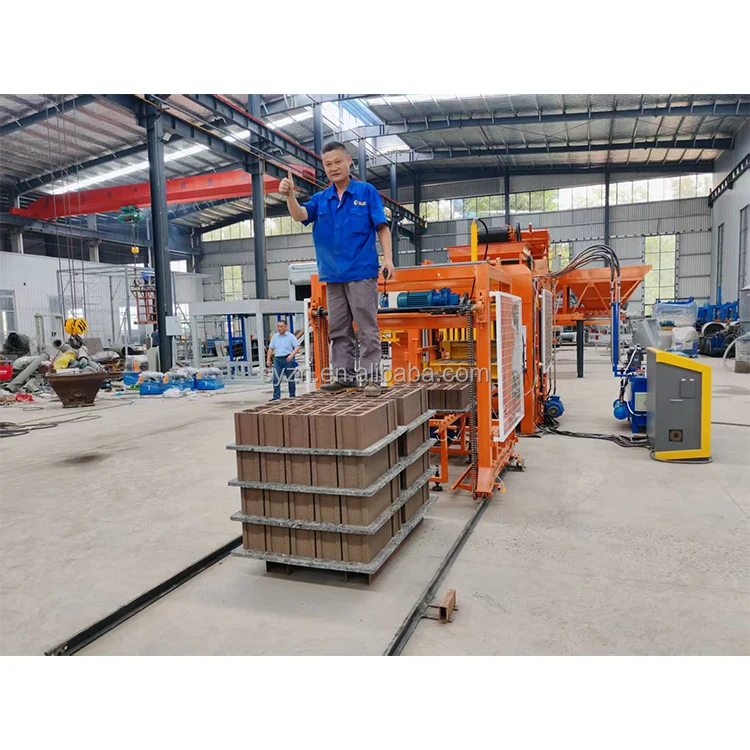
Mould-First Sizing — The QT6-15 block machine capacity is calculated per block format, cavity count, and cycle time, so plant output aligns with what your market actually sells.
Technical Specifications
| Parameter | Value |
|---|---|
| Model | QT6-15 |
| Product Type | Hydraulic Block Making Machine |
| Overall Dimensions (L×W×H) | 8200×1700×2950 mm |
| Vibration Form | Platform Vibration |
| Vibration Frequency | 0-60 Hz |
| Vibration Force | 45 kN |
| Moulding Mode | Automatic loading with vibration moulding |
| Demolding Method | Hydraulic |
| Molding Cycle | 15-20 s (hollow/solid), 20-25 s (pavers) |
| Pallet Size | 880×850 mm |
| Overall Power | 37 kW |
| Total Mass | 7 T |
| Control System | PLC with touch screen interface |
| Block Compressive Strength | >15 MPa |
| Recommended Factory Area | 1200 m² |
| Hydraulic System | Independent integrated hydraulic station |
| Raw Material Compatibility | Waste ash, slag, cement-based mixes |
| Warranty | 1 year (excluding spare parts) |
Application Suitability
| Application | Material or Output |
|---|---|
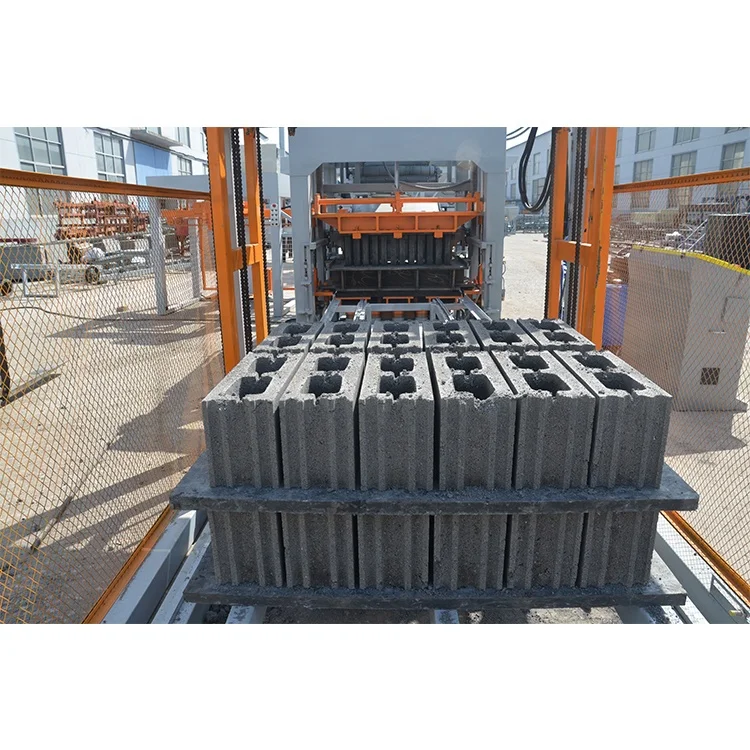
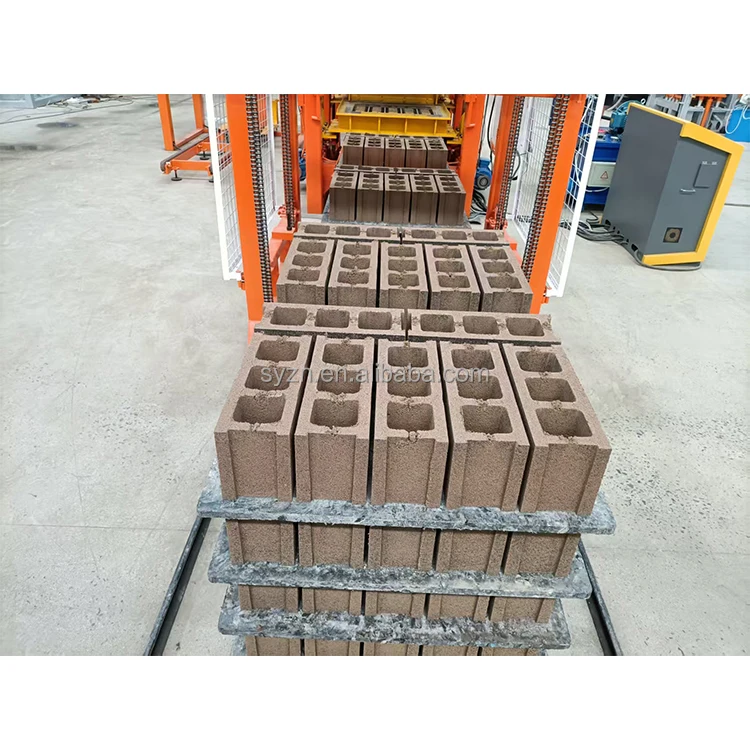
| Hollow block production | 400×200×200 mm (6 pcs/mould, 1080-1440 pcs/h) |
| Hollow block production | 400×150×200 mm (8 pcs/mould, 1440-1920 pcs/h) |
| Solid brick masonry | 240×115×53 mm (32 pcs/mould, 5760-7680 pcs/h) |
| Rectangular paving brick | 200×100×60 mm (21 pcs/mould, 2160-2880 pcs/h) |
| Zigzag interlocking paver | 225×112.5×60 mm (15 pcs/mould, 2160-2880 pcs/h) |
Why "Pieces Per Hour" Means Nothing Without the Block Format
Capacity only becomes real when tied to a specific block size, mould cavity count, and cycle time.
I once watched a site in West Africa take delivery of a mid-tier block maker rated at impressive hourly numbers. The first run produced 400×200×200 hollow blocks, but the local river sand had high clay content. The vibration parameters had to be completely re-tuned, and daily output settled at roughly six tenths of the brochure figure. The machine was fine. The expectation was not. That is why every QT6-15 block machine capacity figure on this page states the block format, mould cavity count, and cycle range it assumes — no hidden basis, no guesswork [NEED_CITE: real-world block output versus catalogue claims].
Matching the QT6-15 to Your Block Format and Market
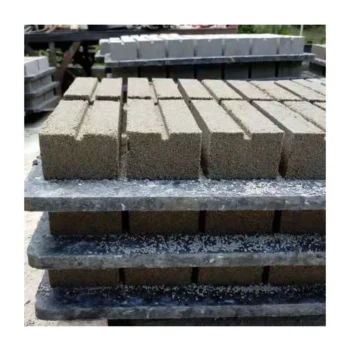
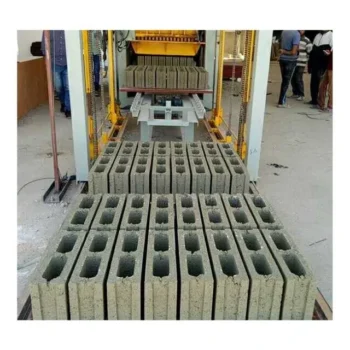
The QT6-15 block machine covers hollow blocks, solid bricks, rectangular pavers, and zigzag interlocking pavers across a single pallet footprint of 880×850 mm. Each format changes the mould cavity count, cycle time, and therefore the daily output your plant can deliver. A buyer producing 400×200×200 hollow blocks for wall construction will run six pieces per cycle at 15-20 seconds, while the same machine pressing 200×100×60 rectangular pavers operates with twenty-one cavities at a slightly longer 20-25 second cycle.
This matters because a quotation that only states "cycles per hour" without naming the block format leaves you unable to plan raw material purchasing, pallet inventory, or curing rack space. Here, the QT6-15 block machine capacity for hollow blocks at 400×150×200 mm — eight pieces per mould, 1440-1920 pieces per hour — is a different number from the 400×200×200 mm format. Both are real. Both must be read against the format your market actually orders [NEED_CITE: block format demand by regional construction market].
Tuning Vibration and Hydraulic Pressure to Local Aggregate
Platform vibration with adjustable frequency from 0-60 Hz and 45 kN of vibration force allows the operator to match the compaction energy to whatever aggregate is available locally. River sand with high fines, crushed basalt, or recycled construction waste each respond differently to vibration. The independent hydraulic station sits isolated from the main frame vibration, which keeps demolding pressure consistent across long production runs — the blocks release from the mould at the same density whether it is hour one or hour eight of the shift.
How the Key Specifications Shape Your Daily Output
The 37 kW overall power rating drives both the hydraulic station and the vibration system, which means electrical supply planning must account for peak draw during simultaneous vibration and pressing. The 880×850 mm pallet size directly dictates your curing rack dimensions and forklift tine spacing — if your existing racks were built for a different pallet standard, the mismatch will slow handling before the machine even becomes the bottleneck. The PLC touch screen interface with fault diagnosis and action interlock logic lets the operator see real-time cycle status and alarm codes, reducing the chance that a minor sensor fault stops the entire line for hours. The recommended 1200 m² factory area accounts for the press, raw material feed, pallet return, and wet block curing zone in a single continuous layout.
What Happens When the Pallet Size Is Chosen Without Checking Your Curing Area
A pallet that does not match your existing curing racks means either rebuilding the racks or stacking blocks by hand — both of which erase whatever speed advantage the machine itself provides. I have seen plants where the press was running smoothly but the curing area could not accept the pallets fast enough, creating a bottleneck that had nothing to do with cycle time [NEED_CITE: pallet handling as a common bottleneck in block plants]. The 880×850 mm pallet used by this machine must be checked against your forklift capacity, rack spacing, and floor area before the order is confirmed.
Why Buyers Source Block Machinery from Shiyue
The machine, mould, pallet, and handling equipment are specified as one matched system rather than assembled from separate suppliers, which eliminates interface problems at commissioning. Configuration is set against your actual mix design, local aggregate, and target block format — not a catalogue default. Mould design covers the formats your regional market demands, including custom drawings when standard moulds do not match. Automation level is selectable, so a buyer can start with semi-automatic pallet handling and add automatic stacking later. Installation includes on-site commissioning and operator training so the first production run is not a costly learning exercise [NEED_CITE: matched system specification versus component-level sourcing].
Documentation & Verification
- Line layout and capacity calculation stating the exact block format and cycle time assumed
- Machine specification sheet with pallet size, power rating, and vibration parameters
- Mould drawing and format list covering all supplied block types
- Hydraulic and electrical schematic for local maintenance teams
- Voltage and control language confirmation before production begins
- Factory test record on your specified block format before dispatch
Installation, Commissioning & Support
- 1200 m² recommended factory area must accommodate press, mixer, and wet curing zone
- 37 kW overall power requires a dedicated three-phase circuit at the confirmed voltage and frequency
- Fully assembled main machine arrives ready for bolt-down and pallet system connection
- PLC touch screen language and alarm codes configured to operator preference before shipment
- Vibration frequency and hydraulic pressure tuned on-site to match your local aggregate and mix
- Mould and hydraulic wear parts list provided with recommended replacement intervals
Before You Request a Quotation
Share the exact block formats your market orders, including dimensions and daily volume targets. Provide a raw material test report or at minimum the aggregate type and cement ratio you plan to use. Confirm your site voltage, frequency, and preferred PLC display language. If you have existing curing racks or forklifts, send their dimensions so the 880×850 mm pallet compatibility can be verified before the order is placed.
Frequently Asked Questions
Q: How is QT6-15 block machine capacity calculated for different block formats?
A: Each capacity figure is tied to a specific block size, mould cavity count, and cycle time. For example, 400×200×200 mm hollow blocks use six cavities per mould at 15-20 seconds per cycle, yielding 1080-1440 pieces per hour. Switching to 400×150×200 mm changes the cavity count to eight and the output to 1440-1920 pieces per hour. Always read the capacity number alongside its format basis.
Q: What is the realistic mould change time on the QT6-15?
A: The QT6-15 uses a hydraulic demolding system that releases the mould assembly from the vibration platform. A trained operator can complete a full mould swap within a shift, though the exact time depends on whether the new mould is pre-staged and whether the format requires a pallet size change. Factor a planned stop into your production schedule rather than expecting zero downtime.
Q: How does the 880×850 mm pallet affect my curing area and handling equipment?
A: Your curing racks must be spaced to accept 880×850 mm pallets, and your forklift tines must clear that width under load. If your existing racks were built for a different pallet standard, you will need to rebuild or adapt them before the machine arrives. Confirming these dimensions early avoids a handling bottleneck that has nothing to do with the press itself.
Q: How do I match vibration frequency and hydraulic pressure to my local aggregate?
A: The platform vibration system adjusts from 0-60 Hz with 45 kN of force. High-clay river sand typically requires a different frequency and compaction time than crushed basalt or recycled aggregate. During on-site commissioning, the vibration parameters are tuned against your actual mix design and test blocks are pressed until compressive strength exceeds 15 MPa consistently.
Q: What electrical and control details must be confirmed before production starts?
A: Voltage, frequency, and PLC display language all need written confirmation before the machine enters production. A mismatch in any of these delays commissioning after arrival and may require rewiring or replacement control components. The independent hydraulic station also requires a dedicated three-phase circuit sized for the 37 kW overall power draw.