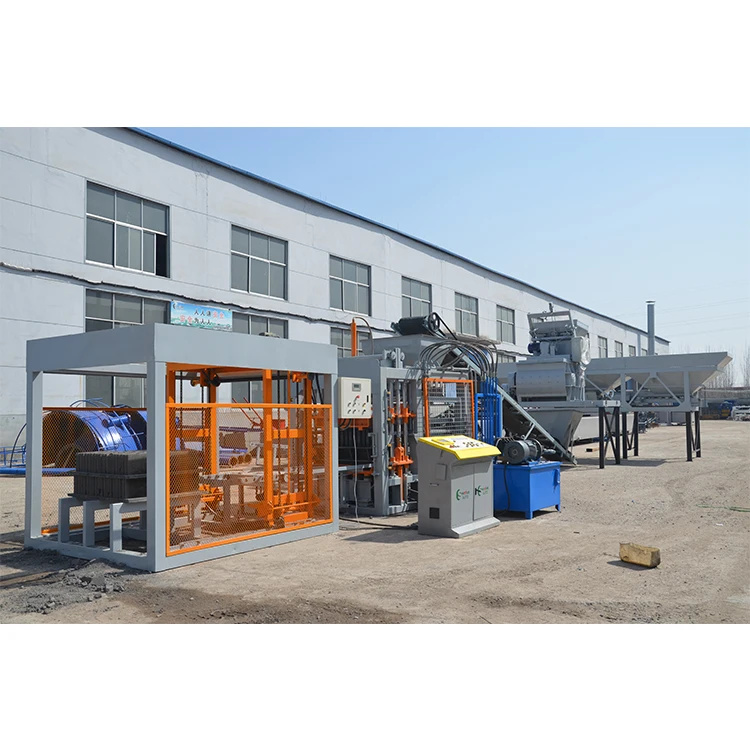
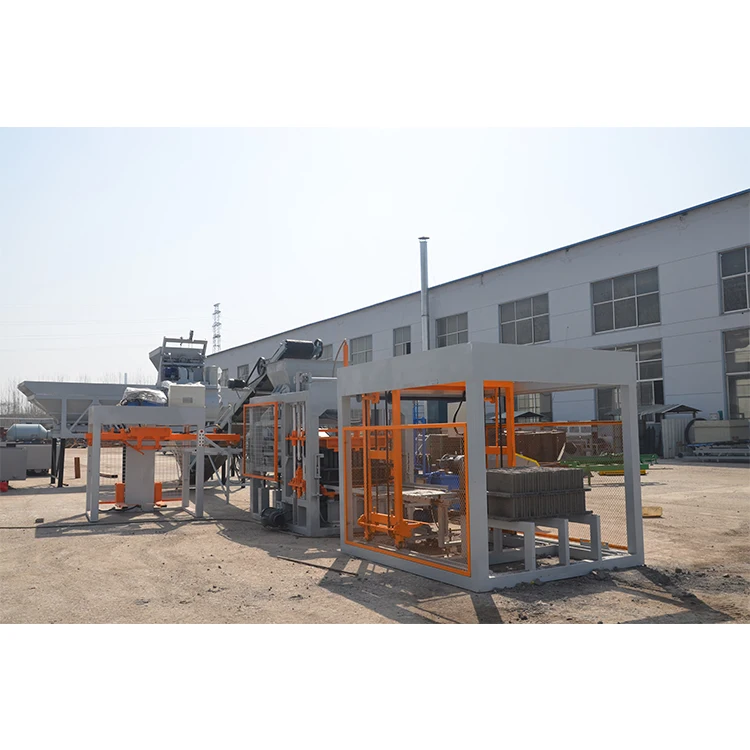

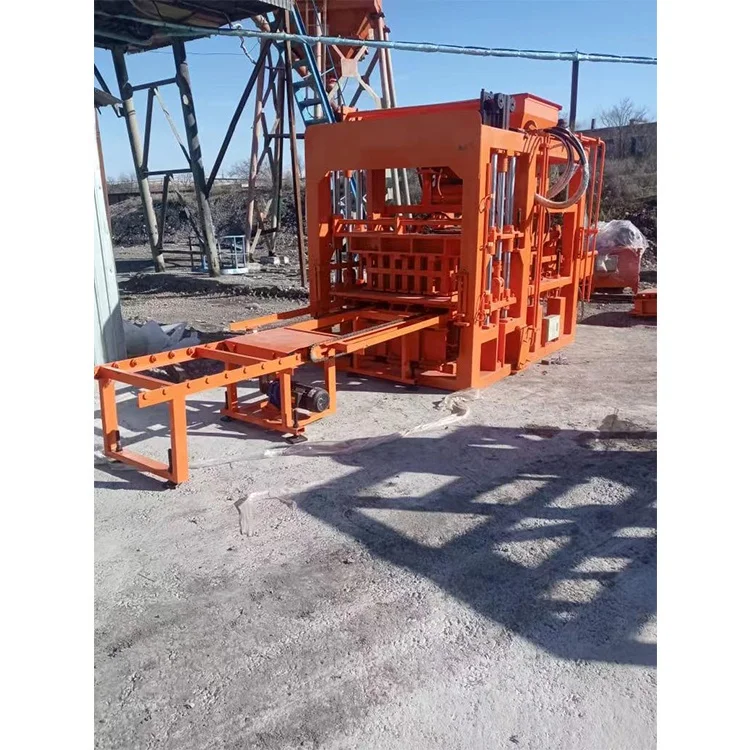
Description
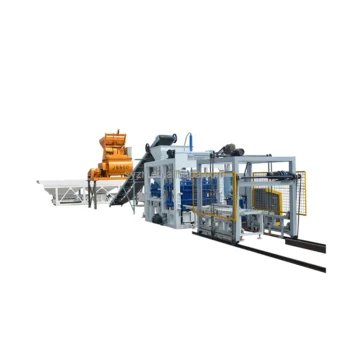
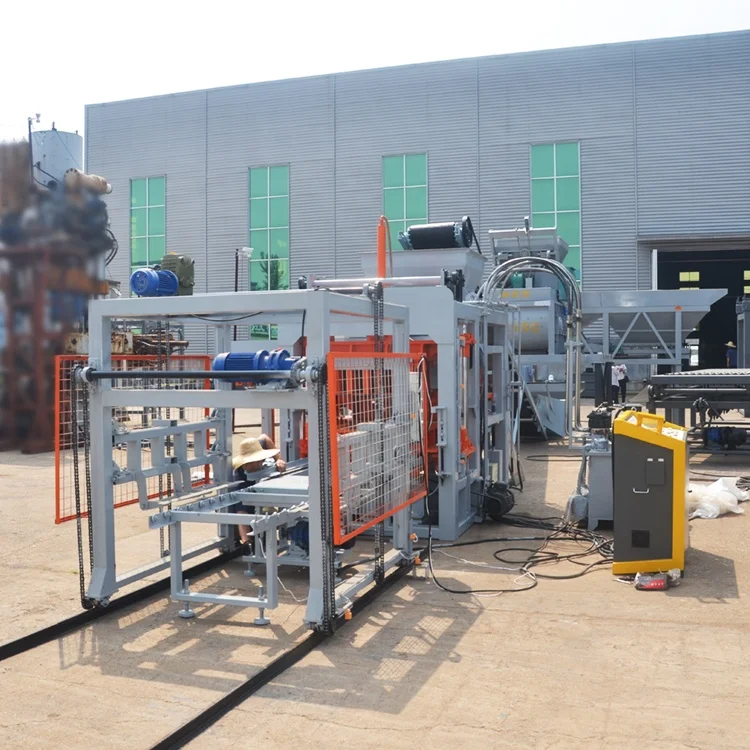
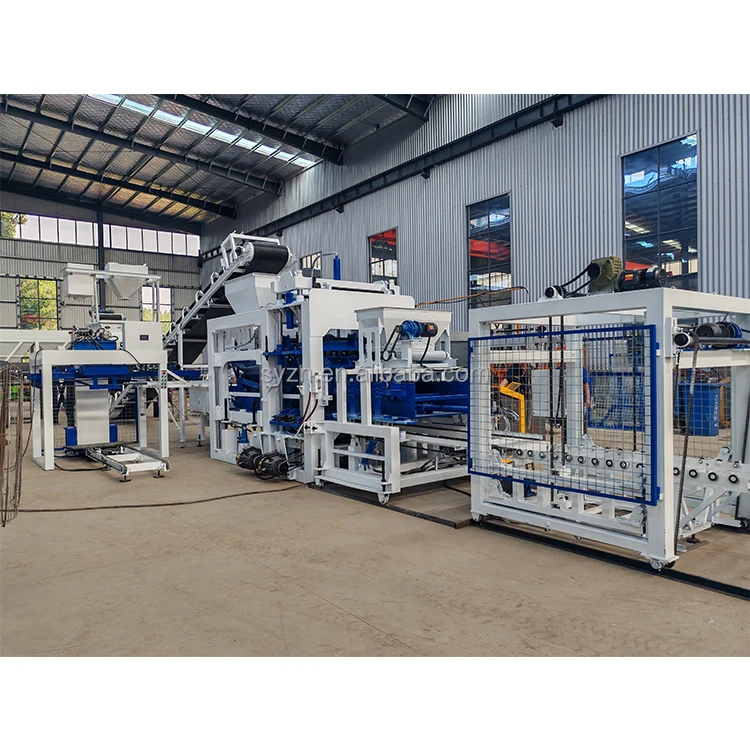
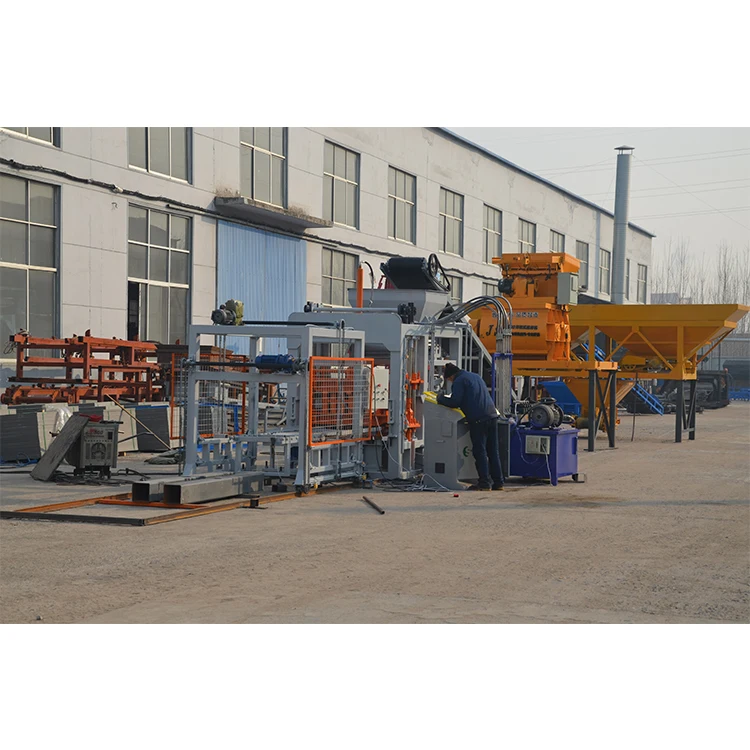
Matched System Specification — the QT5-15 block making machine is configured as a complete production unit where press, mould, pallet and handling are sized together against your target format rather than quoted as isolated components.
Technical Specifications
| Parameter | Value |
|---|---|
| Model | QT5-15 |
| Product Type | Fully Automatic Concrete Block Making Machine |
| Overall Dimensions (L×W×H) | 7100×1600×2610 mm |
| Molding Cycle | 15 s (basis not stated in source — confirm block format / material / thickness) |
| Vibration Frequency | 0–60 Hz (adjustable) |
| Vibration Force (Exciting Power) | 40 kN |
| Rated Power | 33.5 kW |
| Mixer Model | JS500 |
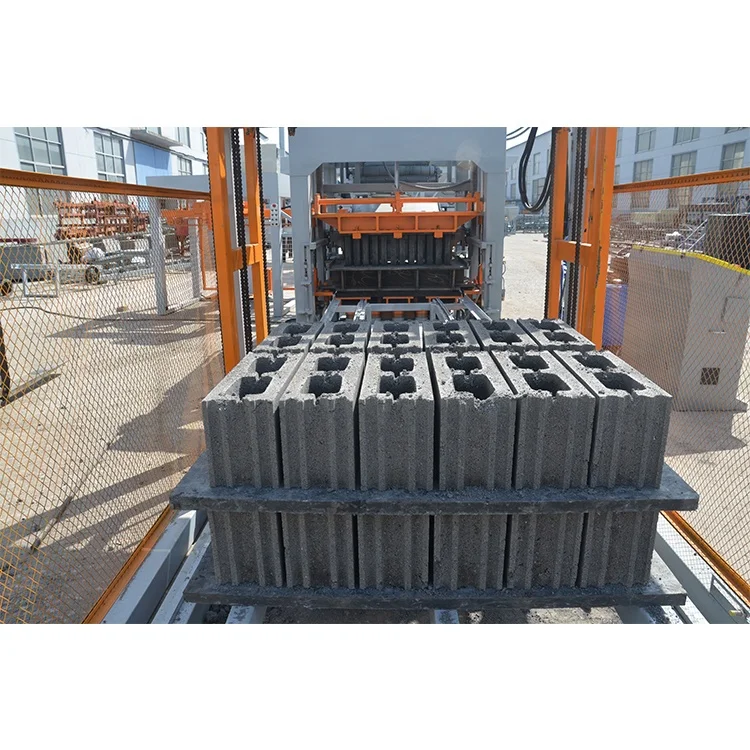
| Pallet Size | 1100×550 mm |
| Total Weight | 5 T |
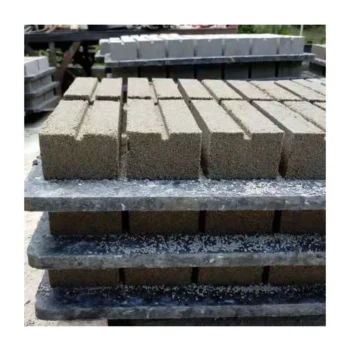
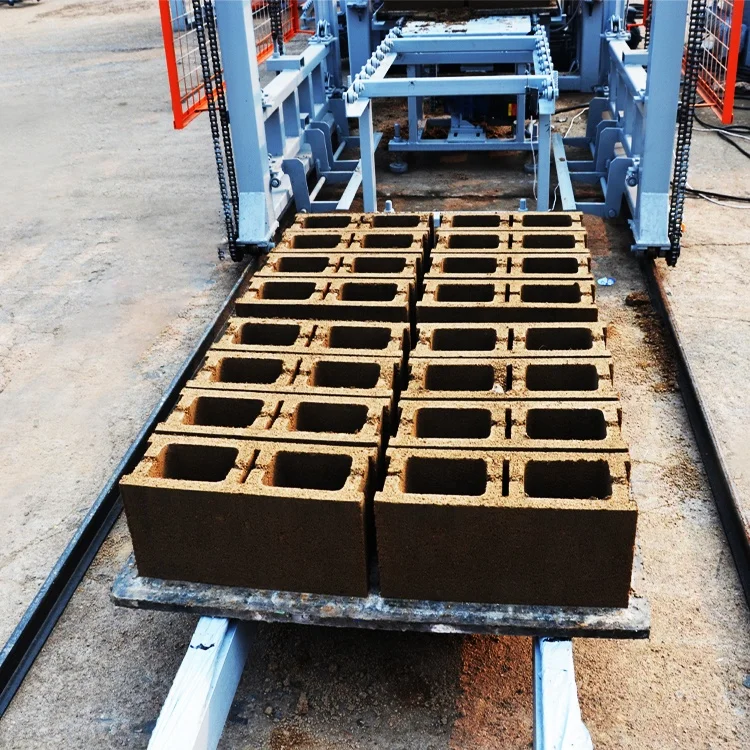
| Applied Products | Paver, solid block, hollow block, curbstone |
| Raw Materials | Crushed stones, sand, cement, dust, fly ash |
| Control System | PLC control system |
| Hydraulic Station | Included |
| Included Equipment | Block making machine, hydraulic station, PLC control system, pallet feeder, brick conveyor, block sweeper |
| Free Spare Parts | Manual hydraulic trolley, spare parts and tools |
| Output Capacity | 450 pcs/h for 400×200×200 mm hollow block; 540 pcs/h for 400×150×200 mm hollow block; 720 pcs/h for 400×100×200 mm solid brick |
| 8-Hour Output | 3,600 pcs (400×200×200 mm hollow block); 4,320 pcs (400×150×200 mm hollow block); 5,760 pcs (400×100×200 mm solid brick) |
| Automation Level | Fully automatic |
| Mould Format Coverage | Hollow block, solid brick, paver, curbstone (mould change required) |
Application Suitability
| Application | Material or Output |
|---|---|
| Hollow block production for residential and commercial wall construction | Crushed stone, sand, cement, fly ash mixes; 400×200×200 mm and 400×150×200 mm formats |
| Solid brick manufacturing for load-bearing and partition walls | Sand, cement, stone dust blends; 400×100×200 mm format |
| Paver production for walkways, driveways and municipal landscaping | Crushed aggregate and cement with pigments; format-dependent mould change |
| Curbstone and kerb manufacturing for road and infrastructure projects | High-strength concrete mixes with coarse aggregate; dedicated curbstone mould |
What "450 Pieces per Hour" Actually Means for the QT5-15 Block Making Machine Specifications
Capacity only matters when the block format is named alongside the number.
Across Southeast Asia, I have watched plant owners unpack a new block press and immediately ask why the daily tally never reaches the brochure figure. The reason is almost always the same: the quoted cycle rate assumed a specific block size, and the buyer’s market demands a different one. The QT5-15 block making machine specifications list output per format — 450 pieces per hour for 400×200×200 mm hollow blocks, 540 for the 150 mm variant, and 720 for 100 mm solid bricks — so production planning starts from the product you actually sell, not a best-case headline. [NEED_CITE: common discrepancy between catalogue capacity and actual output in block plants]
When the format changes, the mould swap, vibration tuning and mix adjustment all shift the real hourly rate. Ignoring these variables turns a capacity calculation into guesswork, and a single shift of underperformance erodes the margin you modelled into the project bid.
Sizing the QT5-15 to Your Block Format and Market
Choosing the right configuration begins with the block your customers order most often. The QT5-15 block making machine covers hollow blocks, solid bricks, pavers and curbstones through dedicated moulds, but each format carries its own cycle behaviour and material demand. A plant supplying 200 mm hollow blocks for housing projects will run a different daily rhythm than one alternating between pavers and kerbstones for municipal contracts. Matching the machine to the format — rather than hoping a general-purpose setup will cover everything — keeps the press running at its rated tempo and avoids half-shifts lost to unplanned changeovers.
Mould Selection and Format Flexibility on the Shop Floor
Mould coverage on the QT5-15 spans the four main concrete product families, yet flexibility depends on how quickly the mould change completes under working conditions. A plant that switches formats twice per day needs a changeover routine measured in minutes, not hours, otherwise the format versatility you paid for stays on paper. Confirming the exact mould drawings and the blocks they produce before the order is placed ensures the formats arriving at your dock match the ones your distributors and contractors actually request. [NEED_CITE: mould changeover impact on daily output in multi-format block plants]
Reading the Specs That Decide Block Strength
Vibration force at 40 kN and adjustable frequency from 0 to 60 Hz govern how densely the concrete settles into the mould cavity. Pair that with the hydraulic station’s pressure, and you control the compaction that determines whether a hollow block survives demoulding intact or crumbles at the edges. The JS500 mixer upstream must deliver a consistent mix so each cycle receives the same material density; inconsistency at the mixer translates directly into strength variation at the stack. Pallet size at 1100×550 mm sets the footprint of every block leaving the press — if your curing racks or forklift are dimensioned differently, the bottleneck simply moves downstream rather than disappearing.
The Cost of Skipping Format and Material Confirmation
Ordering a QT5-15 without confirming the target block format against local aggregate properties leads to vibration settings that do not compact the available sand and crushed stone correctly. I have seen entire production runs in Cambodia scrapped because the river sand used on site behaved nothing like the test aggregate at the factory, and the vibration parameters had never been recalibrated. The blocks demoulded weak, the shift was lost, and the fix required sending material samples back for re-tuning — a delay that could have been avoided with a single pre-shipment test. [NEED_CITE: aggregate variation effects on block compressive strength]
Why Source the QT5-15 Through a Format-Matched Approach
The press, mould, pallet and handling equipment are specified as one system rather than assembled from unrelated suppliers, so cycle times align across stations and the press is never left idle waiting for a pallet. Configuration is set against your actual mix design and local aggregate, not a catalogue default that assumes materials you cannot source. Mould design covers the formats your market moves, and custom drawings are accommodated when standard formats do not match regional building codes. Automation level is selectable, allowing a plant to begin with the fully automatic package and adjust handling as volumes grow. Factory testing records ship with the machine so you see verified performance before the container leaves the dock.
Documentation & Verification
- Line layout and capacity calculation stating the exact block format assumed for each output figure
- Mould drawing and format list confirming every cavity profile before production begins
- Pallet specification sheet cross-referenced with your curing rack dimensions and forklift capacity
- Voltage, frequency and PLC display language confirmed in writing prior to assembly
- Factory test record showing cycle times on your specified block format before dispatch
- Hydraulic and electrical schematic for on-site maintenance reference
Installation, Commissioning & Support
- Foundation pad sized to the 7100×1600 mm machine footprint with vibration isolation provisions
- Dedicated power circuit rated for the 33.5 kW total load with confirmed voltage and frequency
- Machine arrives assembled with hydraulic station, PLC cabinet and pallet feeder pre-wired
- On-site commissioning includes vibration frequency tuning to match your local aggregate sample
- Operator training covers PLC interface navigation, mould change procedure and daily maintenance checkpoints
- Wear parts list and hydraulic seal kit identified for first replacement order
Preparing Your Inquiry for the QT5-15
To move from general interest to a firm configuration, share the block formats your market demands along with the daily volume each format requires. Include a sample or description of the sand, crushed stone and cement available locally so the vibration and pressure settings can be matched before the machine is built. Confirm your site voltage, frequency and preferred PLC display language to avoid commissioning delays once the equipment arrives.
Frequently Asked Questions
Q: How is QT5-15 output capacity calculated per block format?
A: Each capacity figure is tied to a specific block dimension. The 450 pieces per hour rate applies to 400×200×200 mm hollow blocks, 540 pieces per hour to 400×150×200 mm hollow blocks, and 720 pieces per hour to 400×100×200 mm solid bricks. Cycle time and mix behaviour differ by format, so planning should always reference the exact product size you intend to run.
Q: What mould formats are available and how does changeover work?
A: The QT5-15 supports hollow block, solid brick, paver and curbstone moulds. Each format requires a physical mould change on the press. Confirming the exact mould list and changeover procedure before ordering ensures the formats match your market and the switch fits within a normal working shift without excessive downtime.
Q: How should the 1100×550 mm pallet size be matched to my curing setup?
A: Pallet dimensions must align with your existing curing rack slots and forklift tine spacing. If your racks are built for a different pallet size, blocks will need re-stacking by hand after pressing. Sharing your curing area layout and forklift specifications before the order lets the pallet choice be verified against your actual site conditions.
Q: How are vibration force and hydraulic pressure matched to local materials?
A: The 40 kN vibration force and 0–60 Hz adjustable frequency are tuned based on your specific mix design and aggregate sample. Sending a local sand or crushed stone sample before production allows the factory to calibrate compaction settings so blocks reach target strength consistently rather than arriving with generic parameters that may not suit your raw materials.
Q: What electrical and control details must be confirmed before shipment?
A: Voltage, frequency and PLC display language need written confirmation before the machine enters production. Different markets use different power standards, and a mismatch delays commissioning. Specifying these details upfront ensures the electrical cabinet and control interface are ready for immediate operation when the QT5-15 arrives at your facility.