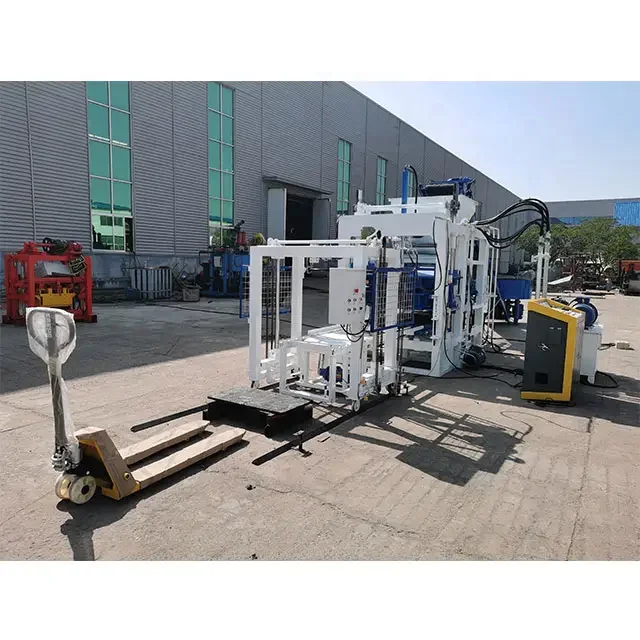
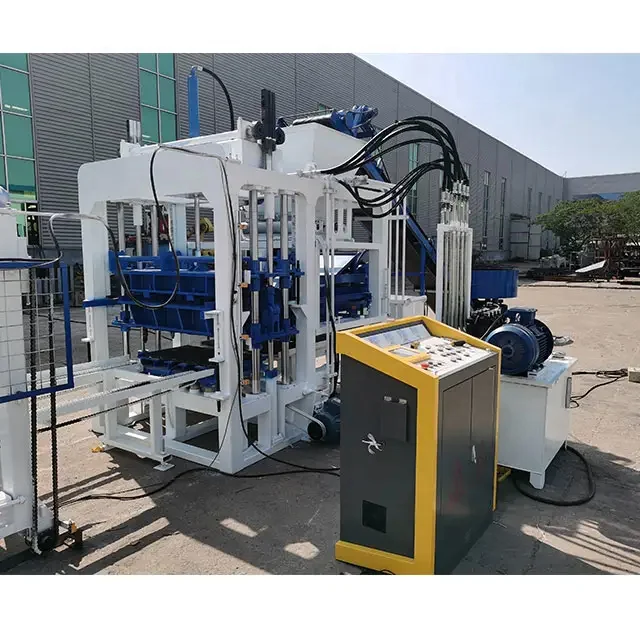
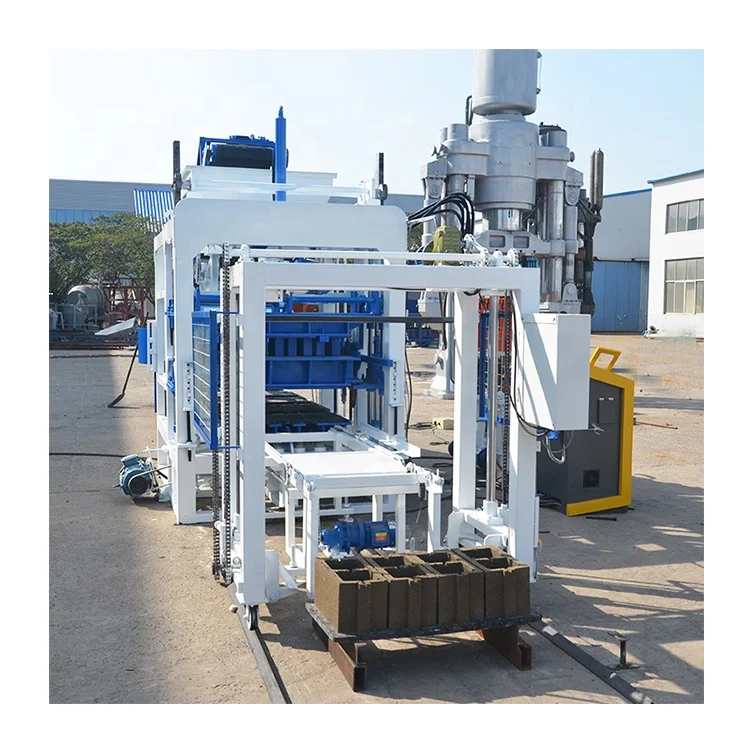
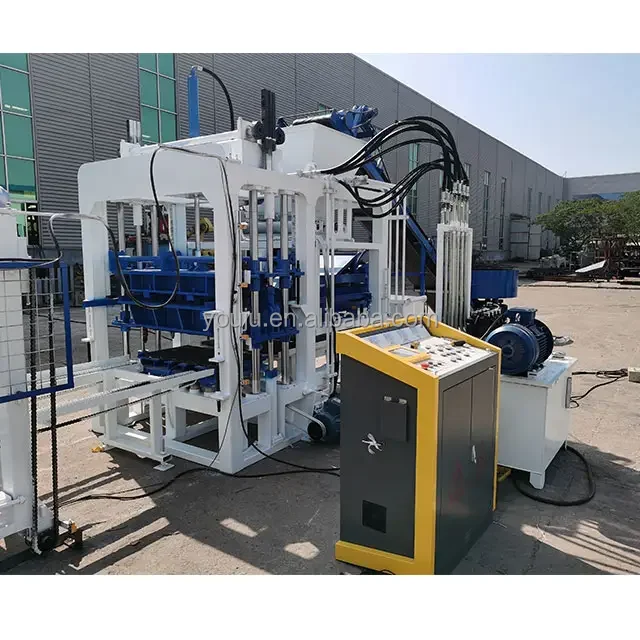
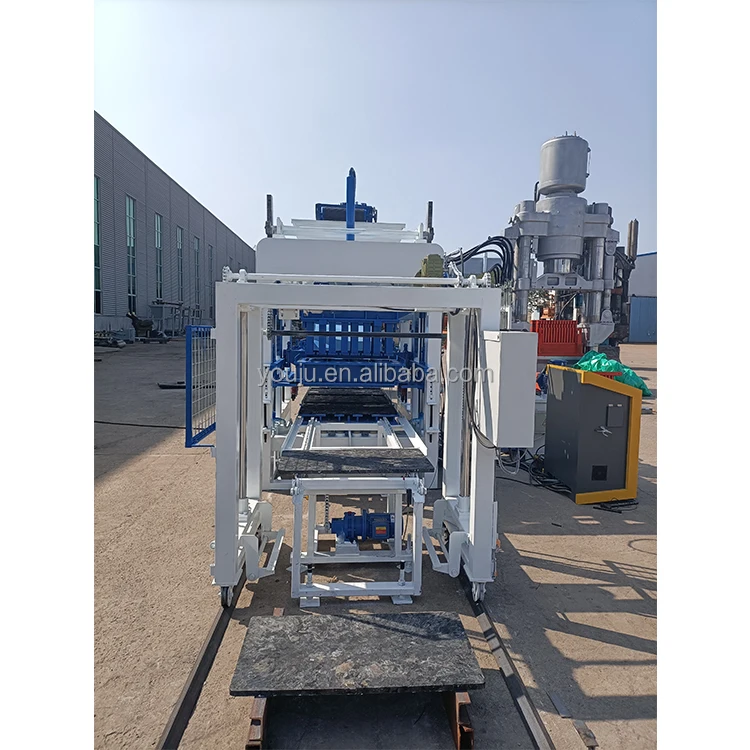
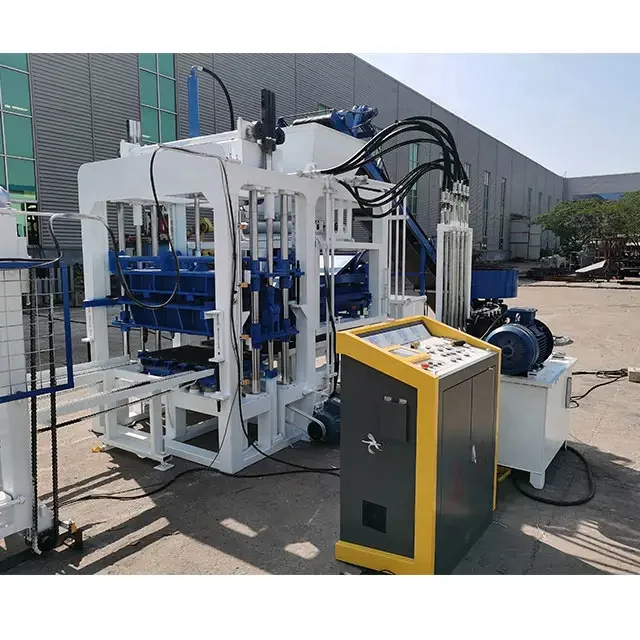
Description
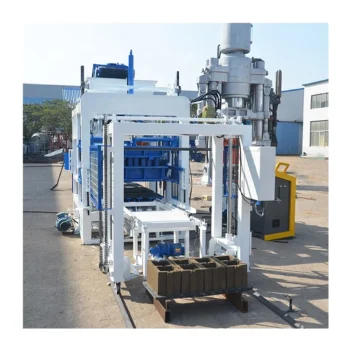
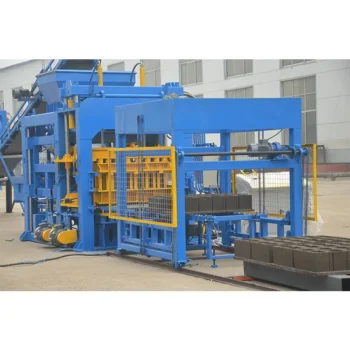
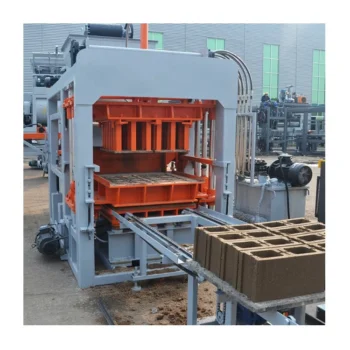
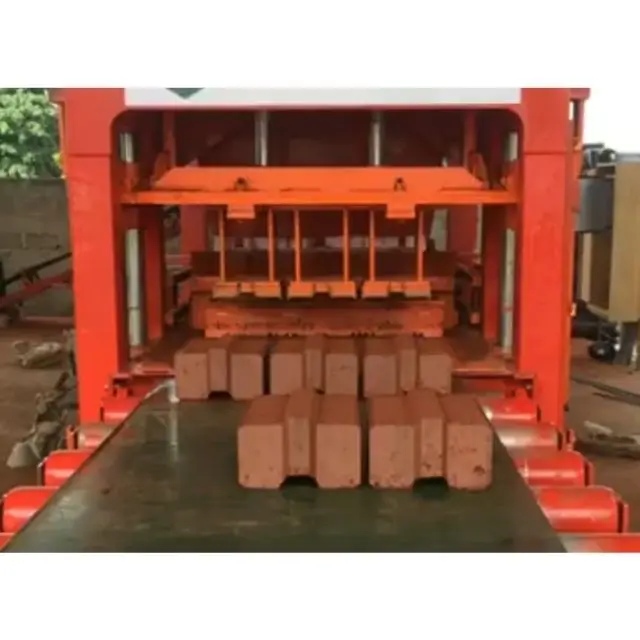
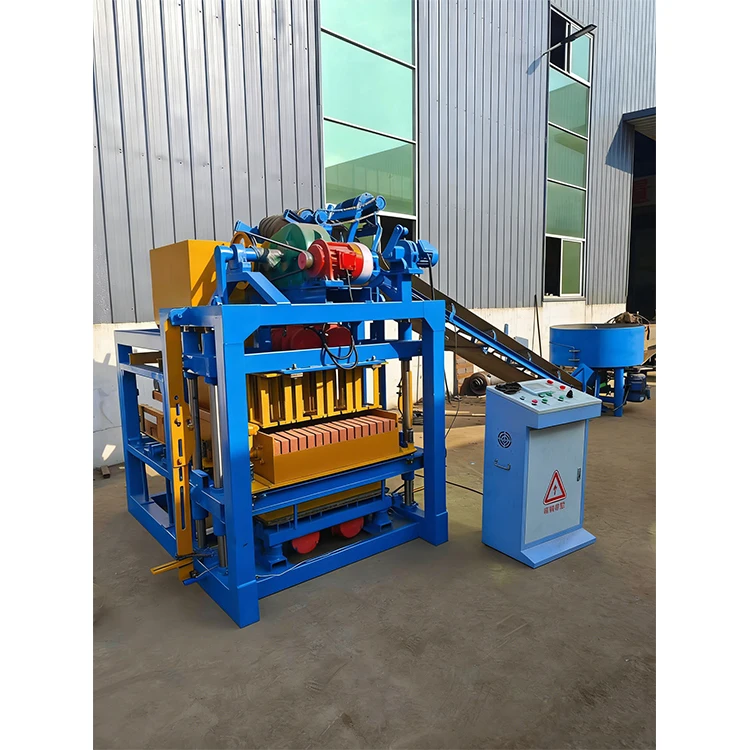
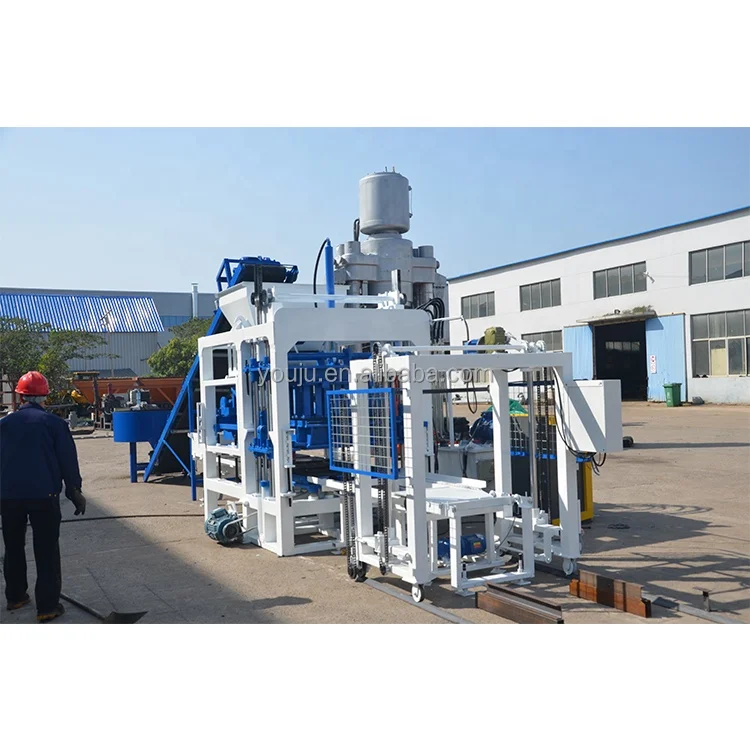
Configuration Against Your Actual Mix and Format — the QT4-18 block line is specified as a matched system, with pallet size, vibration profile and mould geometry all confirmed against the buyer’s local aggregate and target block format before production begins.
Technical Specifications
| Parameter | Value |
|---|---|
| Model | QT4-18 |
| Product Type | Automatic Concrete Block Making Machine |
| Overall Dimensions (L×W×H) | 2500×1750×2200mm |
| Rated Hydraulic Pressure | 16 MPa |
| Vibration Form | Platform Vibration |
| Pallet Size | 950×550mm |
| Molding Cycle | 18–25s (basis not stated in source — confirm block format / material / thickness) |
| Overall Power | 27.5 kW |
| Control System | PLC with frequency converter, HMI |
| Electrical Components | Schneider |
| Mould Lifting Mechanism | Double-sided synchronous gears |
| Material Feeding | Hopper, feeding box, feeding platform, conveyor with distribution belt hopper |
| Pallet Feeding | Hydro-cylinder driven |
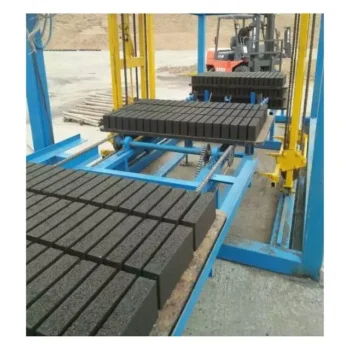
| Block Receiver | Motor + reducer + triangle belt conveyor to front idler wheels |
Application Suitability
| Application | Material or Output |
|---|---|
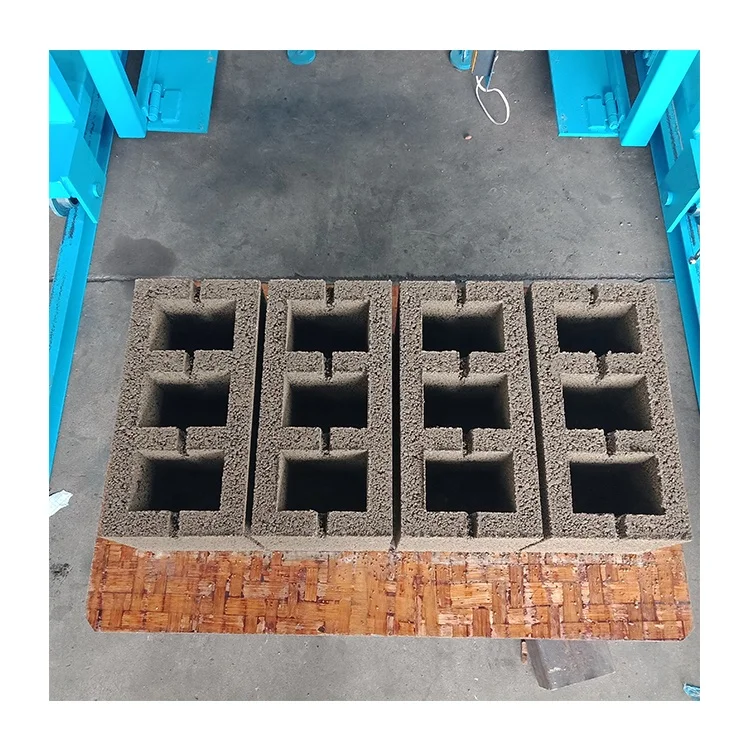
| Hollow block production | Crushed stone, sand, cement, fly ash blends |
| Solid block production | Dense aggregate mixes for load-bearing walls |
| Paving block production | Fine aggregate and cement for interlocking or rectangular pavers |
| On-site contractor production | Locally sourced aggregate for project-specific masonry units |
Why "Cycles per Hour" Tells You Almost Nothing About Real Output
The only capacity figure that matters is the one tied to your exact block format, mix design and curing method.
When an automatic block machine quotation lists a single output number, it is almost always based on the smallest, fastest-cycling format the press can run — typically a thin paver or a small solid block. Switch to a 200mm hollow block, and the vibration time alone extends the cycle considerably. Add a mix with high clay content from local river sand, and the mould fill becomes uneven, forcing further cycle extension. I have watched plants in West Africa sign contracts on one capacity figure and then spend months trying to reach half of it because the quoted format never matched what the local market actually buys [NEED_CITE: block format assumptions in capacity quotations]. The QT4-18 automatic block machine specifications must therefore be read alongside a format-specific capacity calculation, not in isolation.
Matching Vibration Force to Your Aggregate Profile
Platform vibration on the QT4-18 delivers compaction energy directly through the pallet into the mix. The effectiveness of this transfer depends entirely on the particle size distribution and moisture content of the aggregate you feed. Coarse crushed granite responds to high-frequency, short-duration vibration, while locally dug laterite or clay-bearing sand needs longer vibration at lower amplitude to avoid segregation. The frequency converter in the PLC cabinet allows the operator to dial in vibration profiles per mould, but only if those profiles have been established during commissioning with your actual material. This is where the automatic block machine specifications on paper must be validated on your shop floor.
Pallet Size as a System Constraint, Not an Afterthought
The 950×550mm pallet dimension was not chosen arbitrarily. It determines how many blocks are produced per cycle, how the curing yard is laid out, and which forklift class can handle loaded pallets. A buyer with an existing fleet of 1.5-tonne forklifts and a covered curing hall needs pallets that stack within the roof height and stay within the forklift’s load envelope when wet concrete is on top. If the pallet material is bamboo, it absorbs moisture and gains weight over the curing cycle; if it is PVC, it stays light but requires a different surface texture to grip the fresh block. The pallet decision ripples through the entire downstream handling sequence [NEED_CITE: pallet material selection for concrete block curing].
Reading the Pressure and Power Figures Together
The 16 MPa rated hydraulic pressure works in concert with platform vibration to compact the mix. Pressure alone produces a dense but brittle block if vibration is insufficient to reorganize particles; vibration alone leaves voids if the hydraulic head cannot hold the mould closed against the upward force. At 27.5 kW total installed power, the QT4-18 has adequate capacity for both systems simultaneously, but the actual draw depends on the block format being pressed. Tall hollow blocks demand sustained vibration and higher clamp pressure than flat pavers. The Schneider electrical components are rated for continuous industrial duty, though the voltage and frequency must be confirmed in writing before the control panel is wired — a 400V/50Hz panel shipped to a 440V/60Hz market will run hot and trip frequently.
The Hidden Cost of Skipping the Format Conversation
When a buyer accepts a quotation based on a generic mould set rather than the specific formats their market demands, the first mould change reveals the problem. Manual mould exchange on the QT4-18 involves releasing bolts on the upper and lower mould halves, sliding them along the conveyor, and realigning the double-sided synchronous gears. If the new mould was not designed with the same locating geometry as the original, alignment takes longer and block dimensions drift. Plants that ordered a single hollow block mould "to start with" and planned to add pavers later often discover that the feeder box distribution pattern needs adjustment for the different cavity layout, adding further downtime [NEED_CITE: mould change time impact on daily production]. The format list and mould drawing should therefore be reviewed and signed off before the machine enters production.
Why Procurement Starts with Your Site Data
Every QT4-18 leaves the factory with a configuration that reflects the information the buyer provided — or failed to provide. Line layout and capacity calculations are prepared per block format, not as a single blanket number. Mould drawings are produced to match the buyer’s target dimensions and are available for review before tooling is cut. Pallet specifications account for the curing yard dimensions and forklift capacity already on site. Voltage, frequency and PLC display language are confirmed in writing before the electrical panel is assembled, avoiding commissioning delays. Installation support includes operator training on the specific formats and mix designs the plant will run, not a generic start-up checklist.
Documentation & Verification
- Line layout drawing with capacity stated per block format, not a single headline figure
- Mould drawing and format list signed off before tooling enters machining
- Pallet specification sheet matched to buyer’s curing yard and forklift fleet
- Hydraulic and electrical schematic with confirmed voltage, frequency and HMI language
- Factory test record run on buyer’s target format before container loading
- Packing photographs and customs documentation support for destination port clearance
Installation, Commissioning & Support
- Foundation pad sized to 2500×1750mm footprint with anchor bolt template provided before machine arrival
- Dedicated 27.5 kW circuit with voltage and frequency confirmed to local grid standard before panel wiring
- Machine ships in dismantled state; press frame, hopper and conveyor reassembled on site with factory guidance
- Commissioning includes vibration profile tuning against buyer’s actual aggregate and mix design
- Operator training covers mould change procedure using the double-sided synchronous gear system
- Wear parts list identifies hydraulic seals, gear teeth and feeder box liners with reorder intervals
What We Need from You Before Quoting
To prepare an accurate automatic block machine specifications proposal for the QT4-18, share the block formats your market currently sells, including dimensions and wall thickness for hollow blocks. Provide a sample or analysis of your local aggregate — particularly clay and moisture content — so the vibration profile and feeder box configuration can be matched. Confirm your site voltage, frequency and preferred PLC display language so the electrical package is built correctly the first time.
Frequently Asked Questions
Q: What is the realistic daily output for my specific block format on the QT4-18?
A: The 18–25 second molding cycle is a range that shifts depending on block height, wall thickness and mix workability. A flat paver cycles faster than a 200mm hollow block. We provide a format-by-format capacity calculation with your quotation so the daily output figure you plan against matches the product you actually sell, not a catalogue best case.
Q: How is the mould matched to my local aggregate and mix design?
A: Mould cavity geometry, taper angles and surface finish are selected based on your aggregate particle size and cement content. Coarse granite needs different draw angles than fine river sand to release cleanly. We review your mix data and, where possible, run a factory test with a representative sample before the mould is finalized.
Q: What is the actual mould change time, and can it be simplified?
A: The QT4-18 uses a manual bolt-release procedure with double-sided synchronous gears for alignment. Typical changeover takes one shift segment when operators are trained and the next mould is pre-staged. Format standardization across your mould set reduces realignment steps and keeps dimensional tolerances consistent between products.
Q: Which pallet size and material suit my curing area and forklift?
A: The standard 950×550mm pallet is confirmed against your curing rack spacing, yard height clearance and forklift load capacity. Material options include treated bamboo and PVC, each with different moisture absorption and weight characteristics. We specify the pallet alongside the machine so handling downstream is planned, not improvised.
Q: How do I confirm voltage, frequency and PLC language before shipment?
A: These details are captured in a written confirmation document before the electrical panel is wired. The PLC display language is set to your operator’s preference, and the Schneider components are selected for your local voltage and frequency standard. No panel leaves the factory without this sign-off.