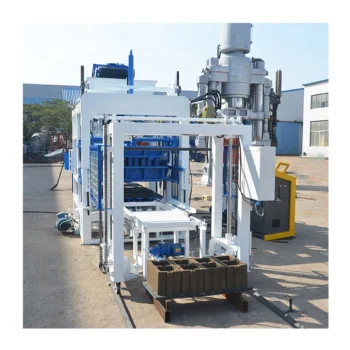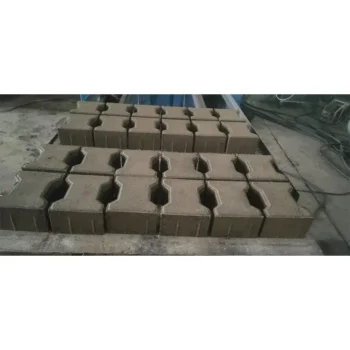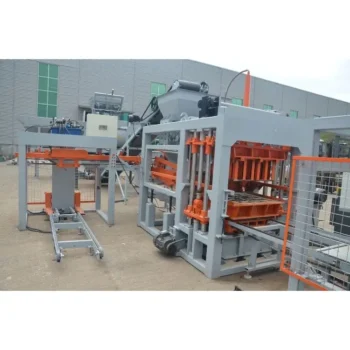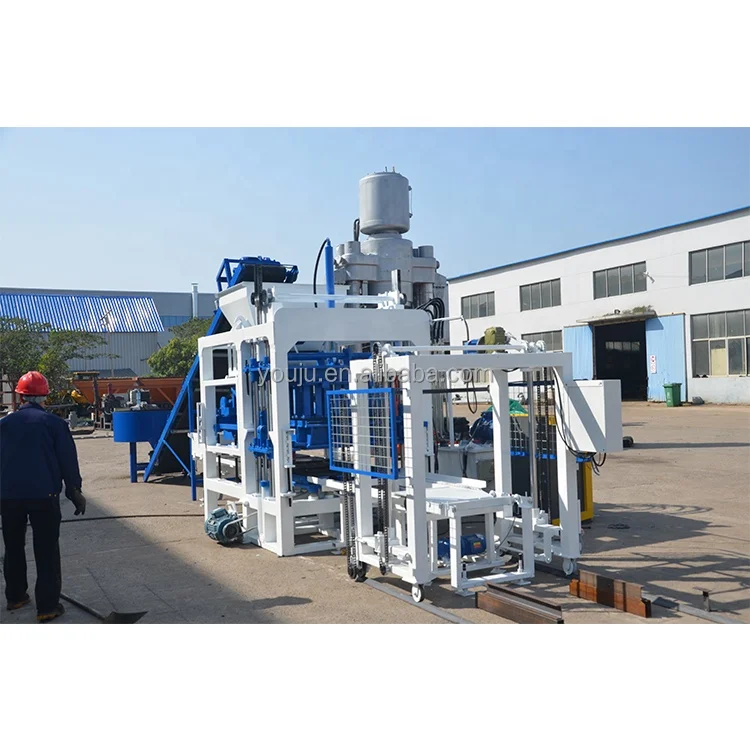
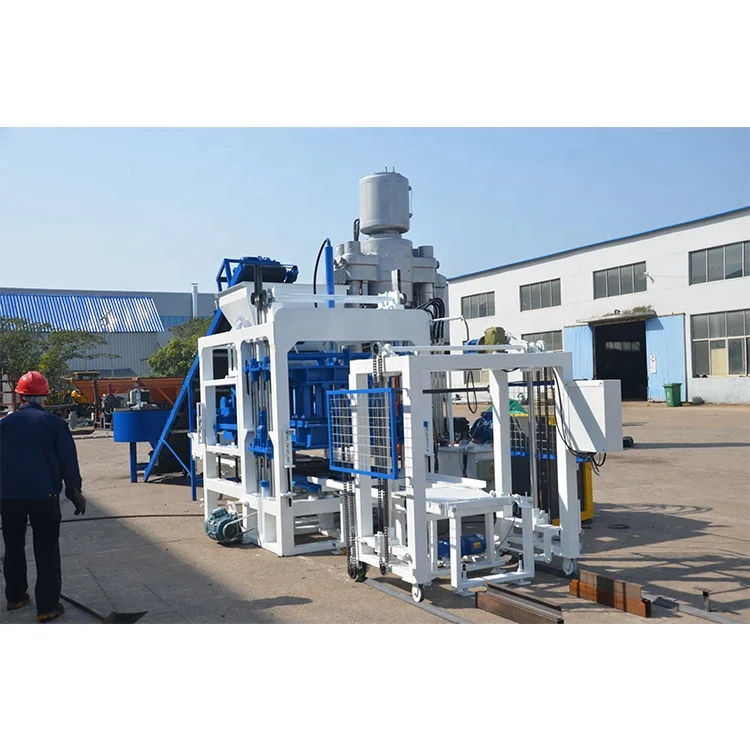

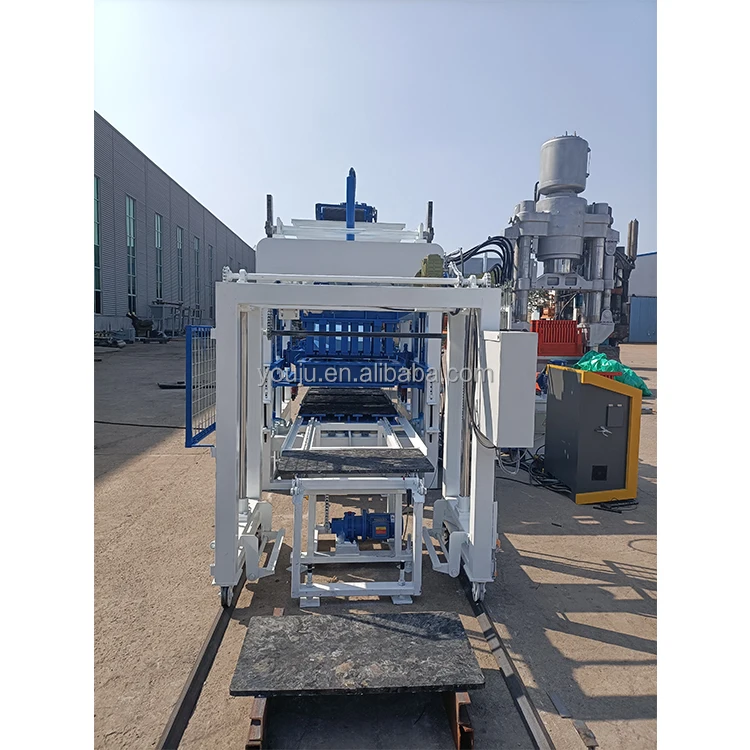
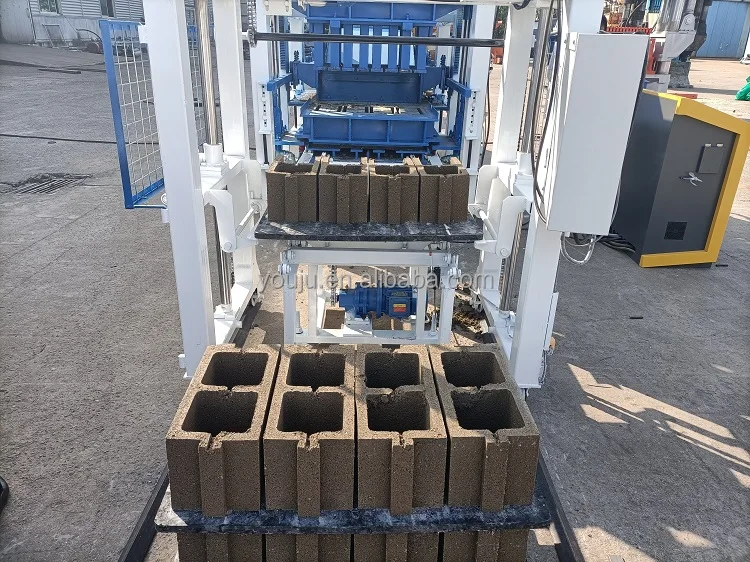
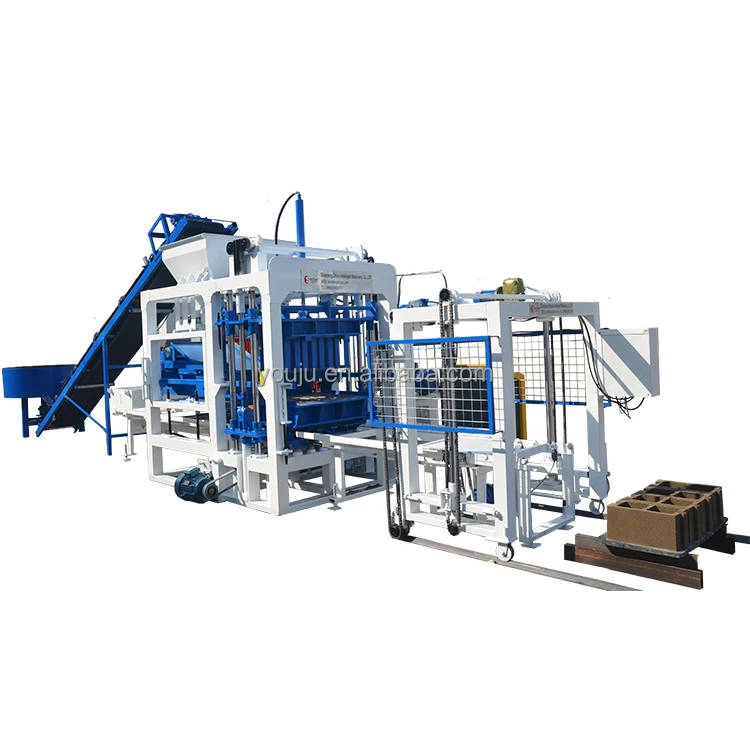
Description
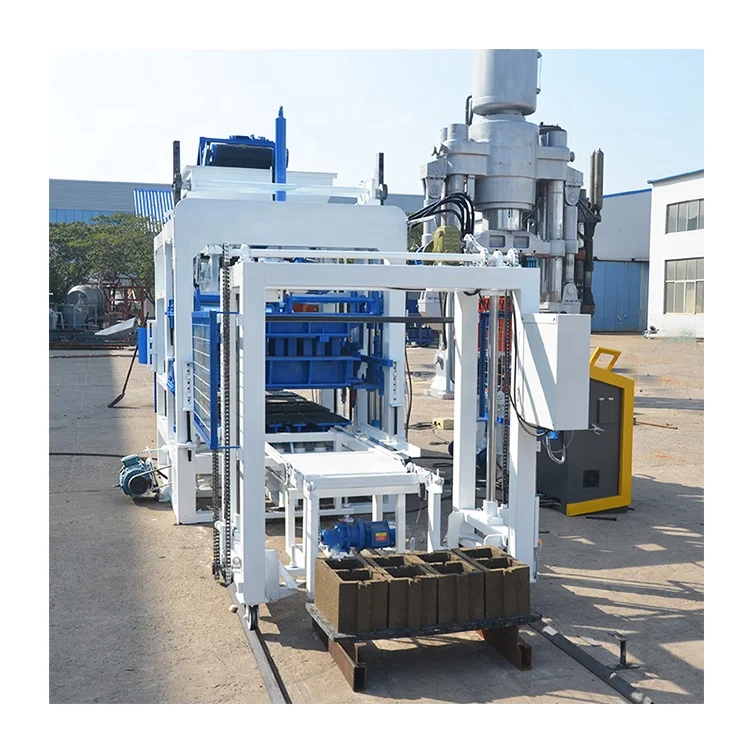
Format-Matched Output — the QT4-18 line is specified against your target block format and local aggregate before the quotation is issued, so cycle time reflects the product you actually sell.
Technical Specifications
| Parameter | Value |
|---|---|
| Model | QT4-18 |
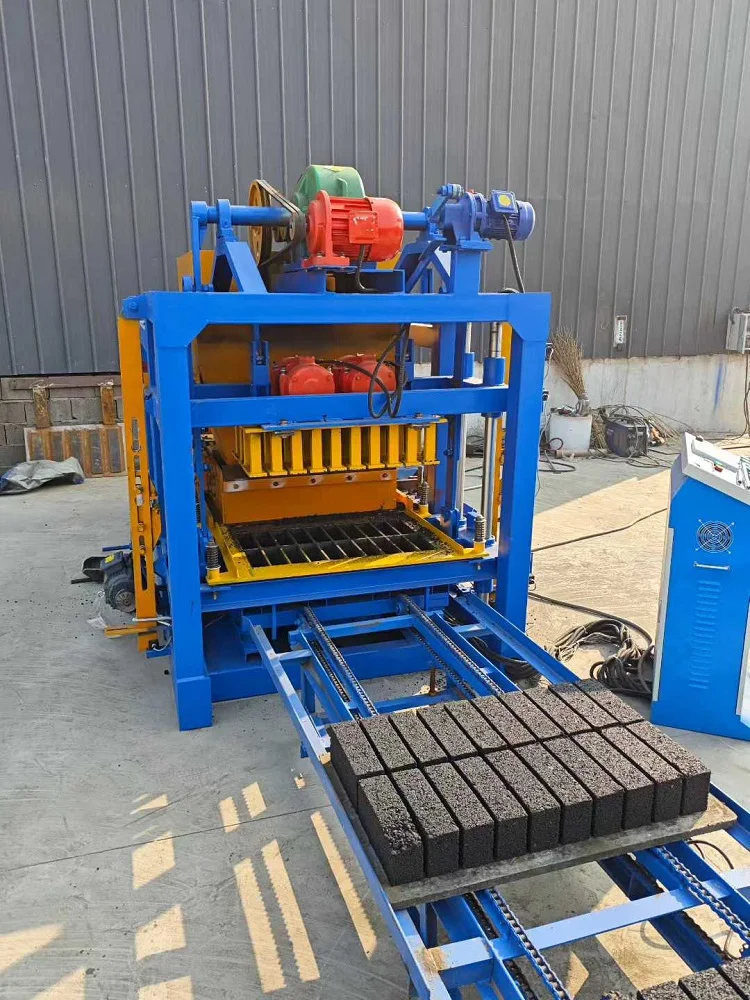
| Product Type | Automatic Concrete Block Making Machine |
| Overall Dimensions (L×W×H) | 2500×1750×2200 mm |
| Rated Pressure | 16 MPa |
| Vibration Form | Platform Vibration |
| Pallet Size | 950×550 mm |
| Molding Cycle | 18–25 s (basis not stated in source — confirm block format / material / thickness) |
| Overall Power | 27.5 kW |
| Control System | PLC with frequency converter, machine-to-person interface |
| Electrical Components | Schneider (international brand) |
| Mould Lifting Mechanism | Double-sided synchronous gears (flagship version) |
| Material Feeder System | Hopper, feeding box, feeding platform, conveyor with distribution belt hopper |
| Pallet Feeder Power | Hydro-cylinder driven |
| Supporting Mixer | JQ500 concrete pan mixer |
| Supporting Conveyor | 8 m belt conveyor (6 m option available) |
| Automation Level | Automatic (mixer, pallet conveyor, molding machine, block conveyor, hydraulic station, PLC console) |
| Mould Change Method | Manual bolt release with conveyor-assisted mould transfer |
Application Suitability
| Application | Material or Output |
|---|---|
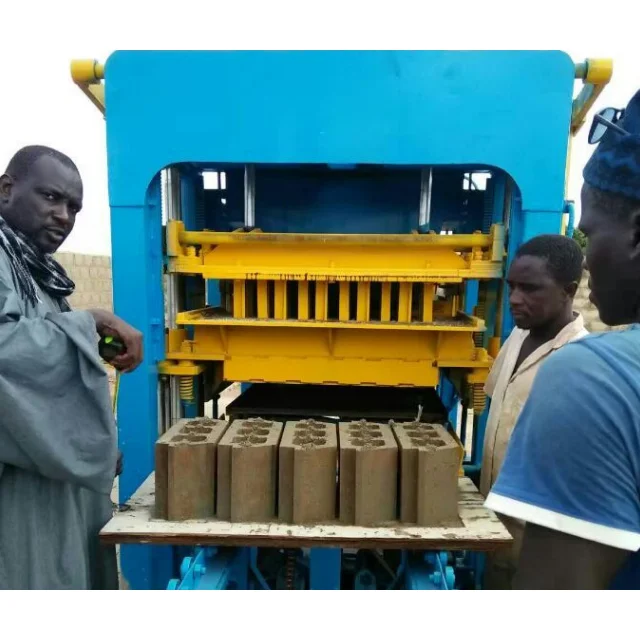
| Hollow block production | Crushed stone, river sand, cement, water |
| Solid block production | Quarry dust, gravel, cement blend |
| Paving block production | Fine aggregate, cement, pigment if coloured |
| On-site contractor block making | Locally sourced sand and aggregate with cement |
| First block plant for entrepreneur | Standard masonry formats from regional raw materials |
Why the Moulding Cycle Figure Tells Only Half the Story on the QT4-18 Automatic Concrete Block Making Machine
Cycle time is meaningless unless the block format, mix design, and pallet size behind it are stated in writing.
Catalogue sheets quote a single cycle figure that collapses every format into one number. A 15-second cycle on a thin paver is a very different event from the same timer on a 200 mm hollow block drawing full vibration and hydraulic pressure. When the mix changes from clean silica sand to a local river sand with higher fines content, the vibration profile must be retuned or the block emerges with weak edges and inconsistent density. I have stood beside block presses in West Africa watching operators chase strength failures for three days because the PLC programme was still running the factory-default cycle. The QT4-18 automatic concrete block making machine specifications should always arrive with a format-by-format capacity sheet, not a single headline number [NEED_CITE: block format and cycle time relationship in concrete masonry production].
Matching Vibration and Pressure to Your Local Aggregate
The QT4-18 delivers platform vibration paired with a 16 MPa rated hydraulic pressure. These two forces must work together against the specific particle-size distribution of your sand and stone. If the vibration amplitude is set too high for a fine aggregate, the mix segregates and the block surface crumbles. Too low, and air voids remain trapped inside. The PLC with frequency converter allows the vibration profile to be adjusted per format, and Schneider electrical components keep that control stable across production shifts.
Pallet Size, Curing Area, and the Forklift You Already Own
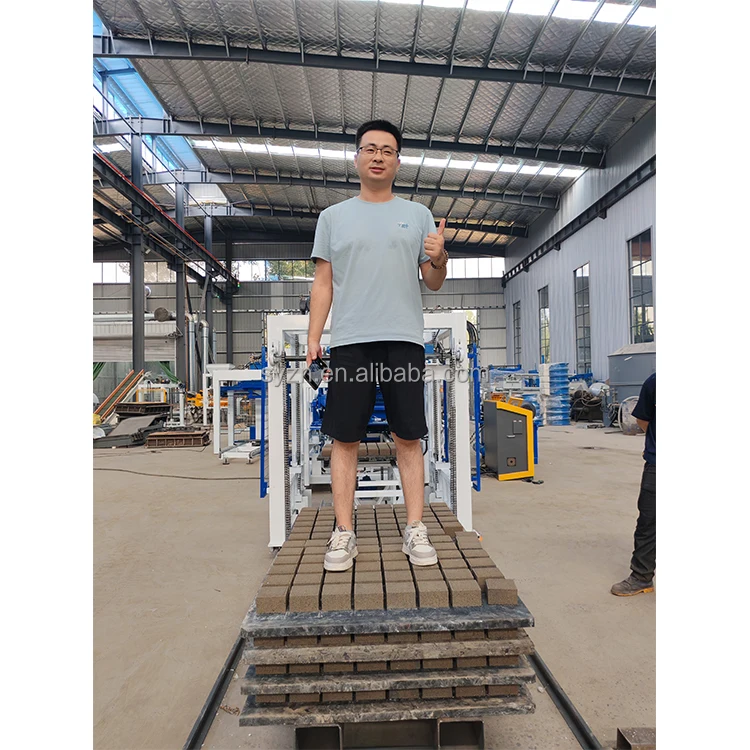
A 950×550 mm pallet is a fixed decision that shapes your entire curing yard. The pallet must fit your existing rack spacing, and the forklift tine width must clear the pallet overhang. When the pallet size is confirmed against your site infrastructure before the QT4-18 automatic concrete block making machine ships, the curing area works from day one. When it is not, blocks pile on the floor and strength development stalls because the required hydration time cannot be respected.
What the Specification Sheet Actually Means on the Shop Floor
The 27.5 kW overall power figure covers the press, the JQ500 pan mixer, the belt conveyor, and the hydraulic station together. A dedicated circuit with correct voltage and frequency confirmation is required before commissioning. The double-sided synchronous gear mould lifting mechanism keeps the mould level during demoulding, reducing uneven wear on the mould box and extending the interval between regrinds. Manual bolt release with conveyor-assisted mould transfer means a format change does not require a crane, but it does require a defined procedure and the right spanner set so the change does not consume most of a shift [NEED_CITE: mould change procedures and their impact on effective production time].
The Hidden Cost of Skipping the Format Conversation
When a line is quoted on a default pallet and default mould set, the buyer often discovers after arrival that the block formats the local market actually buys are not the ones the machine was configured to produce. A distributor who needed interlocking pavers finds the press set up for hollow blocks. The pallet size does not match the curing racks already welded in the yard. Voltage arrives as 380 V / 50 Hz when the site runs 440 V / 60 Hz, and commissioning halts while a transformer is sourced locally. These are not rare failures — they are the most common complaints at the heart of every block machinery dispute [NEED_CITE: common causes of commissioning delays in exported concrete block equipment].
Why Buyers Specify the QT4-18 Through This Channel
Block machinery is the single focus here, so the press, mould, pallet, mixer, conveyor, and stacker are specified as one matched system rather than assembled from separate suppliers. Configuration is set against your actual mix design and local aggregate, not a catalogue default. Mould design covers the formats your market sells, including custom drawings when your product range falls outside standard sizes. Automation level is selectable — a buyer can begin semi-automatic and add automatic stacking later. Installation support includes operator training so the crew understands how to adjust vibration and pressure when the aggregate source changes.
Documentation & Verification
- Line layout and capacity calculation stating the exact block format for each output figure
- Mould drawing and format list confirming which block types the quoted moulds produce
- Voltage, frequency, and PLC display language confirmed in writing before production
- Factory test record showing actual cycle time per format with the specified mix design
- Hydraulic and electrical schematic matching the shipped configuration
Installation, Commissioning & Support
- Foundation pad sized to the 2500×1750 mm footprint with anchor bolt template supplied
- Dedicated 27.5 kW circuit with voltage and frequency verified before the PLC is energised
- Mixer and conveyor assembled on site with belt tension set to your aggregate load
- PLC programme loaded with format-specific cycles from the factory test record
- Operator training covers vibration adjustment when local sand fines content varies
- Wear parts list and mould maintenance schedule handed over at commissioning sign-off
What to Include in Your Enquiry
Send the block formats your market buys, with dimensions and target daily output per format. Provide a sample or sieve analysis of your local sand and stone so the vibration and pressure can be set correctly. Confirm your site voltage, frequency, and the PLC display language your operators will use. State your curing yard dimensions and the forklift model already on site so the pallet size is matched before the QT4-18 automatic concrete block making machine specifications are finalised.
Frequently Asked Questions
Q: How is the QT4-18 daily output calculated per block format?
A: Each block format has its own moulding cycle, mould cavity count, and pallet arrangement. We calculate output per format using the confirmed cycle time for that specific block, not a single catalogue figure. The capacity document you receive states the format, the cycle, and the assumed operating hours so the number is transparent before you commit.
Q: How is the 950×550 mm pallet matched to my curing infrastructure?
A: We ask for your curing rack dimensions and forklift tine spacing before confirming the pallet. If your existing racks or handling equipment require a different pallet size, we adjust the mould and press configuration accordingly so blocks move from the stacker to the curing area without a handling bottleneck.
Q: What mix data do you need before finalising vibration and pressure settings?
A: We need the aggregate type, particle-size distribution, cement grade, and water-cement ratio you plan to run. With that data the vibration frequency and hydraulic pressure are tuned to achieve consistent block density and surface finish across the full production shift.
Q: How long does a mould change take on the QT4-18?
A: The manual bolt release with conveyor-assisted transfer avoids the need for a crane. Actual change time depends on the operator’s familiarity with the procedure and the tool set on hand. We provide a step-by-step changeover guide and train your crew during commissioning so the process is repeatable.
Q: Which block formats can share the same pallet?
A: Formats with similar base dimensions and demoulding height can often share a pallet. Tall hollow blocks and thin pavers usually require dedicated mould and pallet sets because their vibration profiles and handling weights differ. The format list in your quotation clarifies which combinations share tooling and which need separate sets.