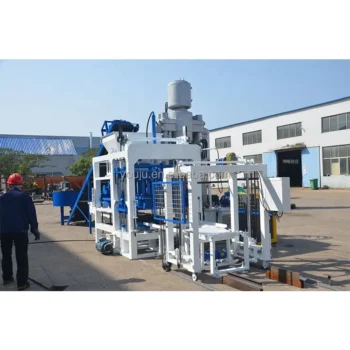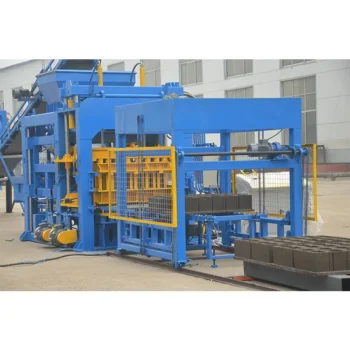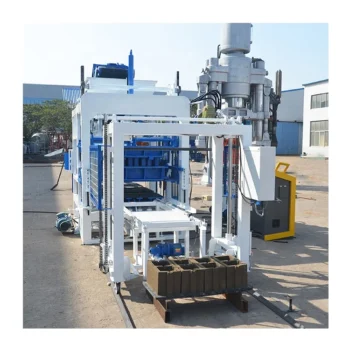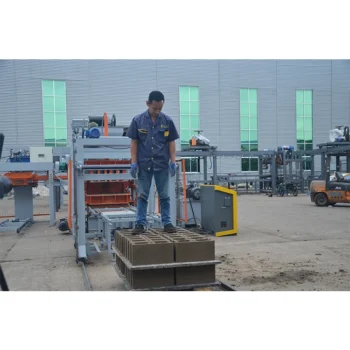

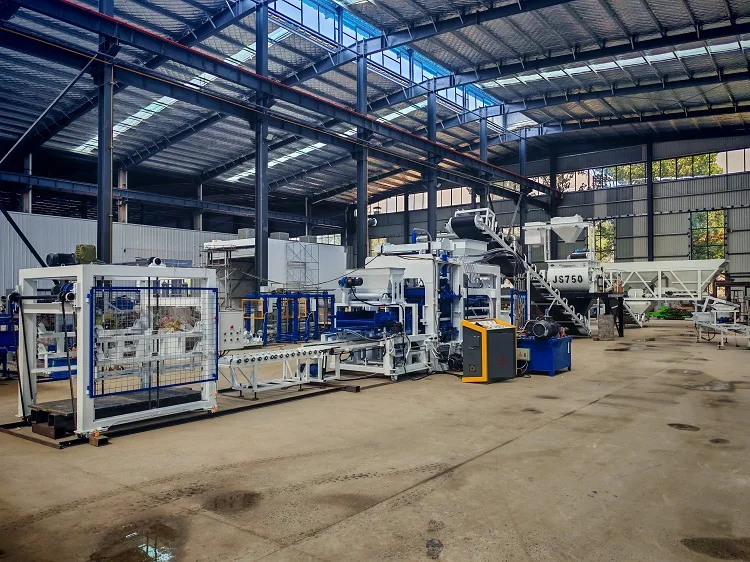
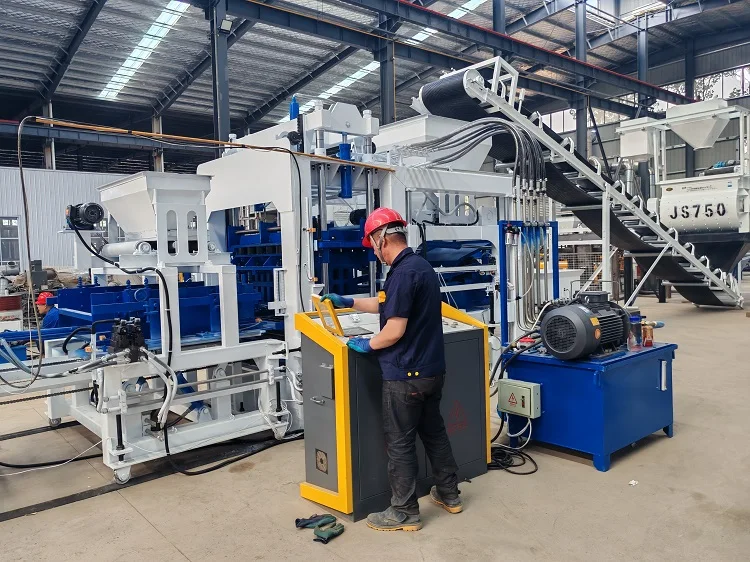
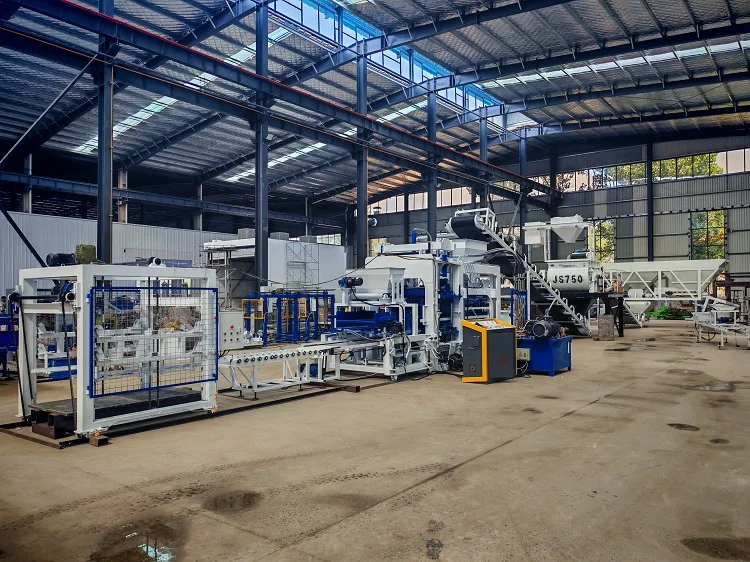
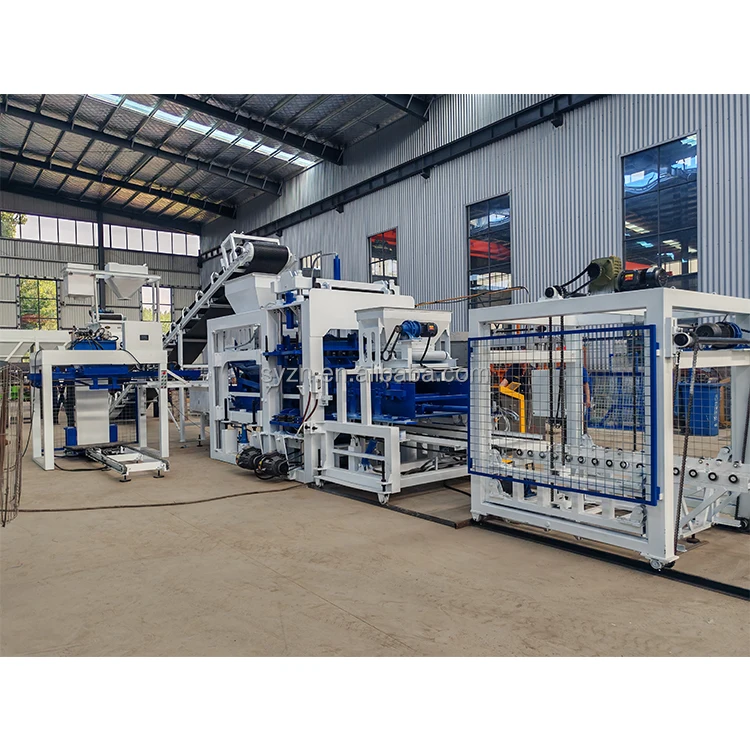
Description
Honest Capacity Reporting — output figures are stated per block format using your local aggregate, not a single misleading cycles-per-hour headline.
Technical Specifications
| Parameter | Value |
|---|---|
| Model | QT8-15 |
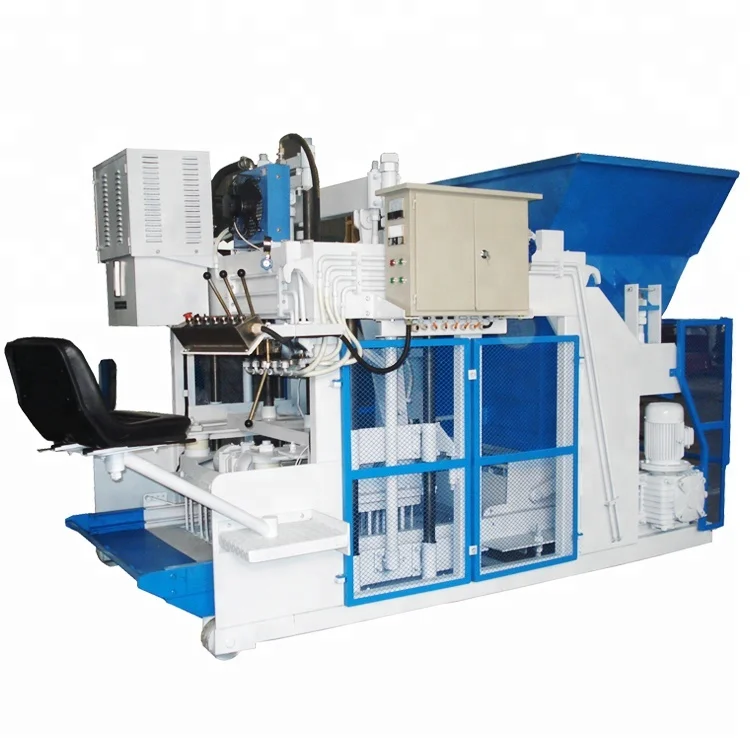
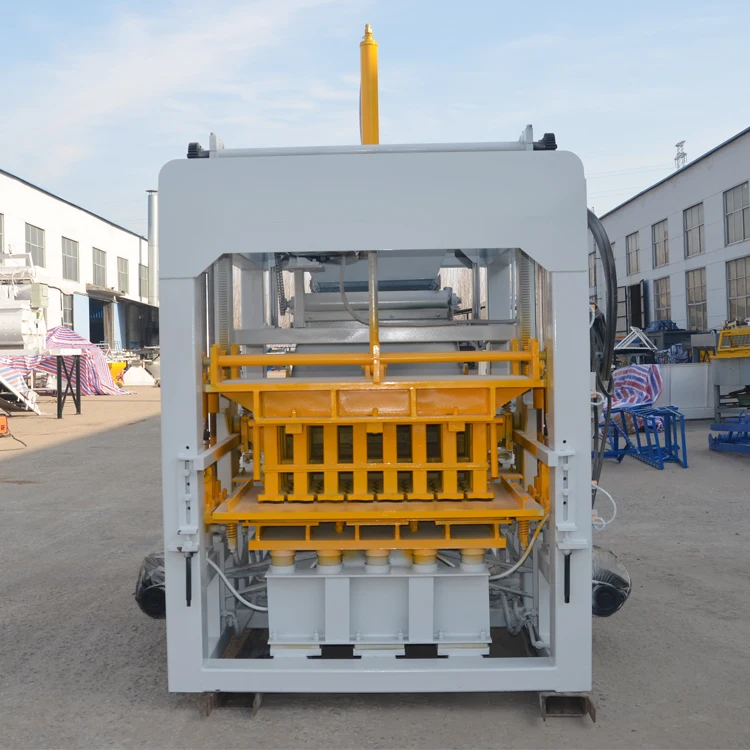
| Product Type | Automatic Concrete Block Making Machine |
| Overall Dimensions | 8300 x 1860 x 3000 mm |
| Vibration Form | Platform Vibration |
| Vibration Frequency Range | 2800 – 4500 RPM |
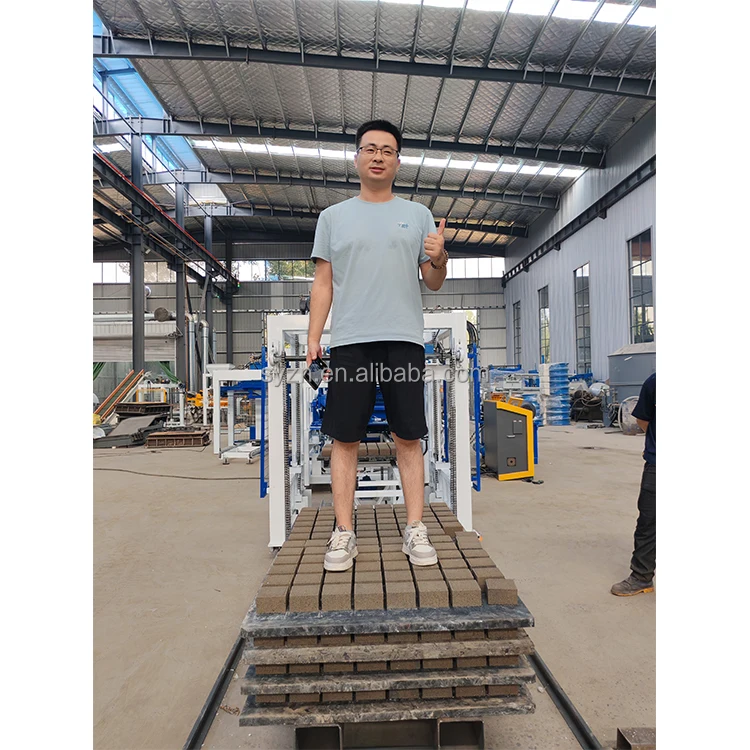
| Pallet Size | 950 x 900 mm |
| Overall Power | 47 kW |
| Control Interface | PLC with touch screen HMI |
| Hydraulic System | Independent integrated station |
| Automation Modes | Manual and automatic transition |
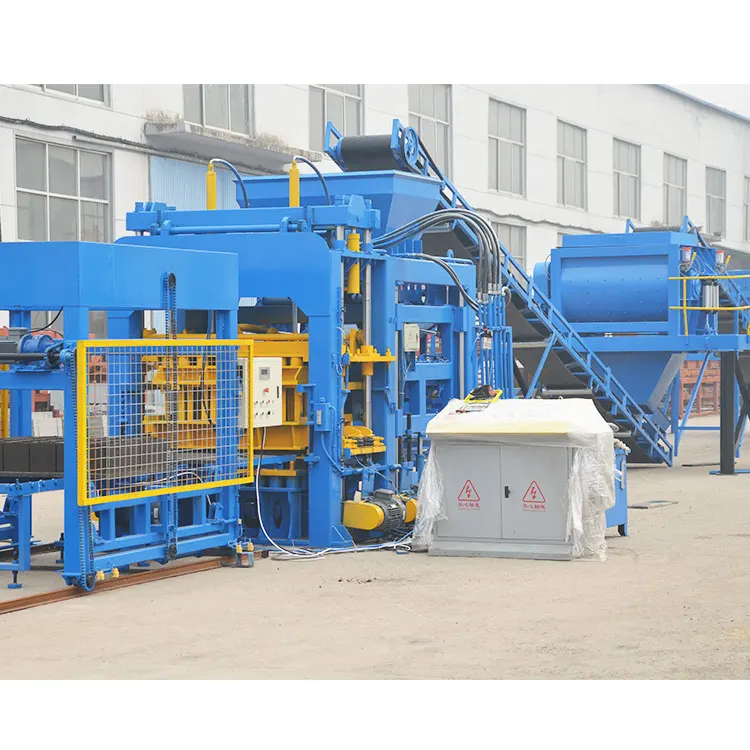
| Support Equipment Options | JS750 mixer, 8 m belt conveyor, automatic stacker |
| Included Mould | One free hollow block mould |
Application Suitability
| Application | Material or Output |
|---|---|
| Hollow Block Production | Crushed stone, river sand, fly ash, and cement blends |
| Paving Block Production | Fine aggregate and cement for high-density interlocking formats |
| Solid Block Production | Heavy aggregate mixes requiring high hydraulic compaction |
| Interlocking Brick Production | Local laterite or volcanic ash blends with cement stabilization |
| Kerbstone Production | Coarse aggregate mixes for heavy-duty roadside profiles |
Why "15-25 Seconds" Means Nothing Without a Block Format
Cycle time only matters when tied to the exact block you intend to sell.
The QT8-15 block making machine specifications often list a molding cycle of 15 to 25 seconds. But a thin paving block and a tall hollow block demand entirely different vibration durations, feeding sequences, and pressure holds. When a buyer takes a generic cycle time and multiplies it by working hours, the daily output calculation falls apart by the second week of production. I have watched plant owners in West Africa recalculate their entire project timeline because the cycle quoted applied to a solid block they never planned to make. The honest approach is to measure and quote the QT8-15 cycle time against each specific mould in your product range, using your actual raw material. [NEED_CITE: block format cycle time variation in concrete block production]
Matching Vibration Frequency to Your Local Aggregate
The platform vibration system on the QT8-15 automatic block making machine covers a frequency range from 2800 to 4500 RPM. This adjustability exists because different aggregates respond to different vibration profiles. Fine river sand compacts efficiently at higher frequencies, while coarse crushed stone or laterite blends need a lower frequency with longer dwell time to settle into the mould cavity. Running a high frequency on a coarse mix leaves voids in the block face and weakens compressive strength. The correct frequency is established during pre-shipment testing with a sample of your raw material.
Pallet Dimensions and Your Curing Infrastructure
The standard 950 x 900 mm pallet size must be evaluated against your existing curing racks, floor space, and forklift capacity. A pallet that is too large for your curing area forces you to rearrange the entire yard layout. A pallet material that warps under local humidity creates uneven blocks and increases rejection rates. Before confirming the QT8-15 block making machine order, we review your site conditions to ensure the pallet specification aligns with your handling equipment and climate. [NEED_CITE: pallet material selection for concrete block curing environments]
Hydraulic Pressure and Vibration Force Balance
The independent hydraulic station operates at rated pressures that must be matched to the vibration force for each block format. High pressure without sufficient vibration leaves air pockets in the lower section of a hollow block. Excessive vibration with low pressure causes surface cracking on paving blocks. The QT8-15 isolates its hydraulic components from the main machine vibration and dust, which preserves seal life and maintains consistent pressure output across long production shifts. This separation also simplifies maintenance, as the hydraulic station can be serviced without dismantling the press frame.
The Cost of Skipping Mix Design Verification
Shipping a block machine configured for standard river sand to a site that uses red laterite and volcanic ash guarantees problems. The feeding time, vibration profile, and pressure hold all need adjustment. Without pre-shipment testing on the buyer’s actual material, the first weeks of production involve trial-and-error that burns through raw material and pallet inventory while generating inconsistent block strength. This is a preventable cost that delays project commissioning and damages buyer confidence in the equipment. [NEED_CITE: impact of local aggregate variation on concrete block quality]
Why Sourcing the Complete Line Matters Here
Block machinery is our single focus, which means the QT8-15 press, its moulds, pallets, and handling equipment are specified as one matched system. Capacity calculations in your proposal state the exact block format assumed for each output figure. Mould designs cover the formats your local market actually buys, including custom profiles from your drawings. Voltage, frequency, and PLC display language are confirmed before production starts, not discovered during commissioning. Factory testing uses material samples you provide so the machine arrives with baseline parameters already established for your conditions.
Documentation & Verification
- Line layout showing capacity per block format for the QT8-15
- Mould drawings confirming cycle times for each ordered profile
- Pallet specification matched to your curing area and forklift
- Voltage, frequency, and PLC language written confirmation before build
- Factory test record using your submitted raw material sample
Installation, Commissioning & Support
- Foundation plan based on the QT8-15 footprint of 8300 x 1860 mm
- Dedicated electrical circuit sized for the 47 kW total power draw
- Machine reassembly and leveling on prepared foundation at site
- First-run parameter tuning using your local aggregate and mix ratio
- Operator training on PLC touch screen for both manual and automatic modes
- Wear parts and mould maintenance schedule provided at handover
What We Need to Configure the QT8-15 for Your Plant
Tell us which block formats your market demands and the daily volume you need for each. Share a sample of your local aggregate and your current mix ratio so we can run pre-shipment tests. Confirm your site voltage and frequency, the language your operators read, and the dimensions of your existing curing area.
Frequently Asked Questions
Q: How is QT8-15 cycle time measured and which block format does it apply to?
A: The 15 to 25 second cycle range covers different block types and materials. A hollow block requires a longer vibration hold than a thin paving block. We measure and quote cycle time against each specific mould in your order, using your submitted raw material sample, so your daily output projection reflects actual production conditions.
Q: How do I select the right mould set for the block formats my market sells?
A: Start by listing the block types your customers actually purchase and their volume split. We provide mould drawings and cycle times for each format so you can see which moulds justify the investment. Custom mould profiles are available from your drawings if your market demands non-standard shapes.
Q: What pallet size and material should I choose for my curing setup?
A: The standard 950 x 900 mm pallet must fit your existing curing racks and forklift. Material selection depends on local humidity and temperature, as some pallet materials warp under tropical conditions. We confirm the pallet specification against your site infrastructure before finalizing the QT8-15 order.
Q: How is block strength verified against my local aggregate and mix design?
A: We request a raw material sample and your proposed mix ratio before shipment. The QT8-15 is then tested at our facility using your material, and the vibration frequency, pressure, and feeding parameters are adjusted to meet the target block strength. A factory test record with these results is included in your documentation package.
Q: How do voltage and PLC language get confirmed before the machine ships?
A: Your site voltage, frequency, and preferred PLC display language are written into the order confirmation. These parameters are set during production and verified during the factory test. This prevents commissioning delays that occur when electrical specifications are assumed rather than confirmed. [NEED_CITE: voltage and frequency standards by export market]