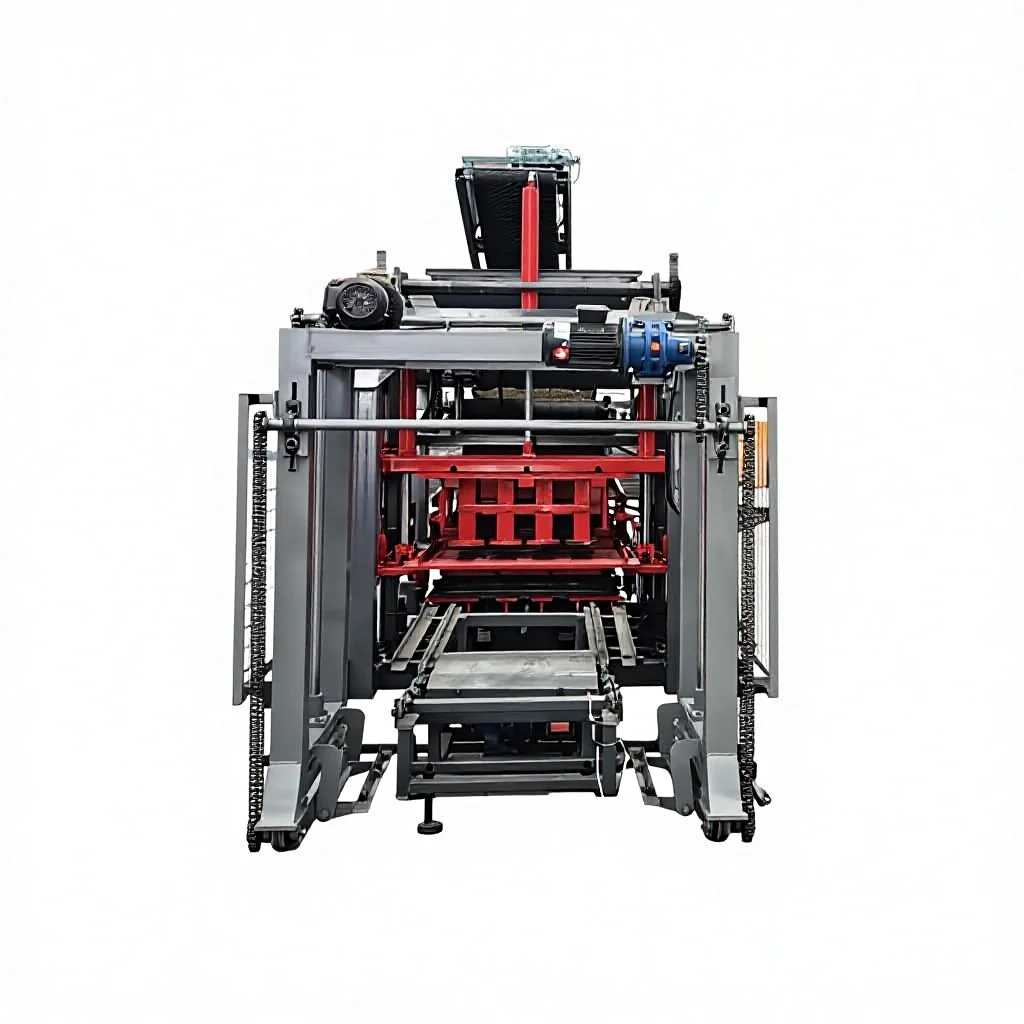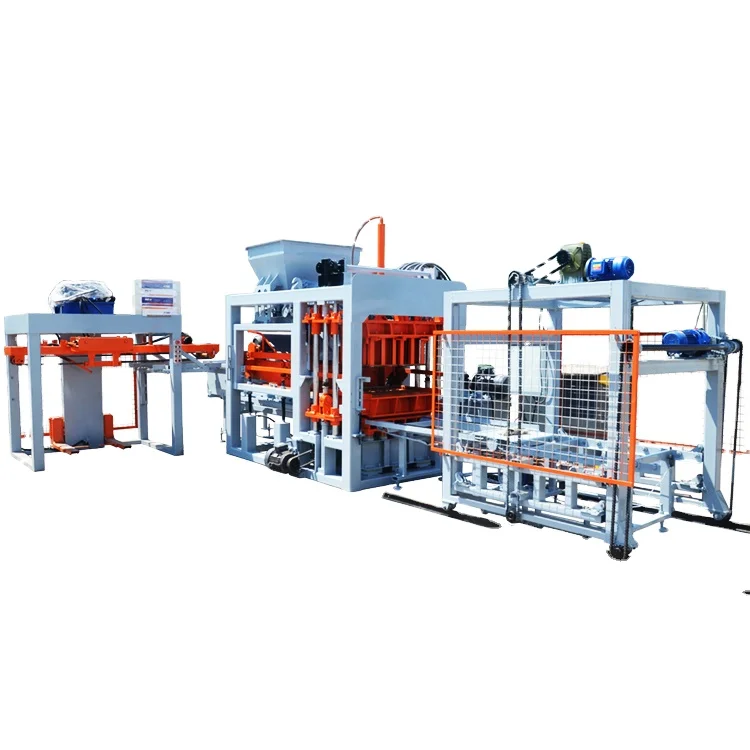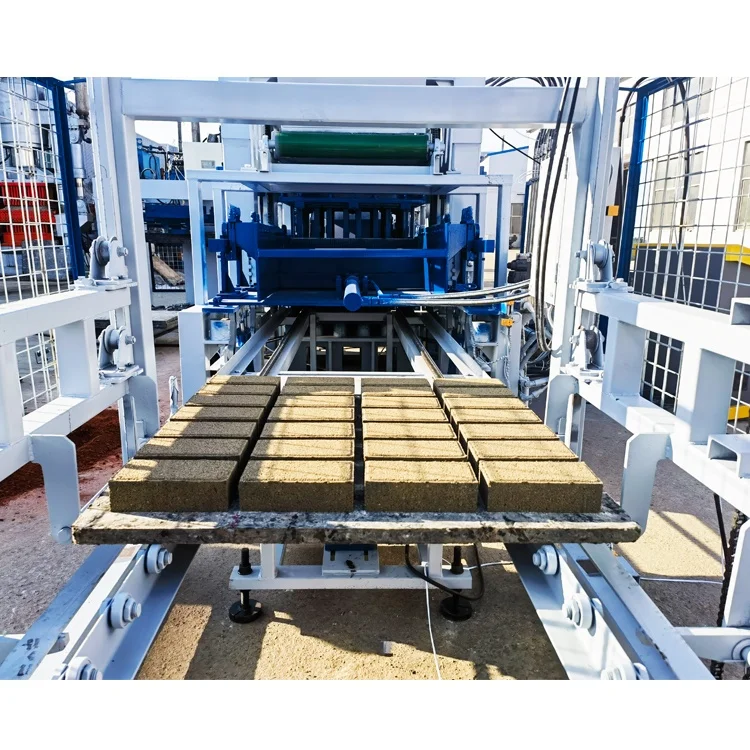

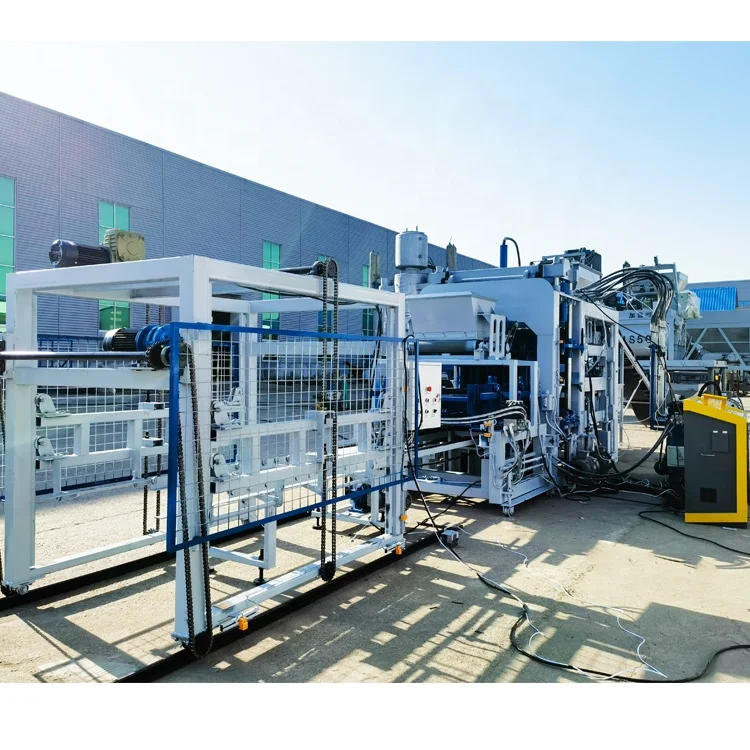
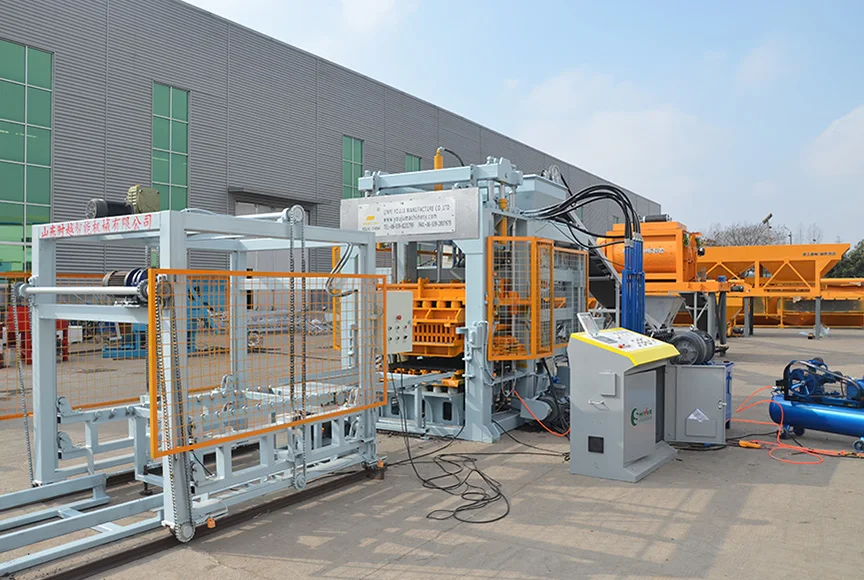

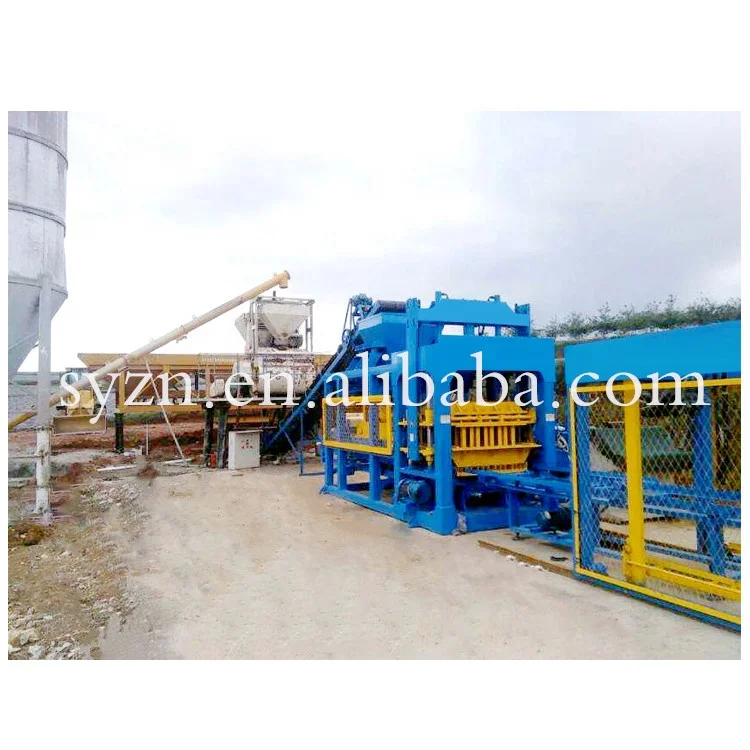
Description
Hydraulic Vibration Matching — QT8-15 configured against your local aggregate and target block format rather than a catalogue default, so vibration force and hydraulic pressure align with your actual mix design.
Technical Specifications
| Parameter | Value |
|---|---|
| Model | QT8-15 |
| Product Type | Automatic Hydraulic Concrete Block Making Machine |
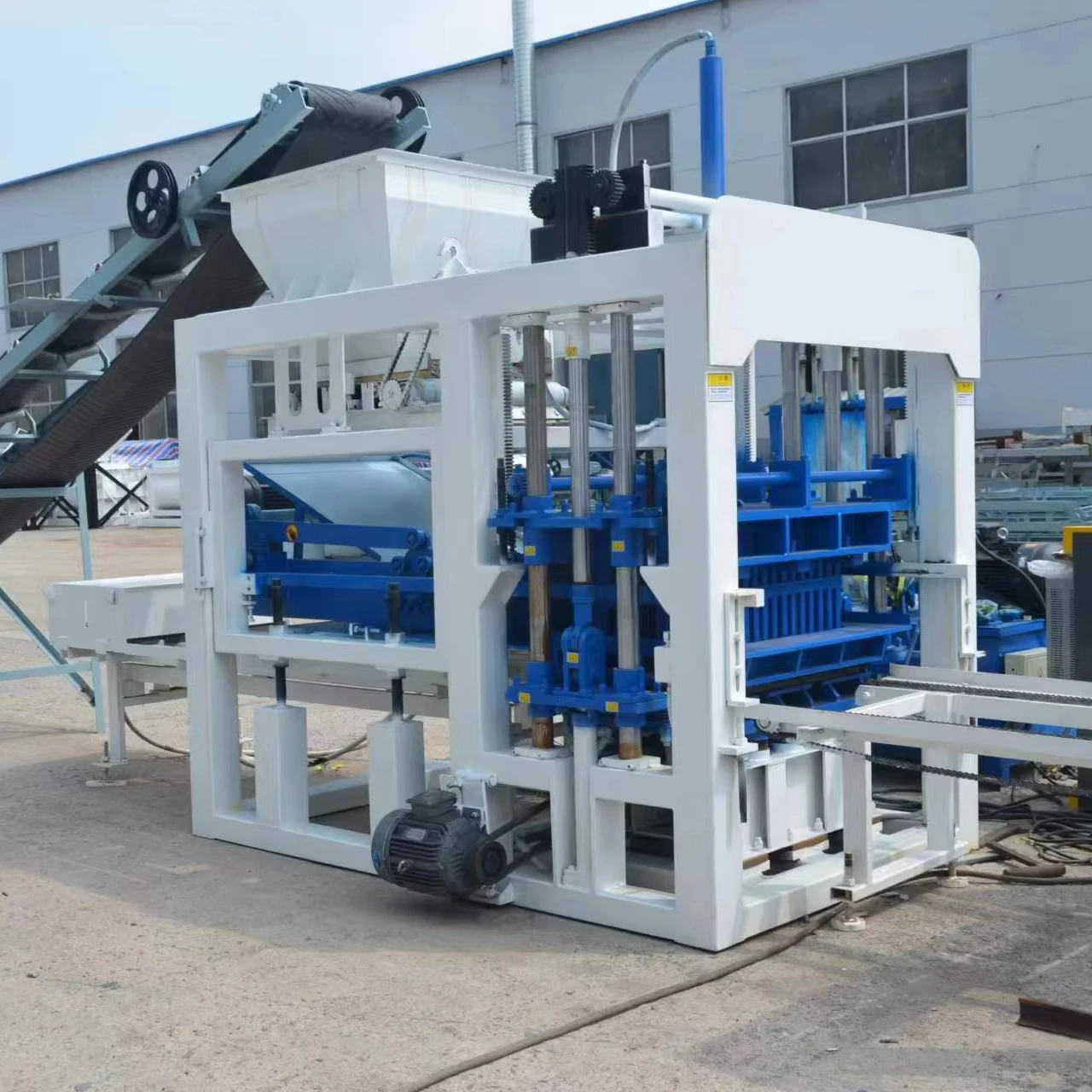
| Overall Dimensions (L×W×H) | 8300×1860×3000mm |
| Molding Cycle | 15-20s (basis not stated in source — confirm per block format and material) |
| Vibration Force | 55kN |
| Total Power | 37.2kW |
| Mixer Model | JS750 |
| Pallet Size | 1020×900mm (source value — verify against 950×900 stated elsewhere) |
| Total Weight | 8T |
| Control System | PLC control system |
| Hydraulic Station | Included |
| Automation Level | Automatic |
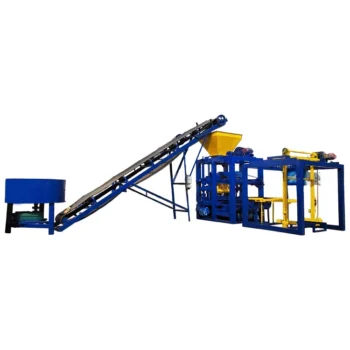
| Included Equipment | Block making machine, hydraulic station, PLC control unit, pallet feeder, block mould, material feeder, block conveyor, block sweeper, spare parts and tools |
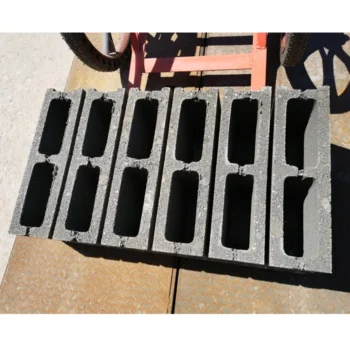
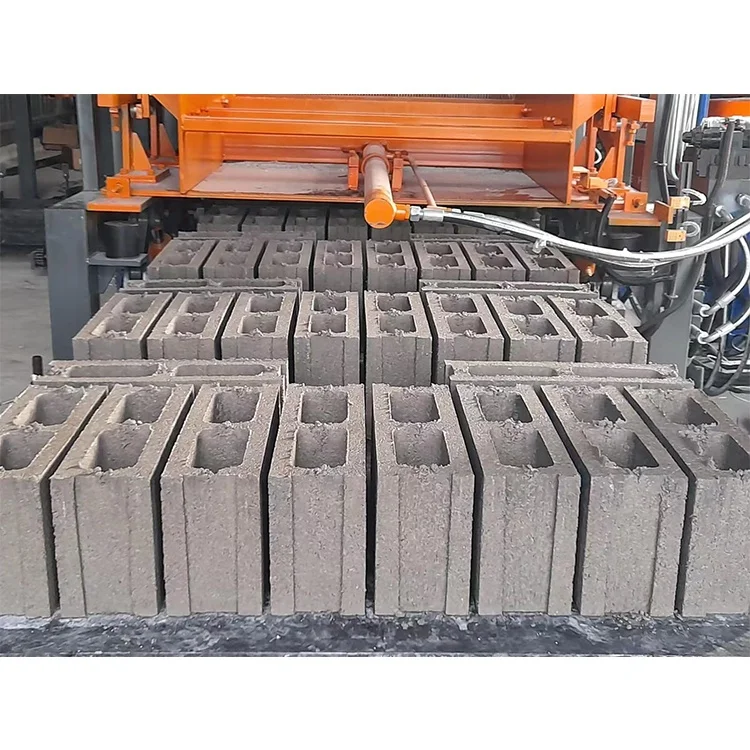
| Applied Products | Paver, solid block, hollow block, curbstone |
| Raw Materials | Crushed stones, sand, cement, dust, fly ash |
Application Suitability
| Application | Material or Output |
|---|---|
| Paving block production | Crushed stone and sand with cement binder for interlocking or rectangular pavers |
| Hollow block manufacturing | Fly ash or sand-cement mixes for load-bearing and partition walls |
| Solid block forming | Dense aggregate blends for foundation and structural masonry |
| Curbstone casting | High-strength mixes with larger aggregate fractions for roadside and edging profiles |
What "15-20 Second Cycle Time" Leaves Out About QT8-15 Block Making Machine Output
Cycle time without a stated block format and mix design is not a production plan.
Catalogue figures often quote the fastest possible cycle on a thin paver with an ideal aggregate, while a buyer producing 200mm hollow blocks with high-clay sand may see that figure stretch considerably. On one Middle East project, a machine shipped with a standard vibration profile encountered sand with clay content above what the default settings expected, and the effective daily output dropped by half against contract figures. [NEED_CITE: effect of aggregate clay content on concrete block cycle time] The QT8-15 block machine specifications must therefore be confirmed against your specific block format, target compressive strength, and the aggregate you can actually source locally — not just the headline molding cycle number.
Mould Selection and Realistic Daily Output
Choosing the right QT8-15 block making machine configuration starts with defining exactly which block formats your market demands. The single-machine platform supports pavers, solid blocks, hollow blocks, and curbstone through mould changes, but each format carries a different cycle time and material consumption rate. Honest capacity planning means calculating daily output per format with the mix design and pallet size confirmed, rather than assuming one cycle figure applies across the entire product range.
Pallet Dimension Alignment With Curing Infrastructure
The pallet size listed at 1020×900mm in the specification table and 950×900mm in the product title represents a discrepancy that must be resolved before production begins. Pallet dimensions determine how many blocks are formed per cycle, how pallets stack in the curing racks, and whether your existing forklift can handle the loaded pallets. If the curing area was designed for a different pallet standard, the entire material flow from press to stacking to dispatch can be disrupted. [NEED_CITE: pallet size compatibility in concrete block curing yards] Confirming the exact pallet specification — material, thickness, and dimensions — against your current site layout is a non-negotiable step in the QT8-15 block making machine selection process.
Vibration, Hydraulic Pressure, and Block Density
Vibration force at 55kN works together with hydraulic pressure to compact the mix into a dense, dimensionally consistent block. The JS750 mixer feeds material into the mould box, where the vibration frequency and hydraulic clamping pressure must be matched to the aggregate grading and cement content of your specific mix. Higher vibration on a dry, coarse mix can achieve rapid compaction, while a wetter or finer mix may require adjusted pressure profiles to avoid surface cracking or edge damage on demoulding. Total power consumption at 37.2kW reflects the combined demand of the hydraulic station, vibration motors, conveyor drives, and the PLC control system running the full automatic sequence. Mould change on this platform is manual, so buyers switching formats frequently should factor operator time into shift planning and confirm the change procedure against their target formats before ordering.
The Cost of Overlooking Format-Specific Configuration
Shipping a machine configured for a generic mix that your local quarry cannot supply forces either a material change or on-site parameter rework after installation. When pallet dimensions are assumed rather than verified, curing racks sit partially empty or forklift operators struggle with load stability. Voltage and frequency left unconfirmed can delay commissioning by weeks while replacement motors or transformers are sourced. [NEED_CITE: electrical specification mismatch in exported industrial machinery] These are not theoretical risks — they are the most common reasons block production projects lose their first month of revenue.
Why Buyers Place This Line Here
Block machinery is our single focus, so the QT8-15 machine, mould, pallet, and handling equipment are specified as one matched system rather than assembled from separate suppliers. Configuration is set against your actual mix design and target block format with cycle time recalculated per format — not quoted from a catalogue peak. Mould design and supply cover the formats your market actually sells, including custom drawings when standard profiles do not match. Automation level is selectable, allowing a buyer to start with the included automatic package and plan future upgrades. Installation support includes on-site commissioning and operator training so the crew running the press on day one understands mould change, PLC fault codes, and daily maintenance. [NEED_CITE: block machine commissioning best practices]
Documentation & Verification
- Line layout and capacity calculation stating the block format assumed for each output figure
- Machine specification sheet confirming pallet size, voltage, frequency, and PLC display language
- Mould drawing and format list covering every block profile ordered with the QT8-15
- Hydraulic and electrical schematic for on-site troubleshooting and spare parts ordering
- Factory test record run on your confirmed mix design and block dimensions before dispatch
Installation, Commissioning & Support
- Foundation must accommodate the 8300×1860mm footprint plus conveyor and mixer clearance zones
- Electrical supply must match confirmed voltage and frequency with a dedicated circuit for the 37.2kW total load
- Machine arrives partially dismantled for container loading; reassembly on site requires crane access
- First-day commissioning includes hydraulic pressure calibration and vibration profile tuning to your mix
- Operator training covers PLC fault diagnosis, mould change procedure, and daily lubrication schedule
- Wear parts list identifies hydraulic seals, vibration springs, and mould liners by part number for reorder
What to Prepare Before Requesting a Proposal
A precise configuration starts with your target block formats, daily output requirement per format, and a representative sample of your local aggregate and sand. Share your existing curing area dimensions and forklift capacity so pallet size can be confirmed without guesswork. Specify the local voltage and frequency standard, and indicate the PLC display language your operators need. If you plan to run multiple block formats on one shift, let us know the changeover frequency so the mould change system can be discussed in context.
Frequently Asked Questions
Q: What is the realistic daily output of the QT8-15 for each block format and what cycle time does each assume?
A: Output varies by format, block height, and mix design. The 15-20 second cycle listed in QT8-15 block machine specifications has no stated block format basis, so we recalculate capacity per format using your confirmed mould, pallet size, and aggregate. A proposal includes a format-by-format daily output table with the assumed cycle time for each.
Q: How do I confirm pallet size matches my curing area and forklift, and why do sources list different dimensions?
A: A discrepancy exists between 950×900mm and 1020×900mm in source documents. Before production, we confirm the exact pallet dimension, material, and thickness in writing and cross-reference it against your curing rack spacing and forklift fork width so loaded pallets move without modification.
Q: What voltage, frequency, and PLC language options are available for the QT8-15 block making machine?
A: Voltage, frequency, and PLC display language are not stated in the base specification sheet and must be confirmed before production. We document these three parameters in writing during the quotation stage so the electrical cabinet and control interface match your site standard on arrival.
Q: How long does a mould change take on the QT8-15 and what formats can it produce without modification?
A: The QT8-15 uses a manual mould change system. Change time depends on mould size and operator familiarity, and the source does not state a specific figure. We provide a change procedure with each format ordered, and custom moulds can be engineered from your drawings when standard profiles do not match local demand.
Q: Which raw materials and mix designs has the QT8-15 been configured for?
A: The platform handles crushed stone, sand, cement, dust, and fly ash. However, aggregate grading and clay content vary by region. We request a material sample and your target block strength before configuration so vibration and hydraulic pressure settings are matched to what you actually source, not a laboratory default.