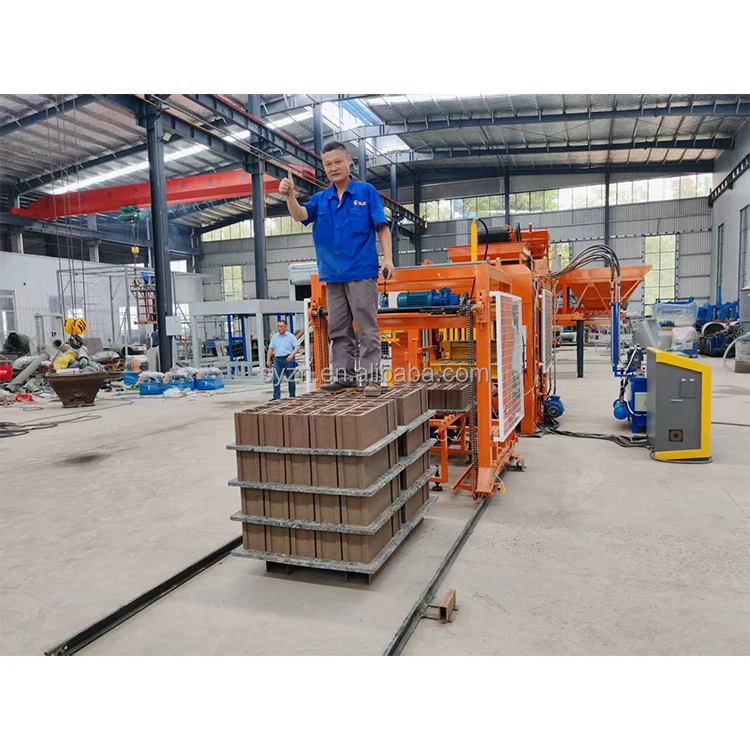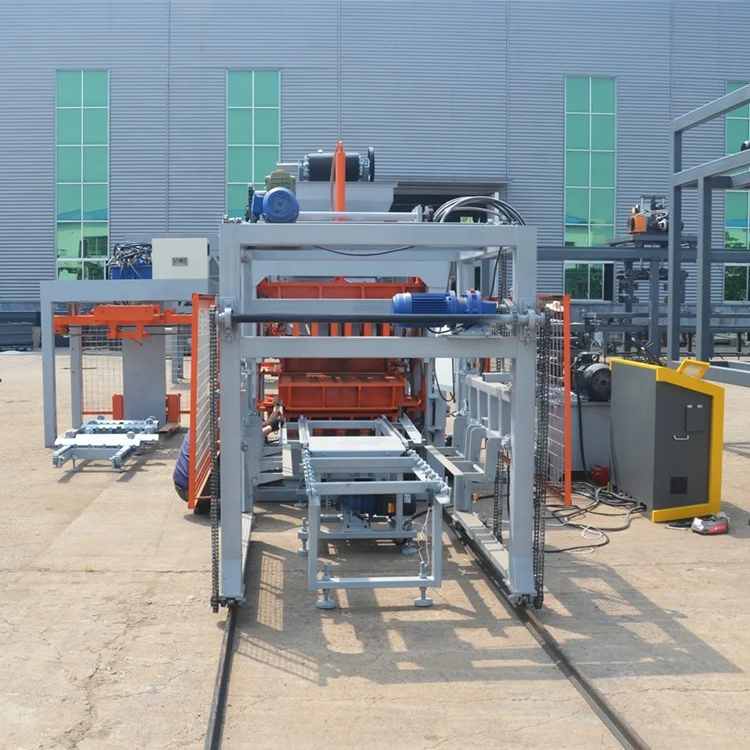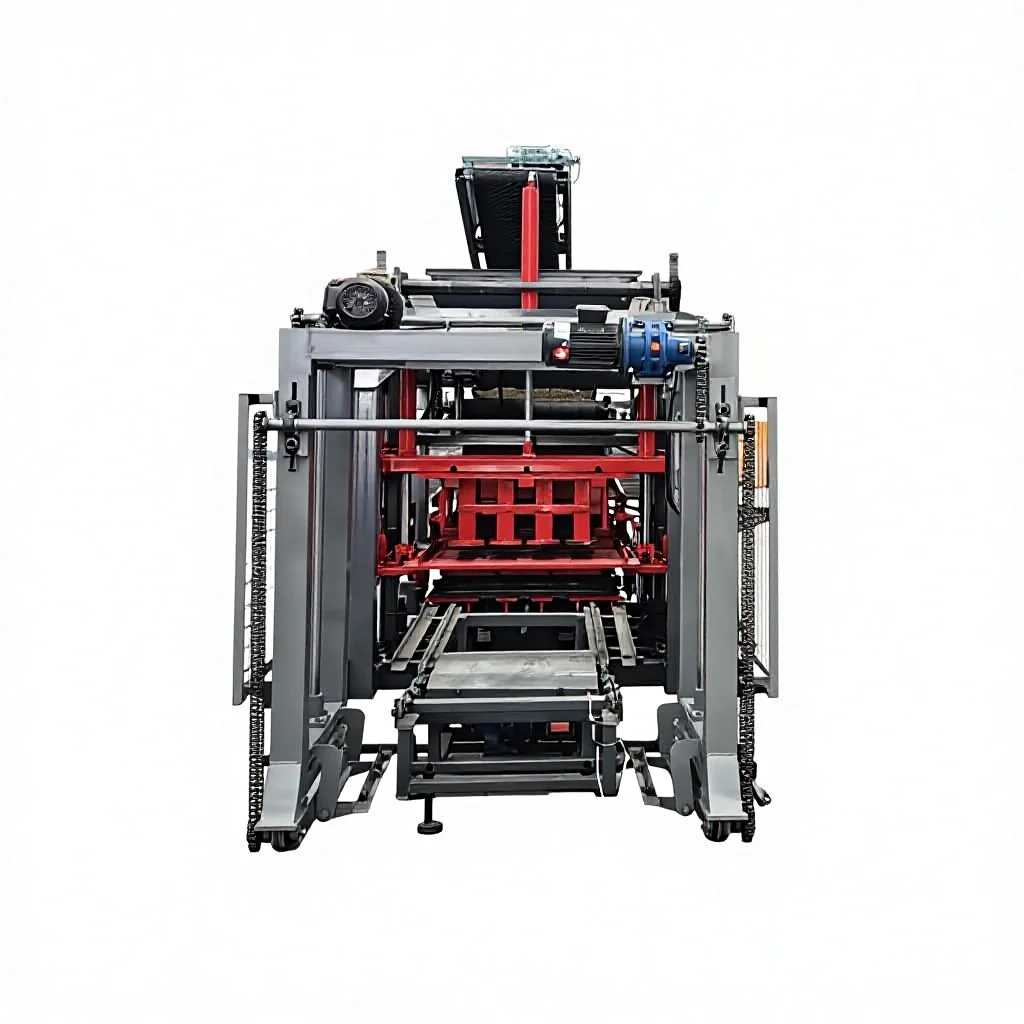
Description
Honest capacity by format — we match the QT4-15A’s hydraulic pressure and vibration force to your target block dimensions and local aggregate rather than quoting a single cycles-per-hour figure.
Technical Specifications
| Parameter | Value |
|---|---|
| Model | QT4-15A |
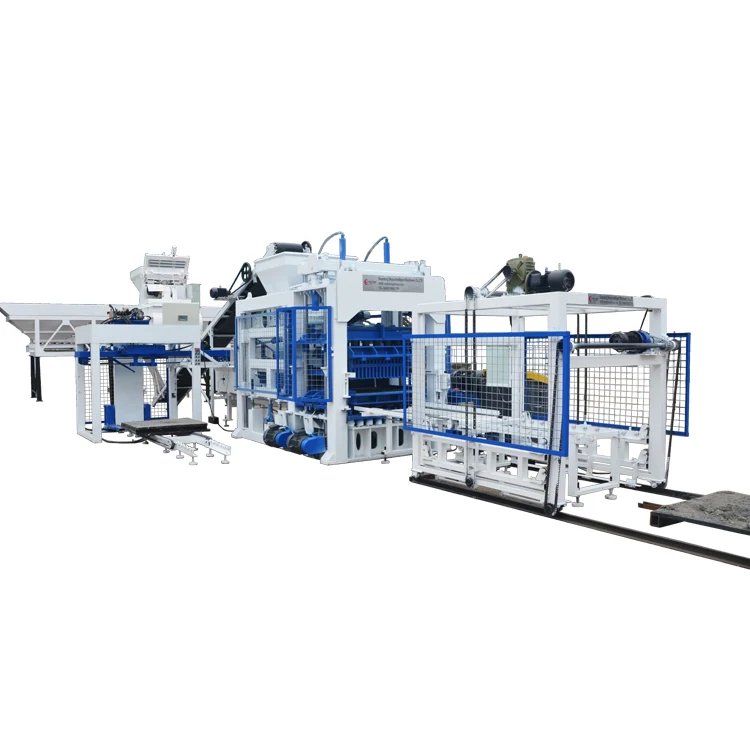
| Product Type | Fully Automatic Hydraulic Concrete Block Making Machine |
| Overall Dimensions (L×W×H) | 4100×1600×2600 mm |
| Rated Pressure | 16–21 MPa |
| Main Vibration Form | Platform Vibration |
| Vibration Frequency | 4200 r/min |
| Vibration Force | 55 kN |
| Pallet Size | 880×550 mm |
| Molding Cycle | 25–30 s (basis not stated in source — confirm block format / material / thickness) |
| Overall Power | 18.45 kW |
| Total Mass | 4 T |
| Demolding Method | Hydraulic |
| Factory Area Required | 300 m² |
| Automation Level | Fully Automatic |
| Raw Materials | Crushed stone, sand, cement, fly ash, gravel, slag, dust |
Application Suitability
| Application | Material or Output |
|---|---|
| Hollow block production for wall construction | Crushed stone, sand, cement |
| Solid block manufacturing for load-bearing structures | Gravel, cement, fly ash blends |
| Paving block and colored paver runs | Fine aggregates with cement binder |
| Interlocking brick production | Sand and cement with local aggregate |
| Kerbstone and curb units for road projects | Coarse gravel and high-pressure compaction |
What "25–30 Seconds" Actually Means for QT4-15A Block Making Machine Specifications
Cycle time only matters when tied to the exact block format you intend to produce.
A molding cycle listed as 25–30 seconds tells you nothing until you know which block size, wall thickness, and material blend that figure assumes. I once watched a contractor in the Middle East unpack a machine that was rated for impressive hourly cycles — only to discover the rating assumed a thin paver, while his daily production target was a thick hollow block that required longer vibration and curing dwell. The real output dropped significantly. [NEED_CITE: block format impact on cycle time in hydraulic presses]
When evaluating QT4-15A block making machine specifications, the cycle baseline must be restated for each mould format on your quotation. A hollow block with deeper cavities demands longer vibration to consolidate the mix fully, and a denser aggregate blend slows the fill-and-compress sequence. Without format-specific cycle data, daily capacity planning remains guesswork.
Matching Vibration Force to Block Density Requirements
The 55 kN platform vibration force on the QT4-15A works in tandem with the 16–21 MPa hydraulic pressure range to consolidate the concrete mix during forming. Vibration frequency at 4200 r/min keeps fine particles mobile while the hydraulic ram applies compaction from above. This dual action determines the final block density and compressive strength. For a buyer targeting hollow blocks with local river sand, the vibration amplitude may need adjustment compared to a run using crushed basalt aggregate.
Pallet Size and Curing Area Alignment
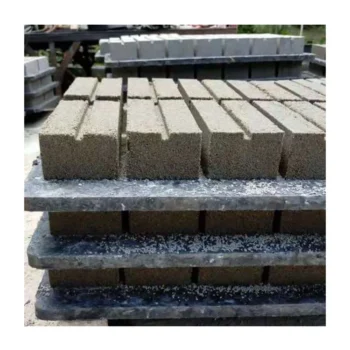
The 880×550 mm pallet defines the mould footprint and directly dictates how many blocks fit on each curing rack. Before confirming an order, the buyer must verify that existing forklifts, curing yard dimensions, and rack spacing accommodate this pallet size. A mismatch here means either wasted curing space or the need to purchase new handling equipment. This single dimension ripples through the entire post-press workflow and should be validated during the proposal stage, not after the QT4-15A arrives on site. [NEED_CITE: pallet handling compatibility in block plant layout]
Reading the Core Specs Beyond the Brochure
The rated pressure range of 16–21 MPa is not a single fixed value but an adjustable window. Lower pressure suits lightweight blocks using fly ash or expanded aggregate, while the upper end produces dense pavers and curbstones that must withstand vehicular loads. The 18.45 kW total power draw reflects the combined demand of the hydraulic pump, vibration motor, and material feeder — a figure that determines the electrical supply capacity your workshop needs. At 4 tonnes total mass, the QT4-15A requires a level concrete foundation with adequate bearing capacity to absorb vibration transfer without cracking over time. The 300 m² factory area reference covers the press, raw material staging, and immediate pallet circulation but does not include curing yard or finished goods storage. Understanding these parameters as a connected system, rather than isolated numbers, is what separates a working block line from an underperforming one.
The Hidden Cost of a Mismatched Configuration
Ordering a block press without confirming voltage, frequency, and PLC display language delays commissioning by weeks. The machine sits idle while transformers are sourced or control panels are reprogrammed. I have seen projects where the pallet size was chosen based on the supplier’s standard rather than the buyer’s existing forklift fork width, forcing a full set of custom pallets to be fabricated locally at considerable expense. [NEED_CITE: commissioning delays from unconfirmed electrical specifications] When the mould format list is not agreed in advance, the machine may ship with moulds for products the local market does not buy, while the moulds you actually need sit on a long lead-time order. These oversights compound into lost production weeks that no capacity figure can recover.
Why Source the QT4-15A Through This Channel
Block machinery is the single focus here, so the press, mould, pallet, and handling equipment are specified as one matched system rather than assembled from unrelated suppliers. Configuration starts from your actual mix design and local aggregate, not a catalogue default. Mould design covers the formats your market demands, including custom drawings when standard options do not fit. The automation level is selectable, allowing a semi-automatic start with a clear upgrade path. Installation and commissioning include operator training on the specific block formats you will produce first.
Documentation & Verification
- Machine specification sheet listing all confirmed parameters for the QT4-15A
- Mould drawing and format list showing cavity count per pallet for each block type
- Pallet specification confirming material grade and dimensional tolerances
- Hydraulic and electrical schematic matching your confirmed voltage and frequency
- Factory test record produced on your target block format before dispatch
Installation, Commissioning & Support
- Level concrete pad required within the 300 m² footprint to support the 4 T mass
- Dedicated electrical circuit sized for the 18.45 kW total power draw confirmed before shipment
- Hydraulic system pressurized and bled on site with parameters set to your aggregate blend
- Mould change procedure demonstrated with actual formats from your confirmed drawing list
- Pallet circulation and handling sequence verified against your curing rack dimensions
- Wear parts list provided with recommended reorder intervals based on your production schedule
Moving Forward With Your Inquiry
To size the QT4-15A accurately, share your target block formats with dimensions, the local aggregate type and gradation you plan to use, and your expected daily output per format. Confirming your site voltage, frequency, and preferred control language at the inquiry stage prevents costly rework after delivery.
Frequently Asked Questions
Q: How is daily output calculated per block format on the QT4-15A?
A: Daily output depends on the cycle time for each specific block format, the number of cavities per mould, and the number of production hours you plan to run. The general 25–30 second cycle is a baseline that shifts with block thickness, material density, and mix design. We provide a format-by-format capacity table with each quotation so you can plan realistically.
Q: Which mould formats are available and how long does a change take?
A: The QT4-15A accepts moulds for hollow blocks, solid blocks, pavers, interlocking bricks, and curbstones, all designed around the 880×550 mm pallet. Custom mould designs are available to buyer drawings. Mould change time varies with the format and the clamping system configuration and is confirmed during the proposal stage.
Q: How do you match vibration and pressure to my local aggregate?
A: We request a sample of your local sand, crushed stone, or fly ash and run trial pressings before finalizing the vibration frequency and hydraulic pressure settings. This ensures the 55 kN vibration force and 16–21 MPa pressure range produce blocks that meet your strength targets with the materials you can actually source.
Q: What documentation comes with the QT4-15A before and after shipment?
A: The package includes the machine specification sheet, mould drawings and format list, pallet specification, hydraulic and electrical schematics, factory test records, operation and maintenance manual, and wear parts list. CE declaration is provided where applicable. All documents reflect the exact configuration shipped, not a generic template.