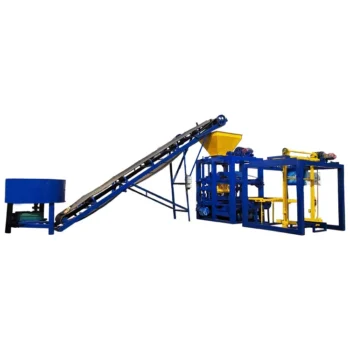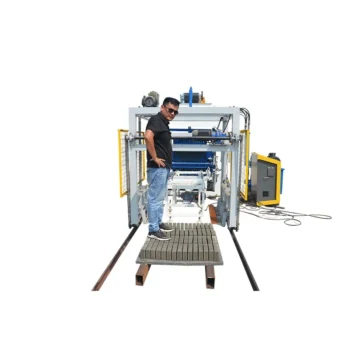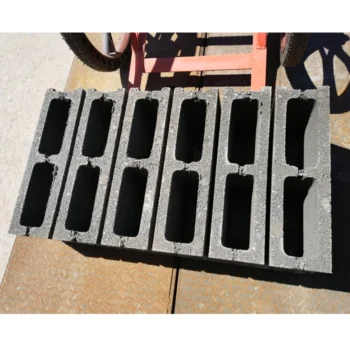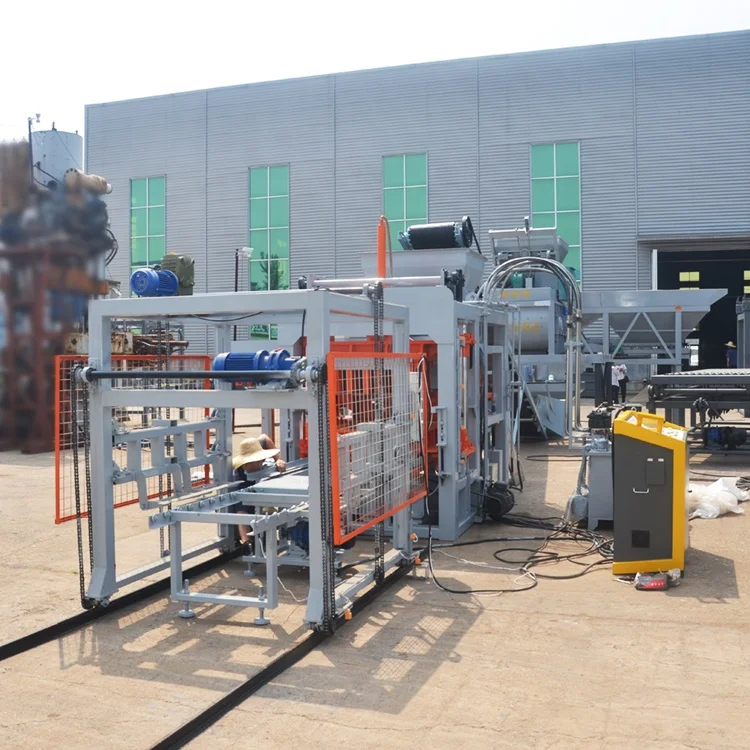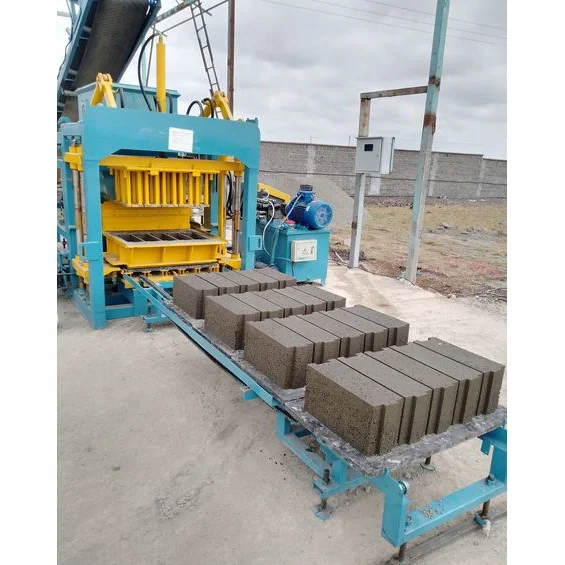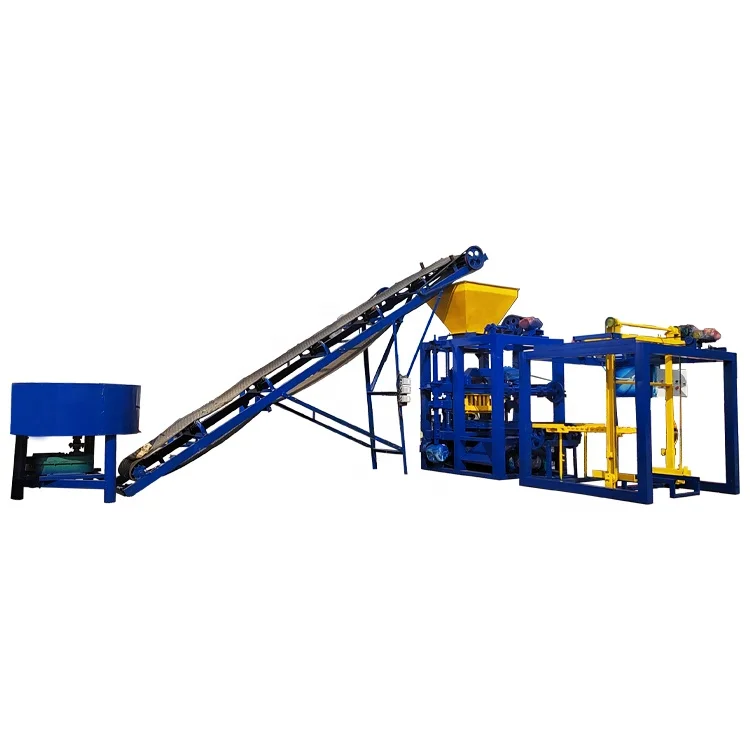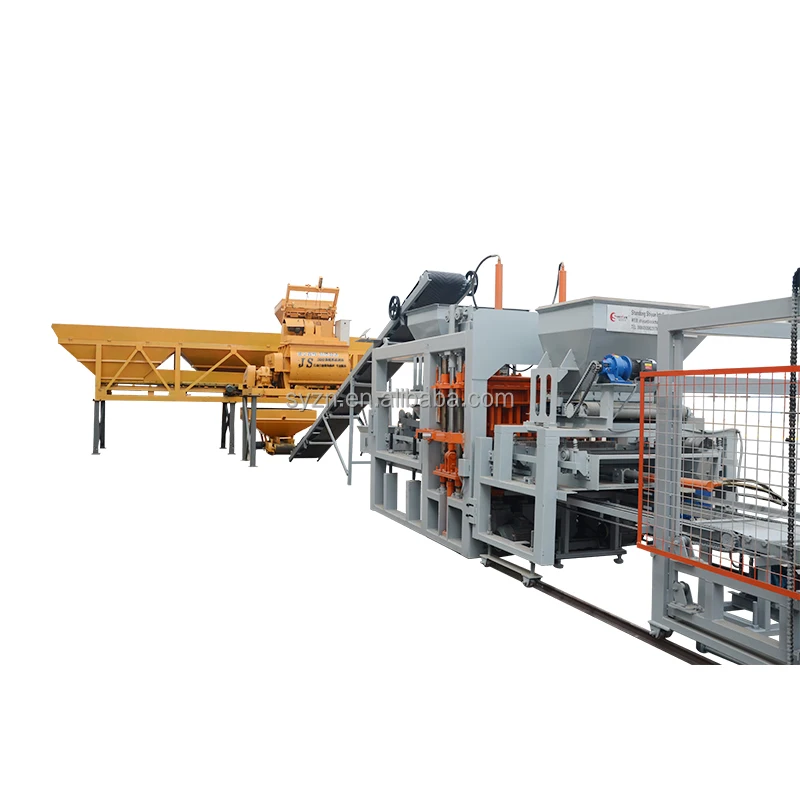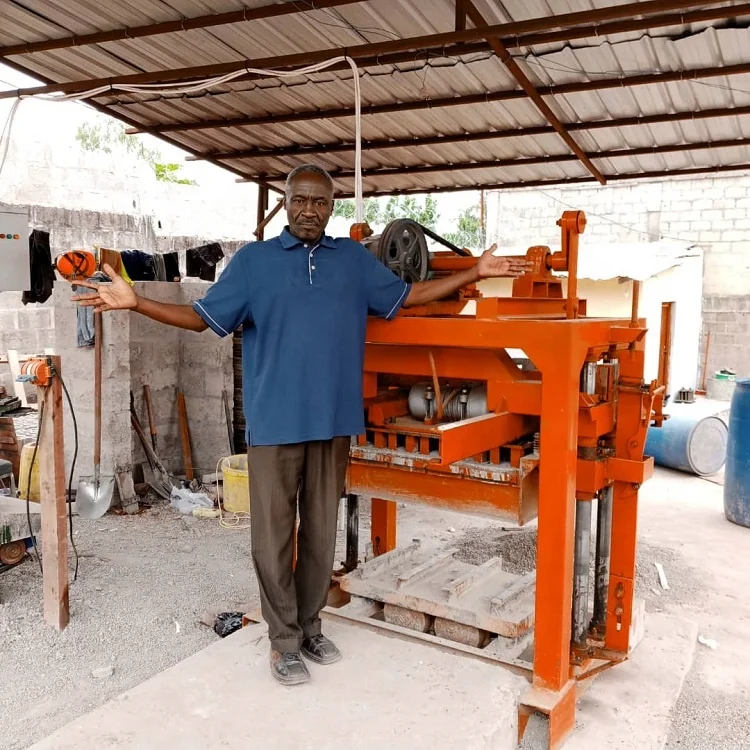
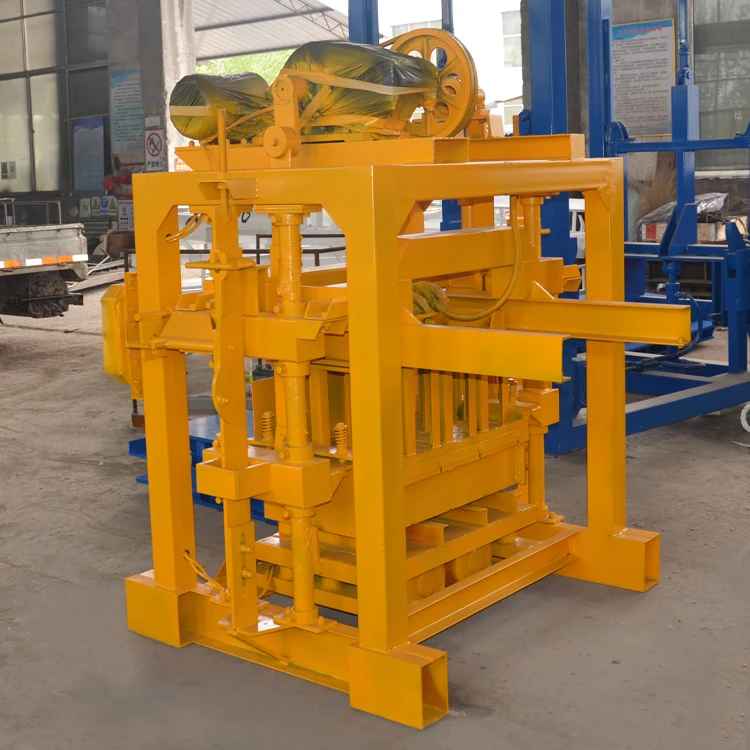


Description
Matched System Configuration — every block format you plan to produce is verified against the QTJ4-40’s vibration force, pallet size, and mould geometry before the machine ships.
Technical Specifications
| Parameter | Value |
|---|---|
| Model | QTJ4-40 |
| Product Type | Manual Cement Block Making Machine |
| Machine Power | 9.5 kW |
| Molding Cycle | 40 s |
| Output Capacity | 2,800 pcs/day (based on 400×200×200mm hollow block, 4 pcs/mould); 3,600 pcs/day (based on 400×150×200mm block, 5 pcs/mould); 6,400 pcs/day (based on 225×112.5×60mm paving brick, 9 pcs/mould) |
| Pcs per Hour | 360 pcs/h (based on 400×200×200mm hollow block); 450 pcs/h (based on 400×150×200mm block); 800 pcs/h (based on 225×112.5×60mm paving brick) |
| Raw Materials | Concrete, sand, cement, fly ash, lime, gypsum |
| Machine Weight | 1 T (source value — verify against manufacturer catalog) |
| Overall Dimensions (L×W×H) | 1,350 × 1,460 × 1,800 mm |
| Pallet Size | 850 × 450 mm |
| Voltage | According to local voltage (basis not stated in source — confirm voltage and frequency) |
| Control System | Manual / semi-automatic operation |
| Vibration Method | Bed mould vertical vibration + upper mould compression vibration |
| Mould Type | Top die push-pull with automatic scraper |
| Operator Requirement | One worker |
Application Suitability
| Application | Material or Output |
|---|---|
| Small-scale hollow block production | Crushed stone, river sand, and cement for local building material supply |
| Paving brick manufacturing | Fine aggregate and cement for on-site or workshop production |
| Fly ash block production | Fly ash, lime, and gypsum blends for lightweight masonry units |
| First block plant setup | Low-capital entry for entrepreneurs and small contractors |
Why the Capacity Number on the Quotation Is Almost Always Wrong
A capacity figure without a named block format is not a capacity figure — it is a marketing placeholder.
Most block machine quotations state a single daily output number. That number almost always assumes the largest, lightest block in the catalogue — typically a 400×200×200mm hollow block at four pieces per mould. If your market actually sells 225×112.5×60mm paving bricks or 400×150×200mm solid blocks, your real throughput will differ substantially from what the quotation promised. When I first started visiting project sites across the Middle East, I watched contractors stand beside machines that were supposed to produce thousands of blocks per day, only to find the operator was running a format the supplier never tested against. The manual block machine specifications you receive should break capacity down per format, or the number is meaningless. [NEED_CITE: block machine capacity verification standards in export documentation]
Cycle Time Broken Down by Block Format
The QTJ4-40 holds a 40-second molding cycle across all formats, but the pieces per cycle change with the mould. A 400×200×200mm hollow block mould produces four pieces per cycle, while a paving brick mould produces nine. That difference alone means your manual block machine specifications must state which format each capacity figure assumes. Without that breakdown, daily planning is guesswork.
Dual Vibration and What It Means for Block Density
The bed mould delivers vertical vibration while the upper mould applies compression vibration simultaneously. This dual action compacts the concrete mix from both directions, which matters when you switch between lightweight fly ash mixes and heavier crushed-stone aggregates. Consistent density across formats depends on this paired vibration reaching every corner of the mould cavity before the scraper levels the surface. [NEED_CITE: vibration compaction methods for concrete block density]
Reading the Numbers That Actually Matter
The 9.5 kW motor drives both vibration and hydraulic functions within a compact 1,350 × 1,460 × 1,800 mm footprint. The 850 × 450 mm pallet size is the dimension your curing racks and forklift must accommodate — if your existing racks are sized for a different pallet, blocks will not stack correctly during the curing stage. The semi-automatic control system keeps one operator at the press while a second worker handles pallet feeding and removal manually, which keeps the machine cost accessible but requires you to plan labour around pallet logistics. The top die push-pull mechanism with an automatic scraper ensures the squeeze head aligns with the mould opening every cycle, reducing dimensional variation across a production run.
The Cost of Skipping the Pallet Conversation
I once saw a block producer in the Gulf receive a machine with a pallet size that did not match his curing racks. Every pallet had to be re-stacked by hand before entering the curing area, adding labour and slowing the entire line. The pallet size on the QTJ4-40 is 850 × 450 mm — confirm this against your racks, your forklift tine spacing, and your stacking height before the machine ships. [NEED_CITE: pallet handling compatibility in block plant layout]
Why Procurement Should Start With Your Block Format, Not a Machine Model
Block machinery specified as a matched system — press, mould, pallet, and handling — avoids the gaps that appear when components are sourced from separate suppliers. Configuration here is set against your actual mix design, local aggregate characteristics, and the specific block format your market sells, rather than pulled from a catalogue default. Mould design covers the formats you need, including custom drawings when your market requires a non-standard size. The automation level on the QTJ4-40 allows you to start with manual pallet handling and add automation later as production volume grows. Installation support includes operator training so your team understands mould change procedure, vibration adjustment, and daily maintenance from the first shift.
Documentation & Verification
- Line layout showing the QTJ4-40 footprint with pallet flow and curing rack spacing
- Capacity calculation sheet stating the block format assumed for each output figure
- Mould drawing and format list confirming available block sizes and change procedure
- Pallet specification matched to your curing area dimensions and forklift capacity
- Voltage, frequency, and control display language confirmation before production
- Factory test record on your chosen block format before dispatch
Installation, Commissioning & Support
- Foundation pad sized to the 1,350 × 1,460 mm footprint with level tolerance specified
- Dedicated circuit for the 9.5 kW motor with voltage and frequency confirmed to your grid
- Machine shipped with mould bolted in place; pallet stock and spare wear parts packed separately
- First-run parameter setting using your local aggregate sample and target block format
- Operator training covering mould change, vibration tuning, and scraper adjustment
- Wear parts list with reorder references for hydraulic seals and vibration pads
What We Need From You to Size This Correctly
Tell us the block format your market sells, the daily volume you need, and the raw materials available at your site — especially the aggregate type and its moisture content. Confirm your local voltage and frequency, and let us know what pallet size your existing curing racks accept. If you are replacing a machine, share the current pallet dimensions so we can verify compatibility.
Frequently Asked Questions
Q: How is daily capacity verified and what block format is each figure based on?
A: Every capacity figure we quote states the exact block format and pieces per mould it assumes. For the QTJ4-40, that means 2,800 pcs/day on 400×200×200mm hollow blocks at four per mould, 3,600 pcs/day on 400×150×200mm blocks at five per mould, and 6,400 pcs/day on 225×112.5×60mm paving bricks at nine per mould, all at a 40-second cycle.
Q: Which mould formats are available and how long does a mould change take?
A: Standard moulds cover hollow blocks, solid blocks, paving bricks, and interlocking bricks in the sizes listed above. Custom moulds can be designed to your drawings. Mould change involves removing the top die and bed mould set, which one trained operator can complete within a shift break once the procedure is learned.
Q: What pallet size does the QTJ4-40 require, and does it fit my existing curing setup?
A: The machine uses 850 × 450 mm pallets. Before ordering, measure your curing rack slots and forklift tine spacing against this dimension. If your existing racks accept a different pallet size, we can discuss whether a pallet adaptation or rack modification is the simpler path.
Q: How are voltage, frequency, and operator interface language confirmed before delivery?
A: We collect your site voltage, frequency, and preferred control display language during the quotation stage and confirm them in writing before production begins. This prevents commissioning delays caused by mismatched electrical supply or an interface the operator cannot read.
Q: What raw materials and mix designs are compatible with the QTJ4-40?
A: The machine handles concrete, sand, cement, fly ash, lime, and gypsum. The dual vibration system adapts to different aggregate densities, but the mix must be tested with your actual local materials — particularly if your sand has high clay or silt content — before final vibration and pressure settings are locked in.