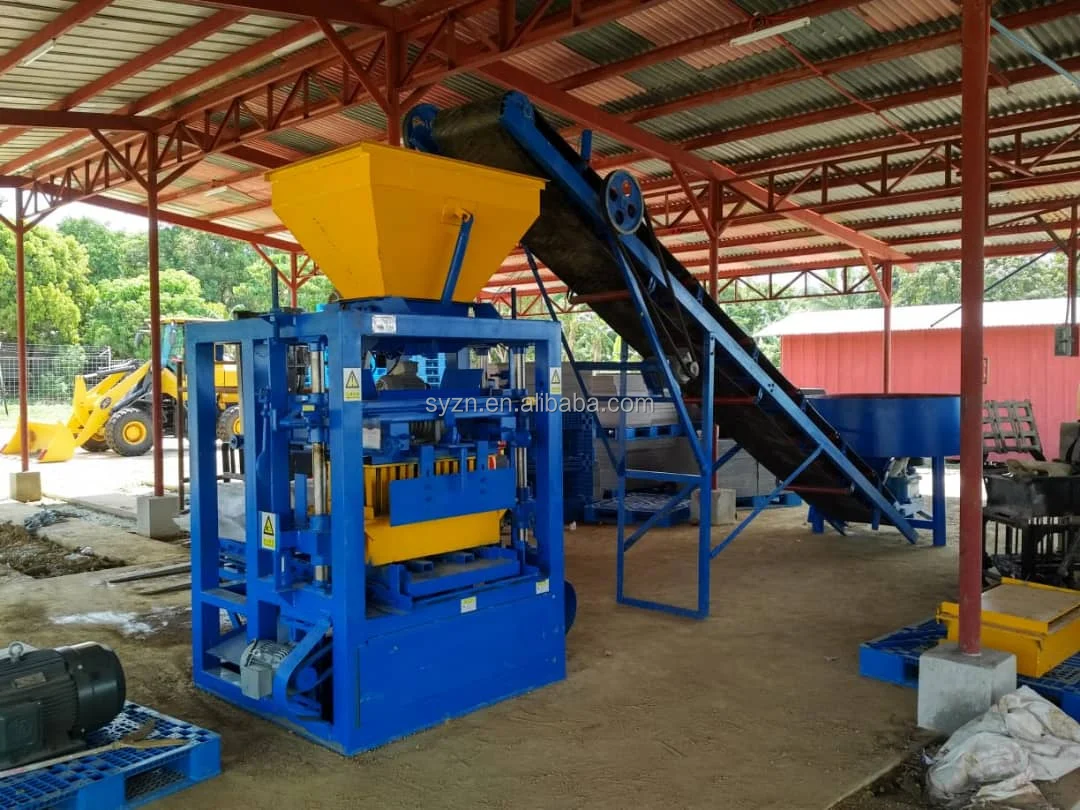
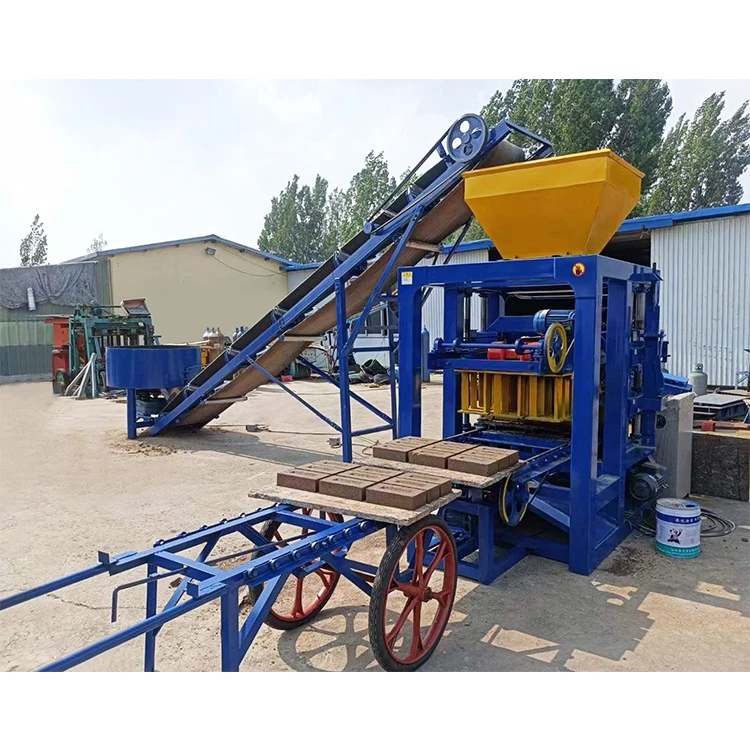
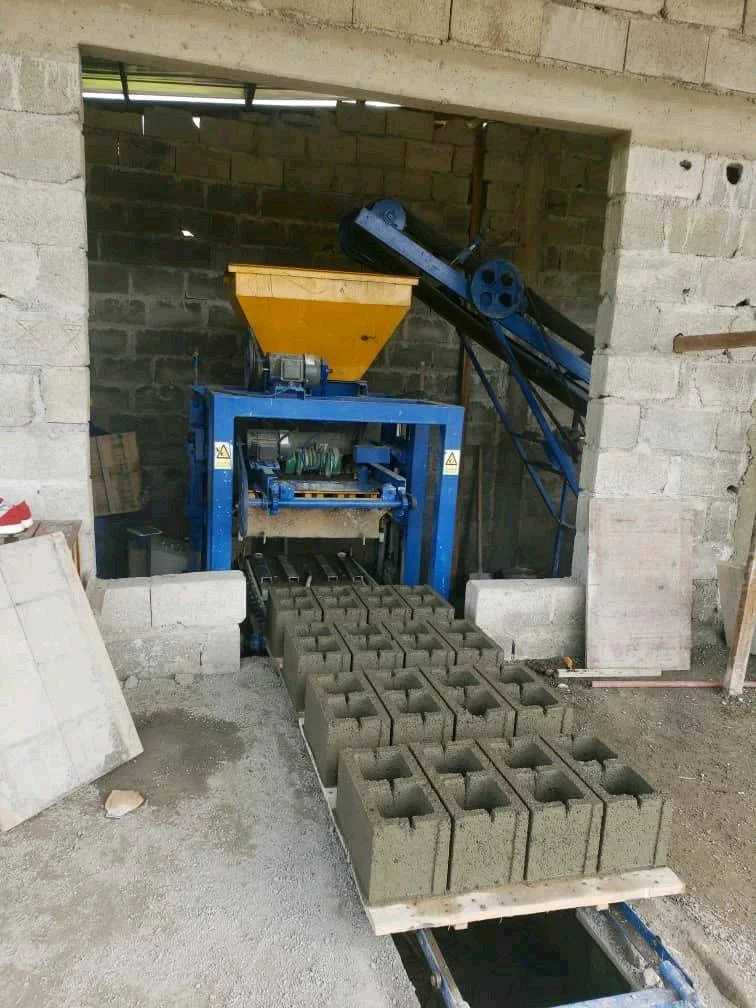
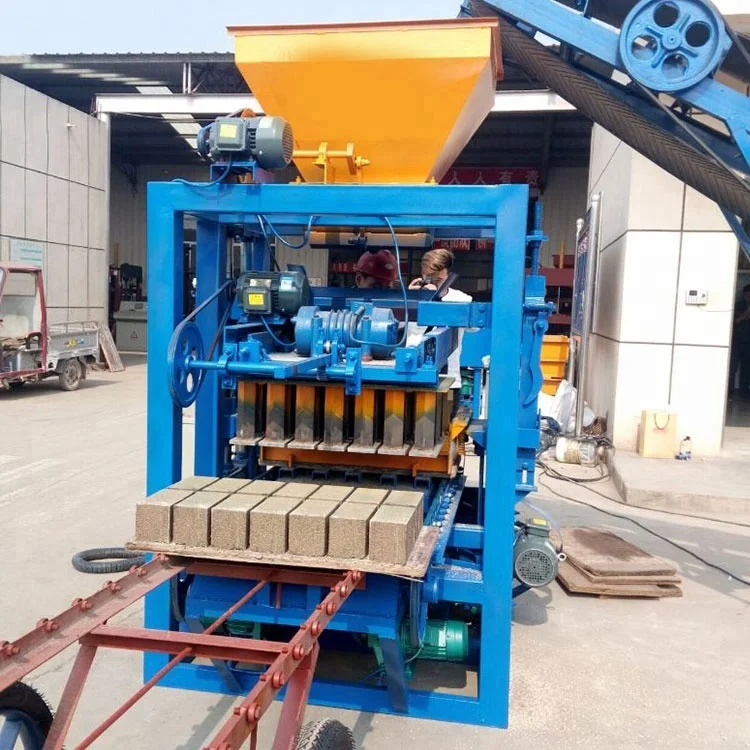
Description
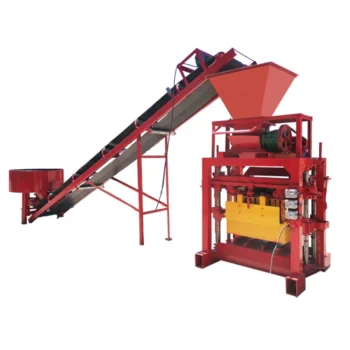
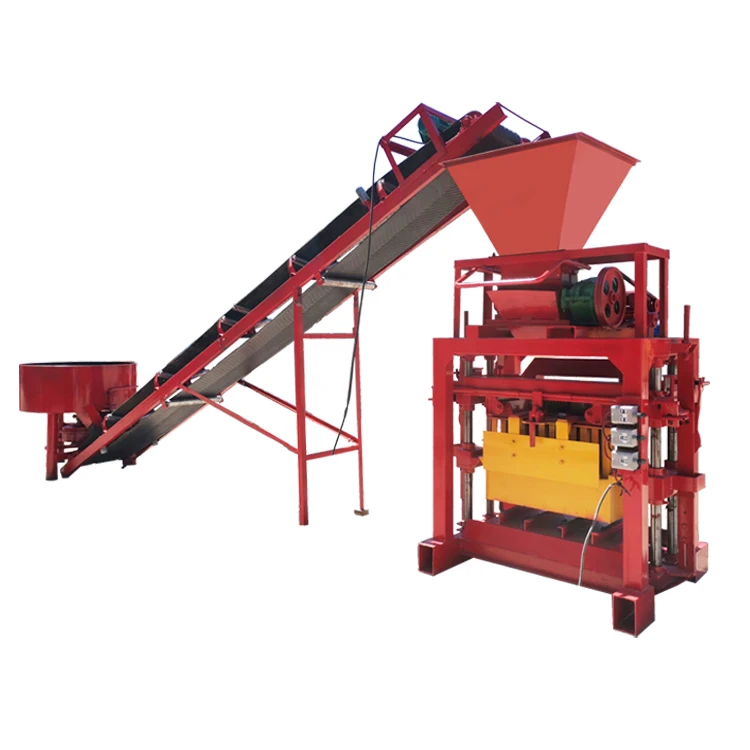
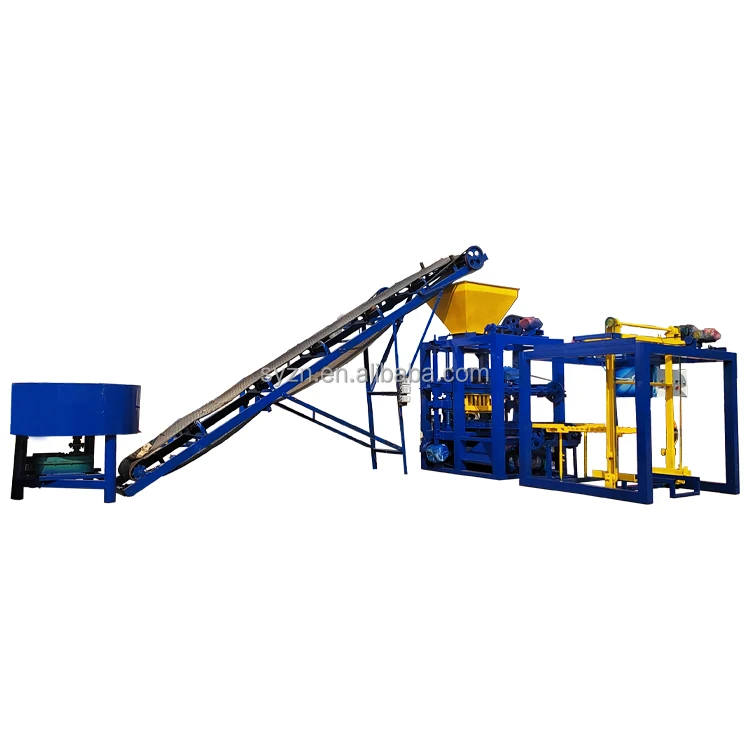
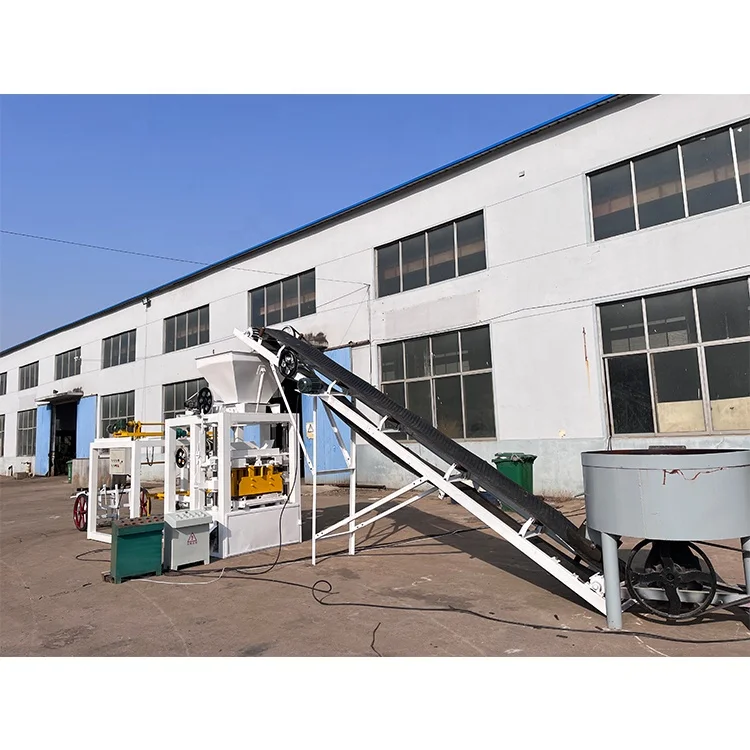
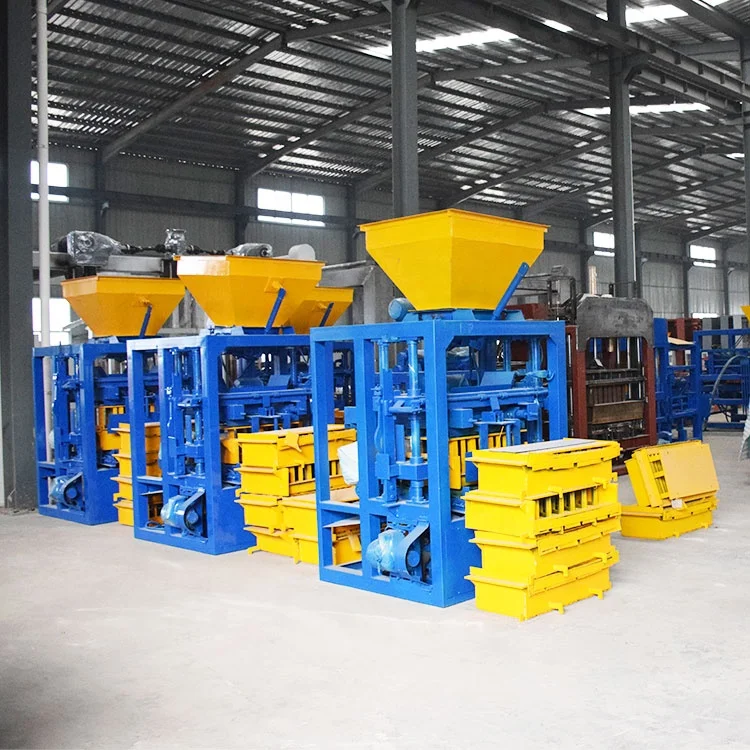
Matched System Specification — the QTJ4-26 semi-automatic block machine, mould and pallet are sized as one coordinated set against your target block format and local aggregate, so vibration force and pressing action align with your actual mix rather than a catalogue default.
Technical Specifications
| Parameter | Value |
|---|---|
| Model | QTJ4-26 |
| Product Type | Semi-Automatic Concrete Block Making Machine |
| Overall Dimensions (L×W×H) | 2060×1730×2580 mm |
| Total Weight | 1800 kg |
| Molding Cycle | 26 s |
| Vibration Frequency | 4200 r/min |
| Exciting Force | 35.5 kN |
| Rated Power | 14.25 kW |
| Mixer Model | JQ350 |
| Pallet Size | 850×450×20 mm |
| Automation Level | Semi-automatic (four guide pillars, automatic mould movement) |
| Output Capacity | 3800 pcs/8h for 390×190×190 mm hollow block (basis not stated in source); 4800 pcs/8h for 400×150×200 mm hollow block (basis not stated in source); 17000 pcs/8h for 240×115×53 mm solid brick (basis not stated in source) |
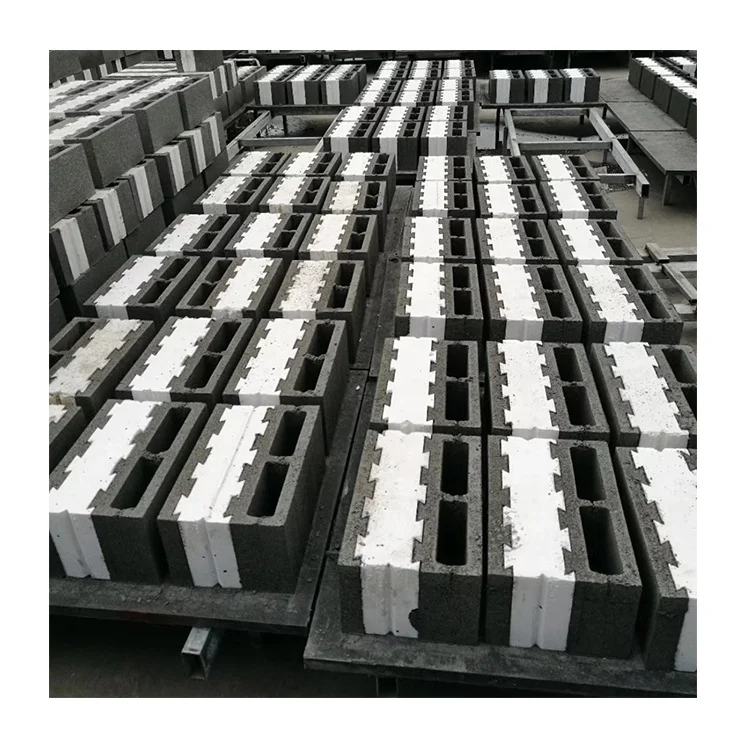
| Applied Products | Concrete hollow blocks (8 inch, 6 inch), solid bricks |
| Raw Materials | Crushed stones, sand, cement, dust, fly ash |
Application Suitability
| Application | Material or Output |
|---|---|
| Small to medium block plant producing 8-inch and 6-inch hollow blocks | Crushed stone, sand, cement and fly ash mixes |
| On-site block production for housing or commercial building projects | Local aggregate with cement binder |
| First block plant with controlled investment | Standard concrete mix with locally sourced sand and dust |
| Solid brick production for masonry and partition walls | Fine aggregate and cement blends |
Why "3800 Blocks per Shift" Means Nothing Without the Mould Format
The only honest output figure is the one tied to a specific block size, mould cavity count and cycle time.
Buyers regularly receive quotations listing a single daily capacity number with no mention of which block format that figure assumes. When the machine arrives and runs a different format — the one the local market actually buys — real output drops noticeably because the mould cavity count and pressing cycle differ from the quoted baseline. I have watched contractors miss project deadlines because the hollow block they needed required a longer cycle than the solid brick used for the capacity claim [NEED_CITE: common block machine output misrepresentation in quotations].
With the QTJ4-26, every capacity discussion starts from your target block format. The 26-second moulding cycle applies to a specific mould and mix; change the format and the cycle shifts. This semi-automatic block machine specifications sheet is only useful when paired with your exact product drawing.
Mould Format Determines Your Real Daily Output
The QTJ4-26 ships with moulds cut for the hollow block and solid brick sizes your market demands. A 390×190×190 mm hollow block mould holds 4 cavities per cycle, while a 240×115×53 mm solid brick mould holds 18 cavities. That difference in cavity count is why the same QTJ4-26 block machine how to choose conversation always circles back to what you actually sell. Quoting a single output number across both formats would be misleading, so each figure is stated per mould.
Vibration Force Must Match Your Aggregate, Not a Lab Sample
The 4200 r/min vibration frequency and 35.5 kN exciting force were set for standard crushed stone and sand mixes. If your local aggregate is lightweight volcanic rock or high-clay river sand, those numbers may not compact the mix to the strength your market requires. The semi-automatic block machine specifications only hold when the vibration force and pressing action are verified against your actual raw material [NEED_CITE: effect of aggregate type on block compressive strength]. That is why the QTJ4-26 block machine how to choose process always asks what you feed into the mixer before confirming the vibration settings.
Reading the Specs That Actually Matter on Site
The four guide pillar structure keeps the upper and lower mould halves aligned through every cycle, which is what gives consistent block density across a full shift. Without that alignment, blocks on one side of the pallet come out softer than the other, and the rejection rate climbs. The JQ350 pan mixer feeds the press at a rate matched to the 26-second cycle, so the operator is not waiting for the next batch while the press sits idle. Pallet size at 850×450×20 mm must match your existing curing racks and forklift tines — a mismatch here means buying new handling equipment or re-pouring curing slabs. The 14.25 kW total rated power determines your transformer and cable sizing before the machine arrives, not after.
The Cost of Skipping Format and Mix Verification
When a buyer orders on catalogue capacity alone, the machine often runs a different block format than the one used for the output claim, and daily throughput falls well short of the business plan. If the vibration force does not suit the local aggregate, blocks crack during curing or fail compression tests at the site, forcing the producer to rework the mix at extra cost. A pallet size that does not fit the curing area means blocks are stacked by hand on the ground, slowing turnover and increasing breakage [NEED_CITE: pallet handling impact on block curing quality]. These problems surface weeks after arrival, when returning the machine is no longer practical.
Why Sourcing the QTJ4-26 Through a Format-Led Process Matters
Machine, mould, pallet and handling are specified as one matched set rather than pulled from separate catalogues, so the vibration platform and mould cavity count work together for your block type. The mould is designed for the formats your market sells, including custom drawings if your local standard differs from common sizes. Configuration is set against your actual mix design and target block strength, not a generic default that may not suit your aggregate. Automation level is selectable — you can start semi-automatic on the QTJ4-26 and add automatic pallet feeding or stacking later as volume grows. Installation includes operator training so your crew understands mould change procedure and cycle adjustment from day one.
Documentation & Verification
- Line layout with capacity calculation stating the exact block format assumed per output figure
- Mould drawing and format list confirming the block dimensions your market requires
- Pallet specification matched to your curing area dimensions and forklift capacity
- Voltage and frequency confirmation sheet signed before production begins
- Factory test record run on your specified block format before dispatch
Installation, Commissioning & Support
- Foundation plan based on the 2060×1730 mm footprint and 1800 kg operating weight
- Power supply sizing for 14.25 kW total rated load with dedicated circuit breaker
- Machine arrives assembled on four guide pillars; mould bolted separately for transport protection
- First-run parameter setting for vibration frequency and cycle time matched to your mix
- Operator training on mould change, pallet loading and daily grease-point maintenance
- Wear parts list with mould liner and vibration spring replacement intervals
What to Include With Your Inquiry
Send the exact block format your market buys, including dimensions and required compressive strength. State your local aggregate type — crushed granite, river sand, volcanic rock, fly ash — and the cement grade available. Confirm your site voltage, frequency and preferred control panel language so the electrical build matches your electrician’s standards before the machine ships.
Frequently Asked Questions
Q: How is daily output calculated per block format, and what does the 26-second cycle assume?
A: Each output figure is tied to a specific mould cavity count and block size. The 26-second moulding cycle applies to a standard concrete mix on a given format; changing to a larger hollow block or denser solid brick alters the cycle. Capacity is always stated per format, not as a single number across all moulds.
Q: Which mould formats are available, and can custom moulds be designed to buyer drawings?
A: Standard moulds cover common 8-inch and 6-inch hollow blocks plus 240×115×53 mm solid bricks. If your market sells a non-standard format, custom moulds can be built to your drawings with cavity count and pressing face matched to the QTJ4-26 platform dimensions and vibration force.
Q: How does the vibration force and pressing action match my local aggregate and mix design?
A: The 35.5 kN exciting force at 4200 r/min suits standard crushed stone and sand mixes. For lightweight or high-clay aggregates, vibration settings are reviewed against your sample mix to confirm the blocks reach target compressive strength without extended cycle times.
Q: What pallet size and material should I choose for my curing area and handling equipment?
A: The standard pallet is 850×450×20 mm. Before confirming, share your curing rack spacing and forklift tine width so the pallet fits your existing setup. Bamboo, PVC and steel pallet options are available depending on your curing method and climate.
Q: Can I start semi-automatic with the QTJ4-26 and upgrade automation later?
A: Yes. The QTJ4-26 runs semi-automatic with manual pallet handling. Automatic pallet feeding, stacking and cubing stations can be added to the line as your production volume grows, without replacing the press itself.