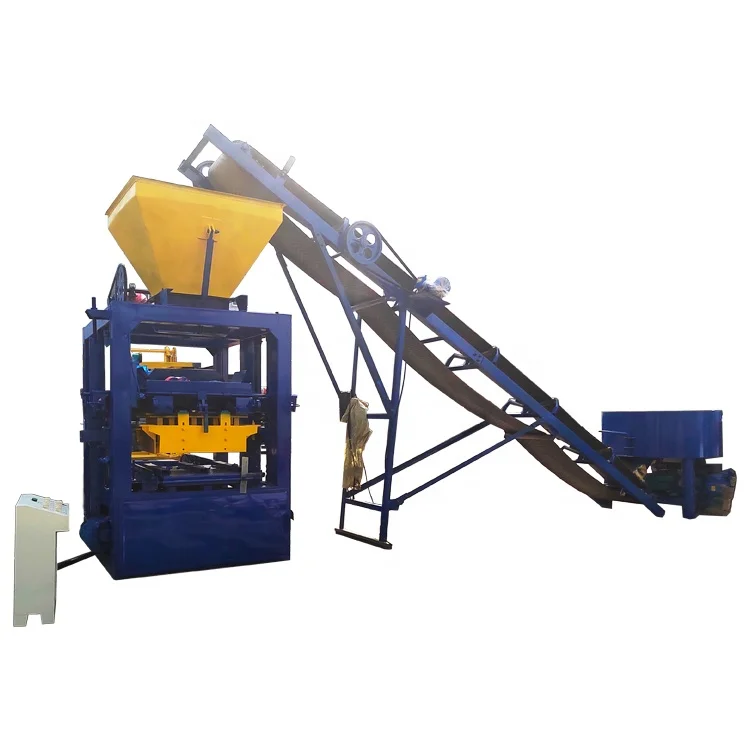

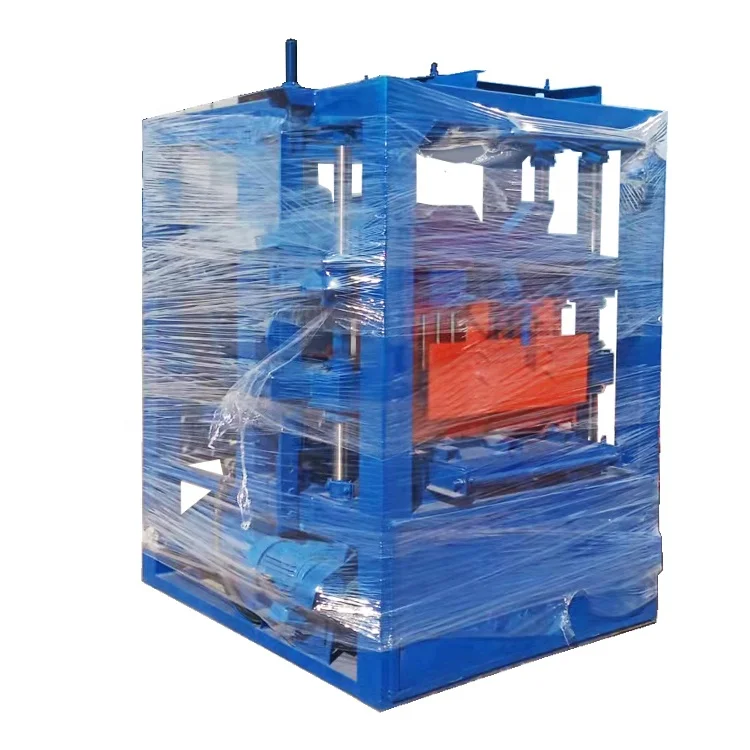

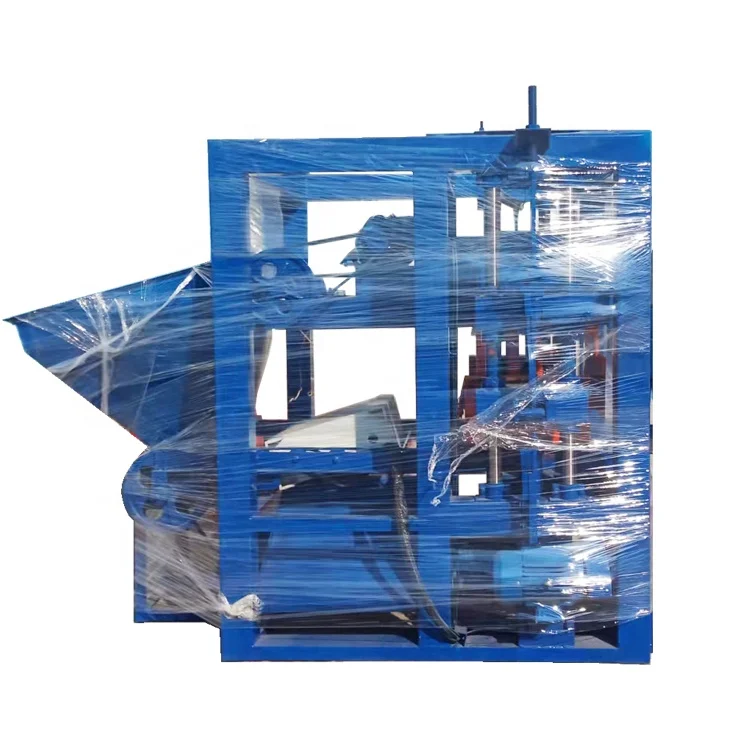
Description
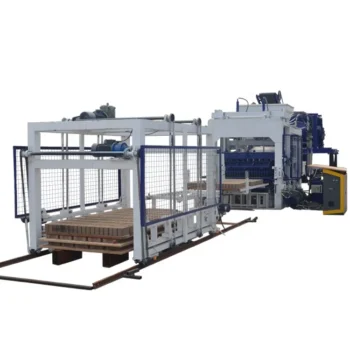
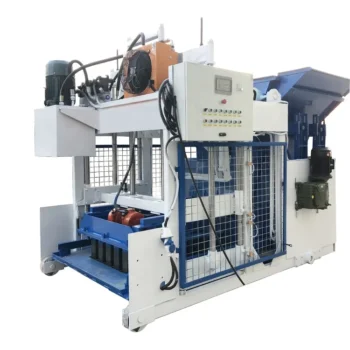
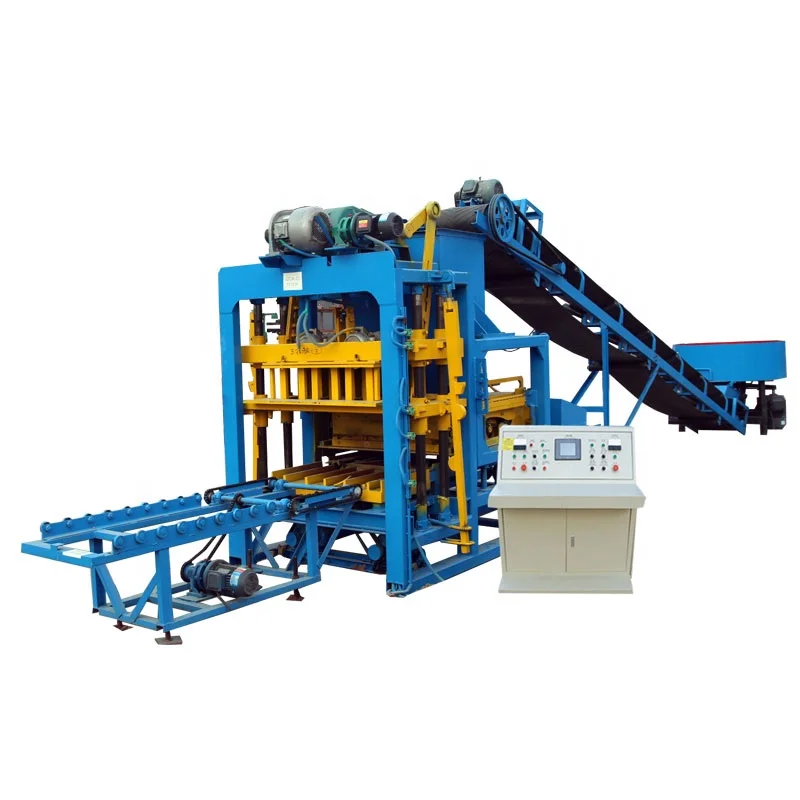
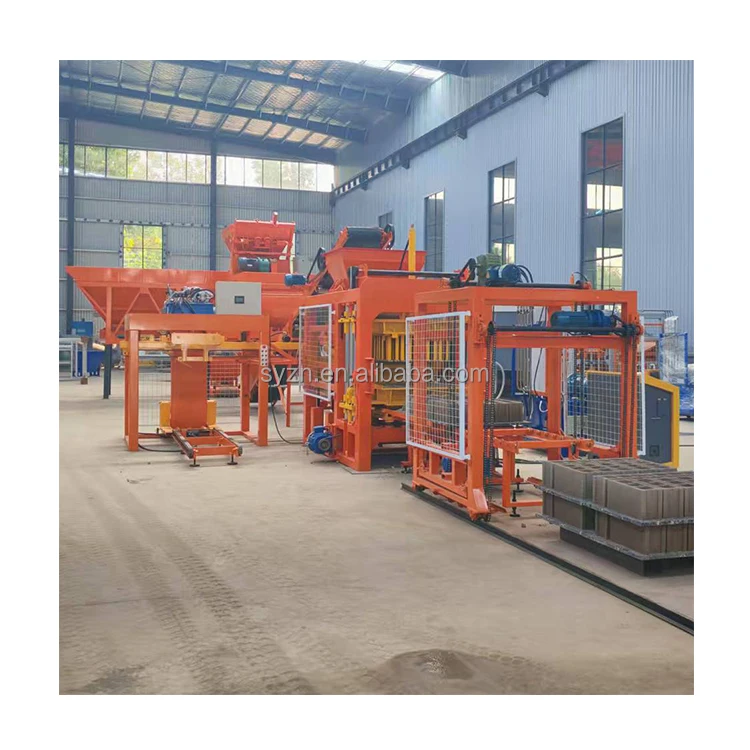
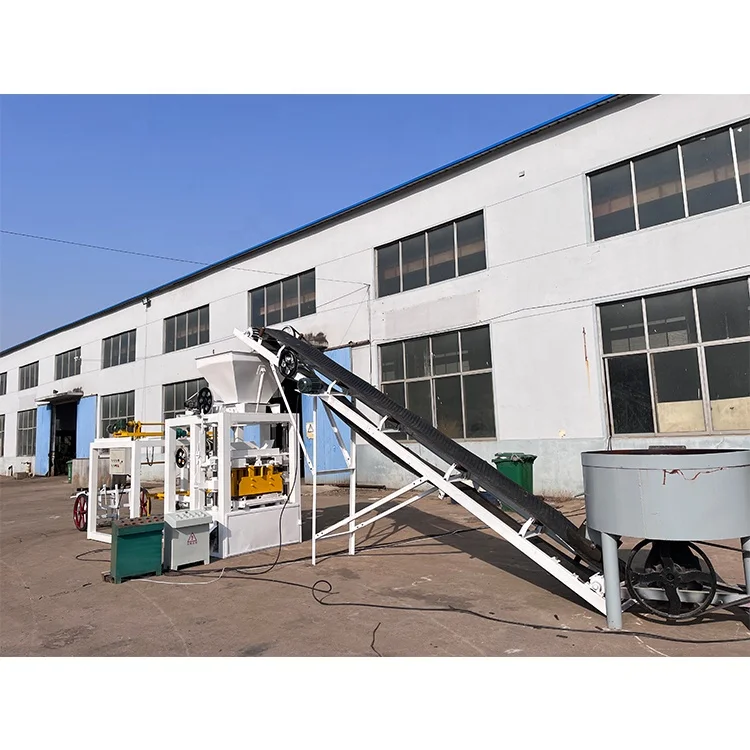
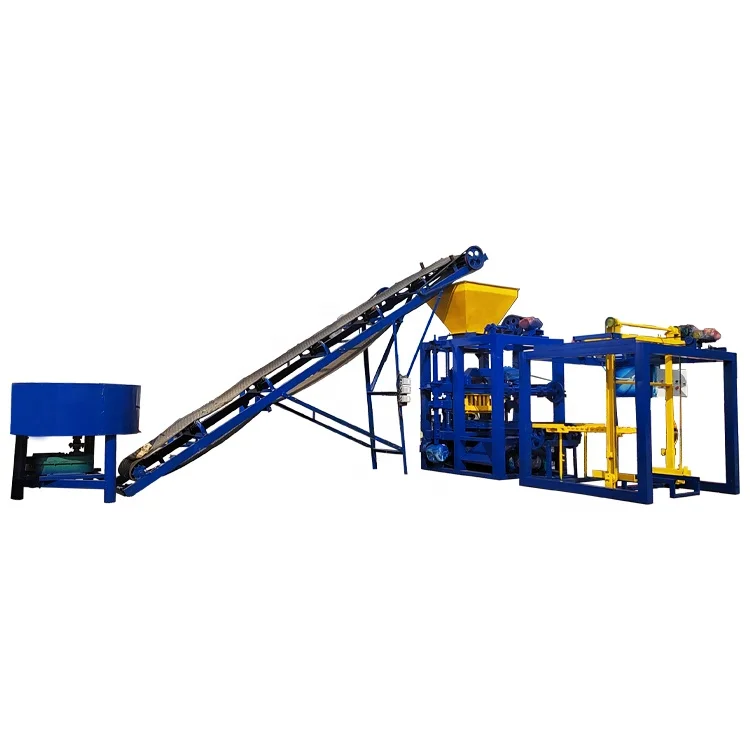
Format-Matched System — Every QTJ4-24 block making machine we quote is configured around your actual block format, local aggregate, and curing setup, not pulled from a generic catalog.
Technical Specifications
| Parameter | Value |
|---|---|
| Model | QTJ4-24 |
| Product Type | Concrete Block Making Machine |
| Overall Dimensions (L×W×H) | 2060 × 1700 × 2650 mm |
| Rated Exiting Force | 35.5 kN |
| Main Vibration Form | Platform Vibration |
| Vibration Frequency | 4200 r/min |
| Pallet Size | 900 × 450 mm |
| Molding Cycle | 24 s (basis not stated in source — confirm block format and material) |
| Overall Power | 11.95 kW |
| Total Mass | 2000 kg |
| Demolding Method | Vibration |
| Factory Area | 260 m² |
| Raw Materials | Crushed stone, sand, cement, fly ash, gravel, slag |
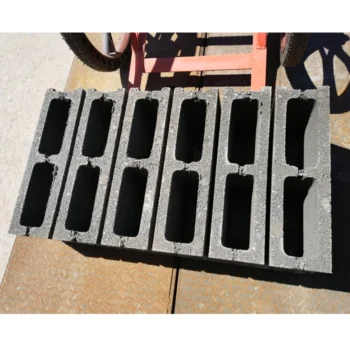
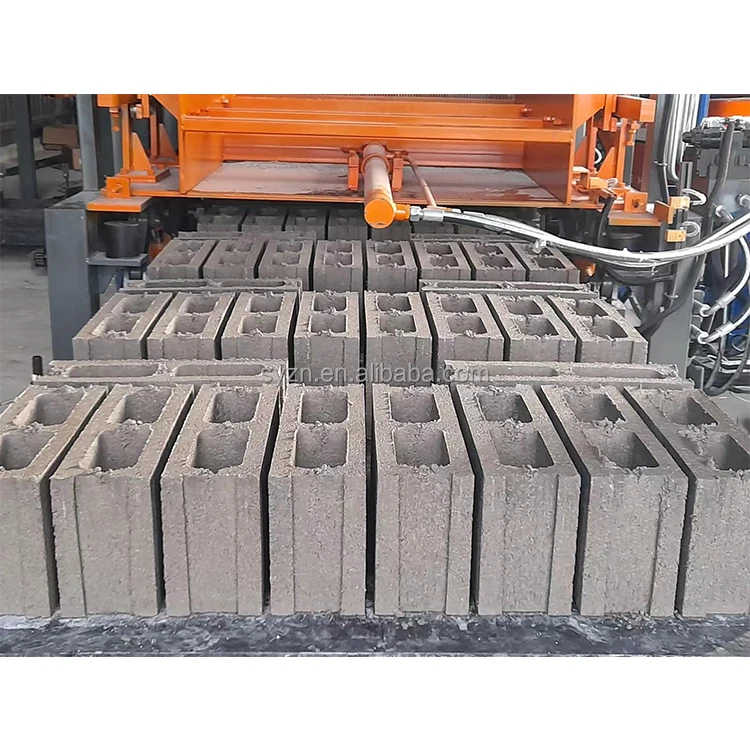
| Applied Products | Hollow blocks, solid blocks, pavers, interlocking blocks, kerbstones, colored pavers |
| Control System | Not stated in source |
| Voltage & Frequency | Not stated in source |
| Automation Level | Semi-manual pallet handling (typical for this class) |
| Warranty | 1 year (excluding spare parts) |
Application Suitability
| Application | Material or Output |
|---|---|
| Hollow block production for residential walls | Crushed stone, sand, cement mix |
| Solid block manufacturing for load-bearing structures | Gravel, cement, fly ash blend |
| Interlocking paver production for driveways and walkways | Fine aggregate, cement, pigment |
| Kerbstone forming for road and curb projects | Coarse aggregate, cement, sand |
| Colored paver runs for landscaping contractors | Sand, cement, oxide pigment |
Why "24 Seconds per Cycle" Tells You Nothing Without the Block Format
Cycle time is meaningless unless you know which block it was measured on.
I learned this the hard way. A buyer in Jamaica ordered a QTJ4-24 block making machine expecting the quoted output, but his local aggregate had high clay content. The mix required longer vibration to reach target density, pushing the real cycle well past the 24-second figure. His daily production dropped to roughly six-tenths of what he planned for. [NEED_CITE: effect of aggregate clay content on concrete block cycle time]
When you see QTJ4-24 block making machine specifications listed as a single cycle time, that number was almost always measured on a standard hollow block with a clean, well-graded mix. Switch to a 60 mm interlocking paver and the cycle extends. Move to a tall kerbstone and it extends further. The daily output difference between formats on the same machine can be substantial, and no catalog default will tell you that.
Matching the QTJ4-24 to Your Actual Block Format
The QTJ4-24 block making machine is built around a platform vibration system running at 4200 r/min, delivering a rated exiting force of 35.5 kN. That force is adequate for standard hollow blocks and solid blocks in the small-to-medium output range, but the vibration must be matched against your specific mix design. If your local sand is fine and low in clay, the standard setting holds. If you are working with crusher dust or fly ash-heavy blends, the vibration duration and pressure profile need adjustment before the first production run.
Pallet Size and What It Means for Your Curing Yard
The 900 × 450 mm pallet is a fixed dimension on the QTJ4-24. Before you confirm the order, measure your curing racks, check your forklift fork spacing, and verify that the pallet will clear the rack entry. I have seen buyers receive machines only to find their existing curing racks were built for a different pallet width. The pallets then sit on the floor, and block handling becomes a manual bottleneck that cancels out the machine’s output advantage. [NEED_CITE: pallet handling logistics in small block plants]
Reading the Specs That Actually Matter
The 35.5 kN rated exiting force and 4200 r/min vibration frequency together determine how densely the concrete is compacted in the mould. Higher vibration frequency with insufficient force leads to surface finish without core density. The QTJ4-24 uses platform vibration rather than mould vibration, meaning the energy transfers through the pallet into the mix from below — this suits drier mixes and standard block heights but requires the mix moisture to stay within a narrow band. The 11.95 kW overall power is typical for semi-automatic machines in this class and should be checked against your site supply capacity, especially if you run a mixer on the same circuit. The 260 m² factory area includes room for the press, pallet circulation, and initial curing staging — measure your actual plot before committing to the layout.
The Cost of Skipping the Aggregate Test
When a buyer skips sending sand and aggregate samples before ordering, the machine ships with default vibration and timing parameters. Those defaults assume a clean, graded mix. If your material arrives with higher fines or moisture variation, the blocks may crack during curing, fail a compression test, or come out of the mould with chipped edges. Reworking the parameters on site after installation costs production days and erodes buyer confidence in the equipment. [NEED_CITE: concrete block compressive strength testing standards]
Why Sourcing the QTJ4-24 Through This Channel
Block machinery is our single focus, so the QTJ4-24 is quoted as a matched system — machine, mould, pallet, and handling — rather than a press with bolt-on components from separate suppliers. We set the configuration against your actual mix design and target block format, not a catalog default. Mould design covers the formats your market sells, and custom drawings are available when standard moulds do not match local block dimensions. Automation is selectable, so a buyer can start with semi-manual pallet handling and add stacking later. Installation support includes operator training so your team understands cycle adjustments when the mix changes seasonally.
Documentation & Verification
- Line layout showing QTJ4-24 placement with pallet flow and curing area
- Capacity calculation stating the exact block format used for cycle time
- Mould drawing and format list for every mould included in the order
- Pallet specification matched to your curing rack and forklift dimensions
- Hydraulic and electrical schematic for on-site maintenance reference
- Factory test record run on your specified block format before dispatch
Installation, Commissioning & Support
- Foundation must support 2000 kg static mass plus dynamic vibration load
- Power supply rated for 11.95 kW with dedicated circuit breaker
- Machine ships assembled; pallet feed and handling stations bolt on site
- First production run includes parameter tuning for your aggregate sample
- Operator training covers mould change procedure and cycle adjustment
- Wear parts list supplied with recommended replacement intervals
What We Need From You to Quote Accurately
Tell us the exact block format you intend to produce — dimensions, wall thickness, and whether hollow, solid, or interlocking. Send a sample or lab report of your local sand and aggregate so we can set the vibration profile before the machine leaves the factory. Confirm your site voltage, frequency, and preferred control language so commissioning is not delayed after arrival.
Frequently Asked Questions
Q: What block format is the 24-second cycle time based on?
A: The 24-second figure is a reference value measured under conditions not stated in the source documentation. Real cycle time varies by block format — a standard hollow block may run close to that number, while a thick interlocking paver or kerbstone requires longer vibration and holding time. We recalculate daily output for your specific target format before quoting.
Q: How is vibration force matched to my local aggregate?
A: The QTJ4-24 delivers 35.5 kN at 4200 r/min through platform vibration. We adjust vibration duration and mix moisture guidance based on your aggregate sample. High-clay or high-fines materials need longer cycles to reach target density, while clean graded sand runs closer to the reference timing.
Q: Can the 900 × 450 mm pallet size be changed?
A: The pallet size is fixed to the machine frame. What we confirm before production is whether this pallet fits your existing curing racks and forklift. If your yard uses a different size, we advise on rack modification or supply matching pallets so handling flows without manual transfer.
Q: What does a mould change involve on this machine?
A: Mould change on the QTJ4-24 involves unbolting the current mould from the vibration platform and fitting the replacement. The time required depends on operator experience and whether the new mould is pre-assembled with its head plate. We supply the format list and change procedure in the operation manual.
Q: What electrical details must be confirmed before production?
A: Voltage, frequency, and any control display language must be confirmed before the QTJ4-24 enters production. Shipping a machine wired for the wrong supply delays commissioning and may require on-site rewiring. We lock these parameters in writing at the order stage.