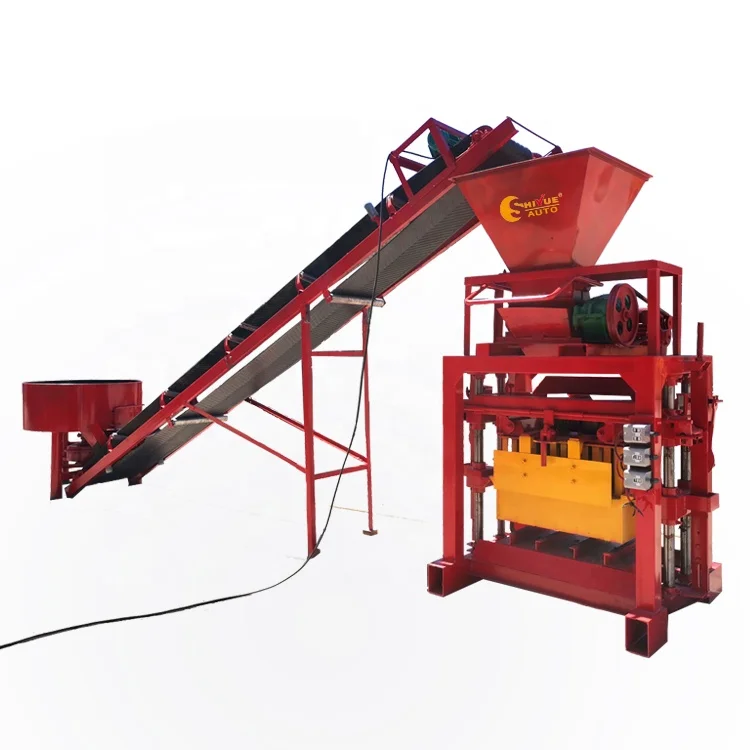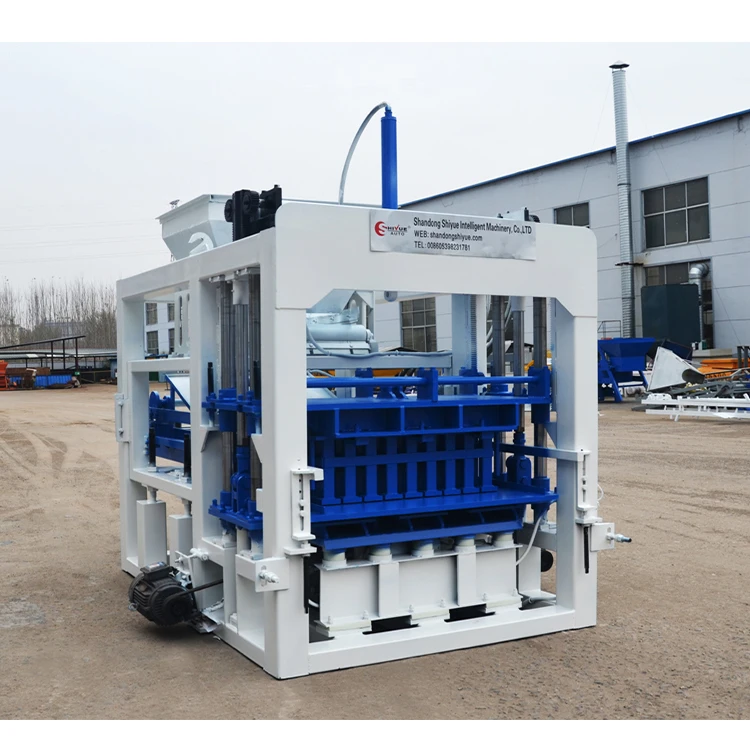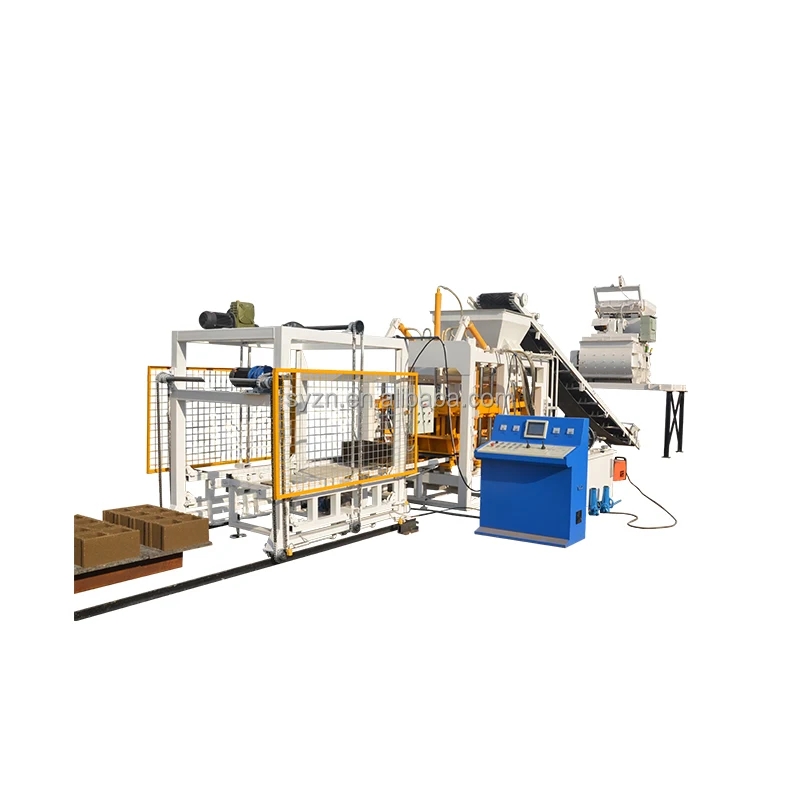
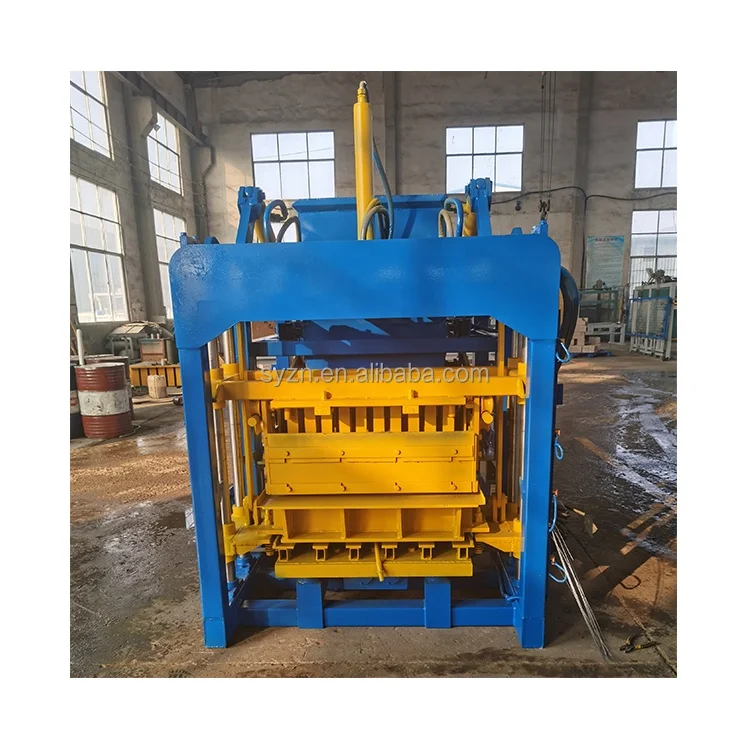

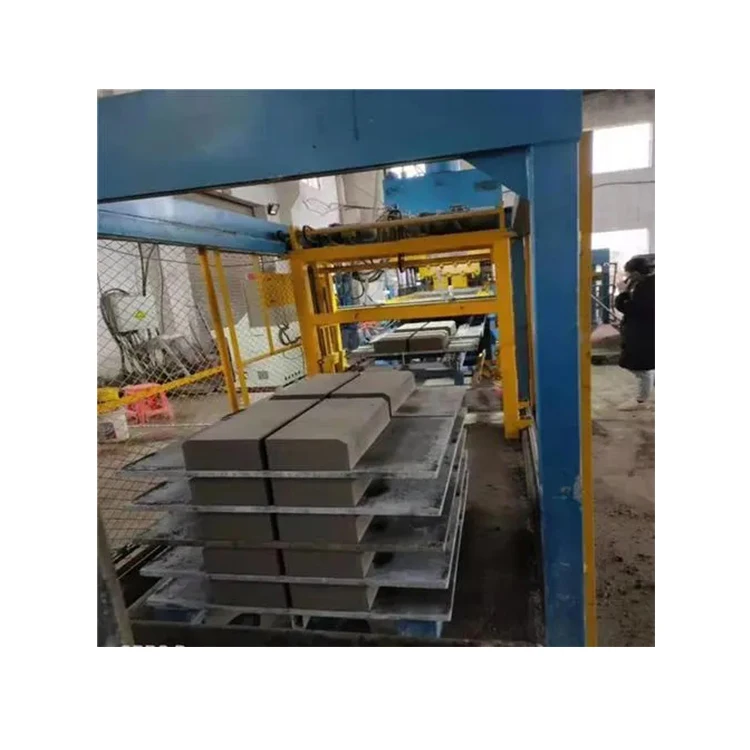


Description
Configured to the Buyer’s Mix — Every QT4-15A quotation ties its capacity figures to a specific block format, pallet size and local aggregate sample, preventing the gap between quoted cycles and actual daily output.
Technical Specifications
| Parameter | Value |
|---|---|
| Model | QT4-15A |
| Overall Dimensions | 7100 × 1600 × 2610 mm |
| Molding Cycle | 15–25 s (basis to be confirmed per block format) |
| Vibration Frequency | 4600 r/min |
| Vibration Force | 40–50 kN |
| Rated Power | 18.45 kW |
| Mixer Model | JQ350 |
| Pallet Size | 850 × 550 × 25 mm |
| Total Weight | 3 T (basis to be confirmed) |
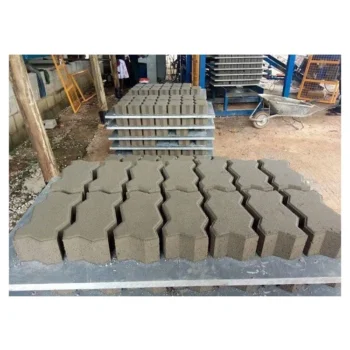
| Applied Products | Paver, solid block, hollow block, curbstone |
| Raw Materials | Crushed stone, sand, cement, fly ash, dust |
| Control System | PLC control system |
| Hydraulic Station | Included |
| Output Capacity | 408 pcs/h hollow block 400×200×200mm; 510 pcs/h hollow block 400×150×200mm; 2100 pcs/h solid brick 240×115×53mm |
| Daily Output (8hr shift) | 3264 pcs (400×200×200mm hollow); 4080 pcs (400×150×200mm hollow); 17000 pcs (240×115×53mm solid) |
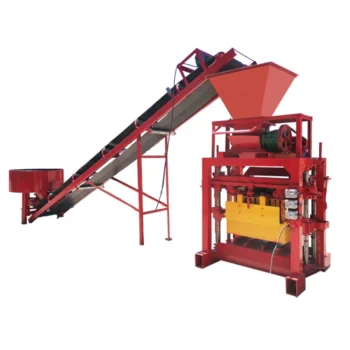
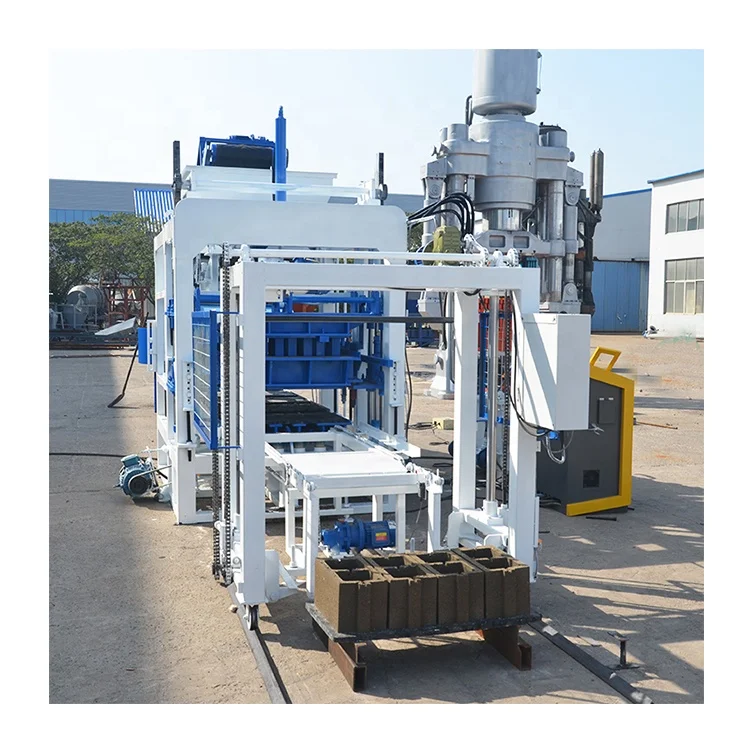
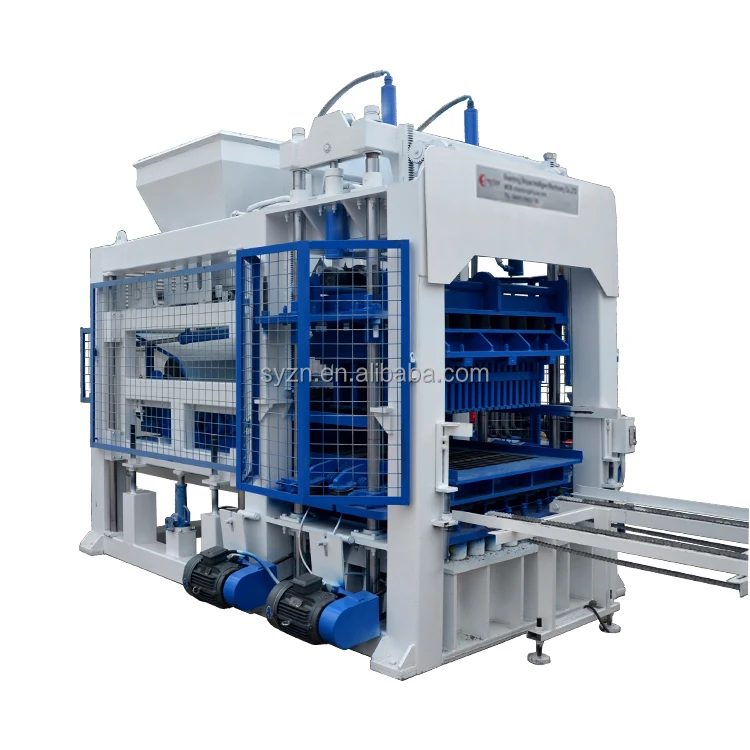
| Included Equipment | Block making machine, hydraulic station, PLC control system, pallet feeder, brick conveyor, block sweeper |
| Free Parts | Manual hydraulic trolley, spare parts and tools |
| Voltage & Frequency | Configurable per destination market |
| Automation Level | Automatic (with pallet feeder and brick conveyor) |
Application Suitability
| Application | Material or Output |
|---|---|
| Hollow block production plants | Crushed stone, sand, cement and fly ash mix for 400×200×200mm and 400×150×200mm formats |
| Solid brick manufacturing | Dense aggregate and cement blends for 240×115×53mm standard bricks |
| Interlocking paver production | Pigmented face-mix over base-mix for paving blocks and kerbstones |
| On-site block production for contractors | Locally sourced sand and stone for project-specific hollow and solid formats |
| Concrete product plants expanding their range | Adding new block formats via mould change on an existing line footprint |
What "Cycles per Hour" Leaves Out About QT4-15A Block Machine Specifications
The cycle time only matters if it was measured on the block you intend to sell.
A machine running a 15-second cycle on a small solid brick does not repeat that same cycle on a 400mm hollow block. The mould height, vibration duration and hydraulic pressure all shift when the format changes. Buyers who compare quotations based on a single cycles-per-hour figure often find their real daily output falling well below expectations once production starts. The QT4-15A block machine specifications are therefore stated per format, so you can match the capacity table directly against your market’s demand [NEED_CITE: block format influence on actual cycle time in hydraulic vibration presses].
Matching Vibration and Hydraulic Pressure to Your Aggregate
The vibration force of 40–50 kN and the hydraulic station on the QT4-15A must work together, not independently. High vibration without adequate hydraulic clamp pressure produces blocks that crack at the edges during demoulding. Excessive pressure without sufficient vibration leaves voids in the core. The correct balance depends on your local aggregate shape, cement ratio and moisture content, which is why aggregate samples are reviewed before the mould and pressure settings are finalized.
Why Mould Format Flexibility Requires a Changeover Plan
The QT4-15A can produce pavers, solid blocks, hollow blocks and curbstones, but switching between them means a physical mould change. The time that change takes directly eats into your shift. If your market demands two or three formats in the same week, the mould change procedure must be practised and timed before the machine is accepted. This is where many quotations leave a gap — listing every available format without stating how long the changeover actually takes on the shop floor [NEED_CITE: practical mould change times in mid-tier block presses].
Reading the Specifications That Actually Affect Daily Production
The rated power of 18.45 kW tells you the electrical supply requirement for the main press and its hydraulic station, but the JQ350 mixer and conveyor draw additional load. The pallet size of 850 × 550 × 25 mm determines how many blocks are formed per cycle and must match the curing racks and forklift tines you already have on site. The PLC control system governs cycle timing, vibration duration and feeder sequencing; confirming the display language before production avoids commissioning delays. Vibration frequency at 4600 r/min is suited to standard concrete mixes but may need adjustment when fine sand or fly ash dominates the blend.
The Hidden Cost of a Misconfigured Block Line
When the pallet size is chosen without checking the buyer’s curing area, blocks end up stacked by hand on the floor because the racks do not accept the pallets. When the voltage is assumed rather than confirmed, the machine sits idle in the container yard while a transformer is sourced locally. When the automation level is not stated in the quotation, the buyer discovers that pallet feeding and stacking are manual tasks that require additional operators from day one [NEED_CITE: common commissioning delays from unconfirmed electrical and automation specifications].
Why Buyers Specifying the QT4-15A Start Here
Every quotation for this automatic block making machine ties capacity to the specific block format, so the output figures you see are the ones you will produce. The mould is selected or custom-designed against the block sizes your local market actually buys, not pulled from a generic catalogue. Pallet dimensions and material are confirmed against your existing curing racks and handling equipment before the machine is built. The automation level — including the pallet feeder and brick conveyor — is stated in the line layout, not left as an optional extra. Configuration decisions are made against your aggregate sample, mix design and site voltage, so the machine arrives ready to run.
Documentation & Verification
- Line layout drawing with capacity calculated per block format
- Mould drawing and format list confirming included and optional block sizes
- Pallet specification sheet matched to your curing area dimensions
- Hydraulic and electrical schematic with confirmed voltage and frequency
- Factory test record run on your target block format before dispatch
- Operation and maintenance manual with PLC display language confirmed
Installation, Commissioning & Support
- Foundation plan sized to the 7100 × 1600 mm footprint and dynamic vibration load
- Dedicated electrical circuit rated for the 18.45 kW main press plus mixer and conveyor load
- Machine shipped in dismantled state with reassembly guided by hydraulic and electrical schematics
- First-run commissioning with cycle time, vibration and pressure adjusted to your aggregate sample
- Operator training on PLC interface, mould change procedure and daily maintenance checkpoints
- Wear parts and mould list provided with recommended replacement intervals
Preparing Your QT4-15A Block Machine Specifications Inquiry
To size the QT4-15A accurately, provide the block formats your market sells along with target daily volumes for each. Share a sample or description of your local aggregate so the vibration and pressure settings can be matched before the mould is built. Confirm your site voltage, frequency and preferred PLC display language to prevent delays once the machine arrives [NEED_CITE: electrical and language standards for industrial machinery exports].
Frequently Asked Questions
Q: How is the output capacity calculated and which block format does each figure assume?
A: Every capacity figure for the QT4-15A is tied to a specific block size. The 408 pieces per hour rating assumes a 400×200×200mm hollow block, while 2100 pieces per hour applies to 240×115×53mm solid bricks. Daily output is calculated on an 8-hour shift. No single "up to" number is used without stating the format it was measured on.
Q: What mould formats are included and what is the mould change time?
A: The standard package covers the block format specified in your order. Additional moulds for pavers, curbstones or other hollow block sizes can be supplied. The mould change time depends on the operator’s familiarity with the procedure and should be timed during commissioning so your production schedule reflects reality.
Q: How should the QT4-15A be configured for my local aggregate?
A: Before the machine is built, your aggregate sample is reviewed for particle shape, clay content and moisture behavior. The vibration force and hydraulic pressure are then adjusted to that mix. This prevents weak blocks caused by using default settings designed for a different raw material.
Q: What pallet size is specified and how does it match my curing area?
A: The standard pallet size is 850 × 550 × 25 mm. Before production, this dimension is checked against your curing rack spacing and forklift tine width. If your existing equipment requires a different pallet size, the mould and feeder are adjusted accordingly to maintain compatibility.
Q: What voltage, frequency and PLC language options are confirmed before shipment?
A: Your site voltage and frequency are confirmed during the quotation stage and locked before production begins. The PLC display language is set to your preference so operators can read fault codes and cycle parameters in their working language from the first day of commissioning.