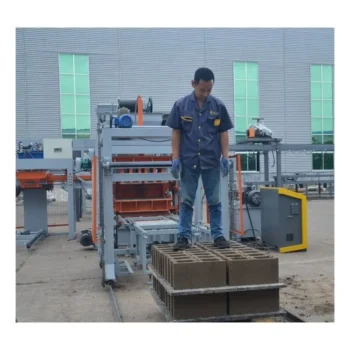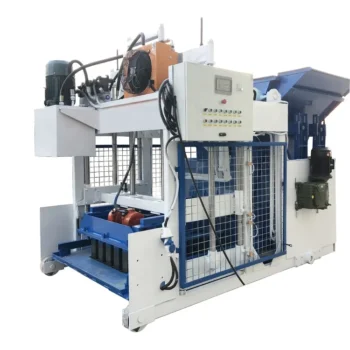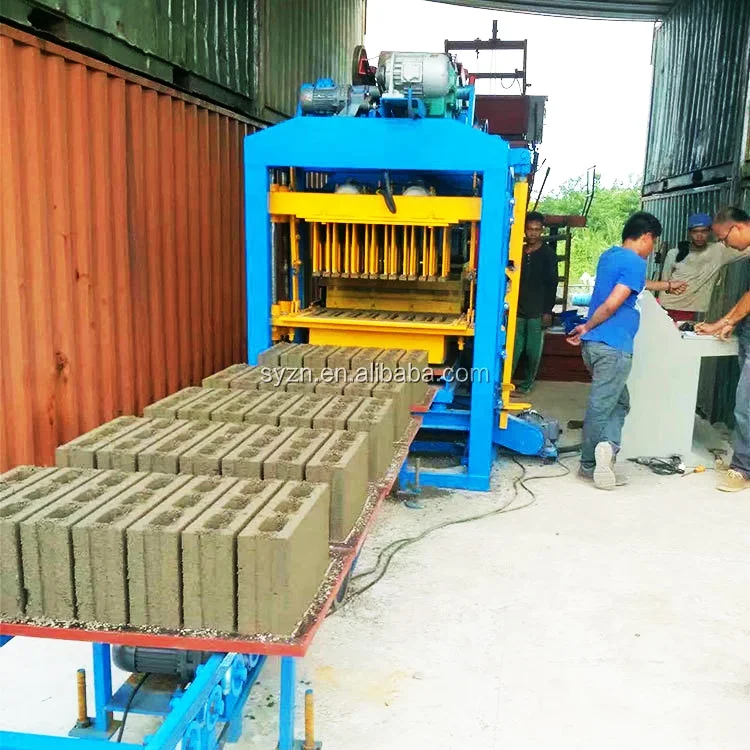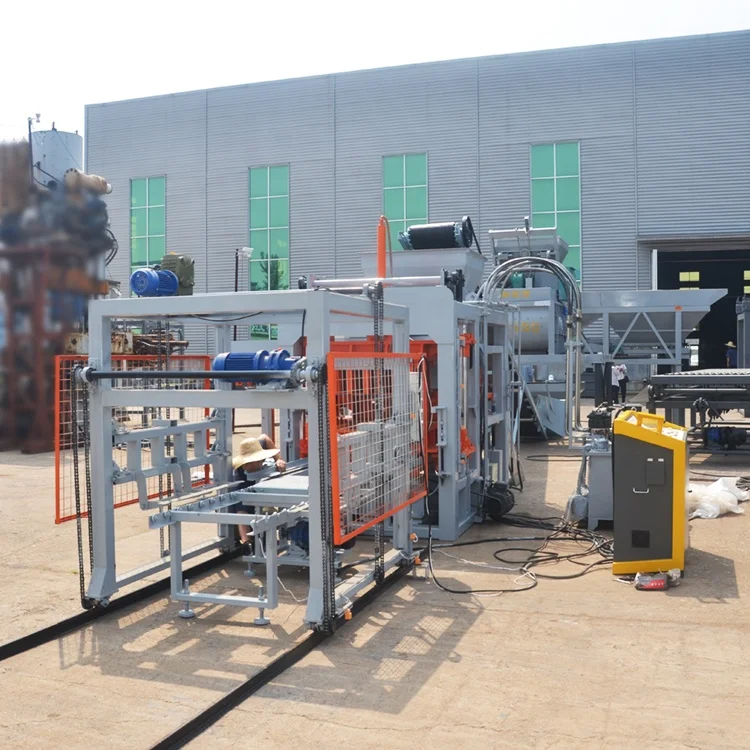
Description
Format-matched capacity — every cycle time and daily output figure is calculated against the specific block format, mould, pallet and aggregate you will actually run, not a catalogue default.
Technical Specifications
| Parameter | Value |
|---|---|
| Model | QT4-15A |
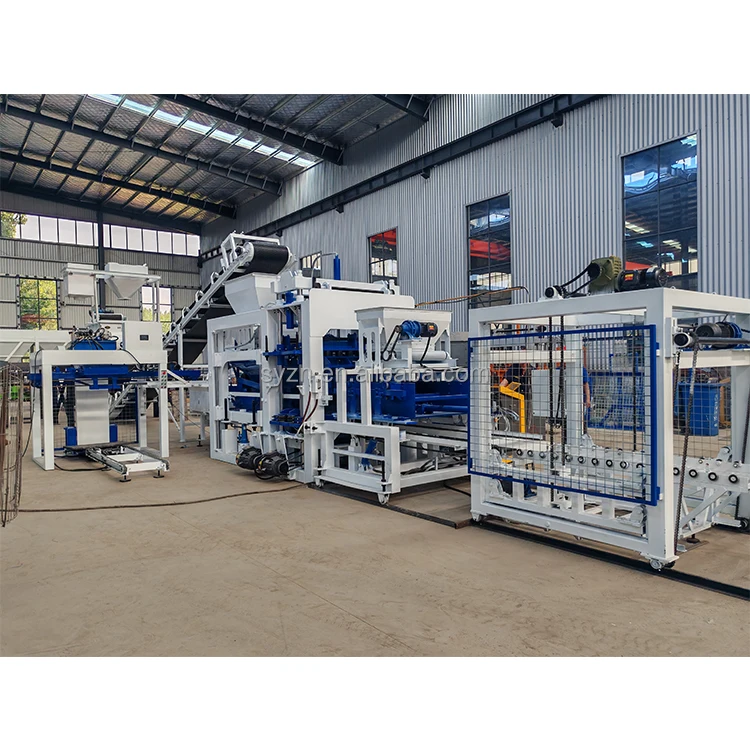
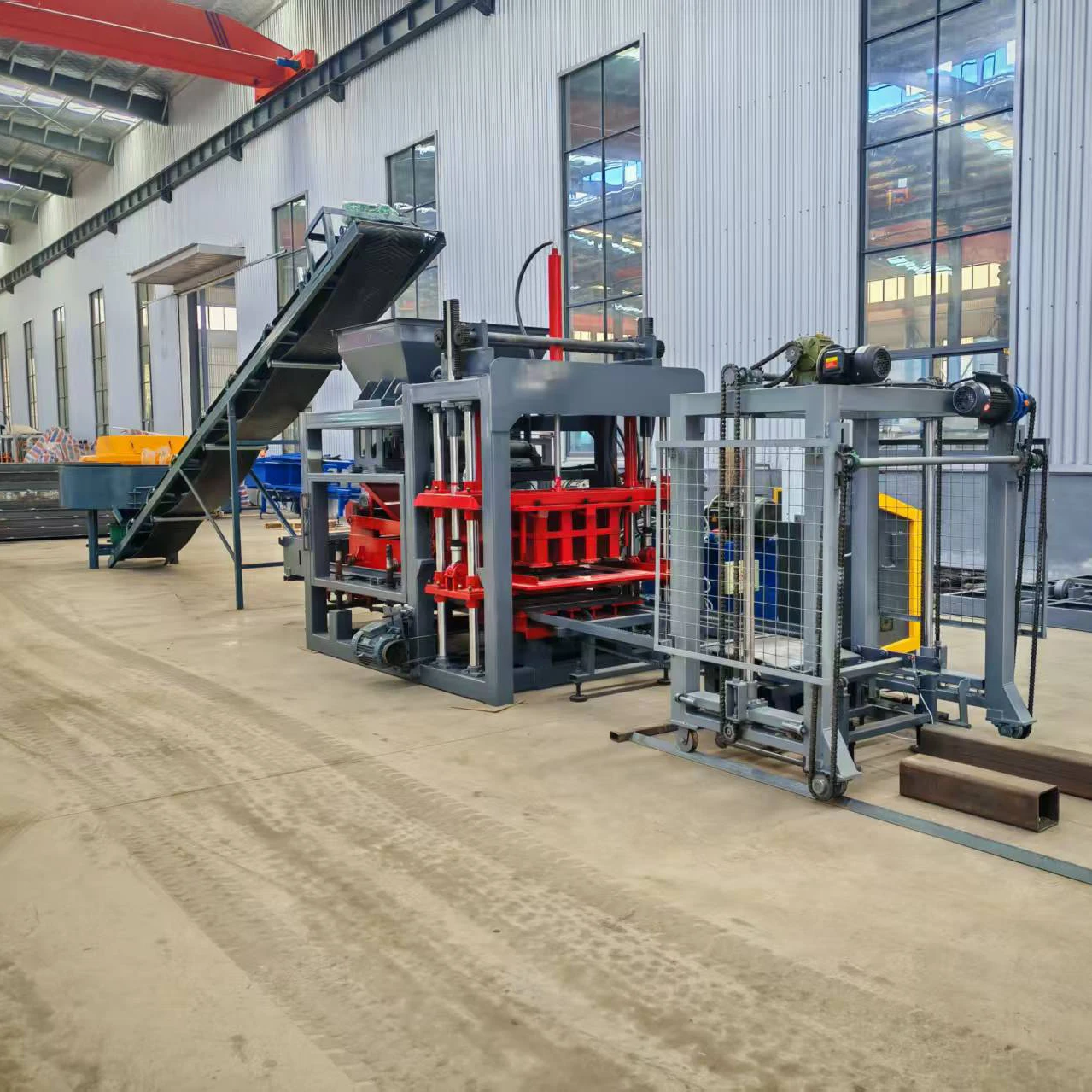
| Product Type | Fully Automatic Concrete Block Making Machine |
| Overall Dimensions (L×W×H) | 4100×1600×2600 mm |
| Rated Hydraulic Pressure | 16–21 MPa |
| Main Vibration Form | Platform Vibration |
| Vibration Frequency | 4200 r/min |
| Vibration Force | 55 kN |
| Pallet Size | 880×550 mm |
| Molding Cycle | 25–30 s (basis not stated in source — confirm block format / material / thickness) |
| Overall Power | 18.45 kW |
| Total Mass | 4 T |
| Demolding Method | Hydraulic |
| Required Factory Area | 300 m² |
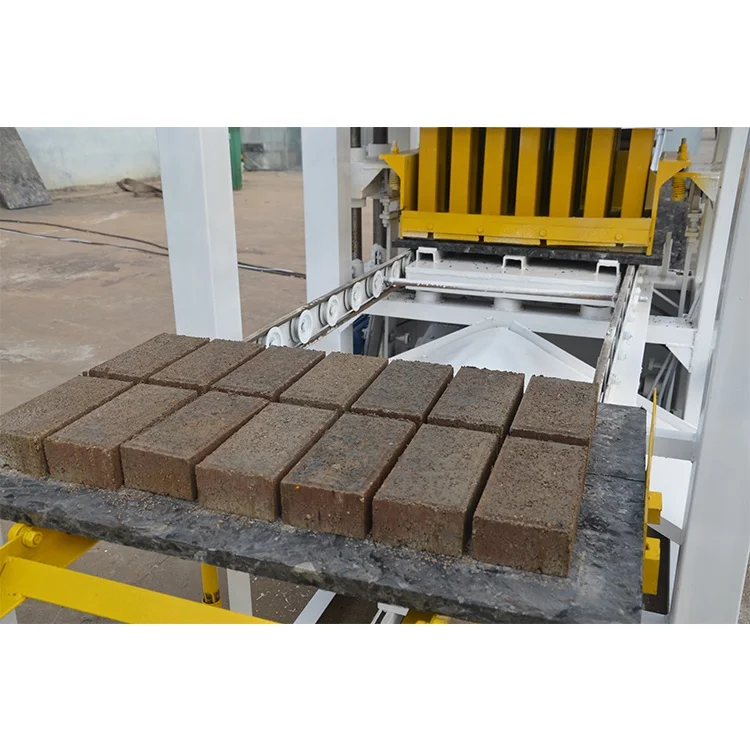
| Applicable Block Formats | Hollow block, solid block, paver, interlocking block, kerbstone, colored paver |
| Compatible Raw Materials | Crushed stone, sand, cement, fly ash, gravel, slag, stone dust |
| Shipping | 1×40HQ container (basic equipment) |
| Warranty | 1 year |
Application Suitability
| Application | Material or Output |
|---|---|
| Hollow block production for residential wall systems | Crushed stone, sand, cement with fly ash replacement up to locally accepted limits |
| Solid block manufacturing for load-bearing structures | Gravel and cement mixes requiring higher hydraulic pressure settings |
| Paving block and colored paver runs for municipal sidewalks | Fine aggregate blends with pigment dosing and longer vibration holds |
| Interlocking brick for landscape and retaining walls | Sharp sand and cement with precision mould alignment |
| Kerbstone production for road edge detailing | Coarse aggregate mixes with extended pressing cycles |
What the QT4-15A Block Making Machine Specifications Leave Out of Generic Quotations
Cycle time only means something when you know which block format, mould cavity count, and aggregate blend produced it.
I have watched buyers sign for a block machine on the strength of a "25-second cycle" without ever being told that figure assumed a thin-walled solid block in standard river sand. When their plant started running 200 mm hollow blocks with volcanic scoria, the same machine stretched past 40 seconds per cycle and daily output fell to half the quoted number. The QT4-15A block making machine specifications on this page are a starting point — the real capacity discussion happens after you tell us which formats your market actually moves [NEED_CITE: block format demand profiles by regional construction market].
Mould and Pallet Sizing to Your Curing Layout
The 880×550 mm pallet is not arbitrary — it dictates how many blocks press per cycle, how the wet product moves into your curing area, and which forklift can handle the loaded pallets. A mismatch here means blocks sit stacked on the floor because your existing racks expect a different dimension, or your forklift cannot clear the pallet width. We confirm pallet size against your current curing rack spacing and material handling equipment before the machine enters production.
Cycle Time Stated Per Block Format, Not Per Machine
A single QT4-15A block making machine specifications sheet cannot honestly quote one cycle time for every format. A standard 400×200×200 mm hollow block demands a longer vibration hold than a 60 mm thick paver, and the mould cavity count changes the effective output per press. We calculate daily output per format, state the mix assumption, and show you the mould drawing before you commit [NEED_CITE: relationship between vibration duration and compressive strength in concrete masonry units].
Hydraulic Pressure, Vibration Force, and What They Mean for Block Density
The 16–21 MPa hydraulic pressure range and 55 kN vibration force work together: vibration liquefies the mix so particles settle, and hydraulic pressure locks them into position before demolding. If your local aggregate is angular and coarse, higher vibration amplitude and longer dwell time produce a denser block. Smooth river sand needs less energy but holds less interlock. The QT4-15A lets the operator adjust pressure within that range, but the starting point must be a trial with your actual materials.
When the Wrong Configuration Costs More Than the Machine
A block machine configured for a mix you cannot source locally forces a material change that may not even be available in your region. I have seen plants shut down for weeks because the aggregate specified in the factory test was not sold within 500 km of the job site. Pallet handling, stacking, and curing equipment left off the quotation means your output piles up on the press table while workers move blocks by hand — the press sits idle waiting for an empty pallet, and the cycle time figure becomes meaningless [NEED_CITE: hidden costs of incomplete block production line specifications].
Why Procurement Here Reduces Configuration Guesswork
Block machinery is our single focus, which means the press, mould, pallet, and handling equipment are specified as one matched system instead of assembled from separate suppliers. Every QT4-15A configuration is set against your actual mix design and target block format rather than a catalogue default. Mould design covers the formats your market sells, including custom drawings when standard cavity layouts do not fit. The automation level is selectable — a buyer can start semi-automatic and add automatic stacking later without replacing the press. Installation support includes operator training on mould changes and cycle adjustment for each format you run.
Documentation & Verification
- Line layout and capacity calculation naming the exact block format behind each cycle time
- Mould drawing and format list covering every cavity pattern the machine will produce
- Pallet specification cross-referenced to your curing rack dimensions and forklift capacity
- Voltage, frequency, and PLC display language confirmed in writing before production begins
- Factory test record run on your specified mix and block format before dispatch
Installation, Commissioning & Support
- Foundation pad sized to the 4100×1600 mm footprint with vibration isolation for the 55 kN platform shaker
- Dedicated power circuit matching confirmed voltage and frequency for the 18.45 kW total load
- Machine dismantled for 40HQ container loading and reassembled on-site with alignment verification
- First-run commissioning includes cycle tuning against your local aggregate and target block strength
- Operator training covers hydraulic demolding technique and mould change procedure for each format
- Wear parts list with reorder codes for hydraulic seals and vibration springs specific to this model
What We Need to Configure Your Line Accurately
Send us the block formats your market moves most — dimensions, wall thickness, and required compressive strength. Include a sample or description of your local aggregate so we can match vibration and pressure settings before the machine ships. Confirm your site voltage, frequency, and preferred PLC language, along with the dimensions of any existing curing racks and forklifts so the pallet specification fits your current handling setup.
Frequently Asked Questions
Q: How is the QT4-15A molding cycle verified per block format?
A: We run factory tests using your target block dimensions and a mix based on your local aggregate, then record the actual cycle time per format. The capacity figure we quote always names the block type, cavity count, and material assumption behind it — no single blanket number.
Q: Which mould formats fit the 880×550 mm pallet?
A: Standard options include hollow blocks, solid blocks, pavers, interlocking bricks, and kerbstones within the pallet envelope. Custom mould layouts are available from buyer drawings. Mould change time depends on cavity complexity and is confirmed during commissioning on your specific format set.
Q: How do you match pressure and vibration to local aggregate?
A: We request a sample or description of your aggregate — particle shape, grading, and absorption rate — then adjust the 16–21 MPa hydraulic pressure range and vibration duration accordingly. Factory tests on your mix confirm block density before the machine ships.
Q: What electrical and control details are confirmed before shipment?
A: Voltage, frequency, plug standard, and PLC display language are agreed in writing before production. This avoids the common delay where a machine arrives with the wrong voltage or a control panel the operator cannot read.
Q: What documentation ships with the machine?
A: You receive a capacity calculation per block format, mould drawings, pallet specification, hydraulic and electrical schematics, a factory test record on your mix, an operation manual, and a wear parts list with reorder codes for this model.